Two Weeks Across Japan - Walking Between Memories
This time, the journey to Magome and the Nakasendo Trail unfolded exactly as it should.
Like a well-rehearsed orchestra, each part seemed ready to enter at precisely the right moment.
The contrast was not lost on me.
On our previous trip, simply finding the correct station in Nagoya had almost derailed the entire day. We had spent precious time running through corridors and shopping complexes, searching for the JR platforms while anxiously watching the minutes slip away.
This time, we were determined not to repeat that experience.
The evening before, we had sat together and discussed how we would get to Magome. There were several possible routes from Nagoya. I knew one of them well. It was neither the most direct nor the cheapest option, but it was the route I trusted most.
After all, my previous journey to Magome had become one of the most memorable experiences of my travels in Japan.
In the end, the group agreed to follow that route.
We checked the train timetable, confirmed the departure we intended to take, and even verified the platform with station staff. Everything was planned well in advance.
The next morning, everyone appeared in the hotel lobby exactly at the agreed time.
That alone felt like a small victory.
Together, we walked to Nagoya Station, making our way through the vast JR Nagoya Takashimaya complex towards the JR platforms.
Before heading to the train, I stopped briefly at the station lockers. The items I would not need for the walk were left behind, reducing my backpack to the essentials.
With that done, we purchased our tickets and made our way directly to the platform.
No confusion.
No frantic searching.
No running.
For the first time since arriving in Japan, it felt as though everything was moving exactly according to plan.
We boarded the JR Shinano Limited Express, the same train we had taken on our previous trip to the Nakasendo.
The journey to Nakatsugawa would take a little under an hour.
As the train pulled away from Nagoya, I realised how different this ride felt compared to last time.
On that previous trip, I had barely noticed the scenery. After the frantic search for the JR station and the fear of missing our connections, I had spent most of the journey watching the electronic display above the doors. My eyes constantly moved between the station names and the number of stops remaining before our destination.
I was not really travelling.
I was monitoring.
This time was different.
Everything had gone according to plan. We knew exactly where we were going, and I knew that Nakatsugawa was the final stop for us. There was nothing to worry about.
For the first time, I allowed myself to settle into the journey.
The carriage was mostly empty, adding to the sense of calm. Once we left the outer suburbs of Nagoya behind, the scenery gradually began to change. Buildings became less dense. Small towns appeared and disappeared. Fields, houses, roads and railway crossings slipped past the window in a steady rhythm.
I found myself simply watching.
There was nothing particularly dramatic about the view. It was everyday Japan unfolding beyond the glass — fragments of urban and rural life passing by too quickly to fully grasp.
Yet that was precisely what made it enjoyable.
I was no longer counting stops or calculating connections.
I was simply enjoying the ride.
Exiting Nakatsugawa Station, some of the group immediately reached for Google Maps, double-checking the way to the bus stop.
But I didn’t need to.
I already knew where to go.
Not from certainty in the present, but from memory — a quiet familiarity that returned as soon as I stepped back into the station.
Which direction to walk. Which exit to take. Which bus stop to stand at.
It felt like re-entering a scene I had already lived through once before, following the same movements, only with different people beside me.
I paused briefly for the rest of the group to gather while we made our way towards the bus stop.
When we arrived, the bus was already there.
Passengers were already seated. The driver was waiting. The engine running.
We joined a queue of travellers stepping aboard in a steady flow, while station staff quickly urged everyone to board before departure.
Everyone had prepared correctly. The exact fare in cash was ready, as the bus did not accept cards or provide change. That small detail, remembered from before, now felt reassuring rather than stressful.
We stepped onto the bus and found that all seats were already taken.
There was no choice but to stand in the aisle, packed closely with other passengers, held in place by the movement of the journey itself.
But even in that tight space, there was no uncertainty.
Only continuation.
The bus climbed steadily upward, winding through the mountains exactly as I remembered.
The curves, the slopes, the shifting view of the valley below — all of it felt familiar.
Yet there was one detail I was waiting for.
A narrow stretch of road that I distinctly remembered from the previous trip.
I had been certain it would appear at some point along the way. It was one of those small but vivid impressions that had stayed with me over time.
But this time, I never saw it.
As the bus continued its climb, I began to wonder.
Had the road changed since my last visit? Or had my memory quietly reshaped what I thought I had seen?
I was still confident in what I remembered.
And yet, the landscape outside the window did not confirm it.
The bus simply kept moving forward, carrying us deeper into the mountains, whether my memory aligned with them or not.
The bus stop itself did not evoke any memory.
I had not paid attention to this area on the previous trip. At that time, my focus was entirely on the walk ahead — getting to Magome, starting the trail, keeping to the plan.
But the moment I stepped off the bus and onto the cobbled stone path of Magome Village, something shifted.
Memory returned immediately.
I recognised it.
Even so, we had not really spent time here before. We had passed through quickly, almost in transit, continuing straight onto the trail without pausing to explore.
This time was different.
We had time.
And with that time, we allowed ourselves to slow down and wander.
There was something I had not fully realised until now — a sense of unfinished business on this trail.
The walk itself had felt complete on the previous trip. We had gone the full distance from Magome to Tsumago, finishing the route as intended.
And yet it also felt incomplete.
Complete in distance, but not in experience.
We had walked it, but we had not really stayed with it.
Magome had been only a starting point, passed through rather than experienced. The same was true, to some extent, of Tsumago.
Everything had been about movement, not presence.
Even as we walked, the pace had been fast, almost driven by schedule rather than observation. I felt, in hindsight, that I may have missed more than I remembered — passing details without ever truly seeing them.
This time, I wanted to test that.
To compare memory against reality.
To see what I remembered clearly, and what I had simply walked past without noticing.
So we decided to take it slowly.
To linger.
And to notice everything we had once rushed through.
Magome felt different this time, and that difference echoed through the rest of the walk.
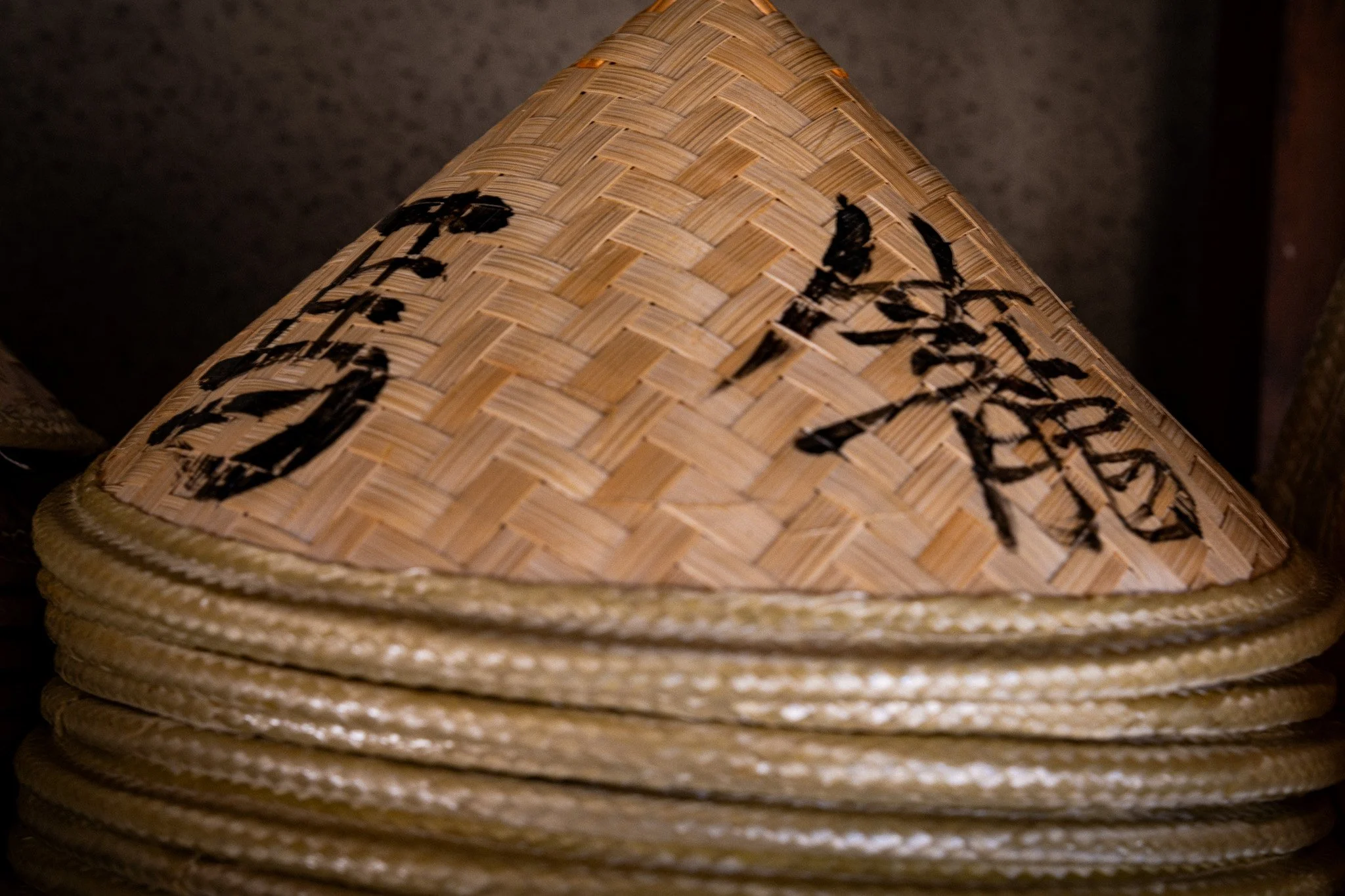
There were simply too many people.
The tranquillity, the quiet rhythm, and the sense that the place belonged only to us were no longer there.
On our previous trip — just after Japan reopened its borders following COVID — the experience had been almost the opposite. There had been very few people. In fact, during the entire walk, we only encountered two or three other couples.
It had felt like a private journey through the mountains.
This time, that feeling was gone.
Instead, we were moving through a shared experience, one shaped by constant presence of others, footsteps ahead of us and behind us, voices carried along the trail.
The same path was there, unchanged in structure, but the atmosphere had shifted completely.
And with it, so had the walk.
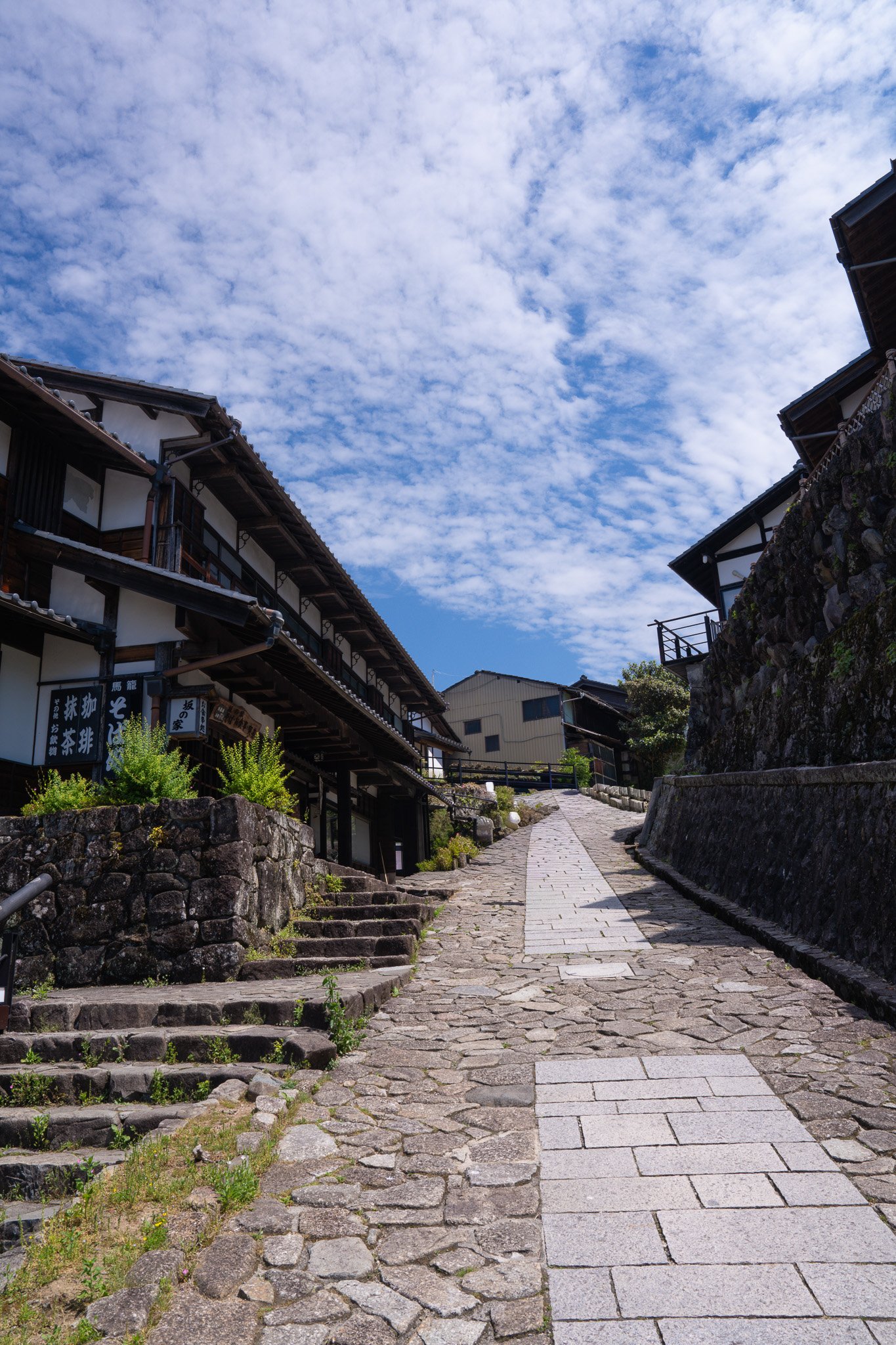
I spent some time in Magome looking for magnets and pins. I have always been an avid collector of them, small objects that quietly mark where I have been.
On the previous trip, I had missed the chance to buy any. The only physical memento I brought back was a single magnet from Tsumago. At the time, I could not find anything in Magome itself — partly because of time, and partly because I had already run out of cash. In the end, that one Tsumago magnet became the only tangible reminder that I had completed the walk, aside from photographs.
This time, I made sure not to miss it again.
After carefully choosing a few pieces and paying for them, I rejoined the group as we began our climb toward the start of the trail, passing through the village itself.
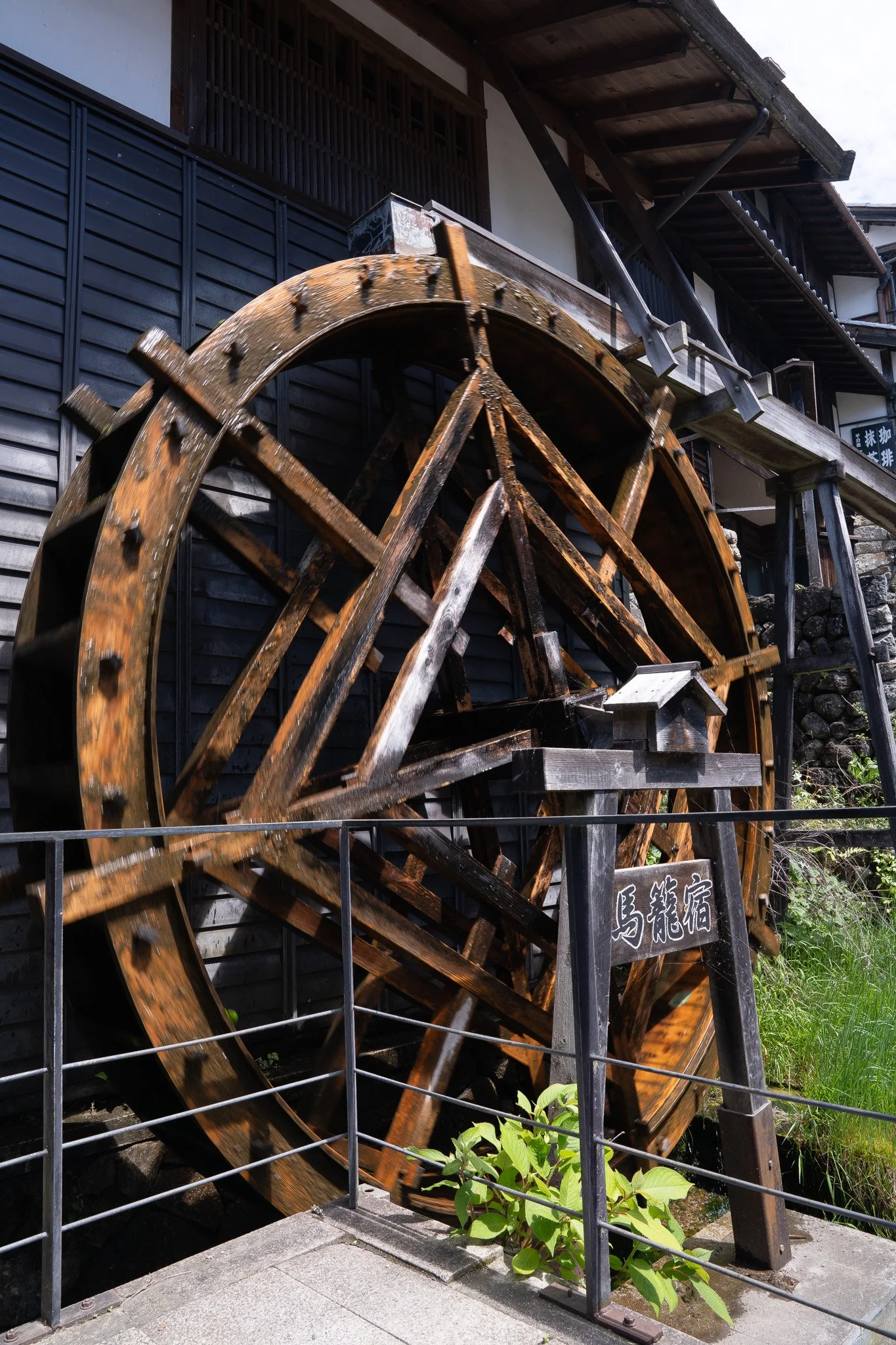
Only then did I properly notice the large water wheel — the one that has become one of Magome’s quiet icons — turning slowly as if it had always been there, waiting to be seen rather than discovered.
The weather was warm and heavy, completely at odds with the forecast that had predicted a high chance of rain.
The sky was clear.
It felt like a blessing.
We had come prepared with raincoats and umbrellas, expecting at least part of the walk to be wet. Instead, they remained packed away in our bags.
As we climbed towards the viewing platform above Magome, I found myself hoping that the crowds would begin to thin out.
On my previous visit, this was where the village seemed to end and the trail truly began. Once we reached this point, there was hardly anyone around us. Beyond the viewing area lay the start of the Nakasendo Trail, and from there we spent much of the walk in remarkable solitude.
At the time, that solitude had not been entirely comforting.
I remember hesitating before starting the walk.
The trail stretched for around eight kilometres. We had already started later than planned, and I was unsure how quickly we needed to walk to stay on schedule. I knew very little about the terrain ahead. A wrong turn or unexpected delay could easily consume the little margin we had.
What concerned me most, however, was the lack of people.
I knew Japan was safe, but the trail passed through forests and remote stretches of countryside. If one of us became injured or needed help, who would we turn to? How long would it take before another traveller came along?
Those questions lingered in my mind as we stood at the start of the trail.
In the end, we decided to continue.
We had come all this way. It seemed foolish not to.
This time, however, the situation was entirely different.
As we approached the beginning of the trail, other groups appeared around us. Some were already ahead, while others followed behind. The path carried a steady stream of walkers, all drawn by the same promise of experiencing a small part of old Japan.
The forecast had not discouraged anyone.
The solitude I remembered from the previous walk was gone.
Part of me missed it.
Yet another part recognised that this was simply a different Nakasendo from the one I had encountered before — the same path, the same mountains, but experienced in a different season, under different circumstances, and alongside many more fellow travellers.
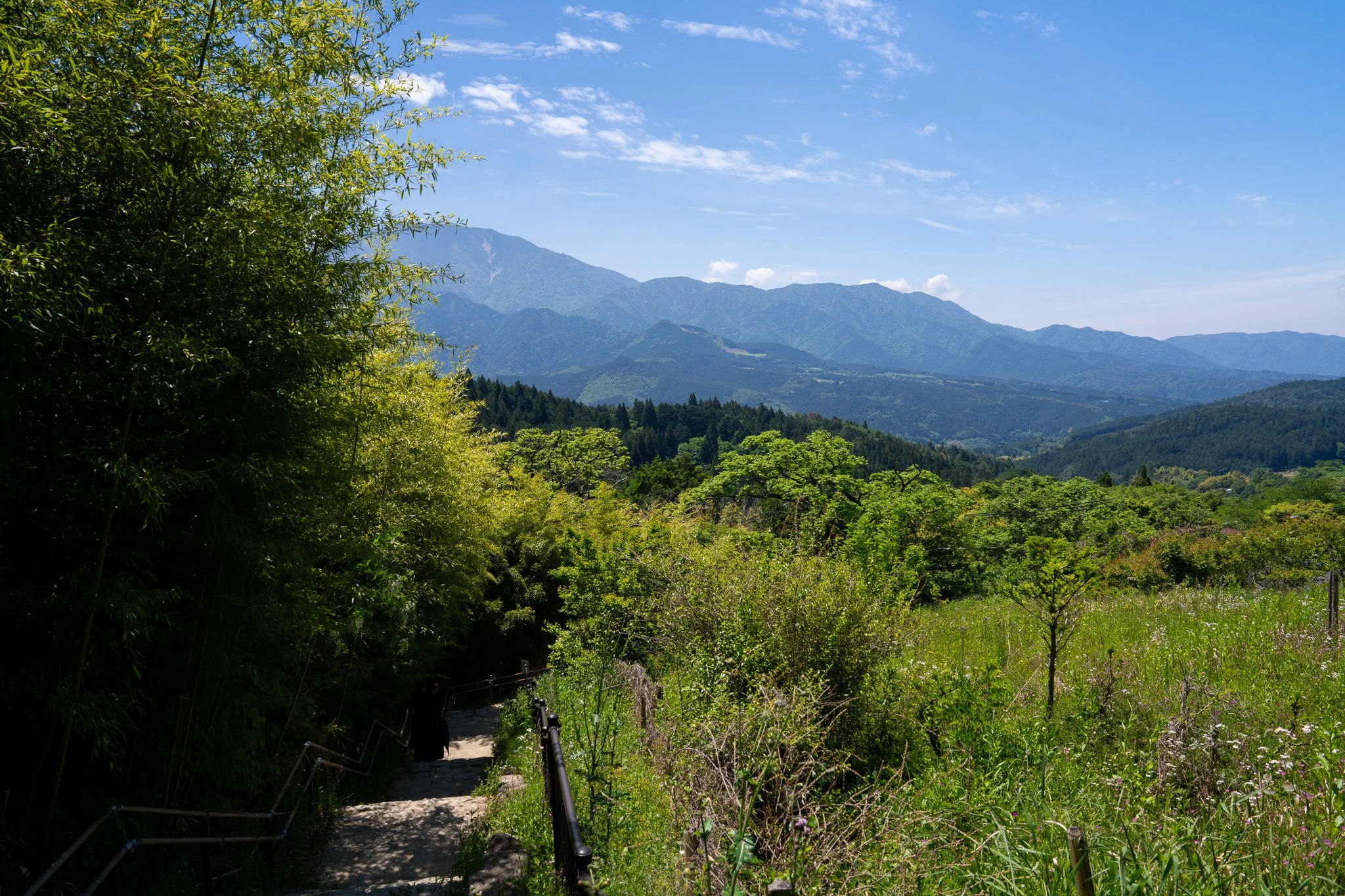
What I had not remembered was that the walk began with a climb.
Before the trip, I had confidently assured everyone that the route from Magome to Tsumago was the easier direction because it was mostly downhill.
I had completely forgotten about this part.
As the path continued upwards, the group quickly reminded me of my earlier promise. There was good-natured teasing about whether I had deliberately misled them.
I could only laugh.
Memory, I was beginning to realise, has a habit of editing out the inconvenient details.
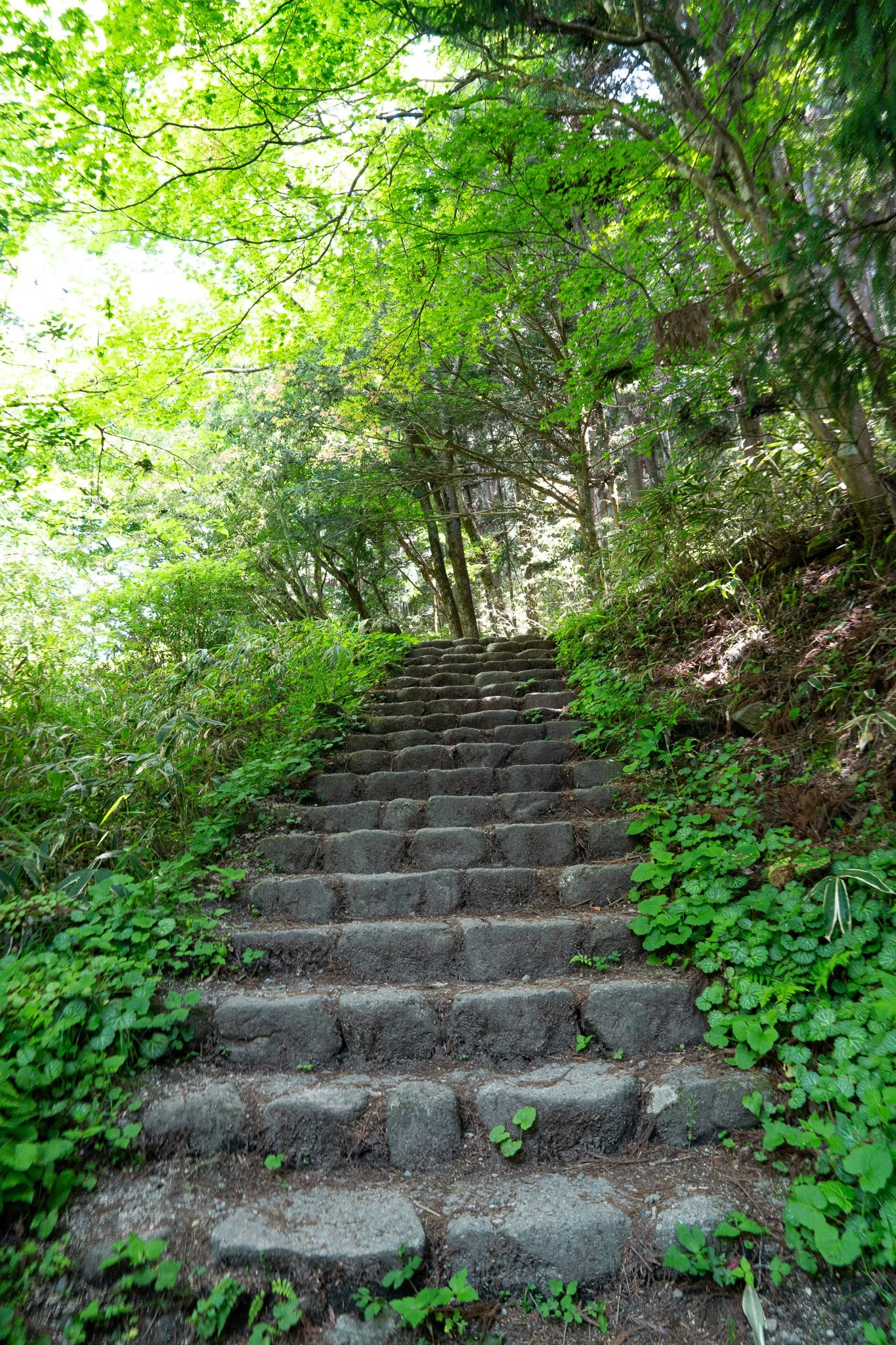
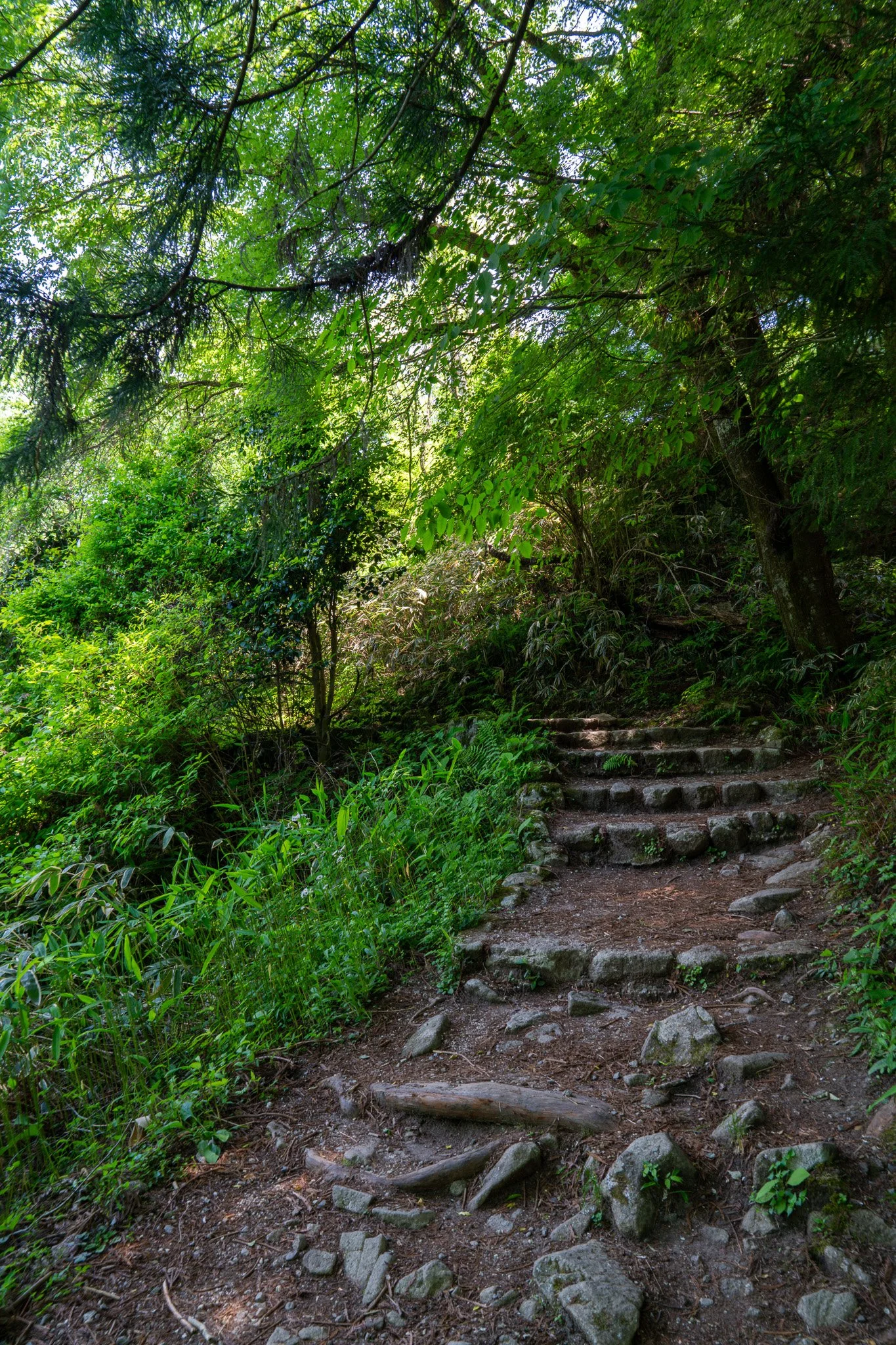
Wanting a little more space for ourselves, we tried to separate from the other walkers. Sometimes we slowed our pace and let people move ahead. Other times we walked faster to create some distance. Gradually, we found ourselves with enough space between groups to enjoy the trail in relative quiet.
And eventually, my memory proved correct.
The path began to descend.
Not long afterwards, we encountered a stream of schoolchildren coming from the opposite direction.
There were hundreds of them.
They arrived in groups, one after another, in what felt like an endless procession. The trail was narrow in places, forcing us to step aside repeatedly to let them pass.
What I remember most was their politeness.
As they walked by, many greeted us with cheerful "Konnichiwa" or "Hello."
Without thinking, we replied with a mixture of Japanese and English.
The exchange became almost rhythmic.
"Konnichiwa."
"Hello."
"Konnichiwa."
"Hello."
Although many of them looked tired, they also seemed to be enjoying themselves. After all, they were tackling the more difficult direction, with much more climbing than we were.
As the last of the students disappeared behind us, the trail entered the forest.
And immediately I noticed how different it felt from my previous walk.
This time, the forest was alive.
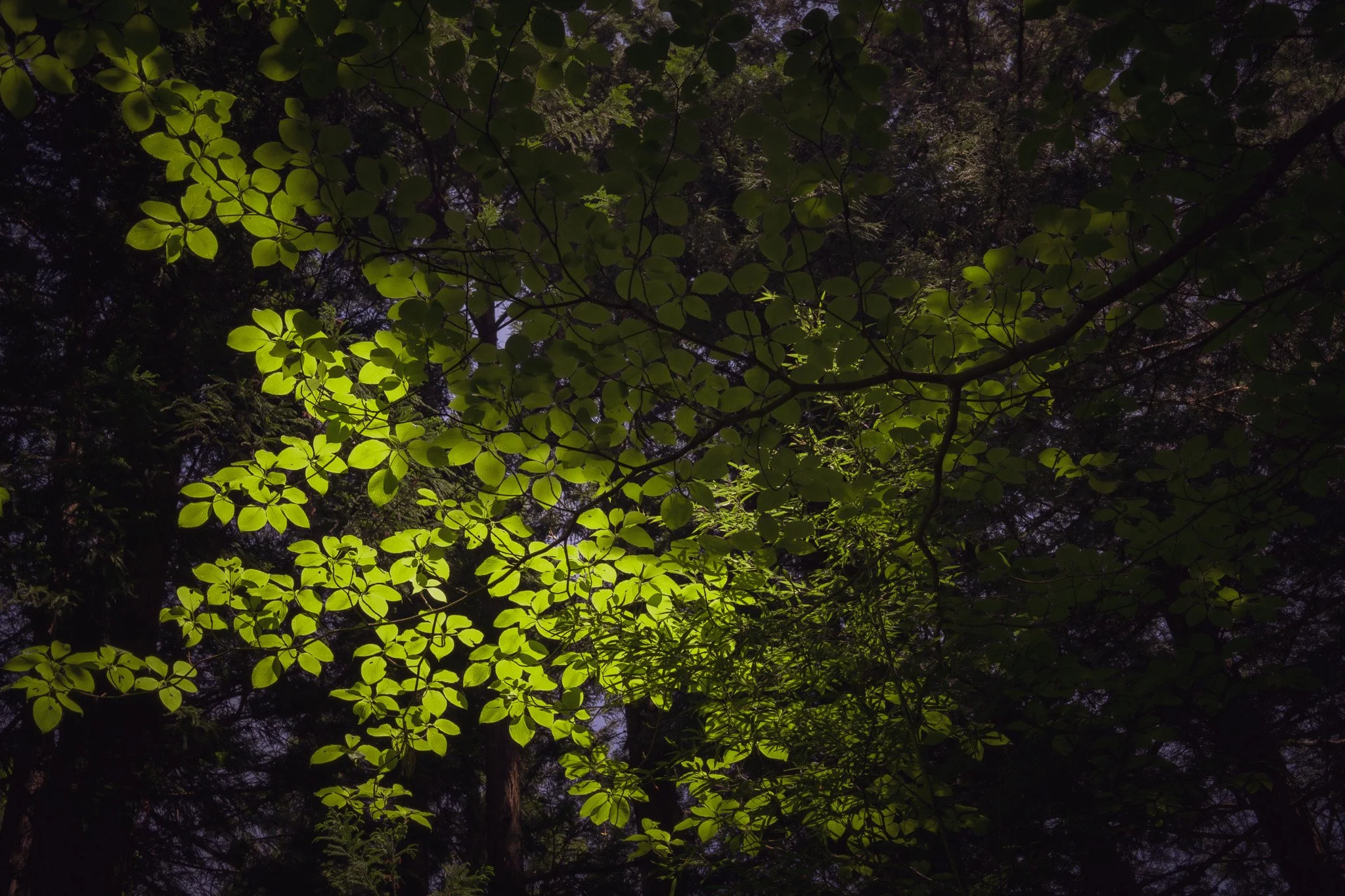
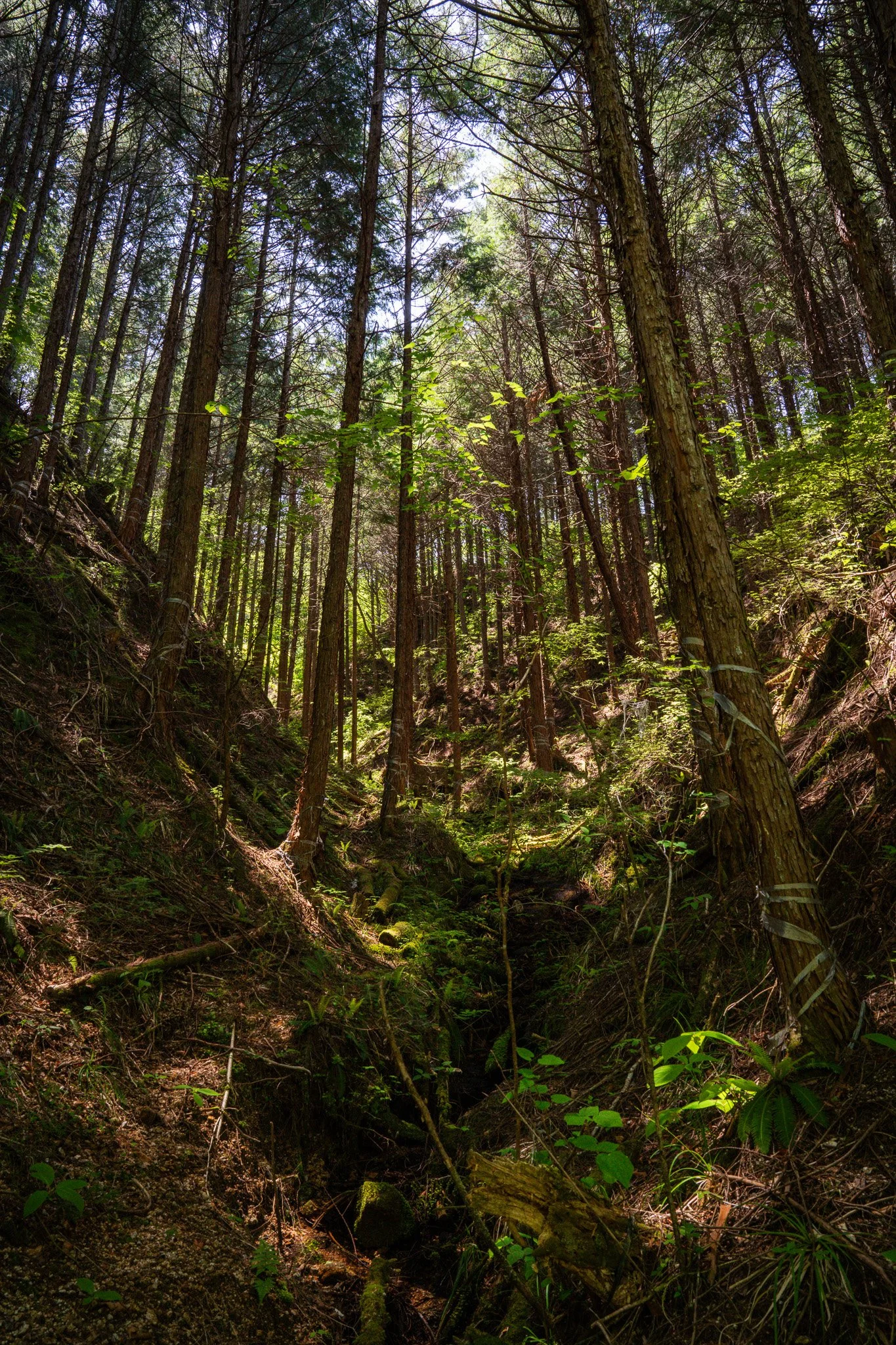
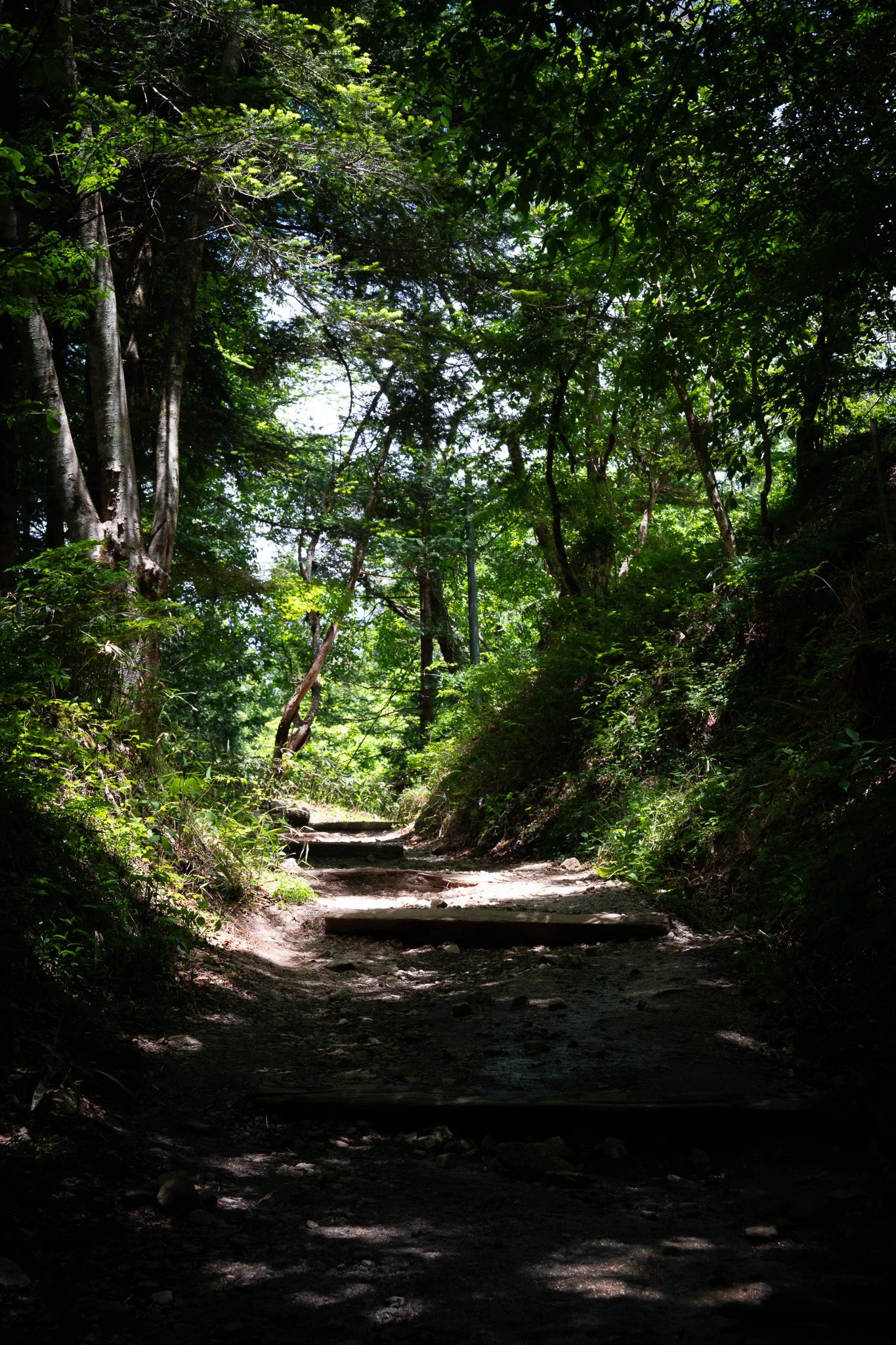
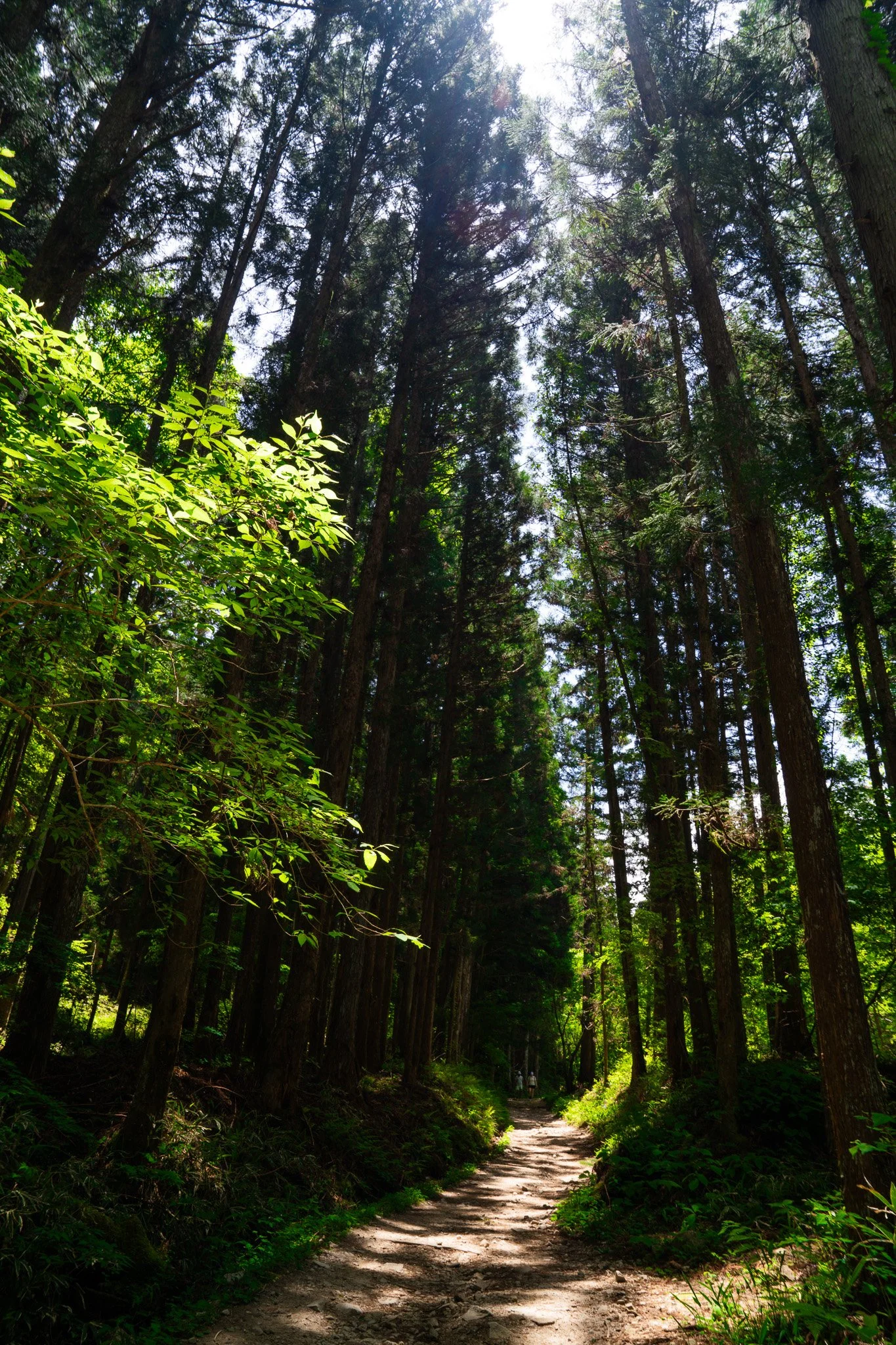
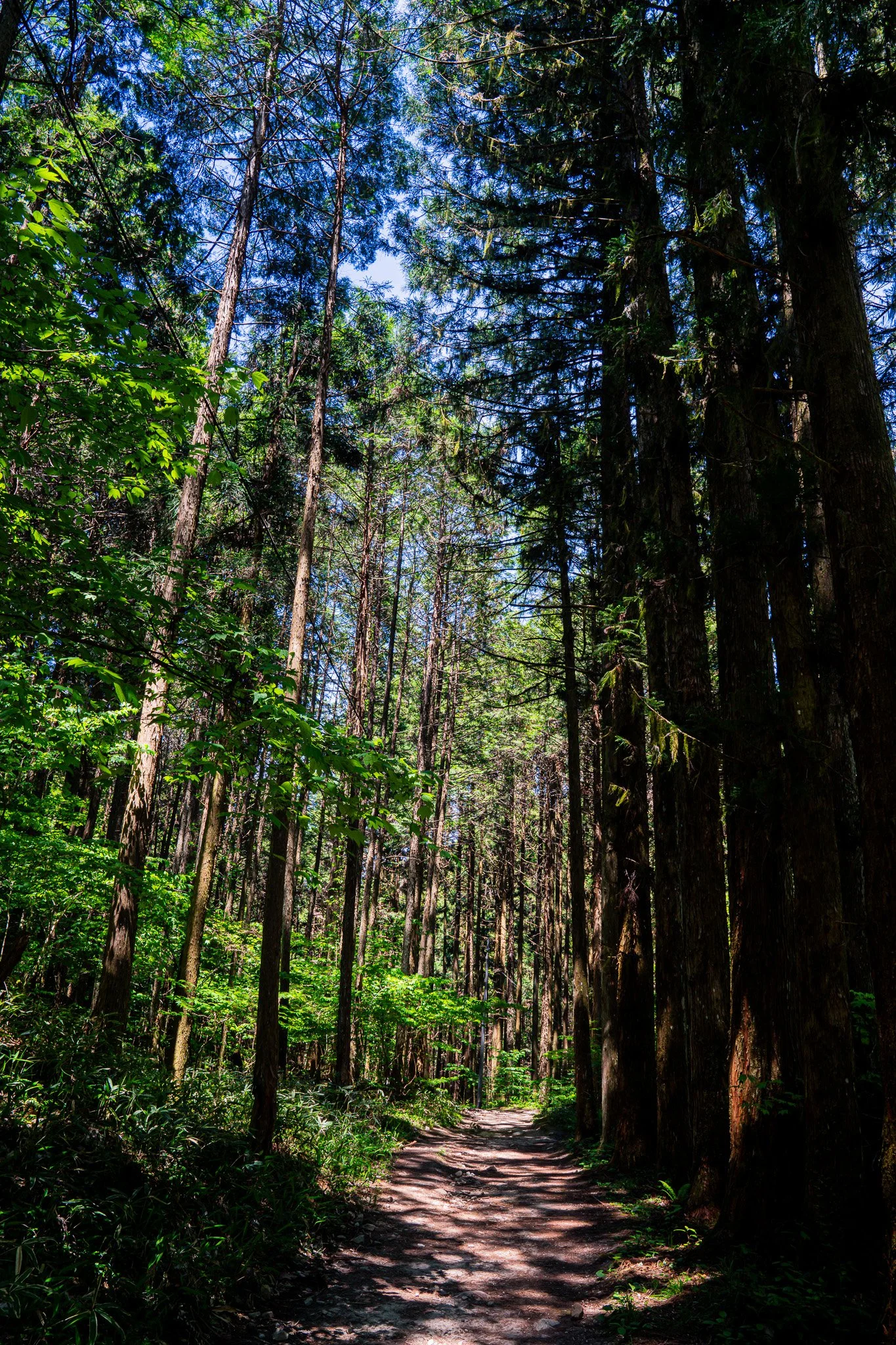
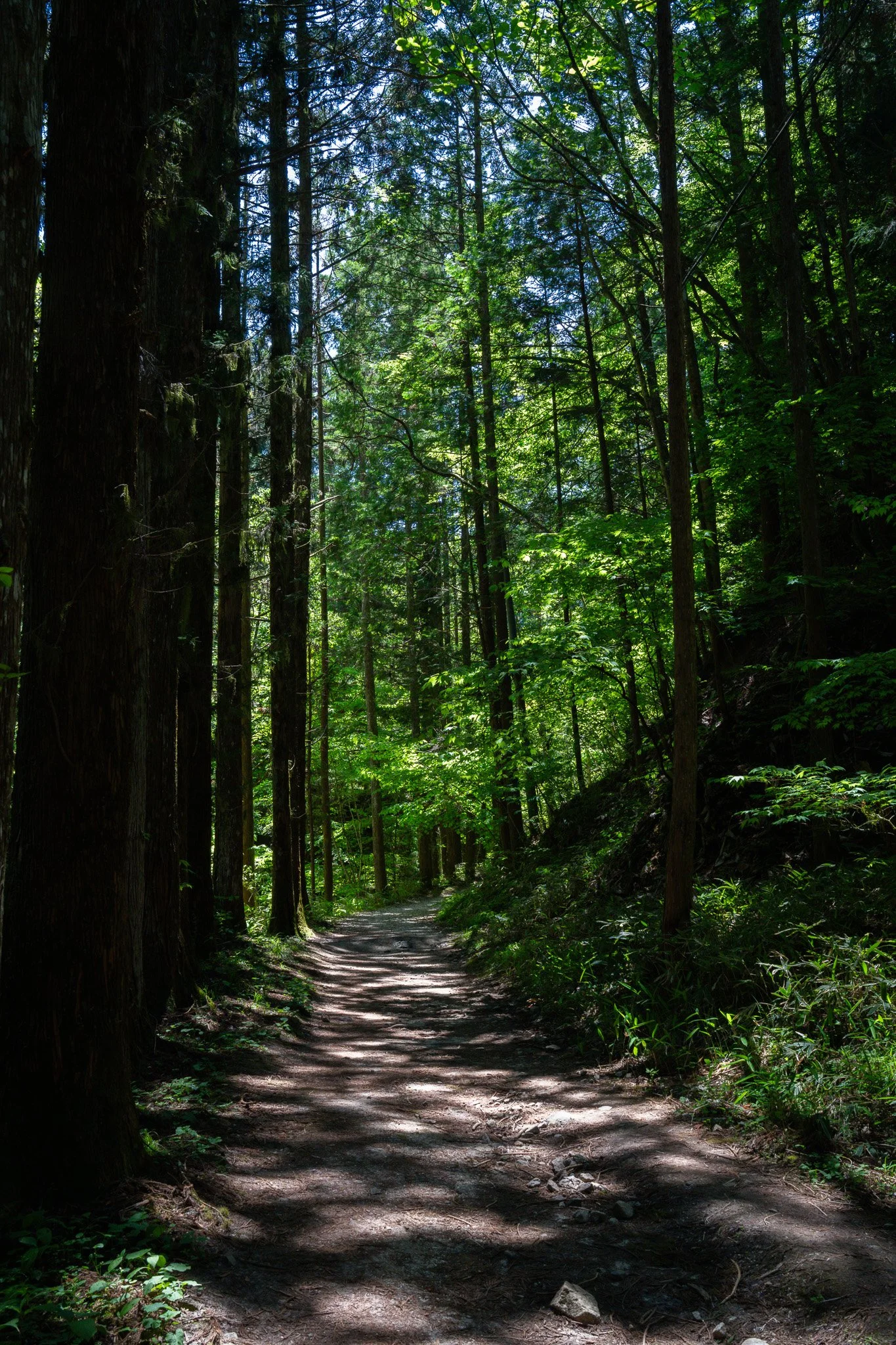
The trees were full with vibrant green leaves, their branches forming a canopy that filtered the sunlight into soft patches across the path. Birds called from somewhere above, and here and there I noticed blossoms among the foliage. The ground was dry and firm beneath our feet.
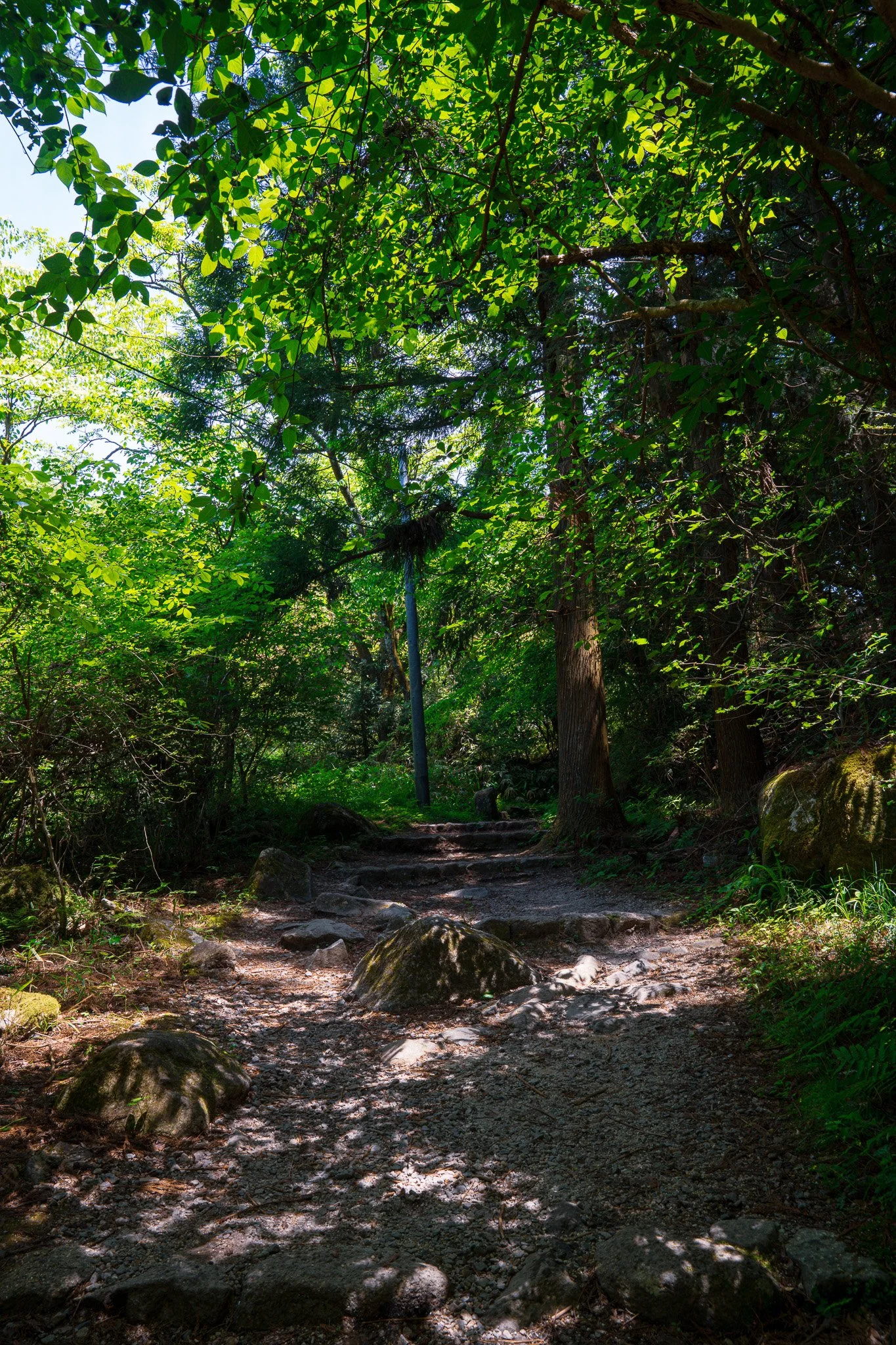
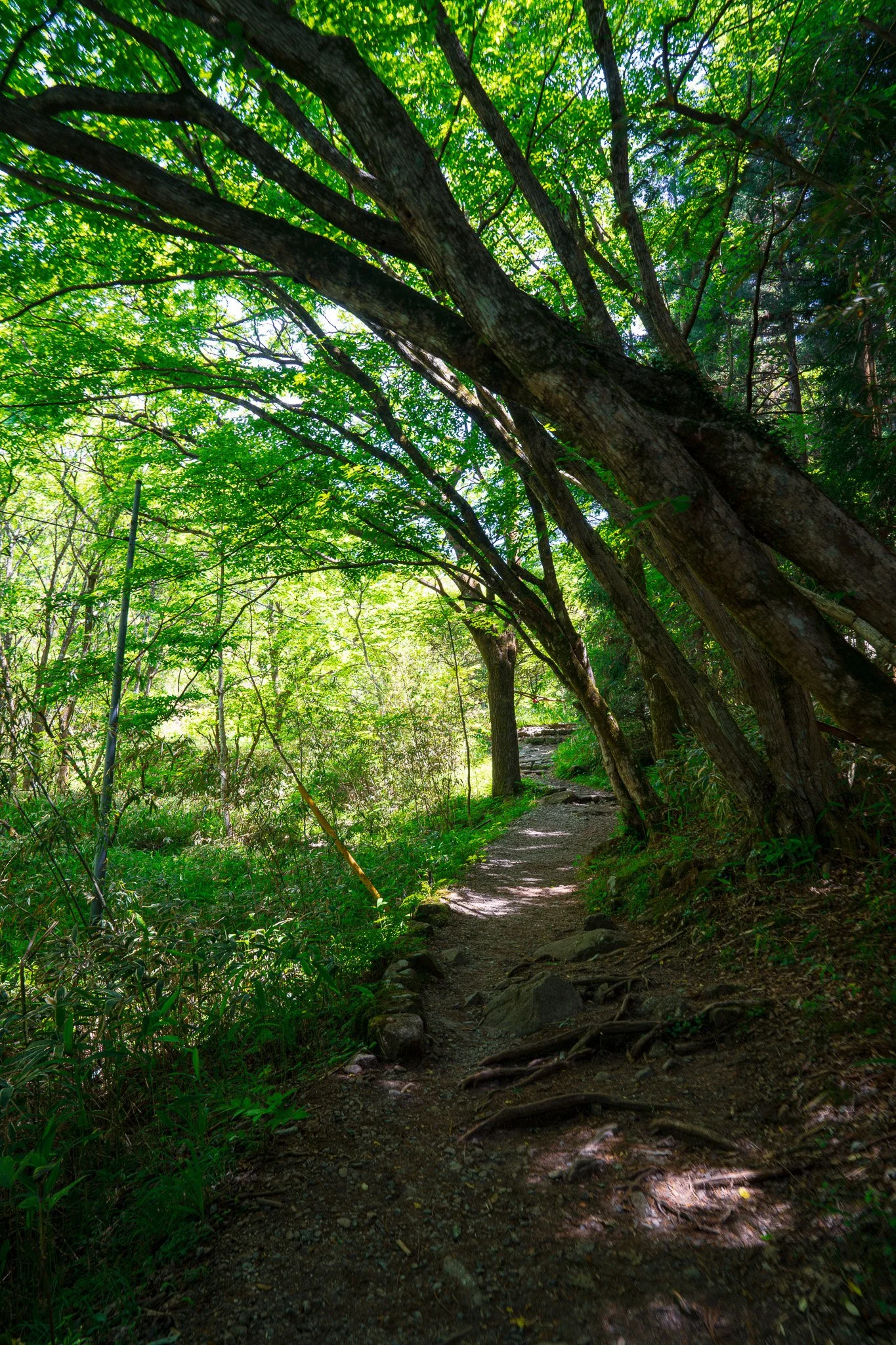
The forest felt full of movement and sound.
On my previous visit, the landscape had been entirely different.
Some trees had already shed their leaves, while others were covered in brilliant autumn colours. The ground had been damp and blanketed with fallen leaves. Every footstep produced that unmistakable rustling sound as the leaves shifted beneath our boots.
That forest had possessed a different kind of beauty.
Walking through it had felt like stepping into a painting.
Now, surrounded by fresh green growth and the sounds of spring, I realised I was seeing a completely different Nakasendo.
The trail itself had not changed.
Only the season.
Yet somehow it felt like an entirely new place.
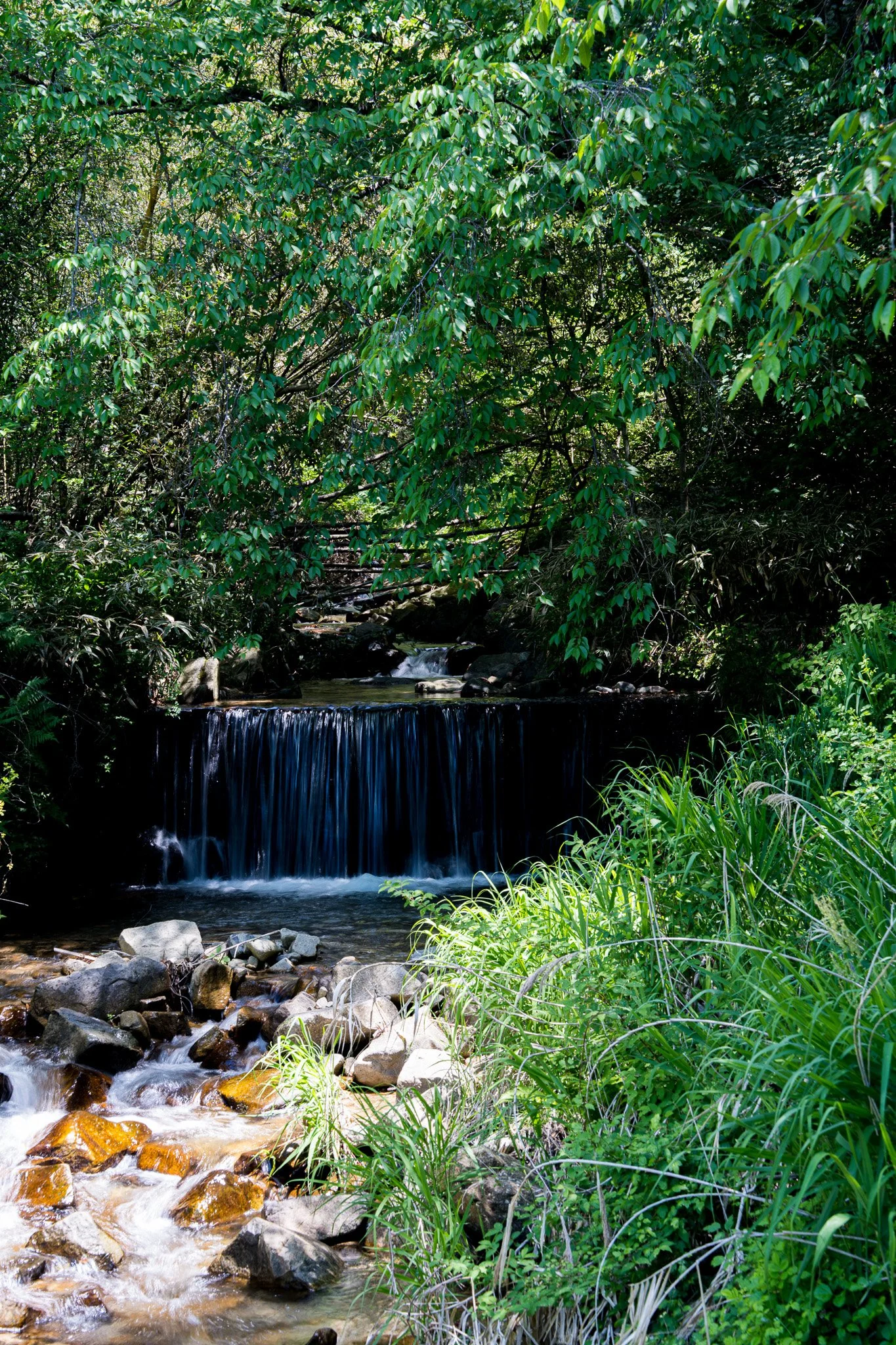
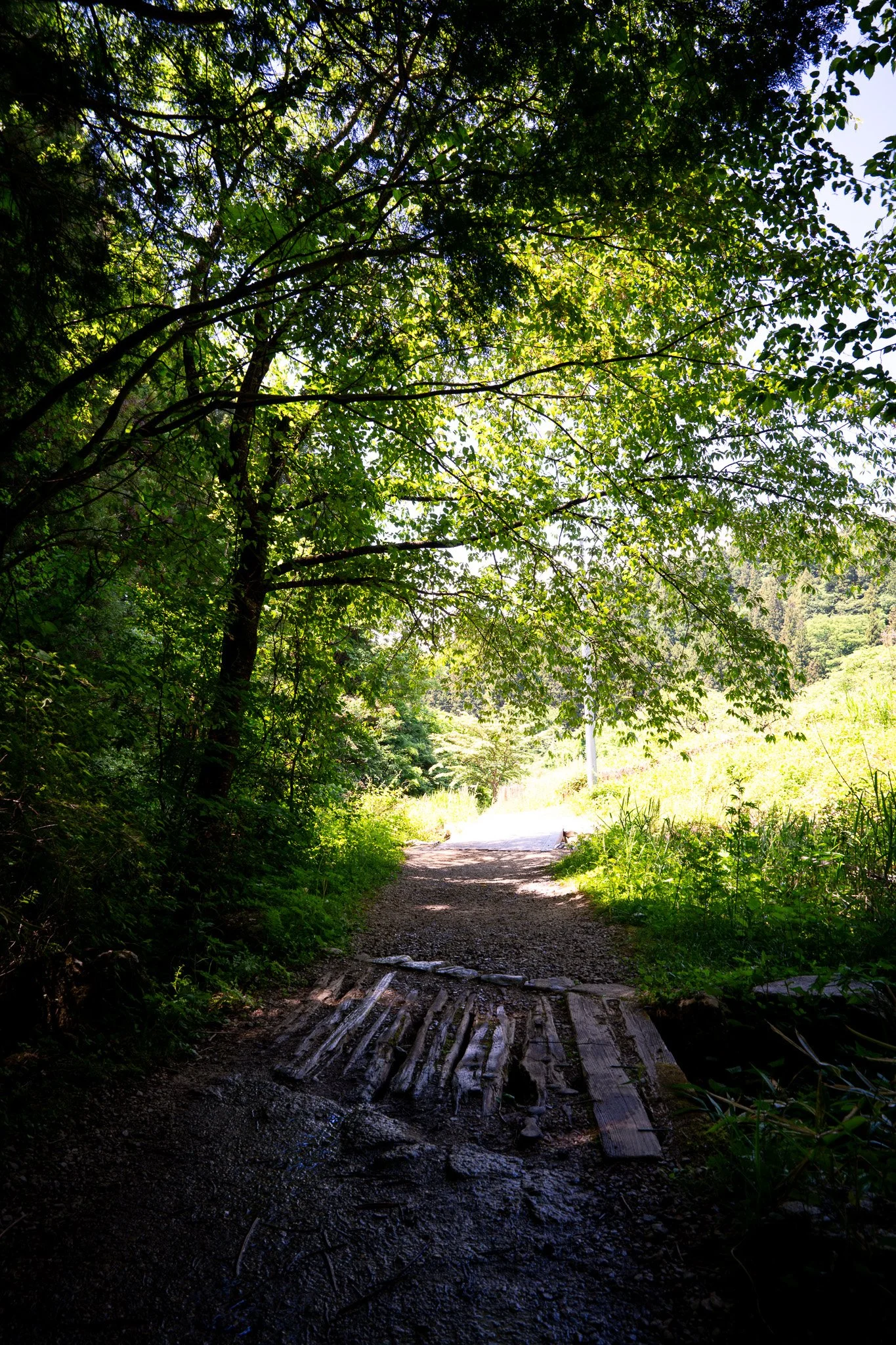
Further along the trail, we came across one of the Nakasendo's more distinctive features — the bear bells.
I remembered them immediately.
On our first walk, we had been quite amused by these bells hanging beside the trail. During all my research before that trip, I could not recall reading anything about bears. So when we encountered the first bell, we treated it more as a curiosity than a warning.
Standing alone on the trail, we gave it several enthusiastic rings.
After all, there was nobody around to be disturbed by the noise.
Well, nobody except perhaps the bears.
This time felt different.
Before the walk, several members of our group had come across warnings about increased bear activity in the area. The warnings were discussed more than once, and some took them seriously enough to prepare. My partner was one of them. She bought a small bell and a whistle specifically for the walk.
Even so, when we reached the large trail bell, we could not resist ringing it.
Some habits survive repeated visits.
As we continued walking, my partner and I found ourselves constantly comparing the trail before us with the one preserved in our memories.
The conversation became a running commentary.
"Remember this section? This was where we started walking faster to make up time."
"Oh yes, and I think we stopped around here to catch our breath."
"I remember this path. It was covered in autumn leaves."
"I don't remember this at all."
"Did we pass this last time?"
"How could I have forgotten this?"
The walk became an exercise in memory as much as a hike.
Each bend in the trail presented another opportunity to test what we remembered against what was actually there.
It reminded me of those memory card games where you briefly see an image, hide it away, and then try to recall where it belongs. Except this time the cards were pathways, trees, stone markers, and old wooden buildings.
Sometimes our memories matched perfectly.
Other times they failed completely.
What fascinated me was not what we remembered, but what we had forgotten.
Places that had seemed unforgettable had vanished from memory, while tiny details — a particular bend in the path, a patch of forest, a place where we had stopped to rest — remained surprisingly vivid.
The trail itself had become a collection of remembered fragments, and with each step we were slowly fitting those fragments back together.
It was a surprisingly enjoyable game.
And with every match, another good memory from the previous walk resurfaced.
One thing that surprised me when I first walked the Nakasendo Trail was that it was not entirely a walk through nature.
From photographs, it is easy to imagine a continuous forest path stretching from Magome to Tsumago. The reality is more varied. At several points, the trail emerges from the forest and crosses roads before disappearing back into the trees again.
The roads themselves are not unpleasant, but they interrupt the illusion of being immersed in nature.
The forest sections felt different.
The paths were narrow and intimate, winding through landscapes where the surrounding vegetation seemed largely undisturbed. Although the trail itself was clearly man-made, it felt as though it belonged to the landscape rather than cutting through it.
One particular crossing stood out in my memory.
On our previous walk, we arrived at a road and became completely unsure of where to go next.
We searched for signs of the trail continuing through the forest but could not find any. Eventually, we crossed the road to examine a small sign more closely.
It displayed the kanji for Tsumago alongside English text and an arrow pointing further along the road.
The direction made little sense.
Just a few metres away, another path disappeared invitingly back into the forest.
Naturally, we assumed that must be the Nakasendo.
Yet the sign was pointing the other way.
We stood there trying to make sense of it.
Had the trail really left the forest and become a road walk? Or were we misreading the sign?
For several minutes we remained undecided.
Fortunately, luck intervened.
Another couple arrived from behind us.
To our relief, they looked just as confused as we were.
After a brief discussion, we collectively decided to trust the sign. If it proved wrong, we could always return and try the forest path instead.
So we followed the arrow.
A short distance later, another sign appeared, this time directing us back into the forest.
The mystery was solved.
The trail had merely taken a brief detour along the road before continuing where we had expected it to.
At the time, we were relieved more than anything else.
We still had a schedule to keep, and after exchanging farewells with our brief walking companions, we increased our pace and soon left them behind.
This time, however, there was no hesitation.
When we reached the same crossing, the memory returned immediately.
Without discussion, we knew exactly where to go.
For the first time that day, I realised that I was no longer rediscovering the trail.
In small ways, I was guiding others through it.
The uncertainty that had accompanied our first walk had quietly been replaced by familiarity.
Not complete familiarity—there were still surprises waiting ahead—but enough that when the path forked, I no longer needed to wonder which direction to take.
Before long, the distance markers to Tsumago began attracting attention.
Someone stopped at one of the signs and exclaimed in surprise.
"Only 2.2 kilometres?"
It was true.
We had not travelled very far at all.
The reaction made me smile because I remembered feeling the exact opposite on my first walk along the Nakasendo.
Back then, every distance marker was a reminder that we needed to move faster. We were racing against bus schedules and train connections, constantly calculating whether we would arrive on time. When we saw how many kilometres remained, we never thought about how far we had already walked. We thought about how much time we still needed to save.
The trail became a problem to solve.
This time, there was no urgency.
We stopped for photographs. We paused to admire views. We lingered beneath the trees and spent time noticing details that would have escaped our attention before.
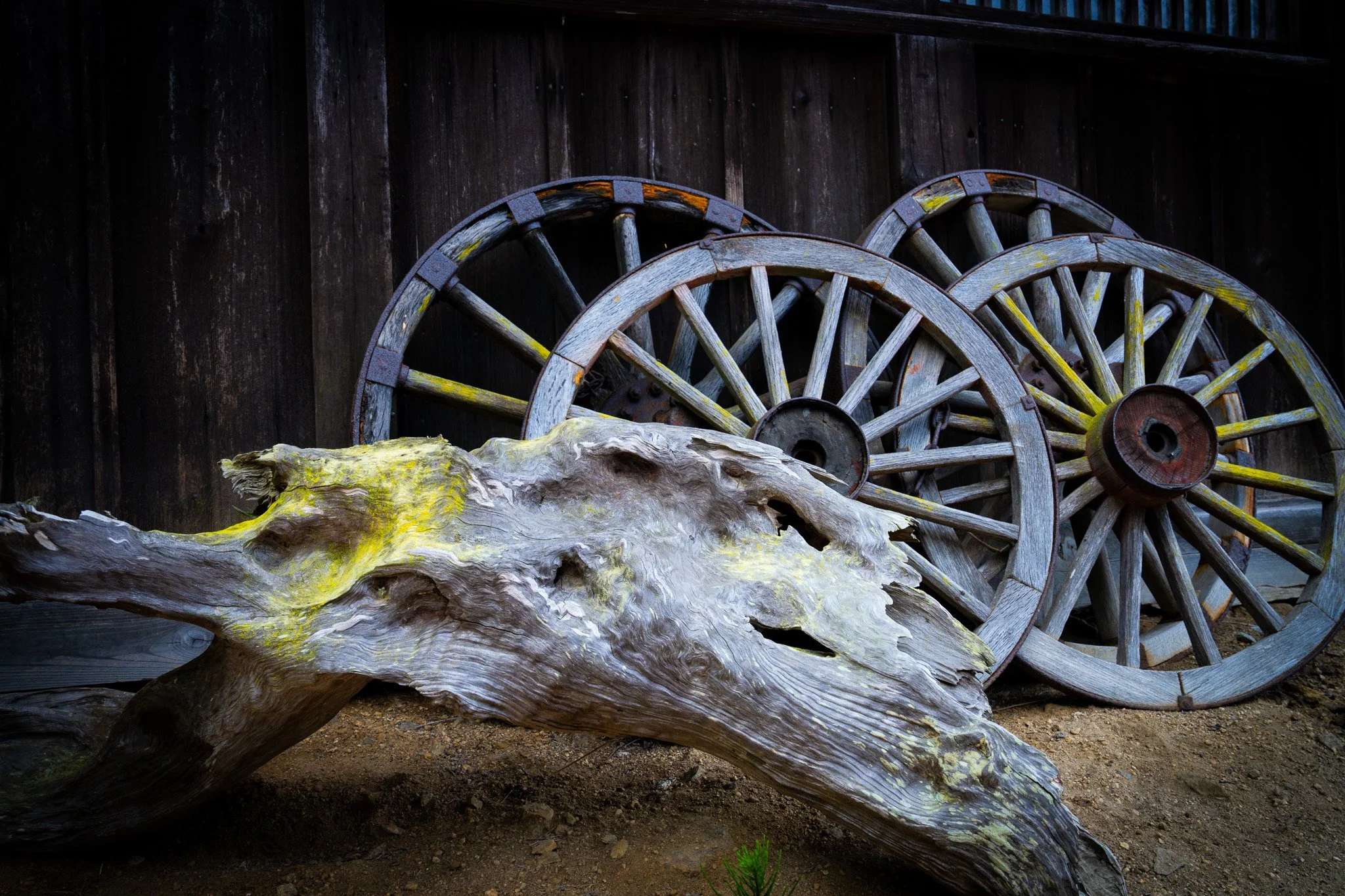
As a result, the distance felt more noticeable.
The trail had not changed.
The kilometres were exactly the same as they had always been.
What had changed was us.
When travelling under pressure, the mind focuses on the next task. Distance becomes secondary to the objective. But when time is abundant, you begin to feel the journey itself. Every kilometre has a presence. Every bend in the path takes up space in your awareness.
It was a reminder that the same walk can feel entirely different depending on what you bring to it.
The first time, we were trying to reach Tsumago.
This time, we were simply walking.
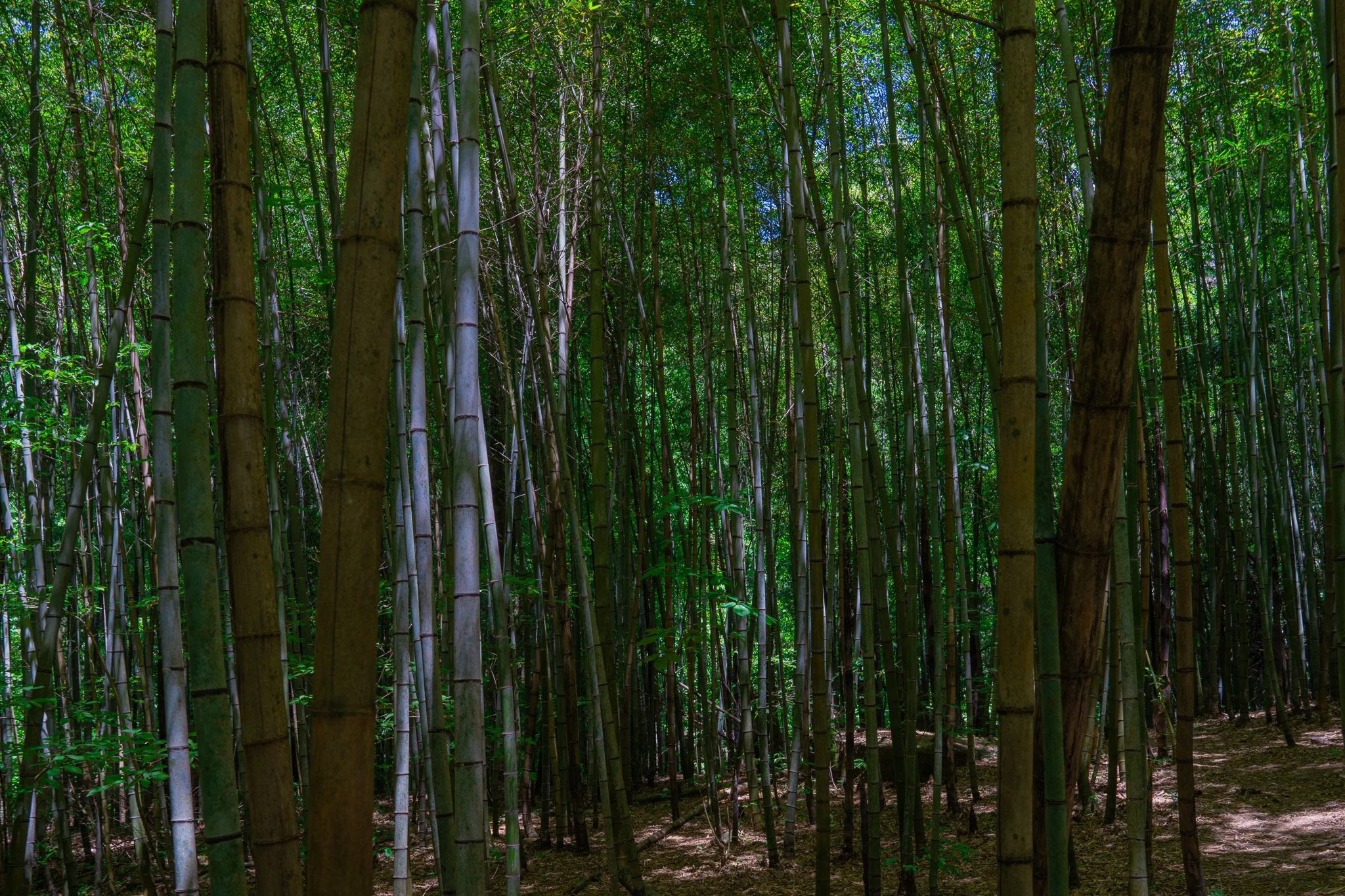
I reassured the group that we would know when we were halfway along the trail. There would be a tea house.
It had become something of a landmark on the Nakasendo — a resting point where hot tea was offered freely to walkers. In return, visitors could leave a small donation to help keep it running for those who came after.
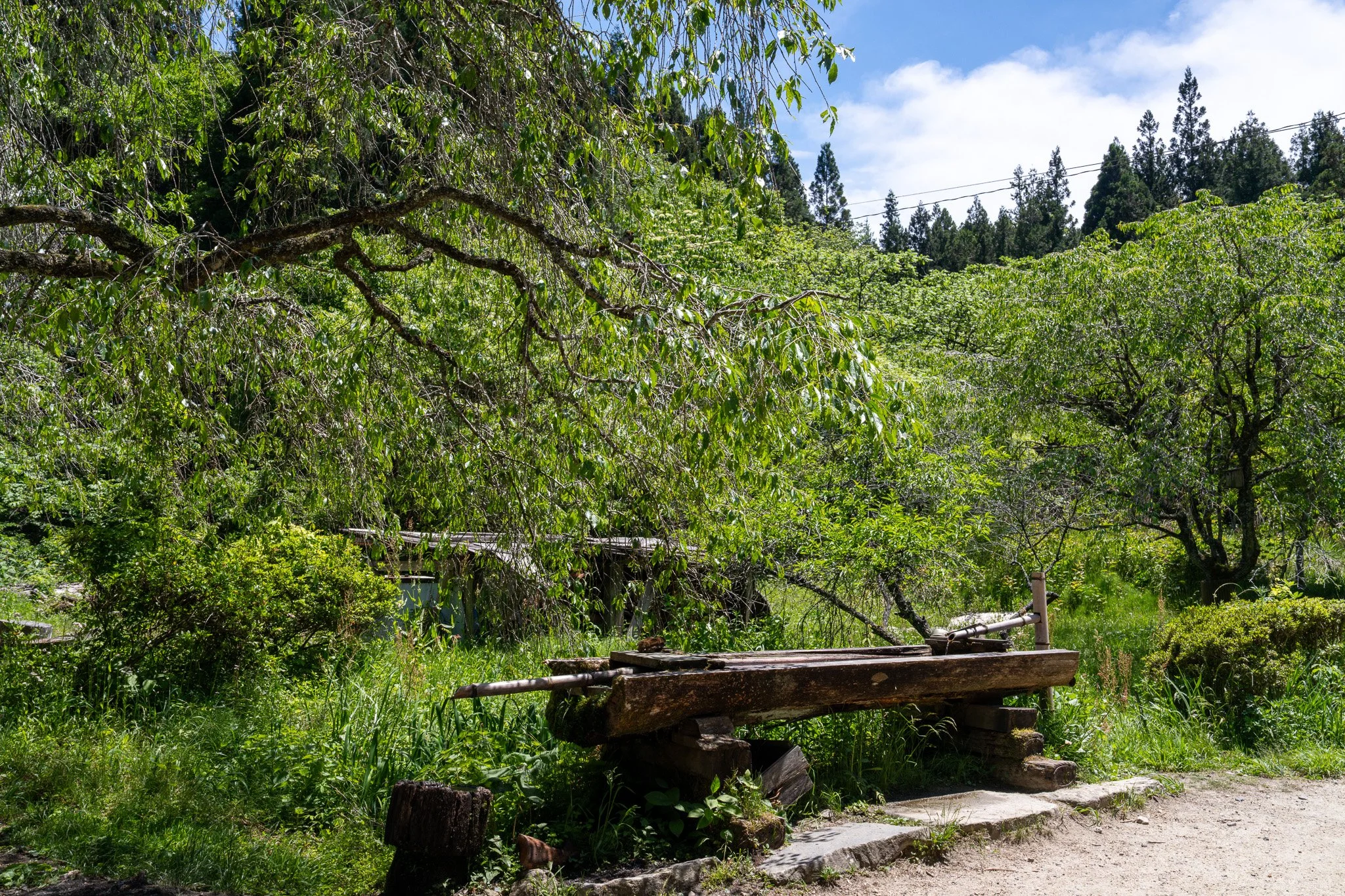
When we arrived, however, it was far more crowded than I remembered.
Most of the seats inside were already taken, so after receiving our cups of hot tea, we ended up sitting outside. That was fine — the weather had turned warm enough that the shade was welcome rather than necessary.
Still, it felt different from my previous visit.
There was none of the quiet intimacy I remembered. We were just one of many small groups passing through, briefly pausing before continuing on.
The tea house keeper greeted us warmly and immediately began preparing fresh tea. He lit the traditional fire and, as he worked, explained how the tea was brewed in the old way.
It was a simple gesture, but generous in its patience.
After serving us, he sat nearby and joined in light conversation, as if we were old friends who had simply stopped by on a familiar path.
What stayed with me was not just the tea itself, but the way the space functioned — not as a café or a stop, but as a shared pause in the journey.
A place where strangers met briefly, were looked after, and then continued on their way.
It was a surprise to see so many people at the tea house. Yet, once we continued along the trail, we found ourselves mostly alone again.
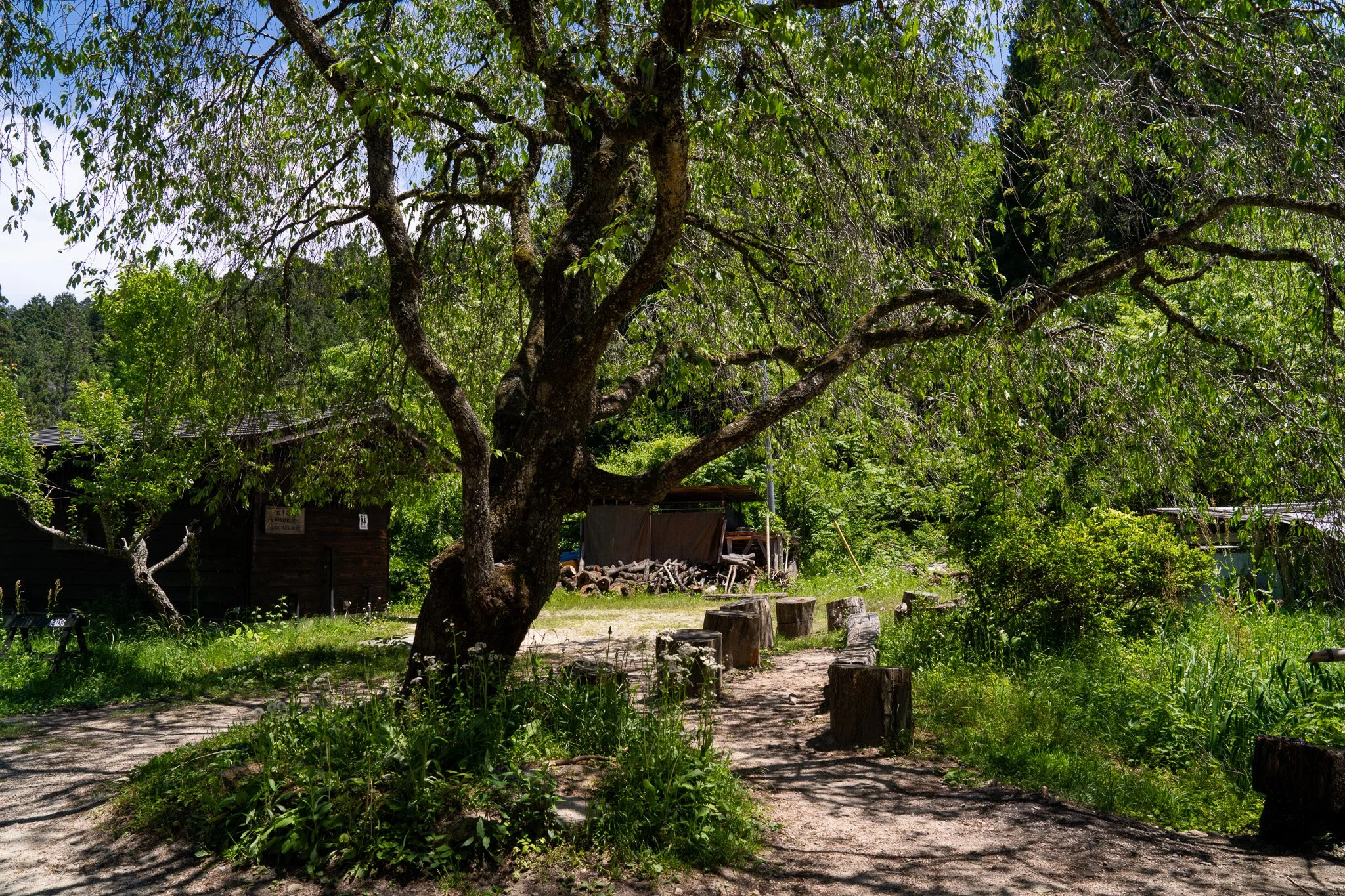
The rhythm of the walk returned to something quieter.
At one of the road crossings, my partner turned to me and said, “Remember, we had to detour here last time because of a road block?”
I tried to recall it, but nothing came immediately. Still, I trusted her memory.
And she was right.
As we stood there, fragments of the previous walk began to return — the waterfall we had encountered unexpectedly, a highlight that had felt like a hidden reward along the trail.
This time, a sign indicated that the waterfalls were about three kilometres away in another direction.
There were several listed, each requiring a separate detour. I could not remember which one we had seen before, only that it had appeared unexpectedly rather than through any planned diversion.
But looking at the distance now, it felt too far to justify the deviation.
No one in the group was particularly eager to detour.
So we continued straight on.
Further along, we crossed a series of small creeks connected by narrow bridges.
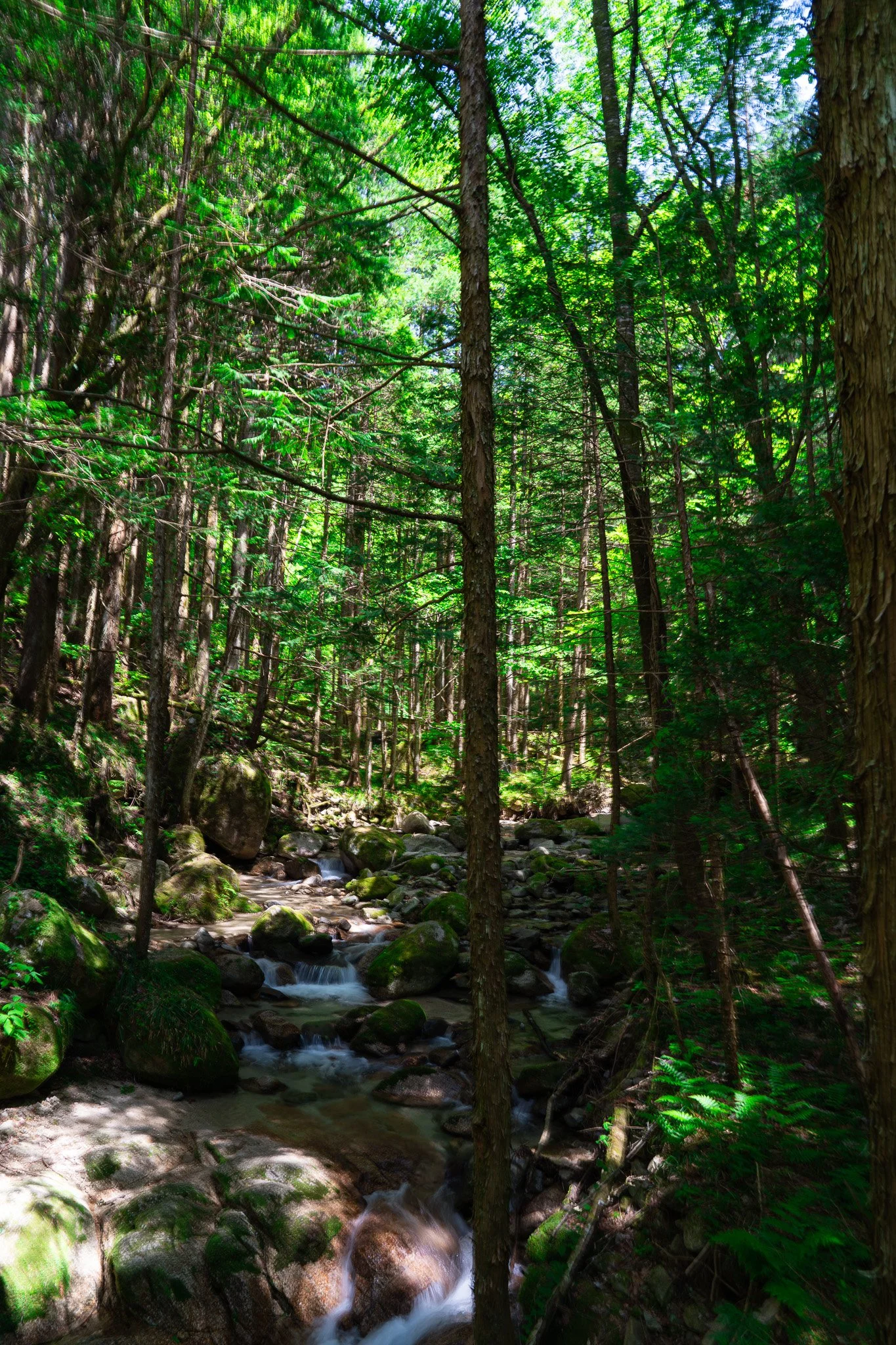
On one of them, my partner paused again.
“I took a photo here before,” she said.
She showed me her phone — the same bridge, captured years earlier.
The difference was immediate and striking.
In her photo, the bridge was framed by autumn leaves, the trees rich with colour, the scene warm and dense with seasonal change.
Now, everything was green and open. The trees had shed the weight of autumn, and the landscape felt lighter, almost exposed in comparison.
Standing there, I realised we were not just revisiting a trail.
We were revisiting versions of it.
Each season holding a different memory of the same place, each walk revealing a different layer of the same path.
It felt meaningful that my partner and I could complete each other’s memories — filling in the gaps where one of us had forgotten, the other still remembered.
That, I realised, is one of the quiet strengths of travelling with someone close. Not just someone who shares your interests, but someone who carries parts of your experience that you no longer hold clearly yourself. Someone willing to move through unfamiliar places with you, without always needing certainty about where it leads.
As the Nakasendo walk drew to its end, I found myself thinking about how fragile memory really is. Not in the sense of being unreliable, but in the sense that it is never complete in isolation.
So I wondered: if all six of us were to walk this same trail again, following the exact same route, what would remain the same?
Which moments would align across all of us, and which would exist only in fragments — remembered vividly by one person, but barely at all by another?
Would we agree on what the journey was, or would we discover that we had each walked a slightly different Nakasendo, shaped not only by the path, but by attention, fatigue, timing, and company?
And perhaps more interestingly, what would we say to each other in the gaps between those memories?
In the end, I began to think that the trail itself was not just the path between Magome and Tsumago.
It was the space between our memories of it — where shared experience quietly separates, and then reappears differently in each of us.
Eventually, the trail gave way to ordinary movement again.
The forest thinned, the signs reappeared, and the rhythm of walking slowly shifted from observation back to transition — from being on the path, to moving beyond it.
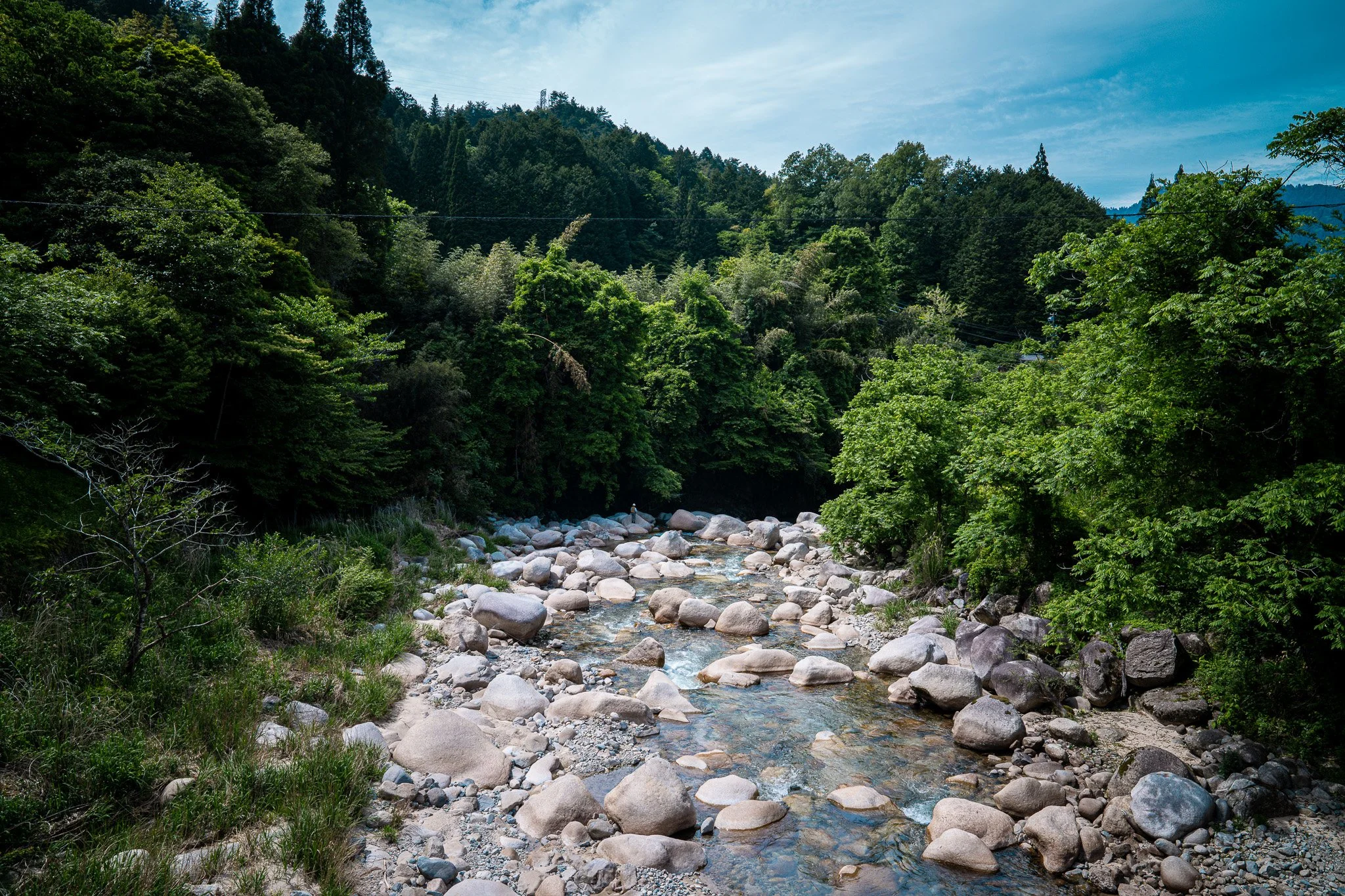
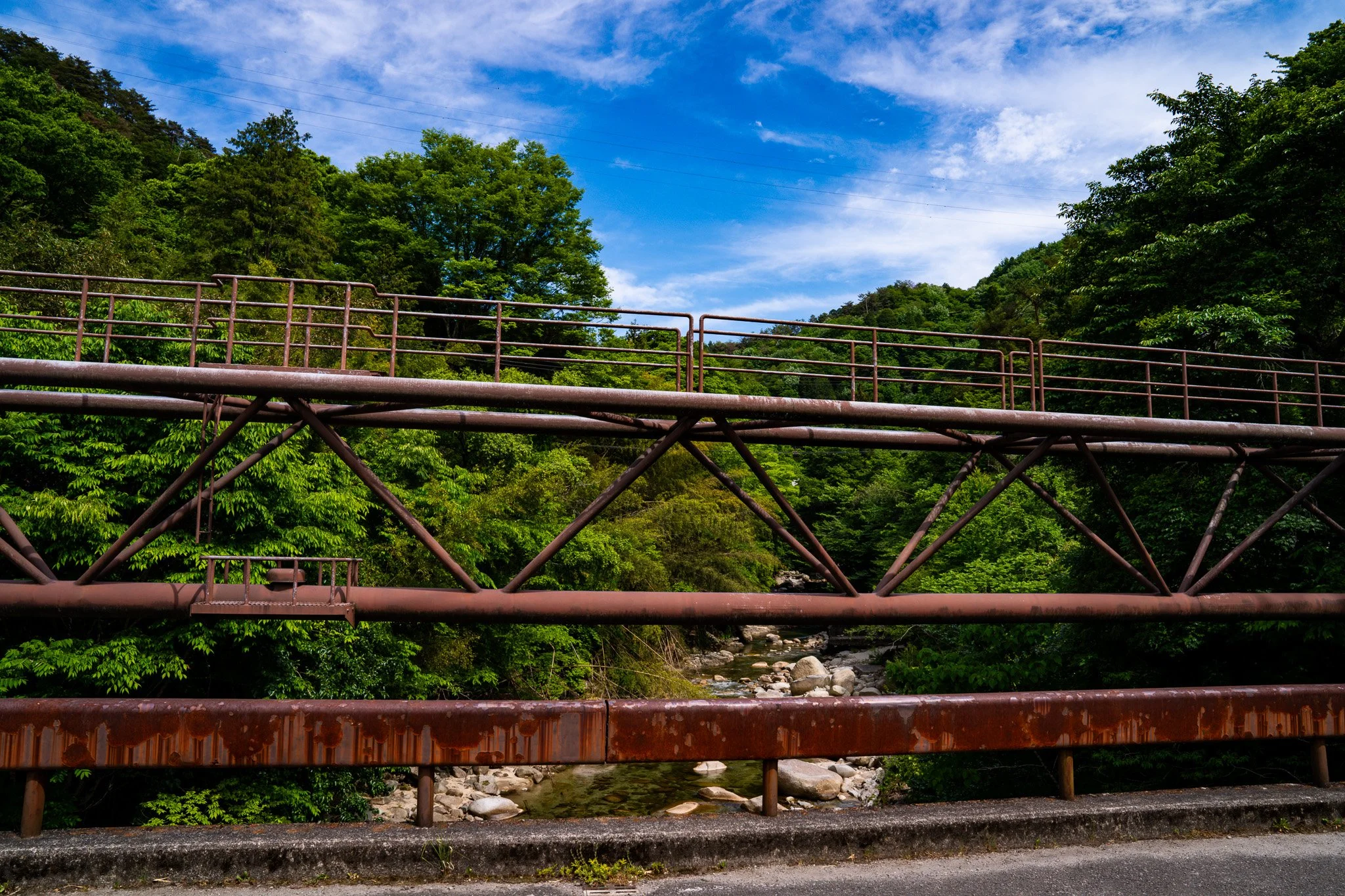
We would spend a night in Nagiso, a small town we had only briefly passed through, but one that still felt like it held more than what we had seen. Perhaps one day we would return again — hopefully all six of us, retracing not just the route, but the experience itself.
From there, the journey would gradually turn back towards Osaka, where the structure of the trip would begin to change once more. The group would soon separate, each of us heading towards different endings — Tokyo for some, Osaka and then home for others.
But for now, we were still together.
Still moving through the same stretch of time, still sharing the same direction, even as the meaning of the journey quietly began to diverge for each of us.
The Nakasendo walk would remain behind us — not as a finished chapter, but as something that continued to echo softly as we moved forward, shaping the way we would remember everything that came after.
We reached the Tsumago bus stop just as the queue began to stretch. By the time the bus arrived, it was the same as that morning — no seats available, only standing space. It was almost ironic how the pattern repeated itself within a single day, as if the journey had its own quiet symmetry.
From Tsumago, we were dropped back at Nagiso Station.
By then, hunger had settled in more sharply than fatigue. We had not packed a proper lunch — only a few sweets and some gum — enough to delay hunger, but not enough to satisfy it.
We spotted a small café nearby and went in quickly, hoping for something simple. But the menu did not appeal to us, and after a brief look, we decided to leave.
Instead, we followed a suggestion from the owner of the house we would be staying in that night: a nearby mini supermarket, where we could buy ingredients and cook for ourselves. She had recommended the wagyu beef.
The idea was simple enough, and it felt right.
We bought a few hundred grams of beef — surprisingly reasonable in price, even cheaper than what we would expect in Australia or in a restaurant in Japan. To go with it, we picked up instant noodles and half a wombok, keeping everything deliberately uncomplicated.
Back at the accommodation, the meal came together without effort.
When the beef hit the pan, it sizzled loudly, almost like a signal that the day was finally slowing down. The marbled fat rendered immediately, releasing oil that carried its own aroma across the small kitchen. A light dash of salt was all it needed. I did not want to interfere with the taste — only to let it be itself.
Cooking it felt like a privilege.
Eating it felt like a quiet blessing.
The meat was tender, rich, and deeply satisfying without being heavy. It was one of the simplest meals of the trip, yet also one of the most memorable.
The next morning, Nagiso offered us a farewell gift.
Mist had wrapped itself around the mountains, softening their edges. From inside the small house, we watched the landscape slowly reveal itself — not in a rush, but in layers, as if the day itself was choosing when to begin.
It was a quiet morning.
And a gentle ending to the trail.