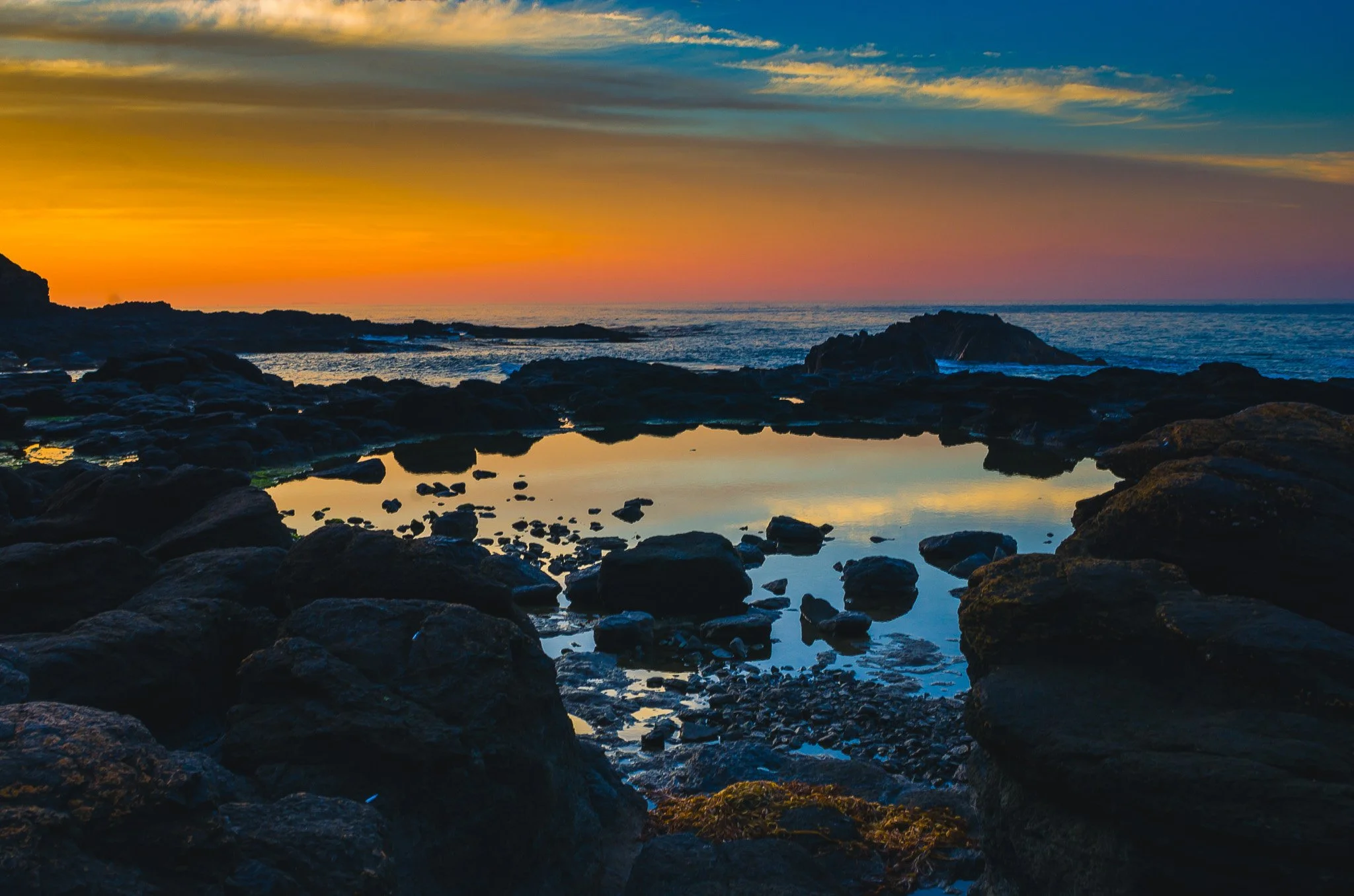
Where the Morning Kept Its Secrets
A pre-dawn journey to Flinders Blowhole unfolds into a morning of mirrored rock pools, hidden coastal formations, and quiet discoveries. From still reflections to the secluded natural arch beside Dragon Head Rock, the Mornington Peninsula reveals its beauty only to those willing to slow down.
It was a Saturday morning in late summer, long before the sun had stirred. I had set my alarm with one purpose: to reach the Mornington Peninsula before dawn and watch the first light slowly claim the sky.
Choosing where to go was never easy. The peninsula offers countless places to greet the morning, each with its own character. Some face wide, open horizons while others are shaped by rugged cliffs, sheltered coves, or weathered rock formations. This time I chose Flinders Blowhole, somewhere I had never visited before. Before leaving home, I had checked the tide tables. Low tide would coincide with sunrise, the ideal conditions for exploring the rock platforms surrounding the blowhole.
I almost drove straight past the entrance.
The sign appeared only moments before the turnoff. Fortunately, at that hour the roads were almost empty, giving me enough time to slow down and turn onto the narrow gravel track leading to the car park. Even in the darkness I could make out several cars already parked there. It was reassuring to know I was not the only one chasing the morning, though beyond the reach of the headlights the landscape remained completely hidden.
With only the torch from my phone to guide me, I began walking down the path toward the coast. Everything beyond the small circle of light disappeared into darkness. On an unfamiliar track, your world shrinks to a few steps ahead. You stop admiring the scenery because there is none to admire yet. Instead, every bit of attention is spent watching where your next foot will land, making sure the path doesn't suddenly disappear or give way to a hidden drop beside you.
As my eyes adjusted, I noticed several lights glowing in the distance. What puzzled me was that they seemed to be well above me. I was descending towards the sea, yet those lights hung high overhead as if suspended in the darkness.
The answer revealed itself little by little.
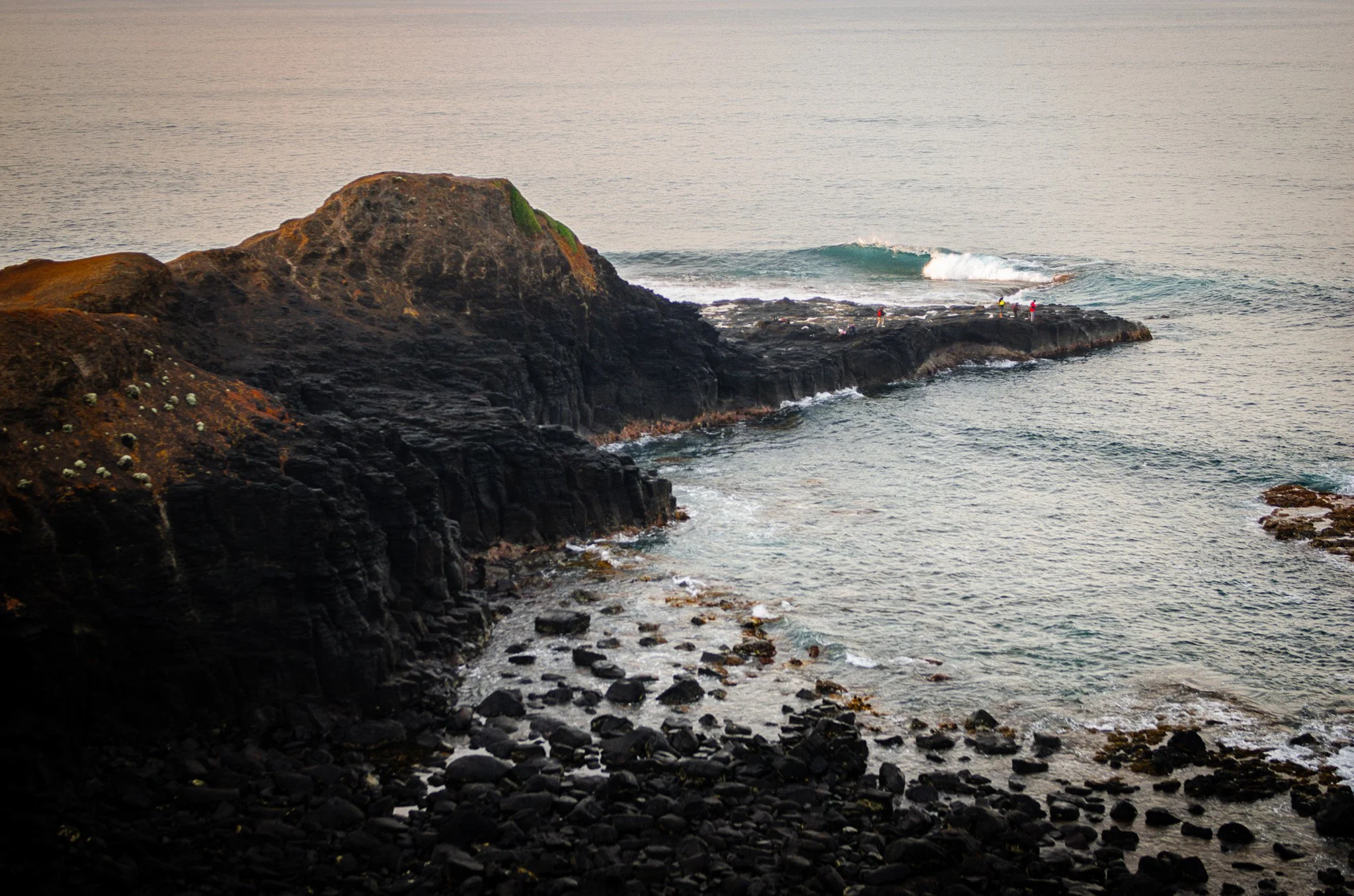
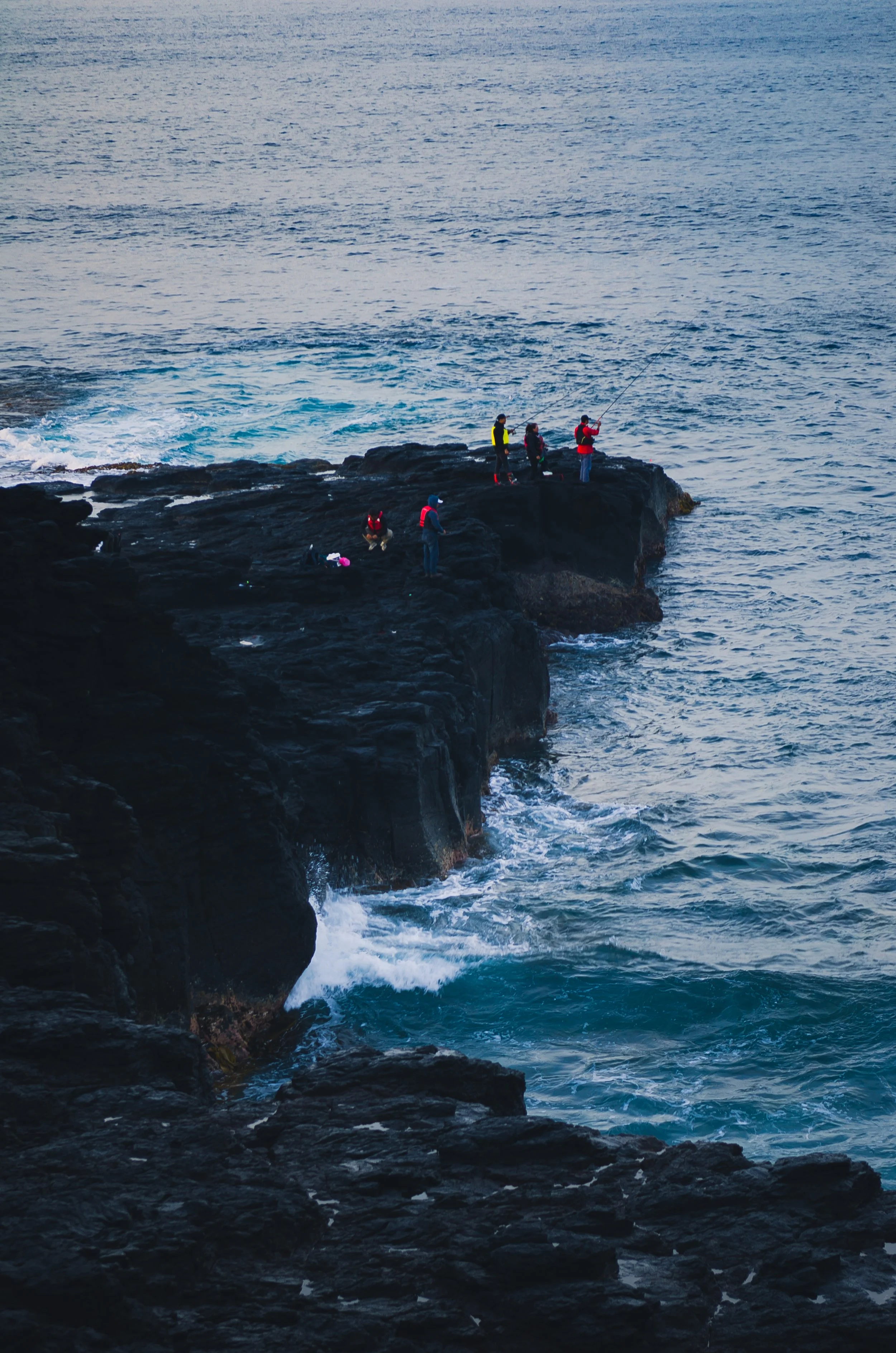
The path had led me onto one of the many rocky headlands that define this stretch of the Mornington Peninsula. From the mainland, the land dipped before rising again into a rugged peninsula that stood high above the surrounding ocean. The lights belonged to photographers who had already claimed the clifftop, waiting patiently for sunrise. My own path, however, continued downward, leading instead to the beach below.
I paused for a moment, trying to work out how they had reached the top. I had not seen another trail branching off from the one I was on. Perhaps there was another entrance hidden further back along the road, or perhaps I had simply missed it in the dark. Either way, there was little point searching now. There would be plenty of time to investigate once daylight arrived.
The beach offered its own reward.
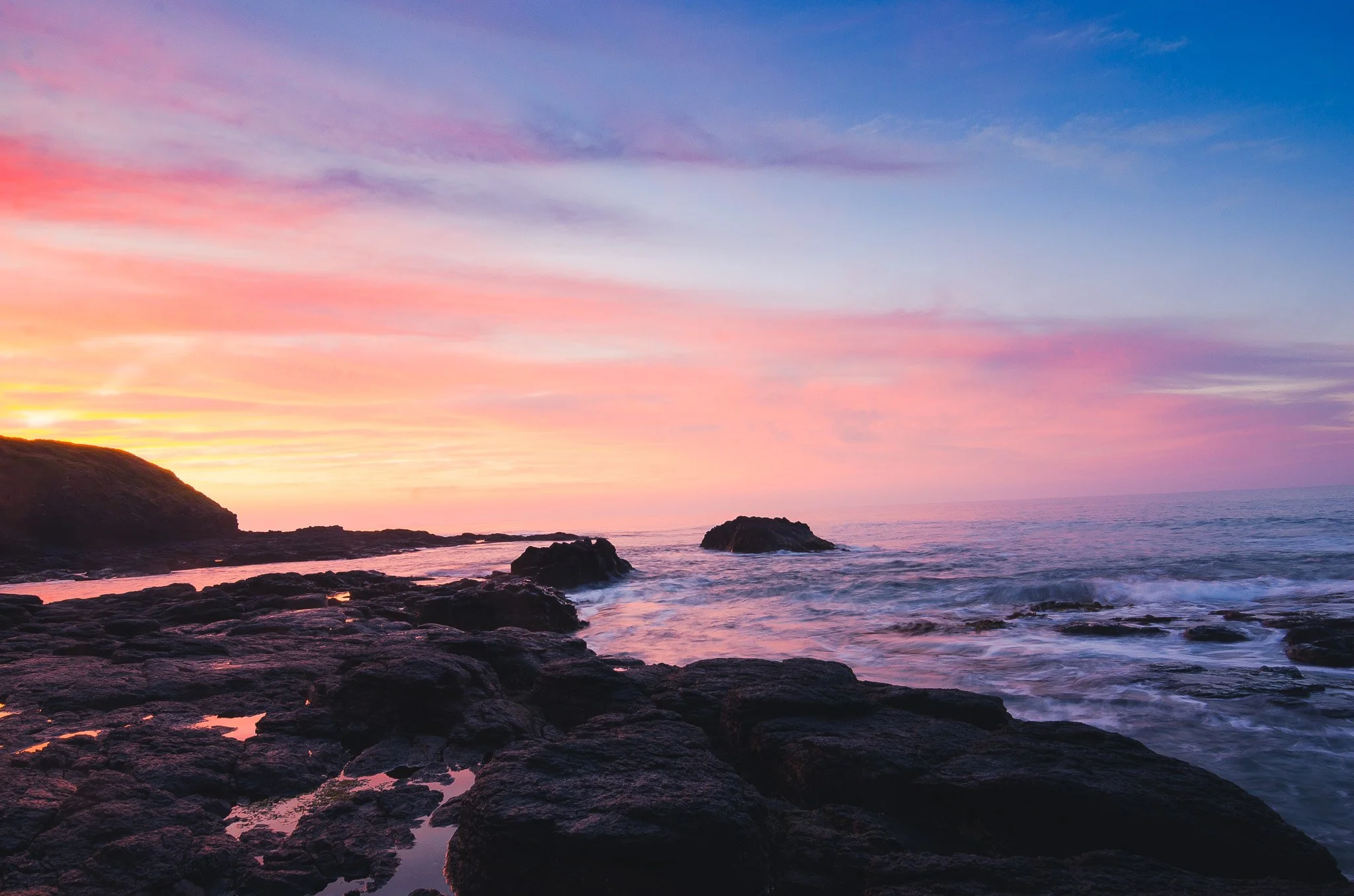
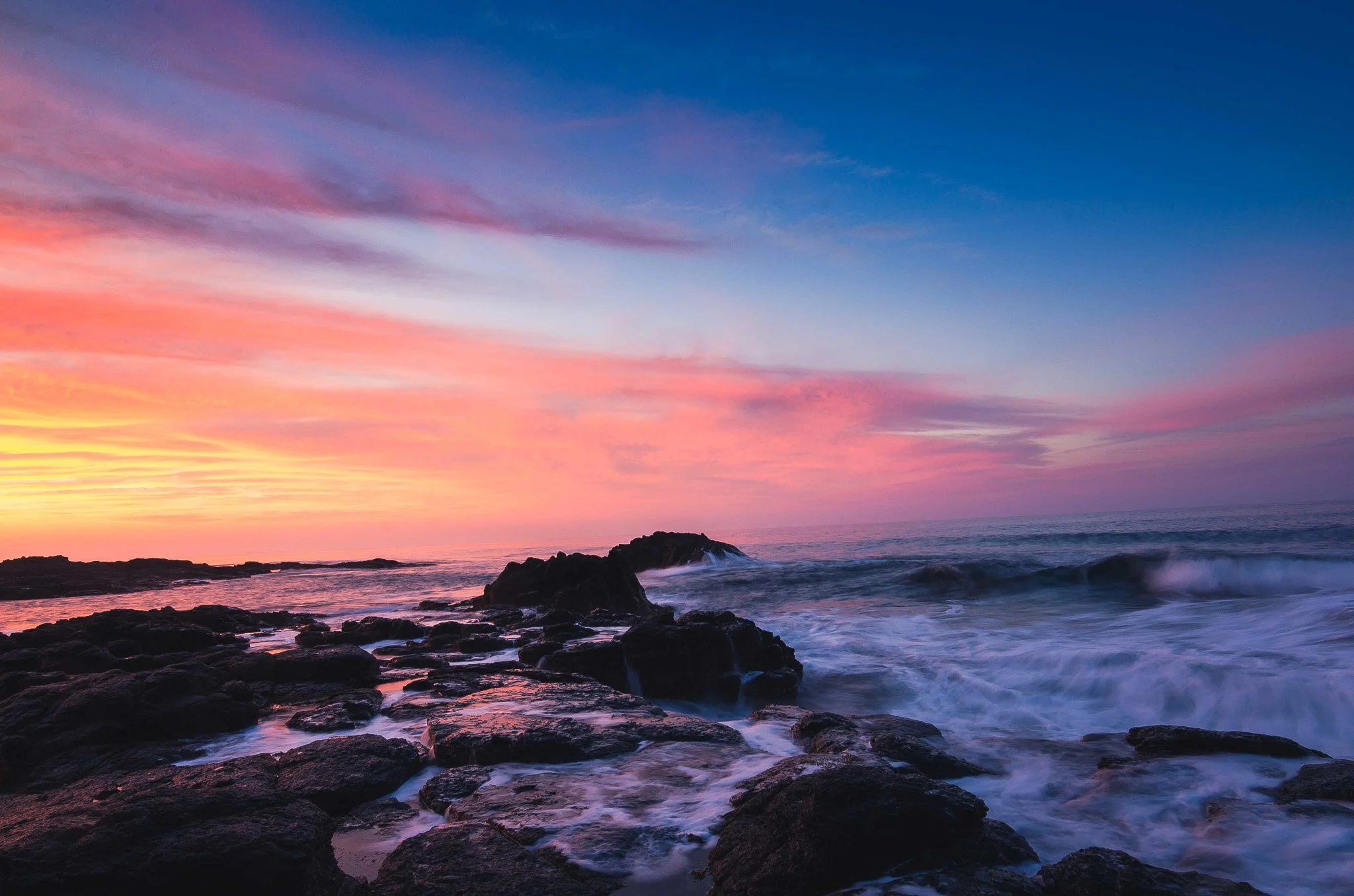
Spread before me were countless rock pools, carved over centuries by the relentless sea. With the sun still hidden behind the neighbouring headland, only the faintest hint of dawn reached the coastline. The world remained wrapped in shades of blue and grey.
Not a breath of wind disturbed the water.
Each pool became a perfect mirror, reflecting the fading stars and the deep predawn sky so clearly that it was difficult to tell where the earth ended and the heavens began. The sea beyond continued its quiet rhythm, but here, trapped within the stone, the water seemed to have forgotten that it belonged to the ocean at all. For a few brief moments, everything stood perfectly still, waiting for the first light to arrive.
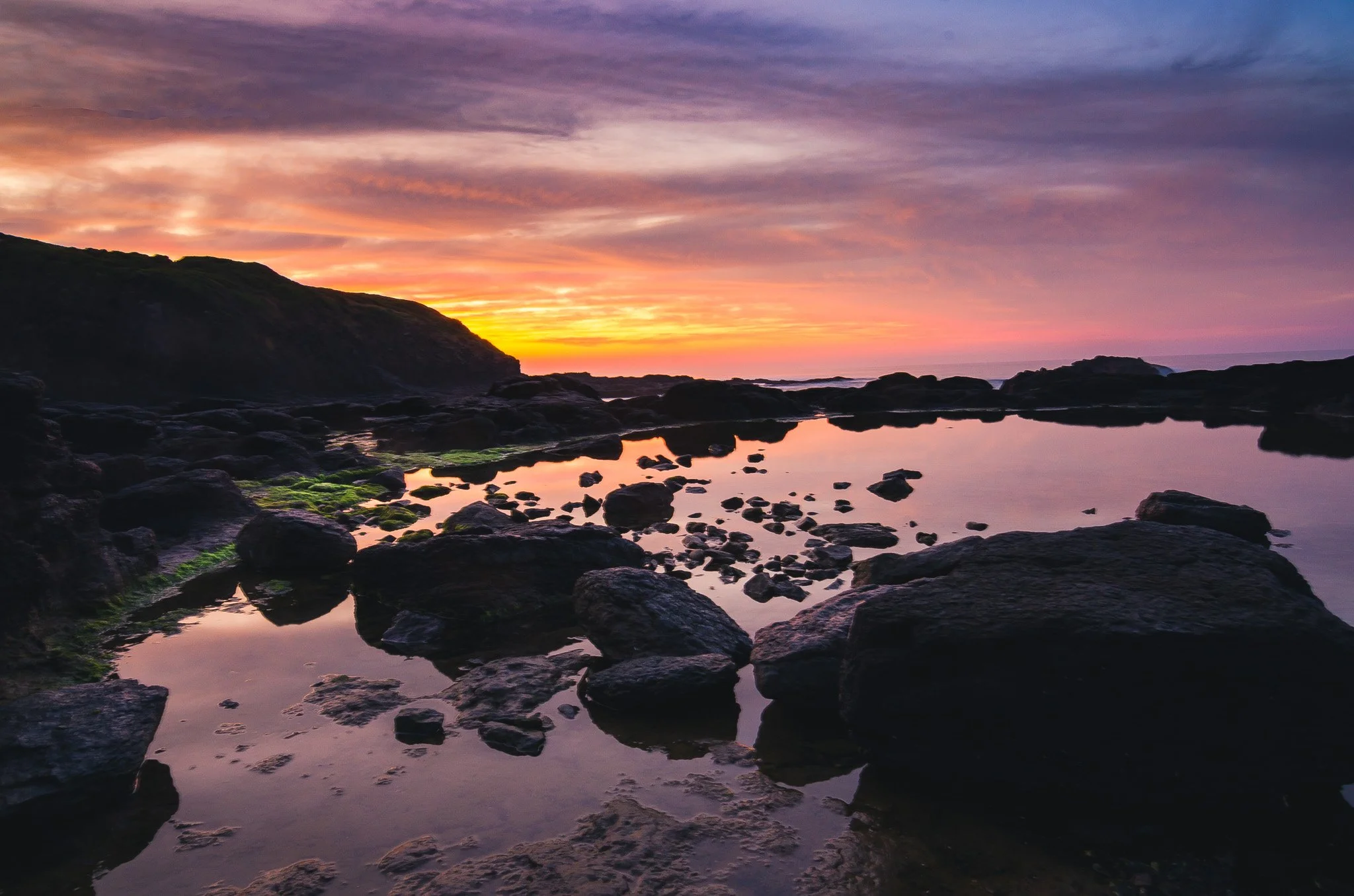
I wandered slowly among the rock pools, stopping every few steps to watch how each one held a different reflection. Some mirrored only the dark sky, while others framed the jagged cliffs or the silhouettes of distant headlands. Every few metres offered a new composition, each one tempting me to unpack my camera. I resisted the urge to rush. The right photograph was not just about finding the most beautiful rock pool, but the one where the light, the still water, and the surrounding landscape came together in quiet harmony.
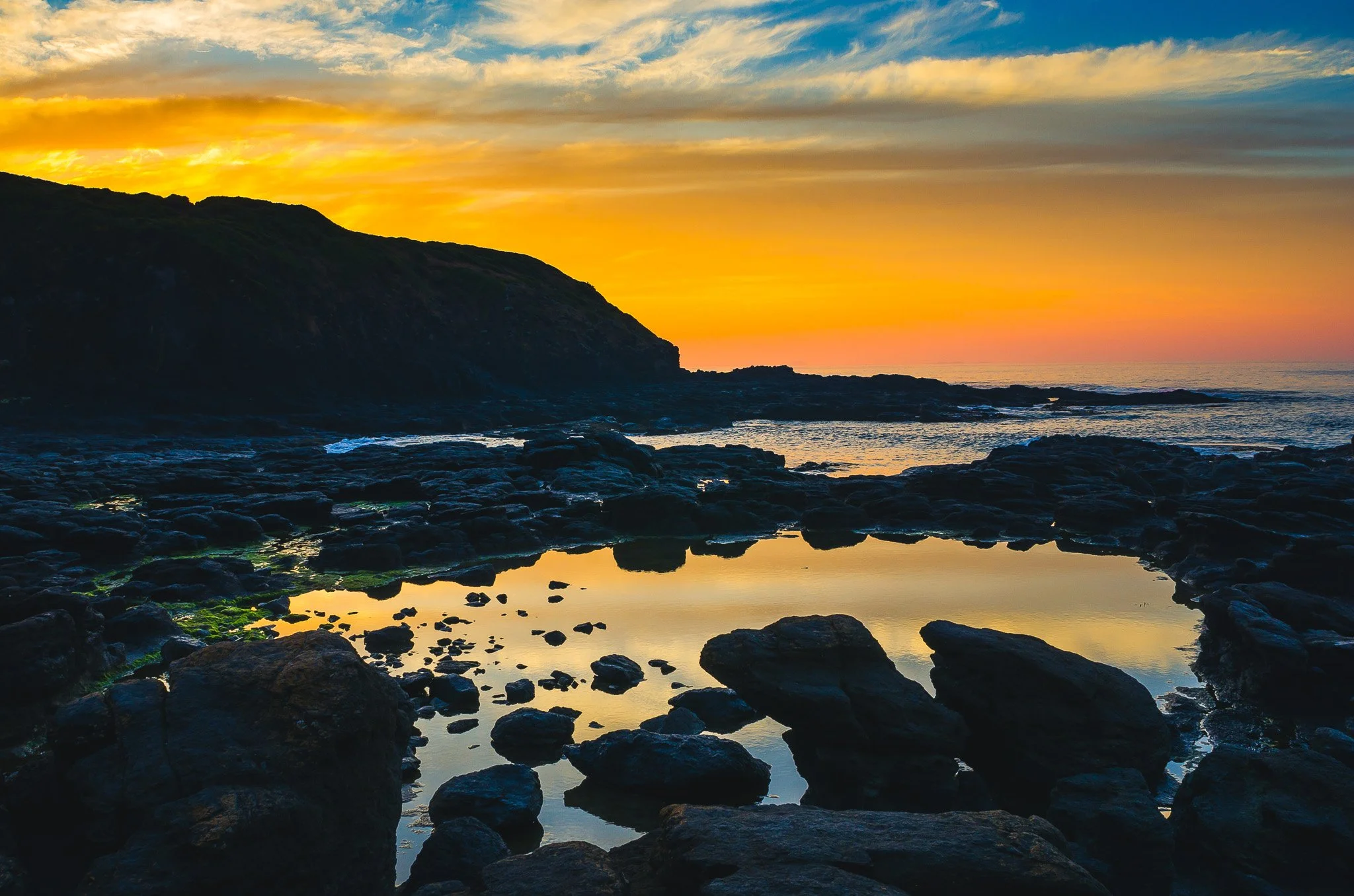
Eventually, I found the place I had been looking for. I unfolded the tripod, mounted the camera, and composed the frame. Now there was nothing more to do but wait.
Slowly, almost imperceptibly, the eastern sky began to change. The deep blues of the night softened into pale violet before giving way to gentle bands of pink and orange. Minute by minute, the colours shifted, each one lasting only long enough to be appreciated before yielding to the next. The still water in the rock pools echoed every subtle transformation, turning each pool into a canvas painted by the dawn. Waiting had become part of the experience, and as the morning unfolded, I realised it was every bit as rewarding as pressing the shutter.
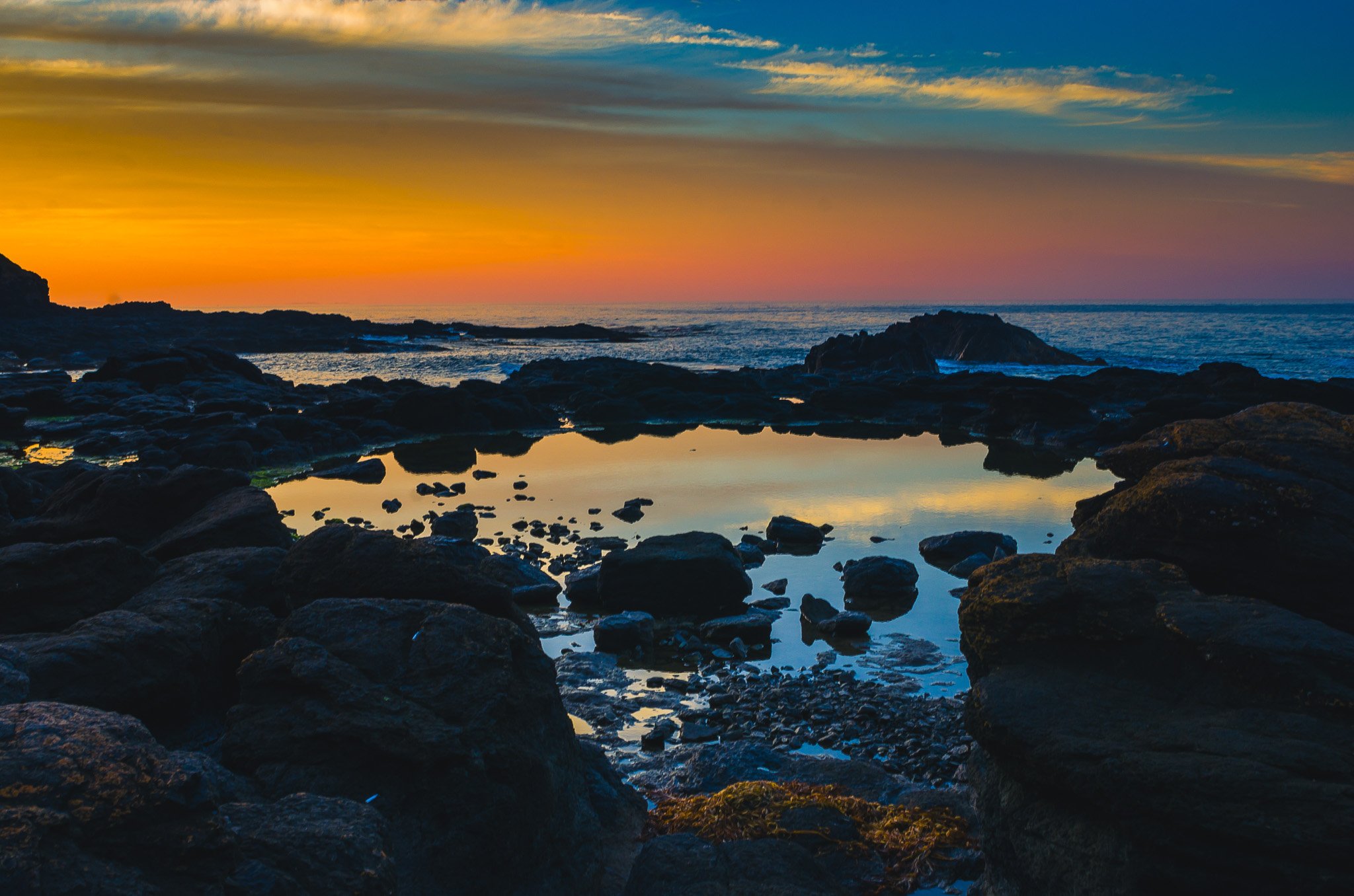
As the morning grew brighter, the coastline gradually revealed itself. Not far from where I stood, I could finally make out the edge where the rock platform met the sea. The waves were neither gentle nor violent. They arrived with quiet confidence, breaking against the rocks in an unhurried rhythm that was as soothing to the mind as it was to the ears.
Each wave spread a sheet of white foam across the dark stone before slowly retreating, leaving the rocks glistening for only a moment. Then another wave would arrive and repeat the ritual. Again and again. There was no urgency, no grand display—just the sea faithfully following its ancient rhythm.
I found myself watching, almost hypnotised by the endless cycle. Moments earlier, the rock pools had held the world perfectly still. Beyond them, the ocean never stood still for a second. Yet somehow, both carried the same quietness. One found peace in stillness, the other in movement.
From where I stood, the sea felt powerful but distant. I was content simply to observe, feeling completely safe on the broad rock platform as the waves continued their timeless conversation with the shore.
Before leaving, I was determined to solve the mystery of the lights I had seen before dawn. I retraced my steps back up the path, returned to the car park, and slowly walked its perimeter, expecting to find another trail leading to the clifftop. There was none.
Curious, I followed the same path back down once more. In the daylight, I noticed another track running beside mine, separated only by a low fence. It suddenly seemed possible that the photographers I had seen earlier had simply stepped over it. The fence was hardly an obstacle.
But then another question surfaced. Why was it there in the first place? Was it meant to discourage people from going that way, or was there another reason I couldn't see?
The temptation to find out lingered for a moment. In the end, curiosity gave way to caution. Some questions are better left unanswered than answered by taking unnecessary risks. I turned back, satisfied that the mystery could remain part of the morning's story.
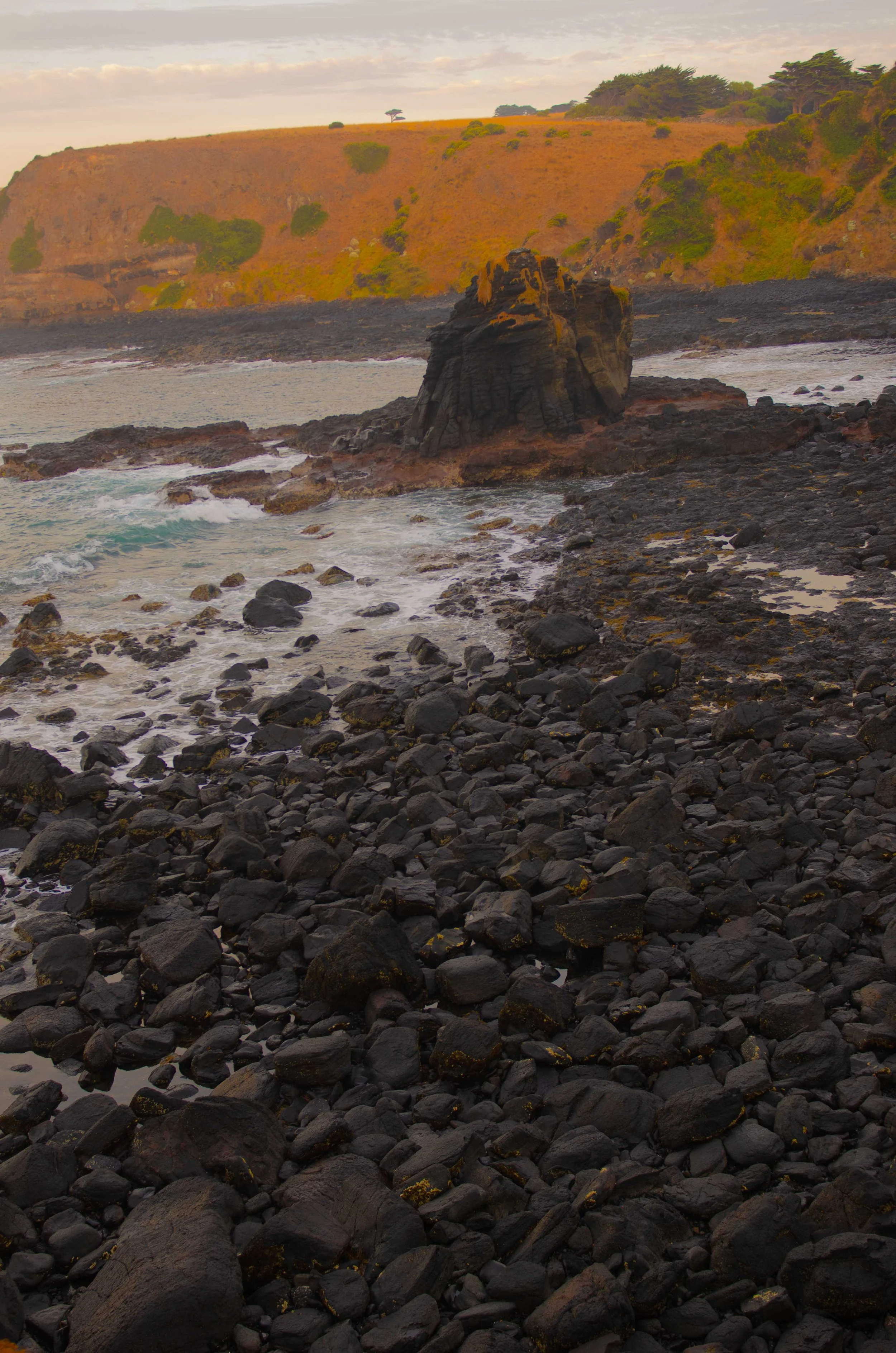
After all, another stretch of coastline was waiting to be discovered.
My next stop was Number 16 Beach, a place known not only for its long sweep of sand but also for a remarkable rock formation that only reveals itself at low tide—the Dragon Head Rock and the natural arch nearby. Like many coastal landmarks, their appearance depends entirely on timing. Arrive too early or too late, and the sea quietly reclaims them.
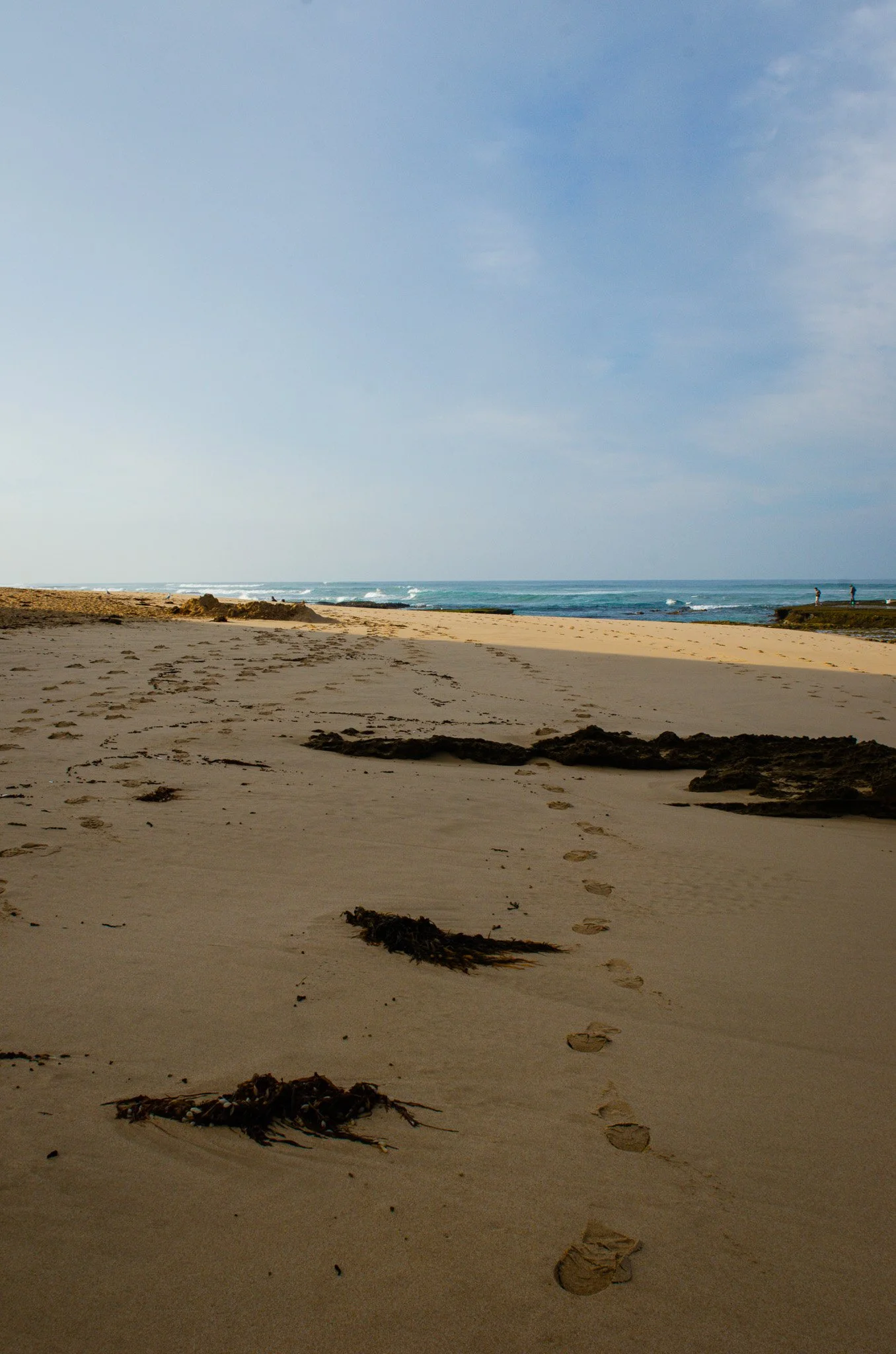
About fifteen minutes later, I pulled into the car park. Even before reaching the beach, I was greeted by the broad expanse of sand that Australian beaches are so well known for. It stretched endlessly in both directions, meeting the ocean beneath an uninterrupted horizon.
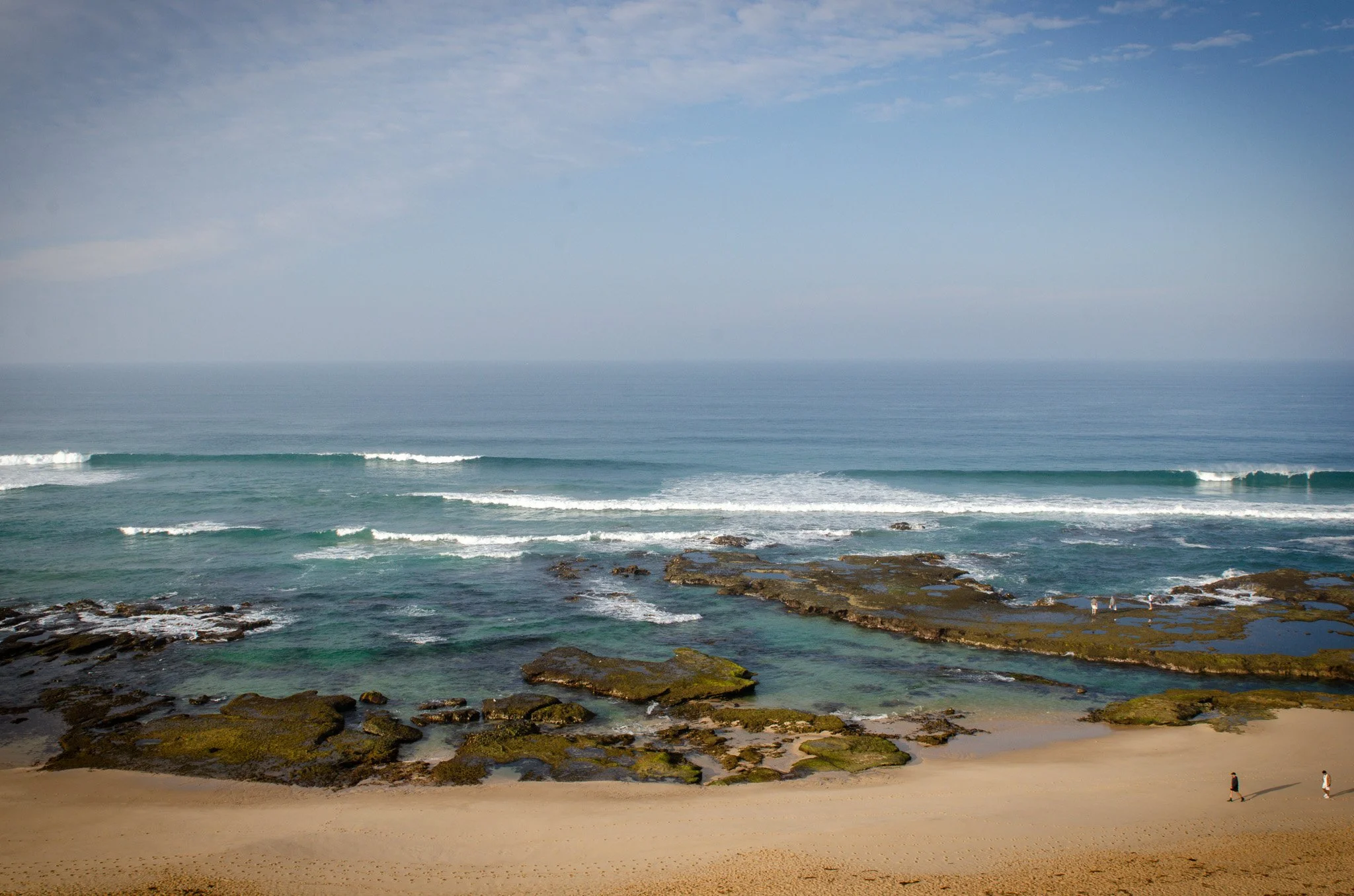
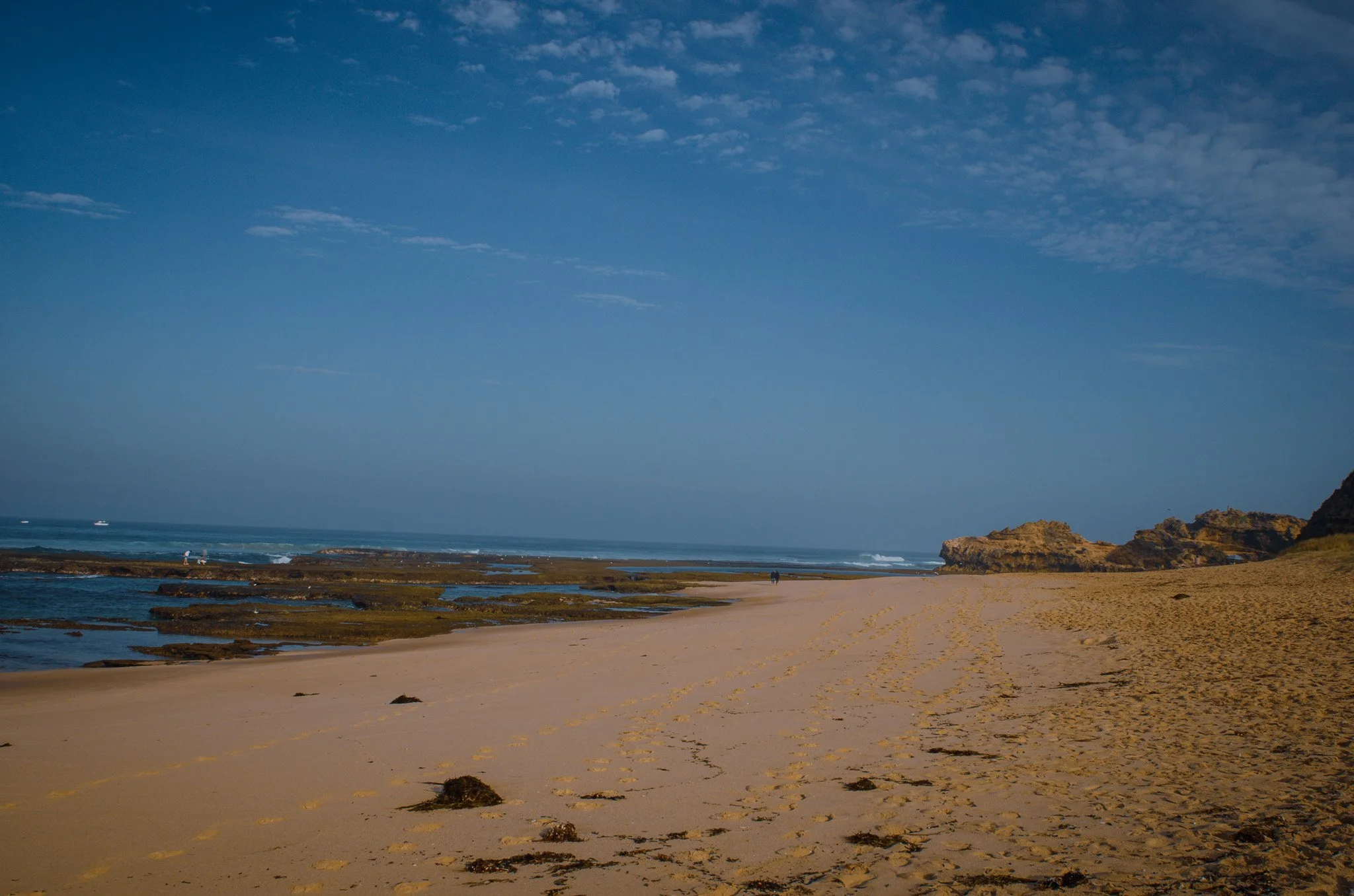
After descending the long staircase, the Dragon Head Rock finally came into view. It was still some distance away, making its finer details difficult to distinguish, yet its unmistakable silhouette was already enough to understand how it had earned its name.
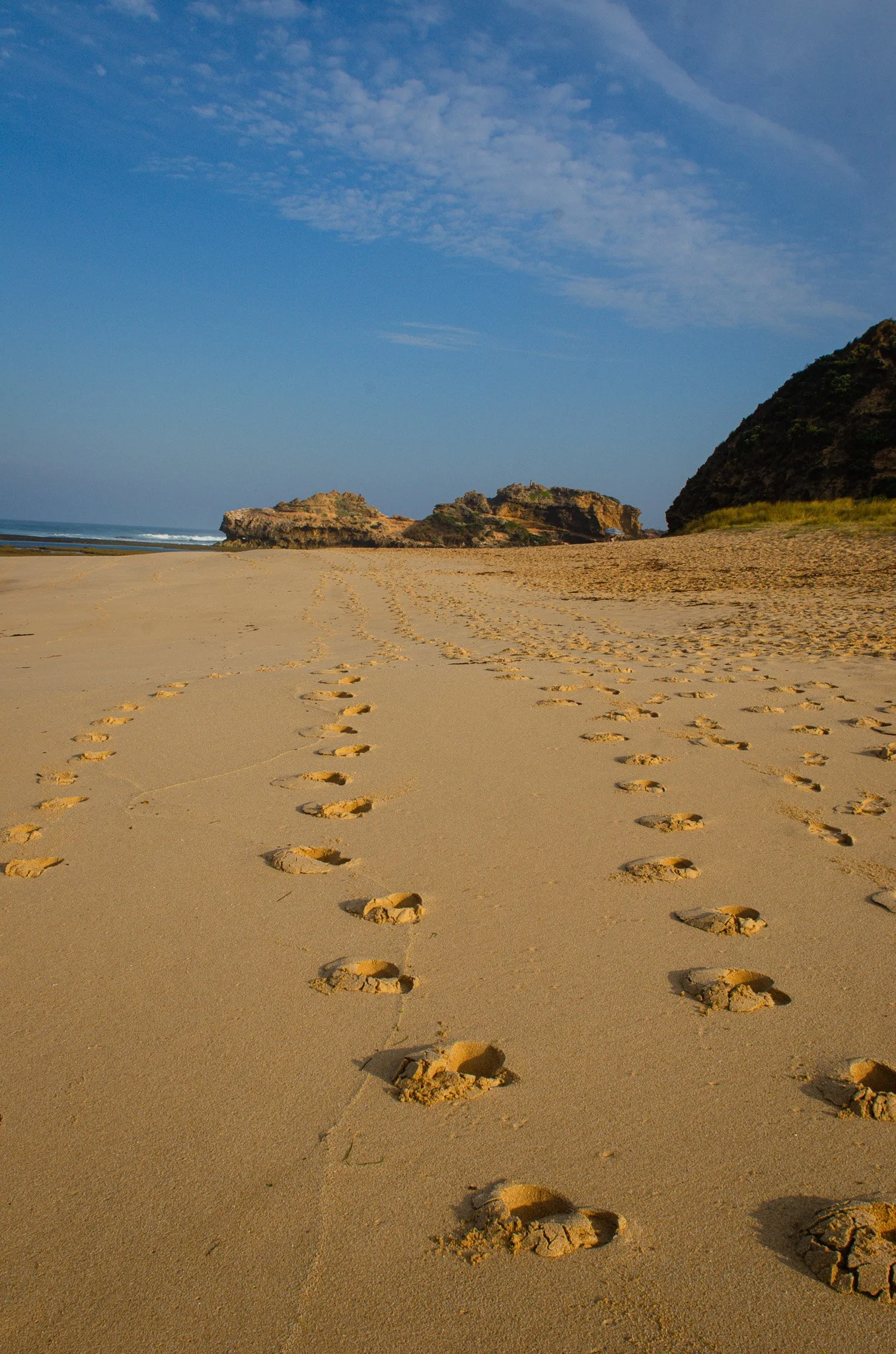
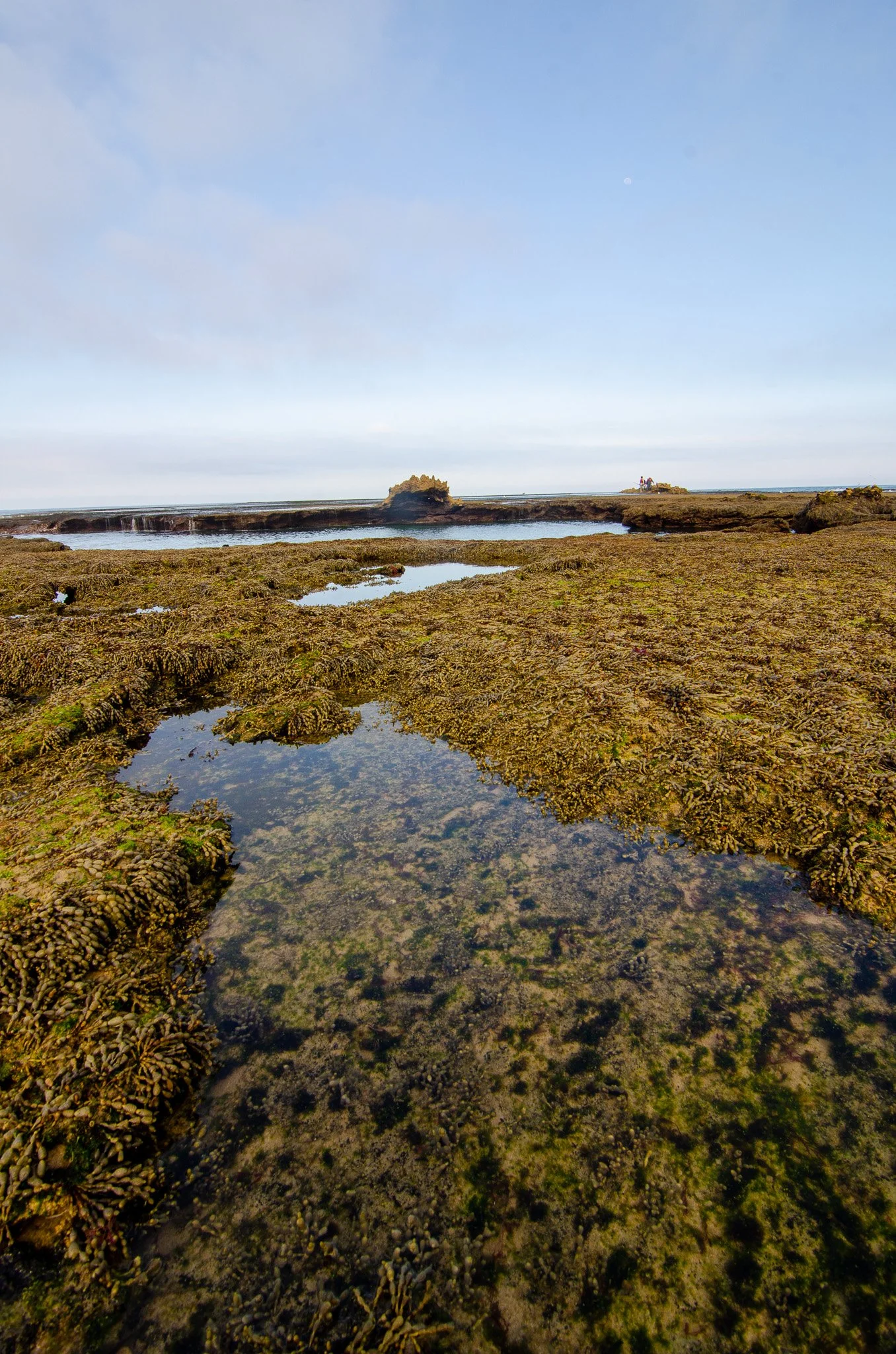
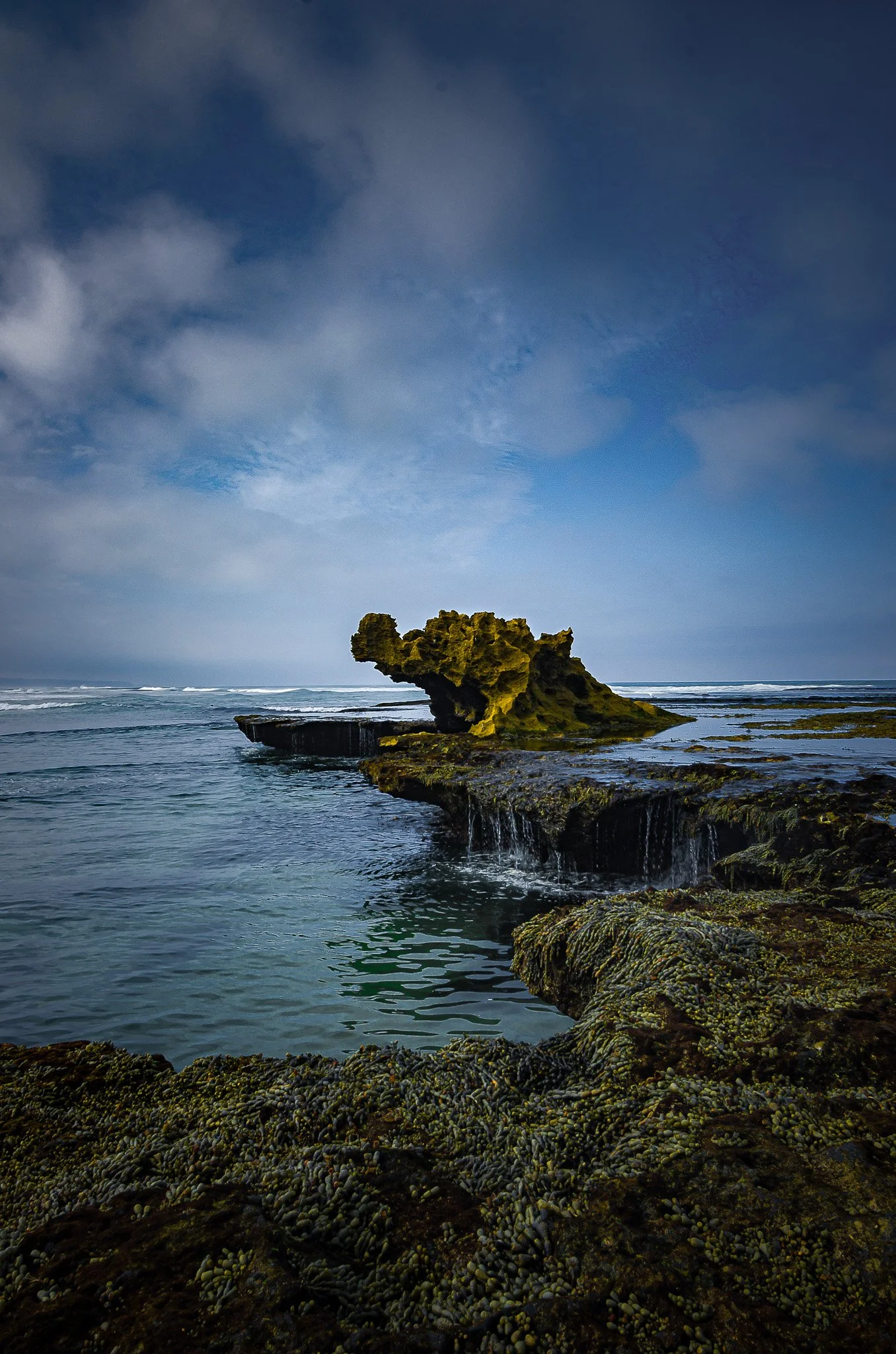
The rock sat proudly at the edge of the platform, its profile turned towards the sea as though keeping watch over the coastline. From beneath its weathered face, thin streams of seawater trickled continuously back into the ocean, giving the impression that the dragon itself had only recently emerged from the retreating tide.
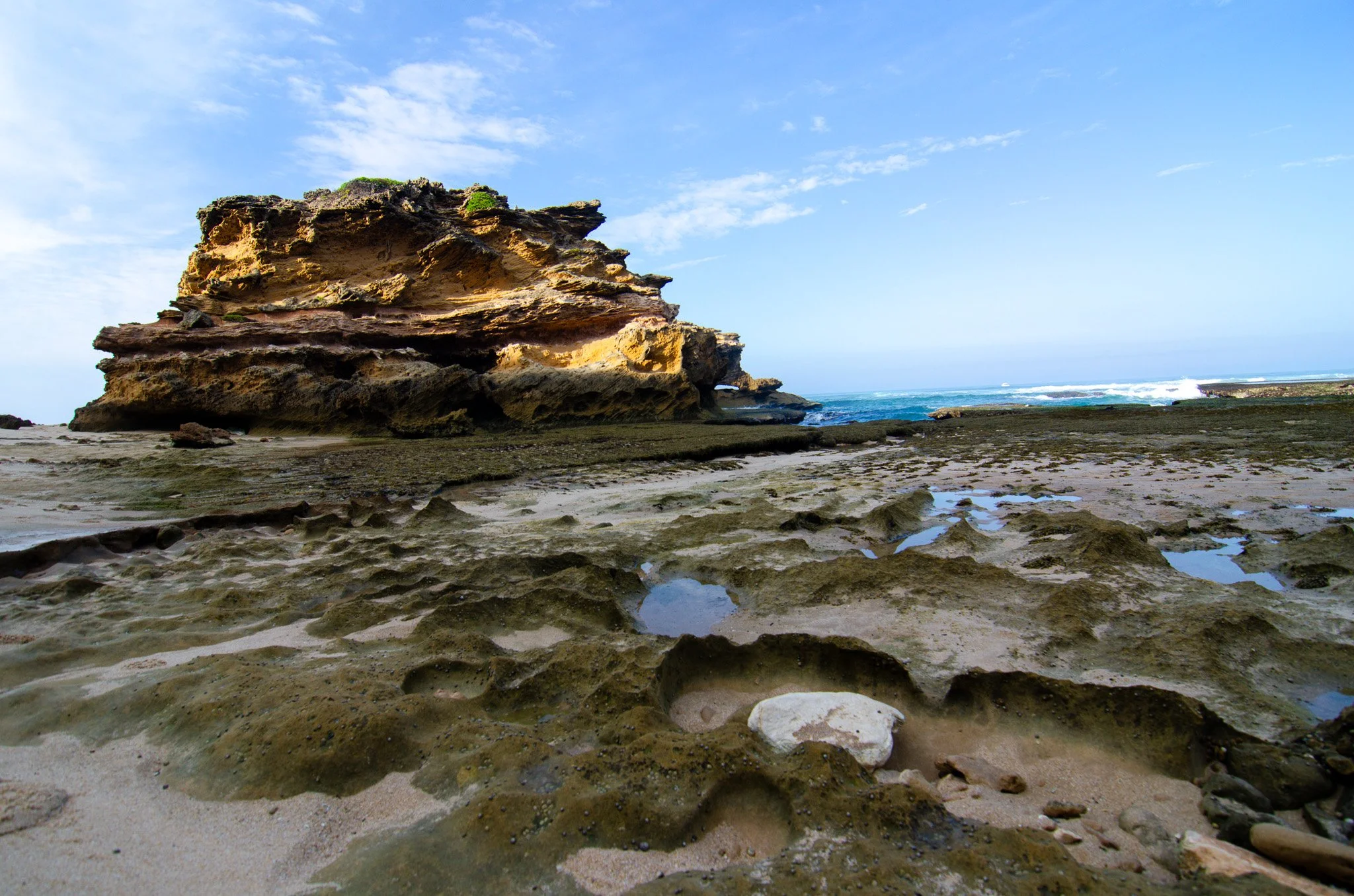
As I walked closer, the landscape became even more intriguing. Shallow rock pools, carpeted with green seaweed and other marine plants, spread across the exposed reef. Their rich colours softened the rugged stone beneath, creating the illusion of walking across the back of some ancient creature that had lain undisturbed for centuries.
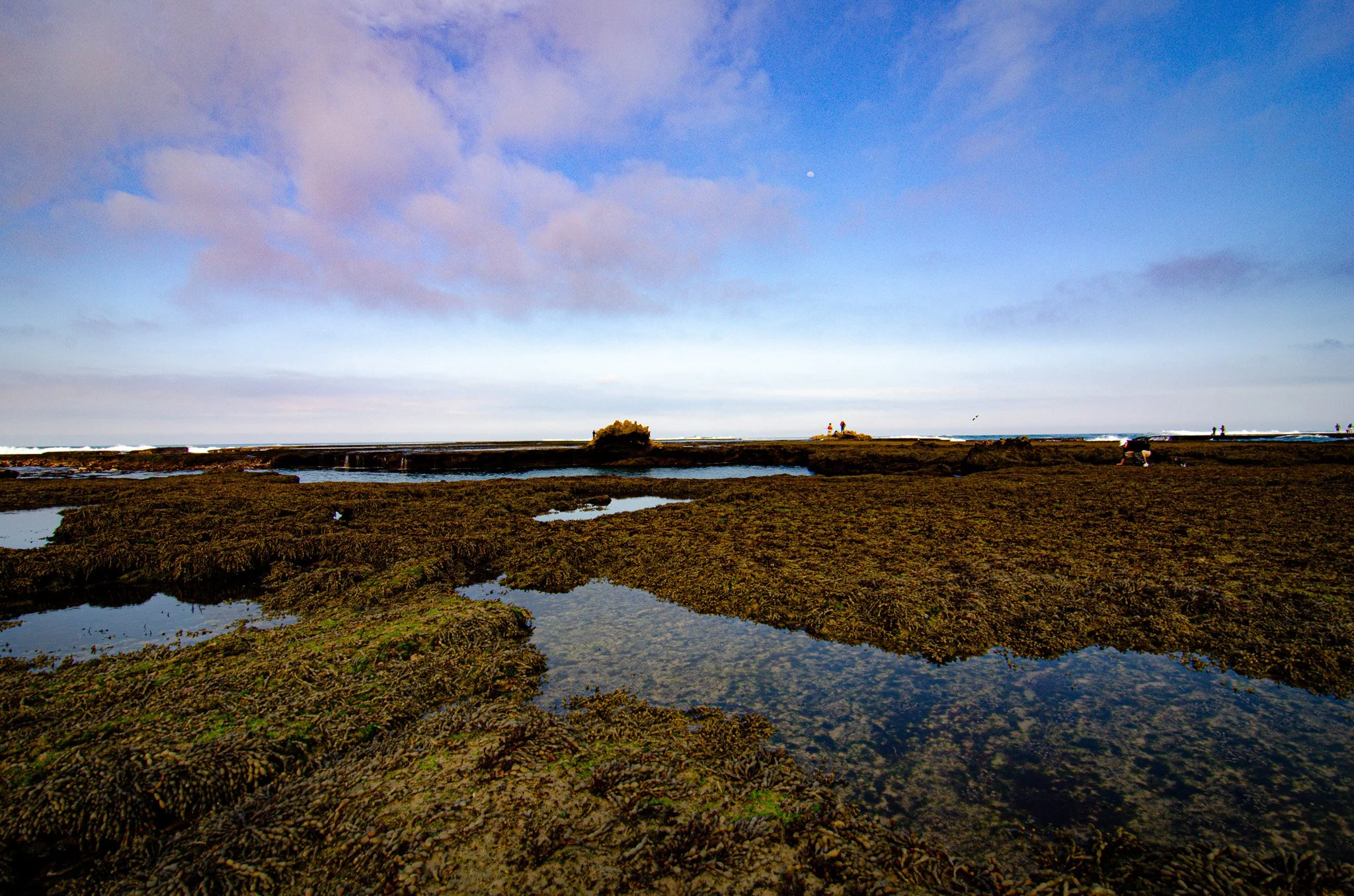
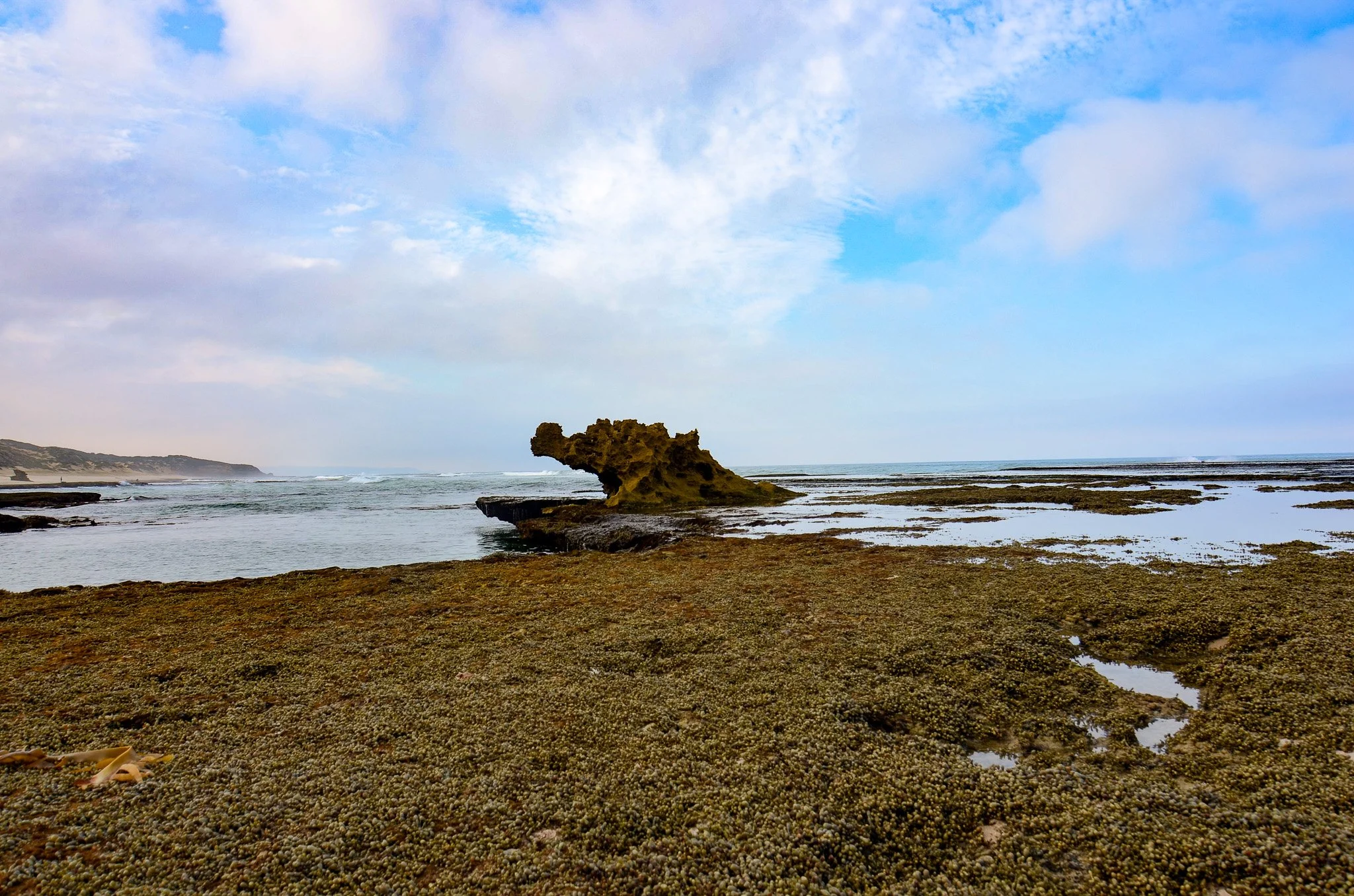
The Dragon Head Rock itself was not particularly large. Had it been sitting alone in a museum, it might have seemed almost modest. Yet nature has a remarkable way of giving ordinary-sized things an extraordinary presence. Carved by countless tides and shaped by relentless winds, the rock bore a striking resemblance to the head of a dragon, its weathered features appearing almost lifelike against the endless backdrop of sea and sky. Standing before it, it was easy to understand why so many people make the journey here at low tide, if only for a brief moment, to let their imagination complete what nature had begun.
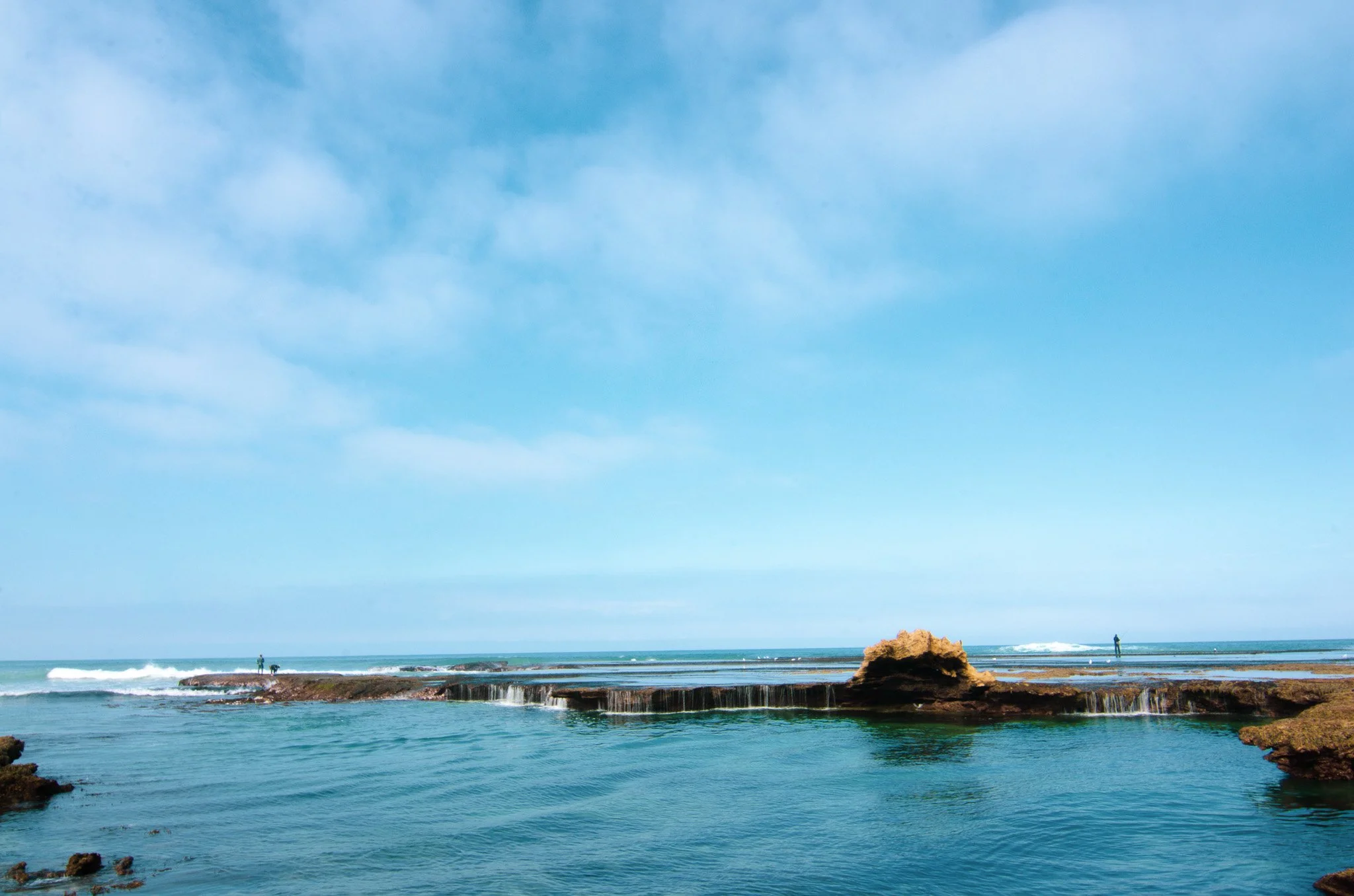
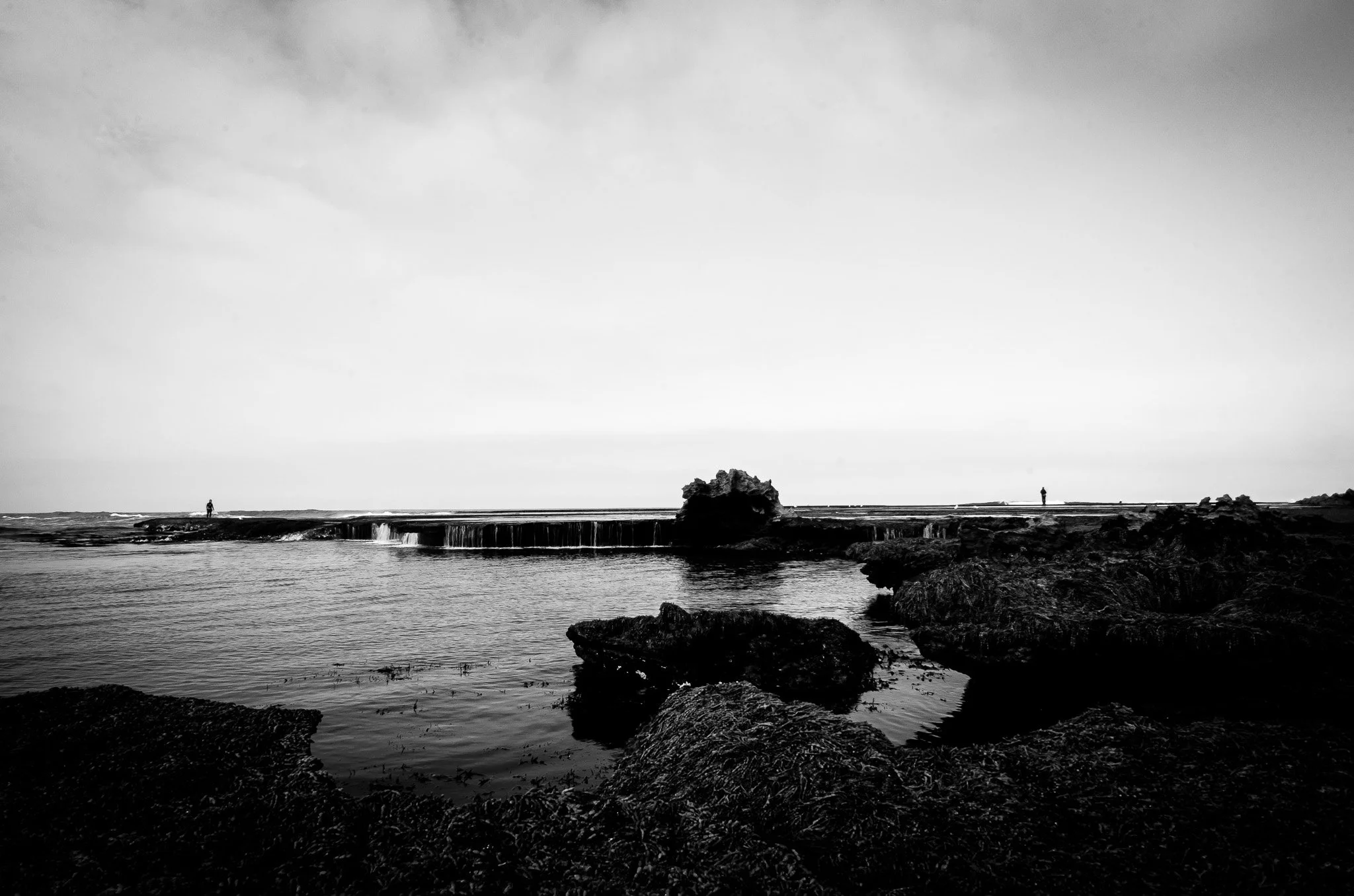
I knew there was a natural arch somewhere nearby, but from where I stood, there was no sign of it. I let my eyes wander across the exposed reef until a large rock, not far from the Dragon Head, caught my attention. It seemed the most likely place to investigate.
The way across was still carpeted with seaweed and delicate marine plants, remnants of the tide that had only recently withdrawn. I picked my way carefully over the uneven rock, placing each step with intention. It was not only to avoid slipping, but also to disturb this fragile world as little as possible. Between the seaweed lay shallow rock pools that blended almost seamlessly into the stone, making it easy to misjudge where solid ground ended and water began.
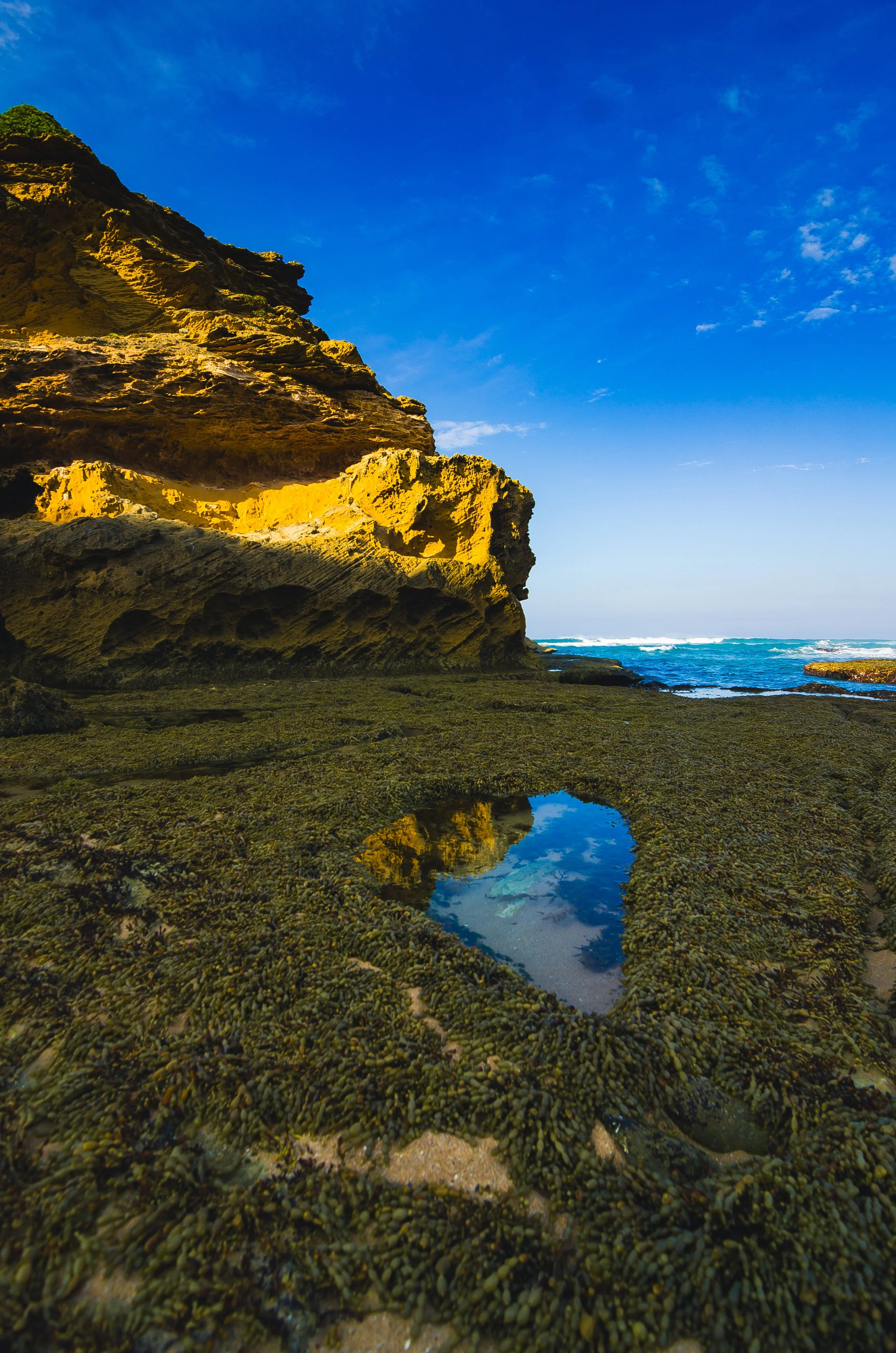
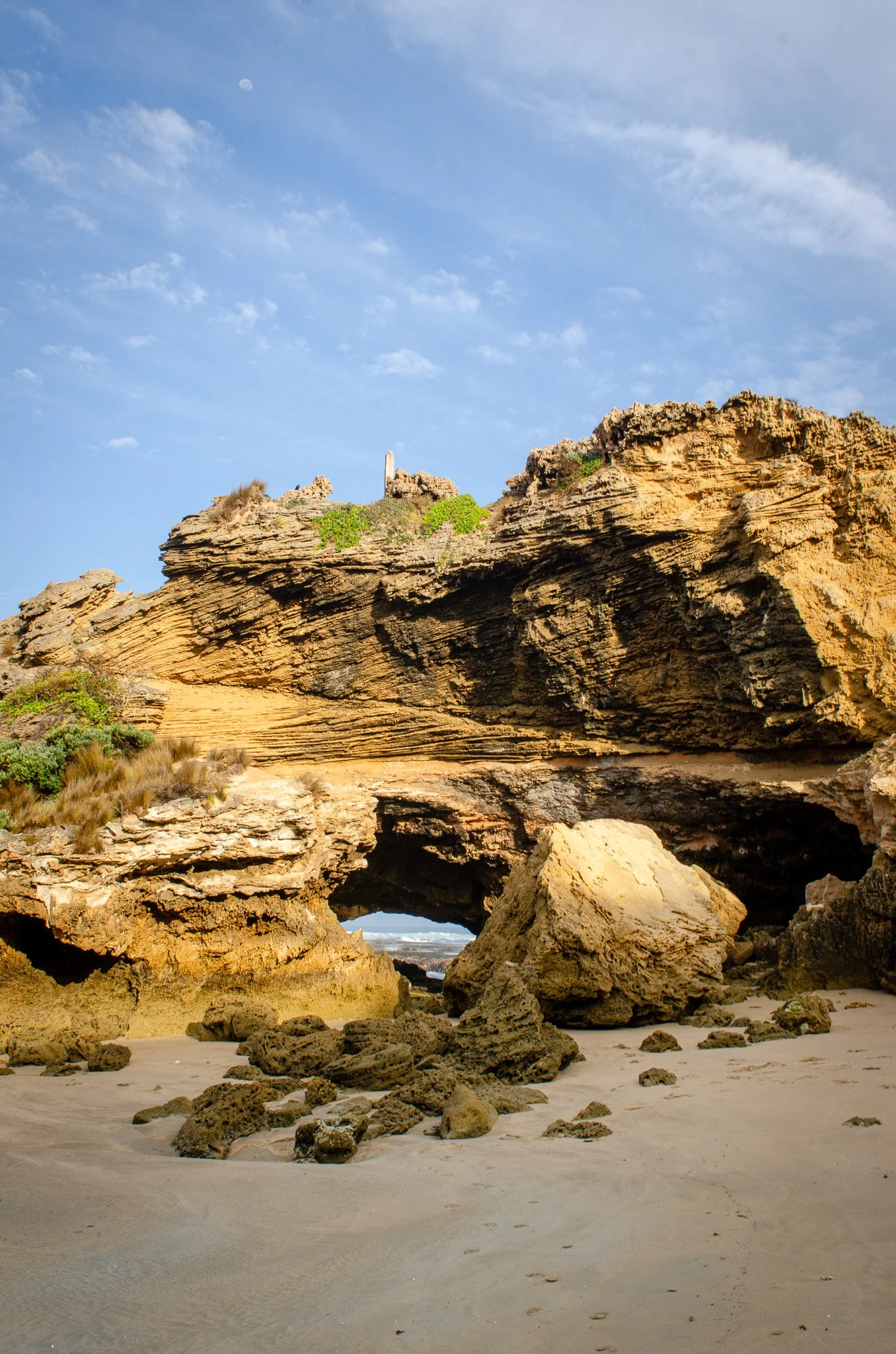
Only when I reached the far side of the rock did the arch reveal itself.
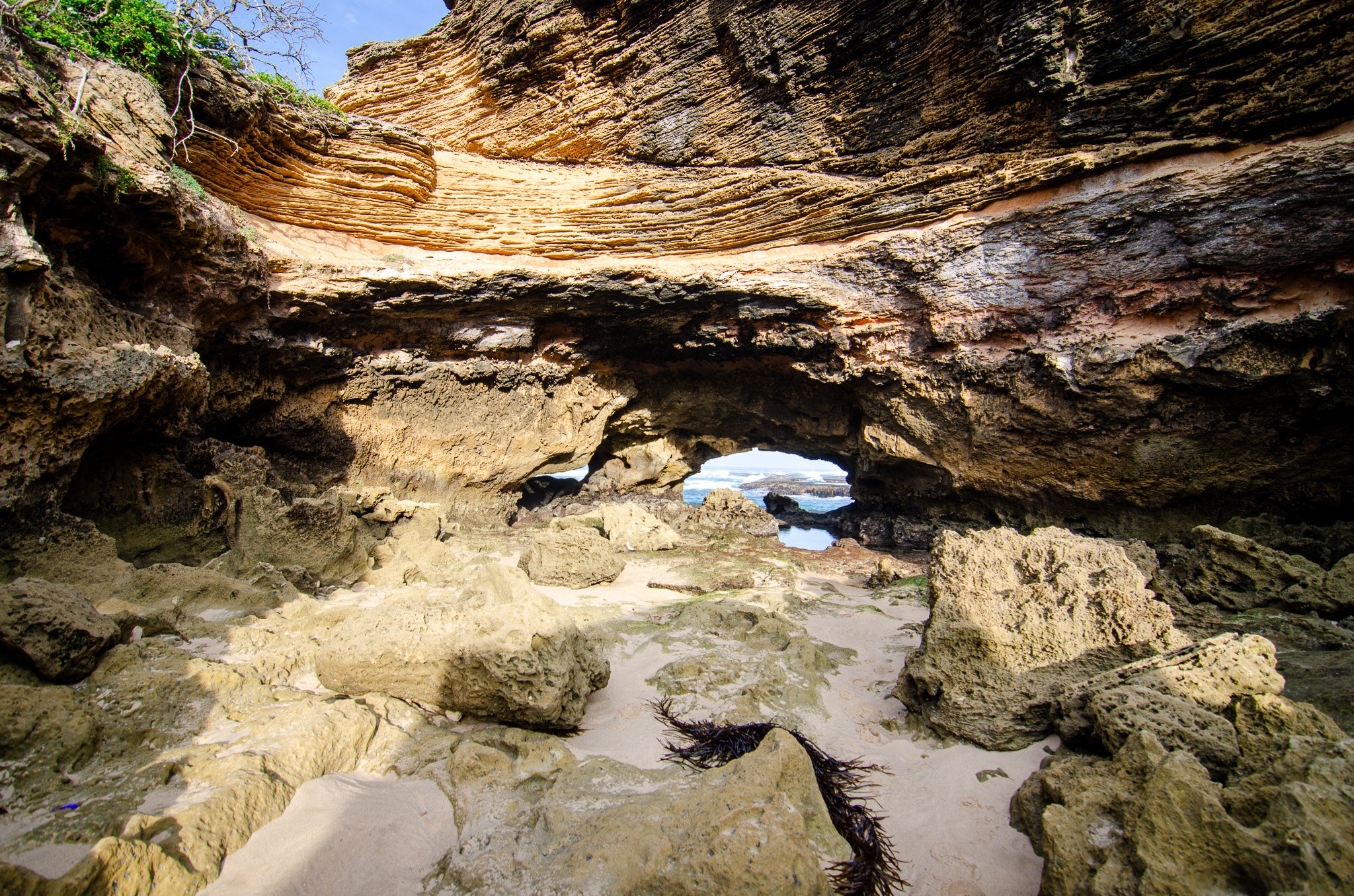
It had been hidden all along, invisible from the Dragon Head. The sea had hollowed out the interior of the rock, creating a sheltered chamber that opened onto the ocean through a modest archway. A series of shallow rock pools led towards the opening, drawing the eye naturally to the sea beyond.
The arch itself was surprisingly small—perhaps no taller than I was, and only about as wide as my outstretched arms. Yet its modest size was precisely what gave it such charm. Rather than dominating the landscape, it framed it. Beyond the opening lay nothing but the endless ocean, perfectly contained within a window sculpted by countless tides.
The morning sun now shone directly through the arch, its light dancing across the rock pools at my feet. Every ripple shattered the reflection into countless fragments, like pieces of broken glass that caught the light before quietly reassembling themselves as the water settled once more.
It was a simple scene, easily overlooked by anyone passing through in a hurry. But standing there, with the tide at its lowest and the morning at its brightest, it felt as though the coastline had revealed one last secret before allowing the sea to reclaim it once again.
View the complete Mornington Peninsula photo gallery.