Rediscovering Camping: A Glamping Adventure in Inverloch
Hovering on the Edge of True Camping
I tried to remember when I last went camping—or whether I had ever really done it at all. I searched every corner of my brain, even the furthest recesses where long-forgotten memories might be hiding. Nothing surfaced. No clear image, no definite moment that I could honestly call camping.
I did recall sleeping in a tent during my youth, but even as the memory formed, I knew it didn’t quite count. While I slept under canvas, everything else was carefully provided. There were proper shower blocks with hot water for comfort, toilet facilities to attend to nature’s calls, and nearby shops where food could be easily bought. Nothing was improvised, nothing was raw or uncertain. Nature was present, yes—but at a comfortable distance.
Those experiences didn’t lack definition; they lacked immersion. I understood what camping was meant to be—being out there, exposed to the elements, reliant on what you carried, and nothing more. Yet I had never actually lived it. I had never been fully in it, in the wild, where nature sets the terms.
Looking back, I realised I had always hovered just shy of that line. And if anything, last weekend we didn’t cross it—we elevated it. Not backward into the wild, but upward into something far more refined. What we had done wasn’t camping at all.
It was glamping.
The place we chose for our glamping experience was Inverloch Glamping Co., and it came highly recommended. After staying for two nights, I wouldn’t hesitate to recommend it myself. Just under a two-hour drive from Melbourne, it sits on the outskirts of Inverloch, surrounded by open farmland.
There was, however, some housing development underway behind the glamping area. Once completed, it may change the atmosphere—which would be a real shame. During our stay, though, we were blissfully spared from that reality. What we experienced instead was quietness, calmness, and a gentle sense of nature, paired with an unexpected feeling of privacy.
We were given a corner all to ourselves, thoughtfully framed by bushland that felt carefully placed yet still natural and untamed. It created the illusion that we were the only two people there, tucked away from the rest of the world—comfortably immersed in nature, but without having to give up hot showers or a good night’s sleep.
Driving EV Car
We arrived just before 4 in the afternoon after driving through and stopping at the recommended small towns a long the way. It also a chance for us to test the EV car that we had owned for only two months. EV car changes your approach to drive long distance. With petrol car, while you still looking for distance, you would not looking at whether there is a petrol station on the route, you just assume there will be at least one in each town or along the highway. With EV car, you need to be bit more careful, the distance, the battery capacity, availability of EV charging stations, how many are there in each station, the type of charging, the charging company. A lot to pay attention to, if you don’t want to be stranded out of battery or have to wait for your turn as charging at least take 20 - 30 minutes.
Since the drive from Melbourne to Inverloch is only about 160 kilometres, it sat comfortably within the range of a full charge on our Geely EX5. That sense of ease gave us permission to wander. Instead of taking the shortest, most direct route, we allowed ourselves a few detours, confident that the battery would carry us where we needed to go.
Loch
One of those detours led us to Loch—a quaint, historic village tucked into the rolling hills of South Gippsland. The moment we arrived, the pace shifted. Loch isn’t a town you rush through; it gently insists that you slow down.
Its main street is lined with romantic heritage buildings and weathered cottages, each one quietly different from the next. Cafés and a brewery announce themselves confidently, impossible to miss, while gift shops, antique stores, and treasure-filled collectables hide in between, inviting curiosity rather than demand. There was one shop in particular—the cheese shop—that left such an impression we made a deliberate return visit on our way home, purely to stock up on its addictive cheese cookies.
It was a pleasant morning to wander the street without an agenda. Every building seemed to carry its own personality, whether through timeworn brickwork, delicate timber details, or the way it was softened by carefully tended gardens. Bursts of colour came from flowers in full bloom, while tall, mature trees offered generous pockets of shade—welcome relief on a warm summer day, their dense foliage creating cool, quiet pauses along the footpath.
As we walked, delight was tempered with a twinge of sadness. A few shopfronts stood closed, their windows empty and doors locked. They interrupted the charm with a quiet reminder of change and fragility, and it was impossible not to feel a small sense of loss for the stories and livelihoods they once held.
Still, Loch lingered with me—not as a postcard-perfect town, but as a place that felt lived-in, loved, and a little vulnerable. The kind of place that stays with you long after you’ve driven on.
Lunch and Close Encounters with Wild Life
Charming as the cafés in Loch were, none of the menus quite called to us. Instead, we followed another recommendation—this time from our glamping hosts in Corinella—and drove about twenty-five minutes to The Fig & The Bay. It felt like a comfortable distance: far enough to feel like a small adventure, yet safely within the margins of our EV’s battery range.
I had imagined the restaurant sitting proudly along a main street or tucked into a popular coastal strip. Instead, it appeared quietly among modern residential houses, almost as if it had wandered into the neighbourhood by mistake. The contrast was unexpected, even a little odd—but somehow that made the discovery more rewarding.
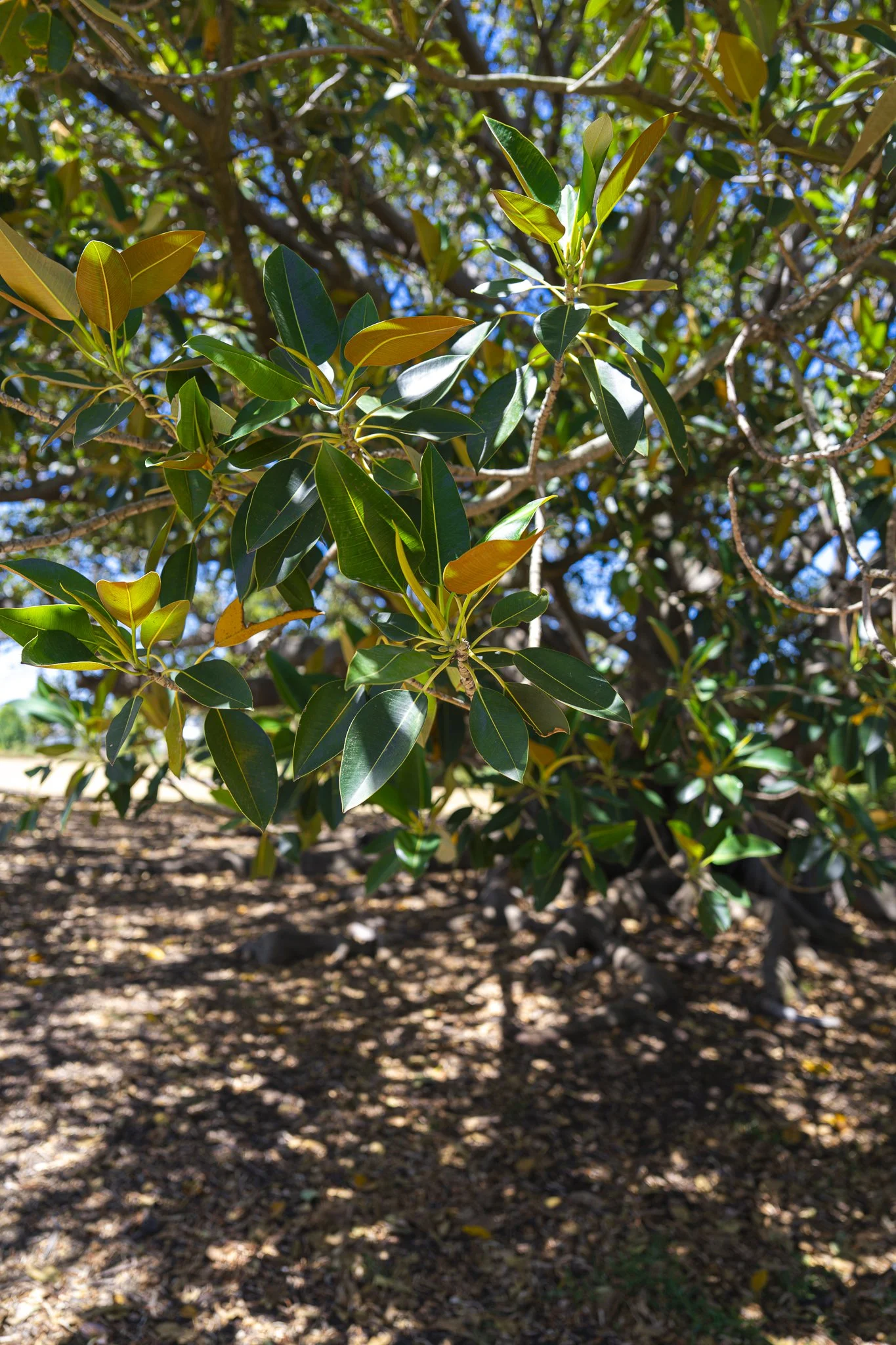
The restaurant itself was full of charm. Housed in a beautiful old homestead, it welcomed us with pressed ceilings, generous open spaces, and a calm, unhurried atmosphere. Outside, tables faced a magnificent fig tree—its broad canopy casting deep, dappled shade—and beyond that, a short walk led to a lookout, inviting diners to linger a little longer than planned.
Lunch did not disappoint. The food arrived in generous servings, comforting and thoughtfully prepared, the kind of meal that makes you slow down without trying. As we ate, we gained a quiet companion: a young magpie, friendly yet unmistakably wild, who hovered patiently near our table. According to the waitress, this bird had taken it upon itself to help “clean up” fallen scraps, though we were gently reminded not to feed it. The magpie seemed to understand the rules well enough, waiting until diners had finished and moved on before inspecting the ground.
Not all the wildlife was quite so polite.
While I stepped away from the table, an adult magpie made a bold executive decision regarding my unfinished chicken. It swooped in so swiftly and confidently that by the time I turned back, it was already airborne—my chicken clenched triumphantly in its beak. The whole event happened in seconds, leaving behind nothing but laughter and a renewed respect for the efficiency of Australian wildlife.
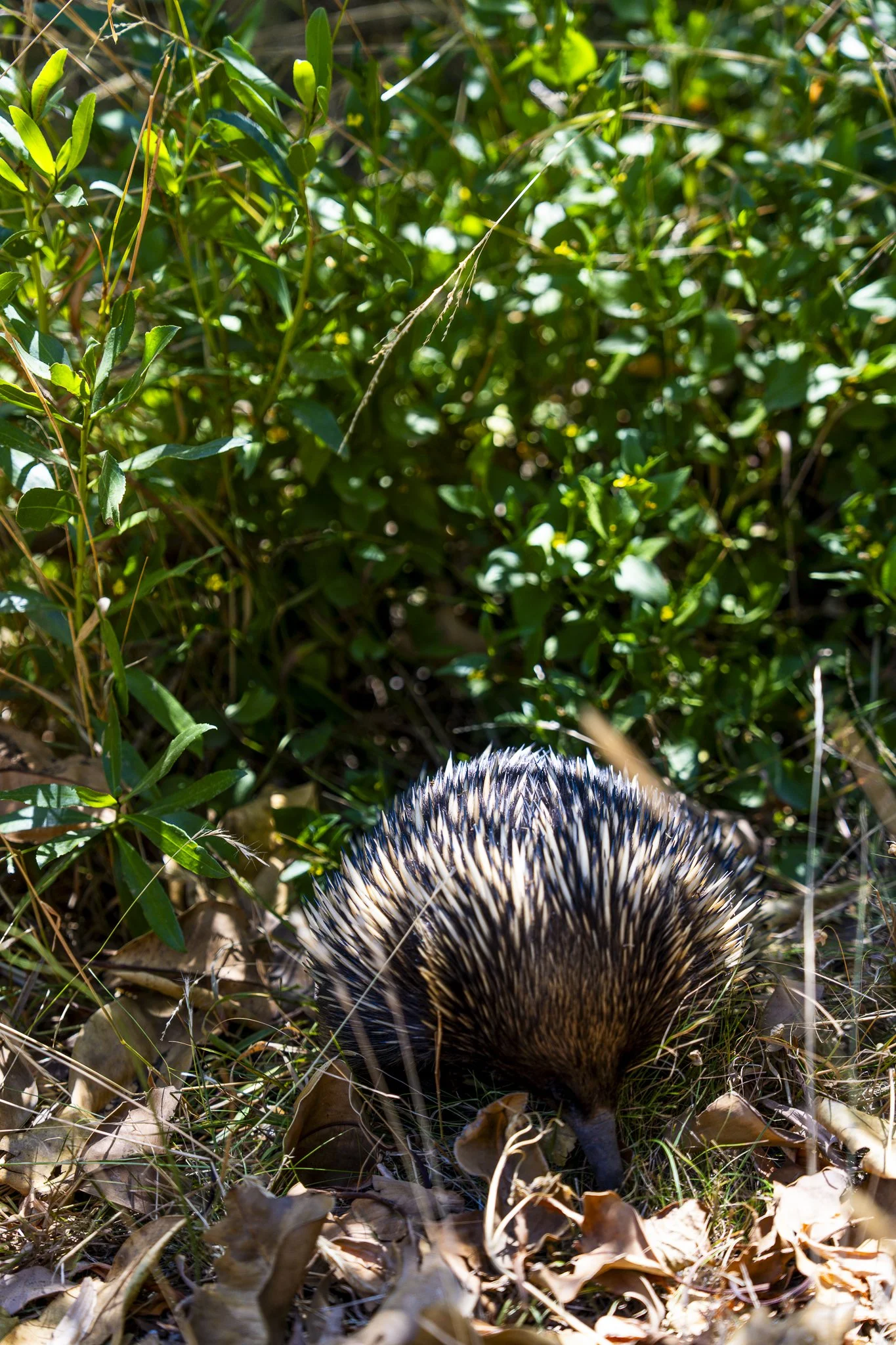
As if that weren’t enough, another surprise awaited us nearby. An echidna appeared, close enough that we could see every spike clearly. As it moved, its quills swayed gently, like tall grass stirred by a soft breeze. It was mesmerising—slow, deliberate, entirely unconcerned by our presence. Watching it shuffle along, pausing in search for food, felt like being quietly invited into a private moment of the natural world, unfiltered and unhurried.
By then, lunch had become more than just a meal. It was a reminder that in places like this, nature doesn’t stay politely in the background—it wanders right up to your table, steals your food, and leaves you with stories you didn’t know you were about to collect.
Before heading to the glamping site, we took a short stroll along the beach near the restaurant. On the walk back to the car, another moment stopped us in our tracks. A superb blue wren appeared—tiny, vivid, and impossible to ignore. Its narrow, pointed black tail flicked constantly, while its brilliant blue body seemed almost unreal against the muted tones of dusty earth and coastal branches.
For a fleeting second, it paused, perfectly posed, as if offering itself for a photograph. Then, just as quickly, it was gone. Restless, agile, and in perpetual motion, the little bird refused to linger. It darted, hopped, and vanished from view, leaving behind a flash of colour and the unmistakable impression of life in its most energetic, uncompromising form.
Kilcunda and the Waves
Inverloch is about fifty to sixty kilometres from Corinella via the Bass Highway, a stretch of road that quietly builds anticipation. As we approached Kilcunda, the landscape opened up and the sea suddenly revealed itself—rolling, restless, and unmistakably alive.
Ahead of us, waves rose and hurled themselves against towering rocks and sheer cliffs, exploding into towering sprays of white before collapsing back into the deep blue. Some surged forward only to crash directly onto the shore, their energy breaking apart into thick, foaming bubbles that glowed almost impossibly white against the vast ocean. The spray leapt metres into the air, as if the sea itself were breathing, exhaling power and fury with every strike.
We couldn’t help ourselves—we had to stop.
Standing there, watching the waves, was utterly mesmerising. There was something deeply humbling about it. The ocean was powerful, untamed, and unapologetic, yet undeniably beautiful. Each crash carried a sense of drama, a reminder of forces far greater than us, moving with their own rhythm and purpose. The sea felt alive—not quietly, not gently, but with raw, commanding presence. In that moment, there was nothing to do but stand still, watch, and appreciate the wildness of it all.
Inverloch and Award Winning Pies
As we left the coast behind, the pace of the day softened. Inverloch itself welcomed us with a gentler rhythm. We stopped briefly in the town centre to gather local tips and explore. One stretch of coastal beach immediately caught our eye—a ribbon of sand promising quiet walks and a chance to breathe in the calm after the drama of the waves. With a rough plan forming, we wandered the streets of the town, letting serendipity guide us.
And serendipity, it turned out, had a delicious sense of humour. Tucked between other shops, we stumbled upon a pie shop with a proud history of awards. We have a long-running tradition of hunting down local, award-winning pies wherever we travel, and this discovery demanded no hesitation. The aromas alone were intoxicating, warm pastry and rich fillings mingling with the crisp air. We picked out a selection for dinner later, knowing we’d return to them after our glamping stay.
With pies in hand, we finally set out for the glamping site. The drive was calm, reflective, a gentle counterpoint to the dramatic spectacle of the sea. There was a feeling of slowing down, of stepping into a different tempo—a space to immerse ourselves in comfort and nature, to let the wild and the domesticated coexist in harmony. The day, we realised, had carried us from the commanding energy of the ocean to the quiet delight of discovery, setting the perfect stage for the experience ahead.
Arrival at Inverloch Glamping Co.
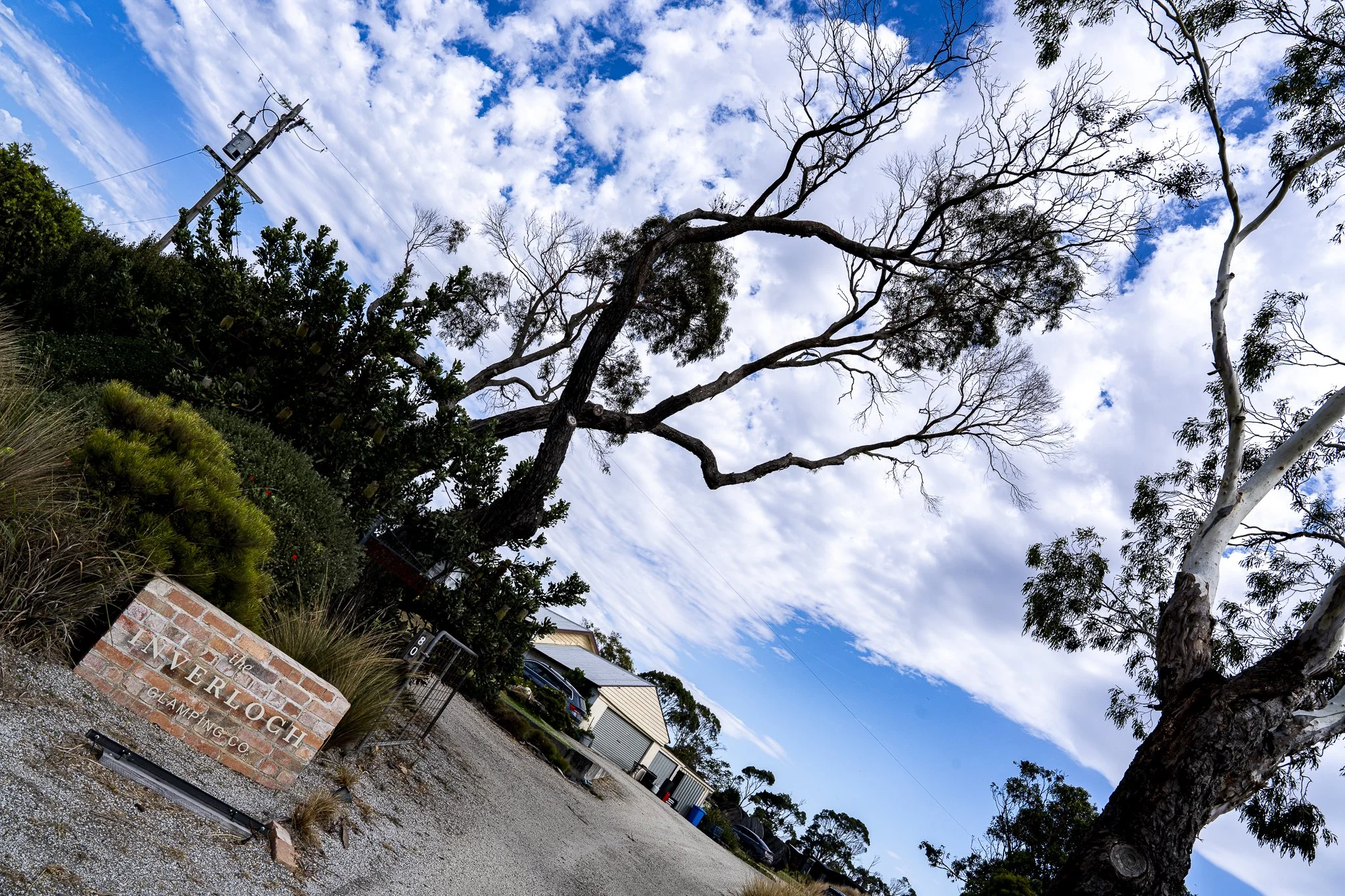
Turning into the entrance of the site, we were immediately greeted by a cute black-and-white dog. We had read about this little greeter in the information we received, but seeing it in person was an absolute delight. Its friendly enthusiasm set the tone for our stay—playful, welcoming, and entirely unpretentious.
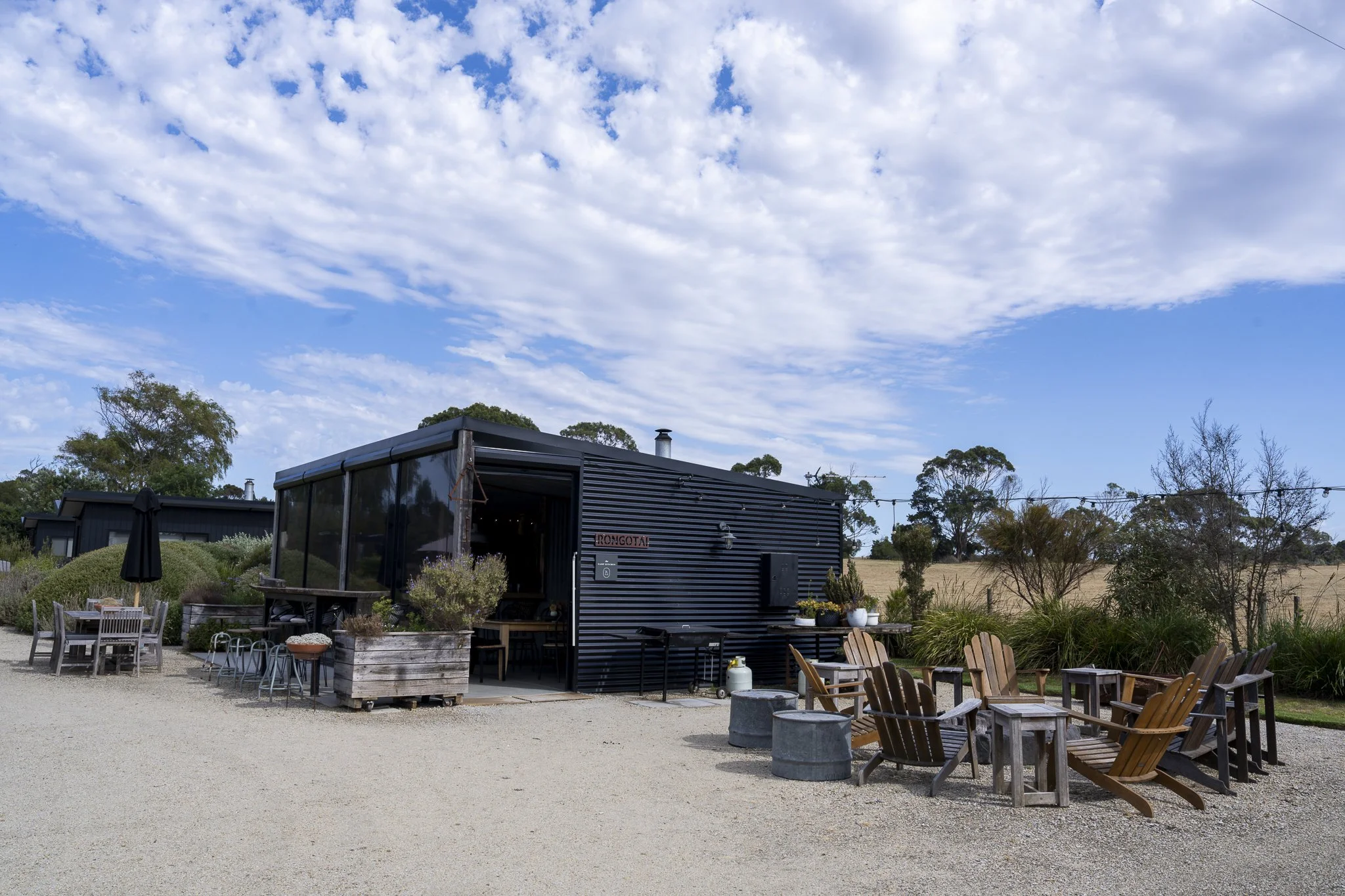
The host guided us to our dome and gave us a tour of the site, highlighting the thoughtful facilities available to guests. There was a common kitchen, spacious yet cosy, fully stocked with all the essentials should we wish to prepare our own meals. Outdoor seating was crafted from long Jarrah wood, rescued and repurposed, giving the area a rustic charm, while indoors, a long communal table invited shared meals and conversation. Hanging plants swayed overhead, softening the space and giving it a rustic, country feel. Nearby, a large fire pit promised warmth and laughter on cooler nights—perfect for larger groups or for lingering under the stars.
The showers continued the theme of carefully considered contrasts. A freestanding building offered a rustic yet luxurious experience, with naturally scented soaps, plush towels, and soft bathrobes. Next to it, an open shower and barrel bath added a playful touch—inviting guests to enjoy water, fresh air, and the sounds of nature in a private, intimate setting.
Beyond that, we discovered one of the most intriguing touches: an open bath for two, tucked away in a secluded corner. Guests could book a time for it, allowing the staff to prepare it for a special experience. We were instantly intrigued and promised ourselves we would return the next day to indulge. The thought of soaking there, surrounded by nature, already felt like one of the highlights of our stay.
Our own dome was complemented by a private fireplace and hammock, a small sanctuary for quiet reflection or simply soaking in the atmosphere. A nearby tent was also available, another option for relaxing or reading in the shade.
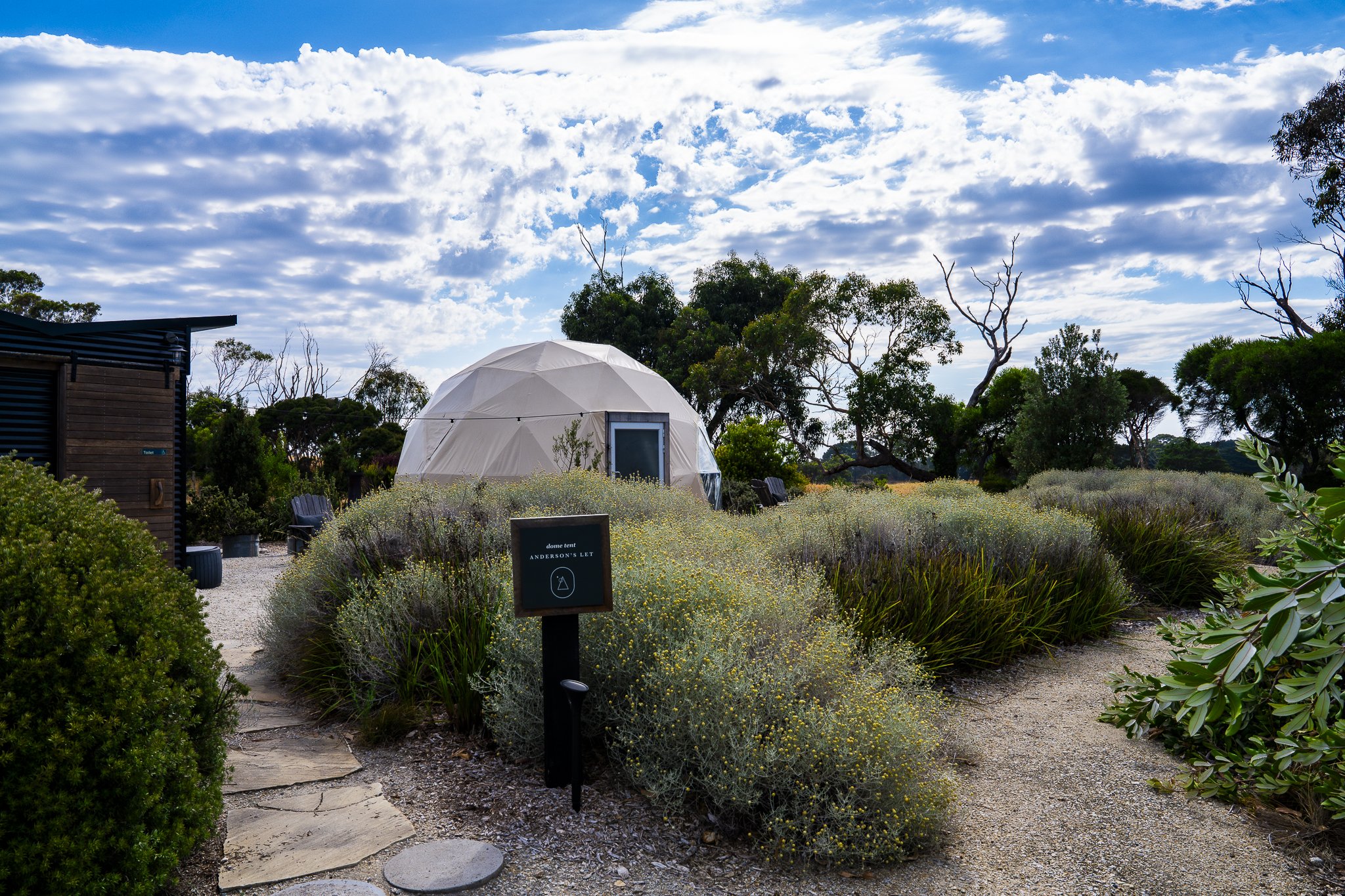
Every detail of the site felt deliberate. Each facility—from the playful dog at the entrance, to the rustic yet well-equipped kitchen, the luxurious showers, and the secluded baths—flowed seamlessly into the next. Together, they created a glamping experience that was both indulgent and connected to the surrounding bushland, allowing guests to fully immerse themselves in comfort and nature.
The Dome: Comfort and Luxury
The dome was impressive even from the outside—large, pristine white, and nestled gracefully within the natural landscape. Its presence alone promised comfort, luxury, and a sense of being pampered.
Stepping inside, we couldn’t help but exclaim, “Wow.” It exceeded every expectation. At the heart of the space, a queen-sized bed beckoned with soft linens, neatly arranged pillows, and a plush duvet that looked impossibly inviting. The air-conditioning kept the temperature perfect, cool and refreshing after a warm day outdoors.
A sitting area added another layer of comfort: a long sofa and two armchairs, each piled with pillows and blankets, seemed to beg you to sink in, relax, and simply gaze out through the large windows. Beyond them, a small outdoor seating area peeked through, offering a quiet spot to enjoy the surrounding bushland. Books were thoughtfully stacked, and fresh cut flowers added touches of life and warmth, creating an almost homely feel without compromising elegance.
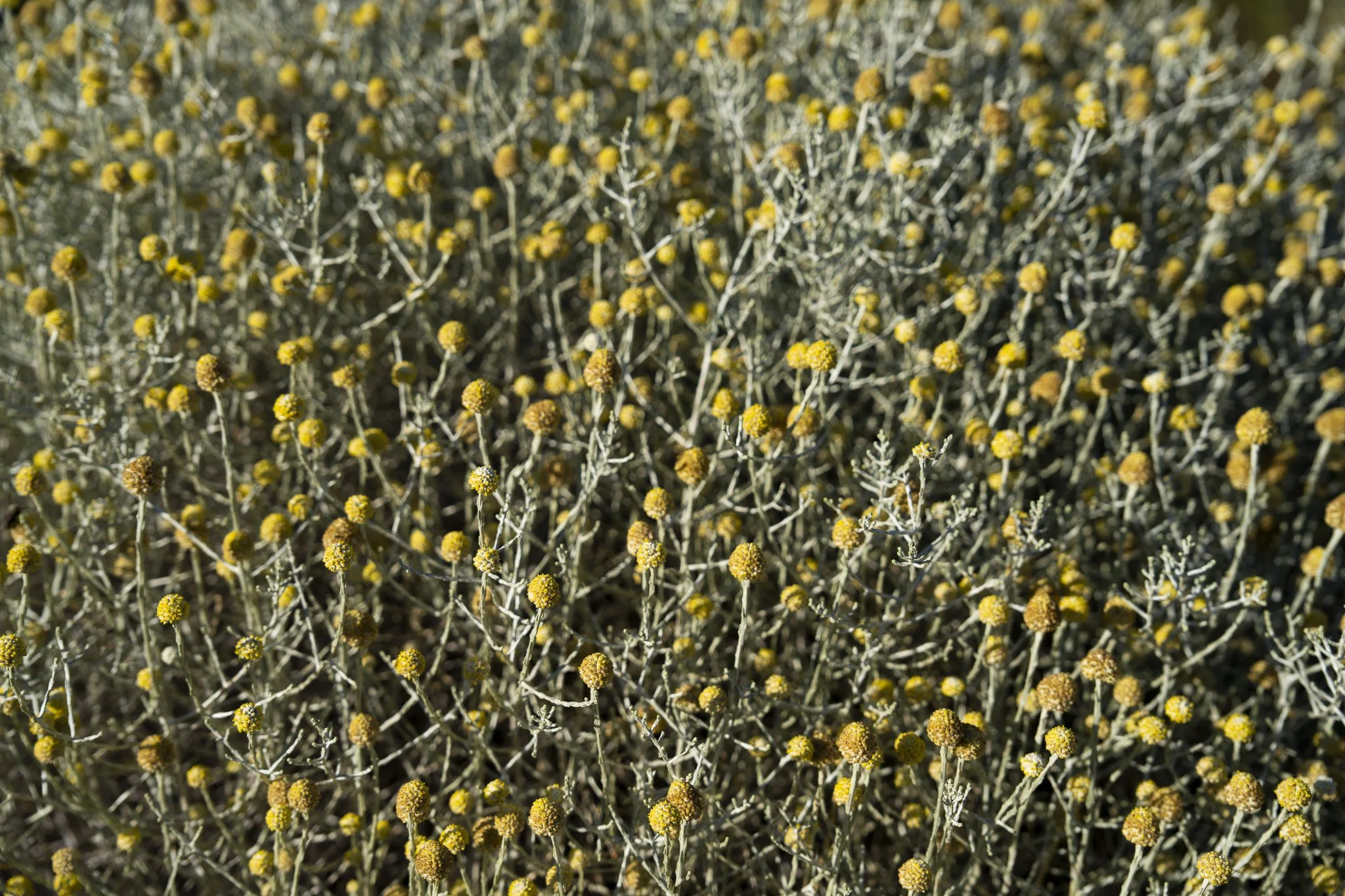
One thing lingered in my mind as I stepped into our dome: an unmissably soft, aromatic wooden smell. At first, I wasn’t sure where it came from. It seemed to float in from outside, subtle yet undeniable. As the afternoon waned, the scent intensified, and I finally located its source: a dense bush planted in front of our dome, the Cushion Bush, a coastal Australian native. Its small, spiky, silvery-grey foliage and pale yellow, button-like flowers produced a gentle, aromatic fragrance that filled the air, connecting the luxury of the dome to the untamed beauty just beyond its walls.
At the far end of the dome, a compact area held all the amenities one could need—tea, coffee, and hot chocolate—so that even the simplest comforts could be enjoyed without leaving the sanctuary of the dome. Every detail, from the layout to the little touches, felt deliberate, designed to make you linger and savor the space.
It was perfect. During our stay, the dome became more than just a place to sleep—it was a private retreat, where the pleasures of modern living harmonized with the sensory presence of nature. The soft beds, cozy sitting area, and gentle aroma of the Cushion Bush outside created a luxury experience that felt intimate, grounding, and unmistakably Australian.
Golden Hour in the Bush
We familiarised ourselves with the facilities once more—where the indoor and outdoor lights were controlled, where the firewood was stored, and how to prepare and light the woodfire should we need it later that evening. With practicalities sorted, we retreated to our dome and finally surrendered to the bed we had been longing to collapse onto from the moment we first saw it.
After the long drive, resting on the perfect softness of the mattress felt almost therapeutic. The gentle coolness of the air, the quietness surrounding us, and the comforting embrace of the bedding wrapped around us like an invitation to let go. Before we realised it, sleep quietly claimed us.
When I woke, the light filtering through the dome was still bright, yet noticeably softer—like the day itself was exhaling. Sunset was still about an hour away, but the world outside had already begun its transformation.
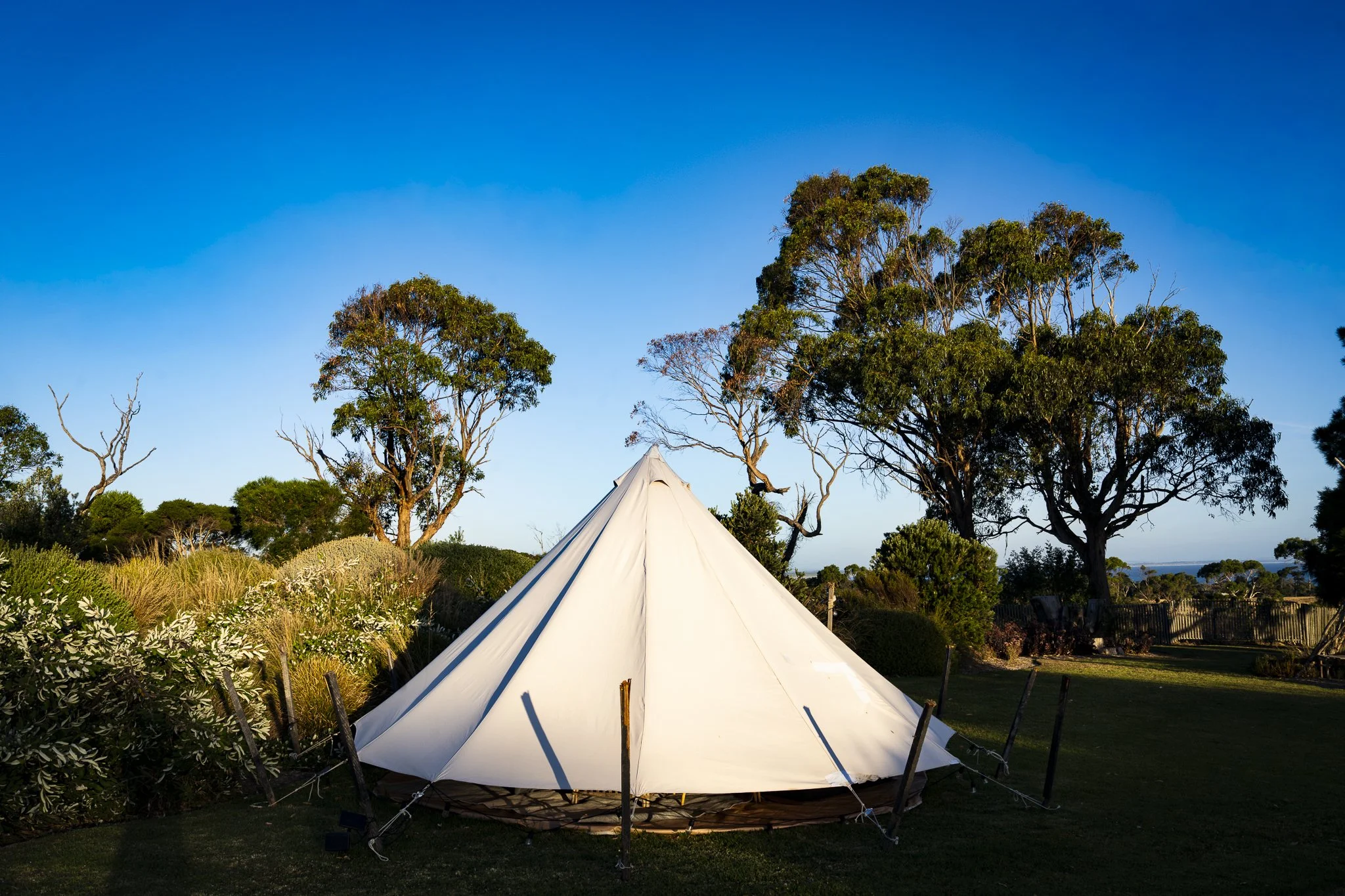
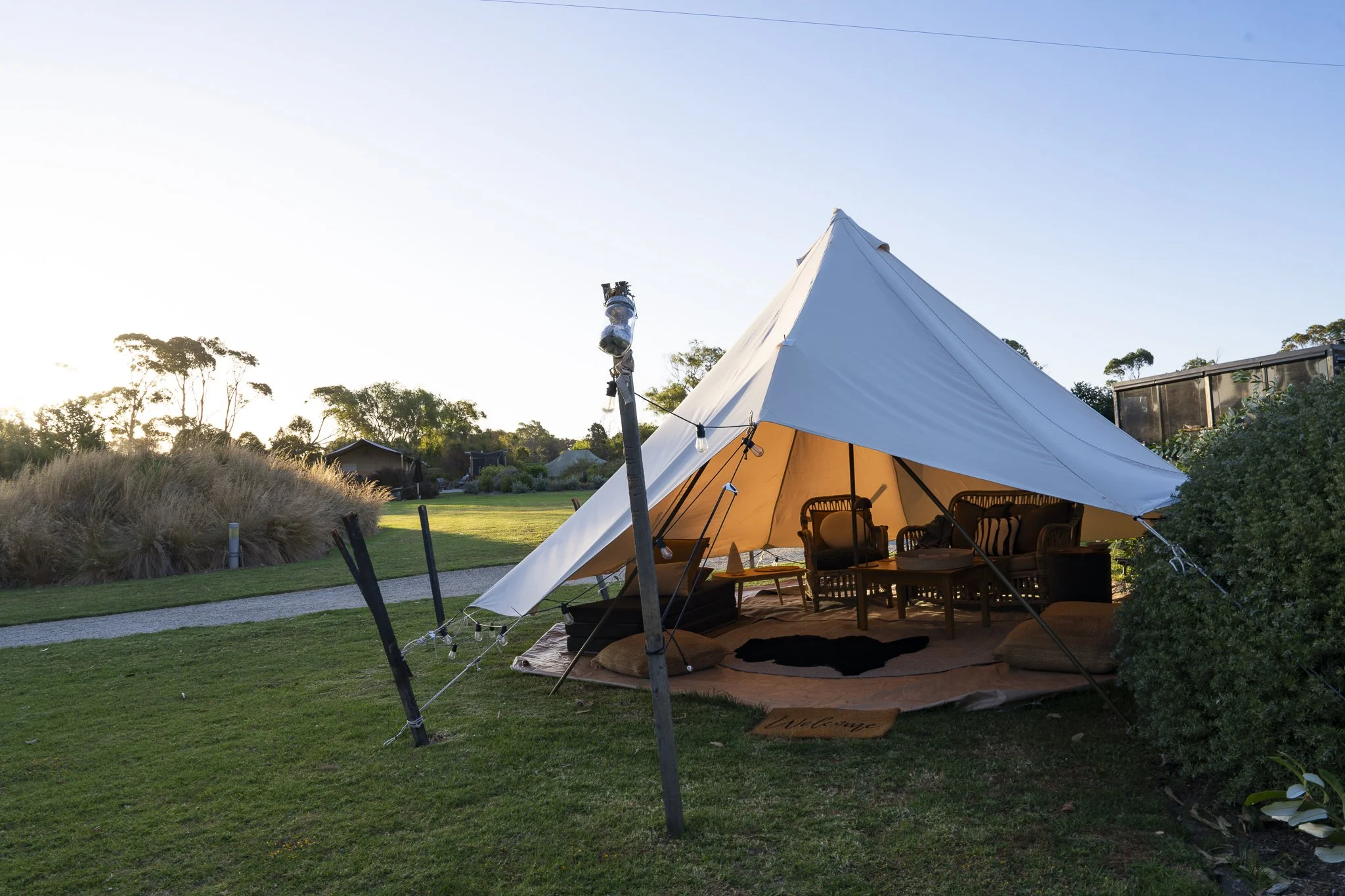
Stepping out of the dome, I paused. The landscape had changed completely under the afternoon sun. The other dome, which had blended almost invisibly into the surroundings earlier, was now glowing softly, like oversized white lantern stood across the bushland. Tall wild grasses had turned into fields of liquid gold, each blade catching the sunlight and shimmering gently as the breeze moved through them. The harshness of midday had dissolved into warmth, softness, and an almost dreamlike glow.
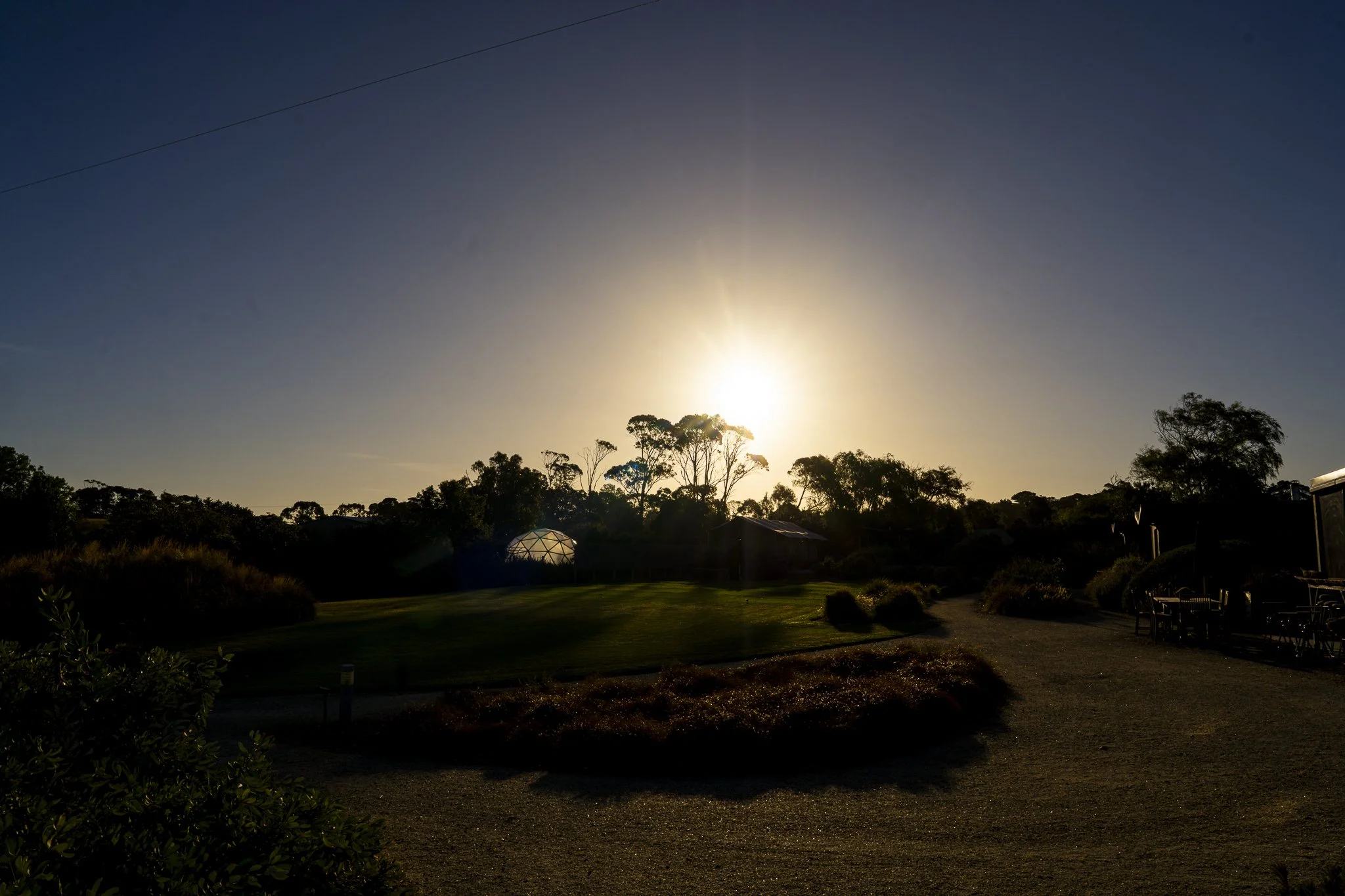
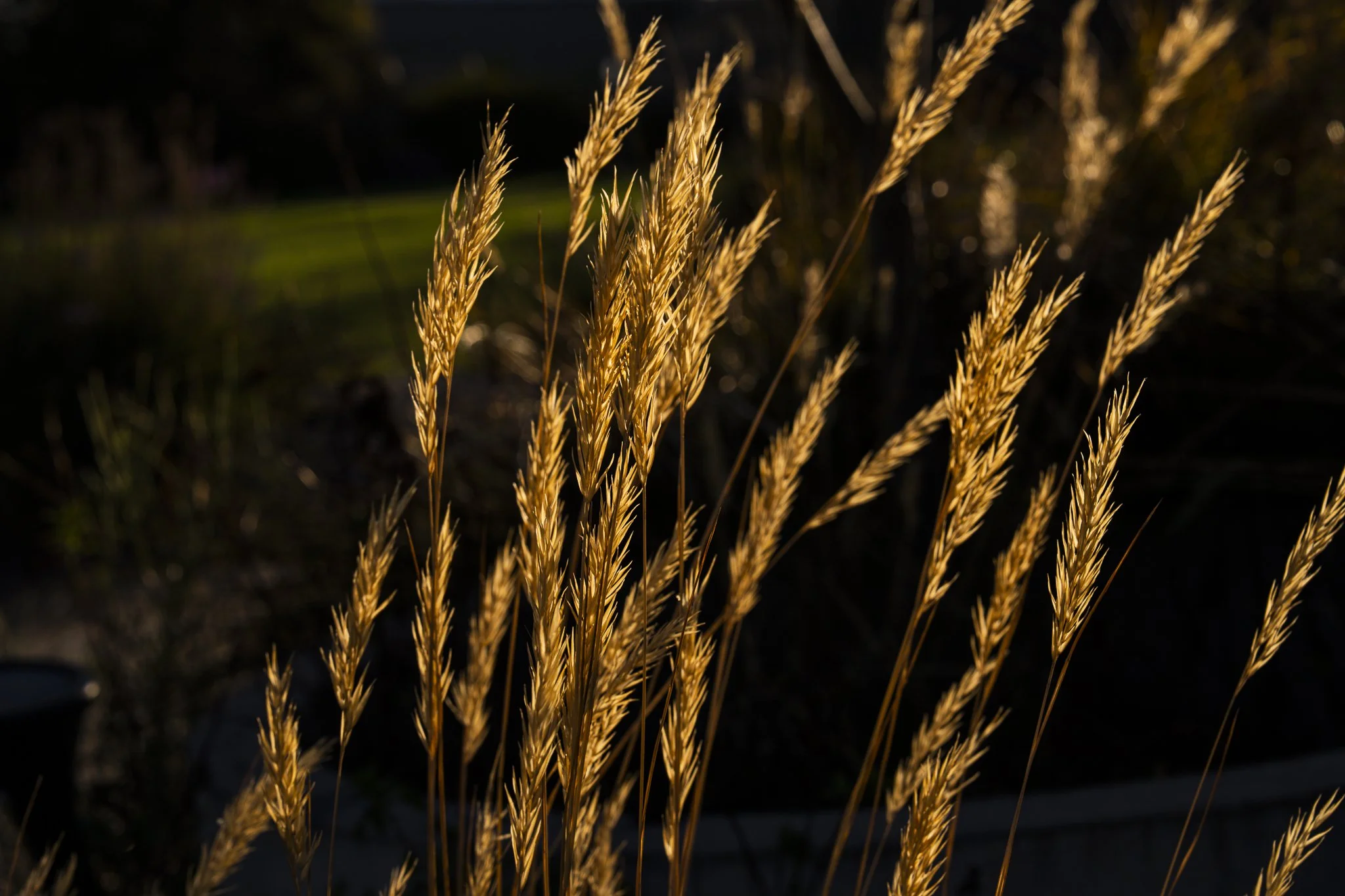
Surprisingly, the weather remained mild and welcoming, comfortable enough to linger outdoors in short sleeves. It felt like nature was offering a perfect pause—a gentle window between day and evening.
It was, unmistakably, golden hour.
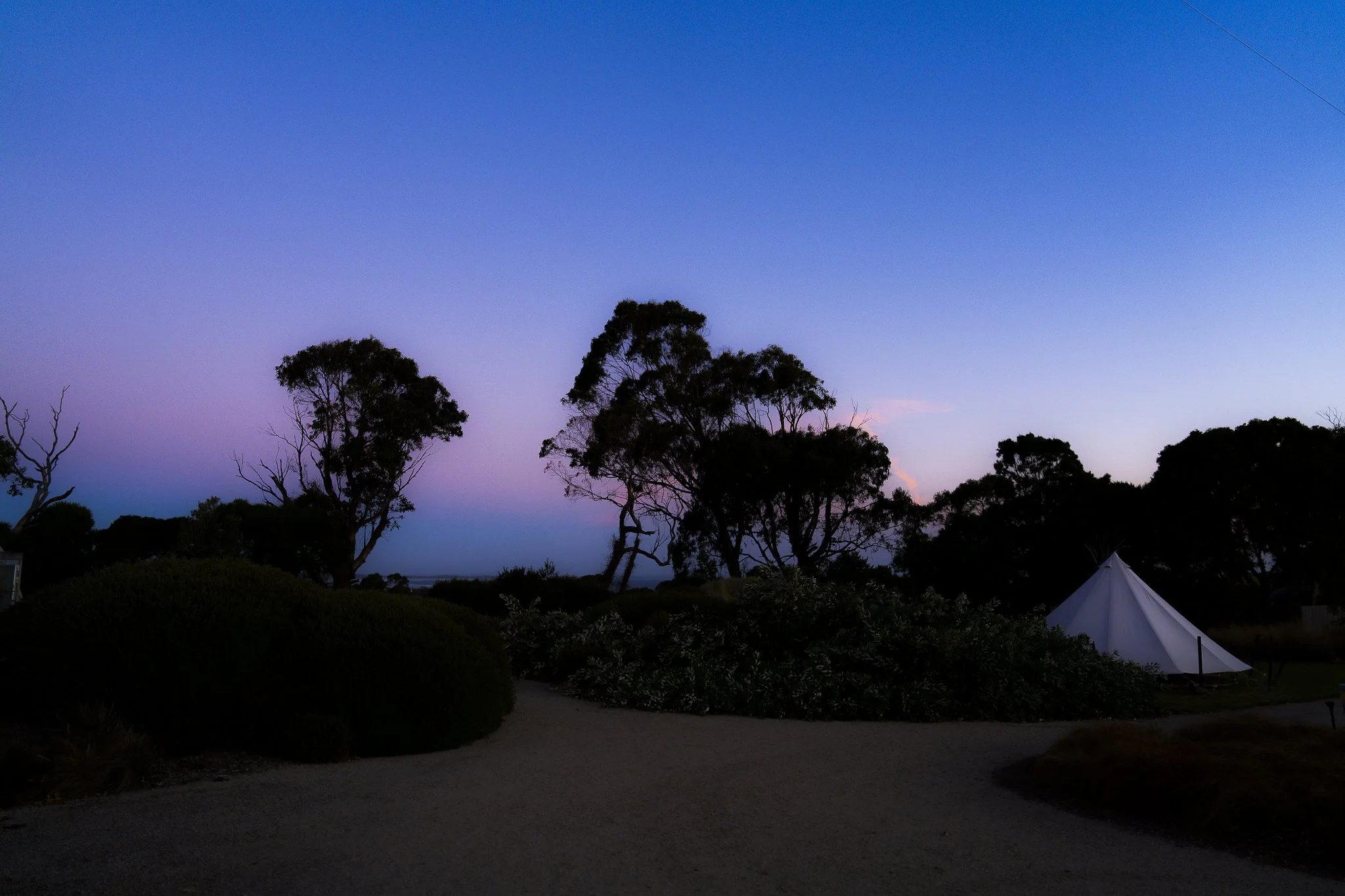
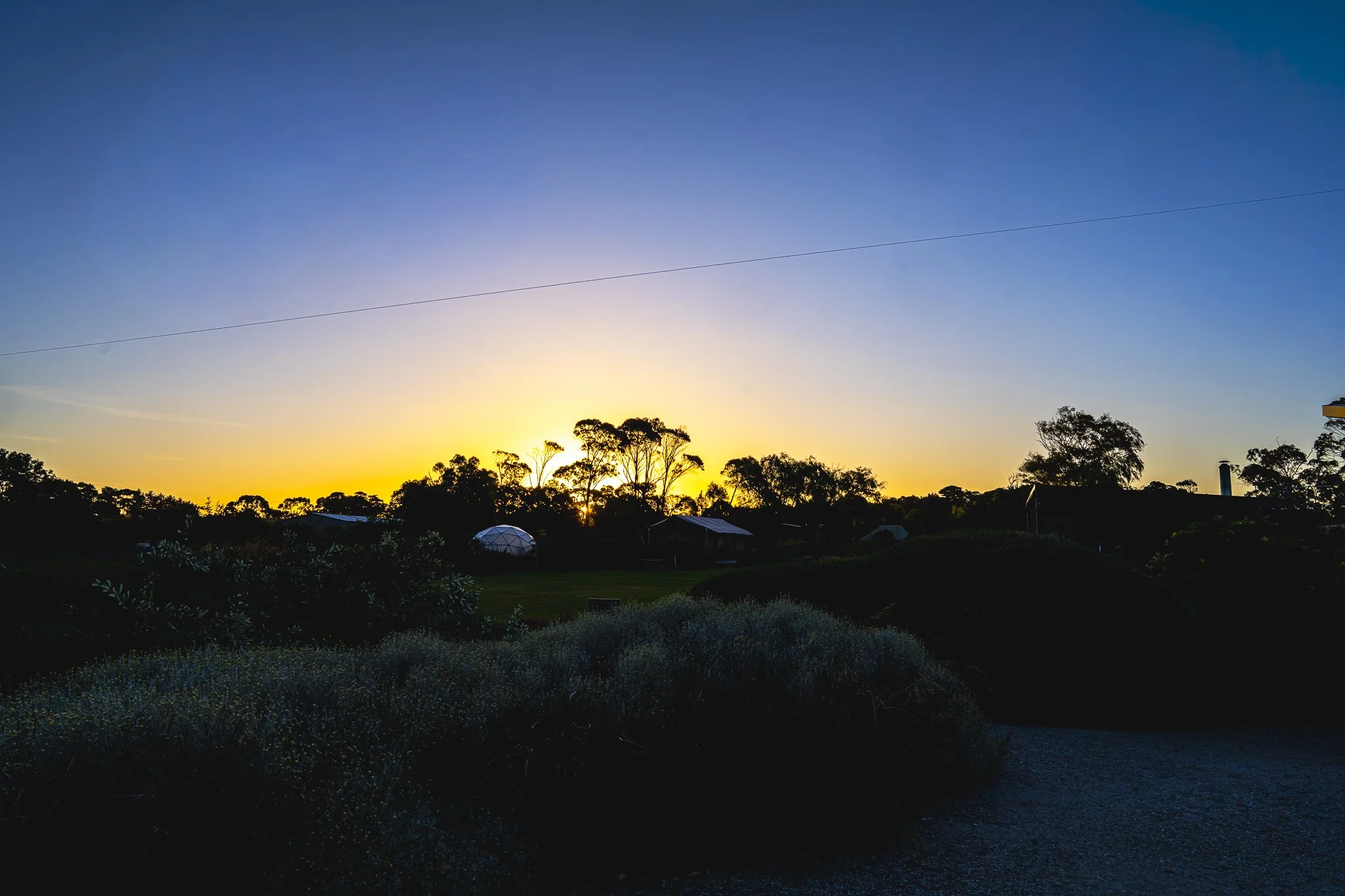
Cameras came out instinctively. We wandered slowly, capturing the light as it brushed against the domes, the grasses, and the surrounding bush. Each photograph felt like an attempt to preserve something fleeting—knowing that later, I would carefully sift through them, choosing which memories to hold onto visually, while the rest would remain stored quietly in my mind.
Eventually, we settled into the outdoor chairs with mugs of hot chocolate and slices of cake we had brought from home. Dinner was easily forgotten; lunch had been generous enough to linger well into the evening. Instead, we sat and allowed ourselves to simply exist within the moment.
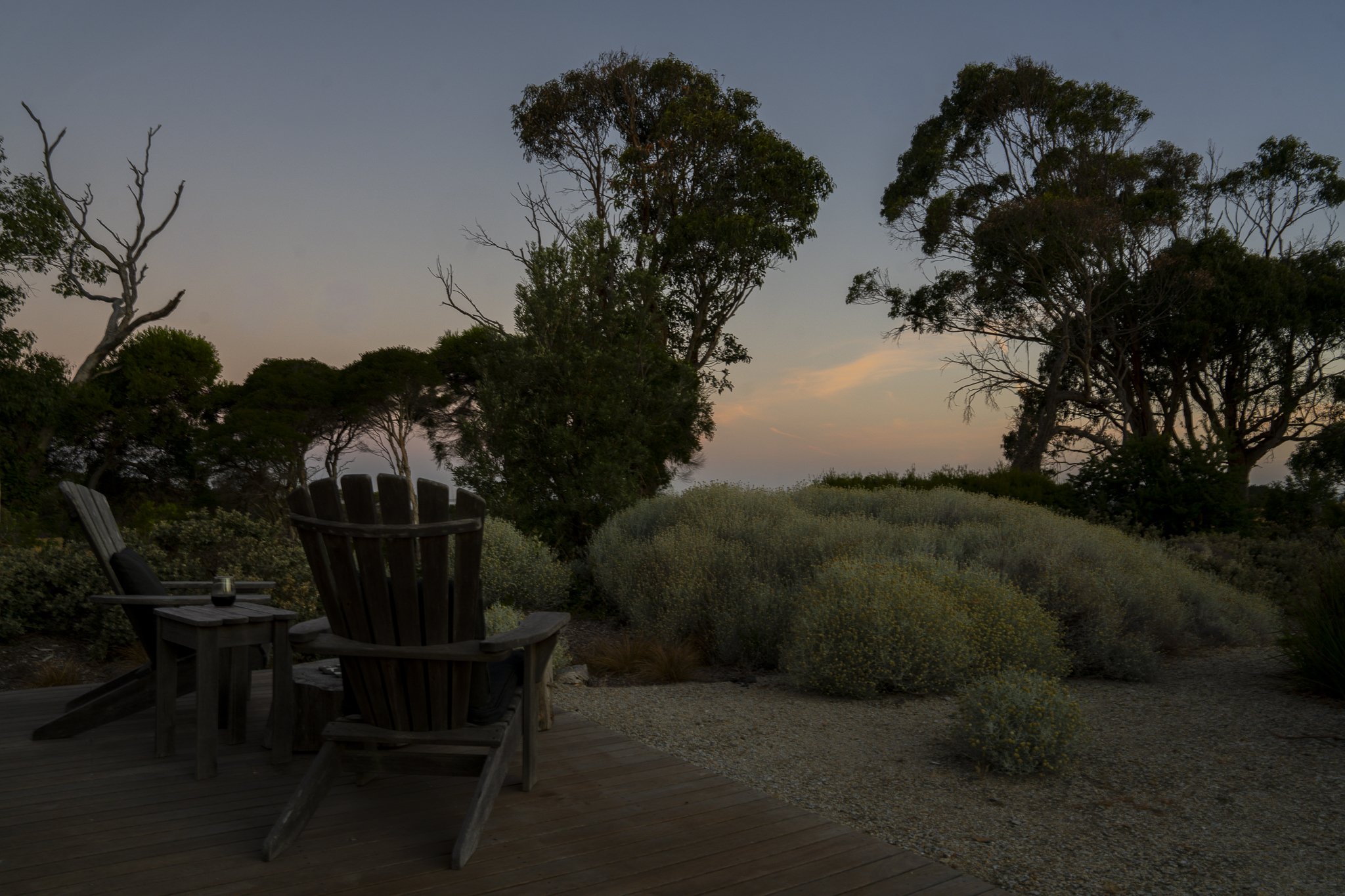
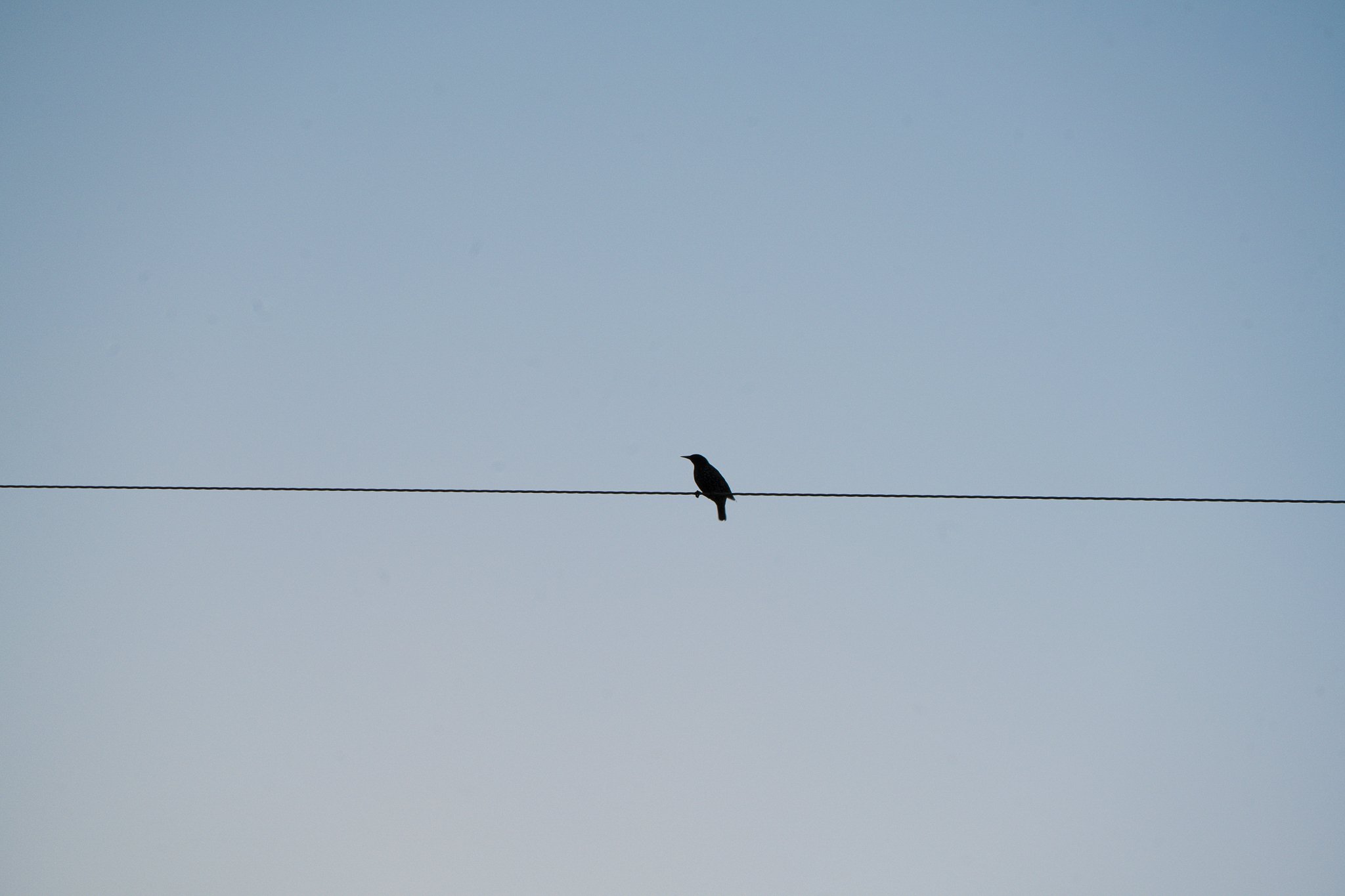
Above us, birds began to appear, first a few, then many more, tracing invisible pathways across the sky. They flew back and forth in loose, shifting formations, their silhouettes darting through the fading light. Some paused on the tall branches of nearby trees, chattering briefly before launching themselves back into the air again, as if relaying messages between one perch and the next.
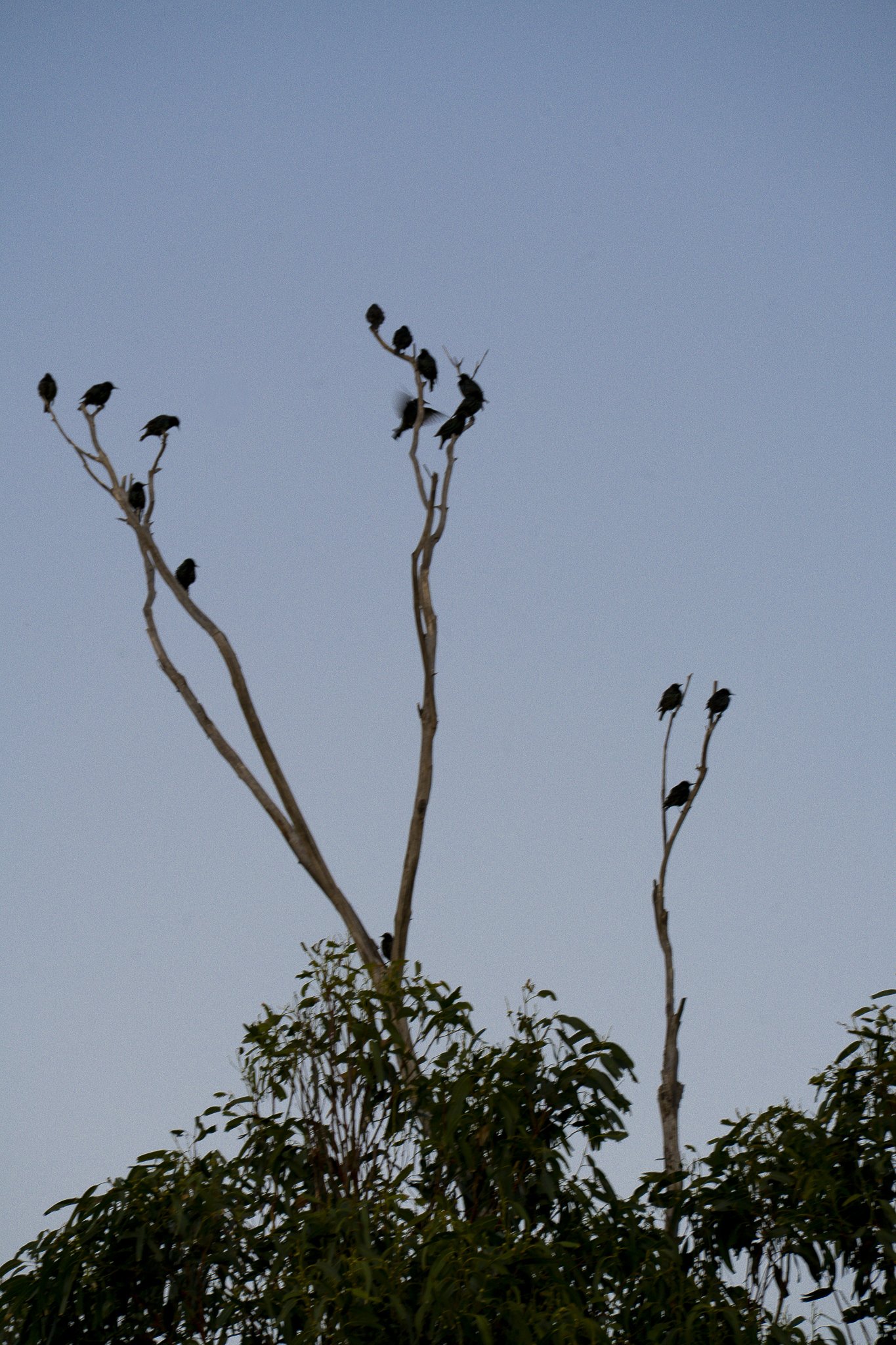
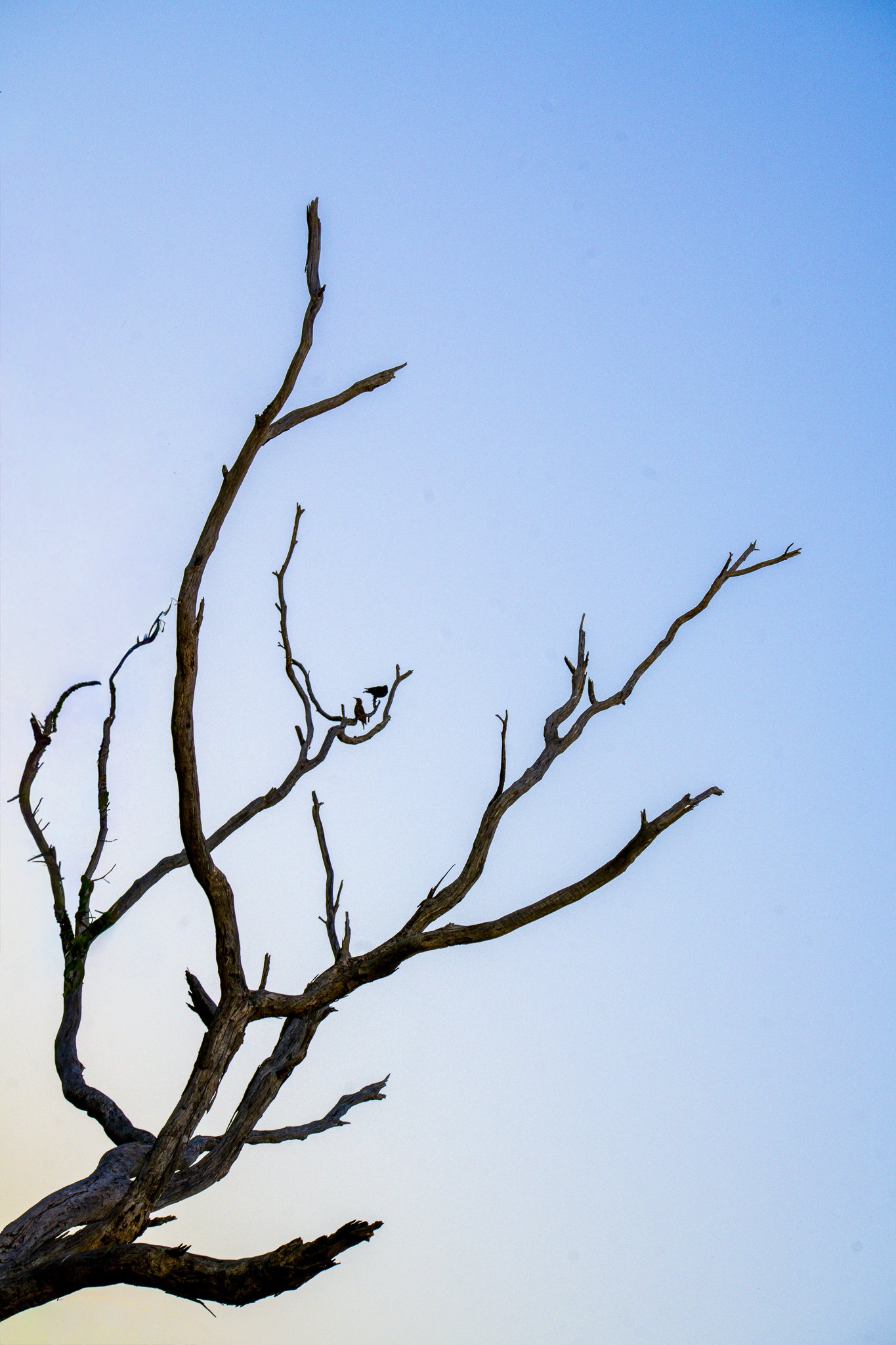
The quietness we had grown accustomed to was gradually replaced—not disrupted, but enriched—by their songs. It felt like a natural evening chorus, each call layered over the next, a conversation unfolding above and around us. The sound was lively yet soothing, filling the air with movement and life.
We sat there, sipping our drinks, listening to the birds, watching the light soften further, quietly aware that we were witnessing something simple yet extraordinary—a daily performance of nature that asked for nothing except our attention.
As the last traces of daylight slowly slipped from view, we decided it was time to light the fire. The temperature had dipped just enough to invite the warmth, and soon the flames were dancing steadily, casting a soft, flickering glow around us. We drew closer, huddling near the fire, warming our feet while lifting our gaze toward the open night sky.
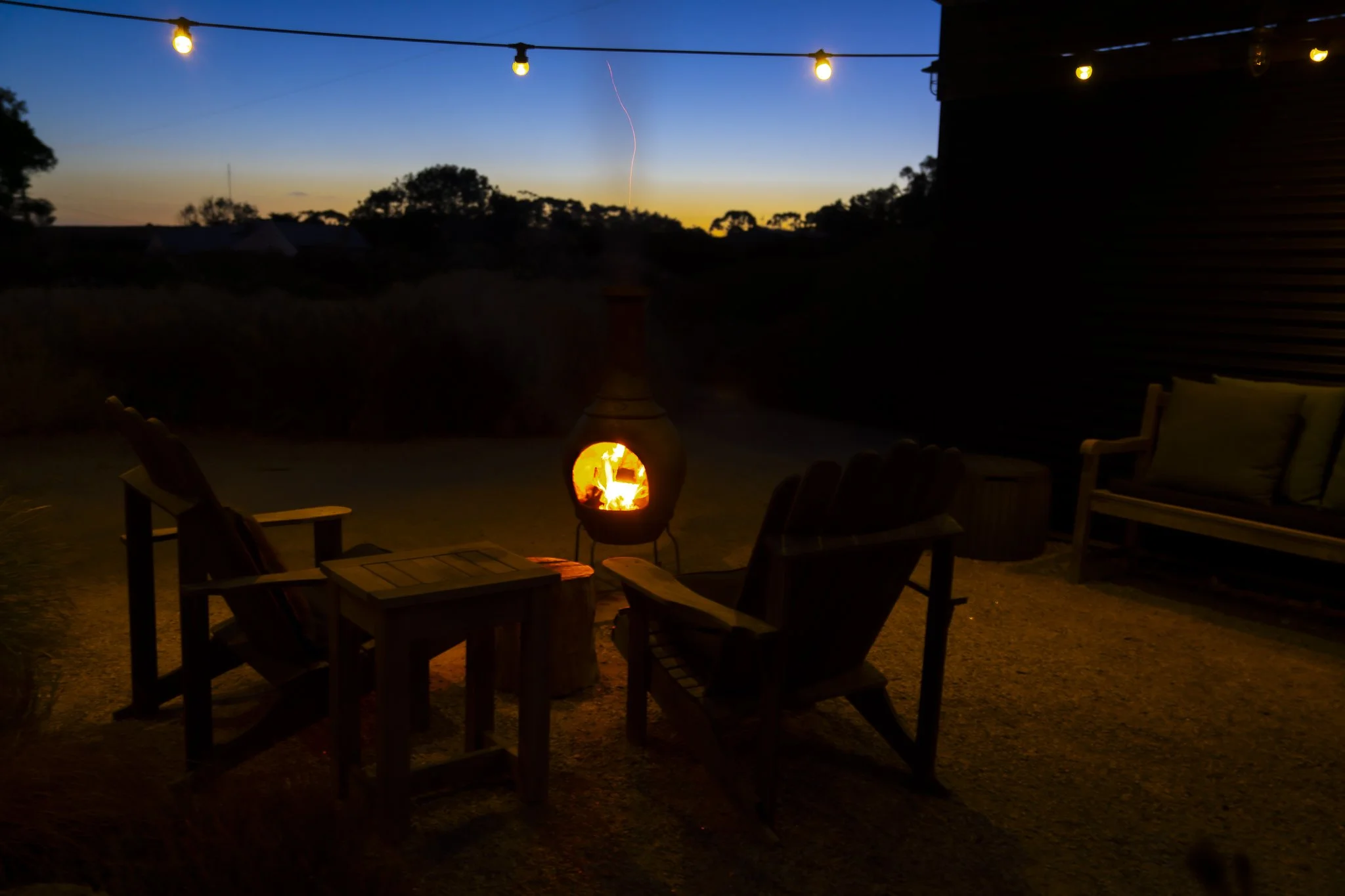
With each passing minute, more stars emerged, quietly revealing themselves as the sky deepened into darkness. Some shone brighter than others, sharp and defined, forming the pointed shapes we instinctively associate with stars in drawings, rather than mere distant dots of light. We weren’t familiar with constellations or star formations, unable to name what we were seeing, yet that knowledge felt unnecessary. Lying beneath them, we were simply in awe—appreciating the picture they painted across the vast, dark canvas above us.
A few stars twinkled gently, as if winking in and out of existence, adding movement to the stillness of the night. It was mesmerising. With no clouds to interrupt the view, the sky felt endless, generous in its display. It was one of those rare moments that quietly commands gratitude—a magnificent night scene offered freely, asking only that we pause and look.
Carrying those images with us, we eventually retreated back into the dome, the warmth of the fire still lingering in our bodies. As we settled into bed, just on the edge of sleep, a sound drifted in from outside—something we hadn’t noticed earlier. It was unfamiliar at first, rhythmic yet uneven, repeating again and again. We lay still, listening, wondering what it could be. The sound came from a distance and felt calm rather than alarming, so we let it be.
As the night deepened, the sound grew clearer, fuller, wrapping itself around the silence. Then it revealed itself—it was the ocean. The waves, rolling in steadily, breaking and retreating, their cadence natural and unforced.
With that realisation came a quiet smile. The sound of the waves, steady and soothing, became a gentle lullaby, easing us fully into sleep. Cradled by comfort, surrounded by darkness, and accompanied by nature’s own music, we drifted off, grateful for the day that had unfolded so beautifully.
Coastal Adventures and Dinosaur Footprints
The next morning began with something decidedly unromantic but entirely necessary: finding a charging station. With the driving we’d done the day before, the battery sat comfortably at half—better than expected—but we didn’t want to gamble. The RACV Inverloch Resort had charging facilities, and we wanted to test them properly. If this didn’t work, our carefree coastal wandering would quickly turn into careful rationing.
We were out as soon as we were ready. Breakfast was last night’s uneaten pies—warm, flaky, and satisfying—and worthy of a mental note to buy more before heading home.
The resort was only a short drive away. Finding the charger was easy; figuring out how it worked took a little longer. An account needed to be set up, apps downloaded, permissions granted—the quiet administrative ritual of modern travel. Once connected, though, the car began to drink steadily from the fast charger. While the battery filled, we stepped inside the resort to explore the dining area. The menu surprised us—interesting, well thought out—so we booked dinner for that evening.
Thirty minutes later, another 30 percent had been added. Enough for a full day of exploring. We unplugged, confident now, and turned our attention fully to the coast.
The staff at the Information Centre had recommended the coastal drive, pointing out several stops worth making along the way. One, in particular, caught our imagination: The Cave where, at low tide, a stretch of coastline where dinosaur footprints can be found embedded in rock during low tide. Low tide that day began at 10 a.m., which made this our natural first stop.
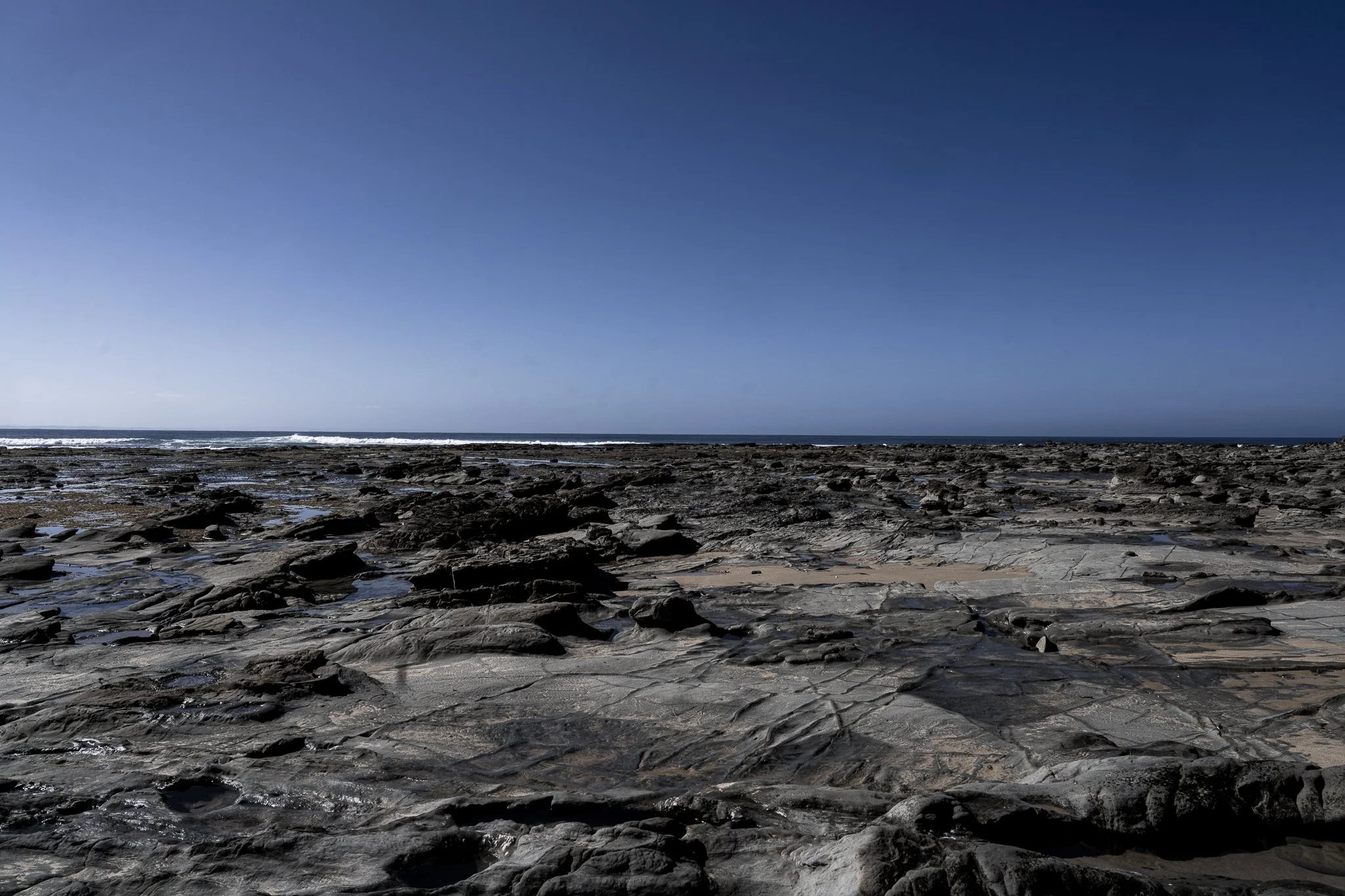
A short descent from the car park delivered us straight onto the beach. The tide had retreated dramatically, pulling the sea far back and exposing a vast stretch of rock slicked with algae. At that hour, we were completely alone. No footprints, no voices—just rock, air, and the distant sound of water breathing in and out.
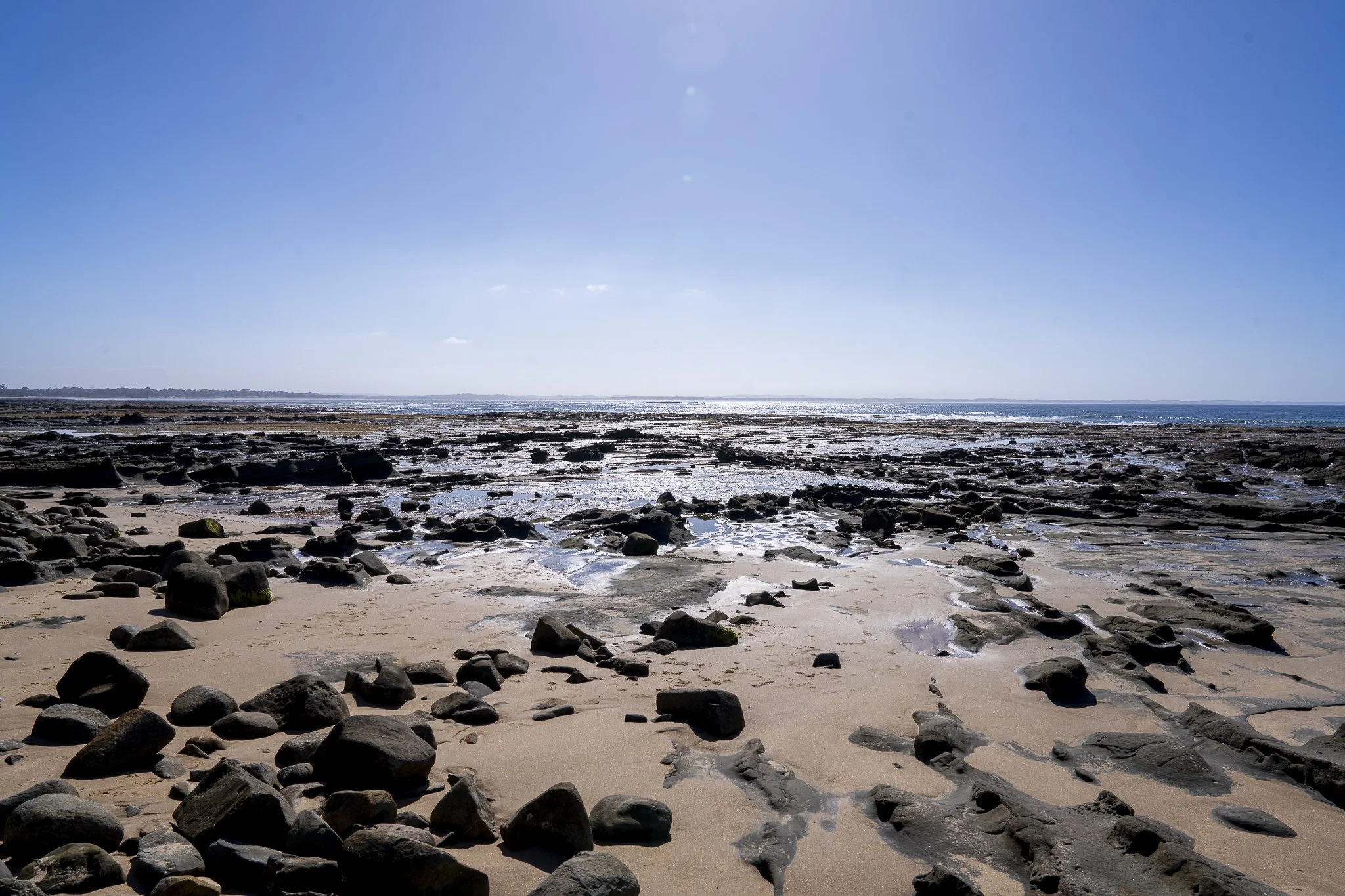
We had been told to look for a small, round hole in the cliff face—a marker. From there, we were to walk in a straight line toward the sea. Somewhere along that invisible path lay the rock bearing the dinosaur footprint. We found the marker almost immediately, and excitement surged. This would be easy, I thought.
It wasn’t.
We walked, scanned, circled. Thirty minutes passed. The image of the footprint in my mind grew vague, then unreliable. Was it deep? Shallow? Clear? Weathered? I realised I no longer knew what I was searching for. Eventually, I stopped looking.
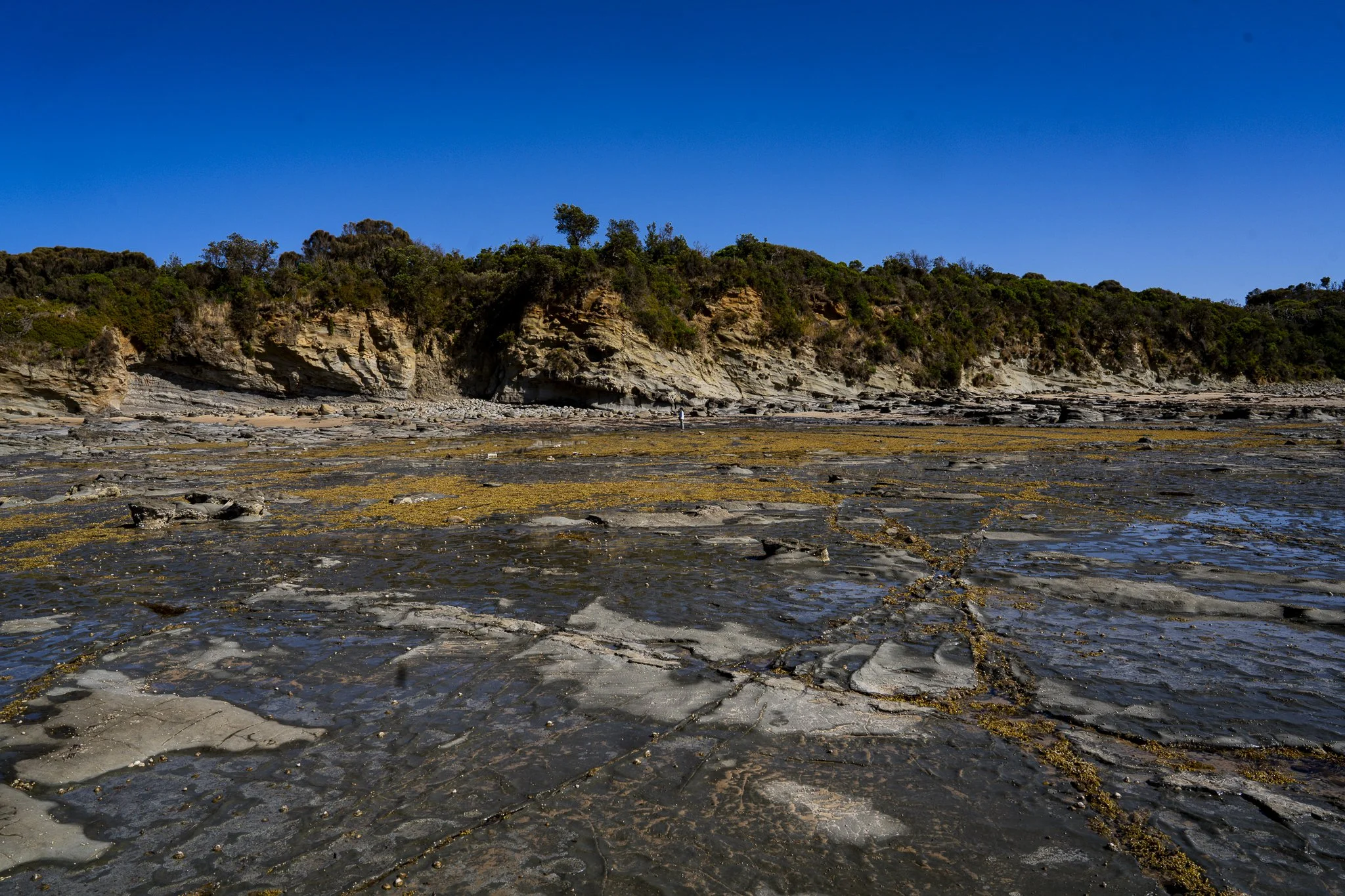
And that’s when the place revealed itself.
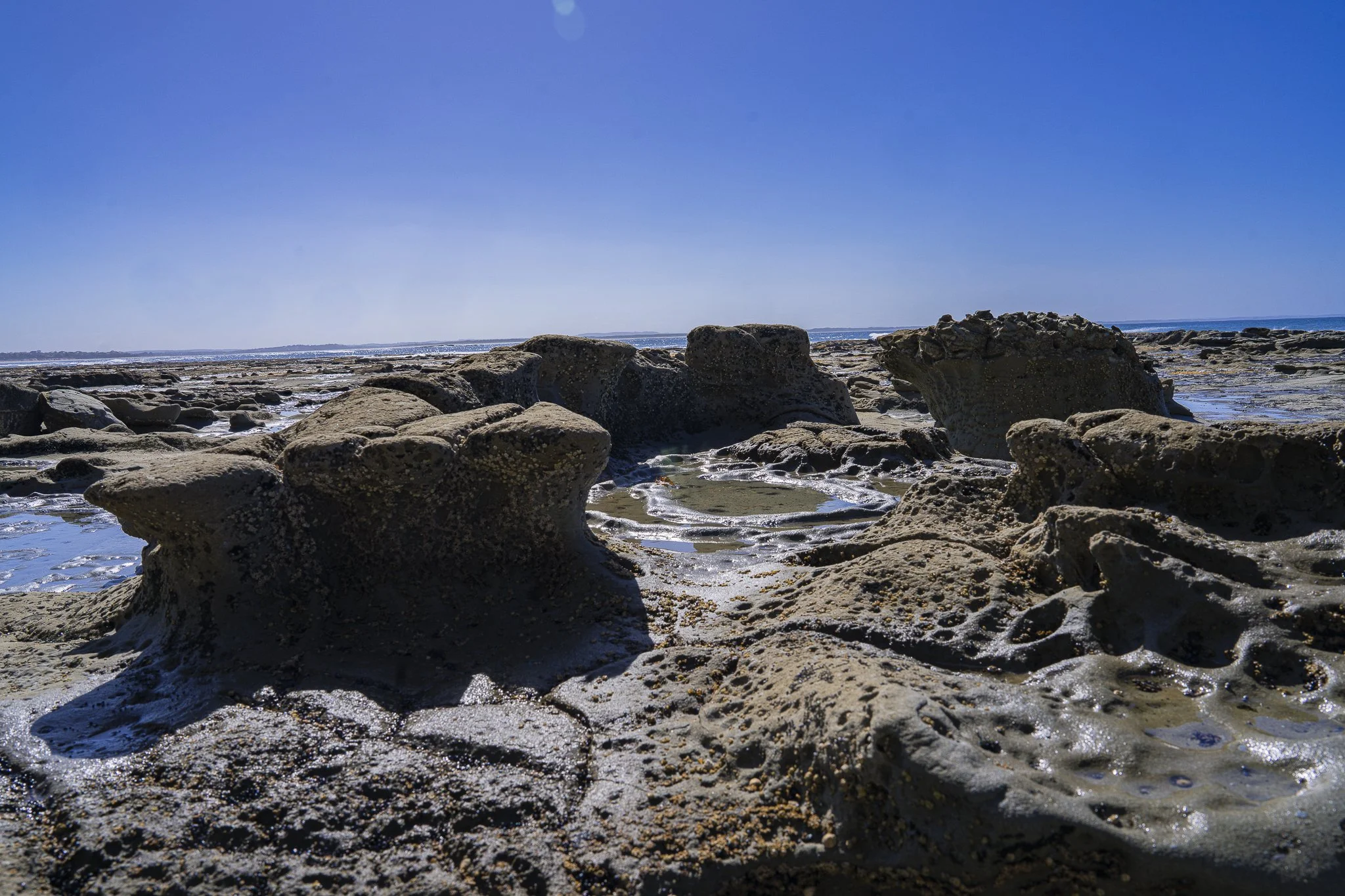
Freed from the single-minded hunt, I began to really see the landscape beneath my feet. The rock formations were unlike anything I had encountered before—ancient, folded, and layered in ways that spoke of deep time. These were not rocks shaped by decades or even centuries, but by forces working patiently across prehistoric ages. Walking across them felt less like a beach stroll and more like stepping through a geological archive.
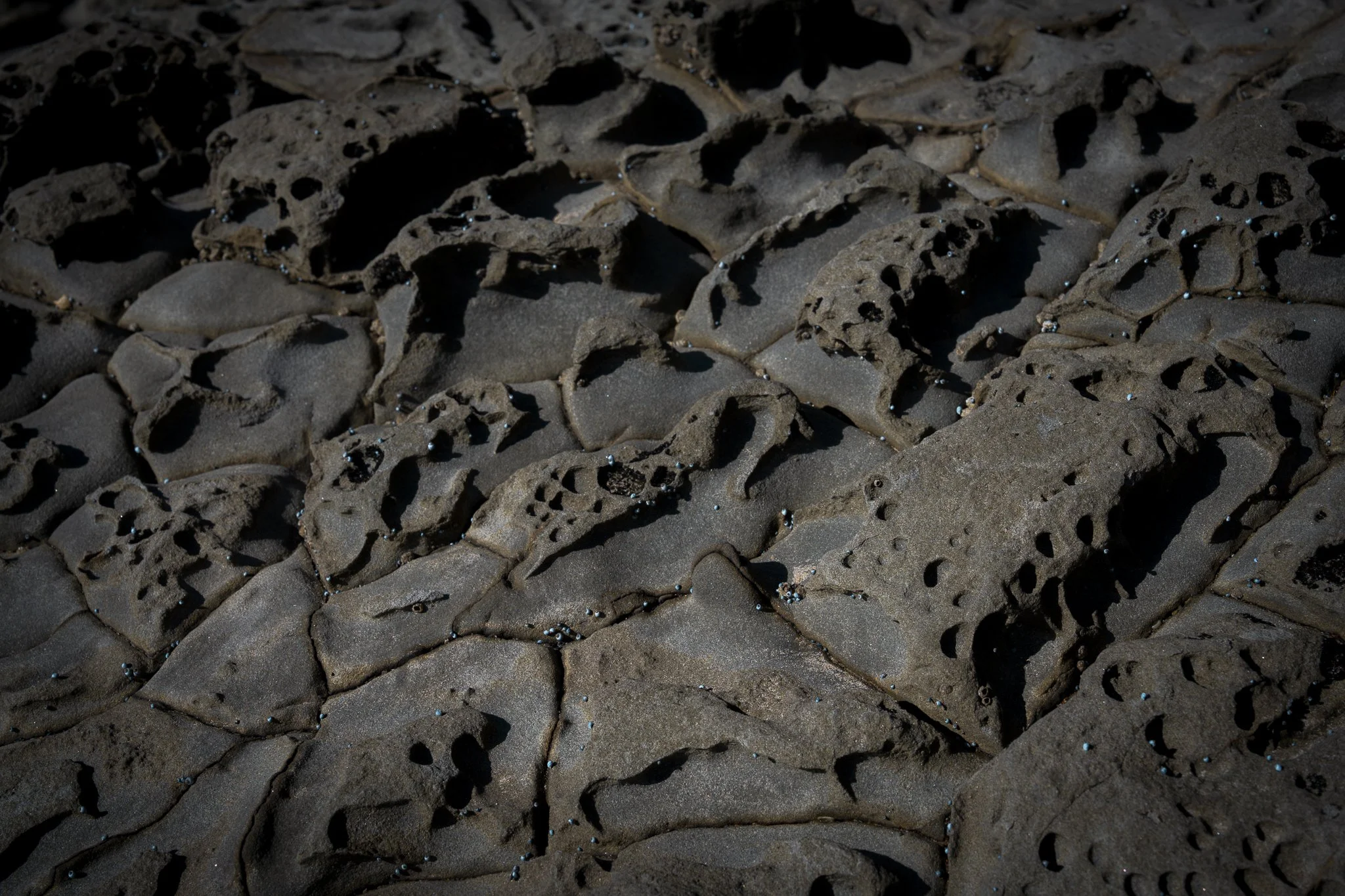
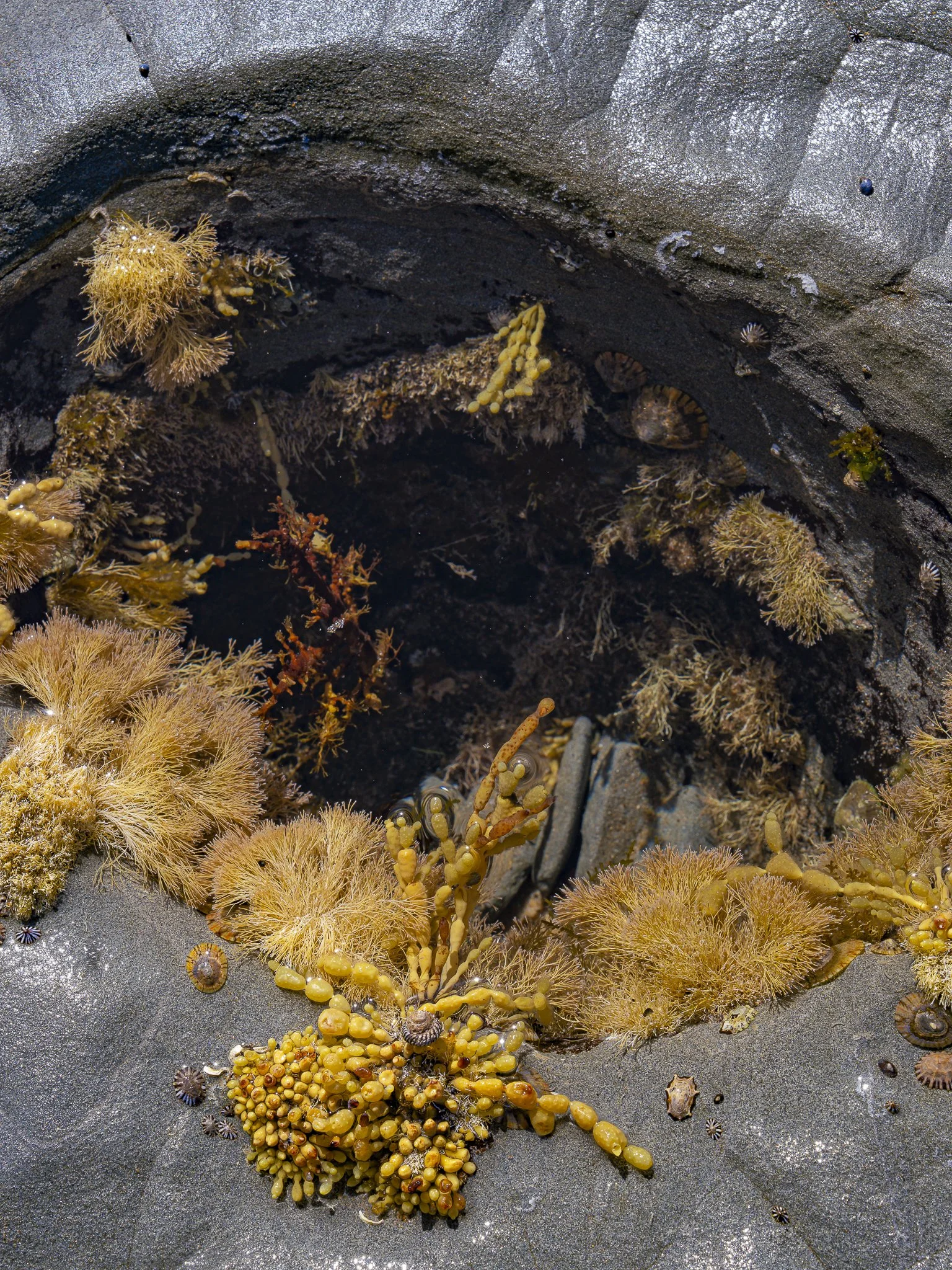
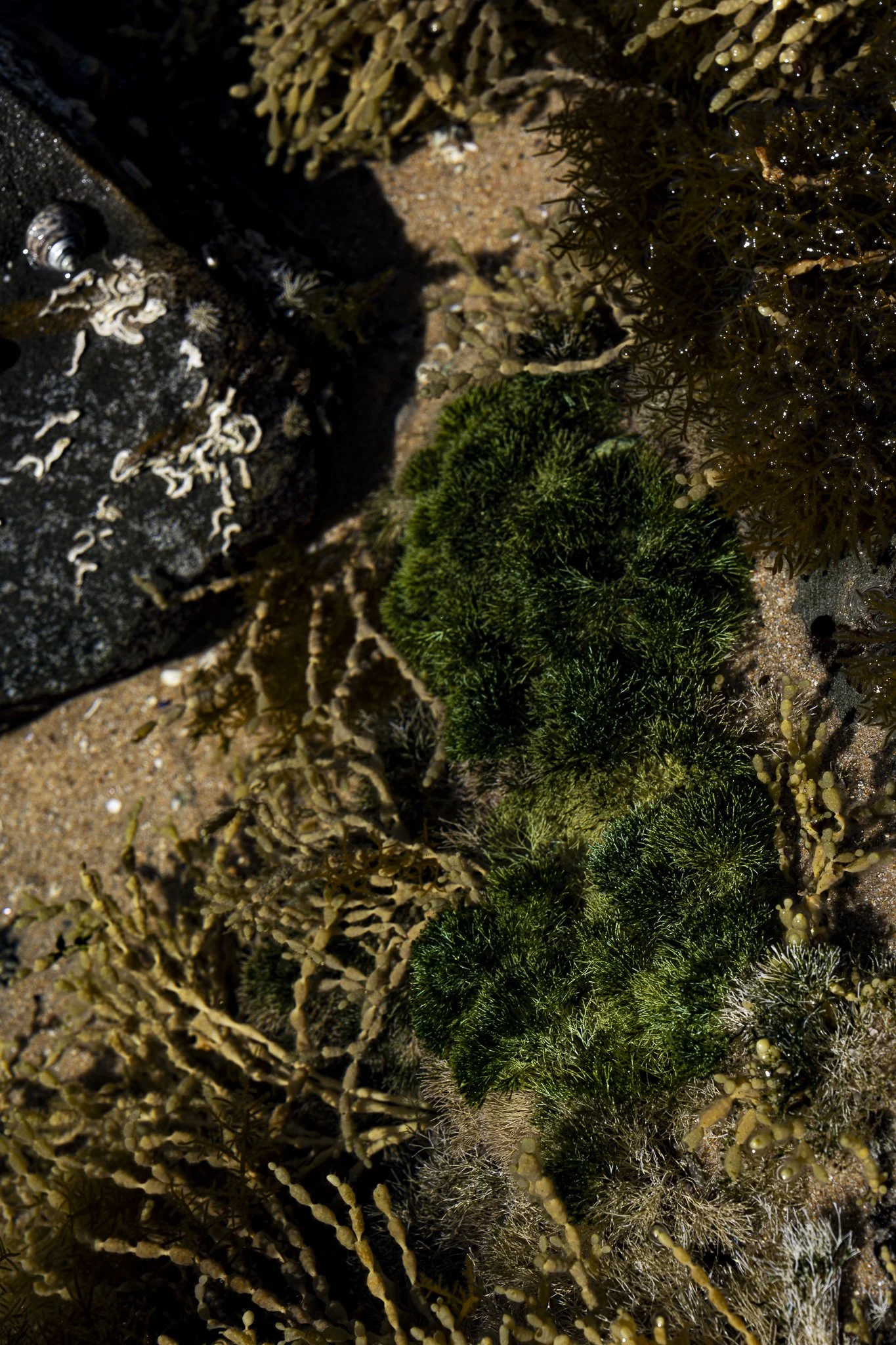
Small rock pools dotted the surface, each holding its own quiet universe. Clear, still water cradled strands of green and rust-coloured algae, delicate sea grasses swaying gently beneath the surface. The colours were vivid against the dark stone, and the silence made everything feel suspended, as if time had paused.
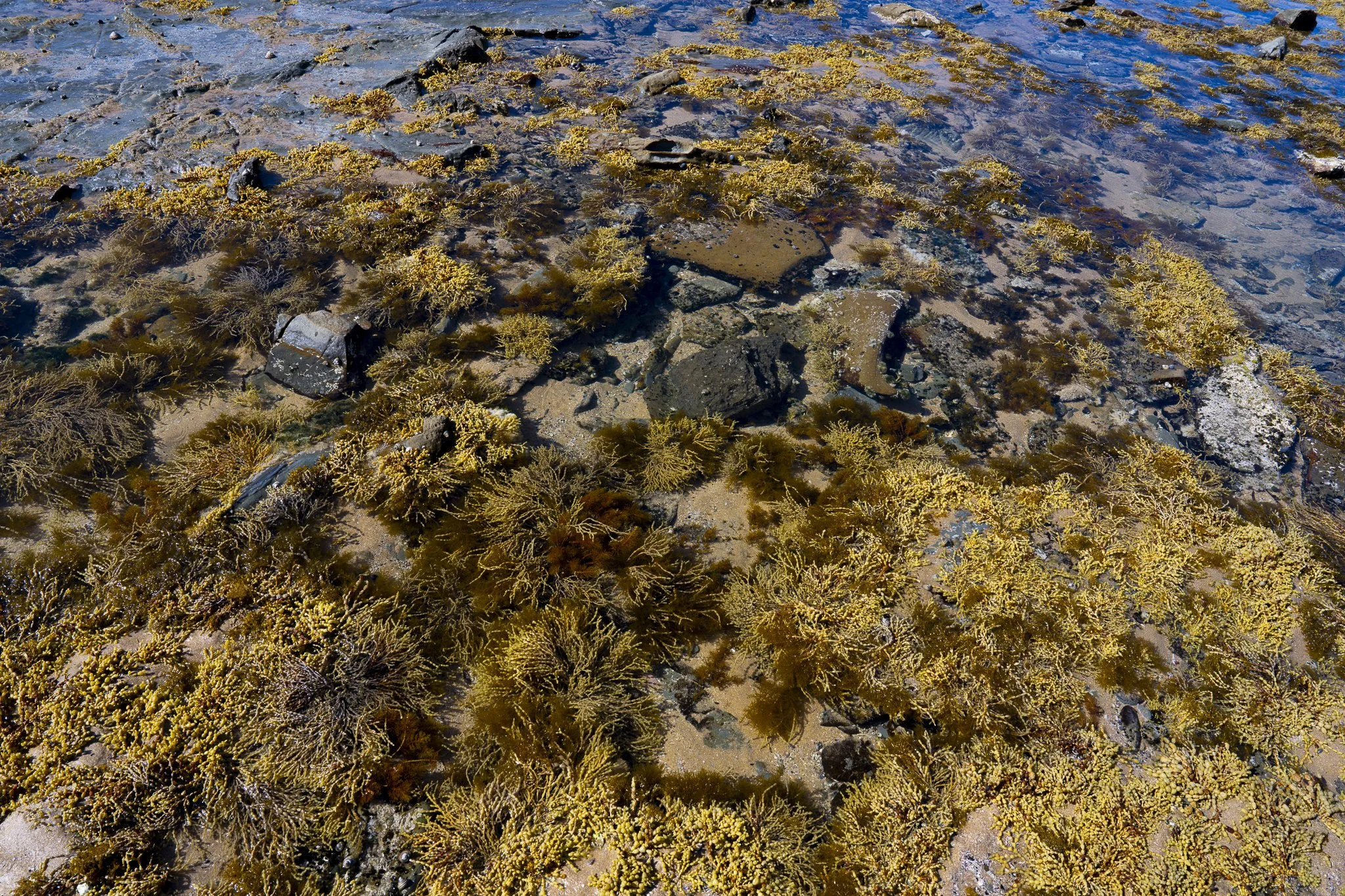
Those rock pools pulled me instantly back to childhood. I remembered low tides long ago, crouching beside similar pools, watching colourful tropical fish dart between shadows, sometimes catching them carefully to bring home for our aquarium. Those pools were places of curiosity and discovery, entire worlds contained within corals.
Here, there were no fish—only water, plants, and light—but the feeling was the same. A sense of quiet wonder. Of being small in the presence of something vast and old. I hadn’t found dinosaur footprints, but I had found something else entirely: the unmistakable sensation of walking across the remnants of a world that existed long before me, and would continue long after.
And somehow, that felt even more extraordinary.
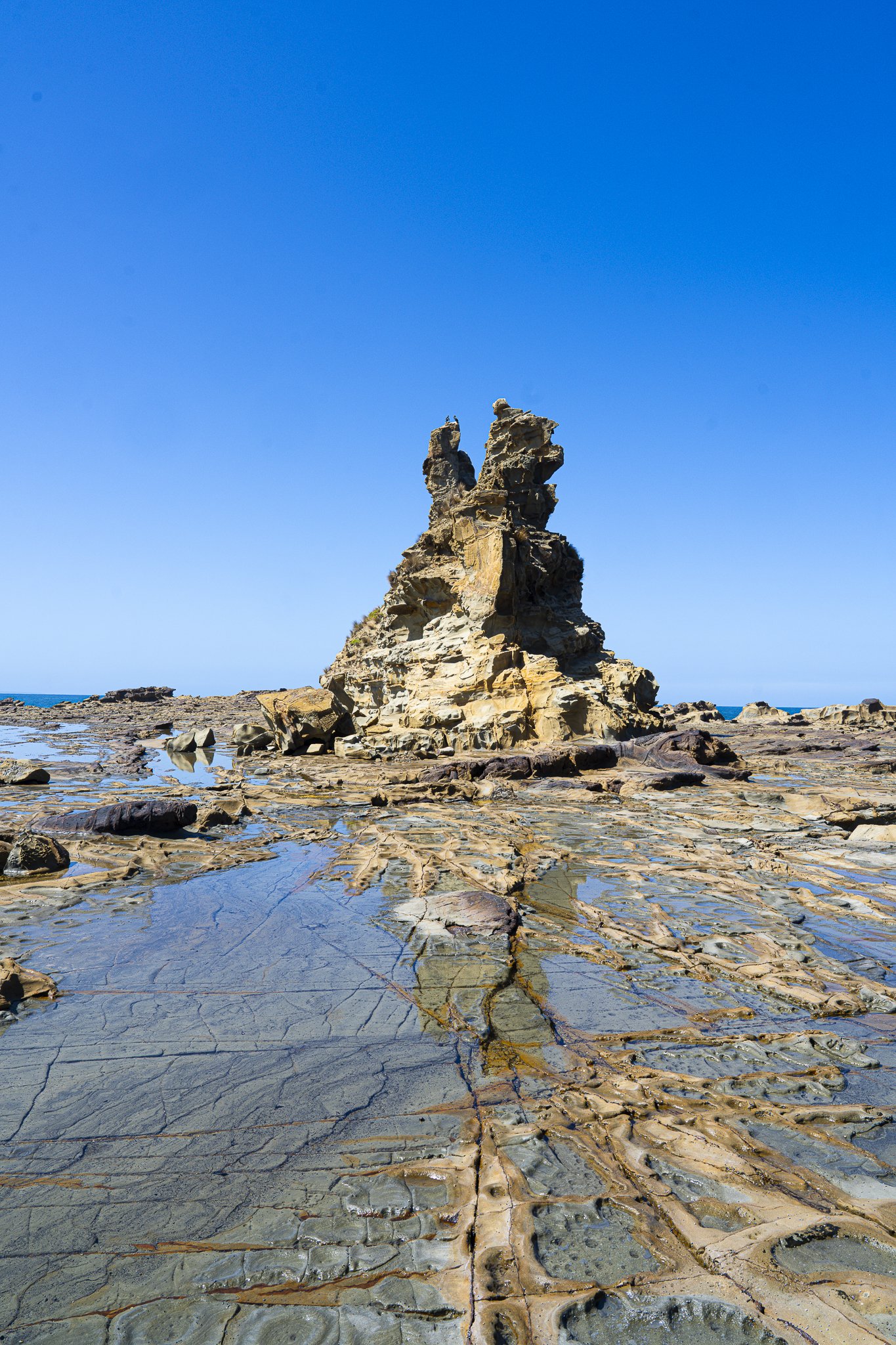
From The Caves, another presence commanded attention. Far in the distance, rising from the exposed rock platform, stood a solitary formation—unmistakable even from afar. It was The Eagle Nest, our next destination, standing proud against the open coast.
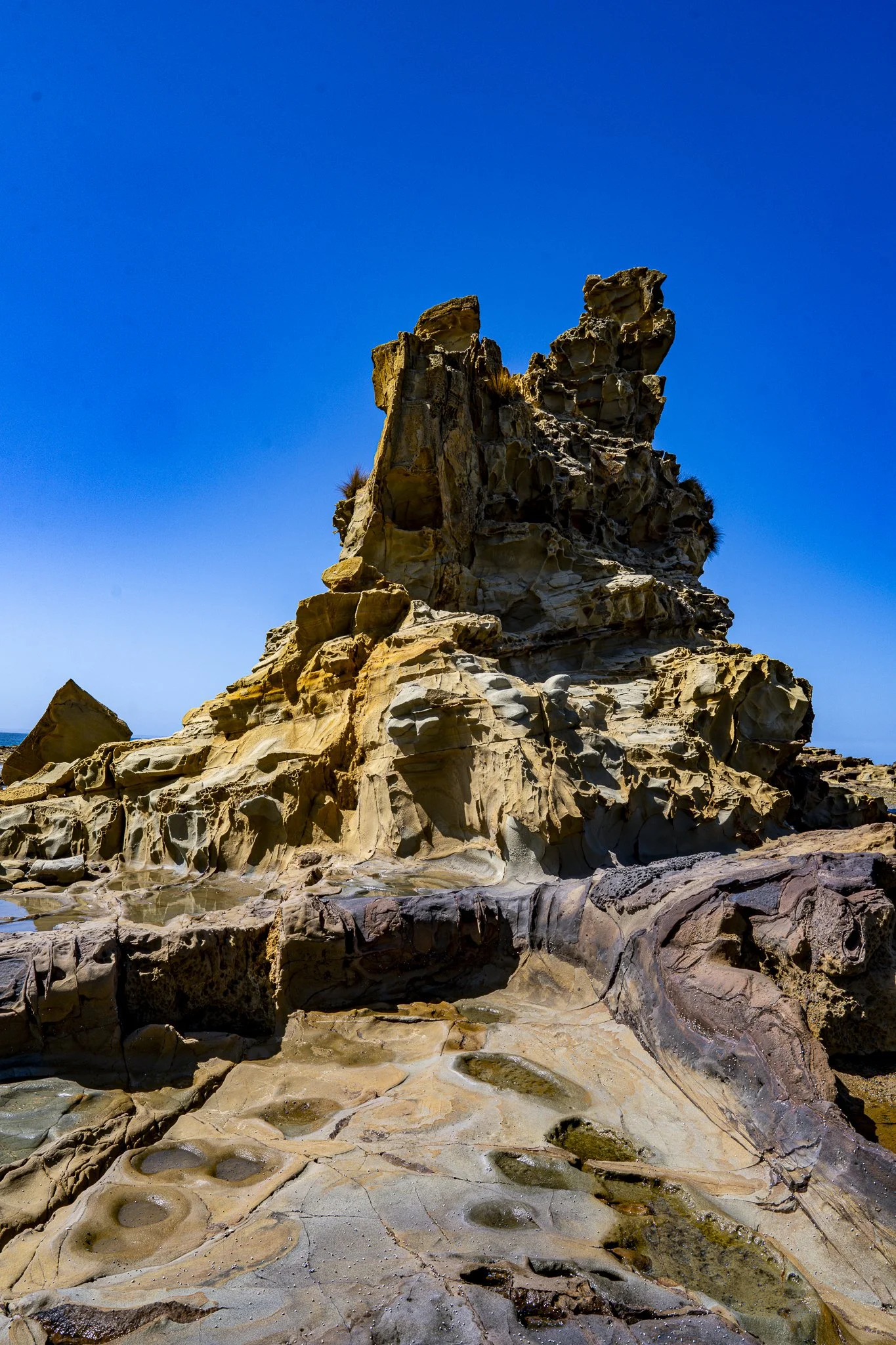
From this vantage point, it looked less like a rock and more like a sentinel. A vast, weathered sea stack anchored to the land, its form sculpted by centuries of wind and wave. People often describe it as a grand fortress guarding the shoreline, and standing there, it was easy to understand why. It didn’t merely occupy the landscape—it ruled it.
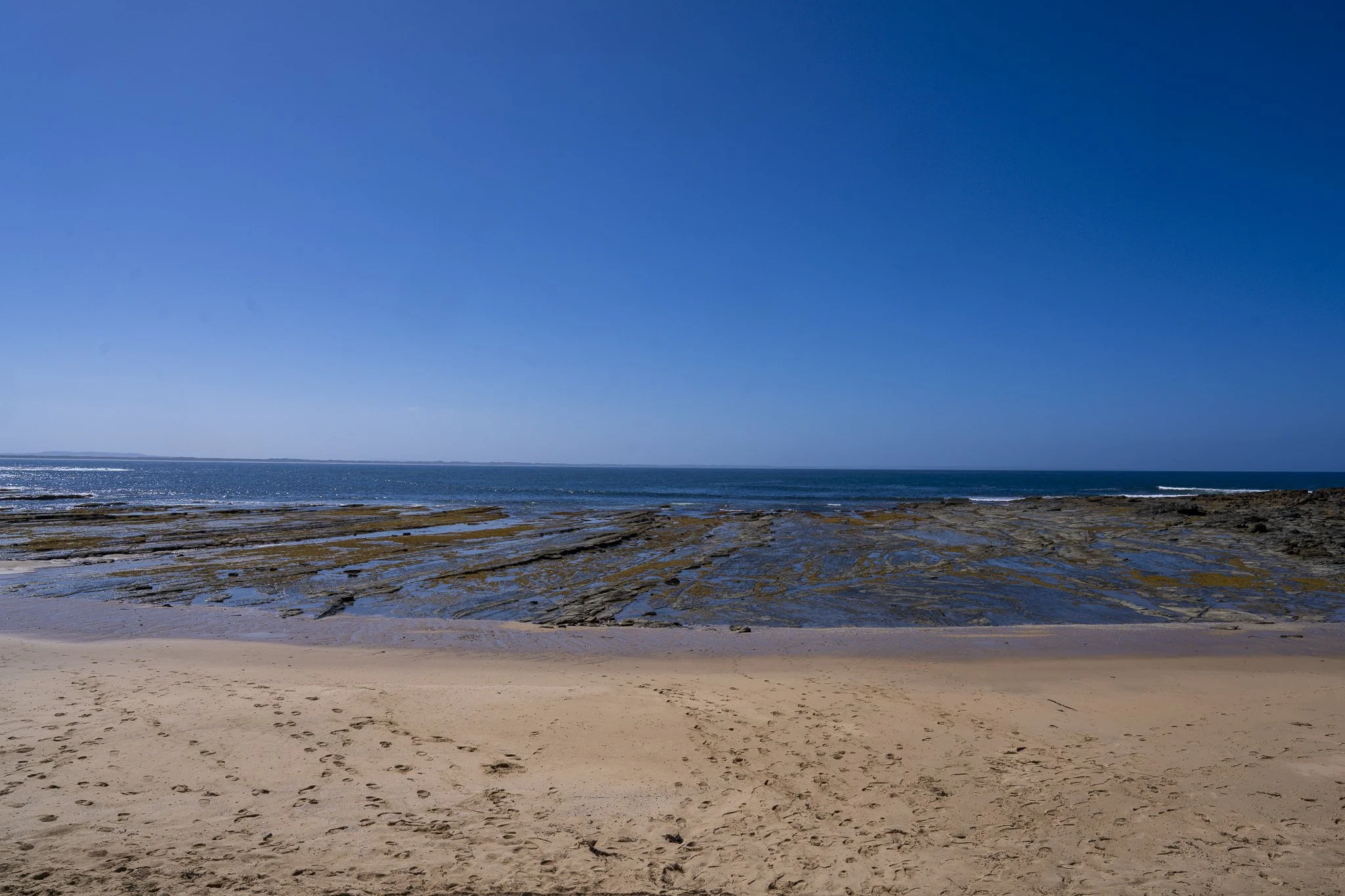
The descent to the beach was longer and more deliberate than at The Caves. From the car park, the view widened, revealing another extraordinary formation below. Stretching along the shore were elongated rock structures, arranged side by side like giant ribs laid bare by the retreating sea. They were wide and solid where they met the land, then gradually tapered and narrowed as they reached into the water, dissolving into the ocean’s edge. These formations existed only at low tide, fleeting and hidden most of the day, and their temporary presence made them feel all the more precious.
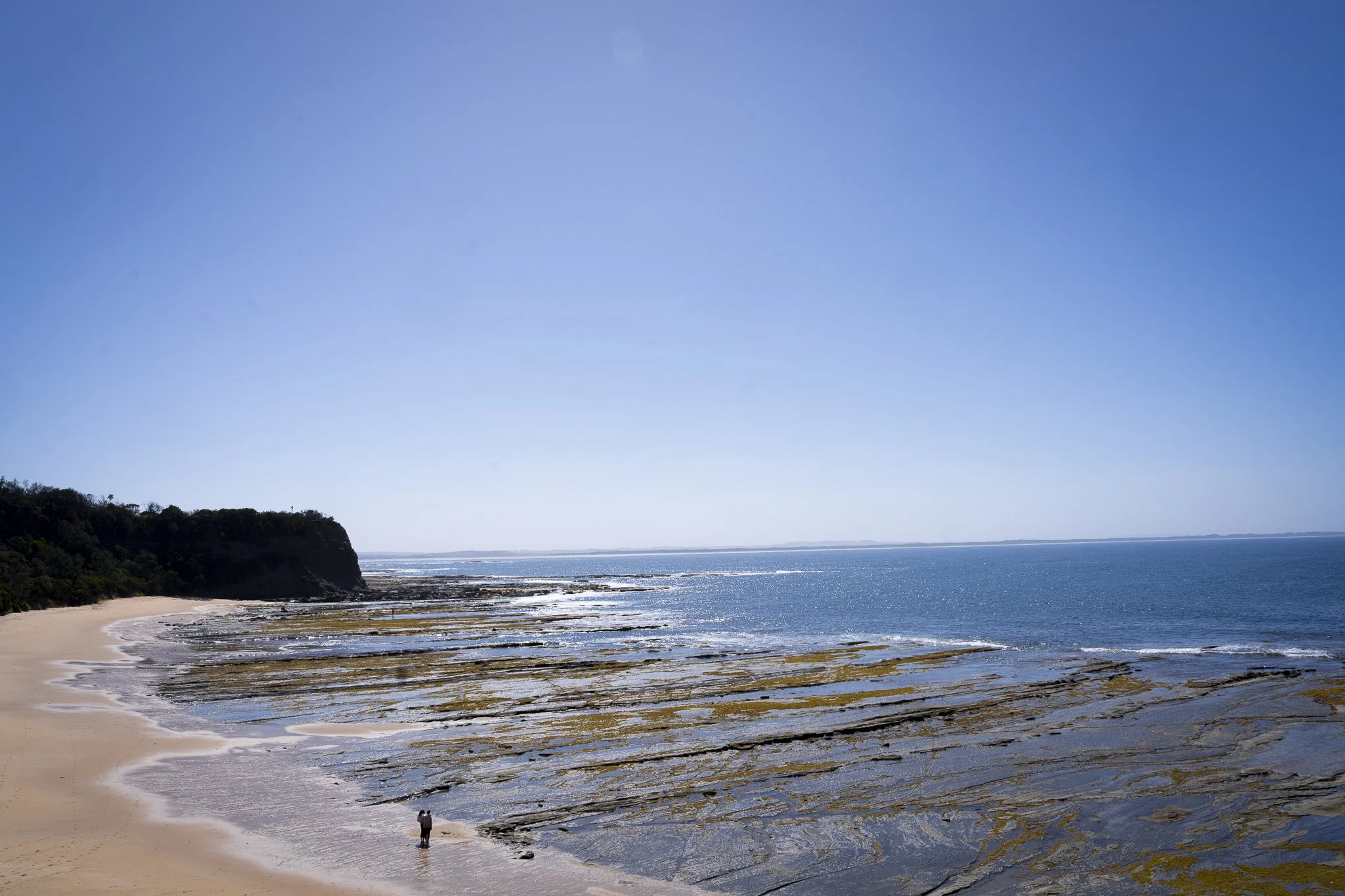
Though The Eagle Nest and The Caves sit not far from each other, their personalities could not have been more different. The Caves felt intricate and intimate; this stretch of coast was bold and architectural, shaped by brute force rather than fine detail.
Once our feet reached the beach, The Eagle Nest drew us in immediately. At low tide, the sea had granted a clear, dry path across the rock platform, inviting us closer—closer than we might otherwise dare. With each step, the formation grew larger, heavier, more commanding. What had seemed impressive from a distance became utterly mesmerising up close.
Standing before it, I felt the scale of time and pressure that had shaped it. This was not a structure formed for admiration—it was the result of relentless exposure, of endurance. Wind, salt, and water had carved it patiently, leaving behind something both brutal and beautiful. The Eagle Nest didn’t ask for attention.
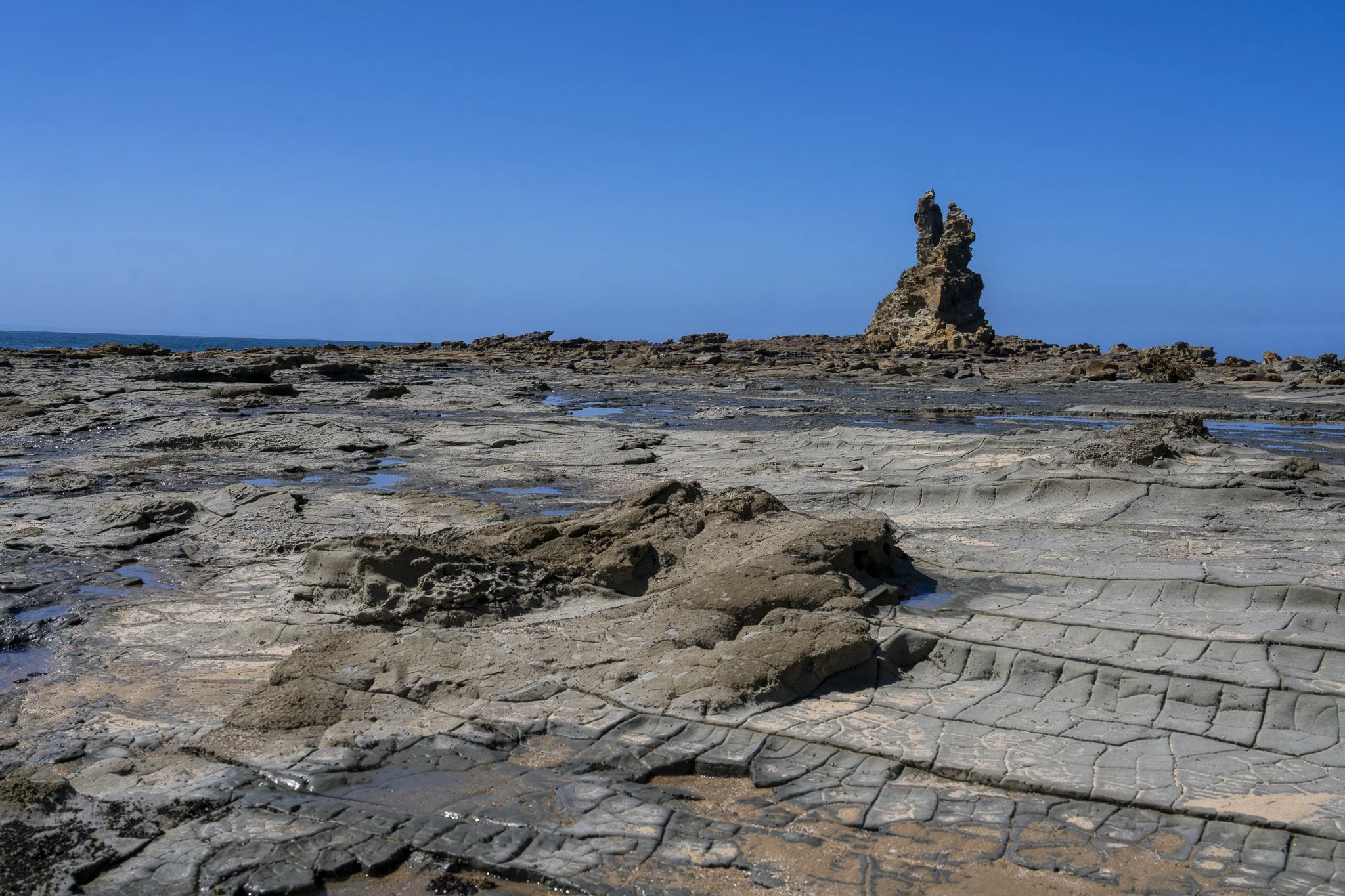
It demanded it.
It held us completely.
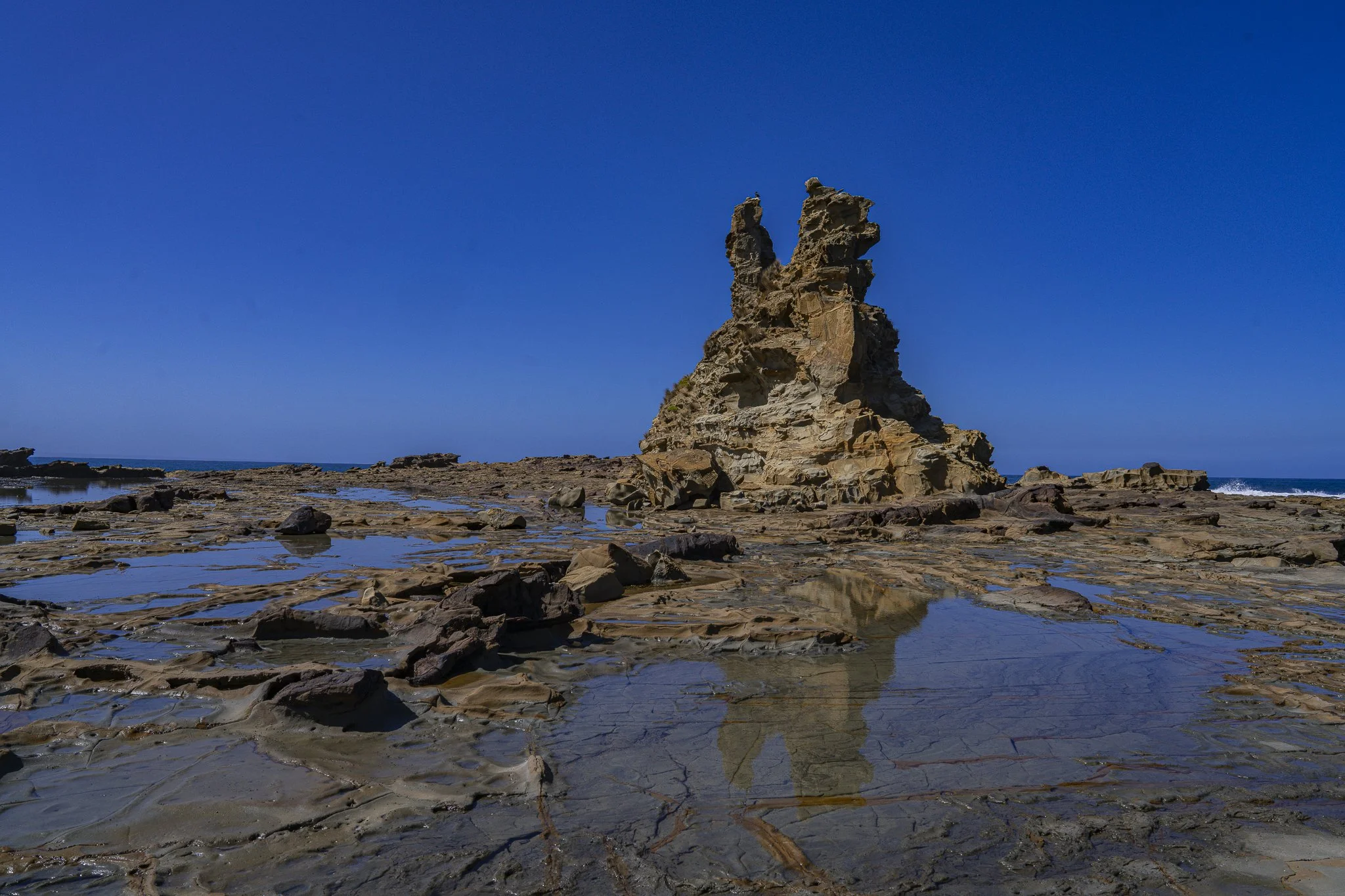
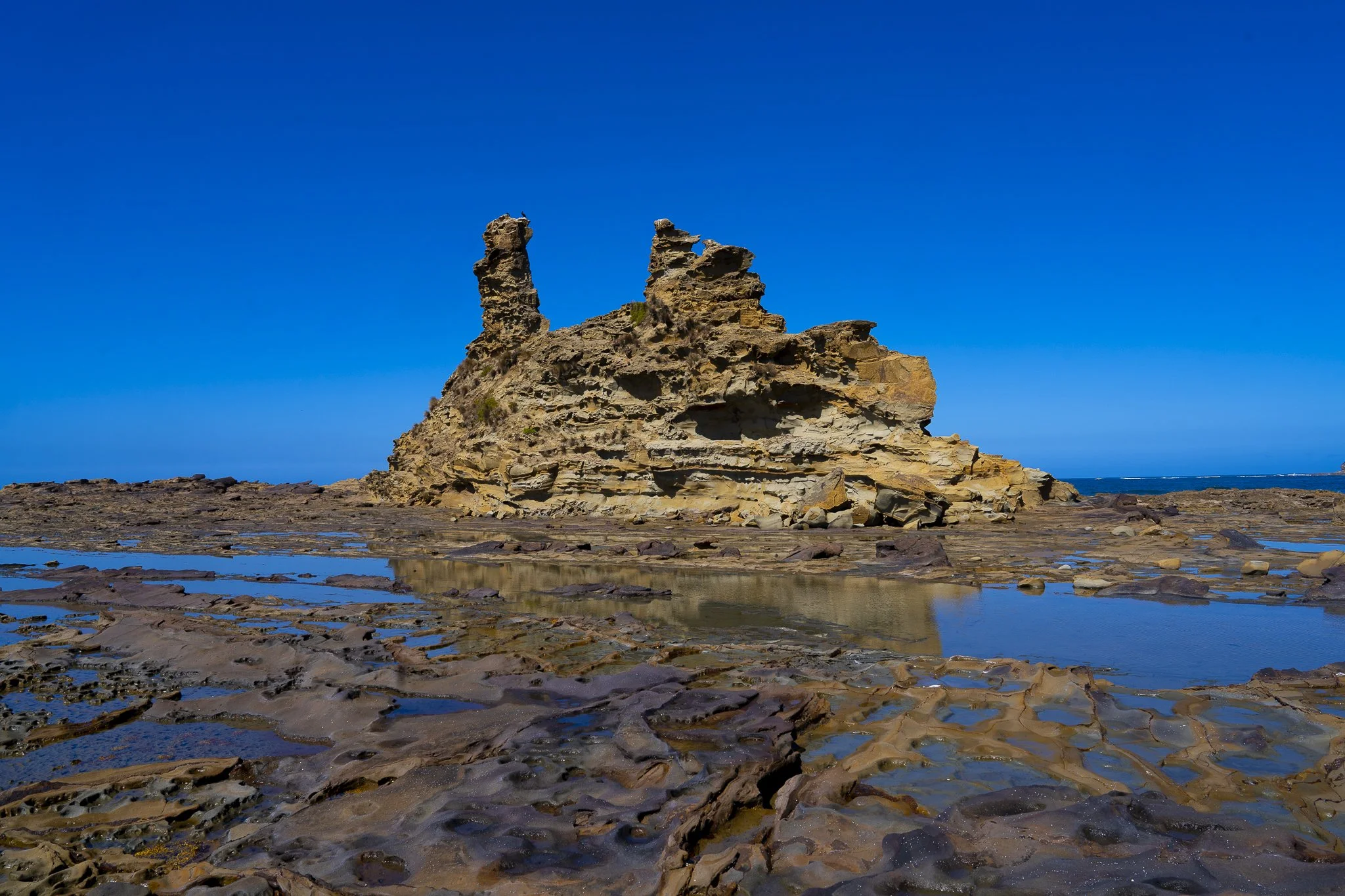
I found myself walking almost all the way around The Eagle Nest, circling it slowly, leaving only the side that faced the open sea untouched. Up close, the rock revealed details that distance had kept secret. Its edges were sharp and deliberate, carved with precision by wind and salt. The surface carried deep, rust-red and brown tones, like oxidised iron, layered and patterned through the sandstone. I wondered if traces of ancient minerals still lived within it, staining the rock with colour earned over millennia.
Every step closer deepened my sense of awe. This was not a rock meant to be admired casually. It demanded attention—invited examination—rewarded patience.
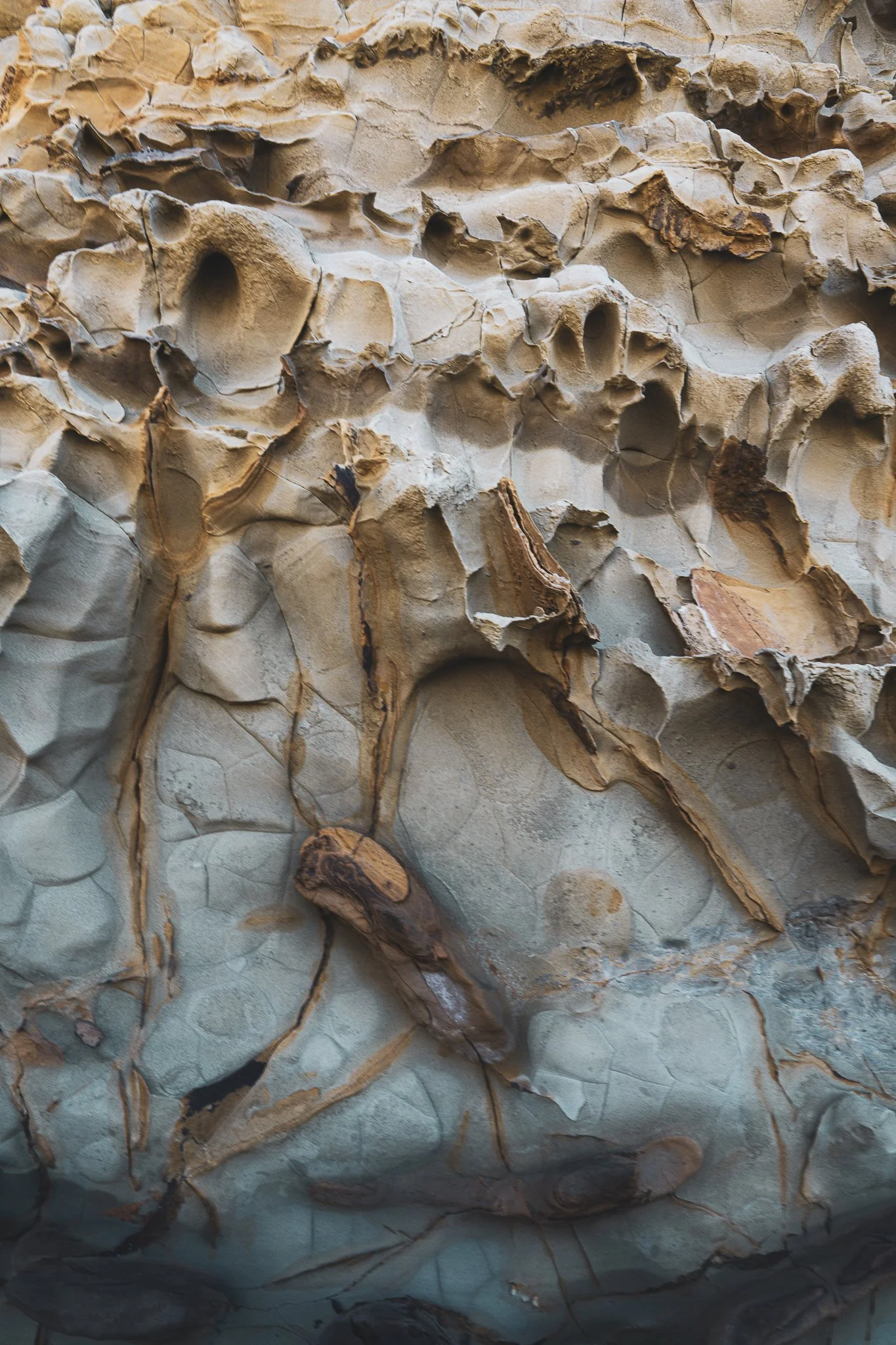
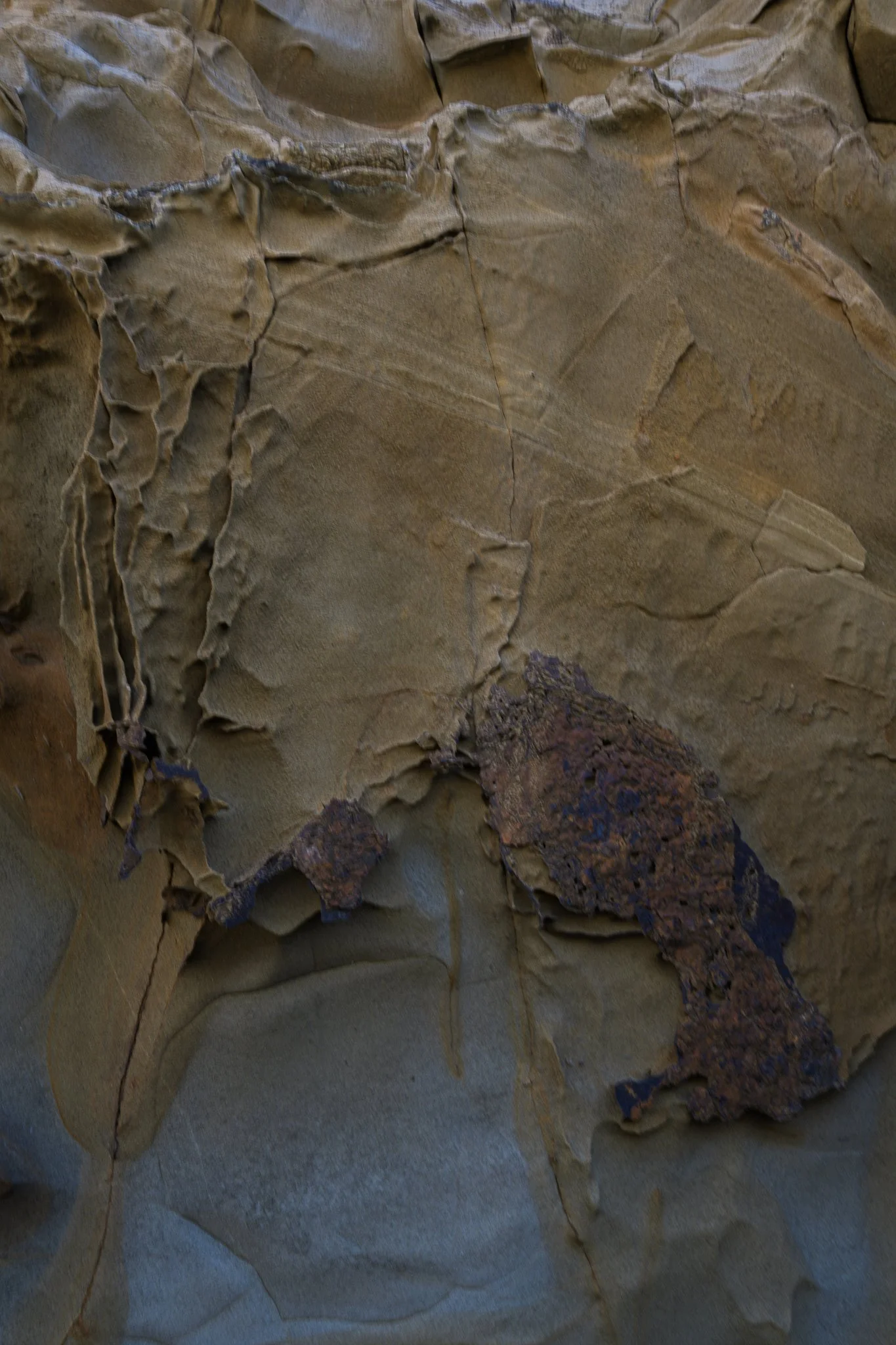
Eventually, we stopped and sat on a slab of dry rock that jutted out naturally, as if it had been shaped for this exact purpose. It fit us perfectly. From there, the world opened up in every direction. In front of us, the vast ocean stretched endlessly, breathing in slow, rhythmic motions. Behind us, the shoreline rested quietly, firm and grounding. To one side lay the elongated stone formations, reaching like ancient fingers toward the sea. To the other, The Eagle Nest loomed beside us—solid, immovable, and protective.
In that moment, it felt like more than an experience. It was something deeper. A quiet, overwhelming awareness of being alive—of existing within a landscape so raw, so powerful, and so unapologetically itself. To be surrounded by nature in this state—rugged yet majestic—felt like a privilege, a rare gift.
We didn’t rush. There was no need to speak. The weather was flawless, the air gentle, the light soft but clear. Everything aligned. We simply sat and absorbed it, letting the place imprint itself into us, knowing this was one of those moments that would return unannounced in memory, long after we had left.
Perfect weather. Perfect scenery.
And a profound sense of gratitude for being there at all.
By now, the sun had climbed high, bright and assertive, but there were still a few stops marked on our map. The next was Shack Bay—and from the moment we arrived, it announced itself as something entirely different.
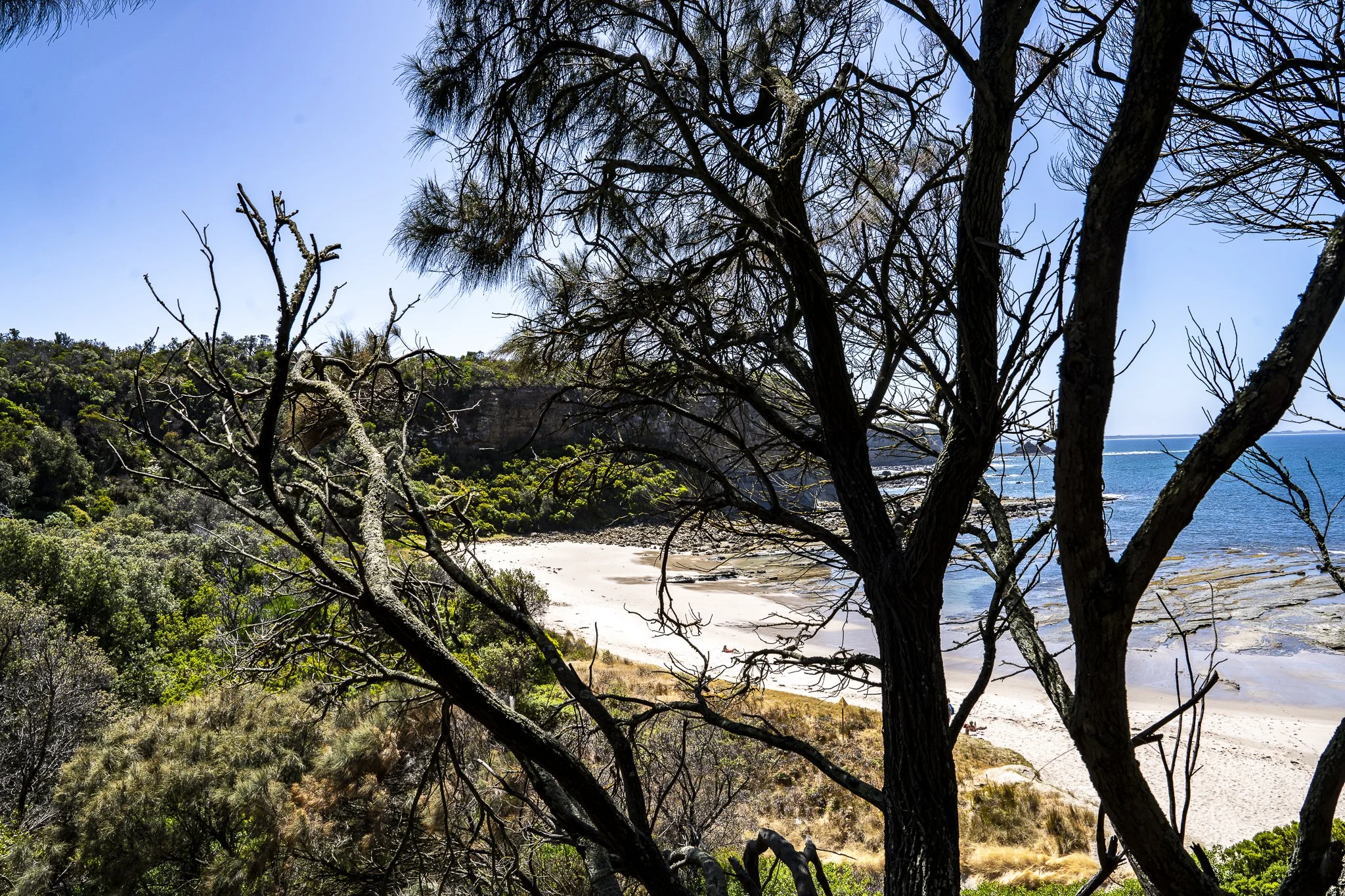
Where The Caves and The Eagle Nest felt narrow, rugged, and dramatic—places shaped for awe rather than ease—Shack Bay opened itself wide. A crescent of sand stretching roughly 150 metres, it sat tucked into the coastline like a secret cove, calm and inviting. The water here was a striking turquoise, clear and luminous, framed by rocky reefs and steep cliffs that felt more protective than imposing. In whale season, this is a place for watching giants pass quietly by. Today, it offered something gentler.
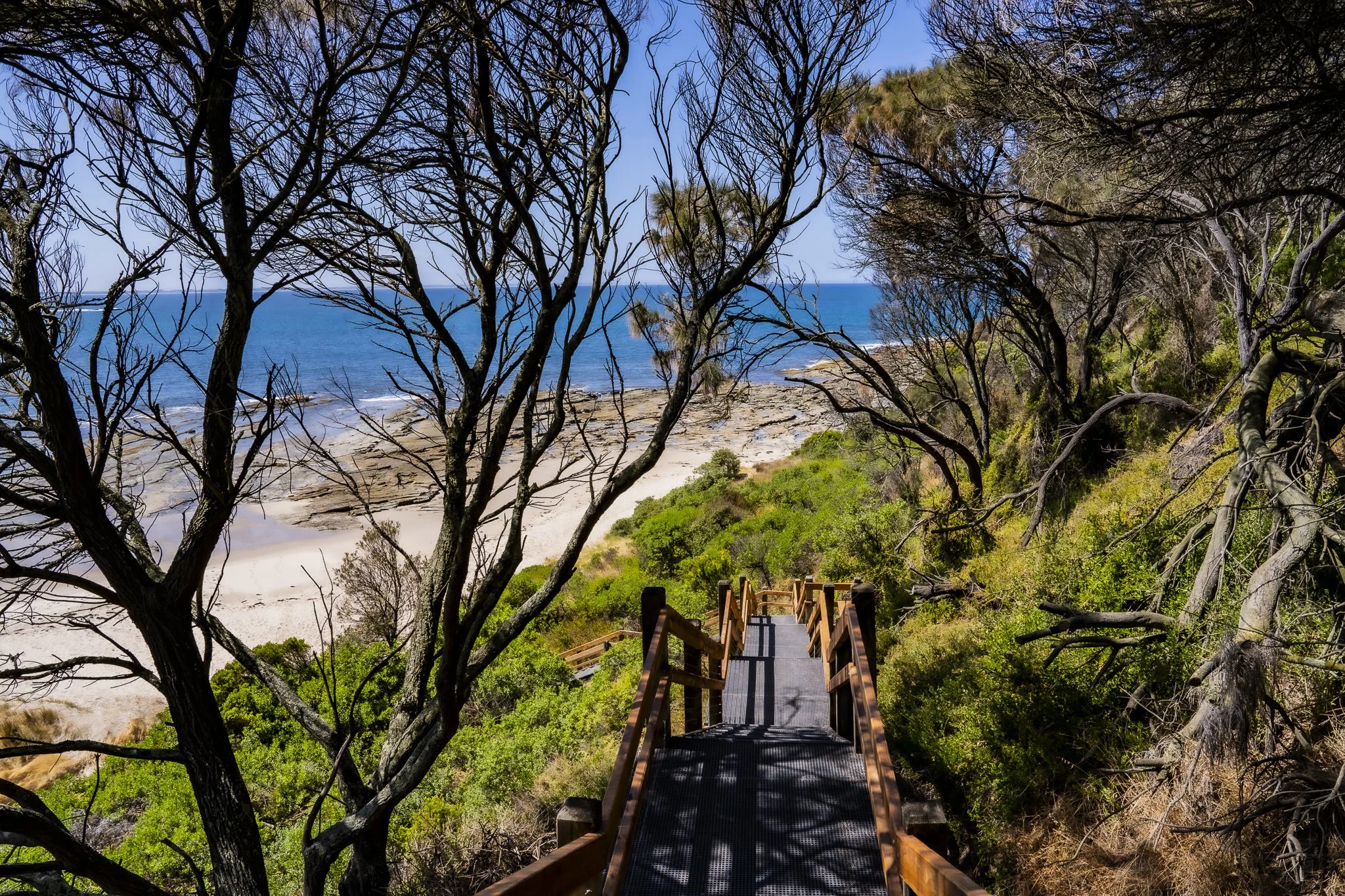
Reaching the beach required a descent down a steep staircase of roughly a hundred steps, each one easing us further away from the wild, exposed energy of the earlier stops. At the bottom, the atmosphere shifted. The beach was peaceful rather than powerful. A few people lay stretched out on the sand, soaking in the sun. A young family waded into the calm shallows, laughter drifting softly across the water. Everything here moved at a slower pace.
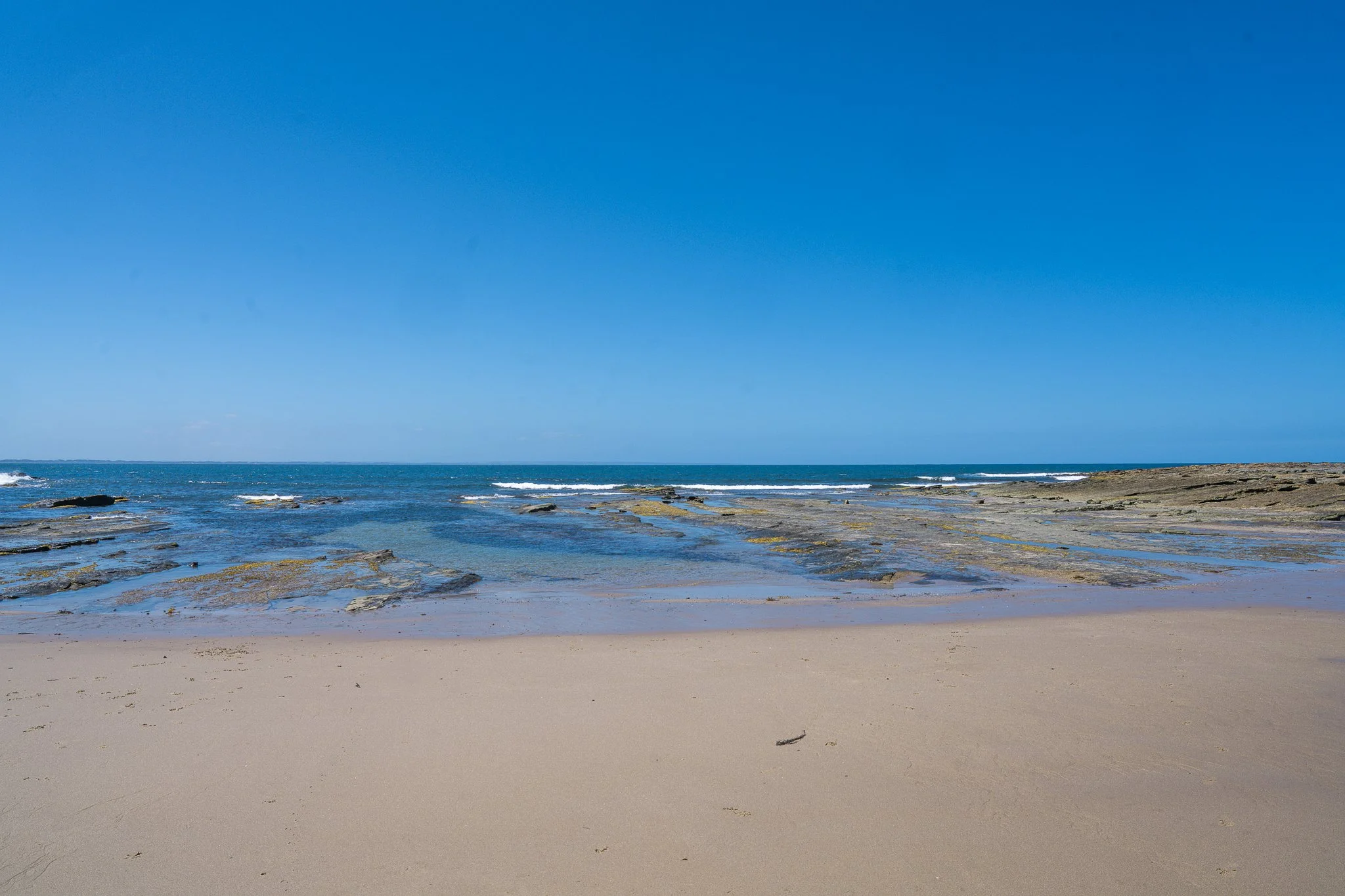
I noticed the stones along the shore—small rocks and pebbles scattered among the sand, their colours unusually soft. Pale blue, silvery grey, almost translucent in places, they caught the light gently, as if echoing the calmness of the bay itself. It was a subtle beauty, easily missed if you weren’t paying attention.
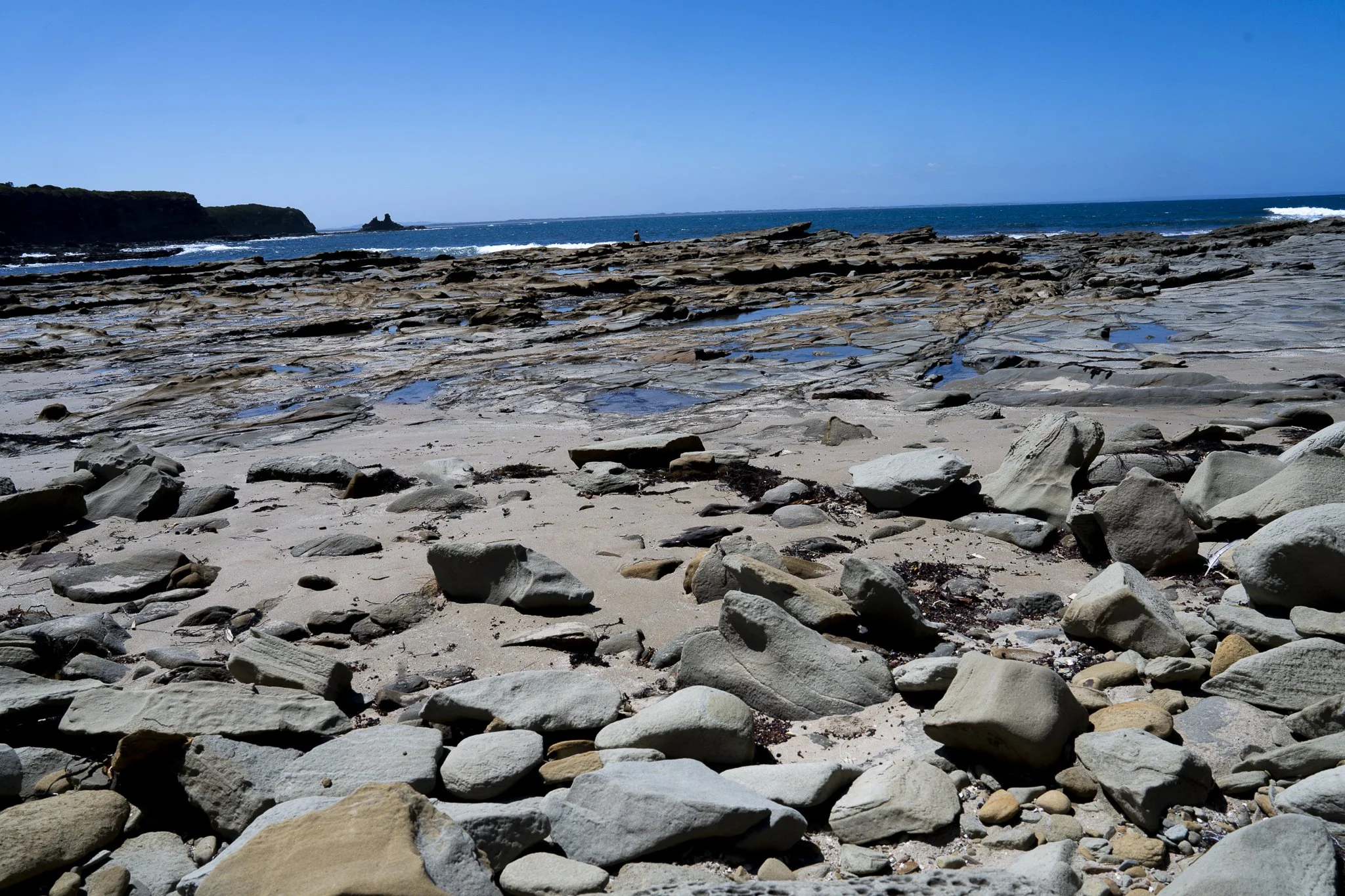
We didn’t stay long. The midday heat had begun to press down, and I suddenly realised I had forgotten both sunscreen and a hat. My body reminded me that while the coast invites wonder, it also demands respect. There were still two more coastal stops on the map, but instead of continuing along the shoreline toward Cape Paterson, we chose to turn inland.
Wonthaggi and Sourdough Secrets
Lunch called, and so did shade.
Wonthaggi lay just five kilometres away—close enough to feel like a natural pause, a human interlude after a morning shaped entirely by rock, sea, and time.
Wonthaggi greeted us in a way the coast could not—grounded, practical, and quietly generous. We parked right along the main road and stepped out in search of lunch. Almost immediately, choices presented themselves. Directly across from where we parked was a small Japanese sushi shop; a few doors down, a café beckoned with its familiar warmth. We hesitated, briefly torn, before deciding to follow our own instincts and choose one each.
I opted for sushi. Dinner was already promised to be a feast, and I wanted something light—just enough to carry me through the afternoon. It was simple, satisfying, and exactly what I needed.
After lunch, we wandered along the street without any particular plan and found ourselves stepping into an organic food shop. It was the kind of place that encourages unhurried browsing, shelves filled with thoughtfully chosen produce and everyday staples that suggested care rather than trend.
On one wall, a small handwritten sign caught our attention. The original mentioned Sourdough starter for sale, but it had been crossed out, instead it has this new offer: Free sourdough starter.
Curious, we asked about it—half-expecting a quick handover, maybe a brief instruction. Instead, the owner lit up. He didn’t simply give us a starter; he offered an education.
With genuine enthusiasm and care, he explained how to keep it alive. Not the generic advice you find online, but the kind of knowledge that comes from lived experience—how to read the starter, how to sense when it needed feeding, how temperature and time mattered more than strict rules. He spoke with patience and quiet pride, as if he were passing on something precious rather than practical.
There was no rush, no obligation, no expectation in return. Just generosity—of time, of attention, and of knowledge. I felt deeply grateful, not only for the starter itself but for the way it was shared: openly, lovingly, and without hesitation.
We left the shop carrying more than we had planned. Not just a jar of living culture, but the privilege of having been entrusted with something that requires care, patience, and respect. It felt symbolic in a way—another reminder that some of the most meaningful moments of travel arrive unexpectedly, offered by strangers who choose to share what they know.
And just like that, Wonthaggi had given us something to take home that would continue to live on long after the journey ended.
Tide, Missed Stops, and Coastal Surprises
We had originally planned to end our coastal drive at Cape Paterson, as suggested by the Information Centre. After lunch, however, a pleasant weariness settled over us—the kind that comes not from exhaustion, but from having already taken in so much. We decided to turn back instead. Still, we stayed on the coastal route, curious to see what the remaining stops might quietly offer, even if only from a distance.
The Oaks was our first stop turning into the coastal drive once more. Drawn by the sound of children’s voices carried on the breeze, we wandered down to the beach. Unlike the more secluded spots earlier in the day, The Oaks felt gently alive. With a boat ramp nearby, it naturally drew more people—families with children splashing in the rockpools, teenagers gathered in easy clusters, young adults strolling along the shore. It wasn’t crowded, just comfortably busy, filled with the soft energy of shared enjoyment.
We drifted toward the far side of the beach, where waves crashed against dark rocks, sending bursts of white spray into the air. Beyond that, the coastline stretched endlessly—miles of pale sand meeting rough, restless waves. As we walked, signs reminded us to keep clear of conservation areas, protecting rare birds and their young. We slowed our pace, respecting the boundaries, listening to the steady rhythm of the ocean, letting the scene unfold without the need to go further.
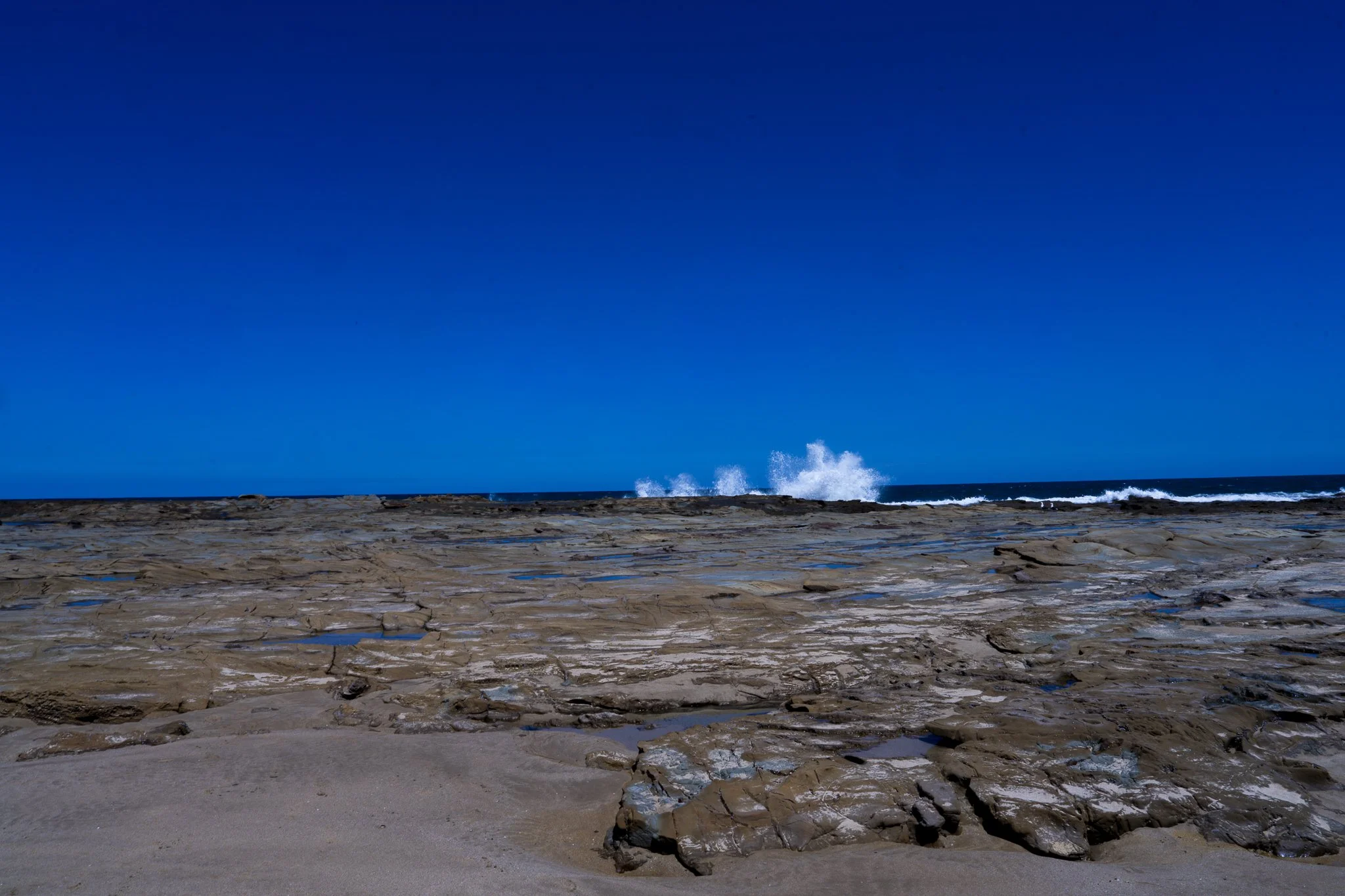
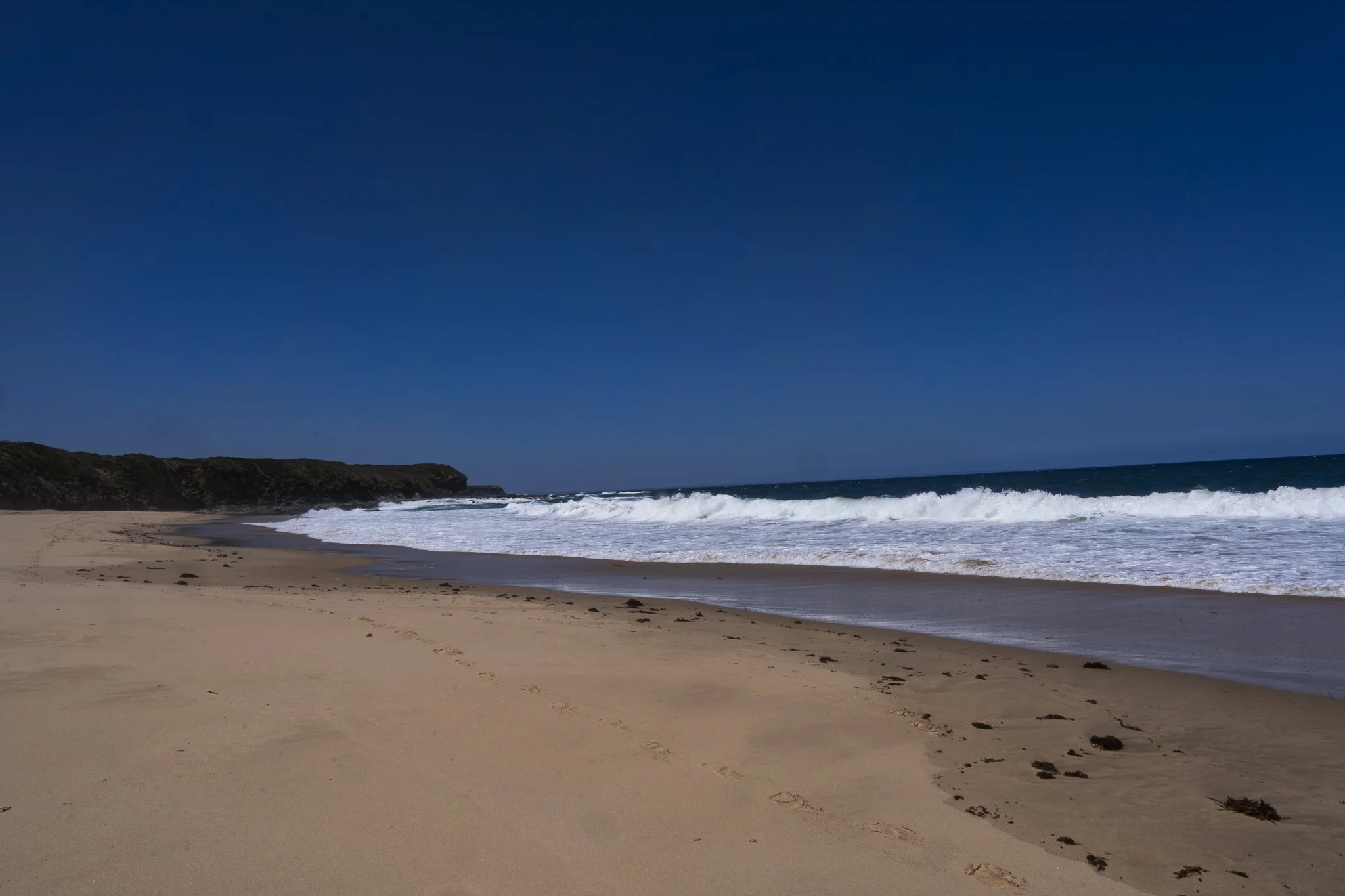
At Twin Reefs, we stopped once more, peering from the lookout and trying to decipher what had given the place its name. From above, it remained a quiet mystery. By then, we were content to leave it that way. The idea of climbing down to the beach felt unnecessary; simply being there was enough.
We made one last attempt to locate Flat Rocks—the stop that would have opened our drive had we not been guided by the tide—but it eluded us. And strangely, that felt right too. The coast had revealed what it wanted to reveal, and no more.
With that, our coastal drive gently came to a close—not with a sense of having missed out, but with the quiet satisfaction of having followed the day as it unfolded, tide and energy leading the way.
Bathing Under the Open Sky
Back safely in our dome, freshly cleaned and unhurried, we gravitated instinctively to the bed. It had become the quiet anchor of our stay. Curling into its softness, our bodies finally gave in, cradled by warmth and stillness. We had a few hours before our scheduled outdoor bath, followed by dinner—time enough for rest, but not enough to sink fully into sleep.
We drifted into a light nap, hovering somewhere between awareness and dreams, where sounds softened and thoughts dissolved. Before we knew it, it was time.
The bath awaited us, prepared with an unmistakable sense of care. Everything—from the arrangement to the presentation—spoke of intention, of relaxation elevated to something quietly elegant. Two small metal tubs stood side by side, their weathered look felt like they had been hauled straight from another century, solid and timeless.
Once we were told the bath was ready, we stepped in. The water felt gently warm against my skin—almost tentative—so I instinctively added a little cold water. It was only later that I realised my mistake. This was an experience meant to be trusted, not adjusted.
A plate of freshly cut fruit and another of chocolates had been placed within easy reach, small luxuries meant to slow us down even further. Though the bath was outdoors, it felt wonderfully private. Three sides were enclosed, while the fourth opened toward the farmland beyond—land we had seen but never seen inhabited. A simple curtain could be drawn if needed, though we never felt the urge. Above us, there was no roof. The sky became one, framed by a loose canopy of trees, their branches offering both shelter and openness.
As we lay back, enveloped by warmth, salt, and soft bubbles, the world narrowed to sensation. Birds settled on nearby branches, their songs drifting down in gentle layers, unhurried and unbroken. The air carried the faint scent of leaves and earth. It felt impossibly calm—so calm it bordered on unreal.
Heaven, I thought.
The water, altered by my earlier impatience, slowly lost its warmth. After the fruit was eaten and the last chocolate melted away, the cool crept in. I stayed as long as I could, until the warmth became a memory rather than a feeling, reluctant to step out of a moment that felt both indulgent and grounding.
Some experiences don’t ask to be improved—only trusted. This was one of them.
Sunset and Dinner
We wanted to see how the coastal landscape had transformed since the morning, to catch the subtle drama as the light shifted toward sunset. We drove to the makeshift lookout along the road facing Eagle Nest Rock. The light was still bright, not yet softened into golden beams. From this vantage point, the tide had again reclaimed most of the beach; only the jagged rock formations remained visible, standing proud against the shimmer of the water. We lingered for a few quiet moments, taking in the change, before heading back toward the resort for dinner.
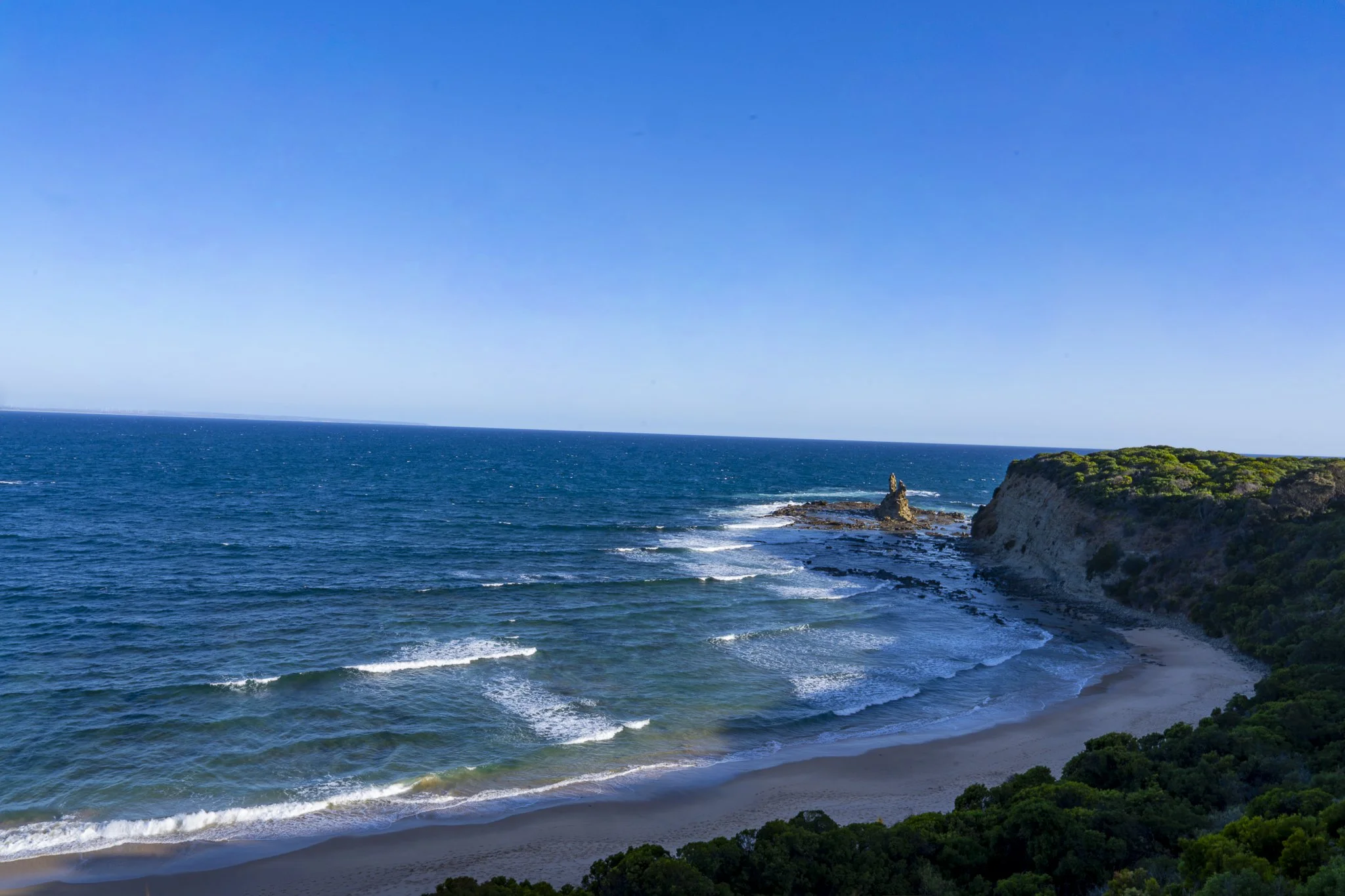
First, we topped up the car at the charging station, watching the battery climb steadily while enjoying the calm surroundings. Arriving a bit early, we hoped to be seated—and were immediately shown to a table. This time, we could peruse the menu with intention, anticipating a meal that would match the day’s sense of indulgence.
We settled on the special of the day: a perfectly grilled pork cutlet resting on a bed of potatoes and broccolini, adorned with pumpkin purée and jus. The dish sounded heavenly, and it was. To complement it, we chose the seafood mafaldine with squid ink, a rich and striking plate that promised layers of flavor.
The meal took its time to arrive, which gave us a chance to relax, watch the resort’s quiet evening life, and finish charging the car. But when it came, every bite was worth the wait. The pork was tender and flavorful, the mafaldine balanced and decadent. By the time we polished both plates clean, we had no room left for dessert, though we lingered anyway, sipping water and savoring the glow of the sunset through the window.
Before calling it a night, we made a small detour to see Eagle Nest Rock once more. Darkness had arrived, too deep now for photography, but the silhouette against the fading light was enough. The rock seemed even more monumental, a quiet sentinel under the early stars.
Back at the dome, the day’s exhaustion swept over us like a tide. Warm and full, we sank into bed, letting the comfort of the dome cradle us into an early night.
Sunrise Over Eagle Nest Rock
Our final day of glamping began before the sun had fully risen. We woke to the first hint of light on the horizon, the world still wrapped in the quiet hush of early morning. We had planned to return to Eagle Nest Rock, drawn by the thought of capturing it bathed in the soft, golden glow of dawn. The rock itself, dramatic and unyielding, would anchor the composition of any photograph, and its eastern-facing position promised nothing but open sky between us and the rising sun.
The tide was high, but a narrow path along the shore and cliff edge offered safe passage closer to the rock without risking wet feet—or worse, being swept away. I walked slowly, deliberately, letting each step draw me further into the rhythm of the morning. The camera was ready, yet I found myself pausing often, enchanted by the shifting reflections in the shallow pools left behind as the waves receded. Each moment was fleeting, and capturing the precise shimmer of light required patience, a quiet stillness that seemed in harmony with the day’s unfolding.
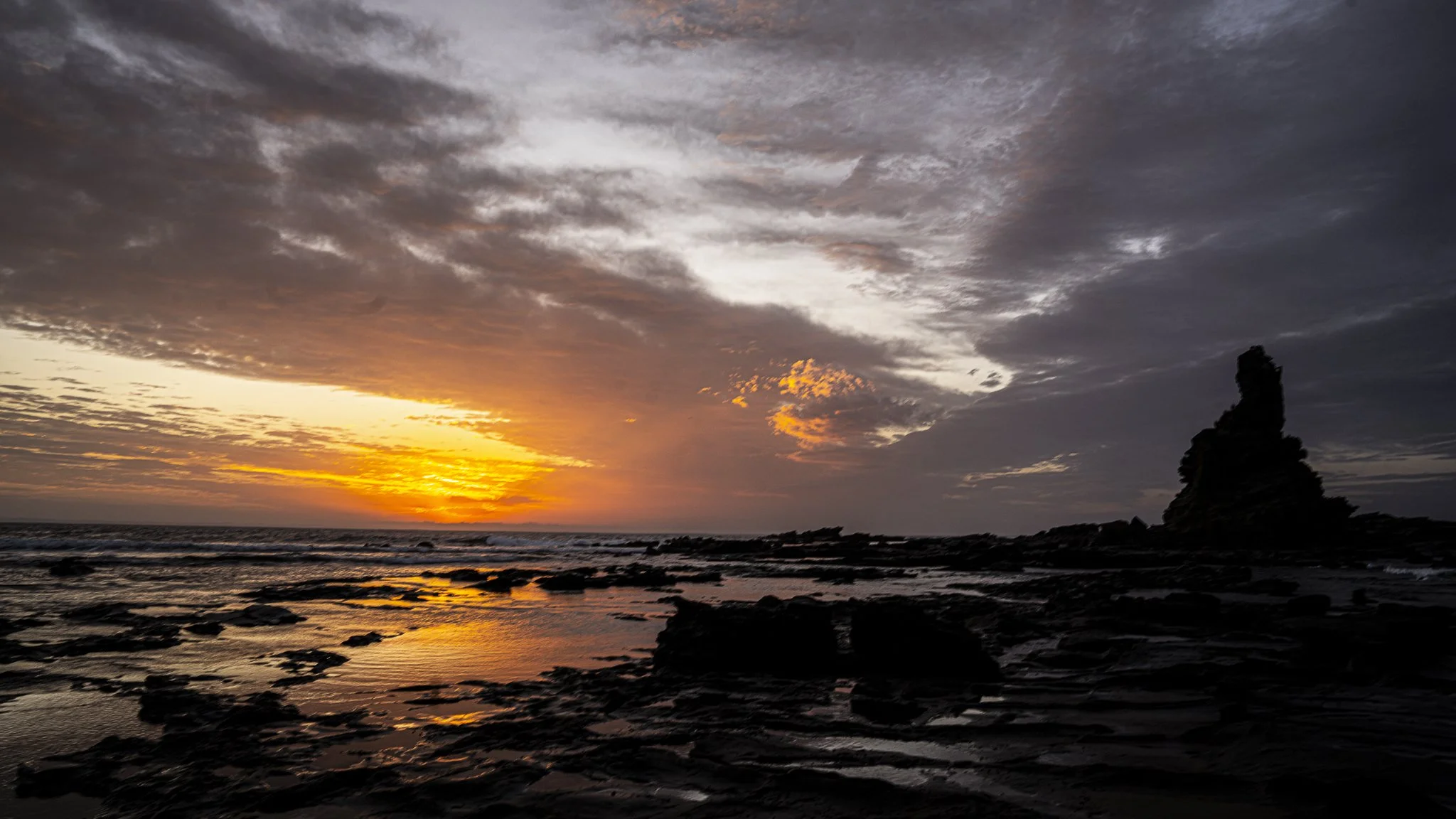
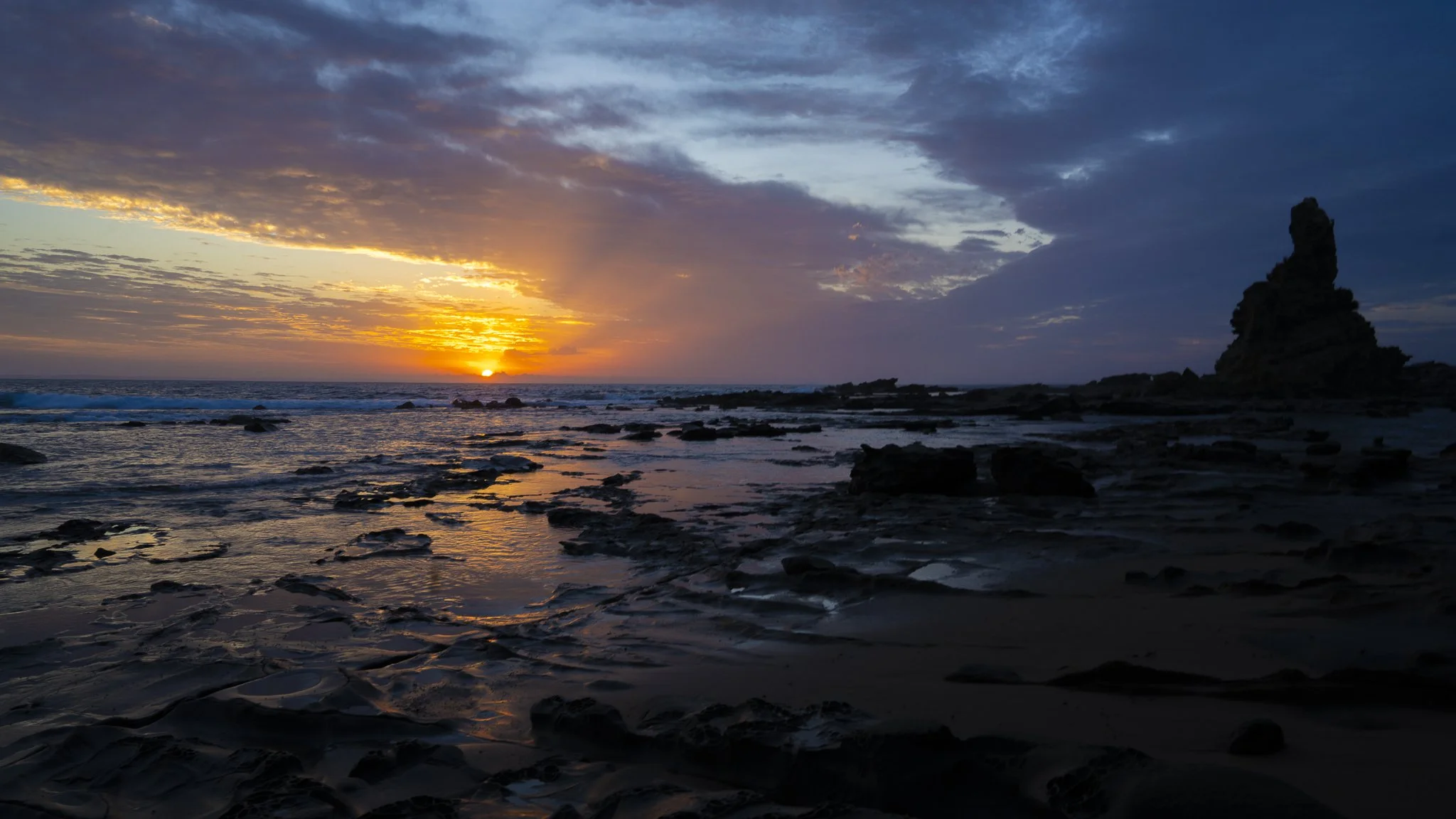
Eagle Nest Rock itself was unreachable this morning, surrounded at its base by the rising water, yet that did not diminish its power. Standing on the dry rock beneath the cliff, I let my gaze linger, absorbing the first beams of sunlight as they touched its rugged surface. The colors shifted subtly with each passing second—reds and oranges deepening, then softening, finally settling into the gentle gold of morning.
It was mesmerizing. The sun rose slowly, steadily, as though honoring its own pace. Watching it, I felt the pulse of life itself—some rhythms steady, unchanging, reliable; others unpredictable, like the tides lapping around the rock, reminding us of nature’s constant flux. In that quiet observation, I felt a rare sense of presence and gratitude: to witness, to stand, to breathe in the wild beauty that had shaped this coast for millennia.
Farewell Inverloch
We lingered at the glamping site longer than usual, granted a small mercy beyond the normal check-out time. Neither of us was ready to leave—the two nights had stretched into something more than a stay; they had given us time, space, and quiet to breathe, to recharge before the inevitable pull of everyday life. Yet time waits for no one. With reluctant hearts, we said goodbye, unsure if we would ever return, but certain that the memories we carried with us would linger, tucked into our minds like treasure.
On the drive home, we had planned two simple stops: Inverloch, to pick up pies as souvenirs for our loved ones, and Loch, for a final indulgence of cheese bites. But even the familiar can surprise. As we searched for parking in Inverloch, a sign caught my eye: a plant sale. As an avid gardener, I was immediately intrigued—and delighted. Inside, a treasure trove of unusual and beautiful plants awaited. I could not resist; each one called to me. With pies and new greenery in hand, we continued to Loch for our last culinary treat.
Finally, satisfied and a little heavy with the spoils of our journey, we turned the car toward home. Just as we crossed into Melbourne, the skies broke with a sudden thunderstorm, a dramatic welcome back to the city’s unpredictable rhythm.
And yet, even as the rain lashed the windows and the familiar streets rolled by, the calm, the wonder, and the quiet luxury of Inverloch remained with us—woven into our senses, our laughter, and our hearts. It had been more than a trip. It had been a pause, a gift, a gentle reminder of what it feels like to step out of routine, to be present, and to let the world, in all its rugged beauty, meet you halfway.