The Crossing I Almost Didn’t Take
Opportunities do not always arrive with certainty. Sometimes they come softly, wrapped in a question, leaving you to decide whether to step forward or let them pass. I found myself at such a crossroads not long ago.
My nephew had invited me to travel with him from Kupang to Flores — not by plane, but by ship. Not a cruise ship with polished decks and itineraries, but a working cargo vessel. The kind that carries more than just people: buses rumbling in its hold, private cars packed tightly side by side, motorbikes lined up in rows, and passengers scattered among them — some with vehicles, others simply with a bag and a destination.
It was, in its own way, a rare opportunity. The sort of journey that promised something raw and unfiltered, a glimpse into a way of travelling that few would deliberately choose. I felt the pull of it almost immediately — that qentle excitement of stepping into the unfamiliar.
And yet, hesitation followed close behind.
The weather in Kupang had been unsettled. Rain lingered in the forecast for the coming weeks, often arriving with strong winds that rattled windows and bent trees. Beyond fifteen days, the skies were predicted to clear, but forecasts that far ahead felt more like guesses than promises. I could not ignore the image forming in my mind — a restless sea, waves rising and falling beneath a heavily laden ship.
I wondered about the crossing. Whether the waters would be rough. Whether I would spend the journey fighting seasickness instead of taking it in. Whether this was an adventure to embrace, or a risk better left alone.
So I waited.
I watched the forecasts, day after day, as the departure drew closer — hoping for some small sign of certainty, even knowing that it might never come.
In the end, it was a mix of urgency and curiosity that tipped the balance. The need to decide, coupled with the sense that this was something I might not be offered again, made the choice for me. It felt like an opportunity too rare to let slip by.
The ship was meant to sail at nine in the morning. But not long before departure, a message came through — some operational delay, we were told — and the schedule was pushed back to one in the afternoon. It was a small change on paper, just a few hours, yet it shifted something I had been quietly anticipating.
I had imagined arriving at Ende just as the day softened into evening, the harbour bathed in the last light of sunset. With the crossing expected to take eight to nine hours, a morning departure would have carried us neatly into that moment. Now, that possibility slipped away. Instead, I would have to settle for watching the sun set somewhere out at sea — not at a destination, but in between.
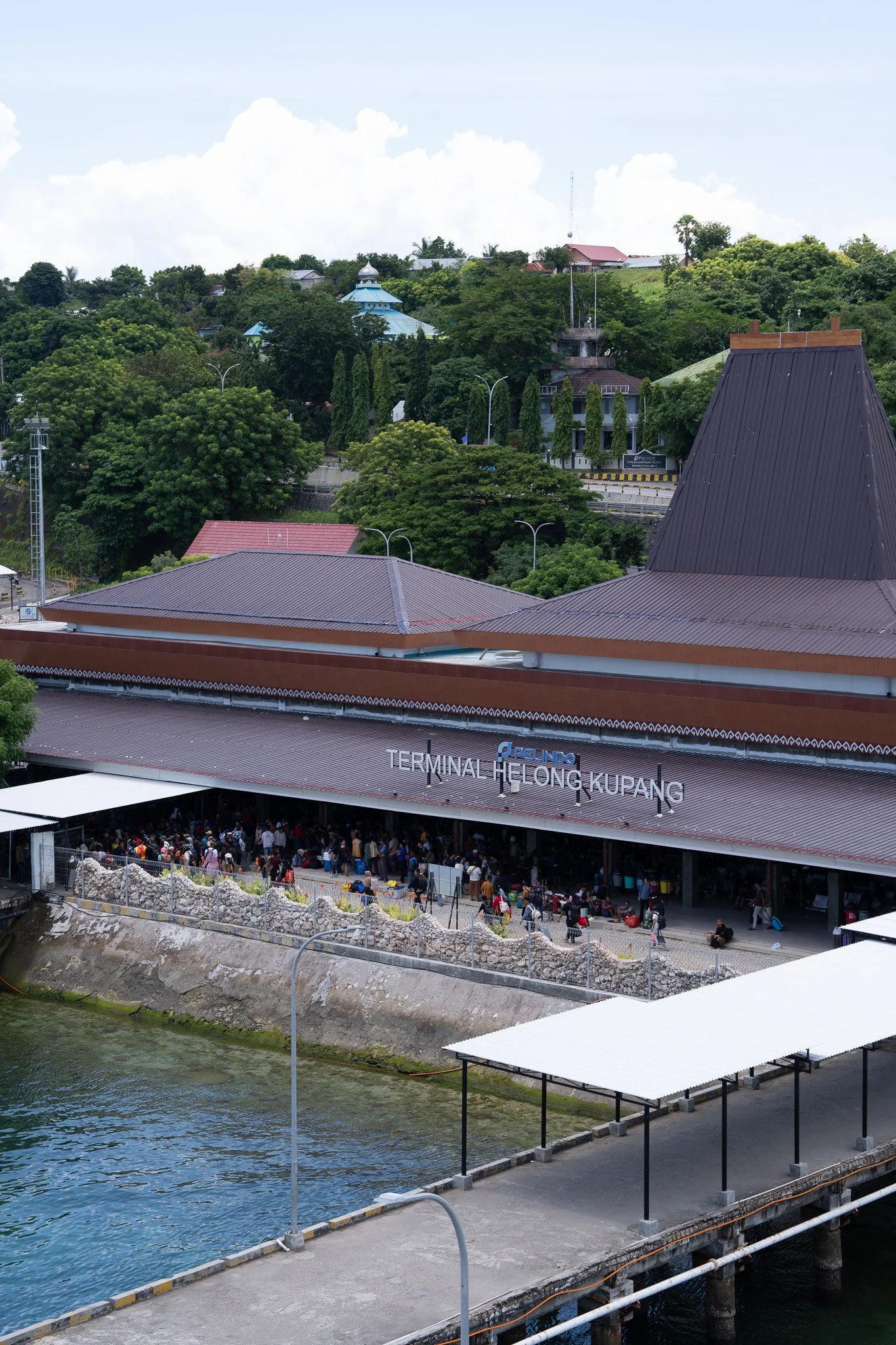
We arrived at the port almost three hours early, unsure of what to expect. The check-in, however, was surprisingly simple. At a small kiosk, we entered the purchase code, and within seconds the tickets slid out. That was it — no identity checks, no long counters, none of the layered formalities that come with flying. It felt almost too easy, as though we had skipped a step without realising it.
From there, we drove into the holding area where vehicles gathered in loose rows, waiting their turn to board. When the ship finally came into view, its scale became real. Up close, it felt imposing — not elegant, but purposeful. It stirred a distant memory of a school excursion years ago, when I had briefly stepped aboard an Indonesian navy vessel. That ship, if I remembered correctly, had been even larger. But memory has a way of reshaping size, and I could not be entirely sure.
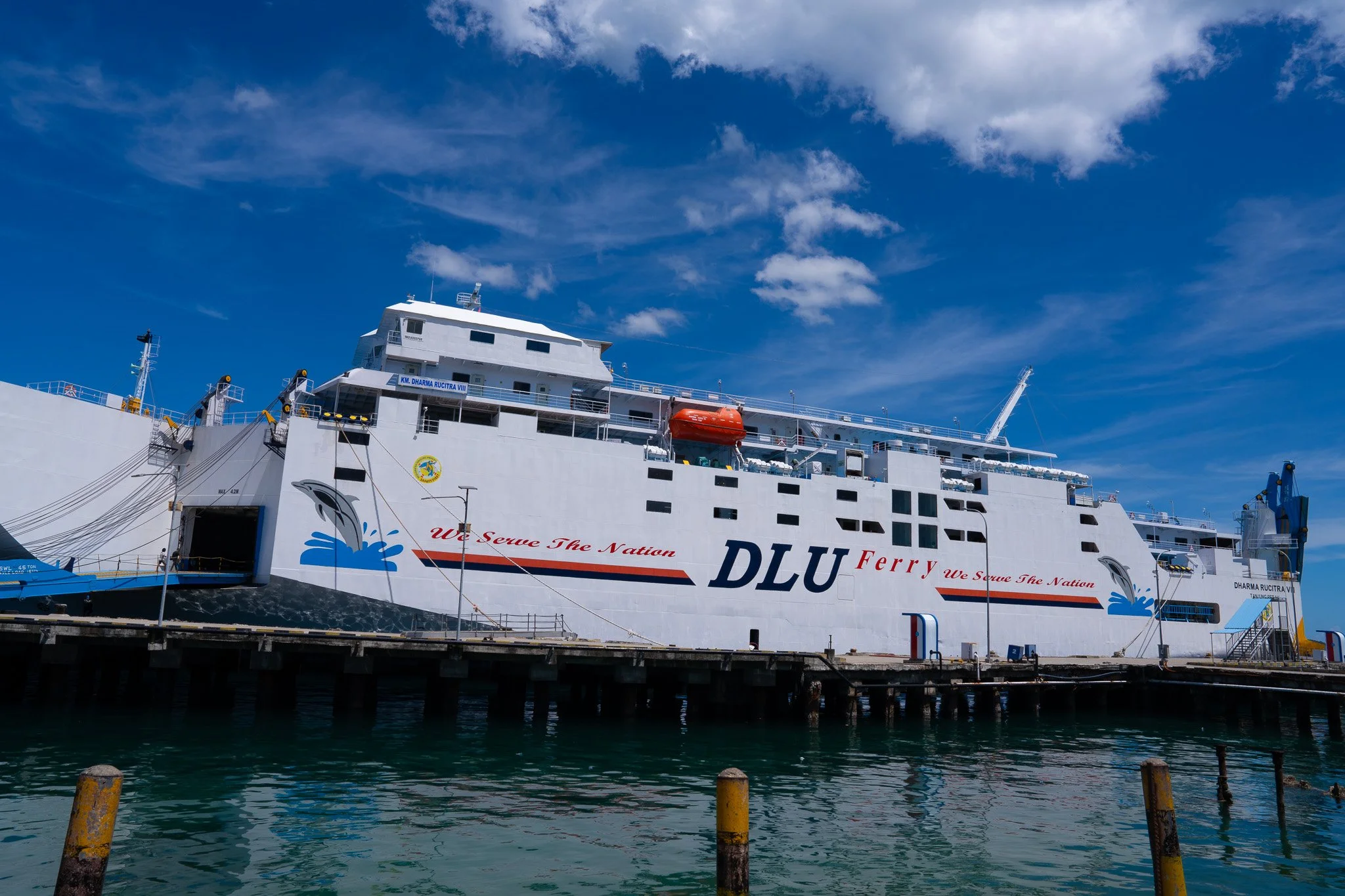
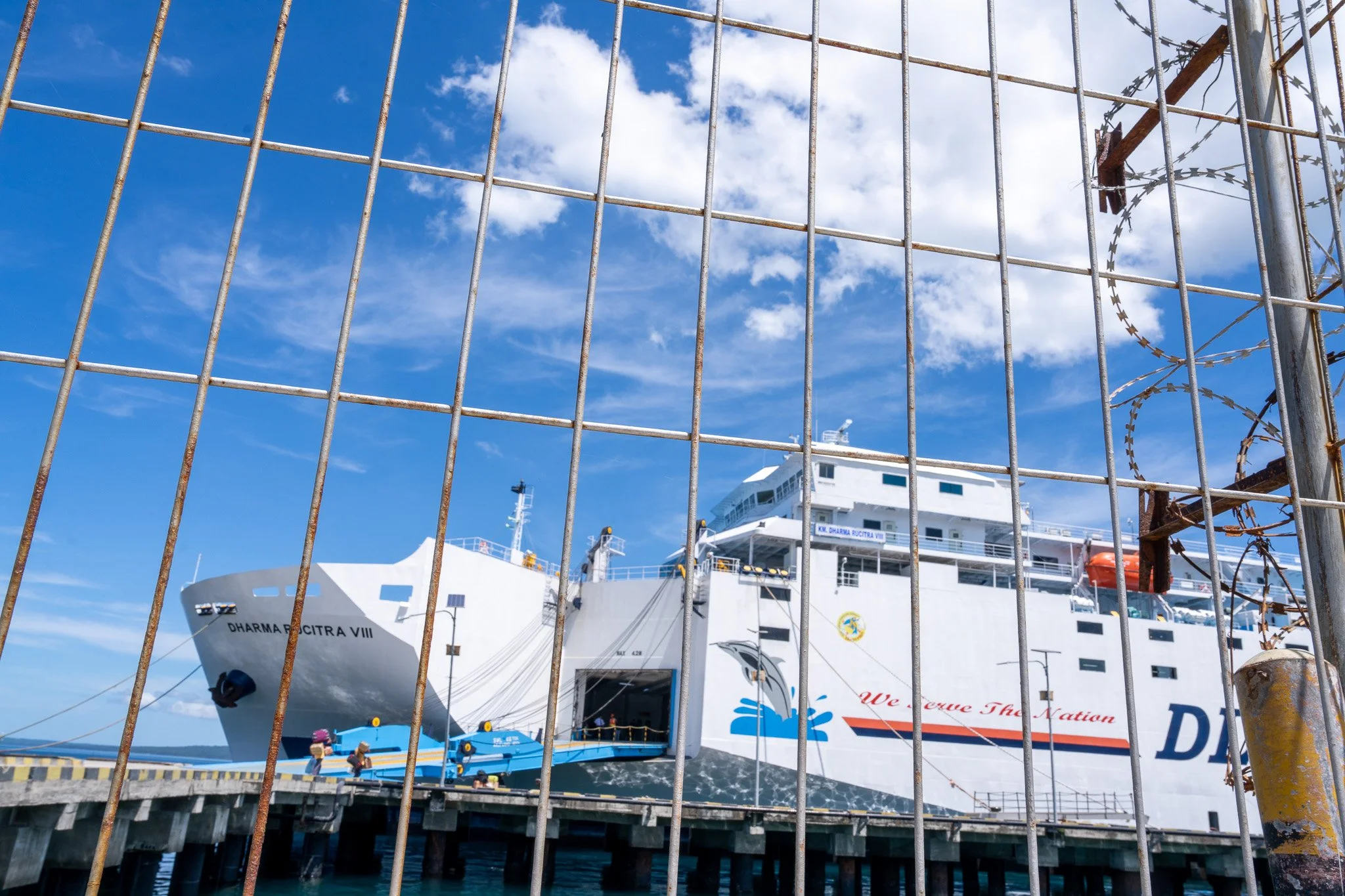
We chose a spot that gave us a clear view of the unloading. A steady stream of trucks, cars, and motorbikes emerged from the ship’s belly, one after another. It was mesmerizing — almost like watching a great creature exhale, releasing everything it had carried within.
Once the last of the vehicles had disembarked, the rhythm shifted. It was our turn to board.
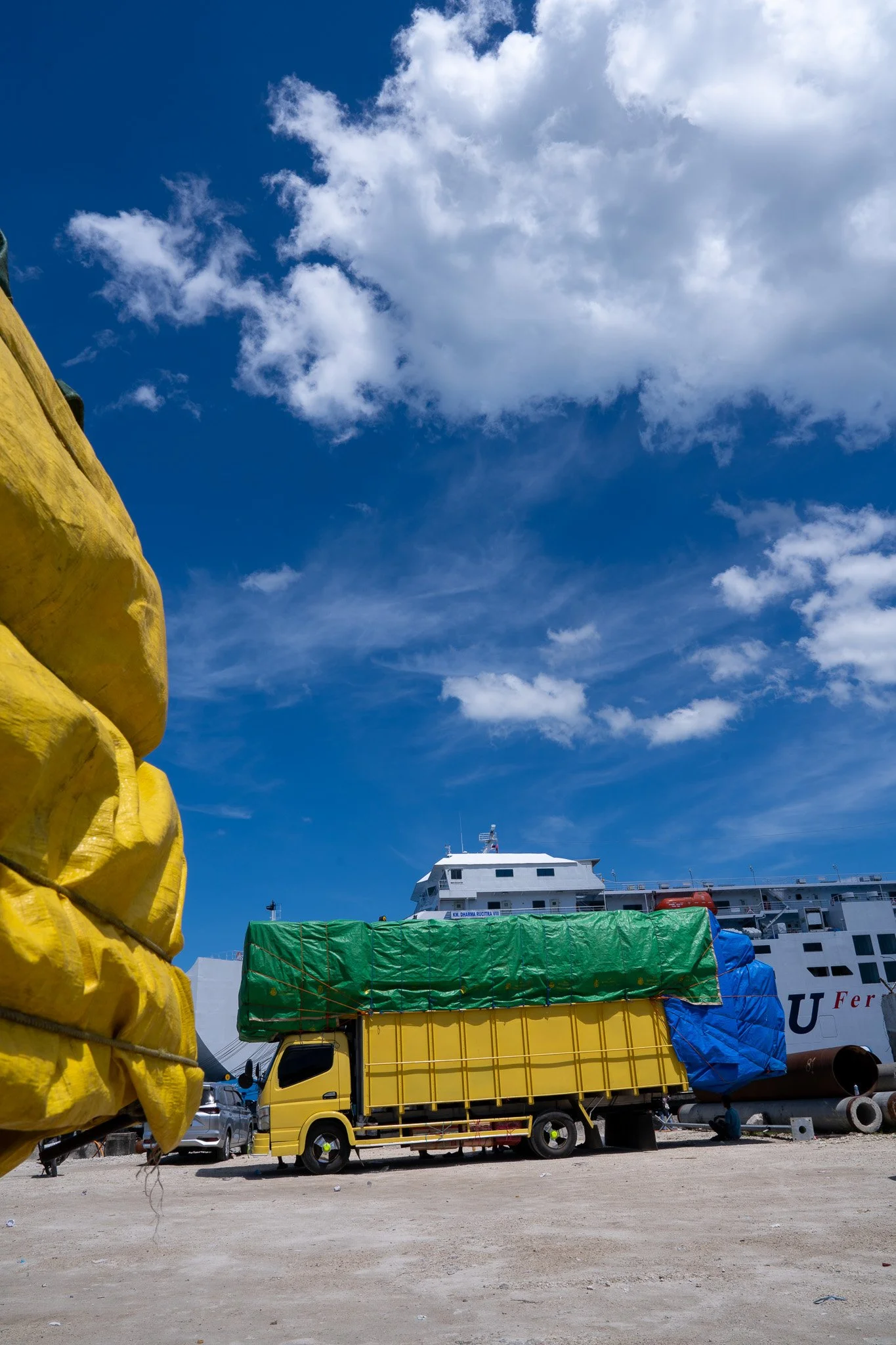
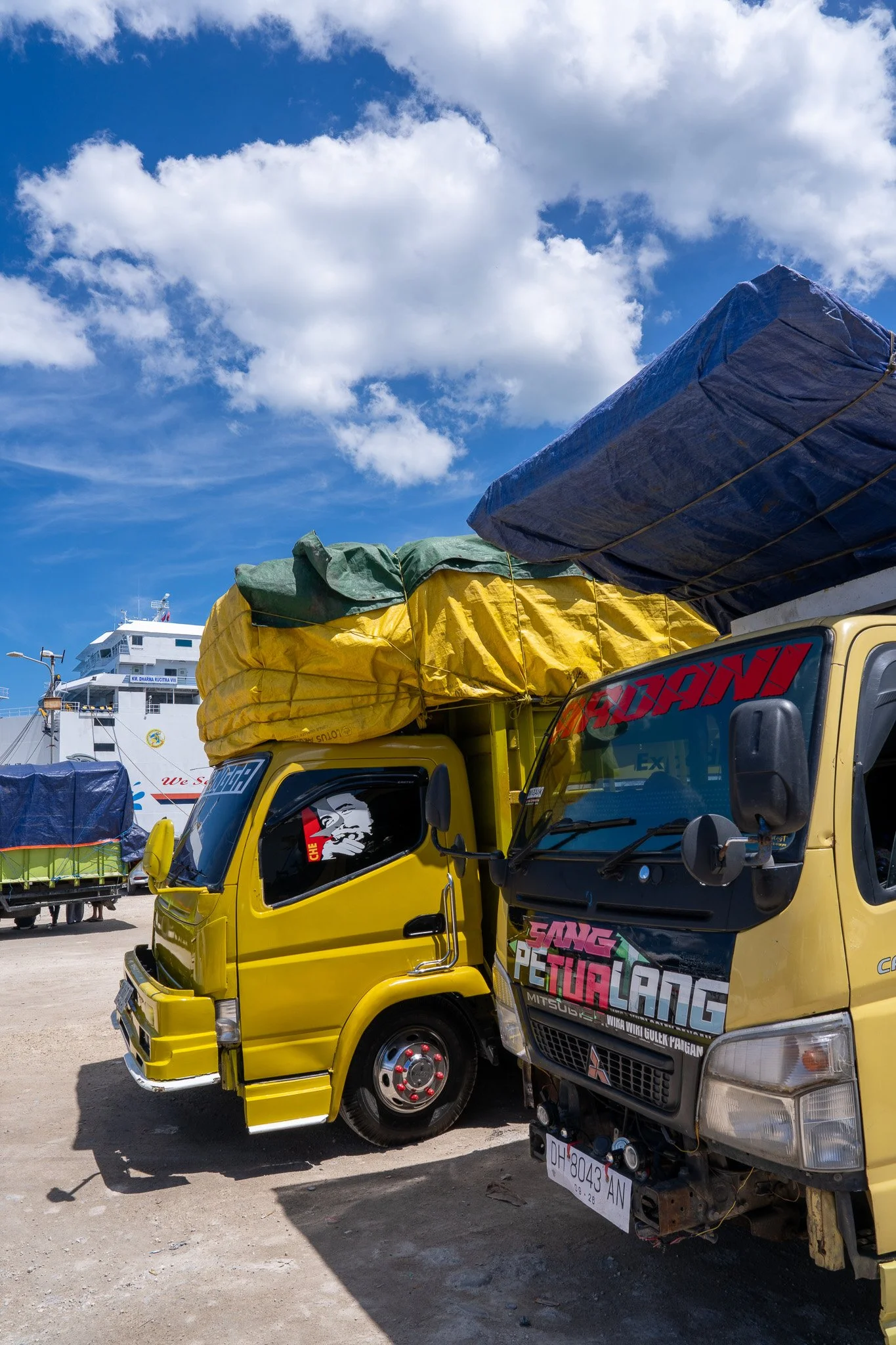
The trucks went first. One by one, they moved forward — large, heavily loaded, their cargo stacked high and swaying gently with each motion. I found myself watching closely, both impressed and uneasy. The loads seemed precariously balanced, shifting as the trucks rolled over the uneven, rocky path toward the ramp. It felt as though the slightest misstep — a rut too deep, a turn too sharp — might tip everything over.
But none of that happened.
Each truck advanced steadily, guided by drivers whose skill showed in the way they handled weight and movement, coaxing their vehicles forward with a confidence that made the difficult look routine.
Then it was our turn.
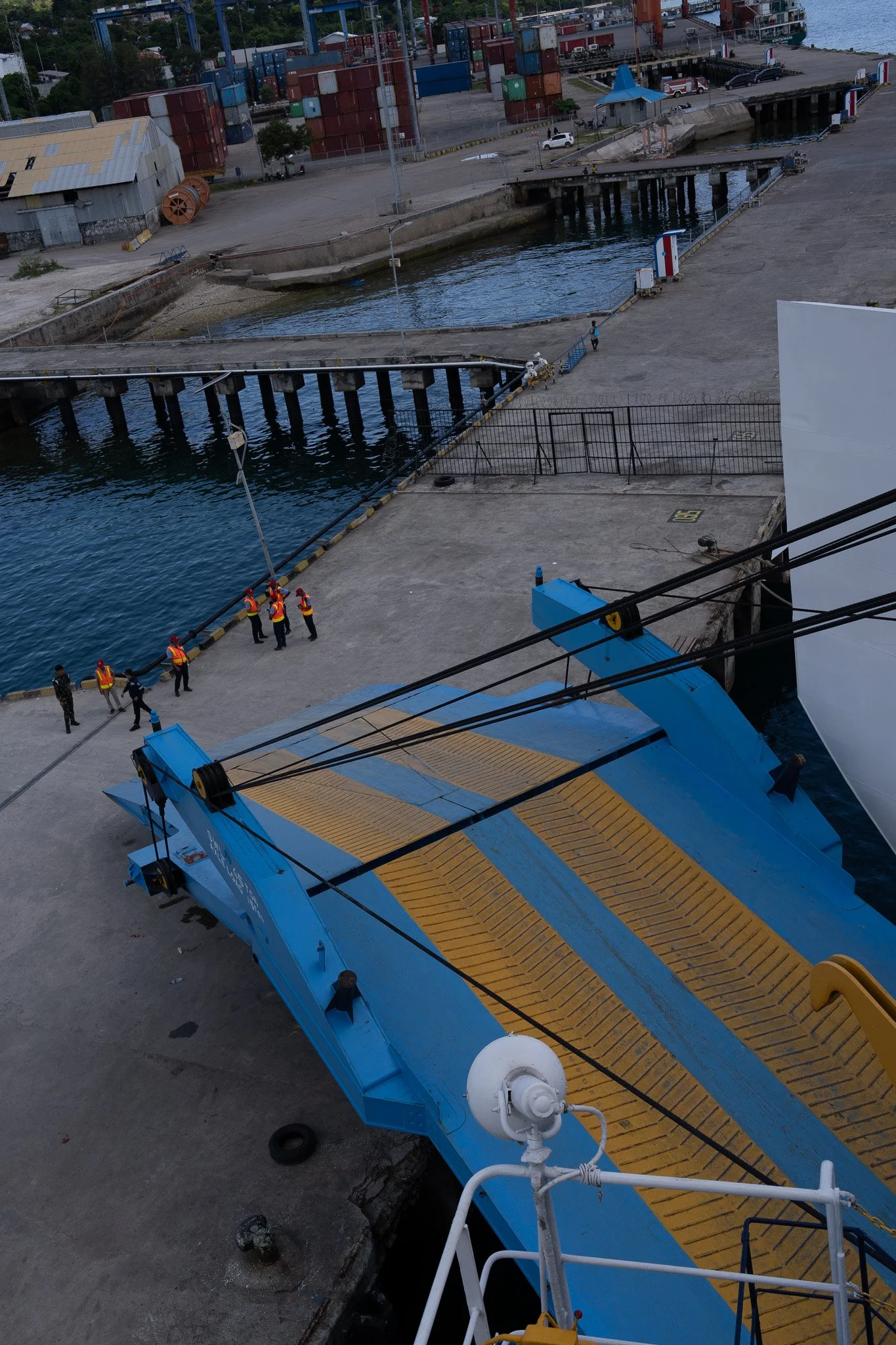
We followed the same worn path, inching forward toward the ship’s open mouth — the same passage the trucks had taken moments before. The metal ramp, temporarily bridging land and vessel, groaned beneath us as we drove across it. It rattled under the weight, a hollow, echoing sound that seemed to mark the moment of crossing — from shore to something less certain.
And just like that, we were on board.
A crew member gestured us forward, guiding us into the ship’s interior. The space opened up into a dim, cavernous deck, where the air felt heavier, thick with the scent of metal and fuel. We followed the curve downward, spiralling like a multi-level car park in a shopping centre, descending deeper into the hull.
The level we first entered was marked Deck 2, but we were waved past it, and then past Deck 3, continuing further down. Until we reached Deck 4.
There, we were directed into position, aligning the car carefully within a narrow row already filling with vehicles. We took our place at the very end of an empty line. First in, last in the line.
It was a small detail, but one that lingered — a quiet realization that when we reached the other side, we would be the last to leave.
As we stepped out of the car and gathered the things we would carry with us, the stillness of the lower deck quickly gave way to movement. The space filled almost at once — doors opening, footsteps echoing, voices rising in different directions. By the time we reached the lift, a long queue had already formed.
It looked daunting at first, but the line moved efficiently. Before long, we found ourselves inside, rising steadily through the ship. I watched the buttons as they lit up — the cabin level sitting two floors above where we had boarded — a small detail, but one that made me aware of how much of the ship existed beyond what we had first seen.
When the doors opened, we stepped out onto Deck 1B.
The change in atmosphere was immediate.
We found ourselves in a lobby that felt unexpectedly familiar — not grand, not luxurious, but reminiscent of a small boutique hotel. The lighting was soft, the space open, and everything appeared clean and well cared for. It was not what I had imagined from a working cargo vessel, and that contrast lingered quietly in my mind.
We were handed two key cards before moving further in, passing through into the cabin area.
Beyond the lobby, the space unfolded in sections rather than in one continuous room. To the left, a row of enclosed seating areas stretched along the wall, noticeably colder than the rest of the ship, as though the air-conditioning had been turned a little too high. At either end, toilets were tucked away, practical and unremarkable.
To the right, the cabins began. They were compact — more like compartments than rooms — each just large enough to hold what was necessary and little more. Many were split into two levels, with a narrow upper and lower berth stacked within the same space. Others, fewer in number, occupied the full compartment alone. There was a certain order to it all, a careful use of limited space that made the most of what was available.
Toward the front, the space opened up again. A small area with a scattering of tables and chairs offered somewhere to sit outside the confines of the cabin. It became, for me, a place to return to — for meals, or simply to stretch out and breathe a little.
Beyond that, at the very front, was a more formal seating area — quieter, slightly set apart — completing the layout in a way that felt both functional and thoughtful.
After finding our assigned cabin and setting down our belongings, I felt a restlessness settle in. There was still more than an hour before departure — too much time to simply sit and wait. I wanted to see more.
By then, I had a rough sense of our level, and one detail had already caught my attention — a spiral staircase tucked to the side, leading upward. It felt almost like an invitation.
I followed it.
The staircase brought me to the Bridge Deck. The space opened into another enclosed seating area, similar in function but subtly different in feel. What stood out, though, were the doors. Unlike Deck 1B, where the outside world was kept behind glass, here the ship offered a way out.
Curiosity drew me through.
The moment I stepped outside, the heat hit with full force. It was just past midday, the sky clear and unbroken, the sun bearing down with an intensity that felt almost physical. For a brief second, I hesitated — but I had come this far.
I kept going.
At the stern, there was a small cluster of activity — a kitchen area, and beside it, somewhat unexpectedly, an open playground for children. The bow, however, remained out of reach, closed off from public access. On either side of the ship, stairways led further upward, tracing the outer edges.
I chose one and climbed.
The next level — the Captain Deck — felt different again. More open, less crowded, and somehow calmer. From here, the view stretched wider, unobstructed. It quickly became my preferred place, the one I would return to throughout the journey.
At the back, a restaurant occupied the space, while toward the front there was a modest seating area. At this time of day, it offered a welcome refuge — shaded by the captain’s quarters above, away from the harshness of the sun.
Still, there was one more level.
I climbed again, reaching the highest accessible deck. It was sparse — a narrow track circling the top, perhaps intended for exercise, though in the heat it seemed more symbolic than practical. I could not imagine anyone choosing to jog here under the midday sun.
From this height, the ship revealed its limits as much as its expanse. The very front remained inaccessible, claimed by the captain’s quarters that occupied the uppermost levels. Even here, there were boundaries.
But it did not diminish the experience.
Standing there, with the sea still waiting and the ship not yet in motion, I felt anticipation of what was to come — suspended between departure and arrival, with time, for the moment, still on my side.
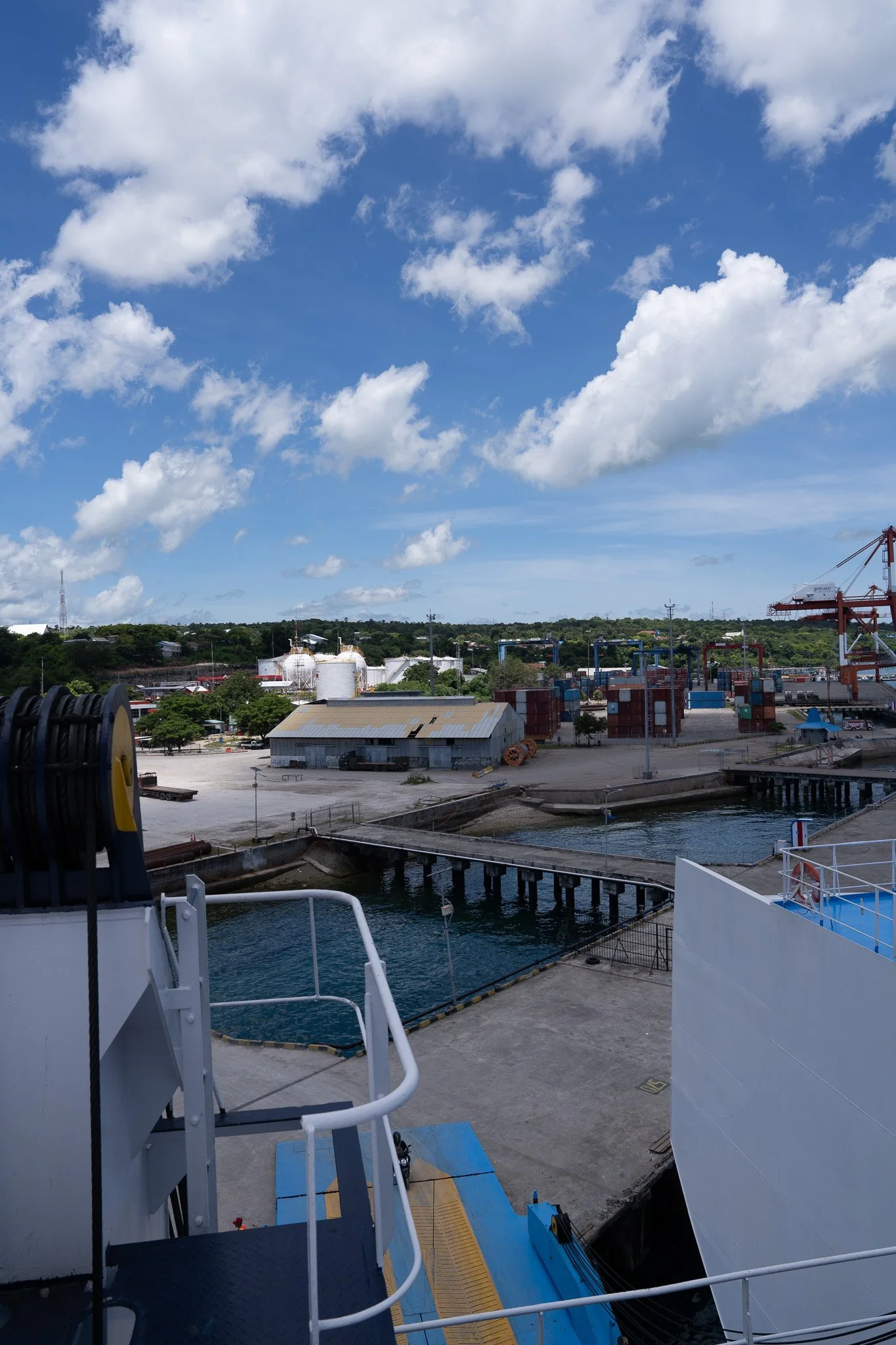
A loud horn shattered the stillness — then another, and another in quick succession. The sound rolled across the deck, deep and commanding. The ship was about to depart.
I made my way back down to the Captain Deck, drawn to the open viewing area. From there, I could see the final preparations unfolding below. The ramp — that heavy metal bridge between land and ship — was being pulled away. It did not move quickly. There was a weight to it, a deliberate effort as it was lifted, adjusted, and finally secured into place.
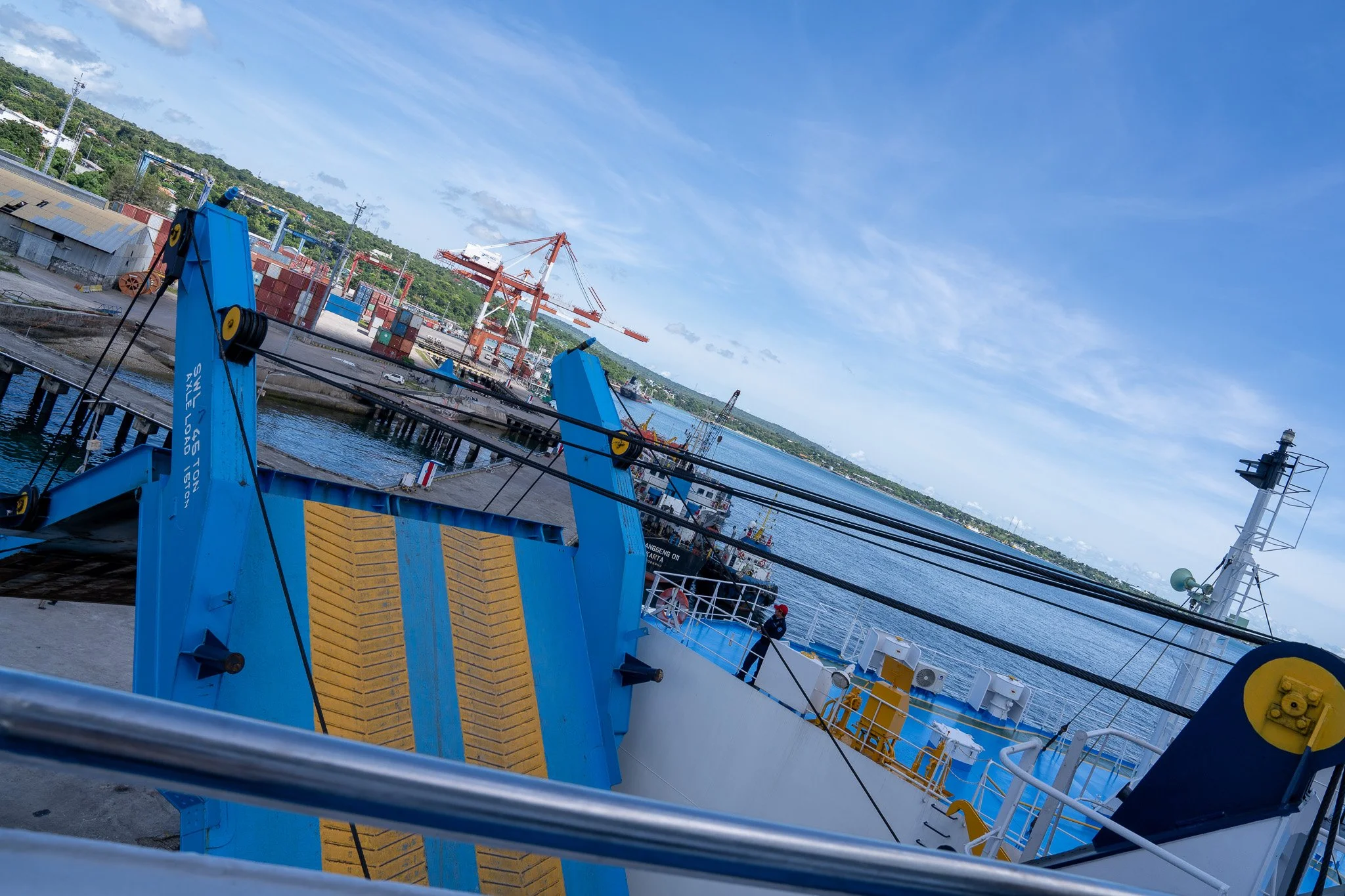
For a brief moment, everything seemed to pause.
Then came a sudden flurry of activity. Lines were released, one after another, loosening the ship’s last ties to the port. What had felt anchored now began to shift.
Almost imperceptibly at first, the ship started to move.
The distance between us and the dock widened, slowly, quietly. The pier slipped away, and with a gentle turn, the ship began to face the open sea. There was no abruptness to it — just a steady, assured motion, as though the ship had done this countless times before.
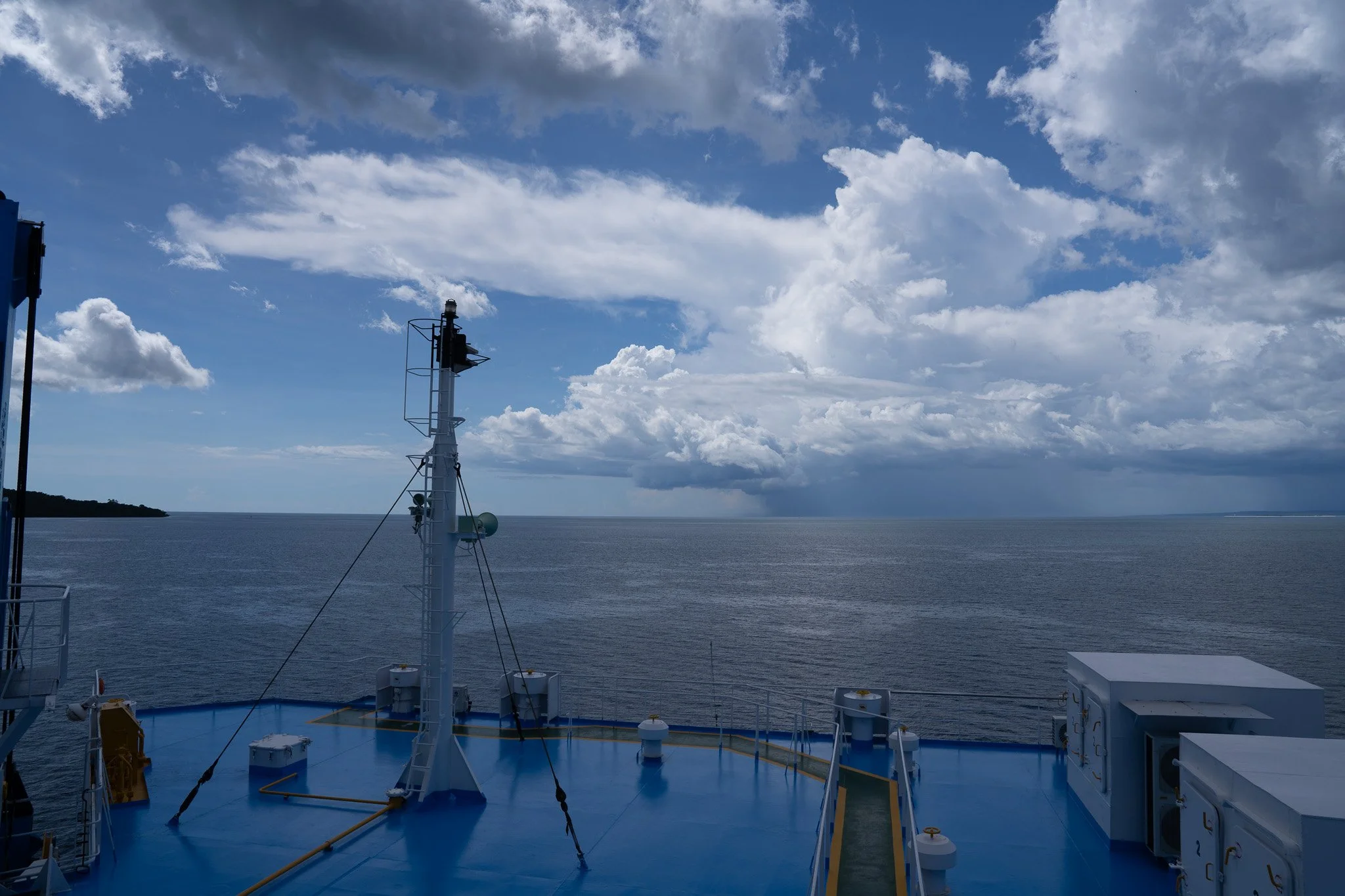
I stayed where I was, watching.
Kupang gradually receded into the background, its edges softening as we moved further out. We passed a small island — one I had seen all my life from afar, always distant, almost familiar in its constancy. Yet now, for the first time, I was close enough to see its shape clearly, its presence no longer just part of the horizon.
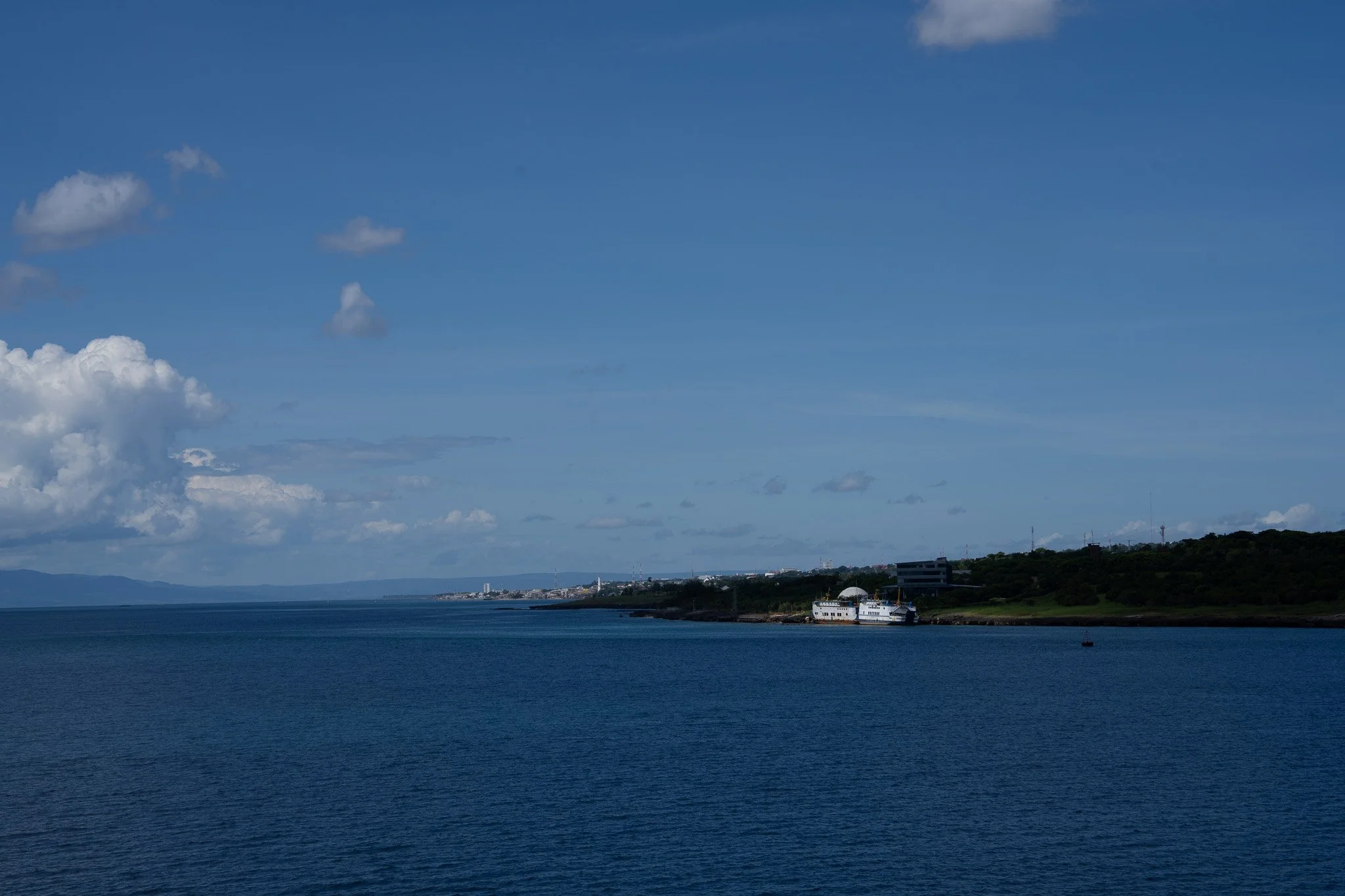
There was something profound in that moment.
This journey — something I had hesitated over, questioned, nearly let pass — was now unfolding beneath my feet. Not imagined, not planned from afar, but real, and happening.
A moment I had never expected, and yet, somehow, had arrived.
The heat eventually drove me back inside.
In the cabin, I lay down, more out of necessity than intention. It was only then, in stillness, that I noticed the gentle, persistent sway of the ship. A slow rise and fall, subtle but unmistakable.
I hesitated.
The thought of seasickness lingered at the edge of my mind, tied to a memory from years ago — a whale-watching trip at Phillip Island. What had begun with excitement had ended in discomfort, leaving a dull, lingering unease that stayed long after we returned to shore. I had no desire to repeat that experience.
For a moment, I considered waiting it out.
But the memory was enough.
I took the pill, telling myself that the worst outcome would simply be sleep — and, at this point in the journey, there was little to miss in the open stretch of sea.
It worked.
Sleep came quickly, though not deeply, and when I woke, the movement of the ship remained — but the discomfort I had feared never followed.
That was enough to draw me out again.
The cabin area, once relatively quiet, had come alive. Children darted between the narrow spaces, playing improvised games — hide and seek, or simply chasing one another with restless energy. Their laughter carried easily through the corridor. Nearby, adults remained close to their cabins, sitting or standing in small clusters, absorbed in conversation.
It was not quiet, yet it did not feel chaotic.
What struck me most was the absence of tension. No one seemed bothered by the noise. No raised voices, no attempts to silence the children. Curtains were drawn when privacy was needed, voices softened when conversations deepened, and life carried on alongside one another.
I realised then that I had fallen asleep earlier in the midst of this same hum of activity, the sounds blending into something almost comforting.
I made my way back up to what had now become my favourite spot.
By then, the sun had begun to soften, its earlier intensity easing as it slowly made its way toward the horizon. The breeze was gentle, inviting me to sit outside.
I settled in.
There was nothing around us, at least nothing the eye could hold onto. Sea and sky stretched endlessly in every direction, the horizon a thin, steady line separating the two. Up here, the ship felt reduced to its essential sounds — the low, steady rhythm of its movement, the water parting as it moved forward with a soft, continuous hush.
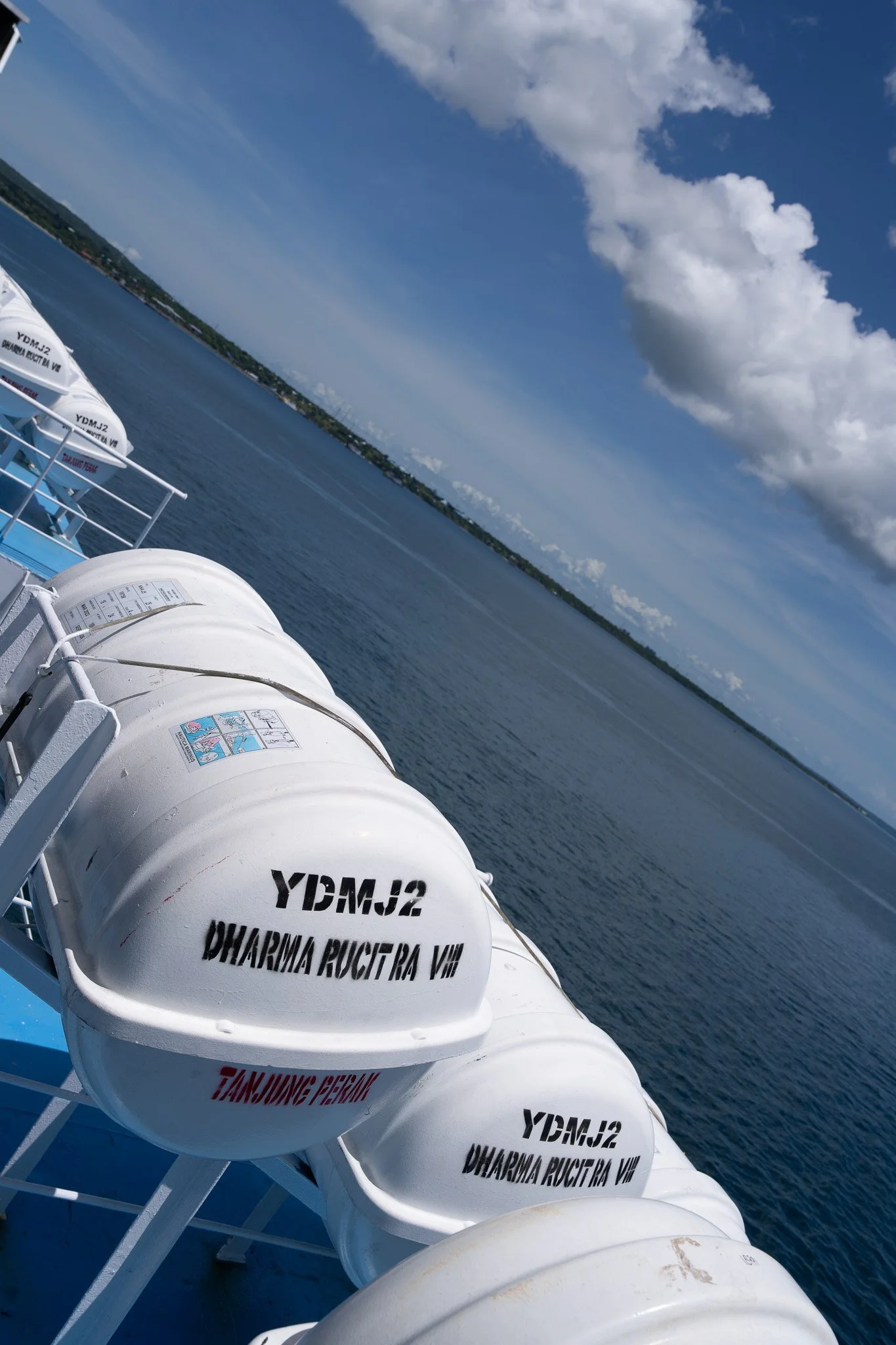
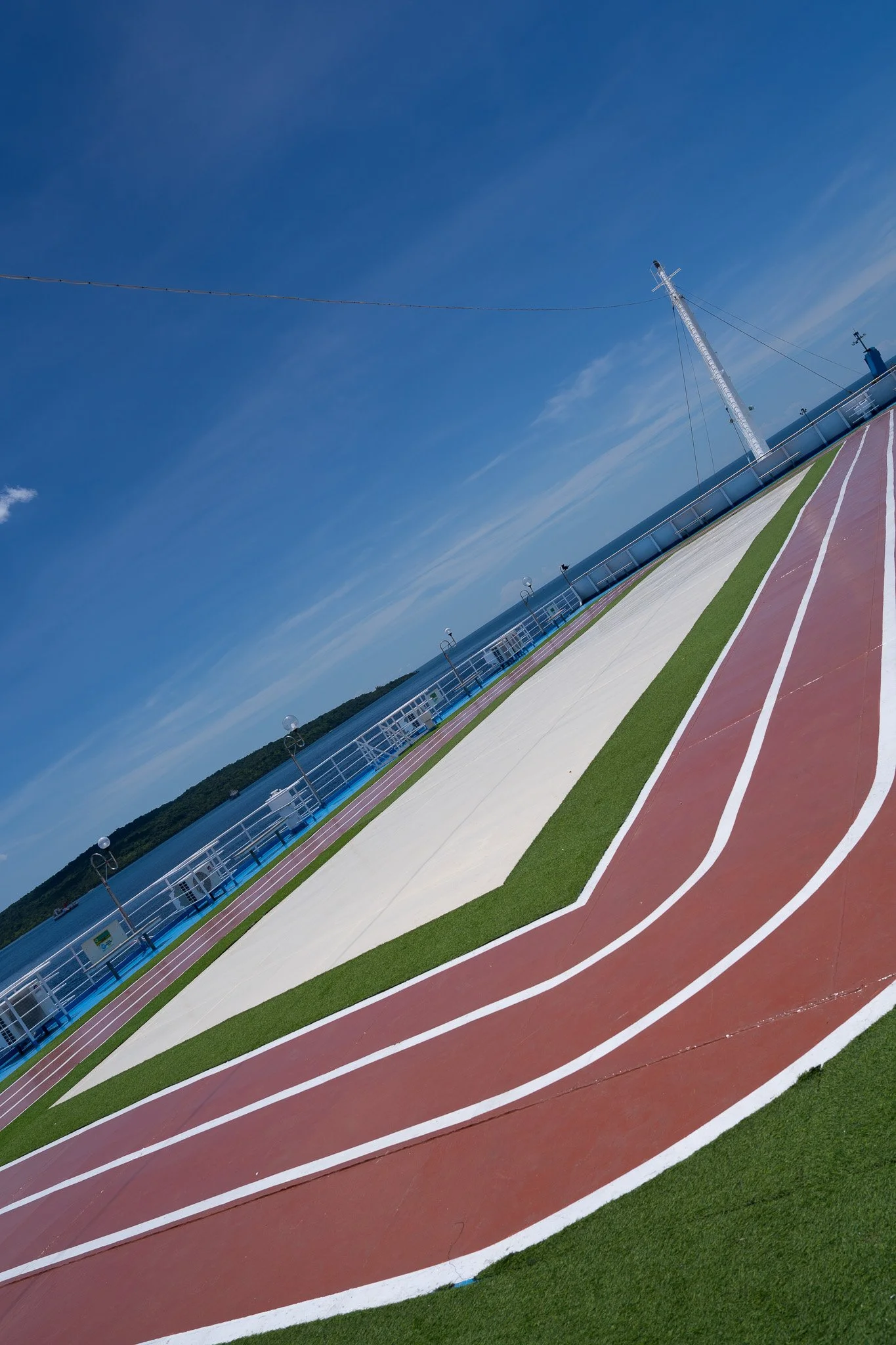
It was a sound that brought comfort — the reassurance that the journey was unfolding as it should.
Sunset was still some time away.
For now, I remained where I was, taking it in — the openness, the vastness, the feeling of being suspended between where I had been and where I was going — letting the moment linger a little longer.
I wandered back to the lobby, drawn this time to the small shop beside the information desk. Earlier, I had passed it without much thought. Now, with time to spare, I slowed down and paid closer attention.
The shop was modest, stocked mostly with snacks and cup noodles — simple, practical things that suddenly made perfect sense. This was the rhythm of travel here. Not long meals, but quick, familiar comforts that could be carried back to a seat or eaten wherever space allowed.
Beside it, a small dining area held a scattering of passengers. A few tables were occupied, heads bent over steaming cups, eating with focus. The air carried the unmistakable scent of instant noodles — warm, savory, edged with sharp chilli. It lingered, stirring a memory of taste so vivid it almost felt immediate. I found myself swallowing reflexively, drawn in despite not being hungry.
I resisted, though not without effort.
Beyond the shop, the walls were lined with maps of the ship — diagrams showing its layout from different angles, layers unfolding one above the other. I stood there longer than I expected, tracing the paths between decks, connecting the spaces I had already walked through with those I had yet to see. There was something satisfying about it, as though the ship was revealing itself piece by piece.
Further along, a closed door marked another section beyond — another sleeping area, accessible only by key card. It remained out of reach, a small reminder that even within this shared journey, there were boundaries — spaces seen, and others only imagined.
There was one space that had quietly held my curiosity from the beginning — the Executive area.
Its door was always closed. Through the glass, I could see only a glimpse: a row of reclining seats, neatly arranged, and more often than not, almost entirely empty. Perhaps two passengers at most, scattered across a space that could have held many more. It felt set apart, not just by access, but by atmosphere.
For a while, I only observed from a distance.
Then, almost without deciding, I stepped in.
I half expected to be stopped — a glance, a question, some gentle redirection — but none came. No one paid me any attention. The space received me as silently as it had everyone else.
Inside, it was even more still than I had imagined. Rows of reclining sofas stretched across the room, most of them unoccupied, lending the place a calm that bordered on emptiness.
What I hadn’t noticed before was a curtain drawn along one side.
Curious, I moved toward it and gently pulled it aside.
Behind it, a wide window opened out toward the bow of the ship. The view was familiar, yet different — the same direction I had seen from the Captain Deck, but here it felt lower, almost level with the sea itself. The horizon stretched ahead, uninterrupted, the ship cutting forward into it with steady certainty.
I stood there for a moment, taking it in.
It was the same journey, the same sea — just seen from another perspective.
I had made a promise to myself earlier — to return for the sunset.
Now, the time had come.
With about an hour to go, I made my way back up to the viewing deck. It was no longer empty. People had gathered, some seated, others leaning against the railing. Conversations drifted in low tones, occasionally interrupted by the click of a photo or the brief lift of a phone for a selfie. Many simply stood still, looking outward.
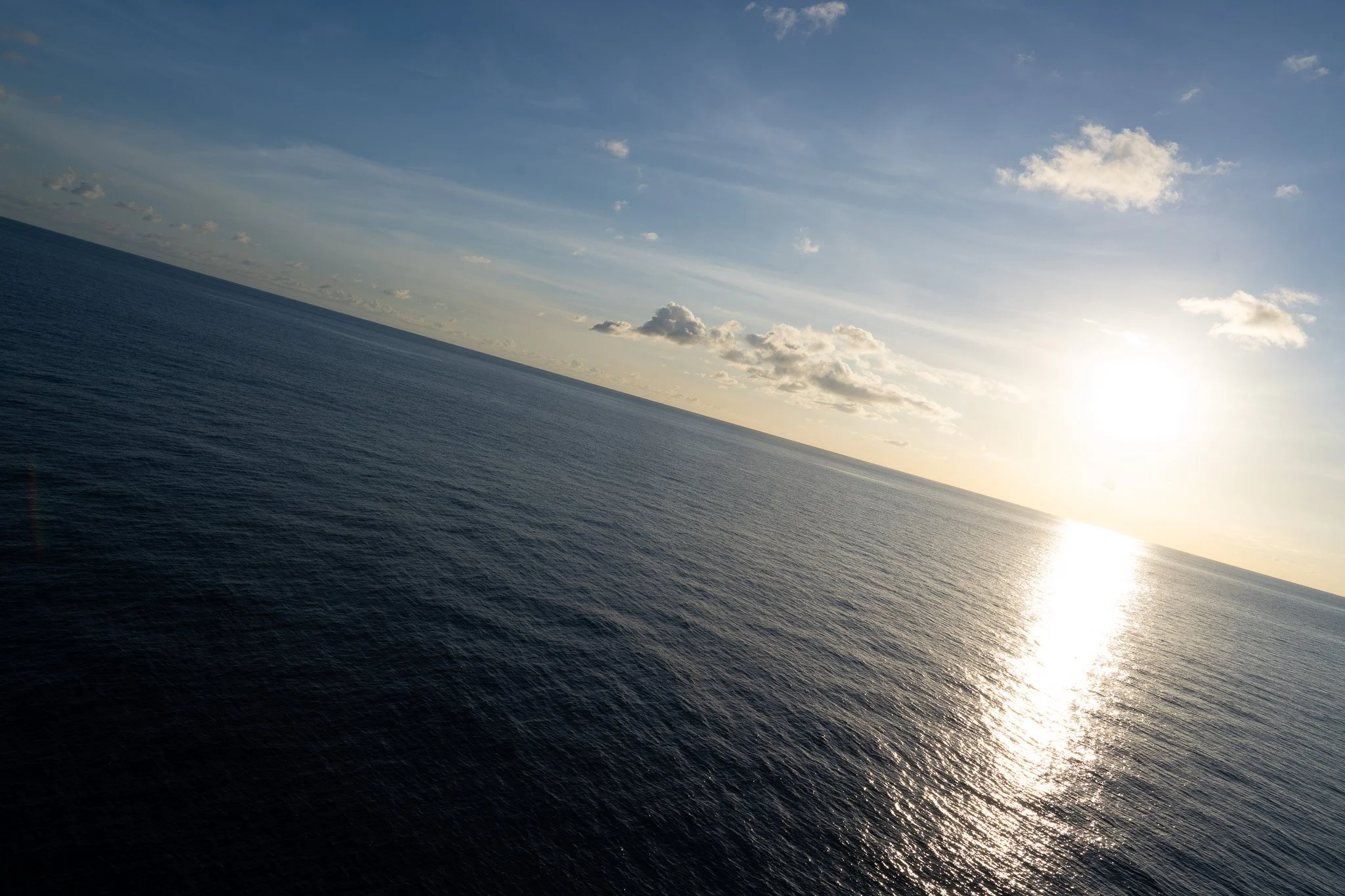
It felt as though we were all waiting for the same thing.
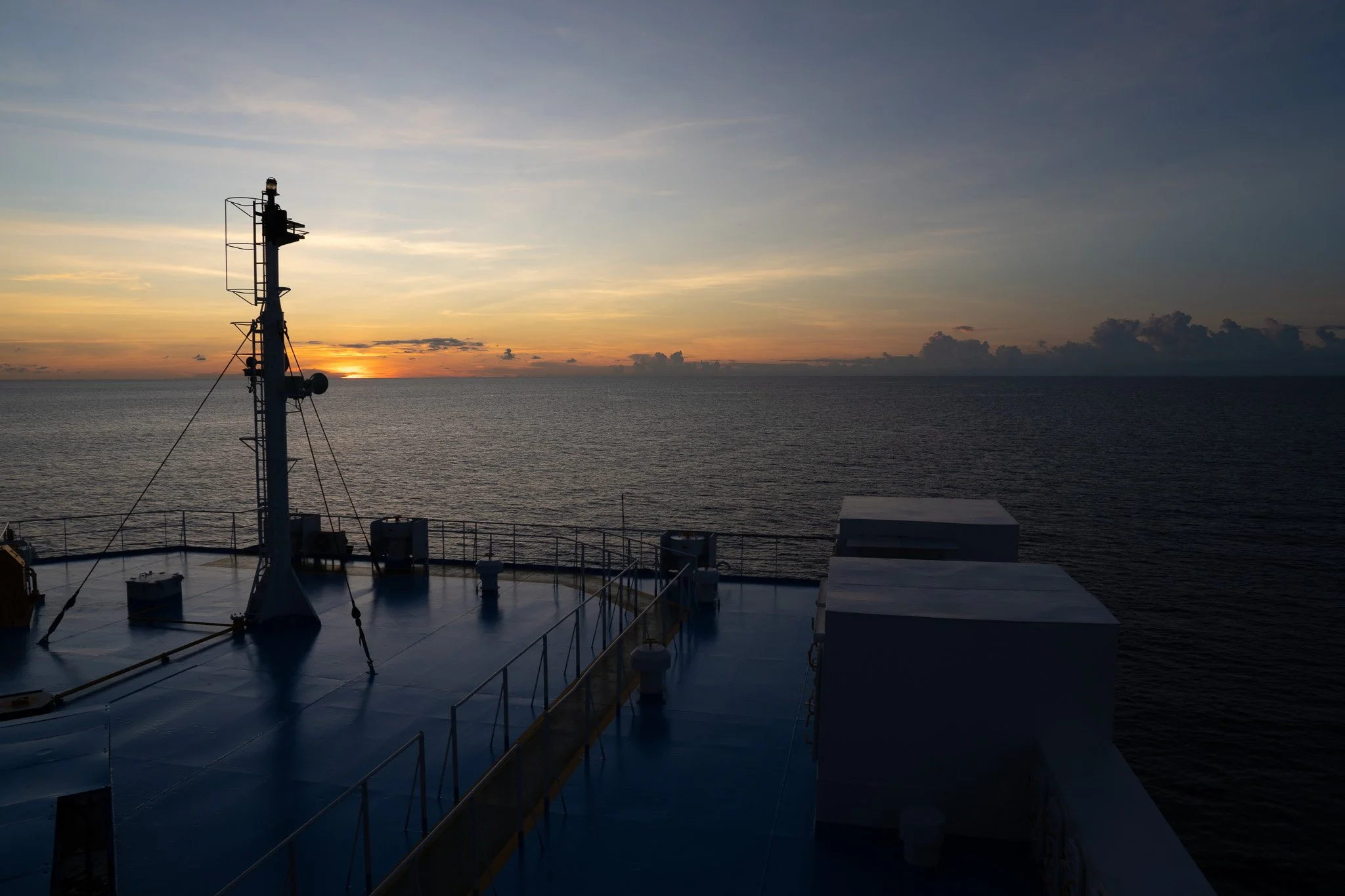
The horizon stretched wide and open, offering itself as a perfect stage. Low clouds hovered in the distance, scattered just enough to add texture without closing the sky. Where the sun would meet the sea, there was a clear gap — an unobstructed path.
The clouds carried a certain illusion. Hanging low, they formed shapes that resembled distant land — rising and falling like the outline of mountains. For a moment, they felt almost like mirages, as though islands might emerge from them at any time.
As time slipped by, the sun moved steadily toward the horizon.
At first, the change was almost imperceptible — a pale wash of yellow spreading across the sky. Gradually, it deepened, gathering warmth, turning to gold as the sun sank lower. The light grew richer, more deliberate.
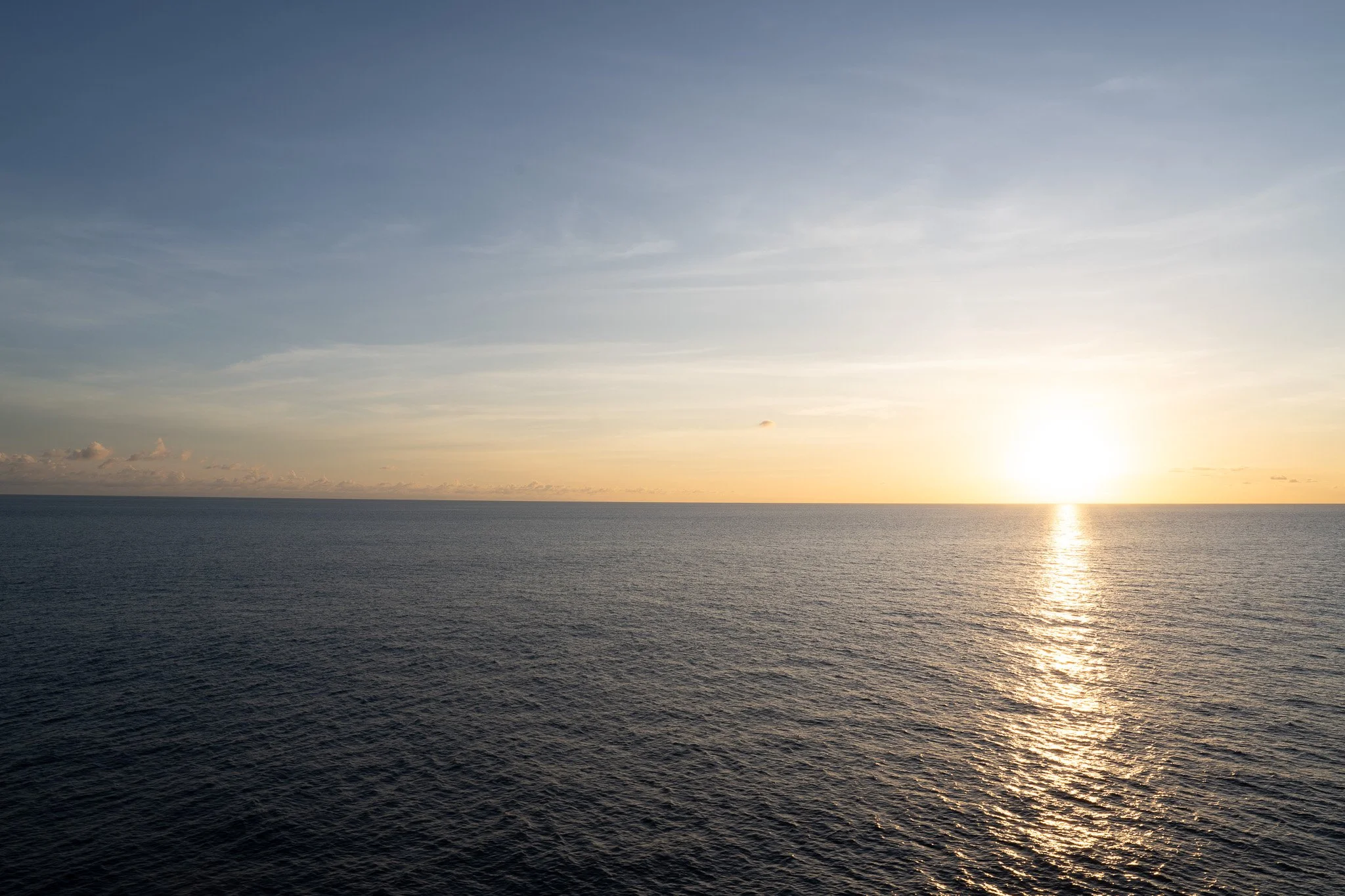
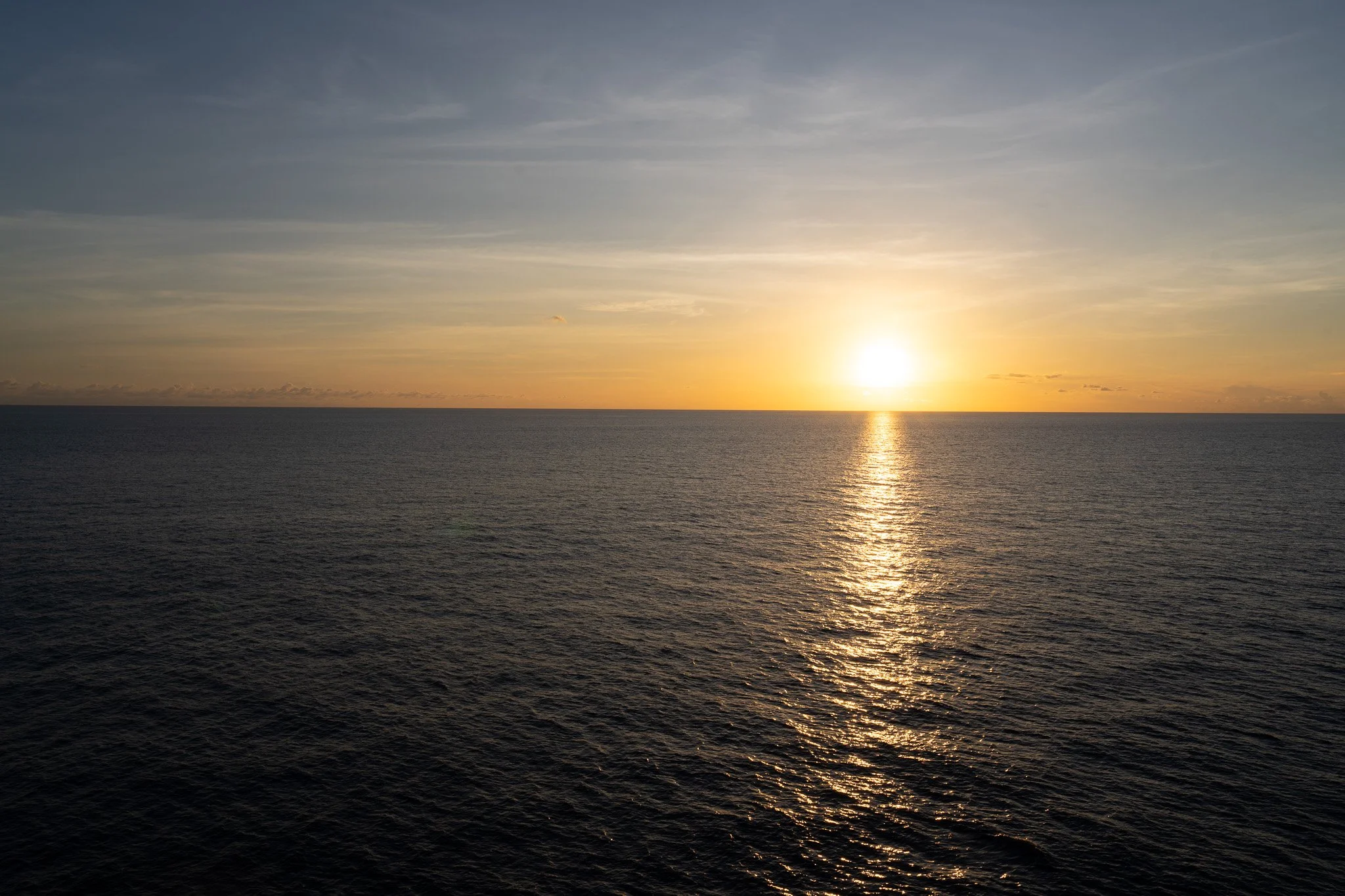
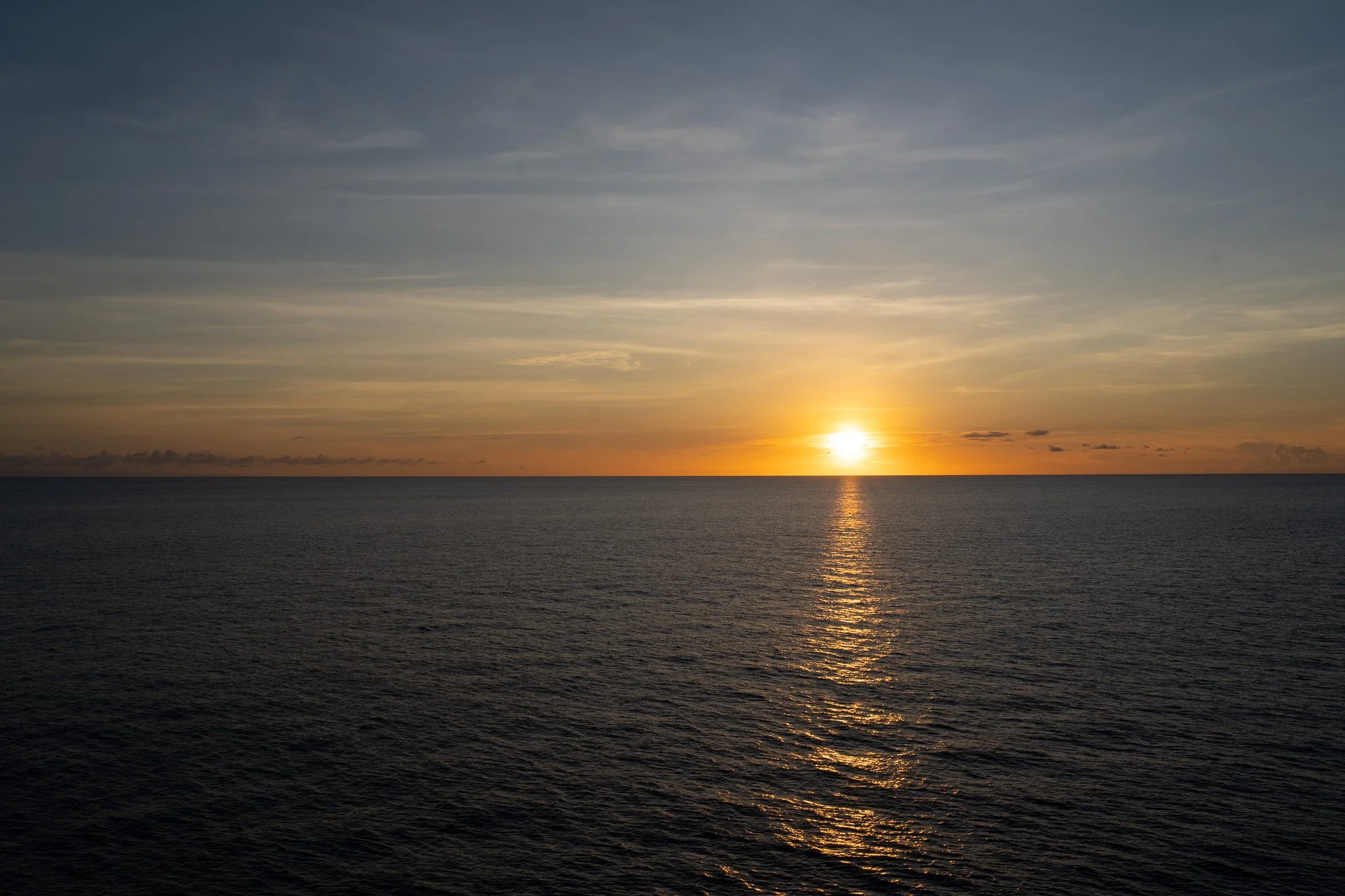
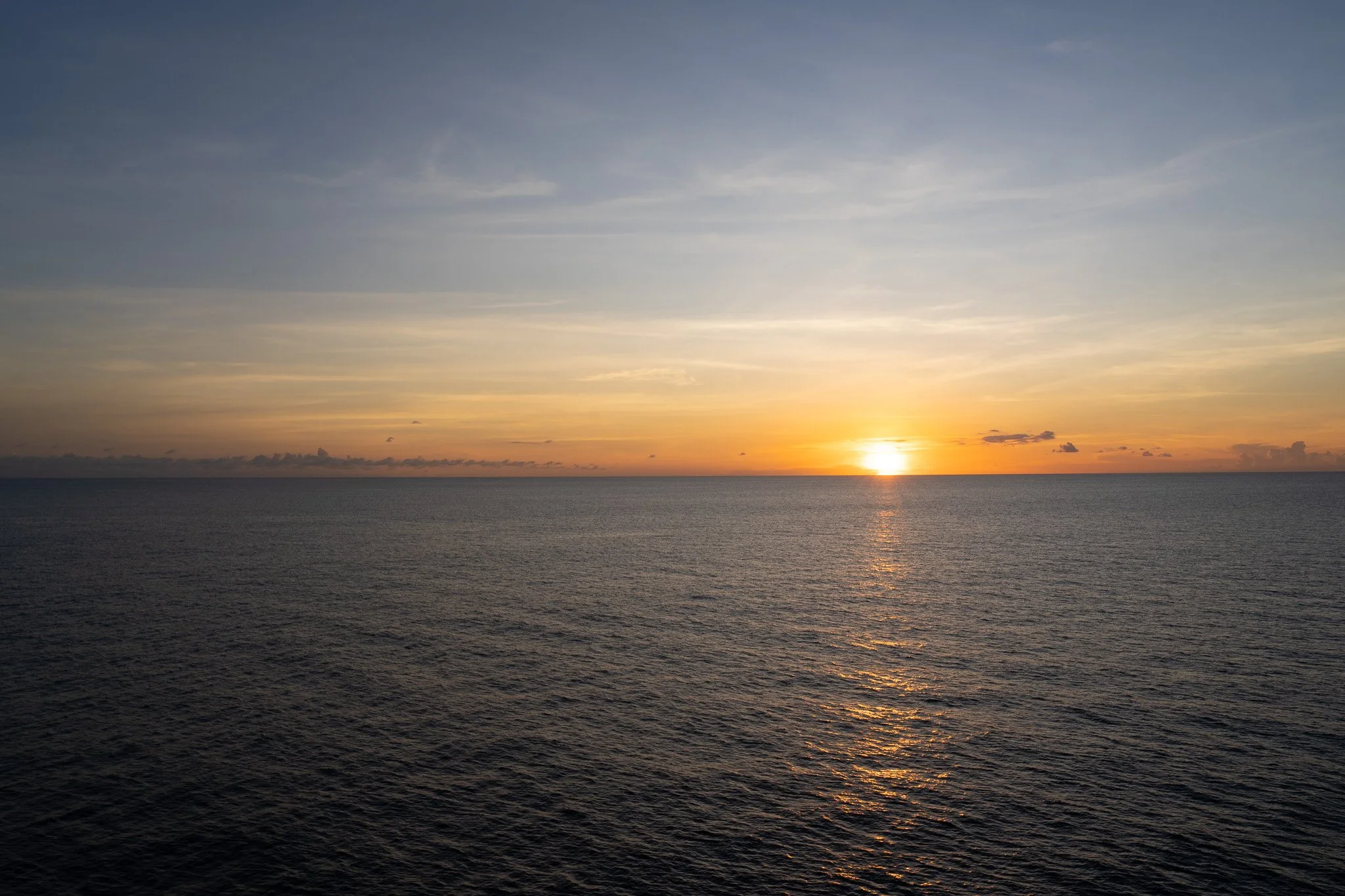
The sun lingered for a moment — round, bright, almost suspended — before finally giving way.
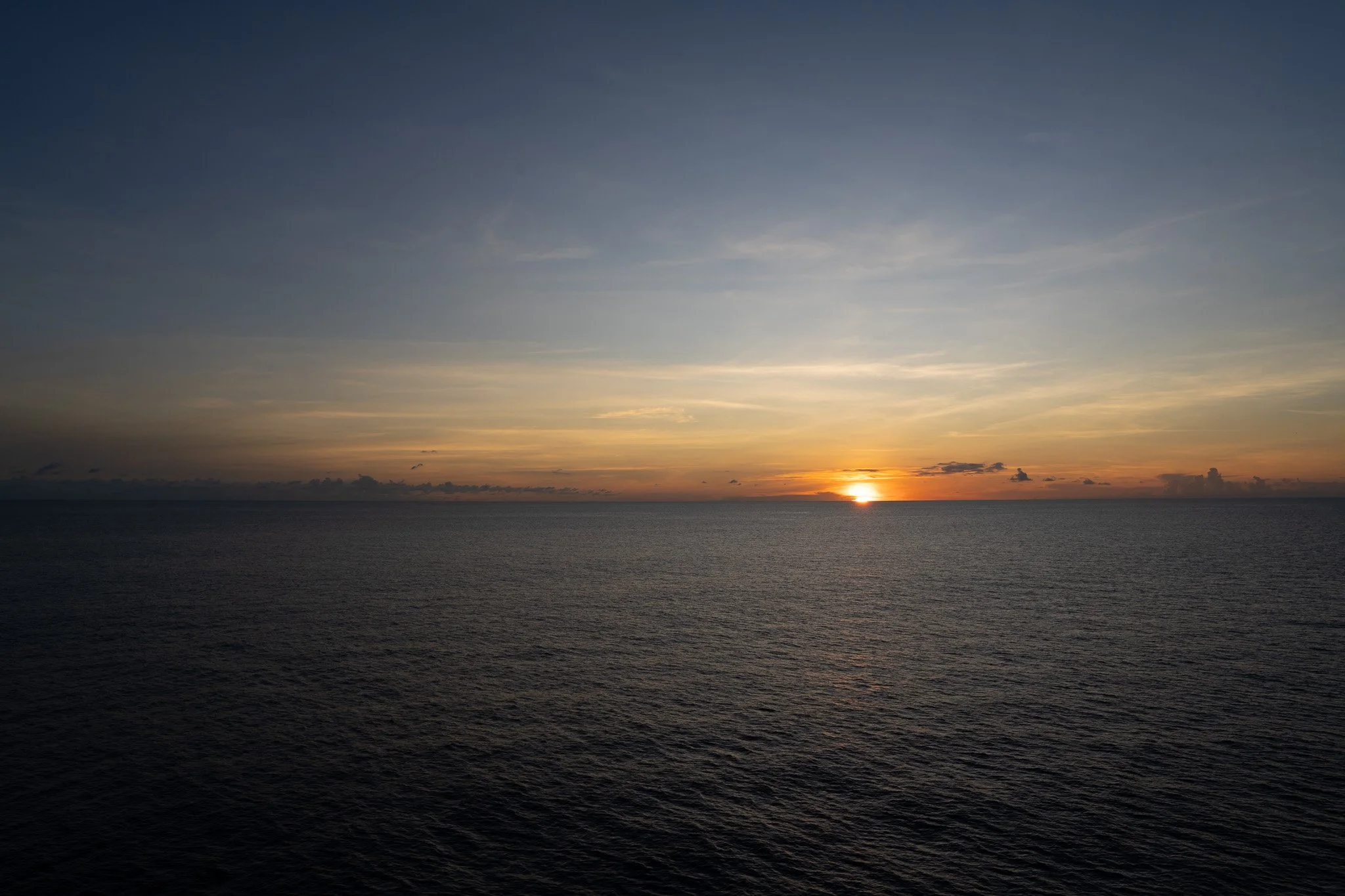
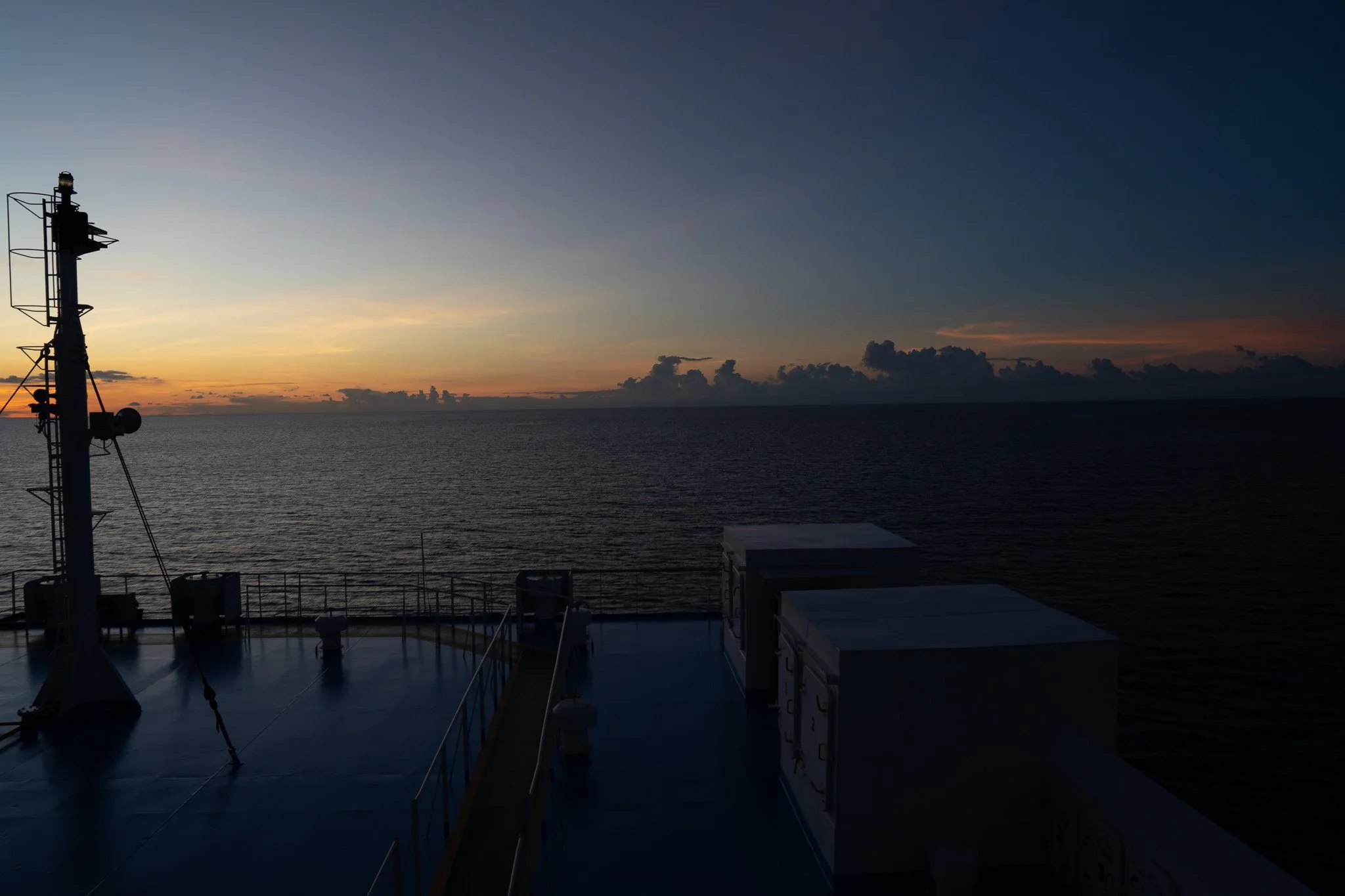
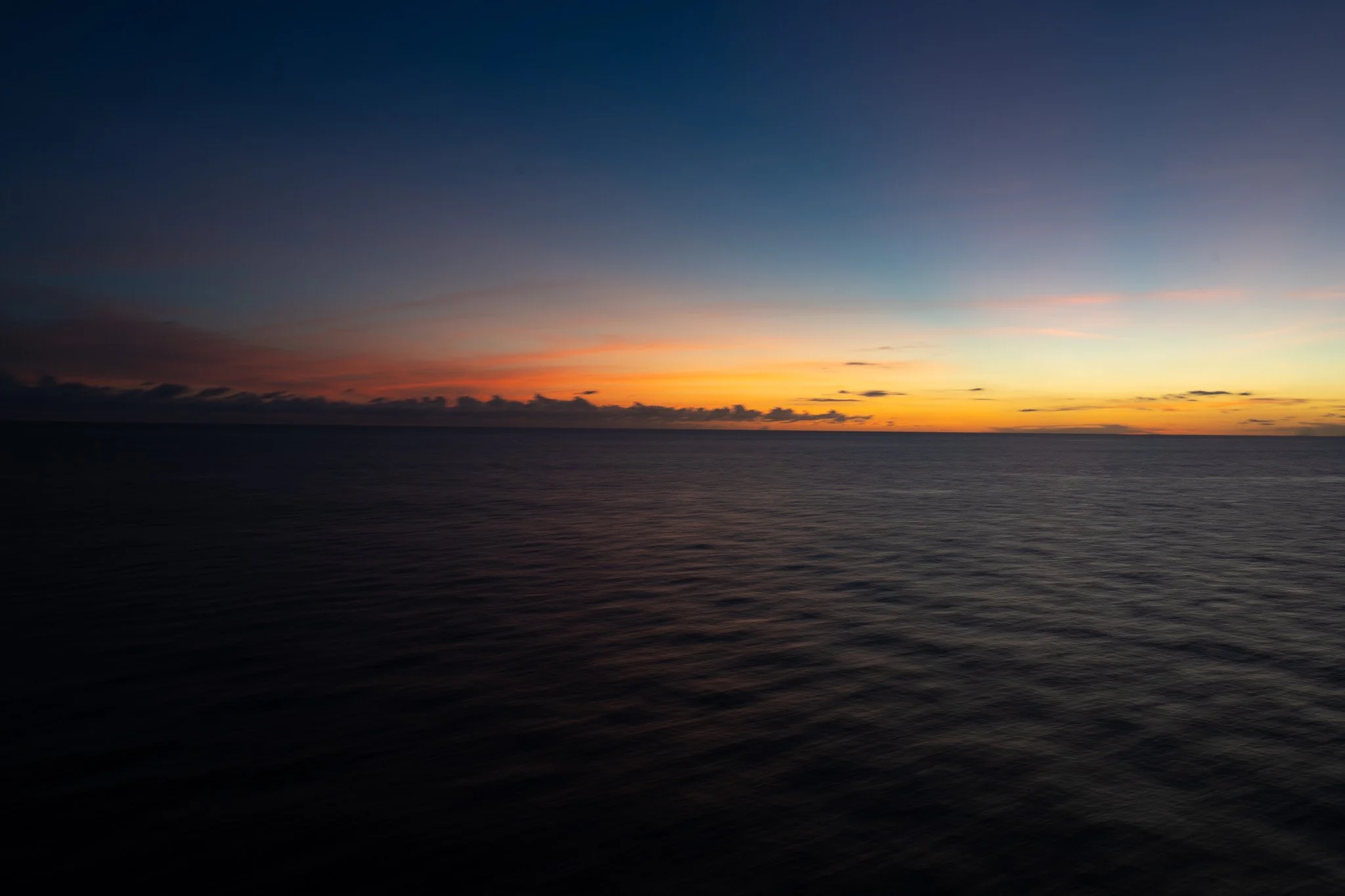
As it touched the horizon, the colours shifted again. Gold gave way to orange, then deepened into red, stretching outward in long, fading strokes. The sea reflected it in fragments, breaking the light into soft, trembling patterns. And then, slowly, almost reluctantly, the last edge of the sun disappeared.
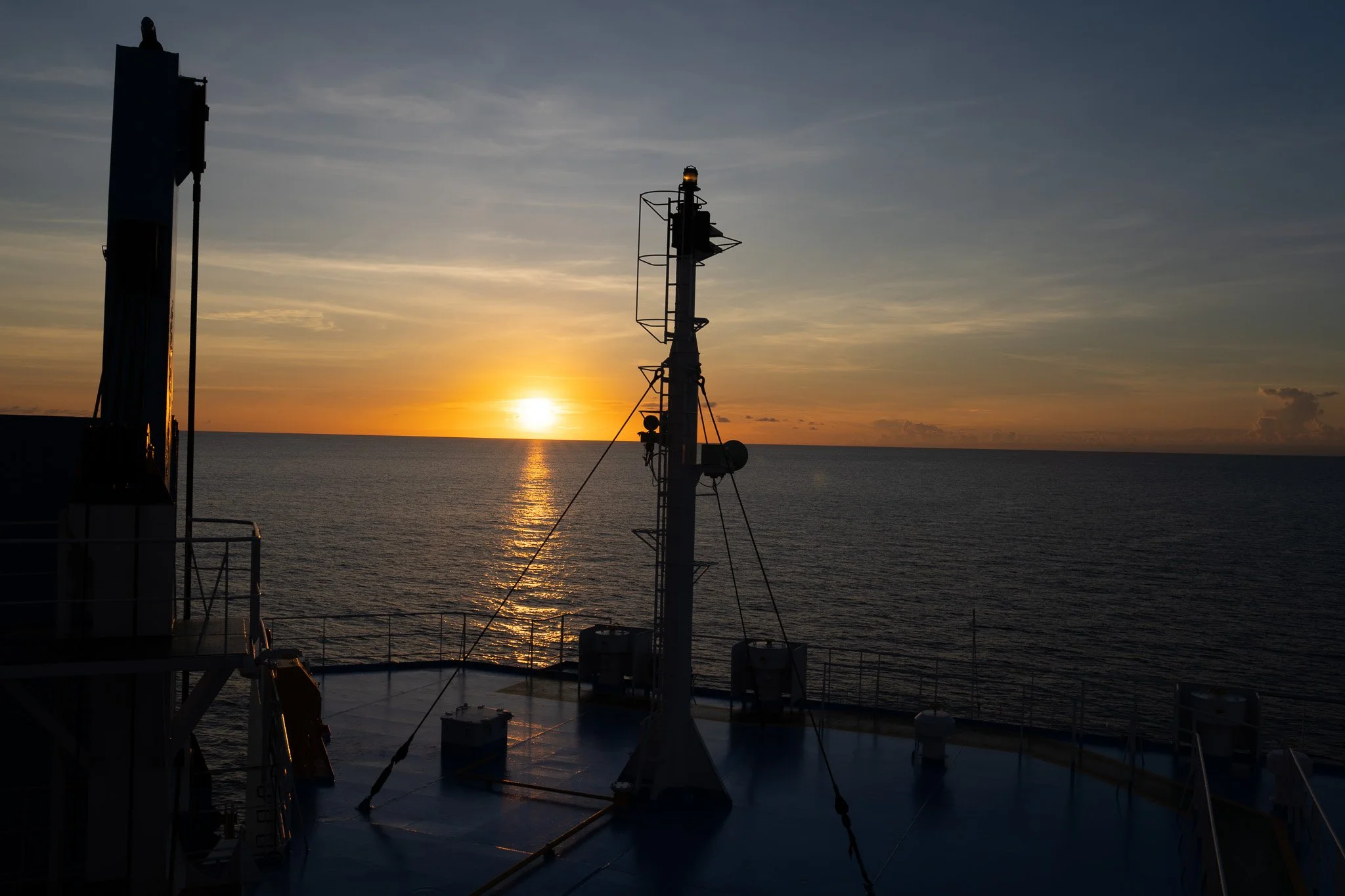
What remained stayed only briefly.
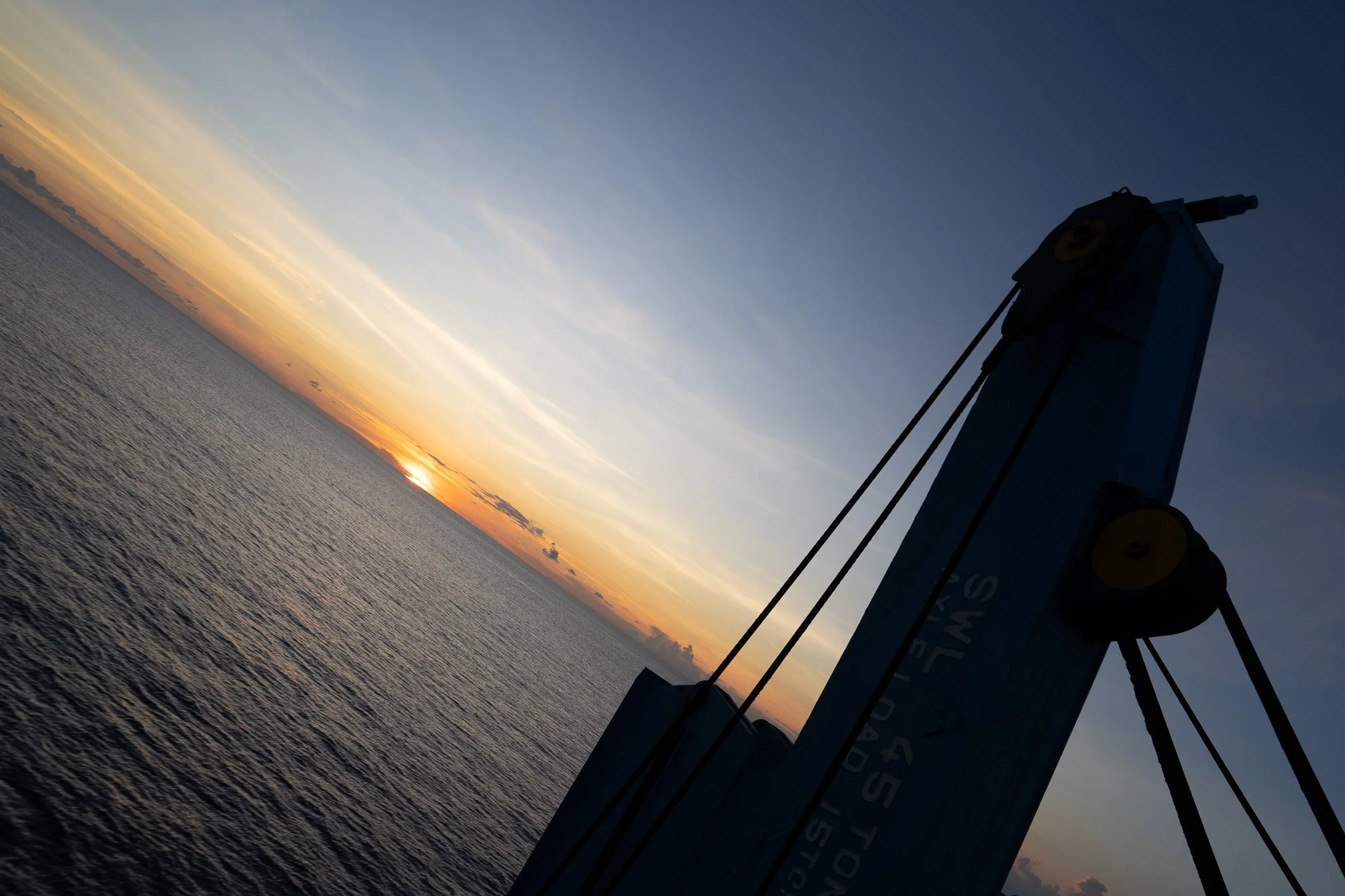
The colours softened, dimmed, and gave way to the quiet arrival of night.
Above, the moon had already taken its place — nearly full, casting a gentle glow across the darkening sky. The stars followed, one by one, faint at first, then clearer, scattered across the expanse like distant lights.
No one spoke much.
There was nothing left to say.
It was my first time watching the sun set over the open sea — nothing in the way, nothing to frame it but the horizon itself.
Whatever disappointment I had felt earlier — of missing the sunset at Ende’s port — seemed to dissolve in that moment. This was different, perhaps even more than I had imagined. Not tied to a place, but unfolding in between, carried gently by the movement of the sea.
It felt rare.
And standing there, watching the last light fade, I was simply grateful to have been there to see it.
I spent the rest of the journey resting, knowing the night was still long. We had thought we would reach my nephew’s house not long after midnight, with the two-hour drive from Ende to Mbay still ahead.
We were wrong.
It was past 3:30 in the morning before we finally arrived.
As we approached the port of Ende, the horn sounded once more, announcing our arrival. I made my way to the window in the Executive area, watching the lights of the port draw closer — steady, scattered, and gradually taking shape.
This had been a journey I would remember for a long time.
One that began with hesitation, unfolded in the unfamiliar, and quietly became something more than I had expected.
I can only hope that, one day, I might find myself travelling this way again.