Macarons Series - Series Two
One challenge that has continued to follow me in my macaron journey is creating light-coloured shells.
Ever since I started making macarons, I have always been fascinated by those delicate shells with soft pastel colours—the kind that look almost too beautiful to eat. Yet achieving that light colour after baking has been much harder than I expected. No matter how carefully I prepared the batter, many of my shells would emerge from the oven darker than I wanted, with the delicate colours I imagined replaced by a slight golden brown.
I have tried many different approaches. I followed suggestions from experienced bakers online, lowering the oven temperature, covering the shells halfway through baking, and moving the tray to a higher rack to reduce the direct heat. I have also experimented with my own adjustments, hoping to find the combination that would work with my oven.
Some attempts were better than others. I have had moderate success, and the shells are definitely lighter than before, but the browning still remains.
Perhaps part of the challenge comes from my oven. I have always used the fan-forced setting, but I have read that the conventional setting may provide gentler heat and help preserve the colour of delicate shells. That will be my next experiment.
For now, these are the light-coloured shells I am most proud of achieving. They may not yet be the perfect pastel macarons I have been chasing, but they represent another step forward in the journey.
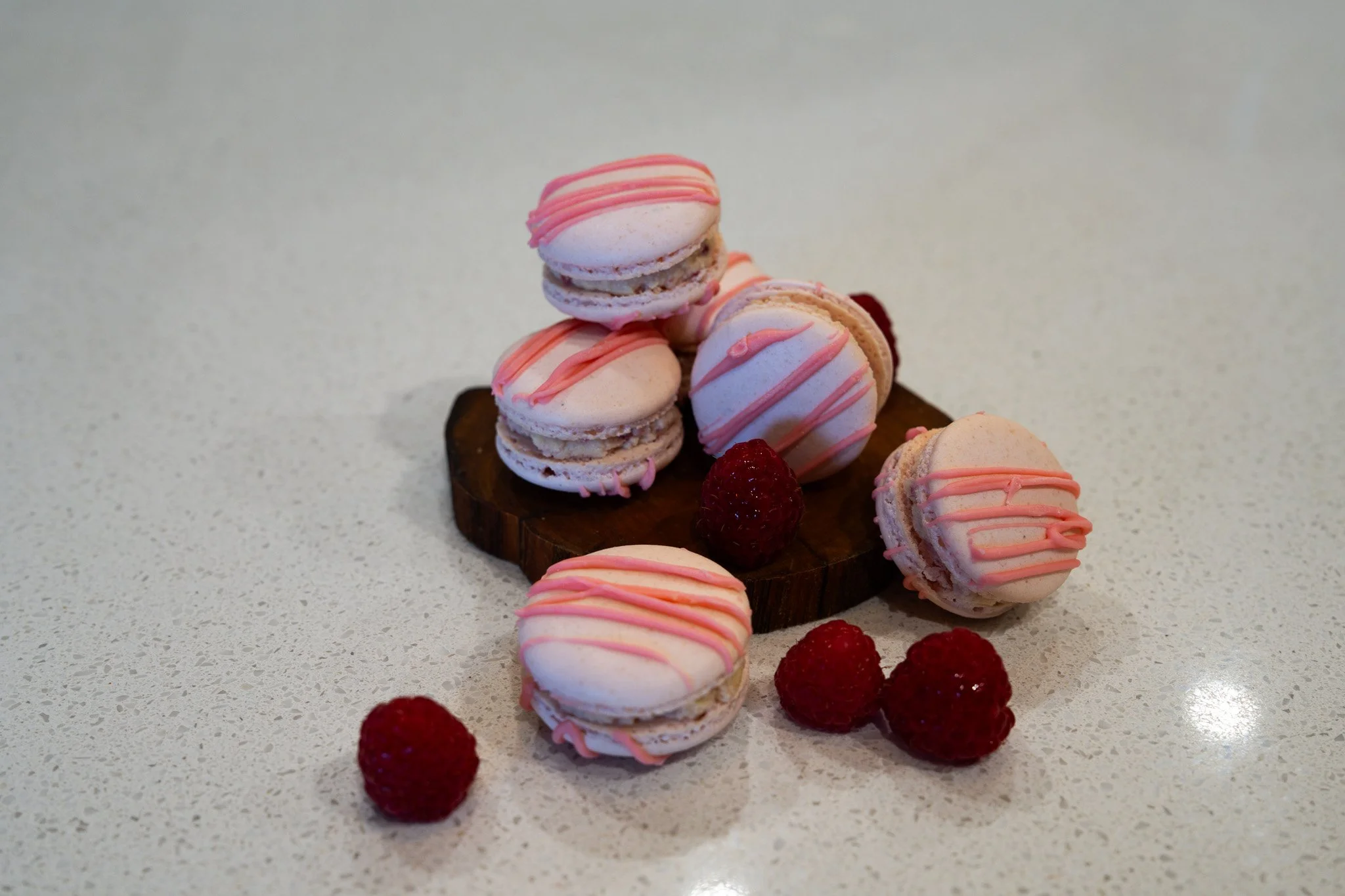
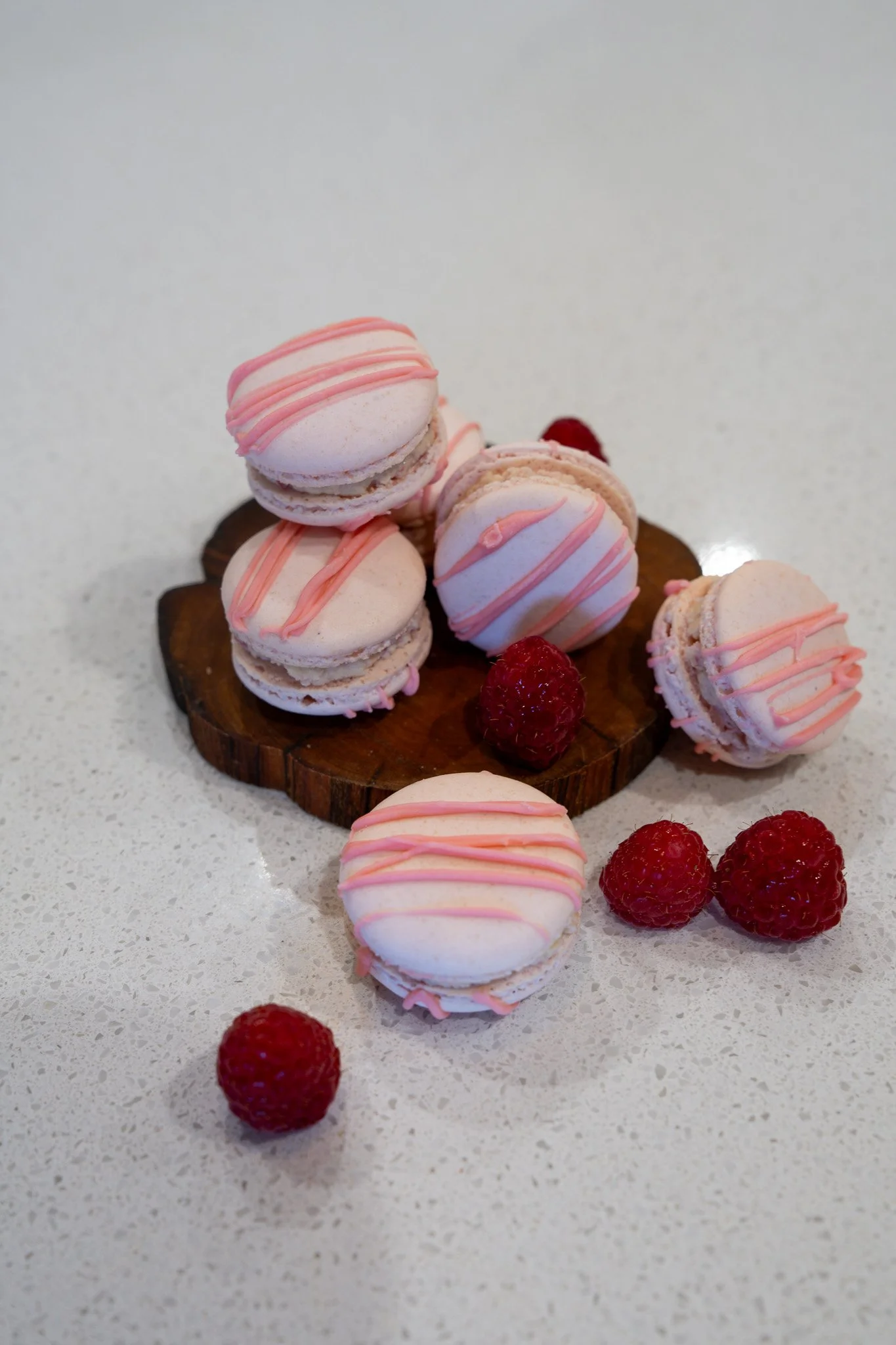
Out of these three light coloured shell, achieving the light pink was the hardest. The shells were browned more creating the uneven pinkish colour. To compensate with the imperfect colour, I tried to distract it with piping a deeper pink icing across the shells. It slightly worked.
While I was experimenting with the shell, I also started exploring different fillings. For these macarons, I chose one of my favourite combinations: white chocolate ganache with fresh raspberries.
I had made this filling before, but the result was not quite what I had hoped for. My usual method was to use a food processor to break down the raspberries. It was quick and convenient, but it also released a lot of liquid. Because the ganache could only absorb so much moisture, I had to leave out some of the raspberry mixture. The final filling was smooth and creamy, but the raspberry flavour was disappointingly subtle. The freshness and tartness that I wanted were almost lost.
For this batch, I decided to try a different approach. Instead of processing the raspberries, I carefully chopped them by hand, hoping that it would reduce the amount of liquid released while still keeping the fruit intact.
To my surprise, it worked.
I was able to fold the chopped raspberries directly into the white chocolate ganache without making it too soft or unstable. Once chilled, the ganache held its shape, and more importantly, the raspberry flavour came through beautifully in every bite.
The contrast was exactly what I had been looking for. The sweetness and creaminess of the white chocolate balanced perfectly with the bright tartness of the fresh raspberries. Together, they created a combination that was simple, elegant, and almost irresistible.
It was a small discovery, but one of the most rewarding parts of baking—finding a solution through experimentation rather than simply following a recipe. This is a method I discovered through trial and error, and one I will continue to refine with every batch.
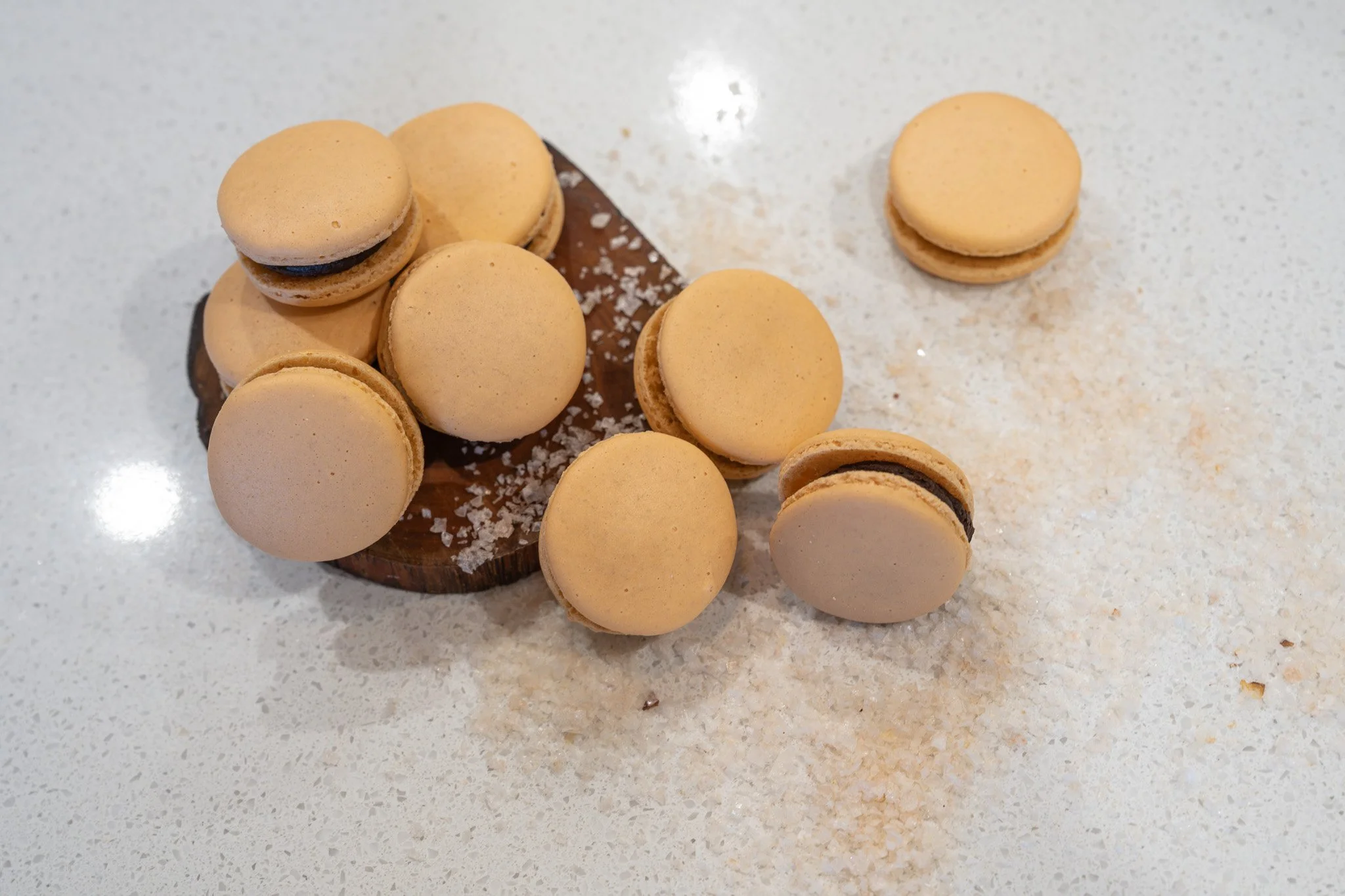
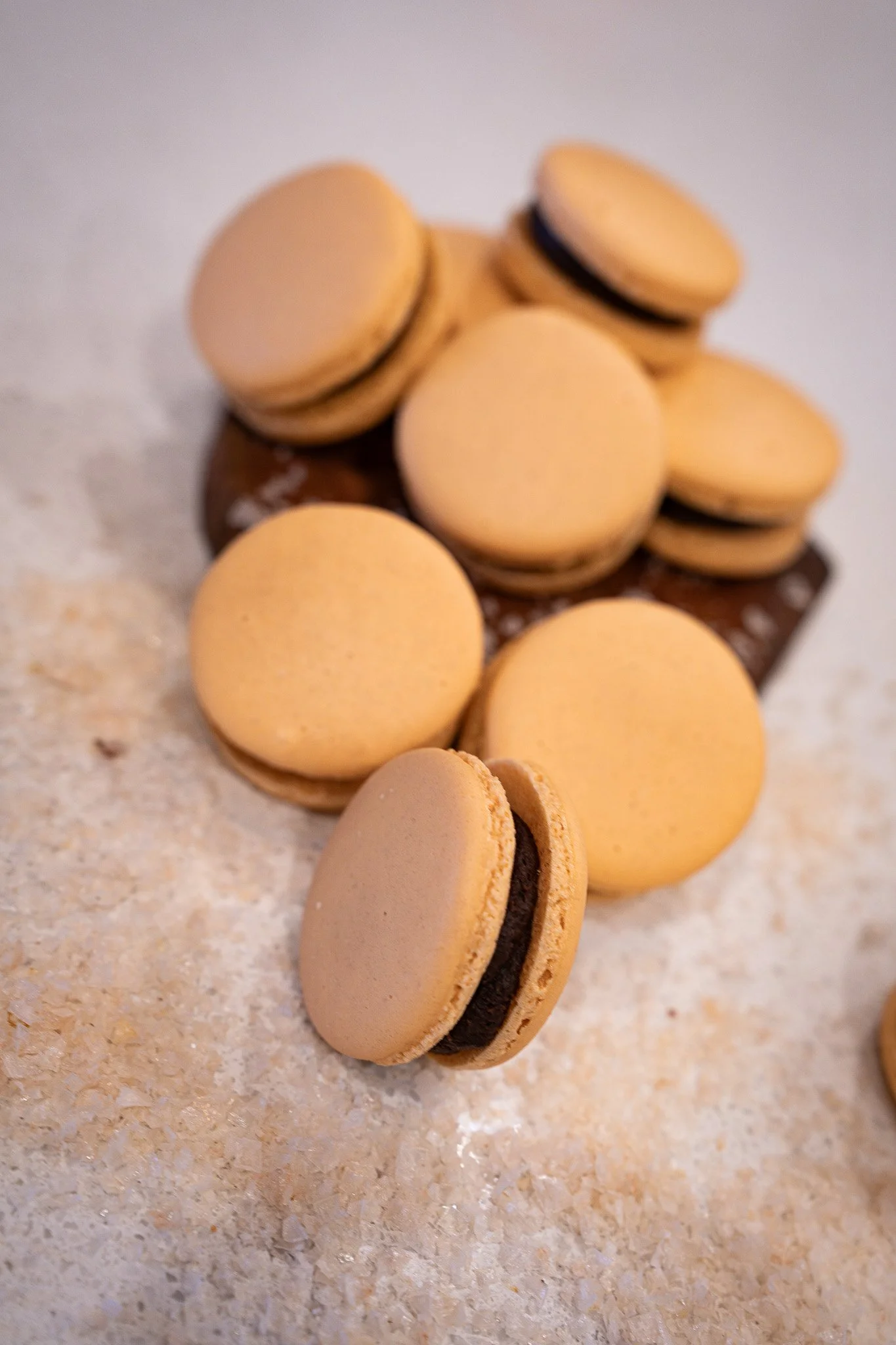
The next filling I experimented with was a classic salted caramel—but with my own interpretation.
For the caramel itself, I trusted the recipe and followed the method carefully. Caramel is not something that can be rushed; the temperature, timing, and consistency all matter. However, when it came to the ingredients, I decided to make a few changes based on the flavour balance I wanted to achieve.
The original recipe suggested using milk chocolate, but I chose to use 70% dark chocolate instead. I felt that the deeper bitterness of dark chocolate would provide a better contrast against the sweetness of the caramel and the macaron shells. Rather than adding more sweetness, I wanted another layer of flavour—something that would create balance.
For the salt component, I also made a small adjustment. Instead of using regular salt, I used Himalayan pink salt. I was surprised by the difference it made. Rather than creating a sharp salty taste, it added a gentle savoury note that enhanced the caramel without overpowering it.
The result exceeded my expectations.
The sweetness of the caramel and the macaron shell was beautifully balanced by the richness and slight bitterness of the dark chocolate. The subtle saltiness of the Himalayan pink salt brought everything together, creating a filling that was indulgent but not overwhelming.
It was another reminder that creating a good macaron is not just about achieving the perfect shell. The magic also happens in the details—the choices of ingredients, the small adjustments, and the search for harmony between different flavours.
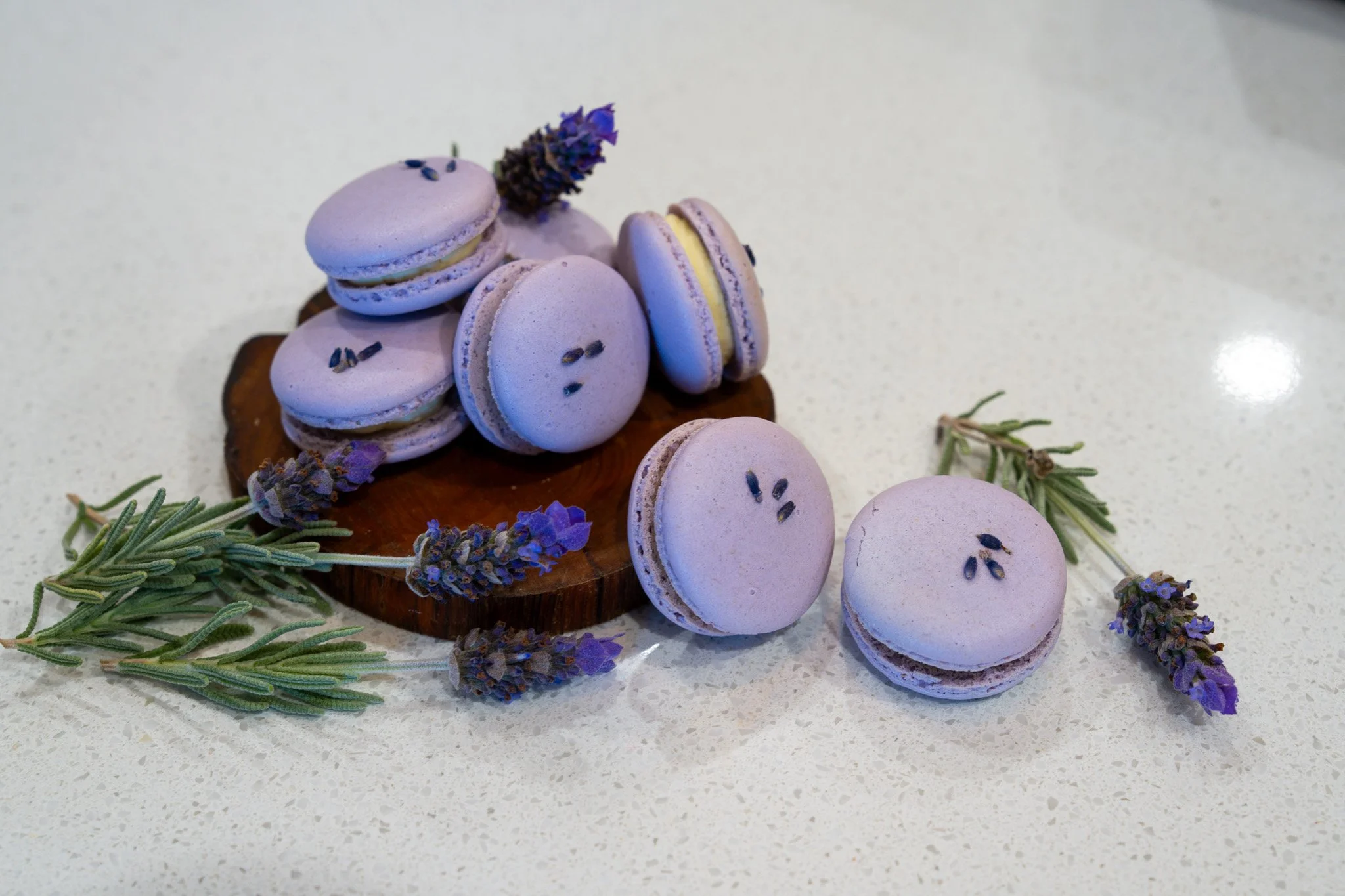
My next experiment was a lavender filling.
I wanted to create something that felt elegant and delicate—something that would remind me of the dried lavender flowers and the lavender essence I brought home from my Tasmania trip. During that journey, I had tried a lavender hot chocolate, and I was surprised by how refined it tasted. It took something as familiar and simple as hot chocolate and transformed it into something more sophisticated. The gentle floral notes added a different dimension without overpowering the chocolate.
I wondered if the same idea could work in a macaron filling.
For the shells, I chose a soft purple colour, which was much easier to achieve than the light pink I had been trying to perfect. The colour itself seemed to complement the lavender flavour, creating a macaron that felt as delicate as the ingredient that inspired it.
The challenge was finding the right balance.
Lavender is a flavour that needs to be treated carefully. Too much essence can quickly become overwhelming, leaving a strong floral taste and a slightly bitter aftertaste. Rather than measuring a large amount at once, I added the lavender essence drop by drop into the white chocolate ganache, tasting along the way until I found the balance I was looking for.
I also knew that lavender was not a flavour everyone would immediately embrace. For some, the lingering floral notes can be unfamiliar or even unusual. But when used with restraint, lavender has a beautiful quality. It adds a gentle fragrance and a subtle floral character that pairs wonderfully with sweeter flavours, especially the creamy richness of white chocolate.
This batch was another reminder that creating flavours is not just about adding ingredients together. It is about finding harmony between them.