When Light Begins to Move: A Night Photography Lesson in Melbourne
I joined a night photography lesson expecting to learn camera settings, but discovered something much deeper. As Melbourne transformed after dark, I learned to see light differently—not as something to simply capture, but as something that could create movement, emotion and a story within a photograph.
The photography lesson at Melbourne Zoo had done exactly what I hoped it would. Instead of simply teaching me how to use my camera, it left me wanting to learn more. I realised how much of my camera I had never truly understood, and more importantly, how much difference the right technique could make. Rather than feeling overwhelmed, I felt excited.
As I browsed the list of photography courses, one immediately caught my attention—night photography in Melbourne's CBD. Photographing the city after dark had always fascinated me. The glowing skyline, colourful reflections along the Yarra River, and the streams of headlights weaving through the streets promised a completely different challenge from photographing wildlife.
There was one problem. The course was only offered on Wednesday evenings, the same night as my weekly table tennis session. Then there was the weather. Melbourne's winter that year had been unusually wet, and a night photography class depended almost entirely on dry conditions. Between the scheduling conflict and the unpredictable rain, I reluctantly chose the Melbourne Zoo class instead.
Looking back, I never regretted that decision. The zoo lesson confirmed that I had found the right instructor. His practical approach suited the way I learned, and by the end of the day I knew I wanted to continue learning with him. The night photography course was no longer just something that looked interesting in a brochure—it had become the natural next step.
As Wednesday approached, I found myself checking the weather forecast far more often than I normally would. On Tuesday, steady rain fell for most of the day. It wasn't the kind of downpour that flooded the streets, but the persistent drizzle that made you think twice about taking an expensive camera outdoors.
Wednesday wasn't much better. Light showers drifted across Melbourne throughout the day, coming and going without warning. According to the forecast, the rain would clear around six o'clock, about half an hour after sunset. It wasn't perfect, but it was enough to give me hope.
When I left work and headed towards the meeting point, the rain had finally stopped. As the tram rolled towards the city, I mentally worked through the checklist the instructor had emailed us a few days earlier. It covered the camera settings we needed before the lesson began, along with a preview of the techniques he would demonstrate.
Only a few weeks earlier, that checklist would have seemed overwhelming. After the Melbourne Zoo lesson, however, I found myself reading it with much more confidence. I now knew where to find most of those settings on my camera instead of searching through menus in frustration. More importantly, I understood why they mattered. The techniques listed in the email no longer looked intimidating—they made me eager to start.
Night photography had always fascinated me because it relied on mastering light. During the day there is usually plenty of it, but after sunset every decision matters. The shutter speed, aperture and ISO all work together to determine how much light reaches the sensor, and learning to balance those three settings was one of the main reasons I had signed up for the class.
I couldn't help thinking back to a night in Sydney the previous year when I tried photographing the Opera House from across the harbour. Without a tripod, I worried that any slow shutter speed would blur the image with camera shake. My solution seemed logical at the time: open the aperture as wide as possible and increase the ISO until I could comfortably handhold the camera.
It worked—but only partly.
Most of the photographs were sharp enough, yet the Opera House itself was never quite in focus. By using such a wide aperture, I had unknowingly created a very shallow depth of field. Standing so far away, I needed much more of the scene to remain sharp than my settings allowed. To make matters worse, focusing in the darkness proved far more difficult than I had expected, and I wasted several opportunities while the camera searched unsuccessfully for focus.
Those photographs taught me that getting a technically sharp image involved far more than simply avoiding camera shake. They also revealed just how much I still had to learn. That was exactly why I was on the tram that evening. I wanted to understand not only how to take better photographs at night, but also why the camera behaved the way it did, so that I could spend less time worrying about the settings and more time enjoying the experience of creating the image.
Although I had visited Melbourne's CBD at night several times in recent years, the atmosphere still caught me by surprise each time. The city felt alive. People flowed through the streets, trams rattled past, and light spilled from shopfronts, restaurants and office towers. Melbourne's nightscape could not rival the dazzling intensity of cities such as Beijing, Shanghai, Tokyo, Osaka or Singapore, yet it was very different from the Melbourne CBD I remembered in the 1990s. The city seemed brighter, busier and far more energetic than it had been when I was a student.
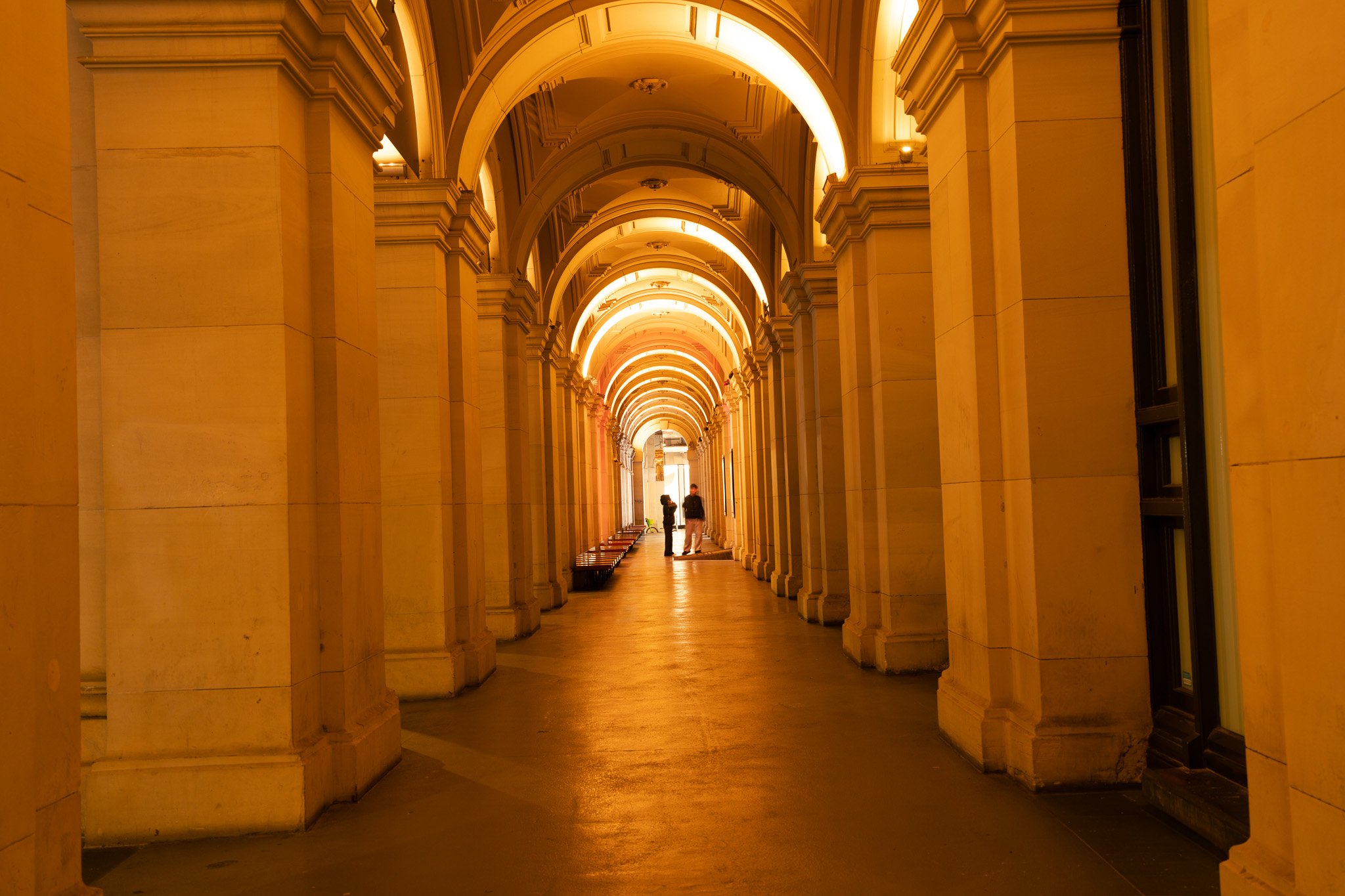
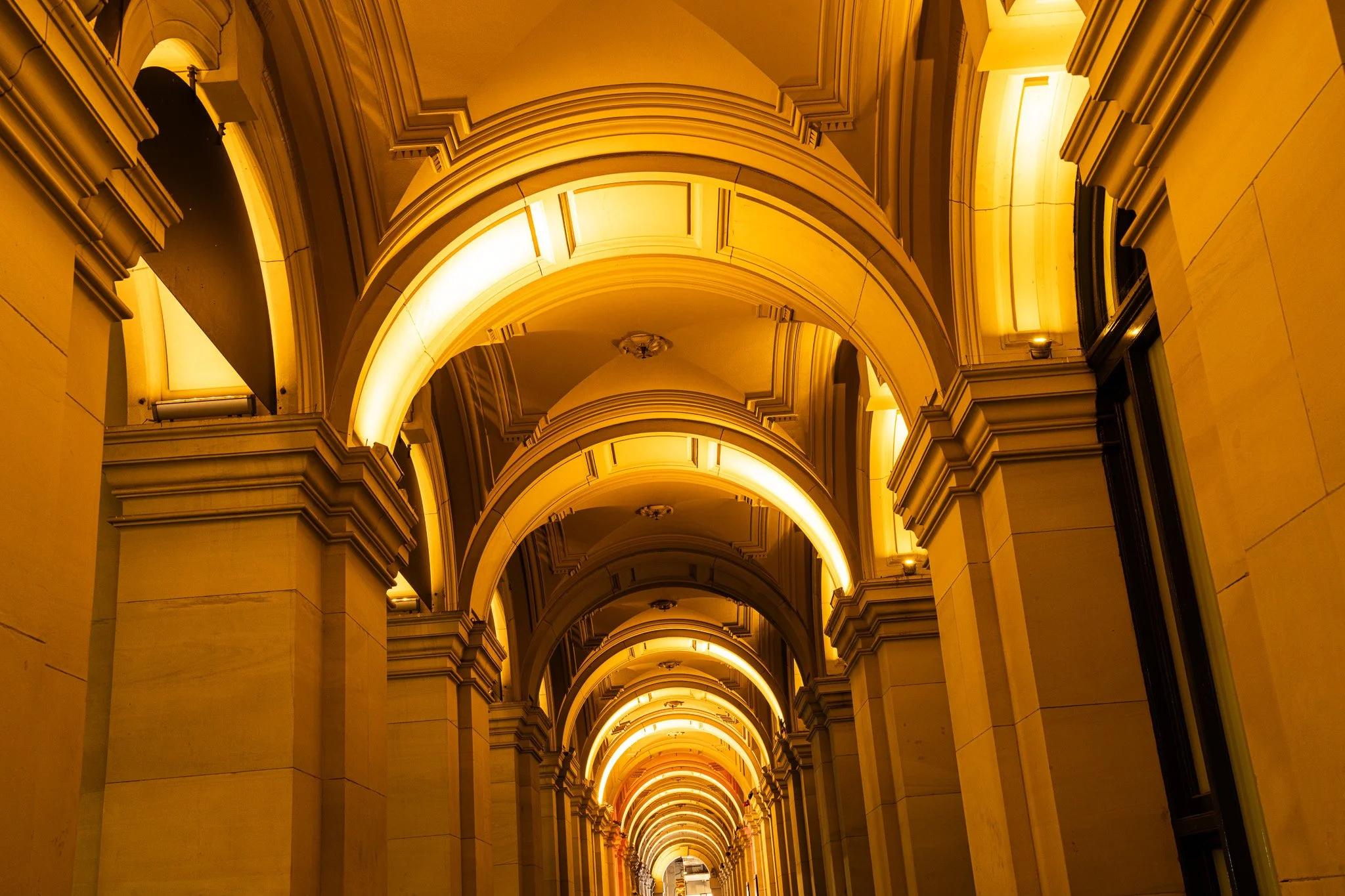
Fortunately, the meeting point was somewhere I knew well from those university days—the General Post Office, Melbourne. The grand historic building still stood proudly at the corner of Elizabeth and Bourke Streets, its sandstone façade glowing under the evening lights.
I soon understood why the instructor had chosen this location. Our first exercise began immediately. We lined up beneath the narrow colonnade of Postal Lane and were asked to photograph the repeating columns and arches. The scene looked simple, but it was perfect for learning. We experimented with different shutter speeds and reviewed the results on our screens, paying attention to how the amount of light affected the brightness and colour of the image.
As I struggled with my heavy tripod in the confined space, I had an unexpected realisation: if I wanted to do night photography regularly, I should probably invest in a lighter tripod.
The instructor then introduced white balance. I had heard the term many times before, but I had never taken the trouble to understand what it actually did. Rather than giving a technical lecture, he pointed to one of the stone columns beside us. Through the camera, the wall looked slightly bluish and dull, which was not how it appeared to our eyes. To correct that colour cast, he explained, the camera needed to add warmer orange tones. Modern cameras could do this automatically, but they also allowed us to choose the appropriate setting ourselves.
He patiently guided each of us through the menu system until we found the white balance controls on our own cameras. When I took another photograph, the difference was immediately obvious. The stone looked warmer, the colours more natural, and the whole scene felt brighter and more alive. It was such a simple adjustment, yet it changed the photograph completely.
We folded our tripods and followed the instructor deeper into Melbourne's CBD, weaving through the network of laneways that the city is famous for. The streets gradually became quieter as we left the bright shopping precinct behind. I assumed our next exercise would be photographing one of the colourful laneways, but instead we stopped in a narrow lane that I didn't recognise.
The lane itself was dimly lit, almost shadowy, while both ends glowed with bright streetlights. It seemed like an unusual place to photograph, but that contrast was exactly why we were there. Once again, we spread out along the lane and set up our tripods.
This lesson focused on something I had been hoping to learn ever since my frustrating evening in Sydney—how to focus reliably in the dark.
The instructor showed us how to switch from autofocus to manual focus. We first used autofocus to lock onto a torch that had been placed on the ground. Once the focus was confirmed, we switched the lens to manual focus. As he explained, the focus was now locked in place. The camera would no longer hunt endlessly for something else to focus on every time the shutter button was pressed.
It was such a simple technique, yet it completely changed the way I thought about night photography. I couldn't help wishing I had known it a year earlier. It would have saved me from missing countless compositions while waiting for the camera to find focus in the darkness.
With our cameras now focused, the instructor introduced us to light painting photography. This was unlike anything I had tried before. Rather than simply recording the available light, we were about to create it.
Using several homemade light-painting tools that he had designed himself, the instructor demonstrated how different movements produced completely different patterns of light. As the shutter remained open, the camera recorded every sweep, spin and curve, transforming simple movements into intricate ribbons of colour. The shutter speed experiments we had practised earlier suddenly made perfect sense. This time, instead of simply controlling the exposure, shutter speed became part of the creative process.
One after another, our cameras captured unique images. Although we were photographing the same demonstration, every photograph looked different depending on our position and composition. It felt less like following instructions and more like discovering a new form of artistic expression. The possibilities seemed almost endless, limited only by our imagination.
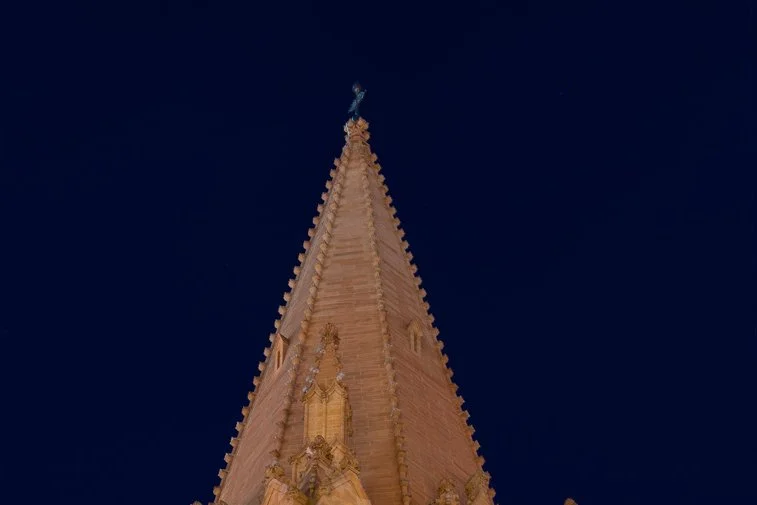
Leaving the laneway behind, we made our way towards the heart of Melbourne's CBD. As we drew closer, the sound of church bells echoed through the city. Their deep, rhythmic chimes rose above the traffic and conversations, creating a moment of calm amidst the bustle of the evening.
The instructor smiled and explained that capturing memorable night photographs often begins long before you set up the tripod. It starts with knowing what is happening at your location. The ringing bells of St Paul's Cathedral on Wednesday evenings were not a special occasion but part of the bell ringers' weekly rehearsal. Because the rehearsal took place after dark, the lights inside the bell tower were switched on, causing the narrow windows high above the street to glow warmly from within. It was a small detail that most people would never notice, yet it transformed an ordinary photograph into something far more distinctive.
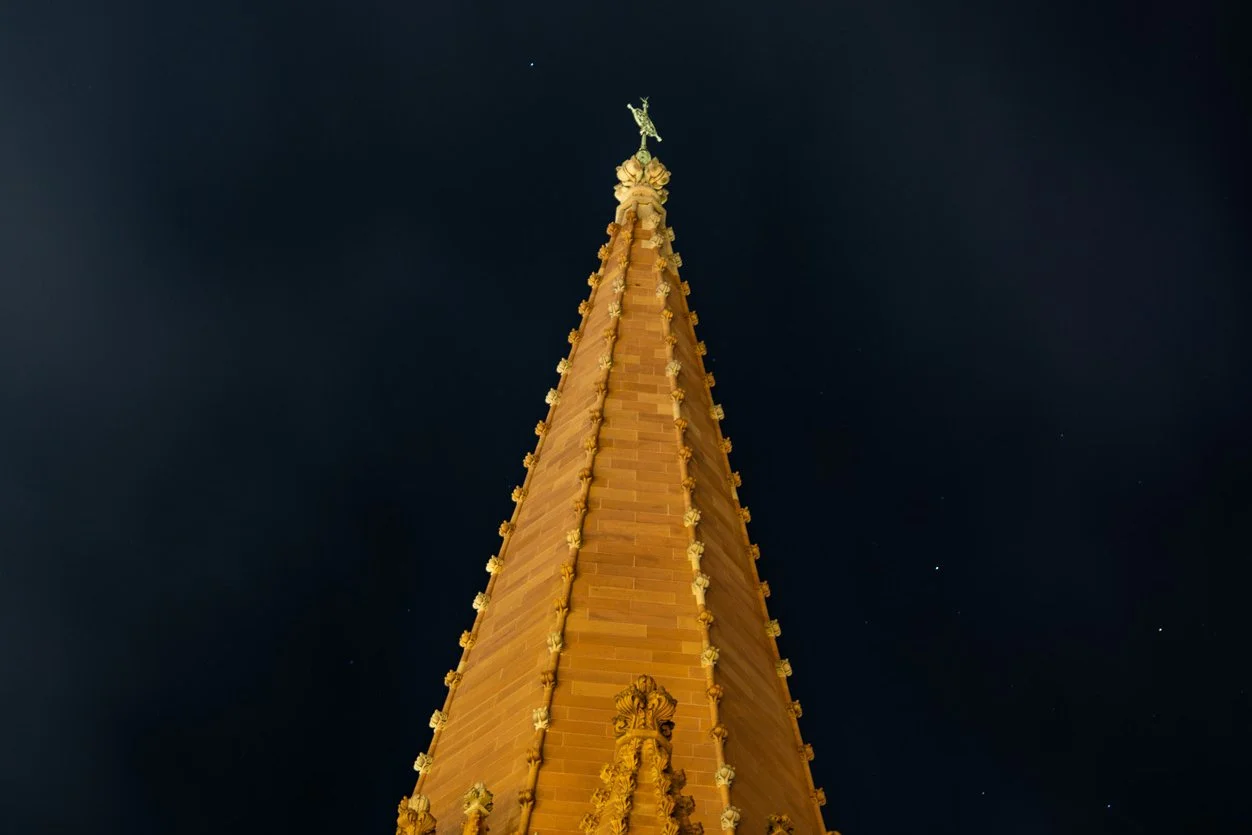
With our cameras aimed at the illuminated tower, we put into practice everything we had learned during the previous half hour. Exposure, white balance and manual focus all came together as we adjusted our settings to suit the scene before us. The instructor also reminded us that choosing where to place the tripod was just as important as choosing the camera settings. A slight change in position could eliminate distracting glare from nearby streetlights or passing traffic, producing a much cleaner image.
I took the opportunity to experiment. I varied the shutter speed, refined my composition and observed how the surrounding light influenced the final photograph. Because the cathedral itself remained perfectly still and its lighting stayed constant, every difference between the images was the result of the adjustments I had made. It was a simple exercise, but it taught me how much control I actually had over the finished photograph.
We only had to walk a few hundred metres around the corner of the cathedral before we came face to face with one of Melbourne's most iconic landmarks—Flinders Street Station.
It was not the brightly illuminated scene that many photographs of the station portray. Instead, on this particular evening, the building was softly lit from within. The warm glow escaping through the windows gave it a sense of mystery, as if the station was quietly revealing itself rather than demanding attention.
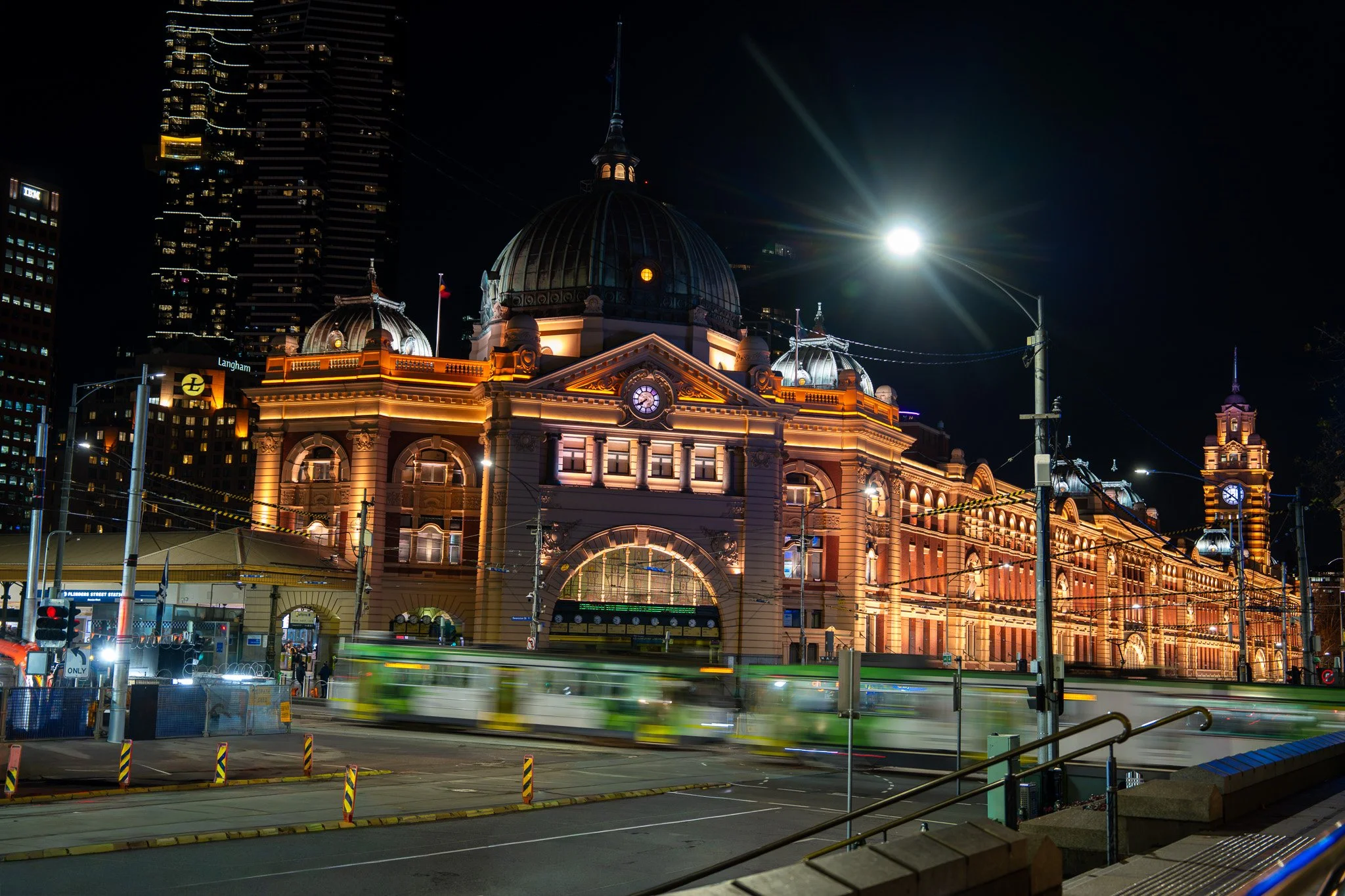
Around it, the city continued to move. Cars flowed through the intersection, pedestrians crossed the streets, and trams passed by with their own rhythm. For a night photographer, this was an ideal combination—a stationary subject surrounded by constantly changing sources of movement and light.
Using the longer shutter speeds we had practised earlier, those moving lights could be transformed into flowing trails. The difference this time was that the light painting was not created by a torch in the darkness; it was created naturally by the movement of the city itself, with Flinders Street Station providing the perfect backdrop.
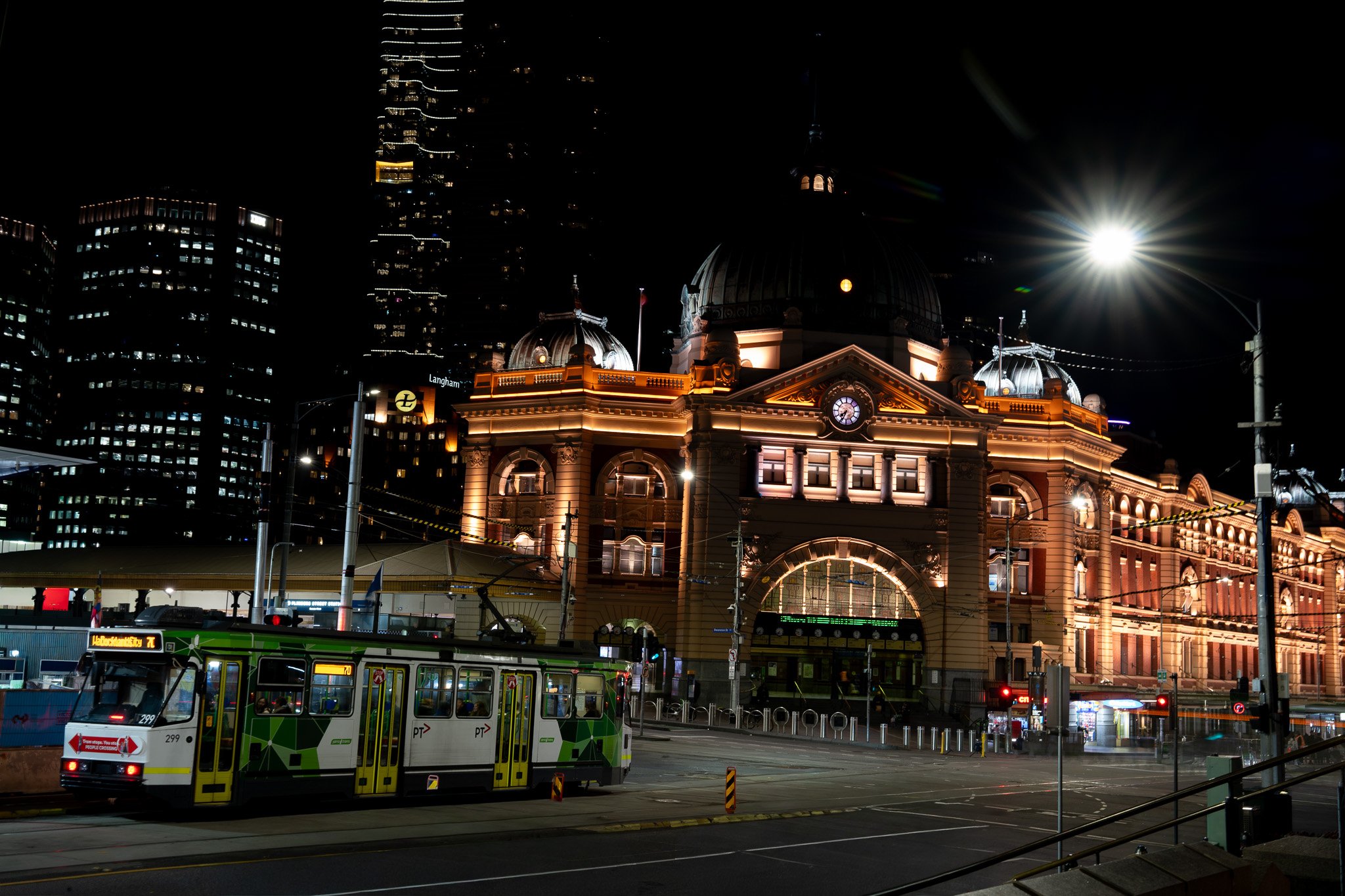
I had photographed Flinders Street Station at night before, but I was never satisfied with the results. The building was always sharp, yet the images felt lifeless. They looked more like a photograph of a building rather than a photograph of a place where people lived, moved and created memories.
Tonight, I wanted to capture the station differently.
I patiently waited for the right combination of elements—the movement of the cars, the passing trams, the flow of pedestrians and the composition I had imagined. It was not as simple as pressing the shutter button. It required patience, observation and preparation. Fortunately, after the lessons earlier that evening, I no longer needed to spend precious moments searching through camera settings. I could focus on watching the scene unfold and wait for the right moment.
When I reviewed the images through the small viewfinder, I immediately knew they were different. The photographs were no longer just sharp records of a famous building. They felt alive.
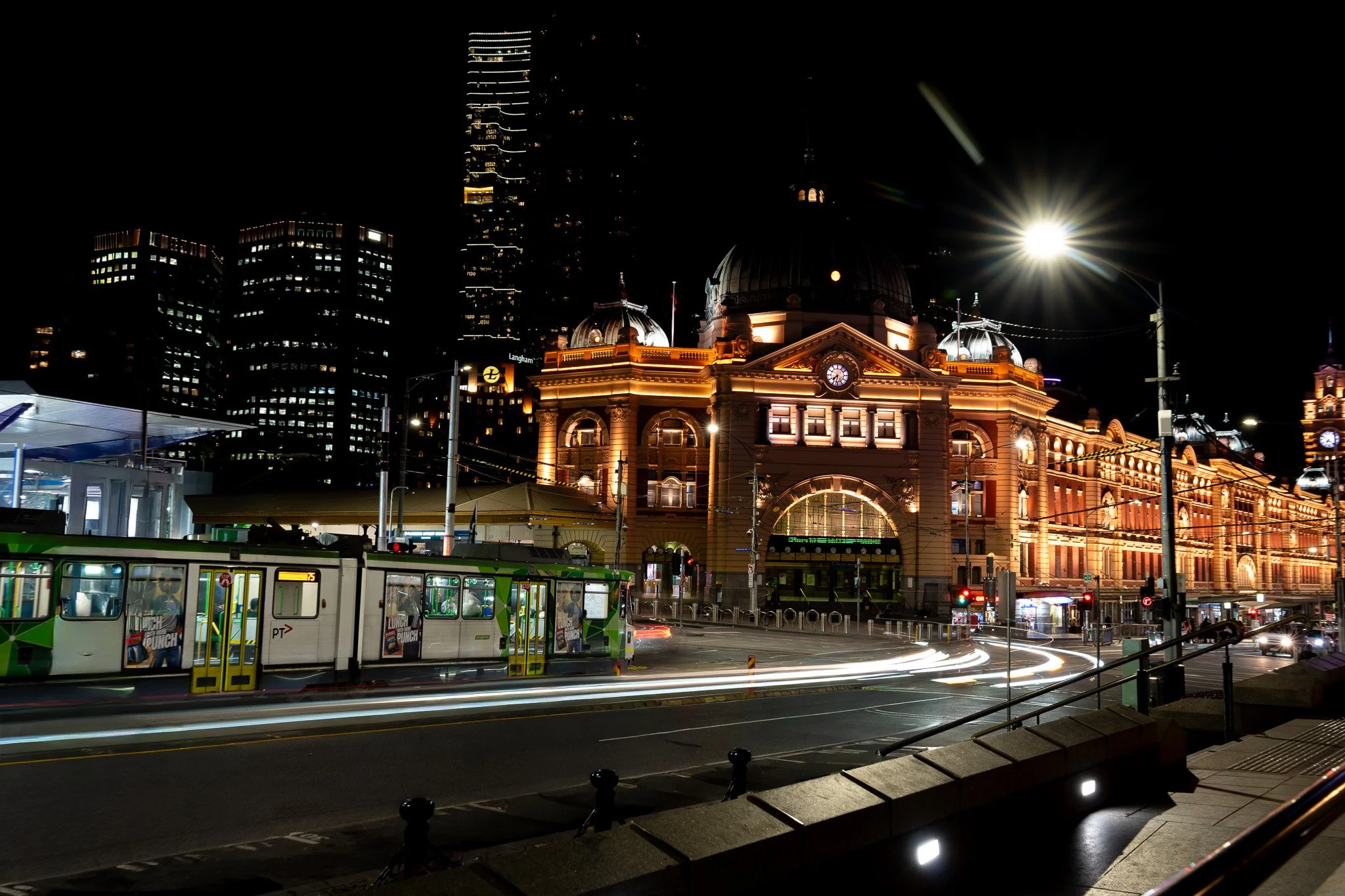
Within the stillness of the image, I could see the movement of the city—the passing cars, the arriving trams, the footsteps of strangers and the energy that surrounded this historic station.
Before we continued to our next location to capture more of Melbourne at night, we noticed something unexpected above us. The moon was perfectly round, shining brightly in a clear sky with not a single cloud nearby.
One of the group members casually asked the instructor how to capture a good photograph of the moon. Without hesitation, he turned it into another mini lesson. He explained the camera settings required and introduced us to spot metering, showing us how to measure the light correctly for a subject as bright and distant as the moon.
Following his guidance, I managed to capture my first properly exposed photograph of the moon.
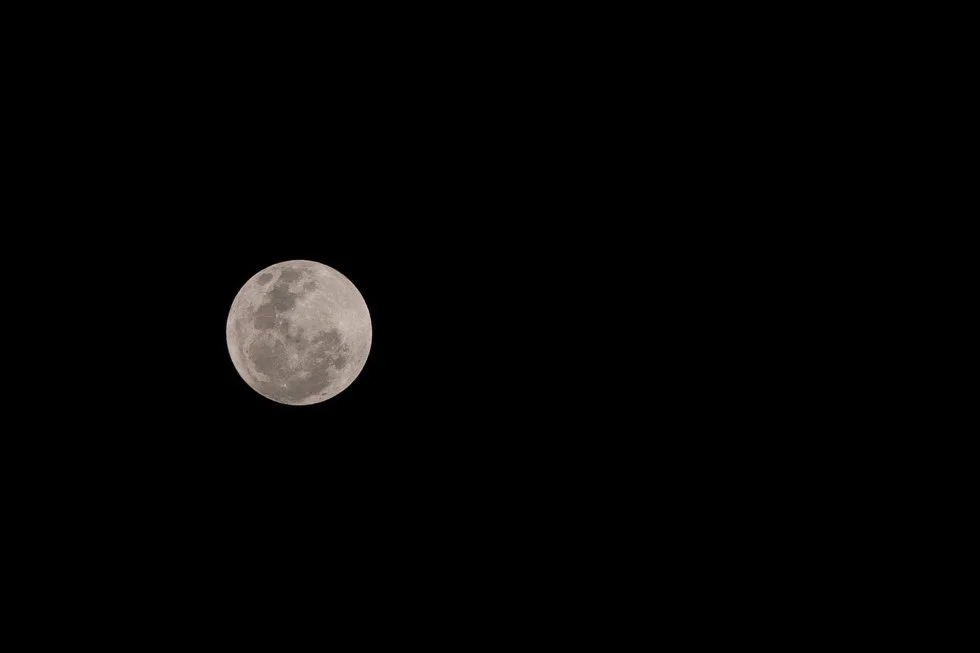
It was an unexpected bonus from the evening—not something planned on the itinerary, but another reminder that photography is often about being ready for the moment in front of you.
Naturally, our next destination was the Yarra River. A night photography session in Melbourne would almost feel incomplete without capturing the city's lights reflected on the water. But before we turned our attention to the river, we stopped in the middle of Princes Bridge and looked east.
In the distance stood another of Melbourne's iconic landmarks—the Melbourne Cricket Ground.
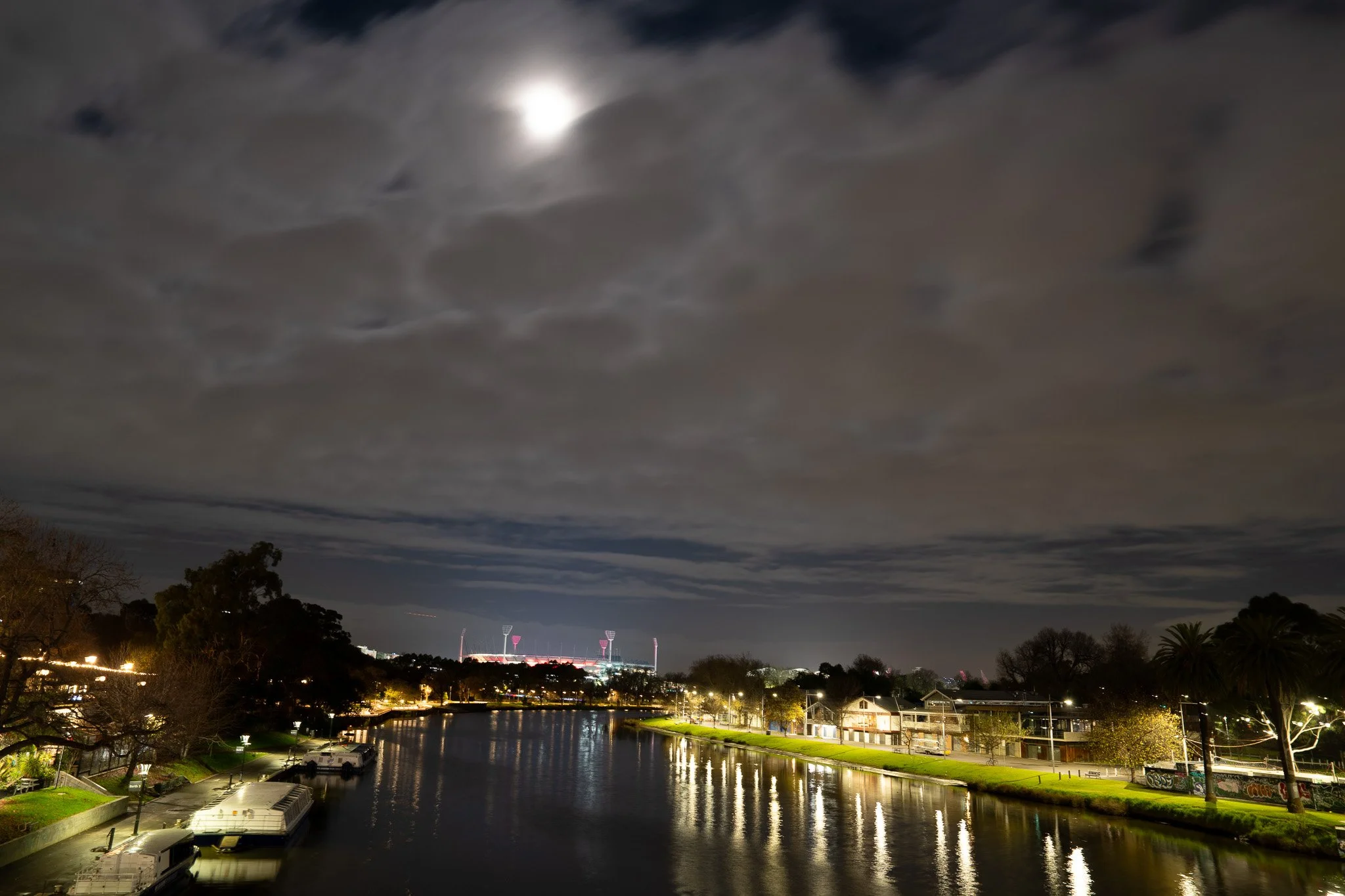
From where we stood, the stadium looked completely different from the image most people know. Instead of being brightly illuminated for a sporting event, the vast structure was mostly dark, with only a mysterious red glow visible from within. It was an unusual and unexpected sight.
Once again, the instructor reminded us that successful night photography often depends on knowing what is happening around you. The red lights were not from an event or a special display. They came from the enormous grow light rigs used by the stadium groundskeepers, which are moved onto the field at night to help maintain the grass.
It was a side of the MCG that most people would never see. The stadium, usually associated with roaring crowds, bright floodlights and sporting celebrations, had taken on a quieter and almost secretive character.
Capturing this unusual composition gave me a different kind of satisfaction. It was not simply a photograph of a famous building. It was a photograph of a moment—a temporary scene that existed only because we happened to be there at that particular time.
That was one of the unexpected joys of night photography. Sometimes the most memorable images are not the ones you plan to take, but the ones you discover along the way.
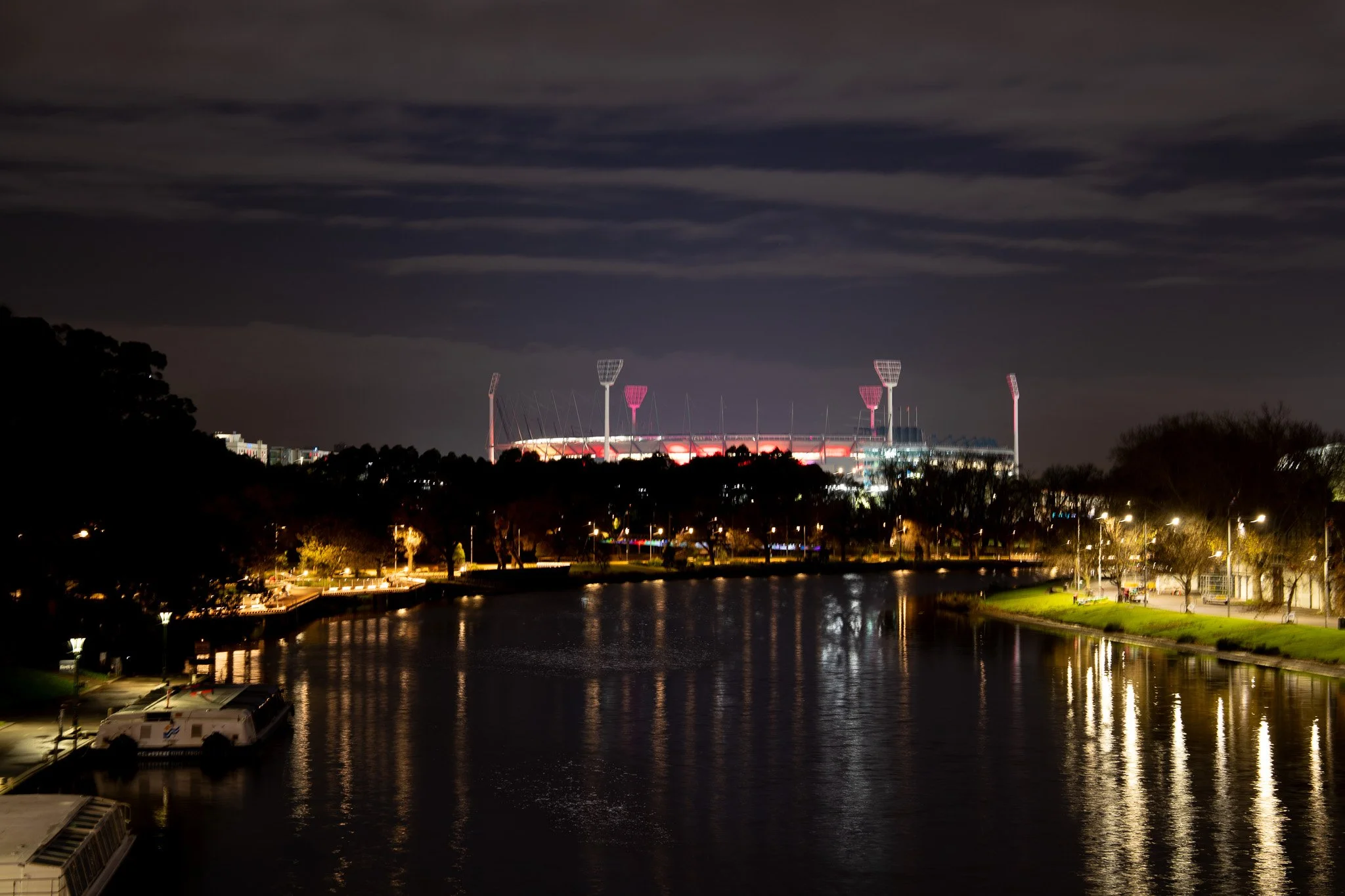
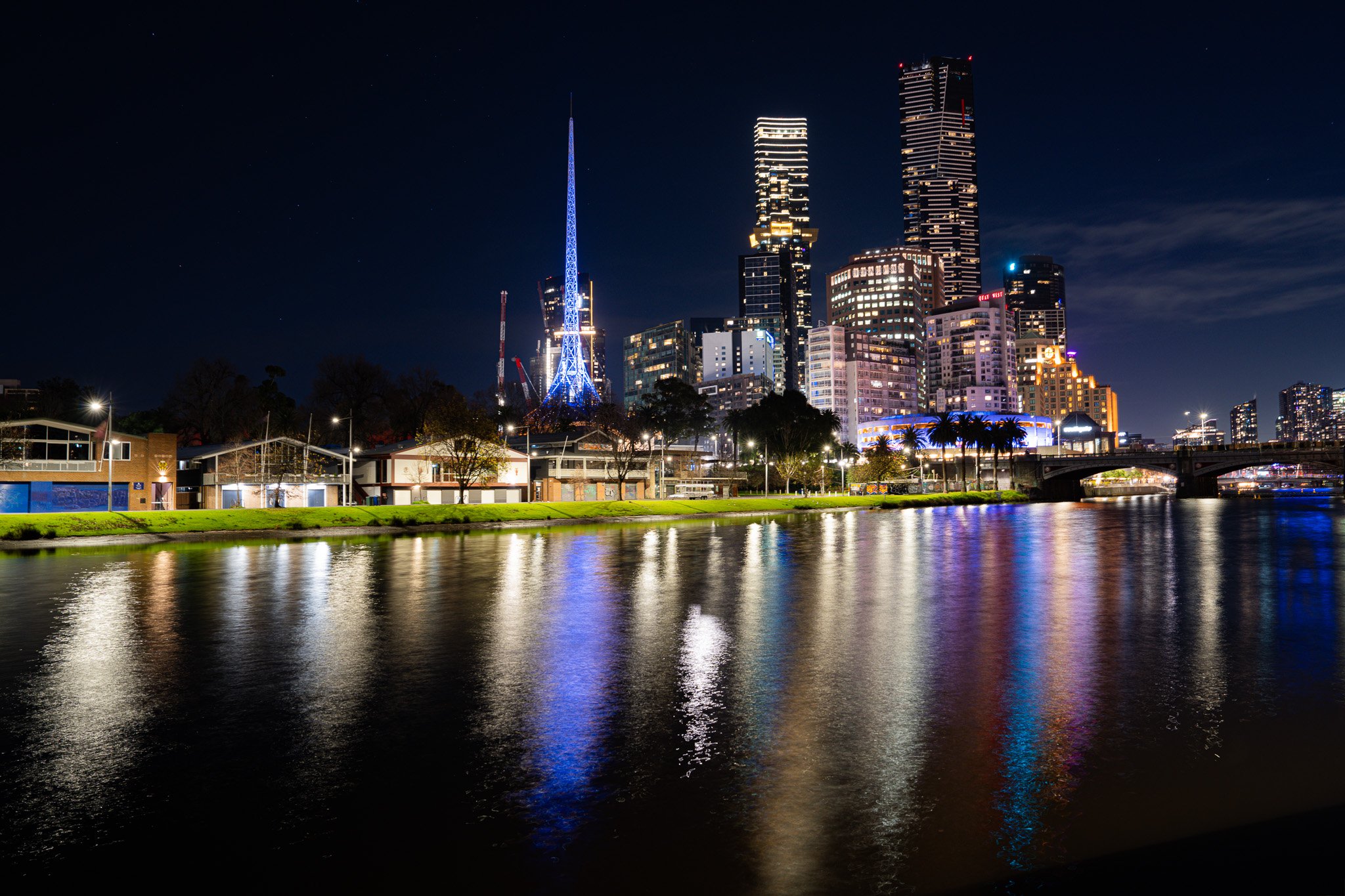
Once we reached the edge of the Yarra River, the city lights felt much closer. The reflections stretched across the water, opening up endless possibilities for composition. Even when photographing the same buildings and the same lights, every angle created something different—the reflections changed shape, length and intensity depending on where we stood.
A gentle breeze moved across the river, creating small ripples on the surface. Traditionally, many photographers search for perfectly still water to capture a clean mirror reflection of the city. But as I looked at the scene in front of me, I found myself drawn to the opposite.
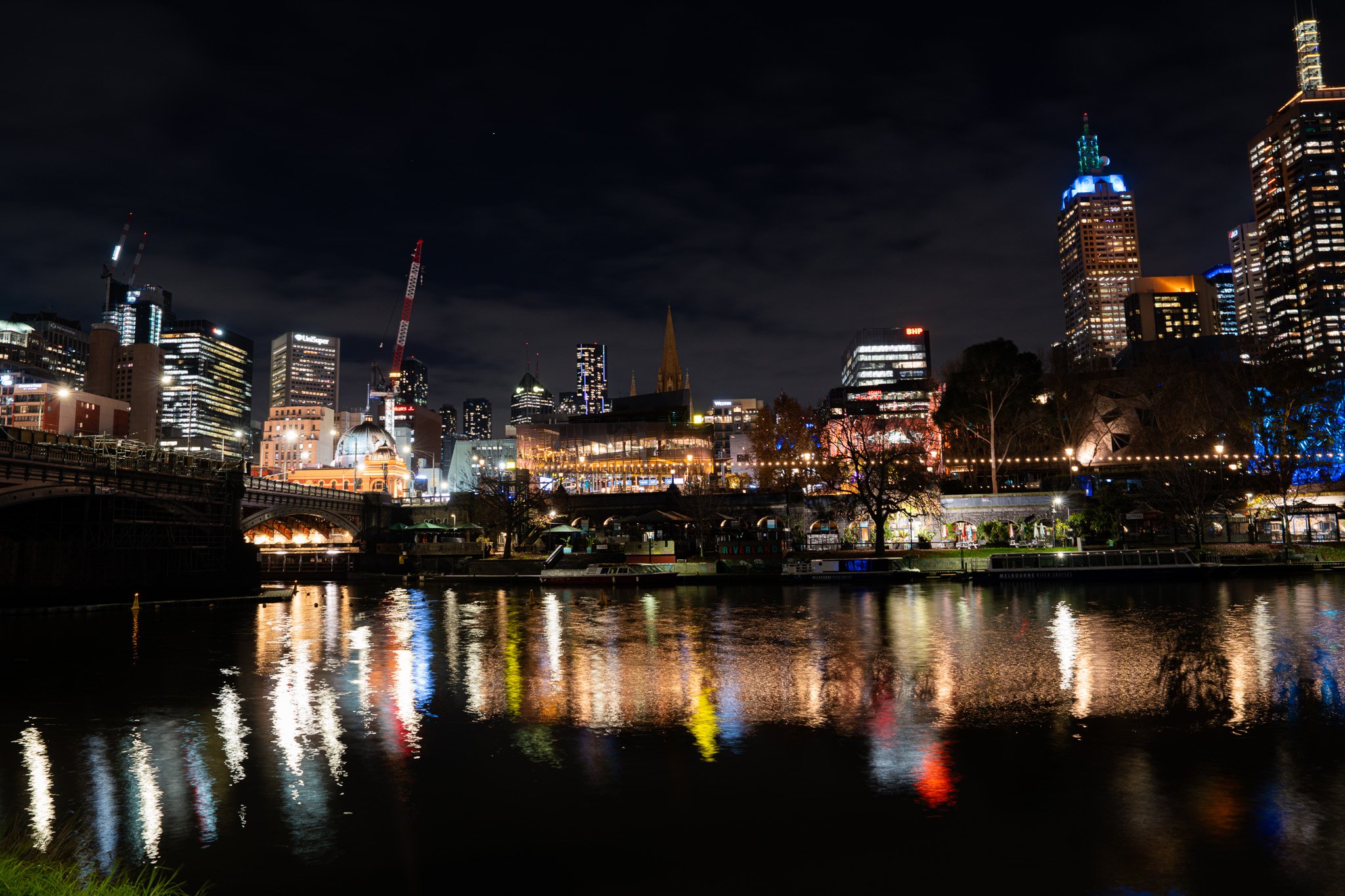
The slight movement of the water gave the photograph life.
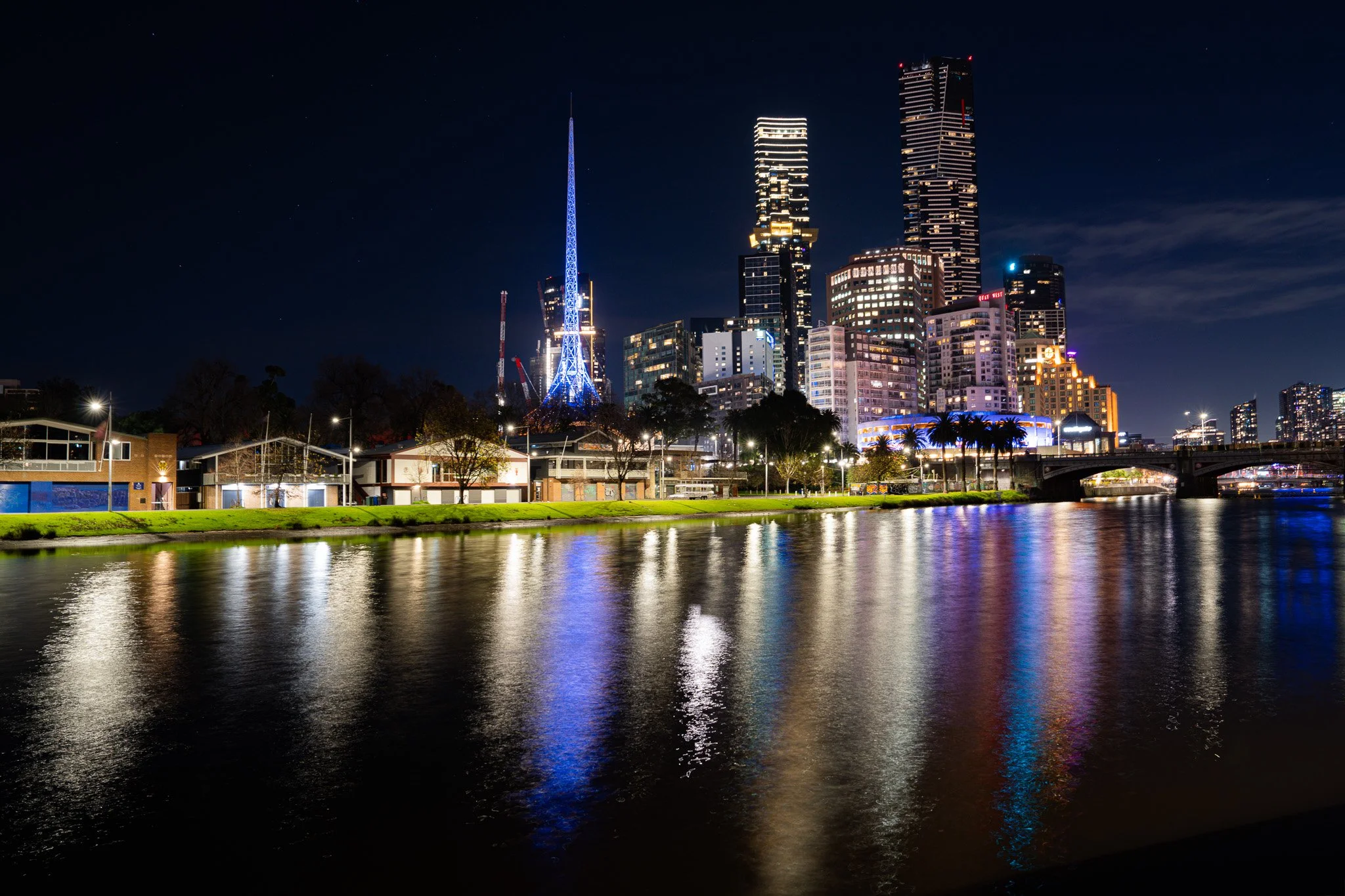
The lights seemed to dance across the surface. With a slower shutter speed, the ripples blended into a smoother texture, almost creating the illusion of stillness. Yet the distorted reflections revealed the movement that remained underneath. It was a smoothness that was never truly still—a quiet reminder that the river was alive.
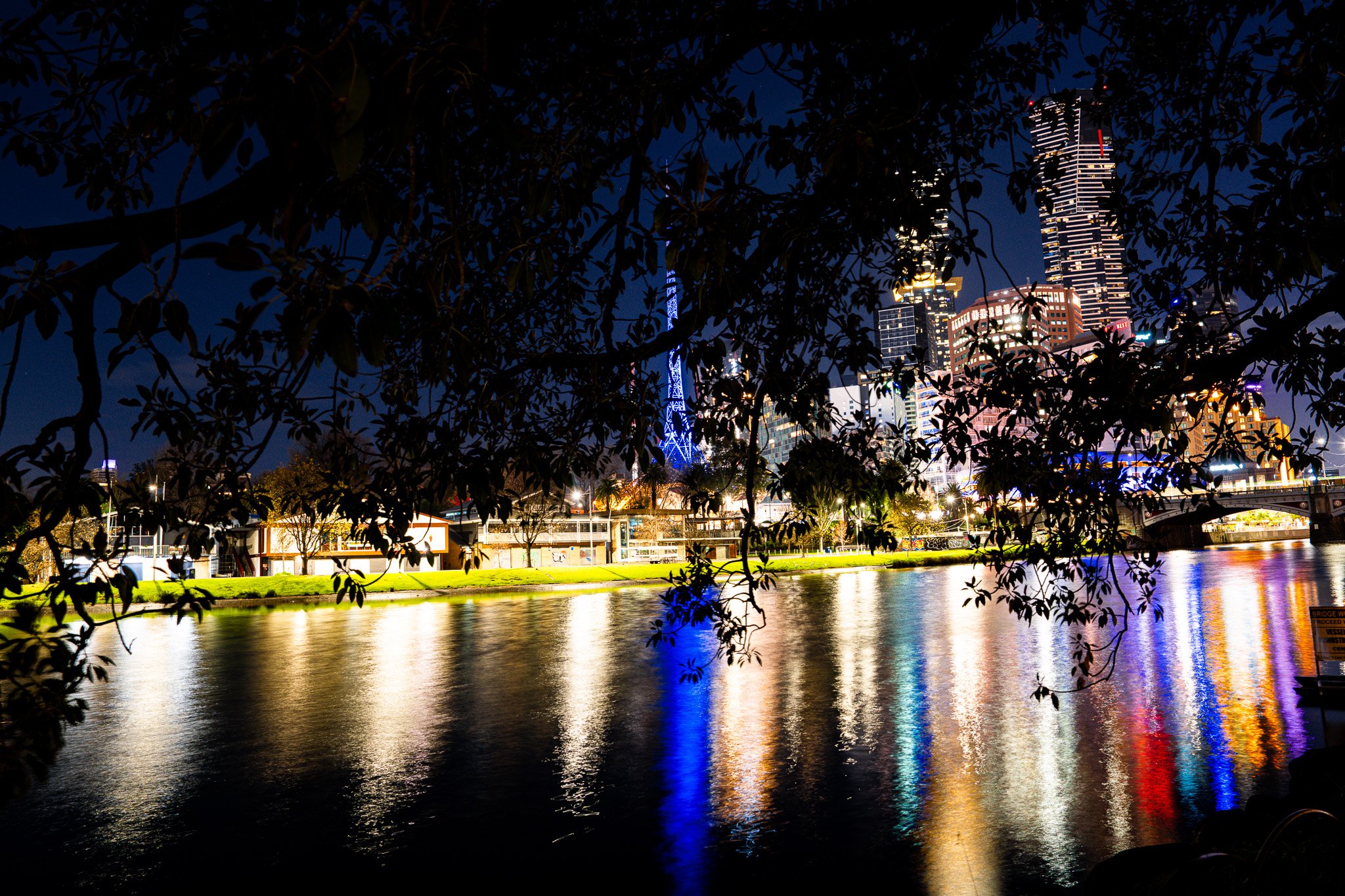
For me, that was what made the image more interesting. The photograph was not just about capturing the city's lights reflected on the water; it was about capturing the interaction between light, water and movement.
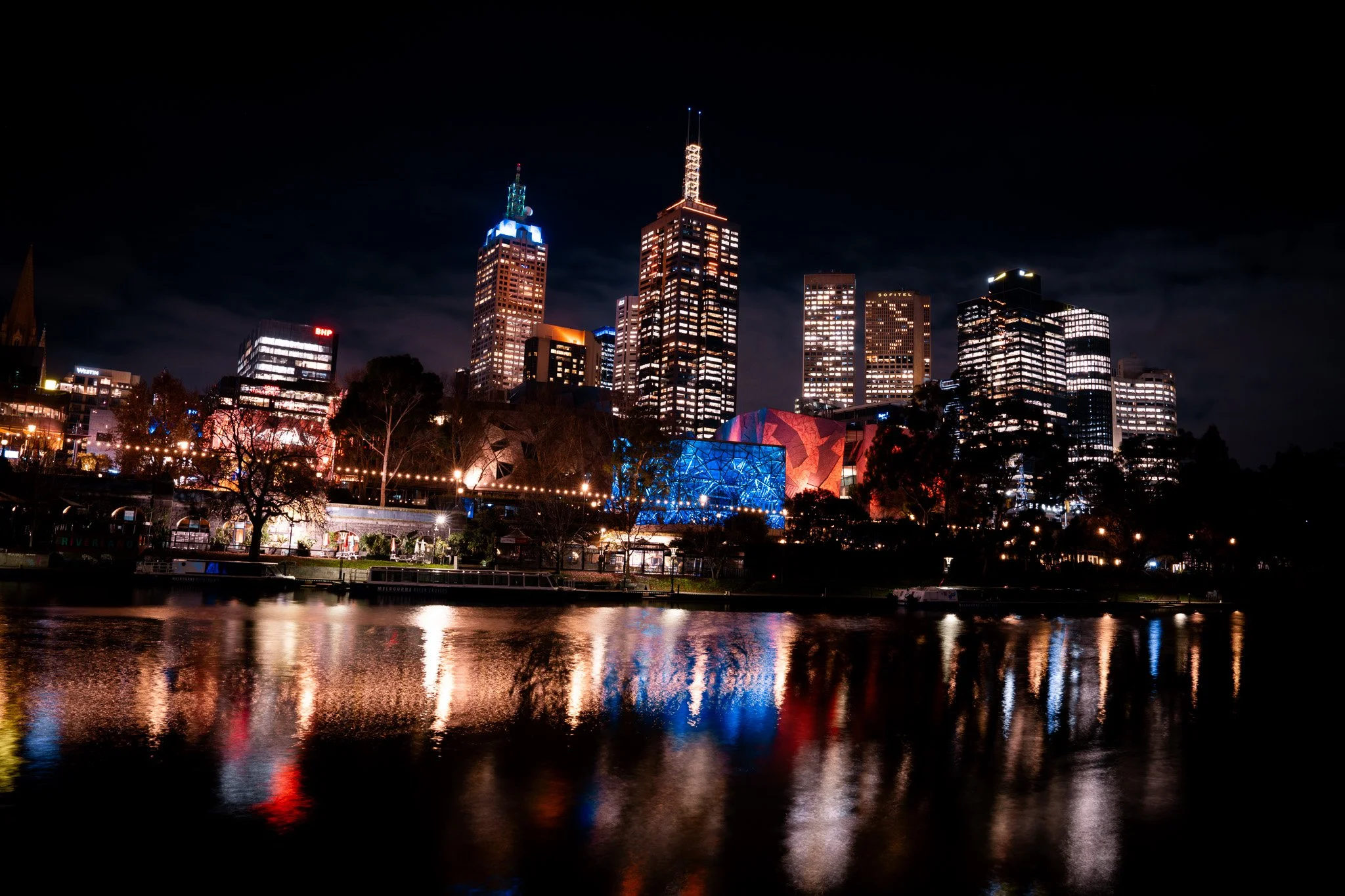
We all agreed that this was the best location of the evening so far. Standing there with our cameras pointed towards the glowing city, it felt like everything we had learned during the night was coming together—the technical settings, the patience, and most importantly, the ability to see a scene differently.
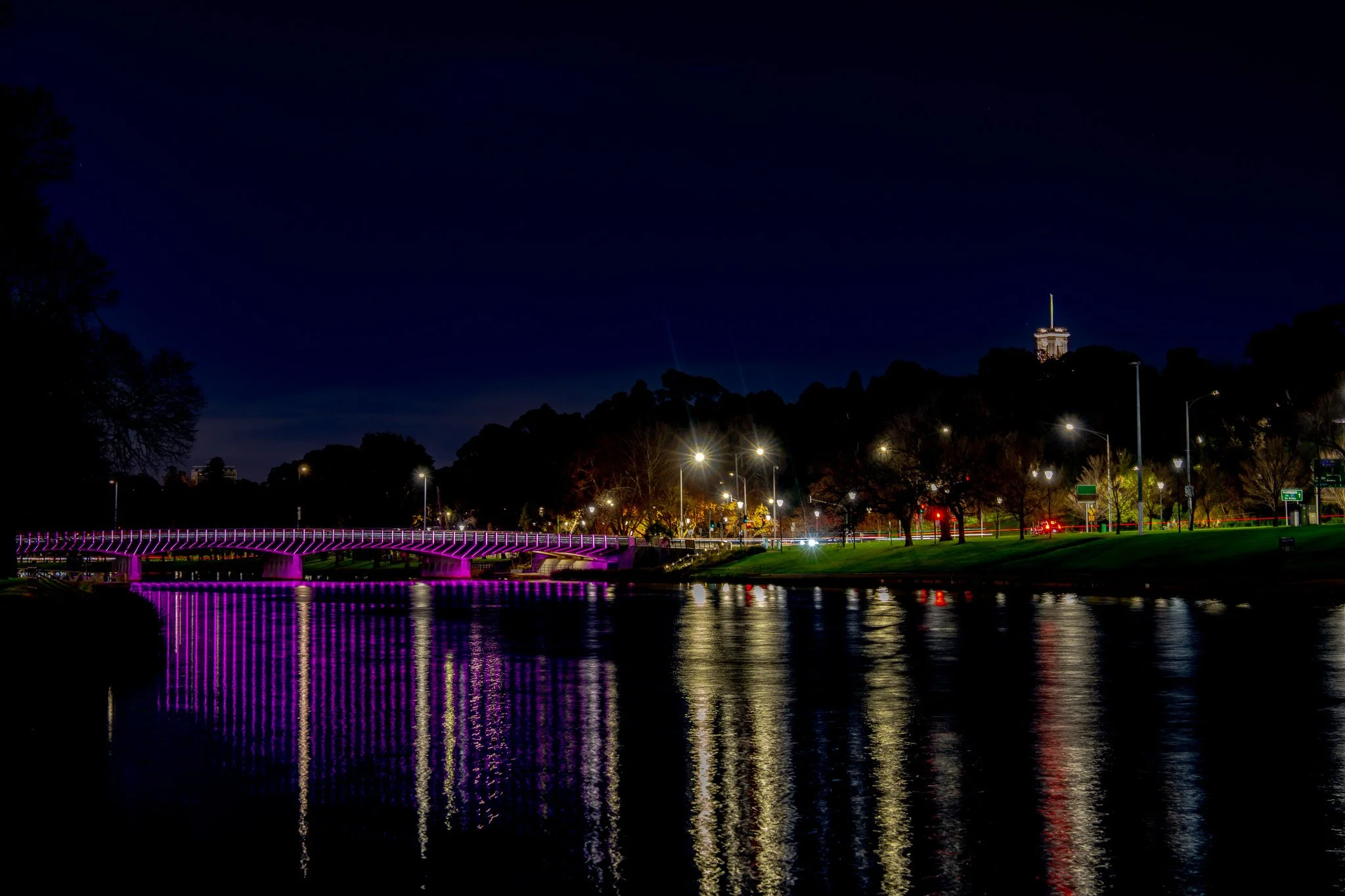
Reluctantly, we left the waterfront and made our way back towards street level. The reflections on the Yarra had been the highlight of the evening so far, and I could have stayed there much longer. But the night was not over yet.
Along the way, we stopped for another light painting exercise. This time, the instructor approached it from a different perspective. Instead of only teaching us how to capture light from behind the camera, he invited us to become part of the creation.
He started with a simple sparkler and asked us to experiment with creating our own light paintings. It was a refreshing change from the concentration required earlier in the evening. After spending so much time adjusting settings, checking focus and analysing compositions, we were suddenly in front of the camera, moving, experimenting and simply enjoying the process.
It was a light-hearted moment that reminded us that photography could also be playful.
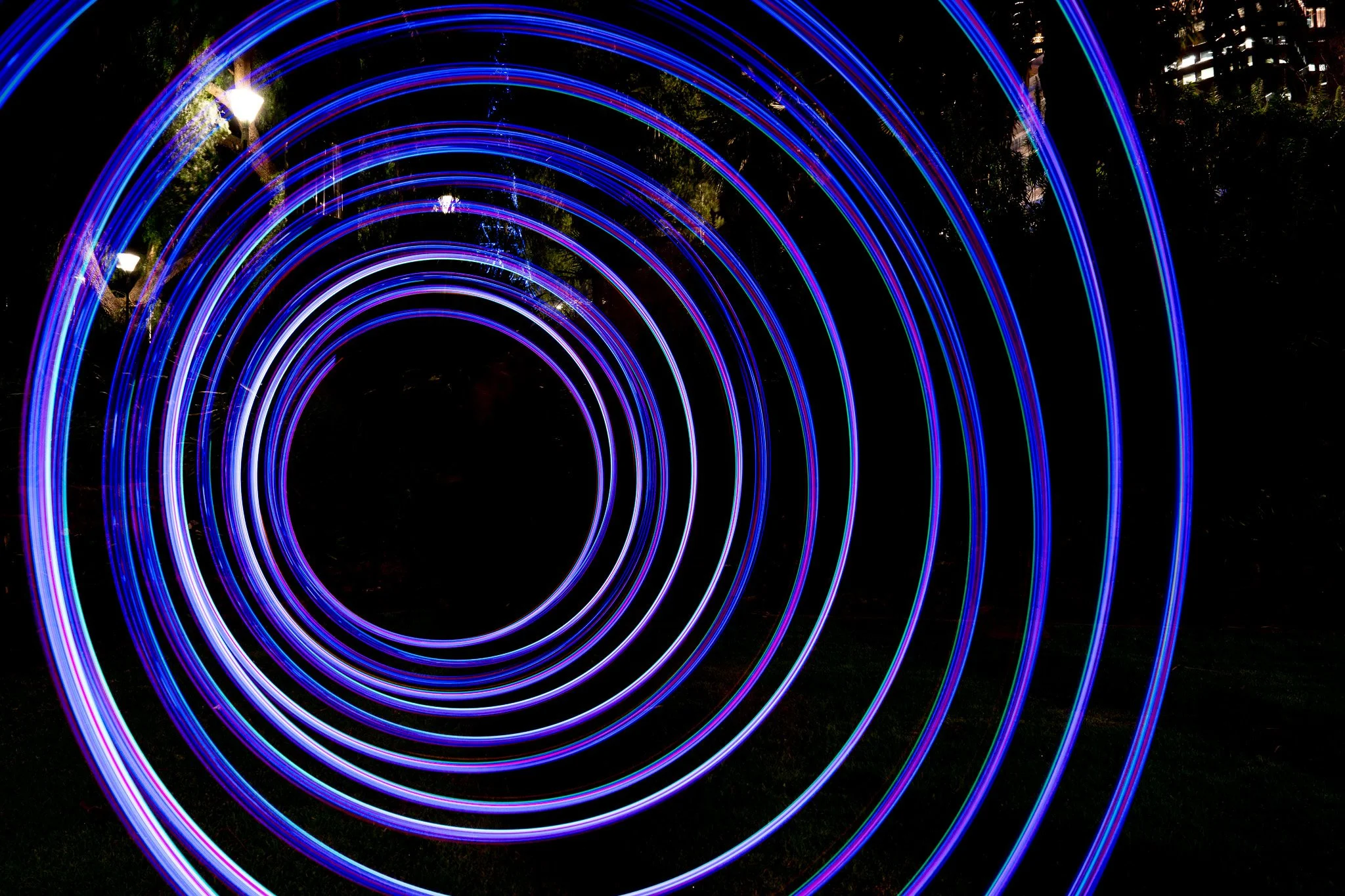
The instructor then revealed another one of his creative inventions. He had assembled several coloured Christmas lights, attached them to a rope, and developed a carefully practised sequence of movements. With the correct shutter speed and precise timing, the simple lights transformed into something extraordinary—a glowing sphere floating in the darkness and a deep tunnel of colours stretching into the frame.
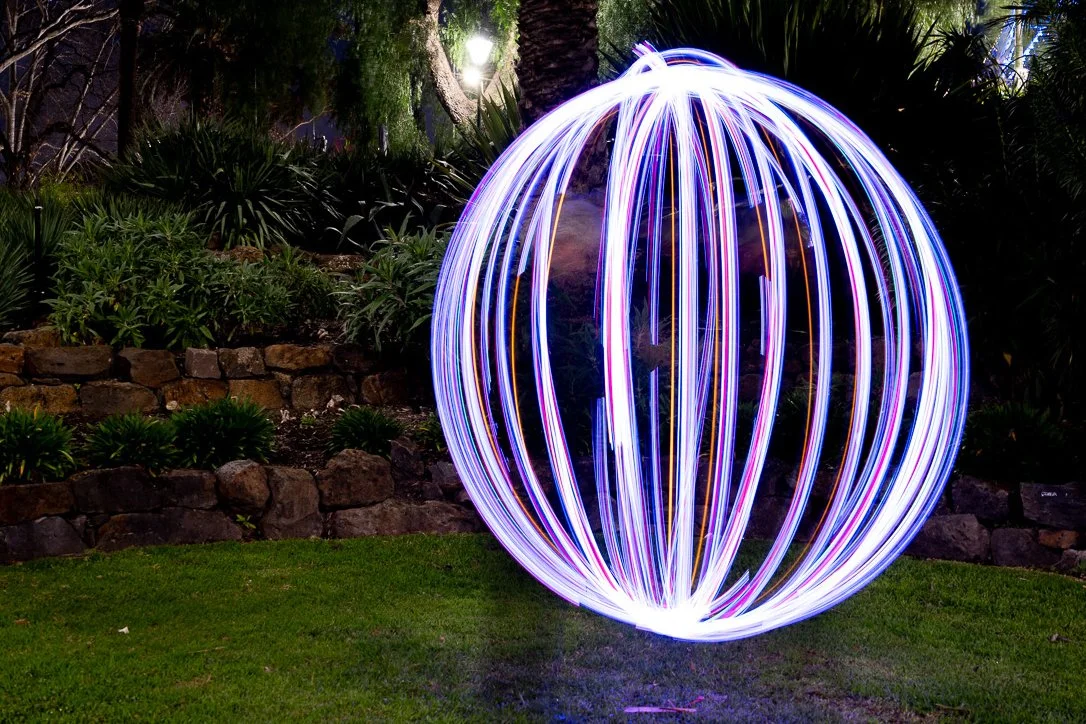
Watching the camera capture these movements was fascinating. What looked like simple actions in real life became intricate patterns of light in the final image.
This lesson changed the way I viewed light. It was no longer just something that the camera needed to record. Light itself could become the subject, the brush and the paint. With imagination and technique, a photographer could create something completely personal—an image that existed only because of that moment, that movement and that creative idea.
Our final location of the evening was none other than the Melbourne Arts Centre. The tower above us glowed with a soft blue light, standing proudly against the night sky. Naturally, I assumed this would be our final subject.
But once again, the instructor surprised us.
Instead of pointing our cameras towards the towering spire, he asked us to lower our viewpoint almost to street level, leaving the tower almost completely out of the frame. Our attention was directed towards Hamer Hall.
At first, I was puzzled.
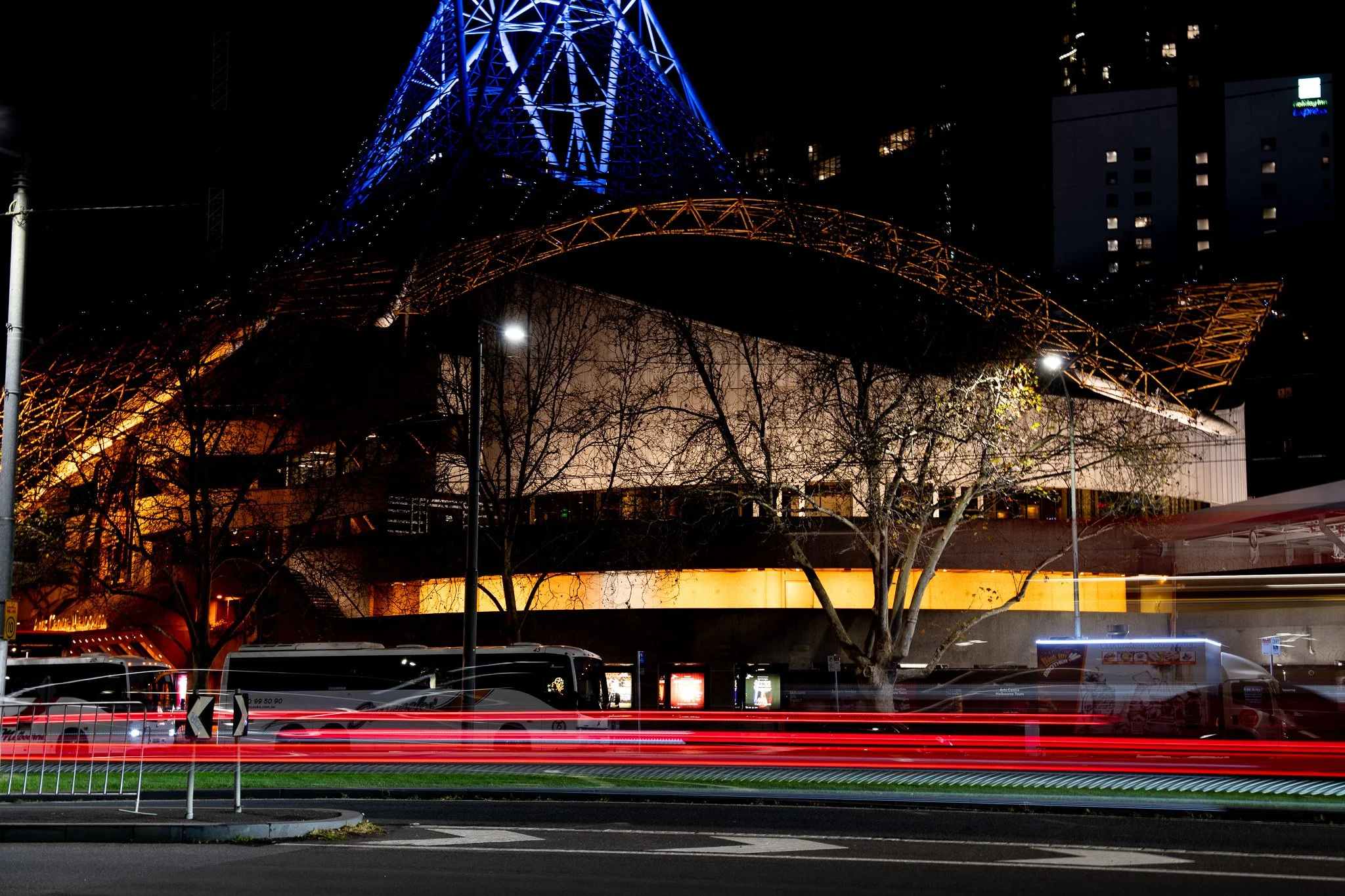
Two large buses were parked along the curb in front of the building, blocking almost a quarter of the view. On the opposite side was a food van, leaving only a narrow opening between them. It did not seem like an obvious location for a final photograph.
But we followed the instruction and set up our tripods.
Then the trams began passing in front of the building.
Suddenly, the composition made sense.
Just like Flinders Street Station earlier in the evening, we were not simply photographing a building. We were capturing movement with a stationary subject as the backdrop. The challenge was no longer finding the subject—it was waiting for the right moment.
The timing had to be precise. The shutter needed to capture the passing tram at exactly the right position in front of Hamer Hall. After we reviewed the first image, the instructor explained what he was looking for. With perfect timing, the illuminated windows of the tram would align with the lights of Hamer Hall, creating the illusion that the building's lights had become part of the moving vehicle.
It was another brilliant example of transforming an ordinary scene into something unexpected. The photograph was created not by the building alone, but by the relationship between light, movement and timing.
As I walked back along the Yarra River after the lesson ended, I reflected on everything I had learned during those three hours.
I had certainly gained a much deeper understanding of my camera. The technical skills—the exposure settings, focusing techniques, white balance and composition—were all important steps towards becoming a better photographer.
But the most valuable lesson was not about the camera.
It was about light.
I learned that light was not simply something to capture. It could be shaped, controlled and used to create something personal. Movement was not always something to eliminate; sometimes it was what gave a photograph its emotion and energy.
A photograph did not always need to show perfect stillness. Sometimes, within the smoothness of an image, there could still be movement waiting to be discovered.