Learning to See Differently: A Winter Photography Journey at Melbourne Zoo
It had been many years since my last visit to Melbourne Zoo. This time, however, I wasn't there simply to wander among the animals. I was on my way to a photography lesson—a thoughtful gift from my partner that promised not just a day out, but an opportunity to see the world a little differently.
Unlike the previous weekend, the weather was on our side. The morning sun cast a warm golden light across a crisp winter day, the kind of light photographers quietly hope for. As I made my way to the zoo, I found myself looking forward to the lesson, curious about what new techniques I might learn and how they might change the way I approached photography.
A few days earlier, we had received a list of camera settings to prepare before the class. Reading through it, I realised just how much I still had to learn. I understood only about half of what was being asked. Although I had owned my camera for more than a year, I had never truly become familiar with it. Most of what I knew had simply carried over from my previous camera, and I had continued shooting out of habit rather than understanding. There were countless buttons, menus and functions that remained unexplored.
Perhaps that was exactly why I was there—to move beyond taking photographs and begin learning how to use the camera as the tool it was designed to be.
Ever since I attended my first digital photography course, I had almost always shot in Manual mode. Learning to balance aperture, shutter speed and ISO felt like understanding the language of photography. It gave me control over the image, and for the landscapes I loved to photograph, it had served me well.
Even so, I had occasionally watched good photographs slip away. While I was busy adjusting camera settings, the light changed, someone walked into the frame, or the fleeting moment I wanted to capture simply disappeared. I had become so focused on getting the exposure right that I sometimes forgot photography was also about timing.
Wildlife photography is a very different discipline. Animals rarely stay still, and they certainly do not wait patiently while you adjust your camera. They move according to instinct, changing direction without warning. The moment appears for only a second before it is gone.
Before we began, our instructor took a quick look through my camera settings. With a few adjustments, he transformed the way my camera responded. The autofocus was changed to AF-S (Single-servo autofocus), which allowed the camera to lock focus when the shutter button was half-pressed. This meant I could focus on the subject first, then adjust my composition without the camera refocusing each time. The focus area was also narrowed, making it easier to place the focus point exactly where I wanted it.
Instead of constantly juggling camera settings, I could concentrate on watching the animals, anticipating their movements, and composing the photograph.
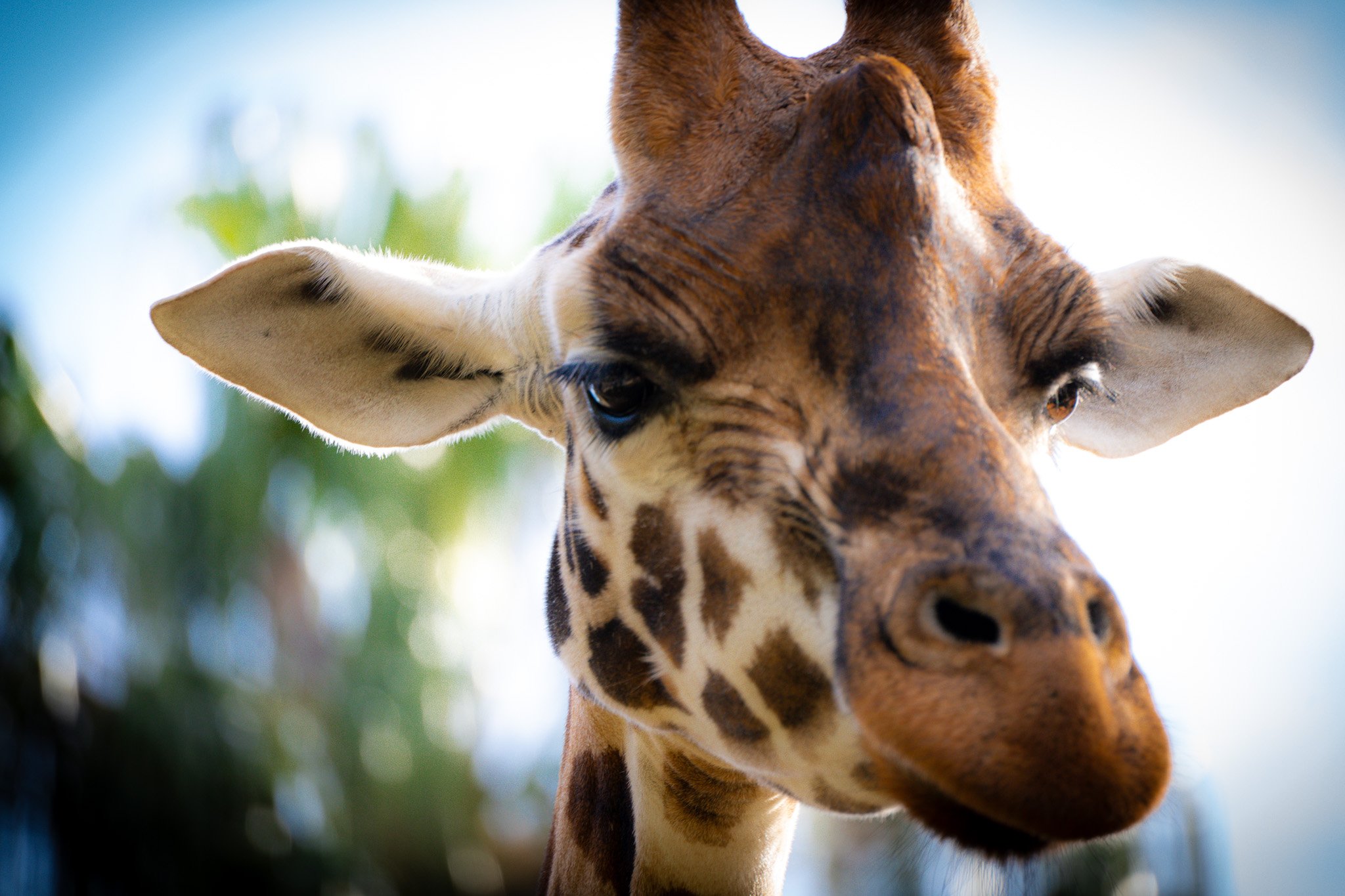
Before we set off around the zoo, our instructor shared a few simple principles that would stay with me throughout the morning. With wildlife, he said, the eyes are almost always the most important part of the photograph. If the eyes are sharp, the image immediately feels alive, even when everything else is slightly softer. More often than not, the most engaging photographs are close portraits that reveal the animal's expression rather than its entire body.
When photographing the whole animal, he reminded us to pay attention to what was inside the frame. It sounded obvious, yet it was something many of us overlooked in our excitement. Don't accidentally crop off the tail, the tips of the ears, or the feet. If they are meant to be in the photograph, include them completely.
He also encouraged us to look beyond the animal itself. A photograph isn't just about the subject; the background plays an equally important role. A soft green backdrop can help the animal stand out, while a cluttered background competes for attention. Composition mattered as well. Rather than placing the animal in the centre every time, leave space in the direction it is looking or moving. That simple adjustment gives the image room to breathe and invites the viewer to wonder what has captured the animal's attention.
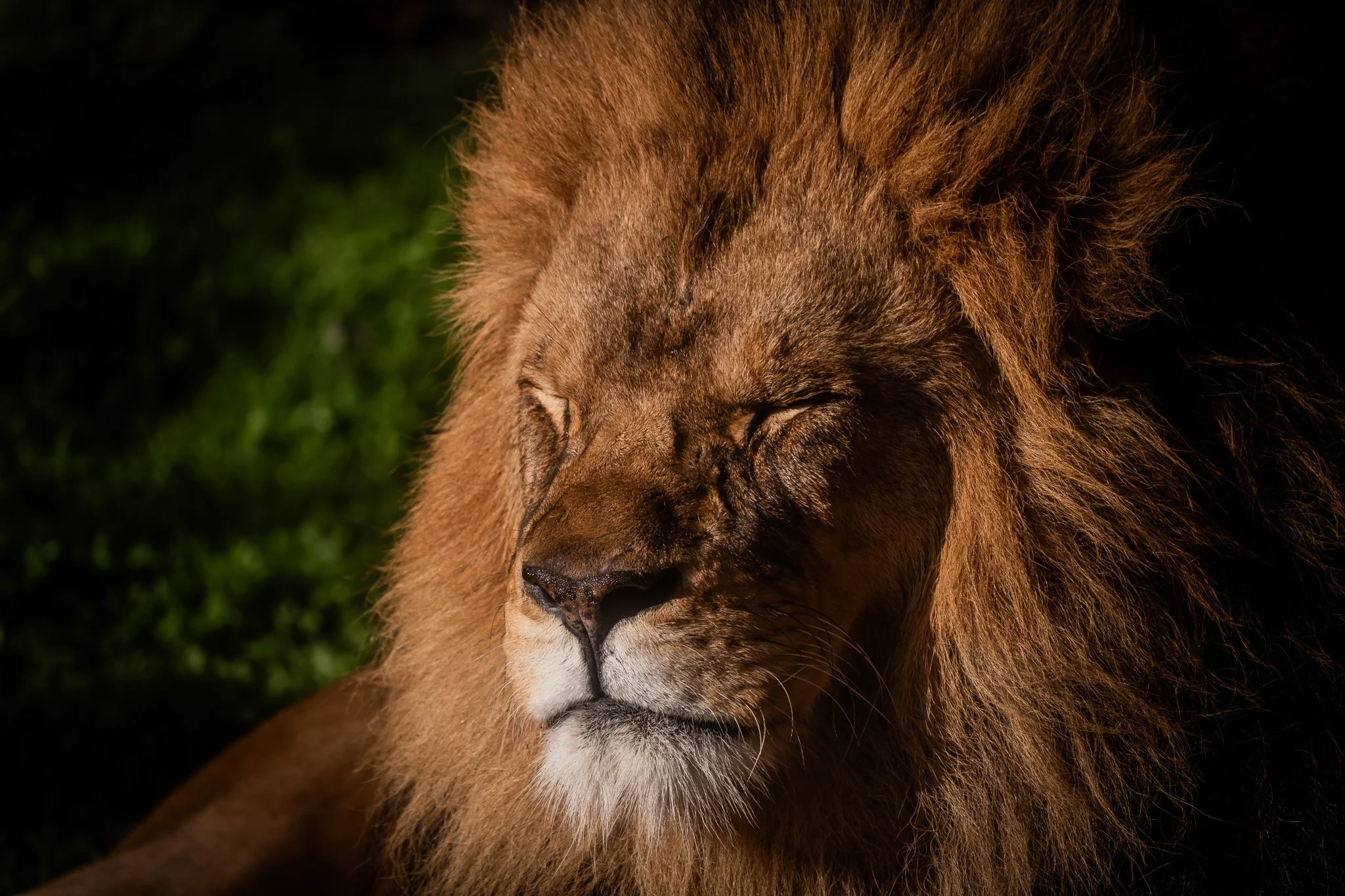
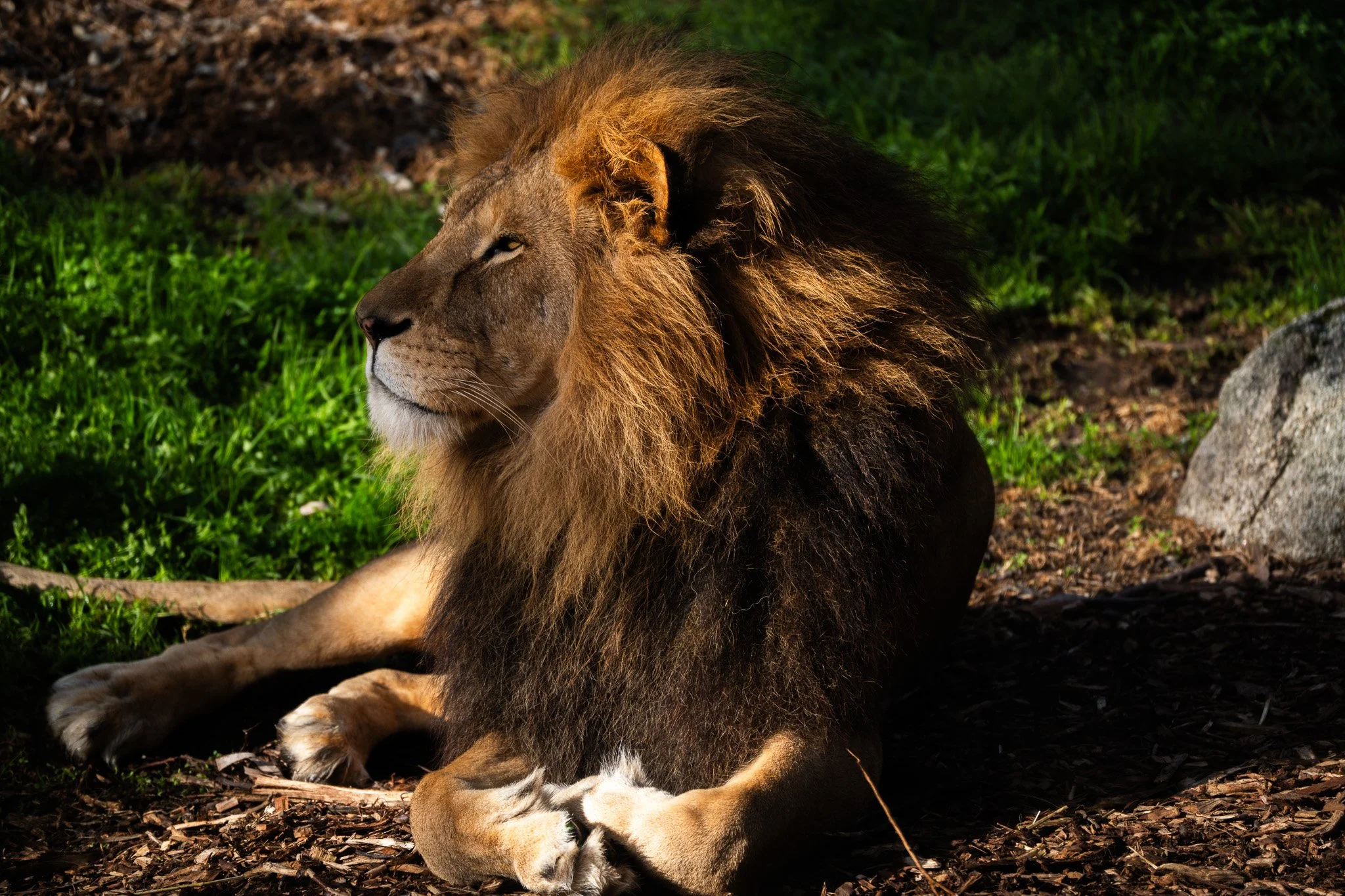
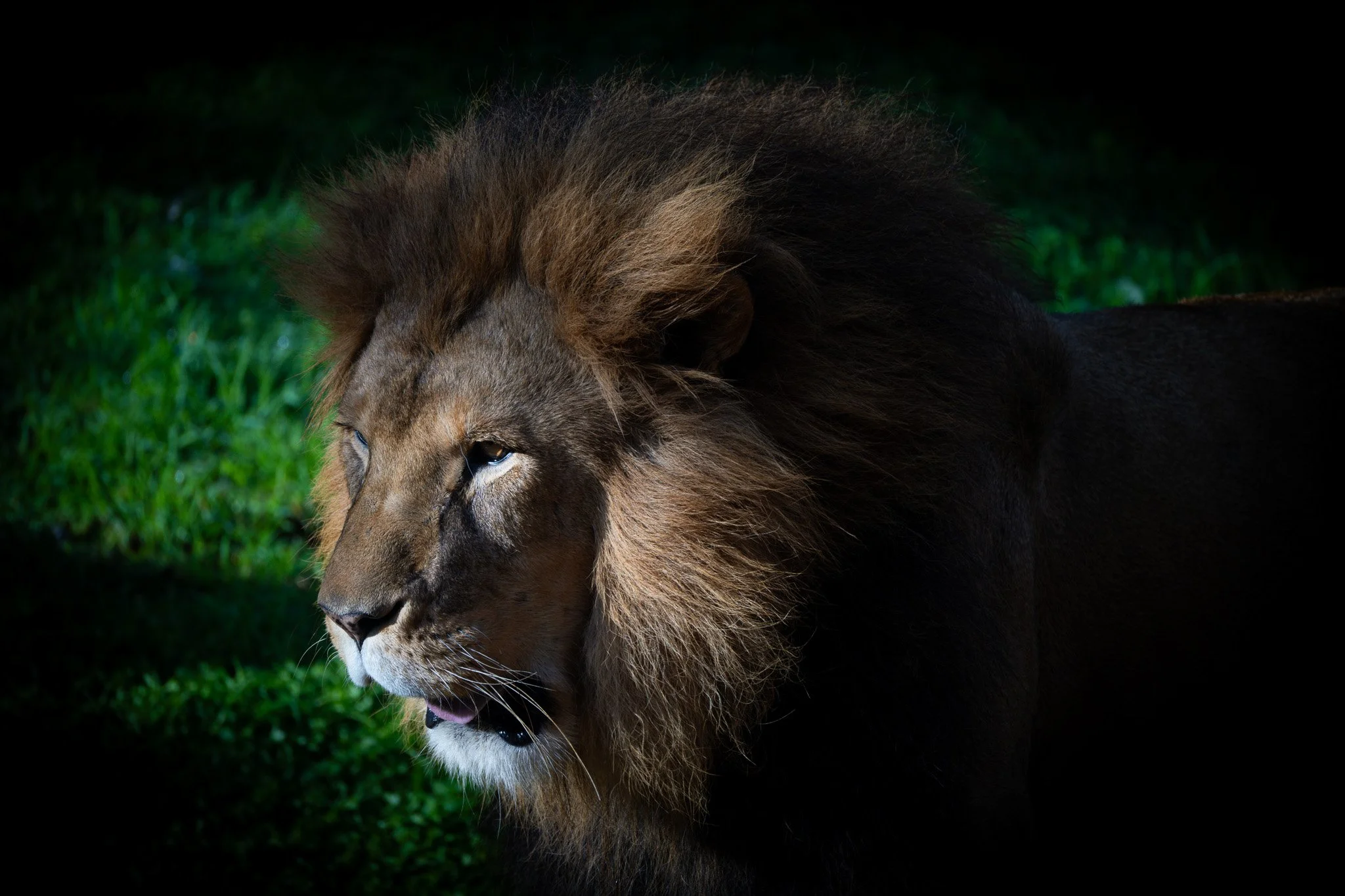
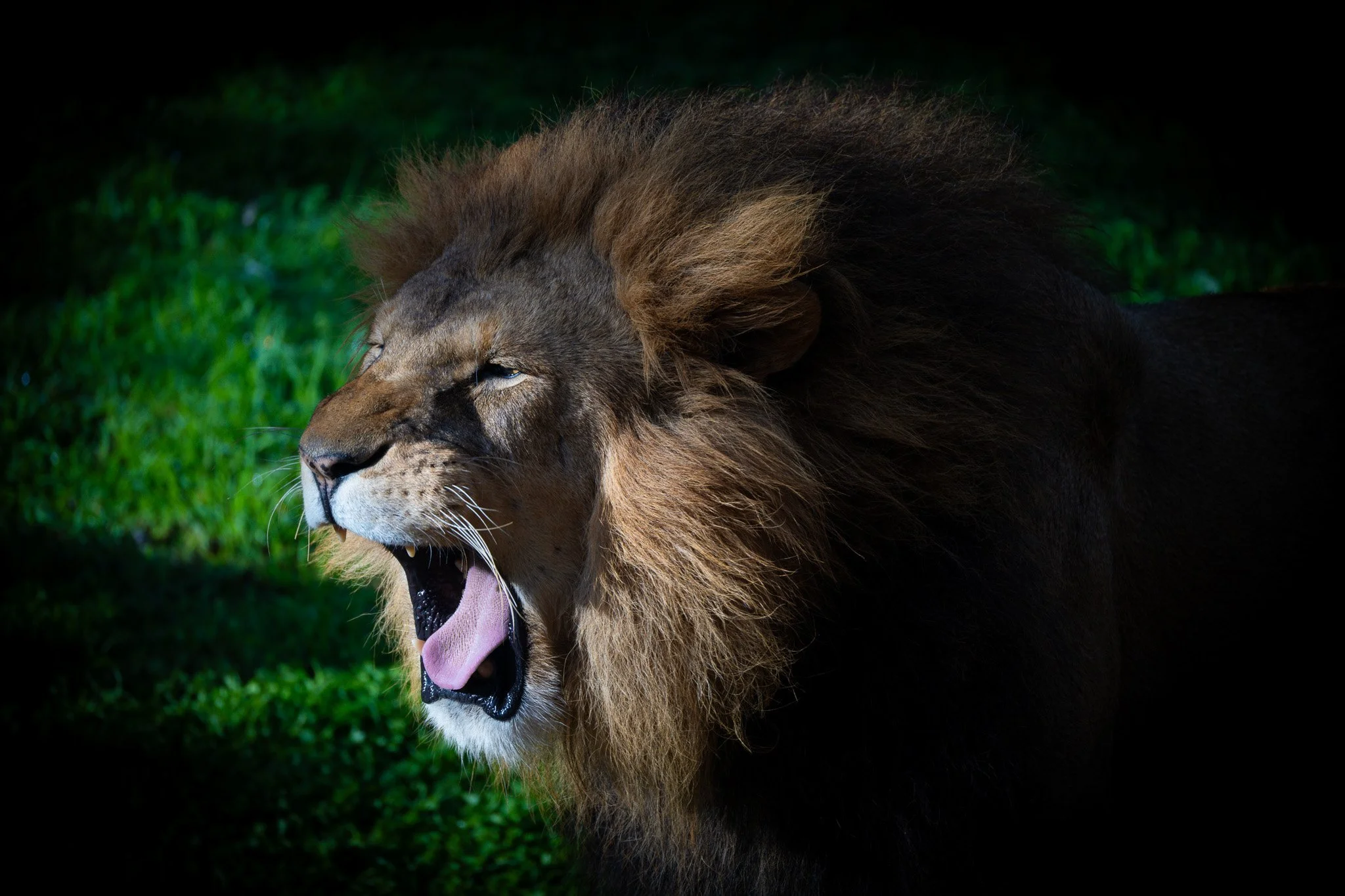
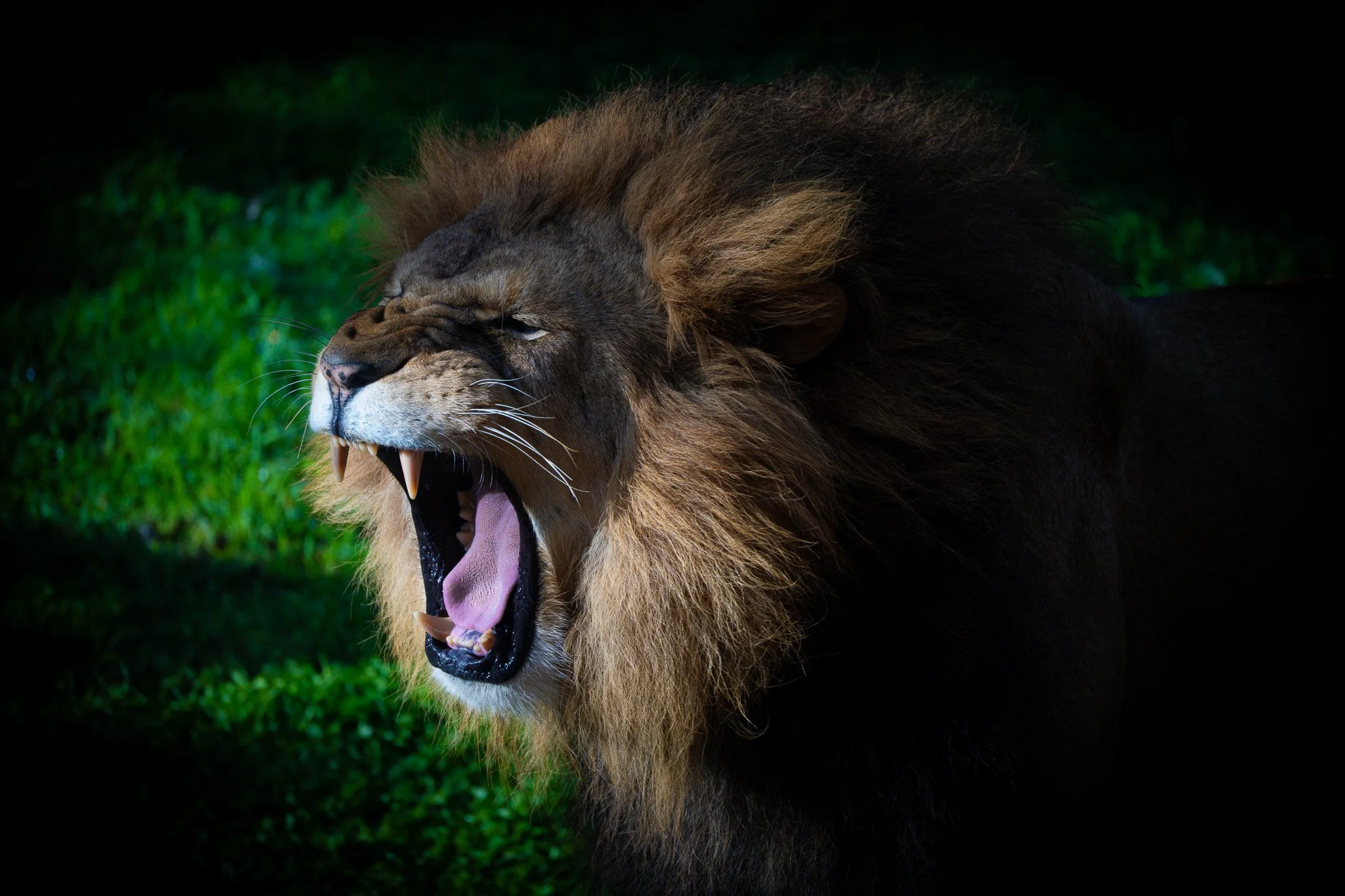
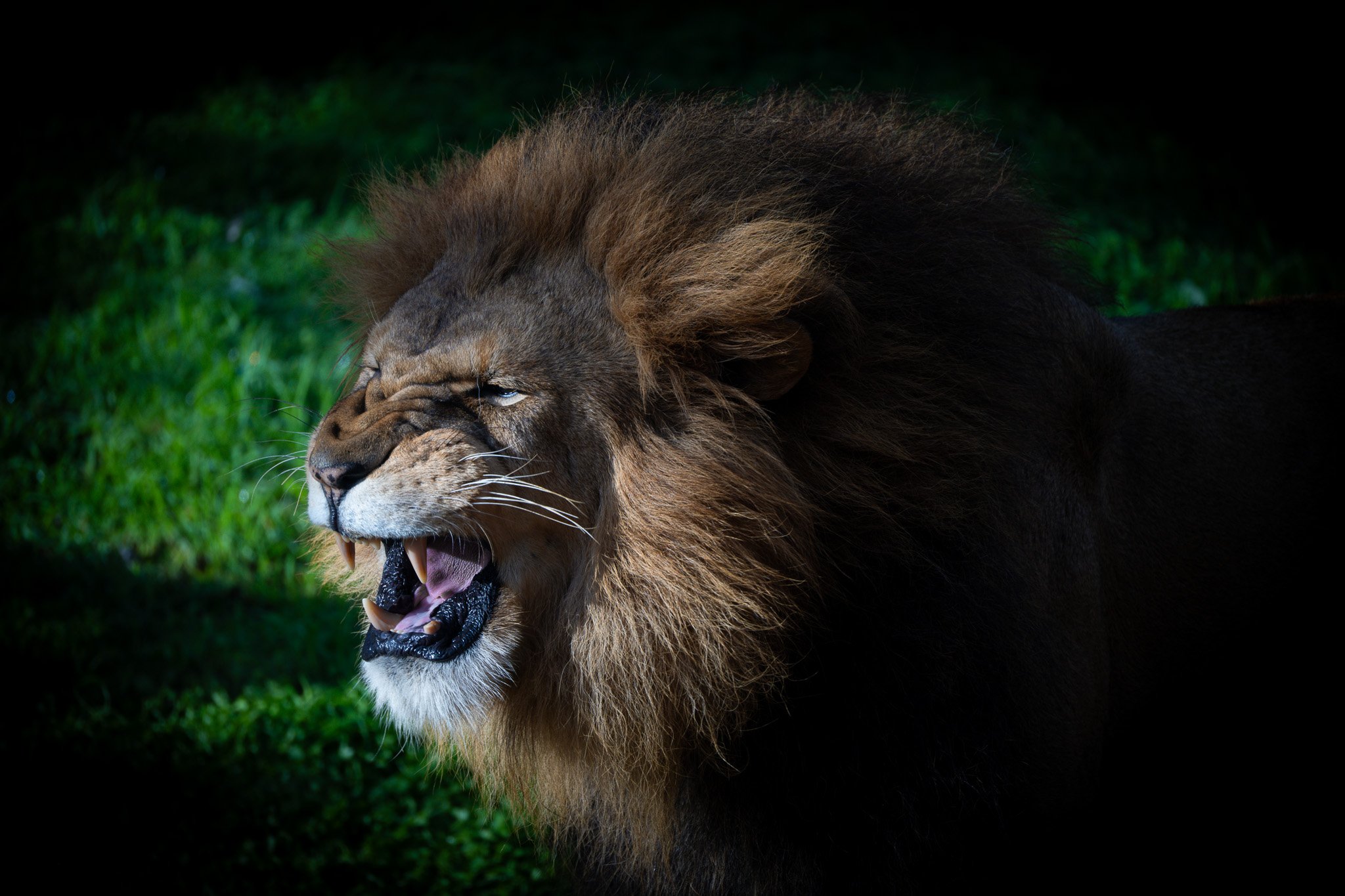
Our first stop was the big cat enclosure. The instructor had taken a quick walk around the zoo before the lesson and discovered that the lions were particularly active that morning, so we headed there before the crowds arrived. It proved to be the right decision. The viewing area was still quiet, giving us plenty of space to settle in and compose our shots.
One of the male lions was already out, basking in the gentle warmth of the winter sun. Almost as if he understood what photographers hoped for, he wandered into the perfect position, framed by a clean, uncluttered background. Before long, his brother emerged to join him. The two lions strolled together, occasionally nudging and playfully interacting with one another, giving us one photographic opportunity after another.
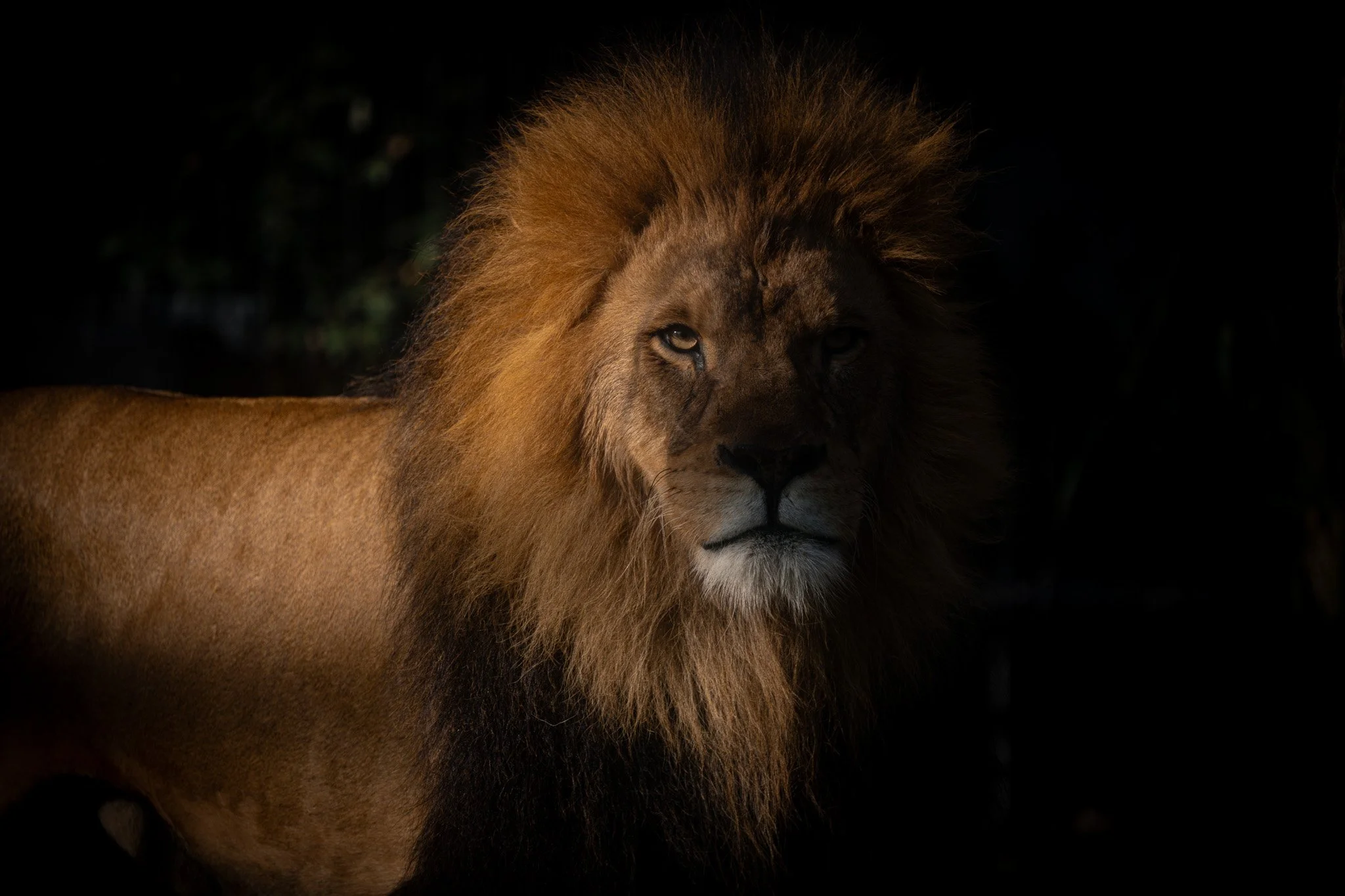
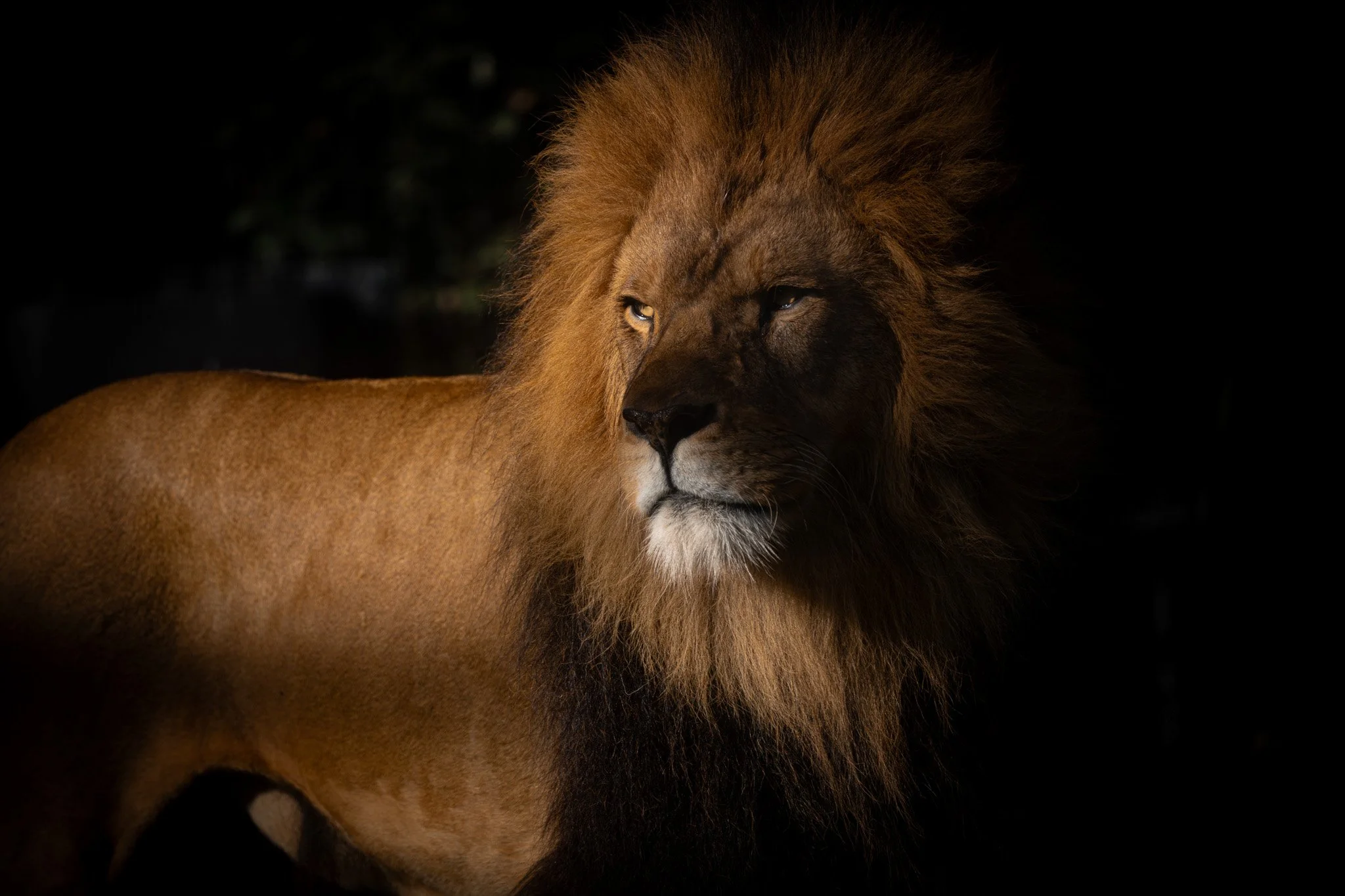
We were fortunate in another respect. Although the viewing glass bore the usual fingerprints and streaks of a busy zoo, it wasn't fogged with condensation. That meant our telephoto lenses could shoot cleanly through the glass without losing contrast or sharpness. For a brief while, it was easy to forget there was a barrier between us and the lions as we captured them enjoying the first rays of the morning sun.
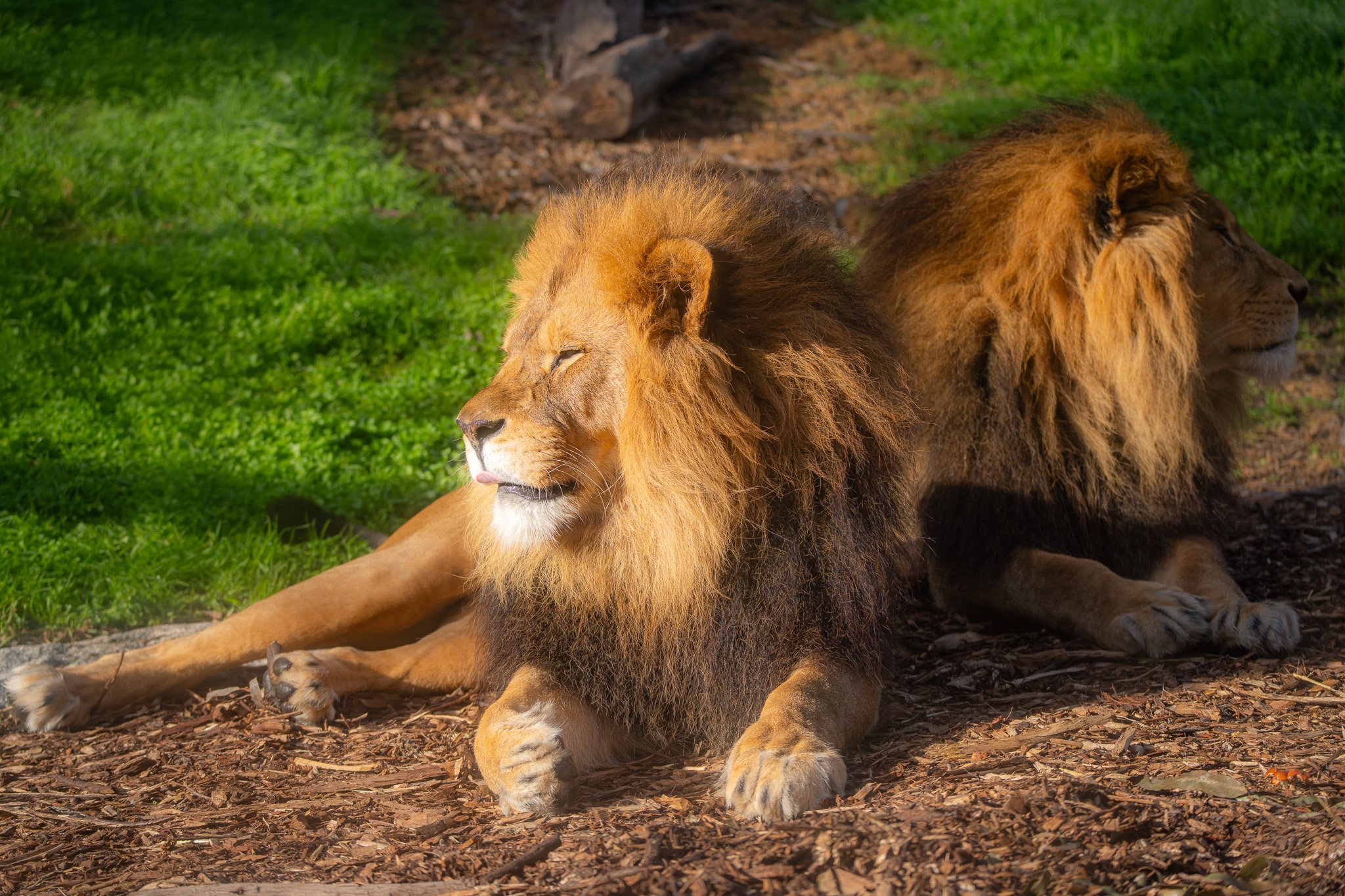
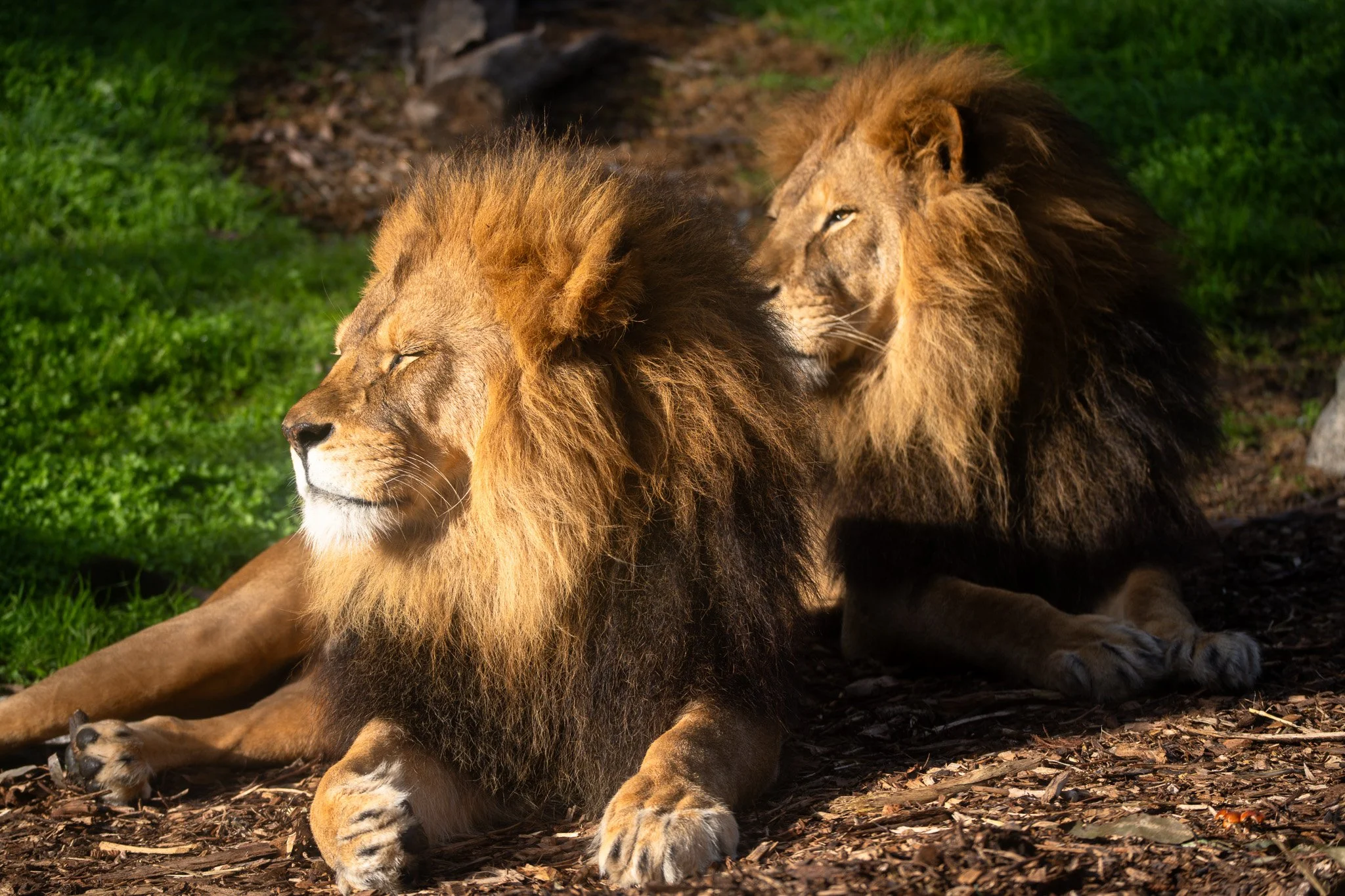
I remembered the instructor's advice and kept reminding myself to focus on the eyes. Rather than firing off dozens of photographs, I waited patiently for the right moment. Although the lions were constantly on the move, they would pause every now and then, scanning their surroundings with slow, deliberate movements of their heads. Those brief moments gave me the perfect opportunity to practise locking focus on their eyes and, just as importantly, to become more familiar with my telephoto lens. With each photograph, handling the camera felt a little less awkward and a little more instinctive.
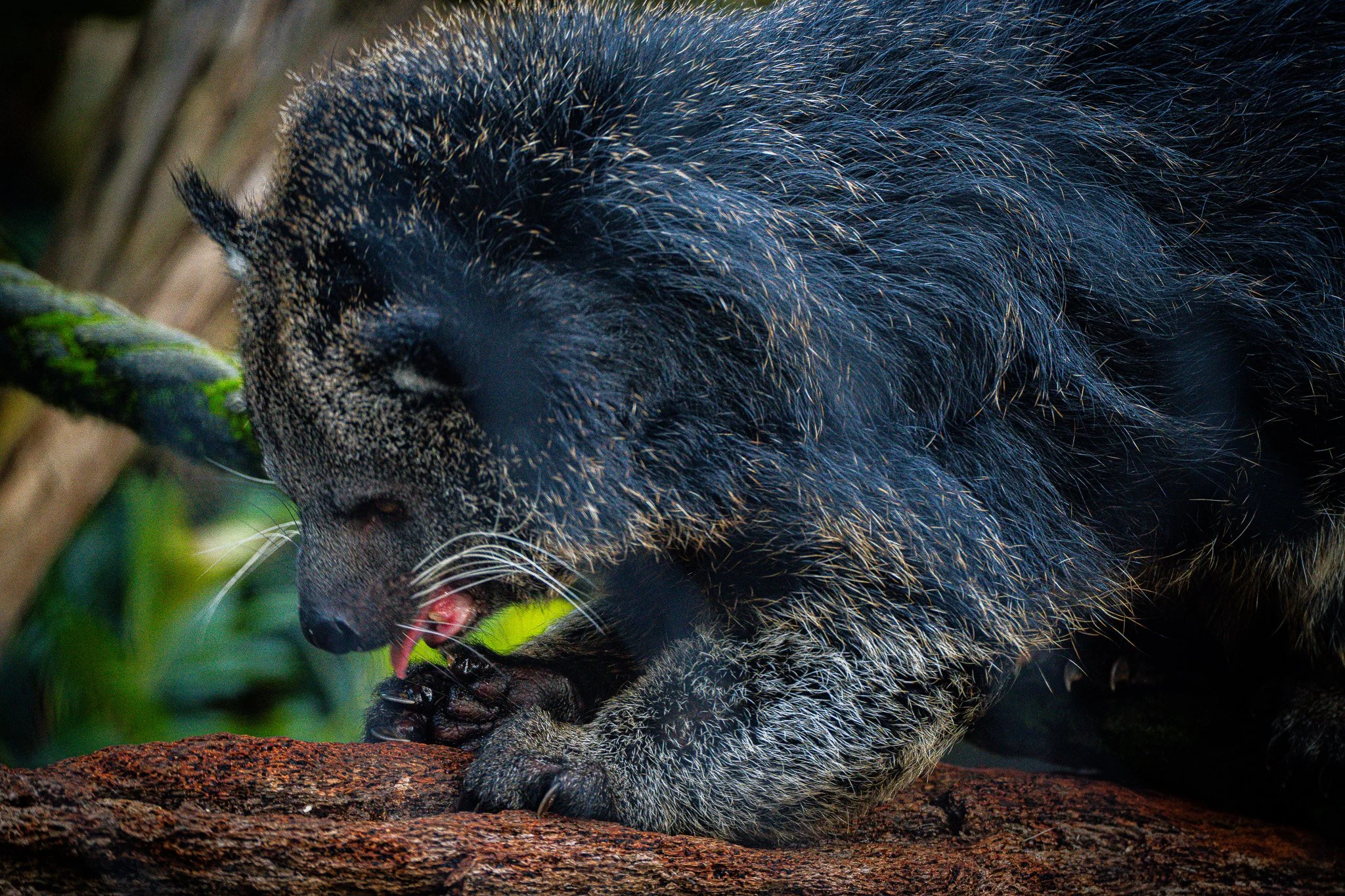
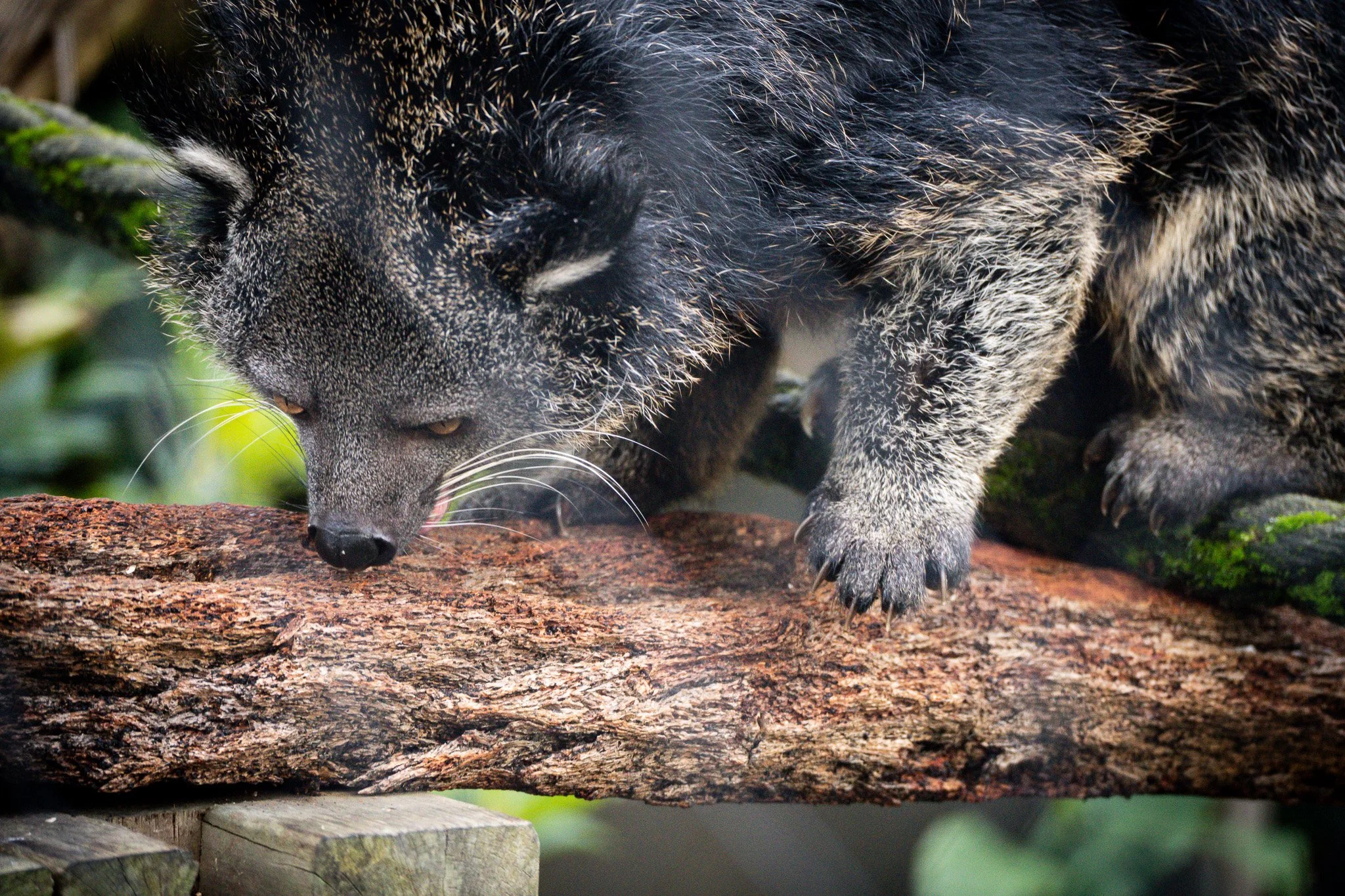
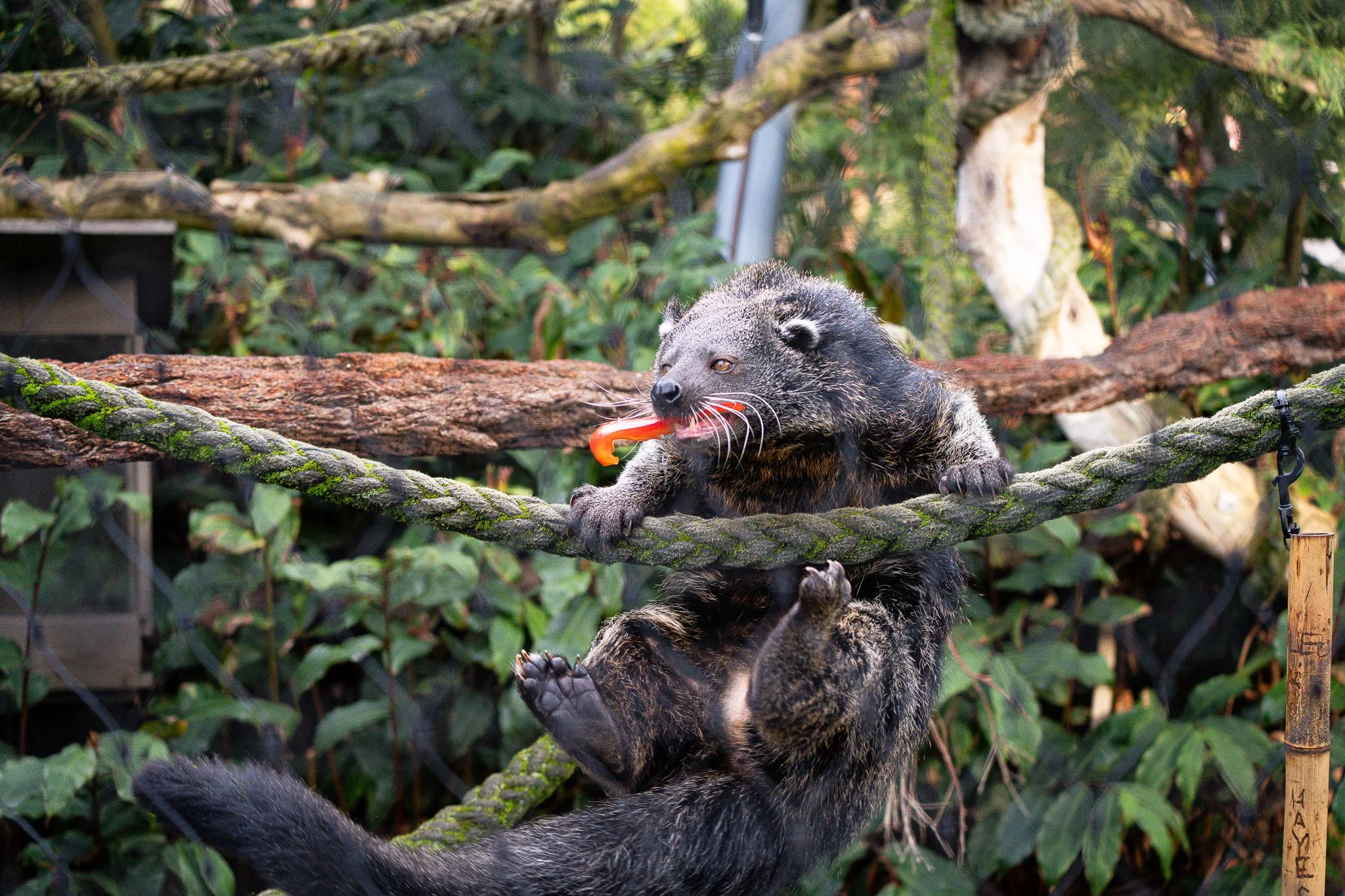
While we had no luck spotting the elusive snow leopard, the binturong gave us an unexpected opportunity. Unlike the lions, who were content to lounge and observe the world around them, the binturong was constantly on the move. The zookeeper had just placed its morning meal in front of it, and it immediately began enjoying its breakfast, completely oblivious to the visitors and cameras around it.
Its constant movement presented a new challenge. Trying to keep focus on a moving subject was difficult enough, but the wire fence between us and the animal made it even more challenging. Time and again, my camera struggled to find focus, catching on the wires instead of the binturong.
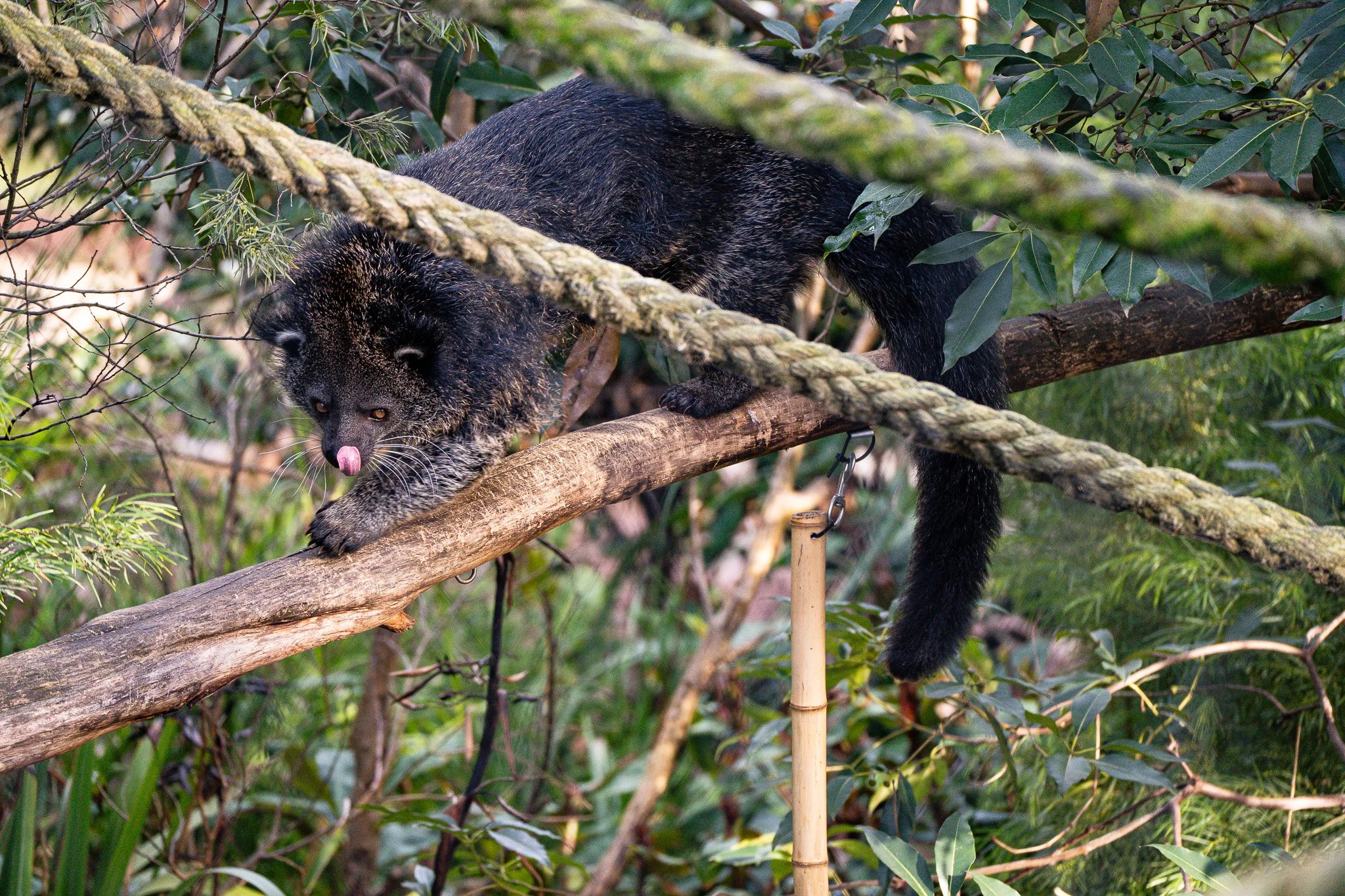
The instructor’s voice reminded us of a simple but effective technique: step back. By creating a little more distance, the camera had a better chance of locking onto the subject rather than the fence. Once the focus was secured, we could carefully move closer and compose the shot we wanted. It was a small adjustment, but it made a remarkable difference.
Capturing the binturong was also more challenging than photographing the lions because of its long, slender body. Unlike the broad and stationary shape of the lions, the binturong stretched across the frame, often leaving parts of its body outside the composition. I found myself repeatedly stepping back, allowing the camera to capture its entire form before slowly moving in to find the right framing.
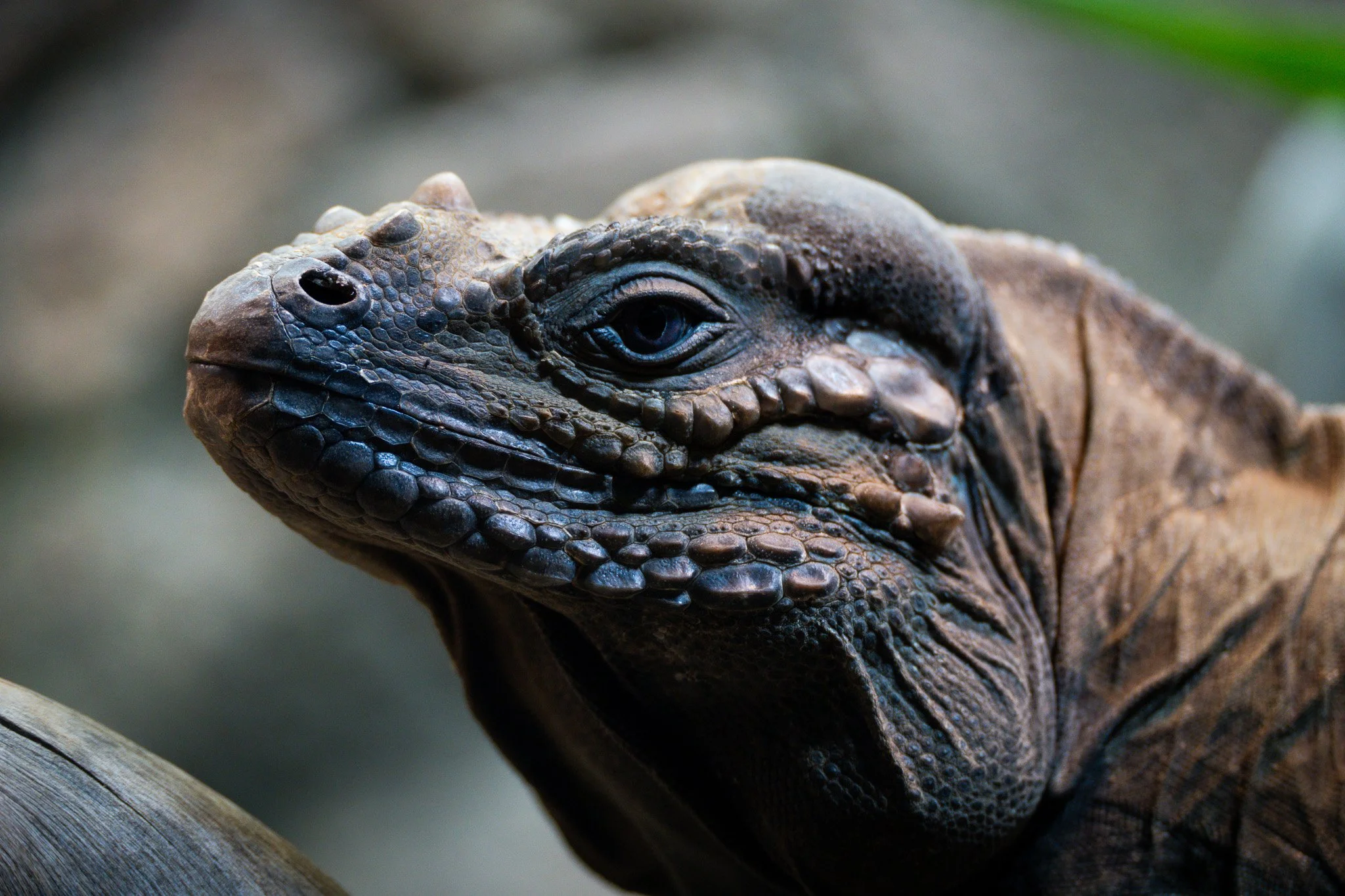
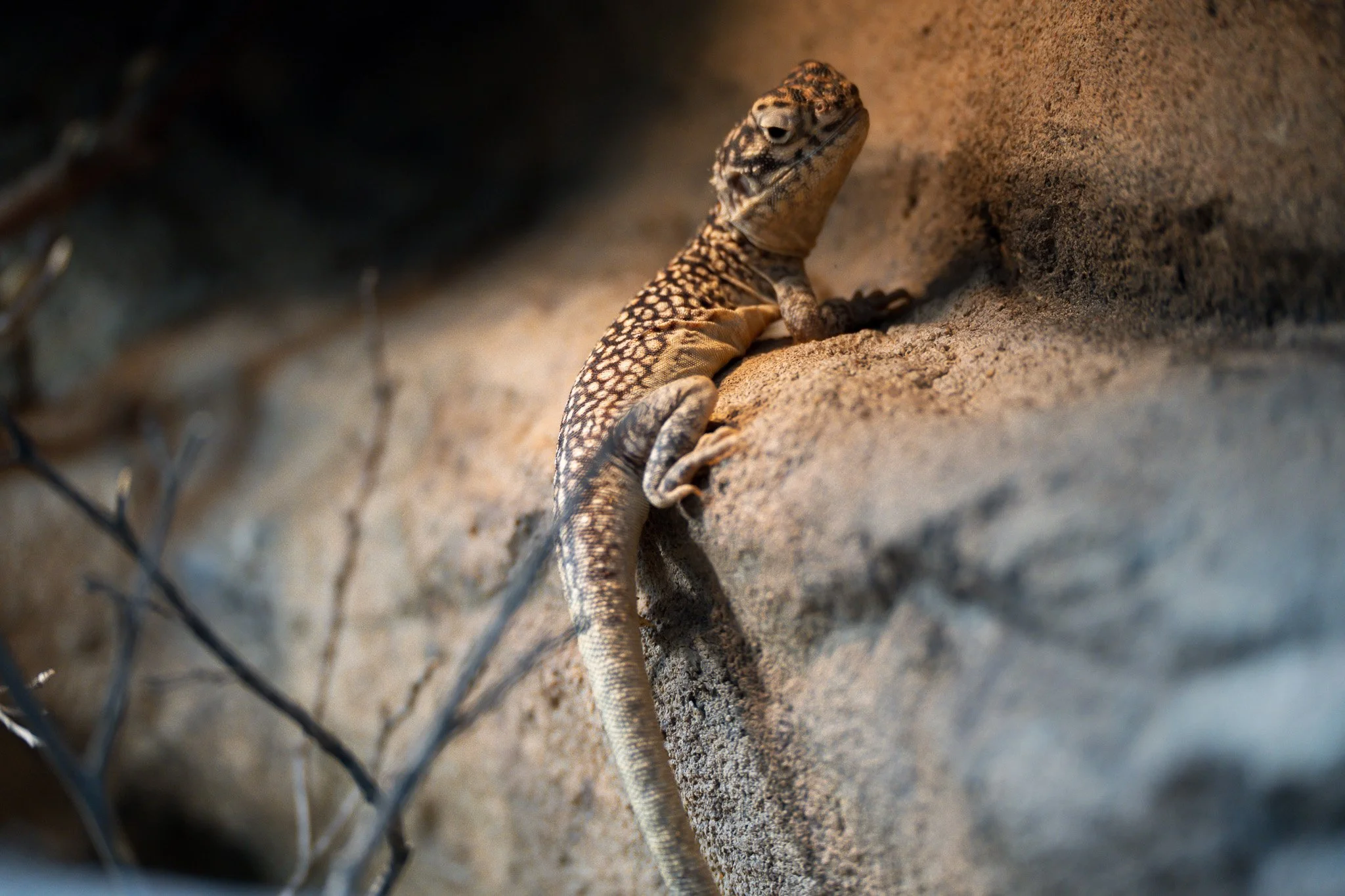
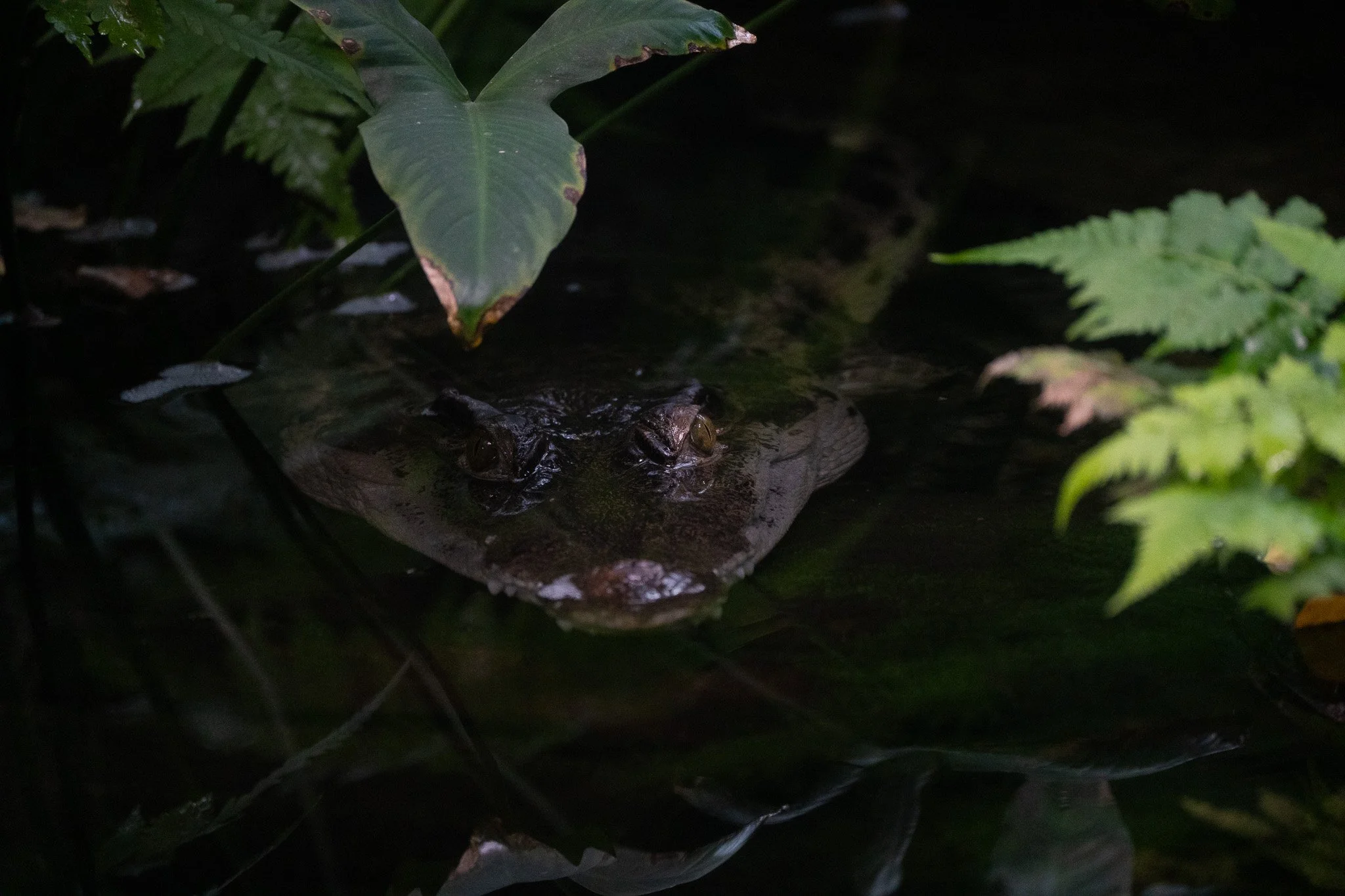
I found photographing the reptiles to be one of the biggest challenges of the day. Many of them had evolved to blend seamlessly into their surroundings, disappearing among rocks, branches and tree hollows. Simply finding them within the enclosure often took longer than taking the photograph itself.
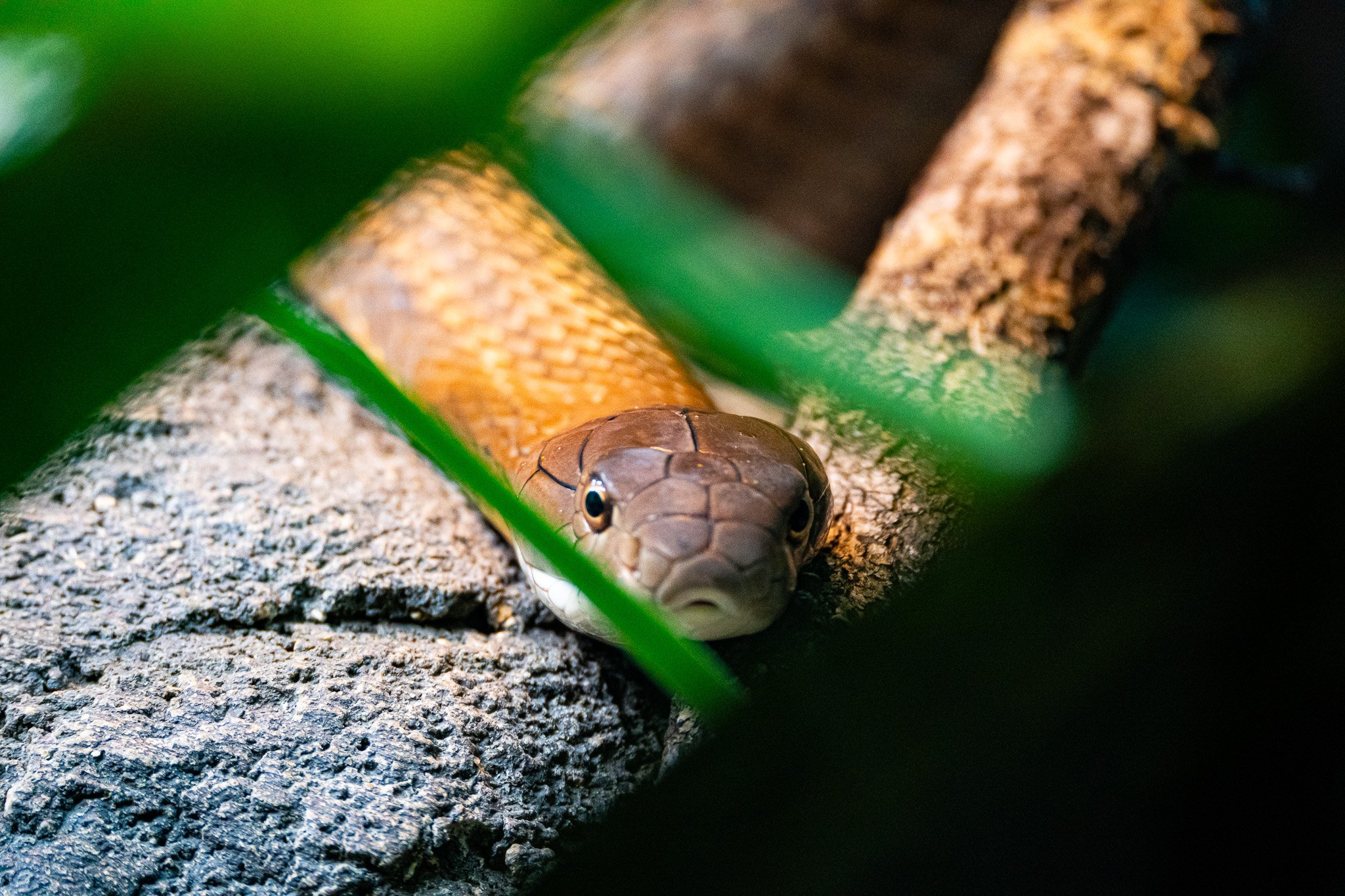
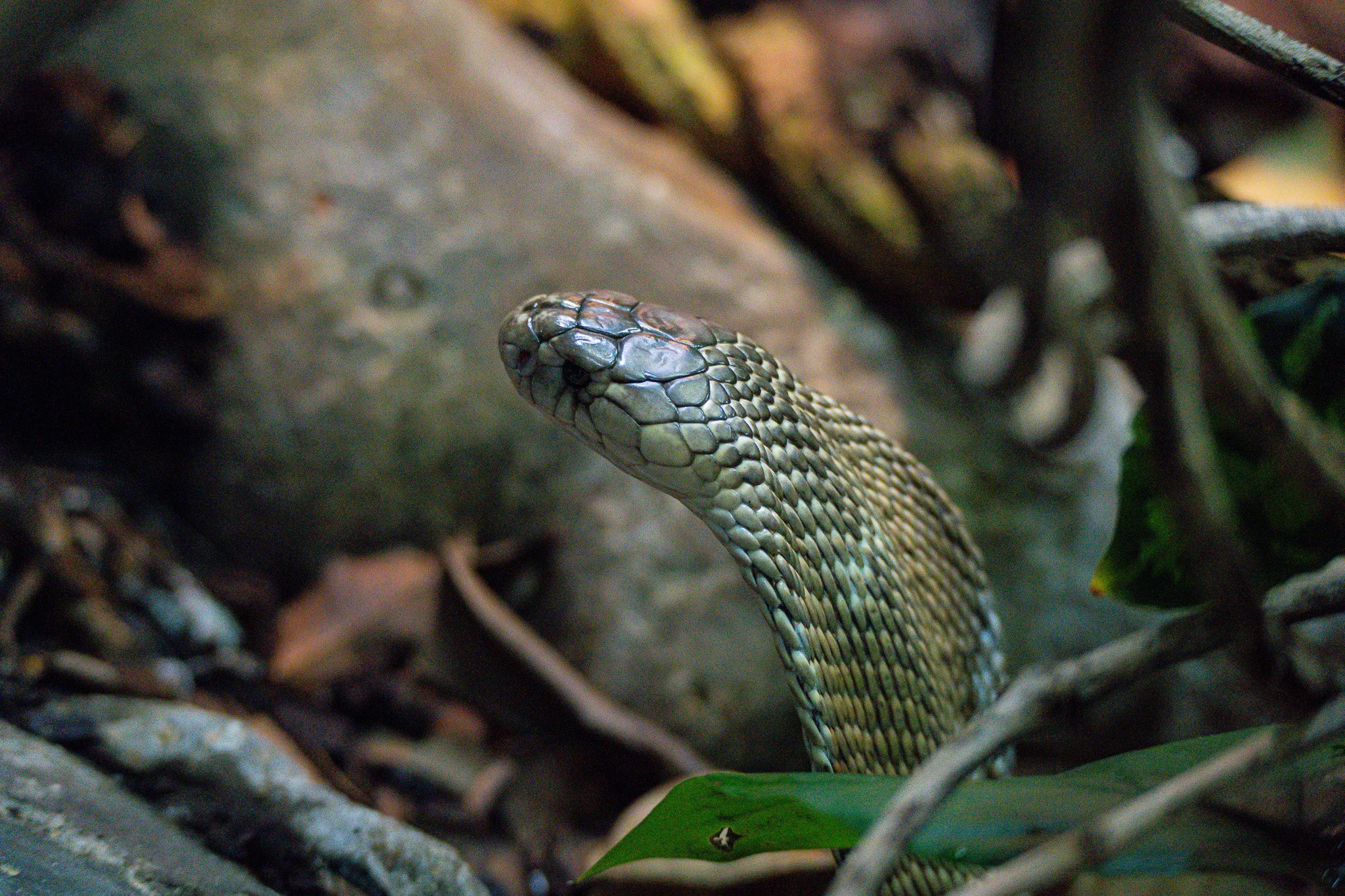
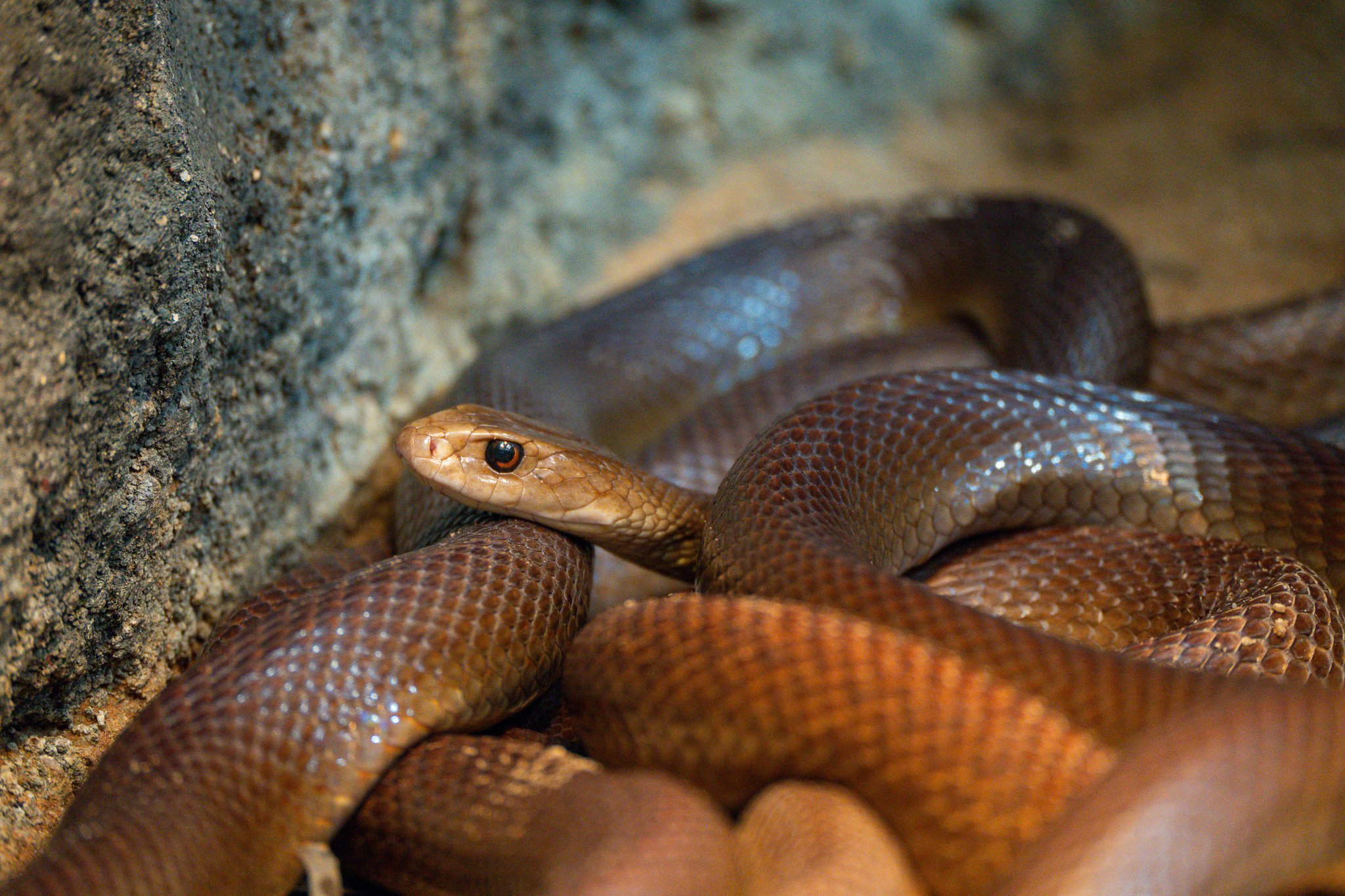
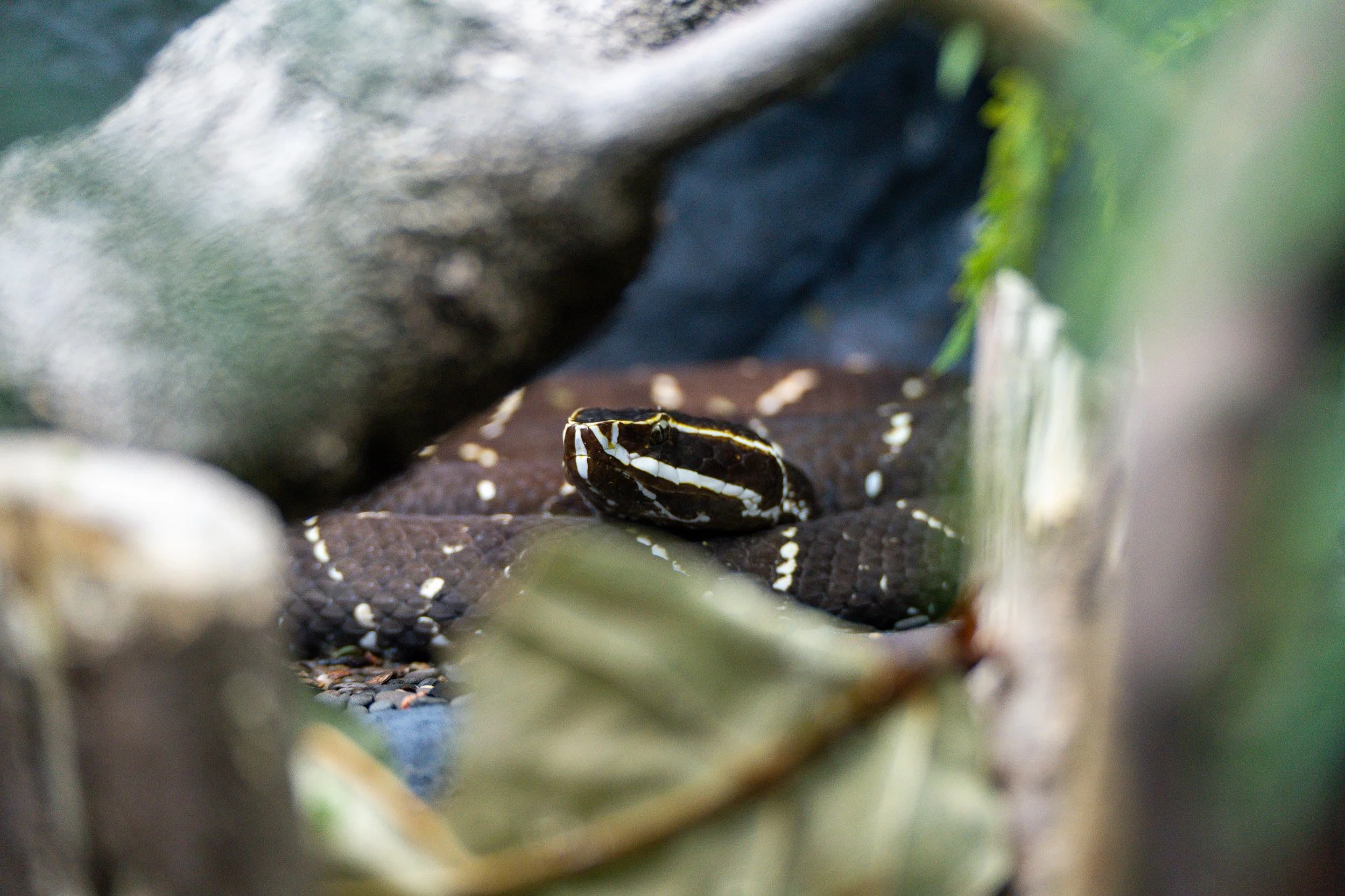
The Reptile House added another layer of difficulty. Although each enclosure was illuminated by its own lighting, the surrounding room was kept deliberately dark. The contrast created an unexpected problem. As visitors moved around the exhibits, their shadows often spilled across the glass, changing the light inside the enclosure just as I was about to press the shutter. The constantly shifting light made it difficult for the camera to expose the scene consistently.
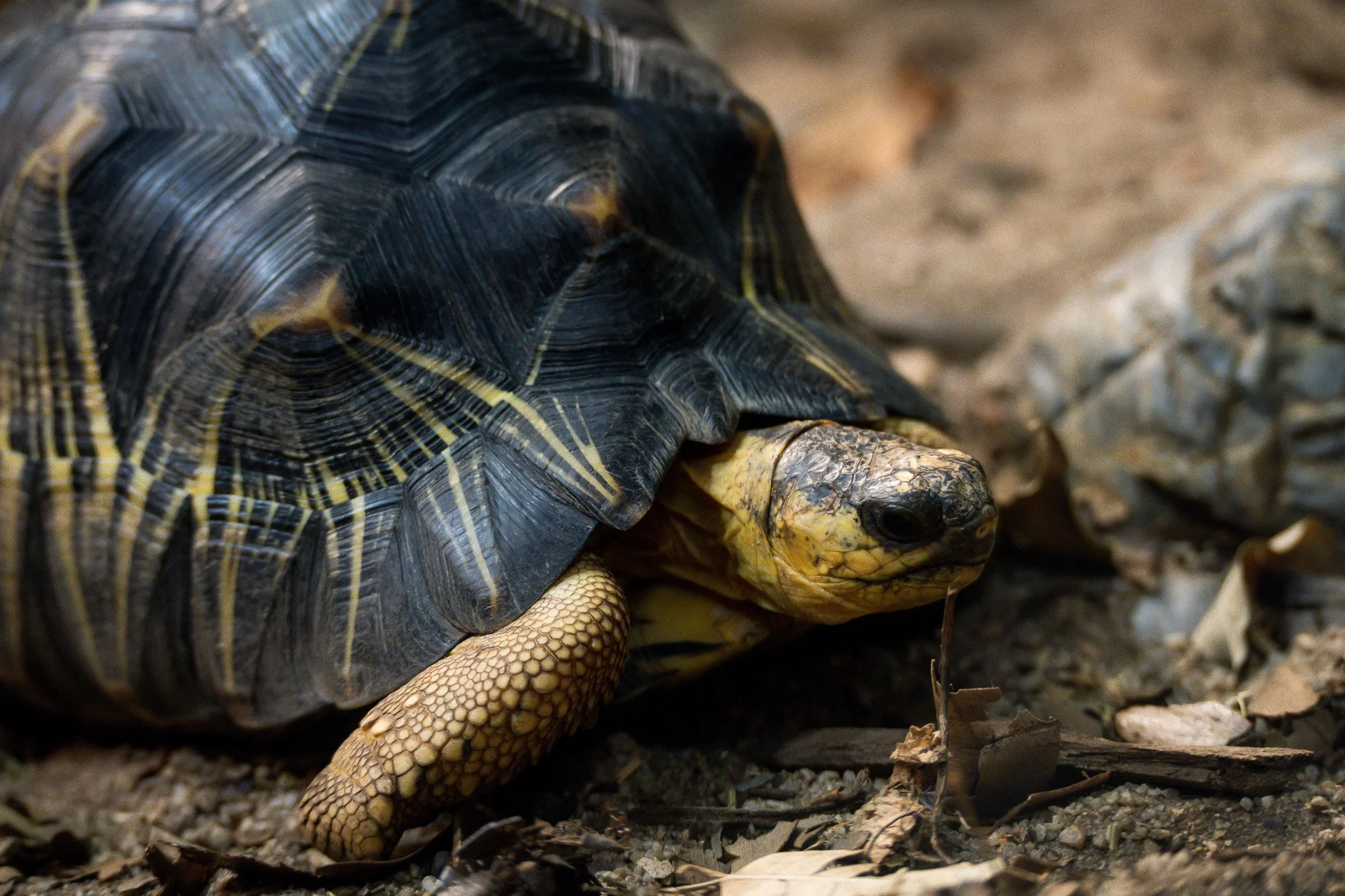
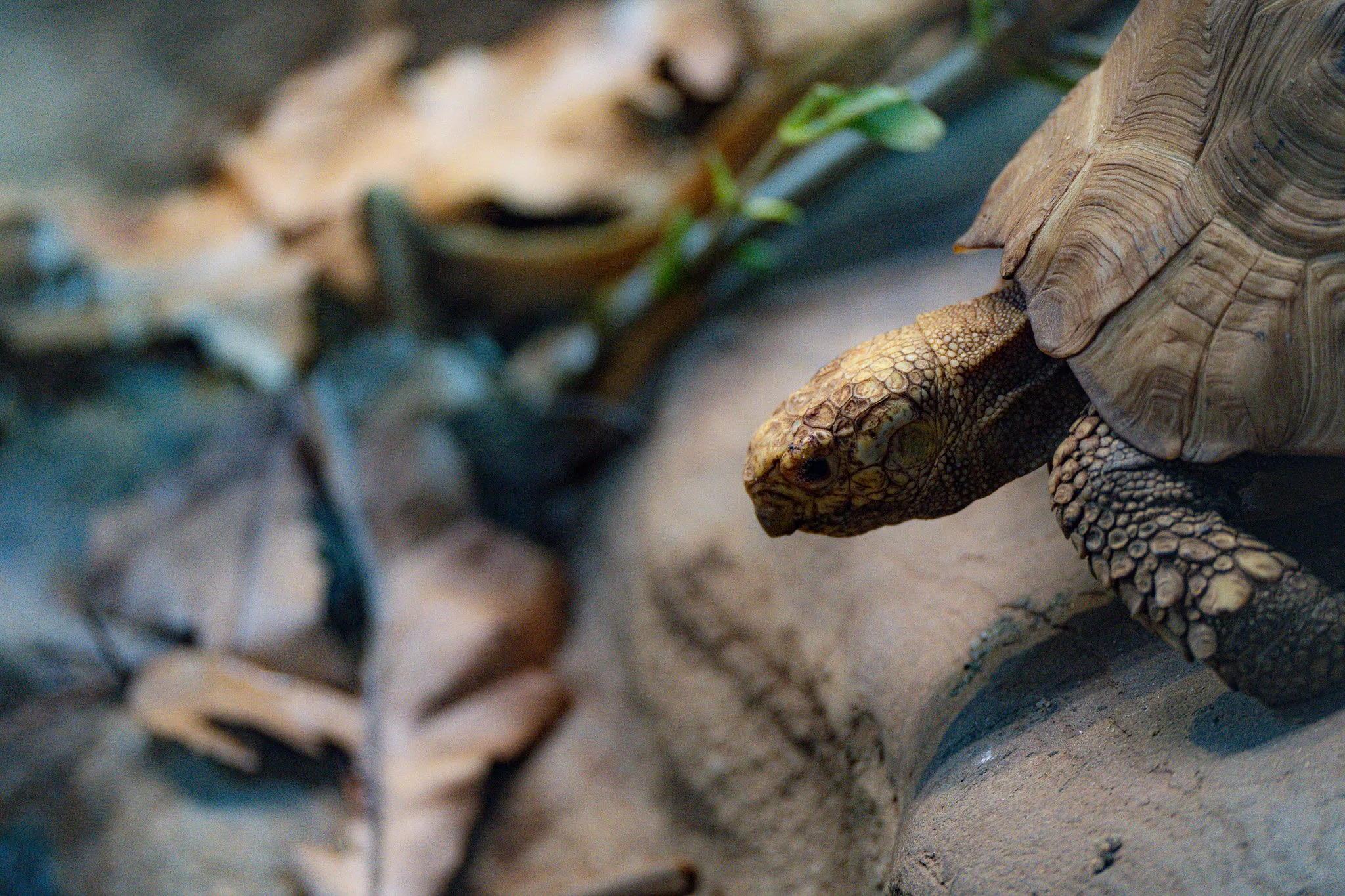
Of all the challenges, however, achieving sharp focus proved to be the most frustrating. Many of the reptiles were small and remained perfectly still, yet their camouflage made it difficult for the camera to lock onto the part that mattered most—their eyes. It wasn't until I reviewed my photographs later that I realised the problem. In many of the images, some part of the reptile's body was sharp, but its head was not. It was a disappointing discovery, but also a valuable lesson. Like so much of photography, knowing what to look for is only the beginning. Developing the technique to achieve it will simply take time and practice.
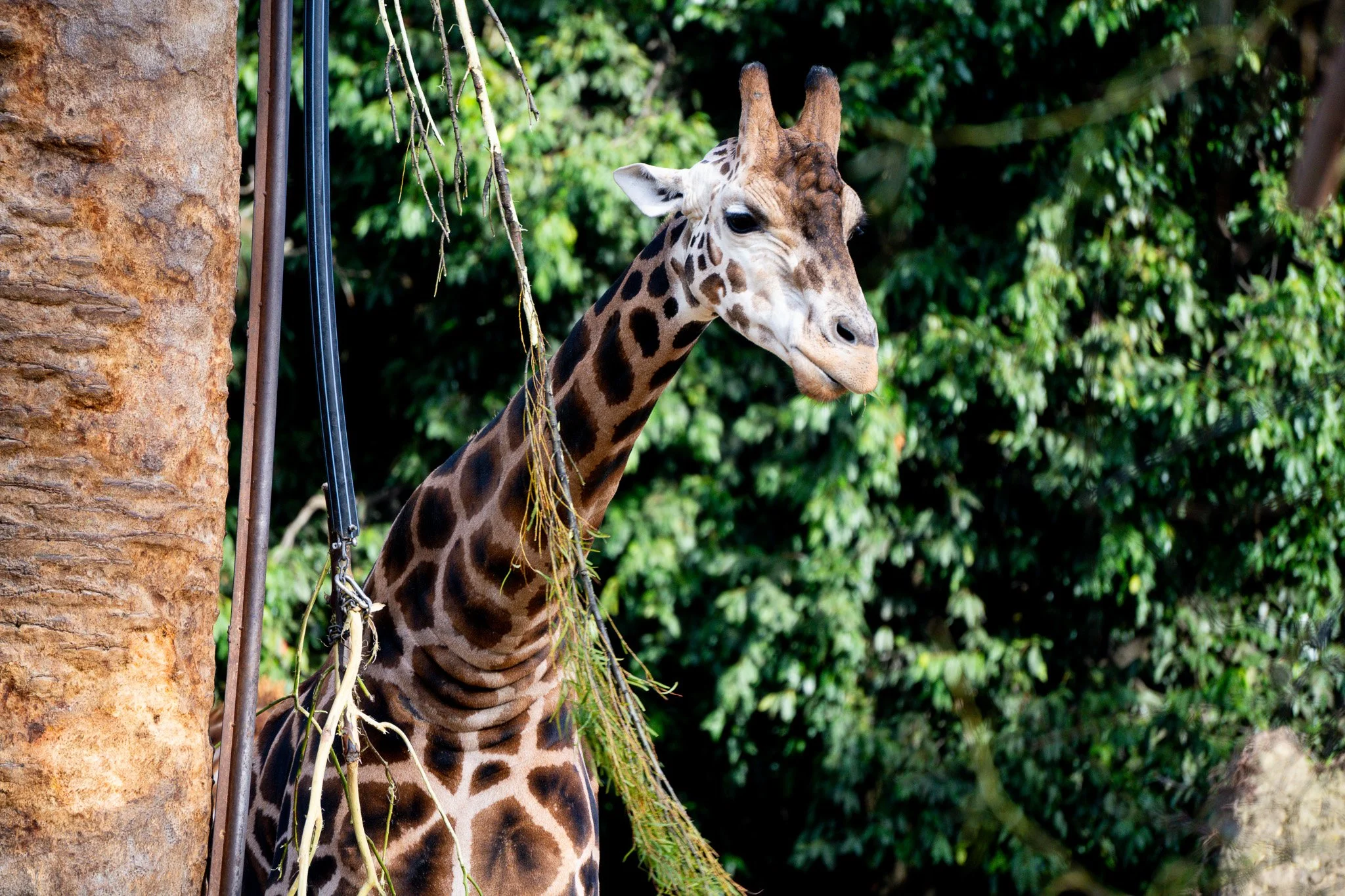
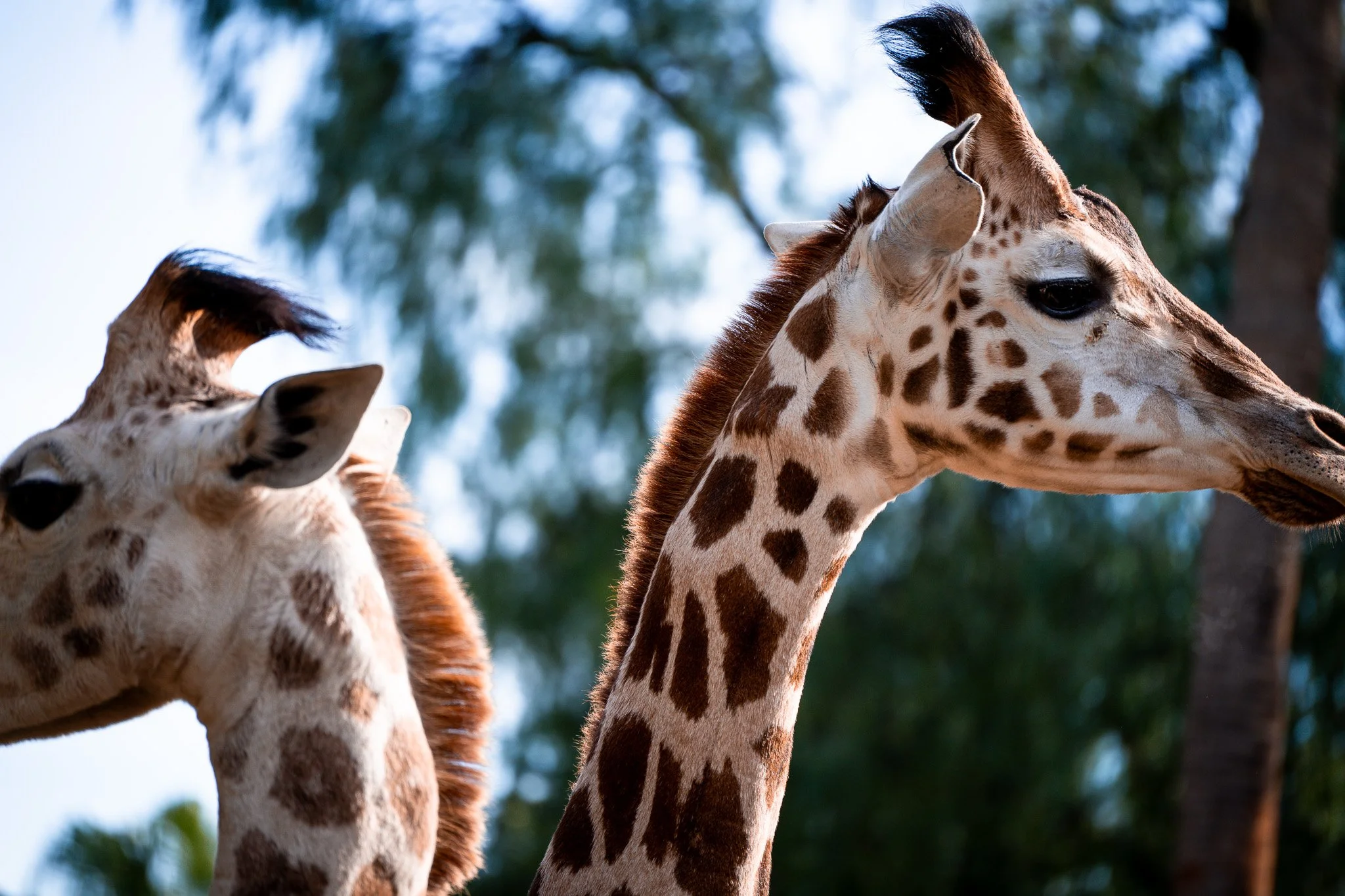
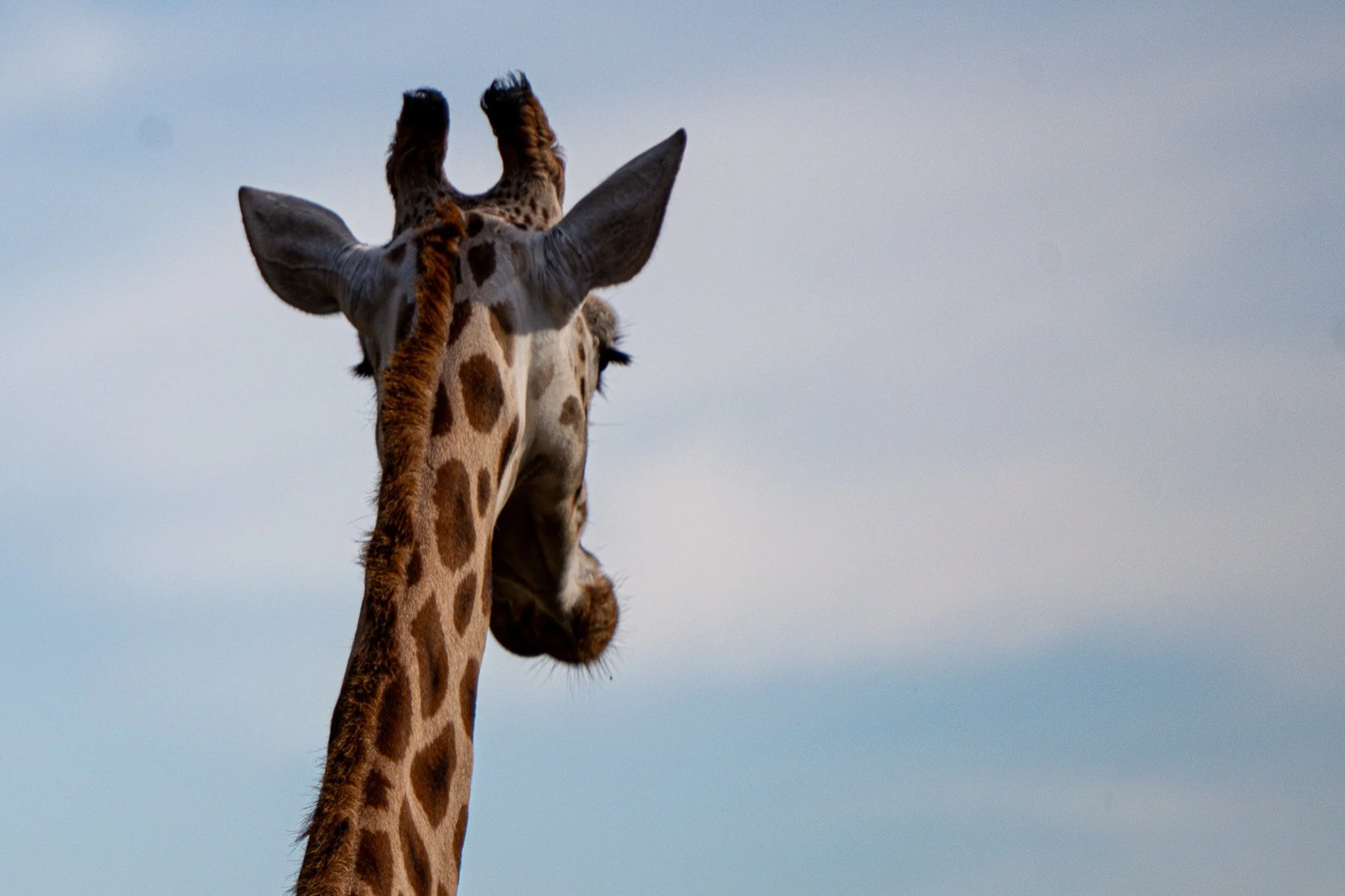
The giraffes were, without question, my favourite subjects of the day. They were graceful, elegant and wonderfully photogenic. Their towering height gave them an undeniable presence, yet they moved with surprising gentleness across the enclosure.
There were five giraffes altogether, including two young calves. Seeing the adults walking alongside the youngsters created a wonderful sense of scale. The difference in height was striking and added depth to the photographs, making the family group feel even more connected. I was fortunate enough to capture them as they walked towards us, all together in a single frame.
Photographing them, however, was not as straightforward as I had expected. Fitting their entire bodies into a landscape composition often meant stepping back much farther than I anticipated. Their long necks seemed to stretch endlessly, and it was easy to clip the top of their heads or the tips of their legs if I wasn't careful with my framing.
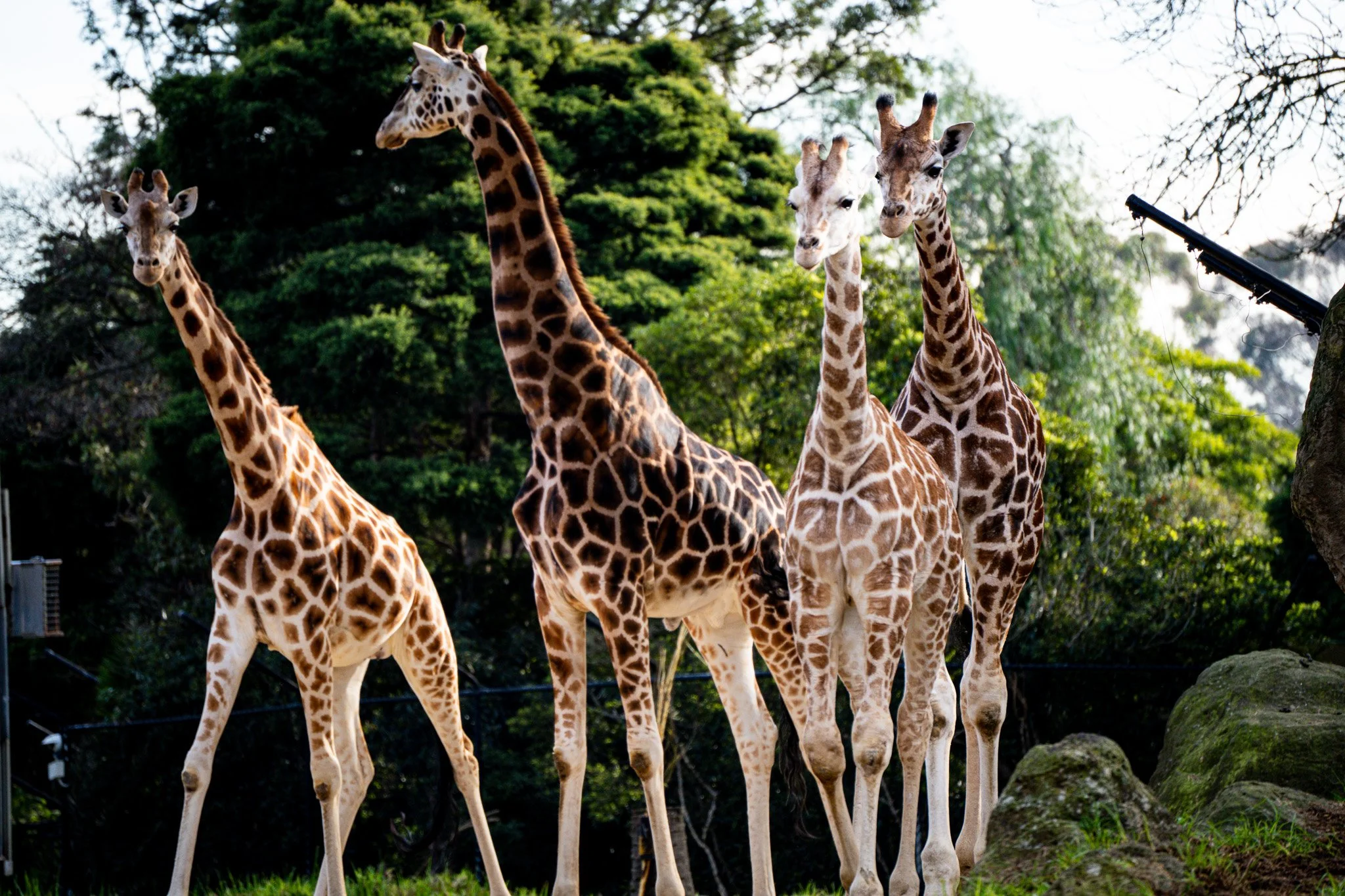
What made the giraffes such rewarding subjects was their distinctive shape. Whether viewed from the front, the side or even from behind, their long necks, expressive faces and unique markings created strong compositions from almost every angle. They became the perfect subjects for practising the techniques we had been learning throughout the morning—thinking about composition, anticipating movement, and deciding how best to frame the scene before pressing the shutter.
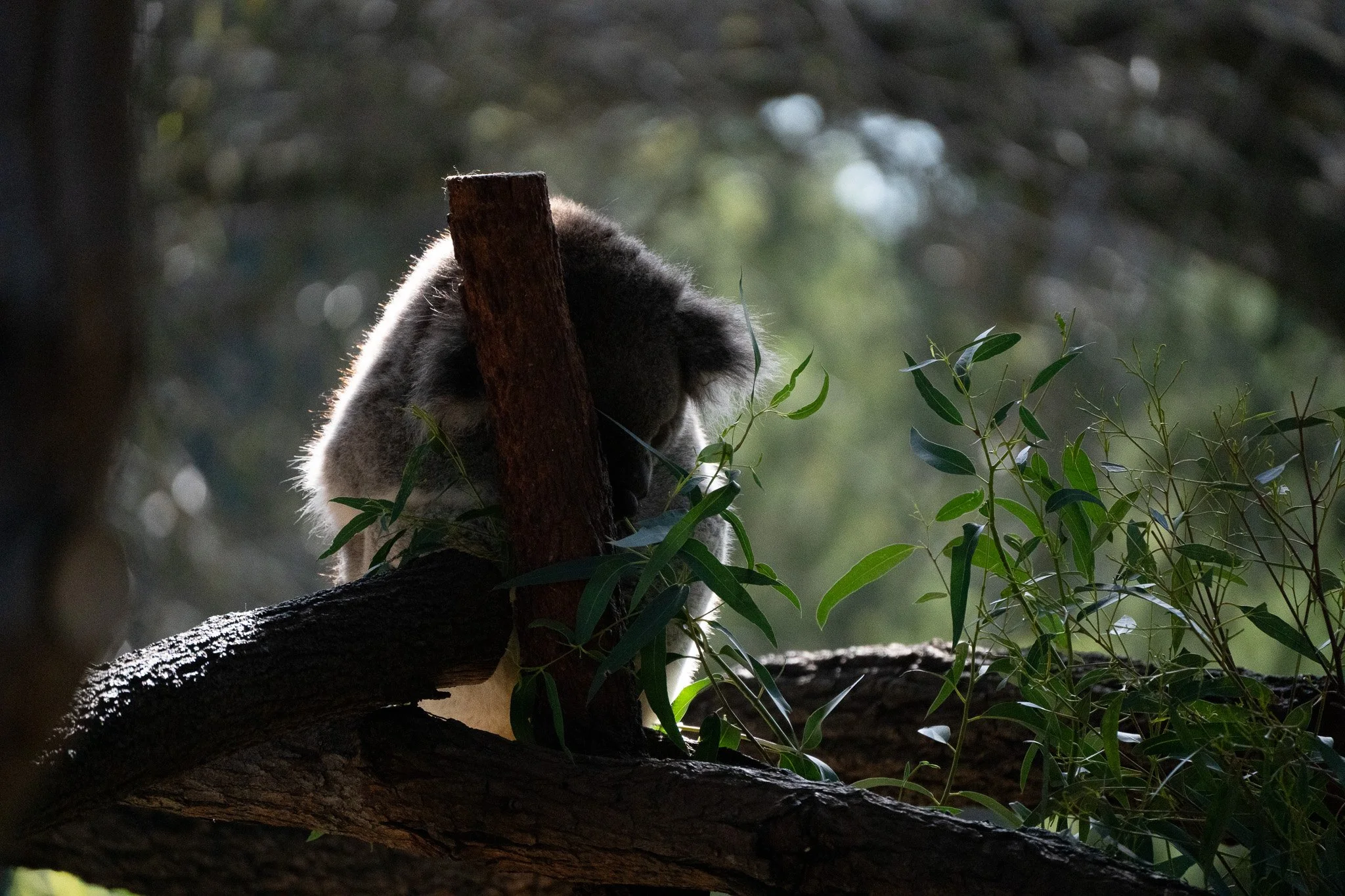
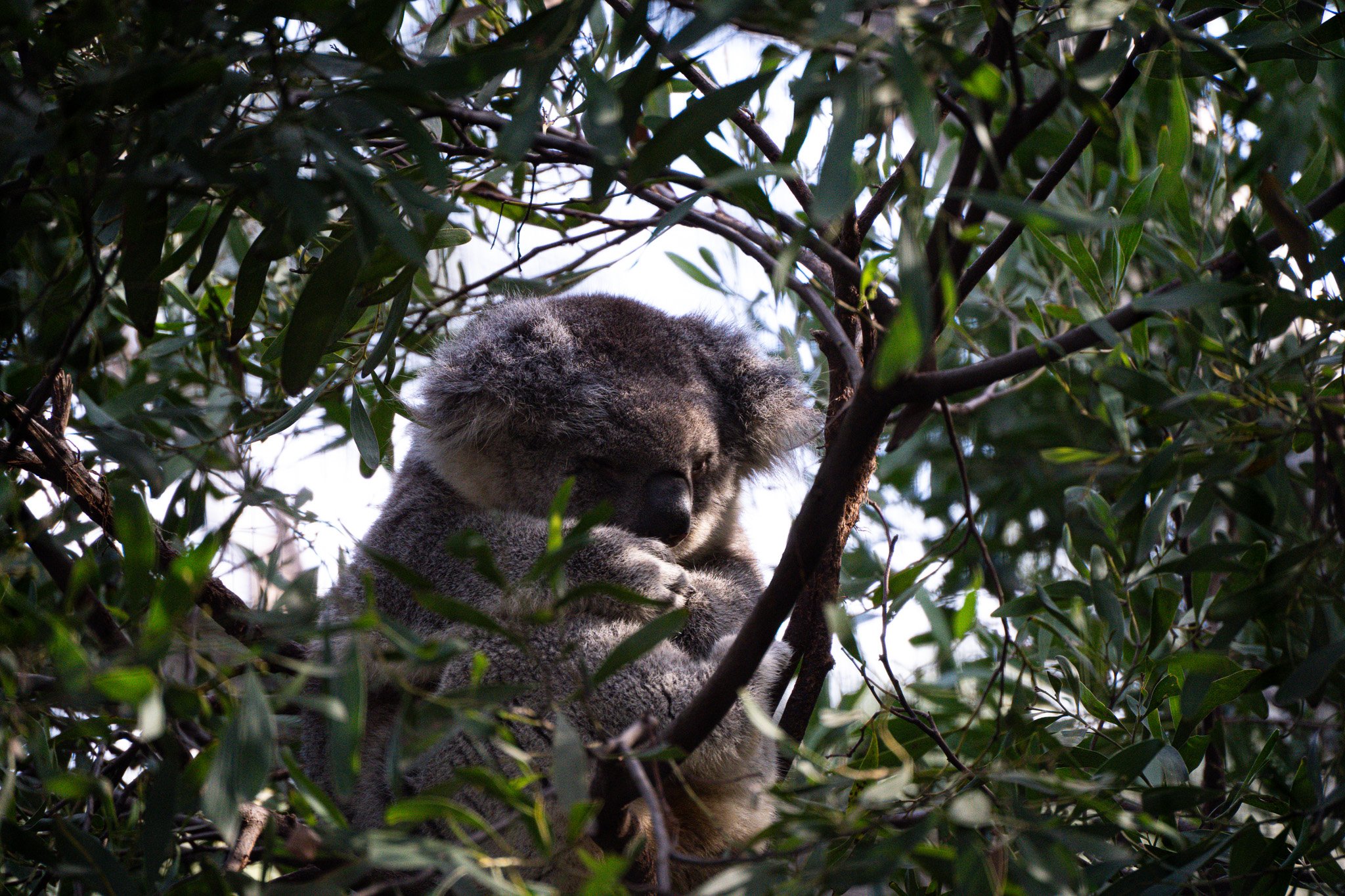
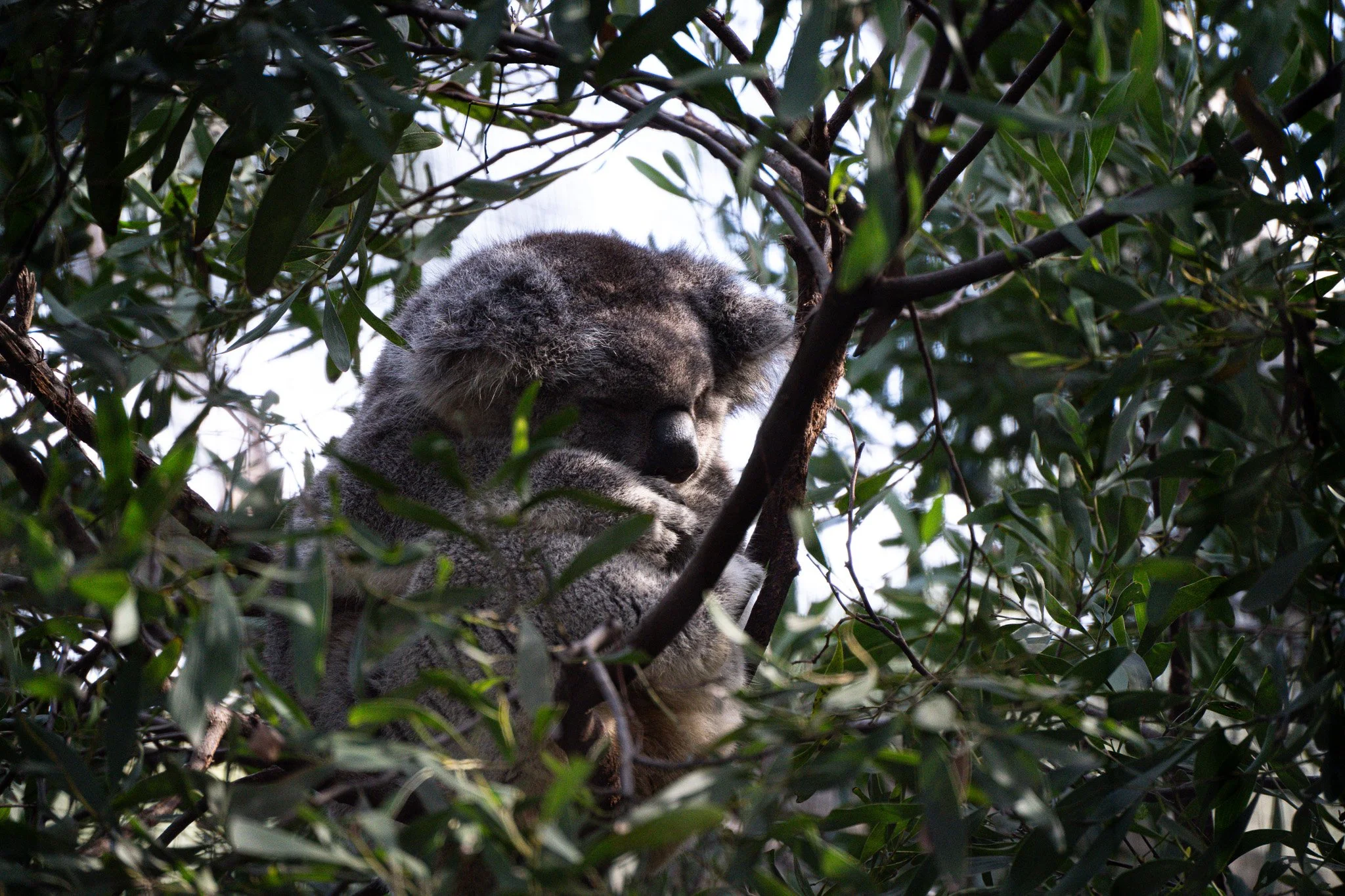
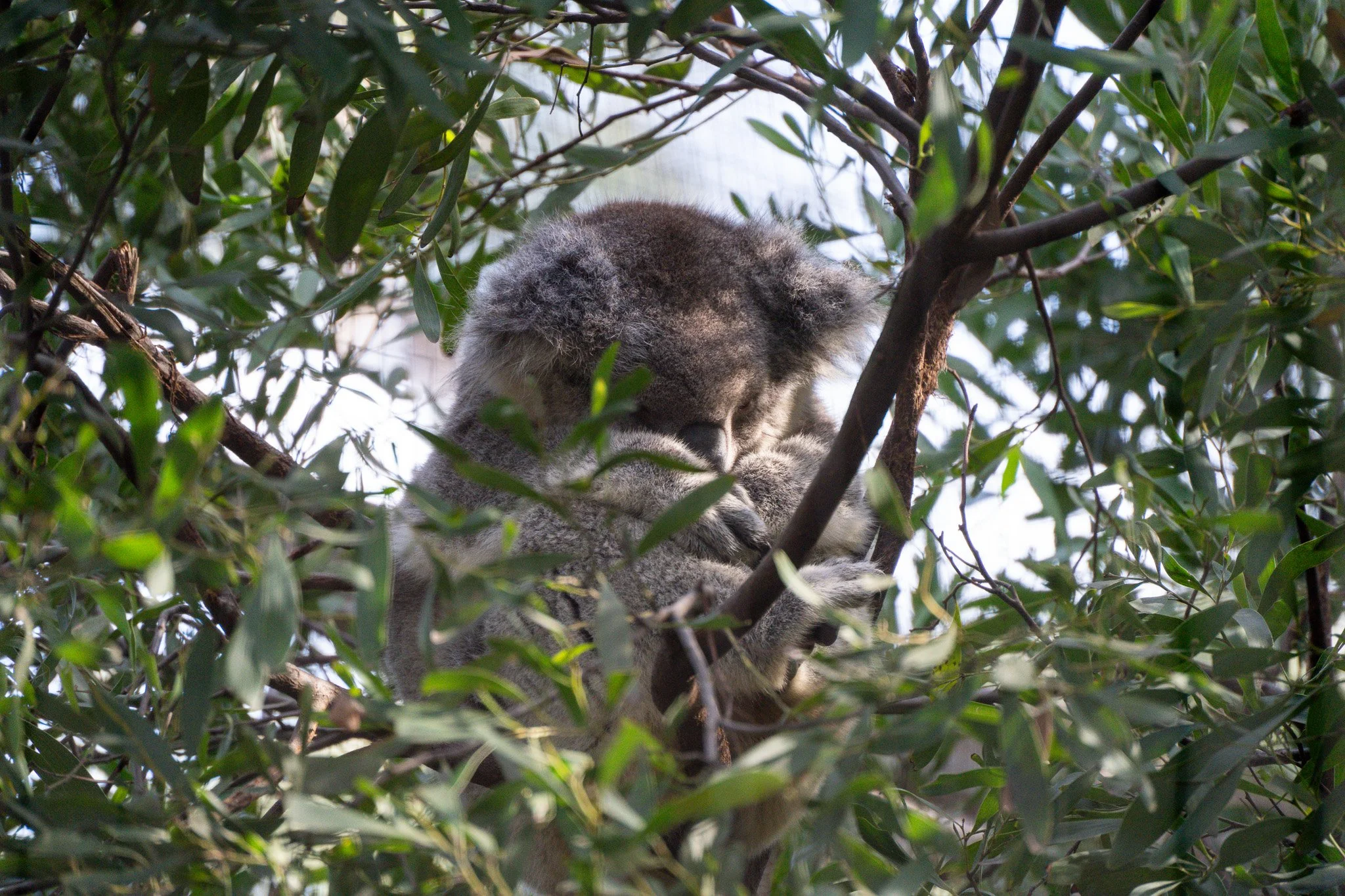
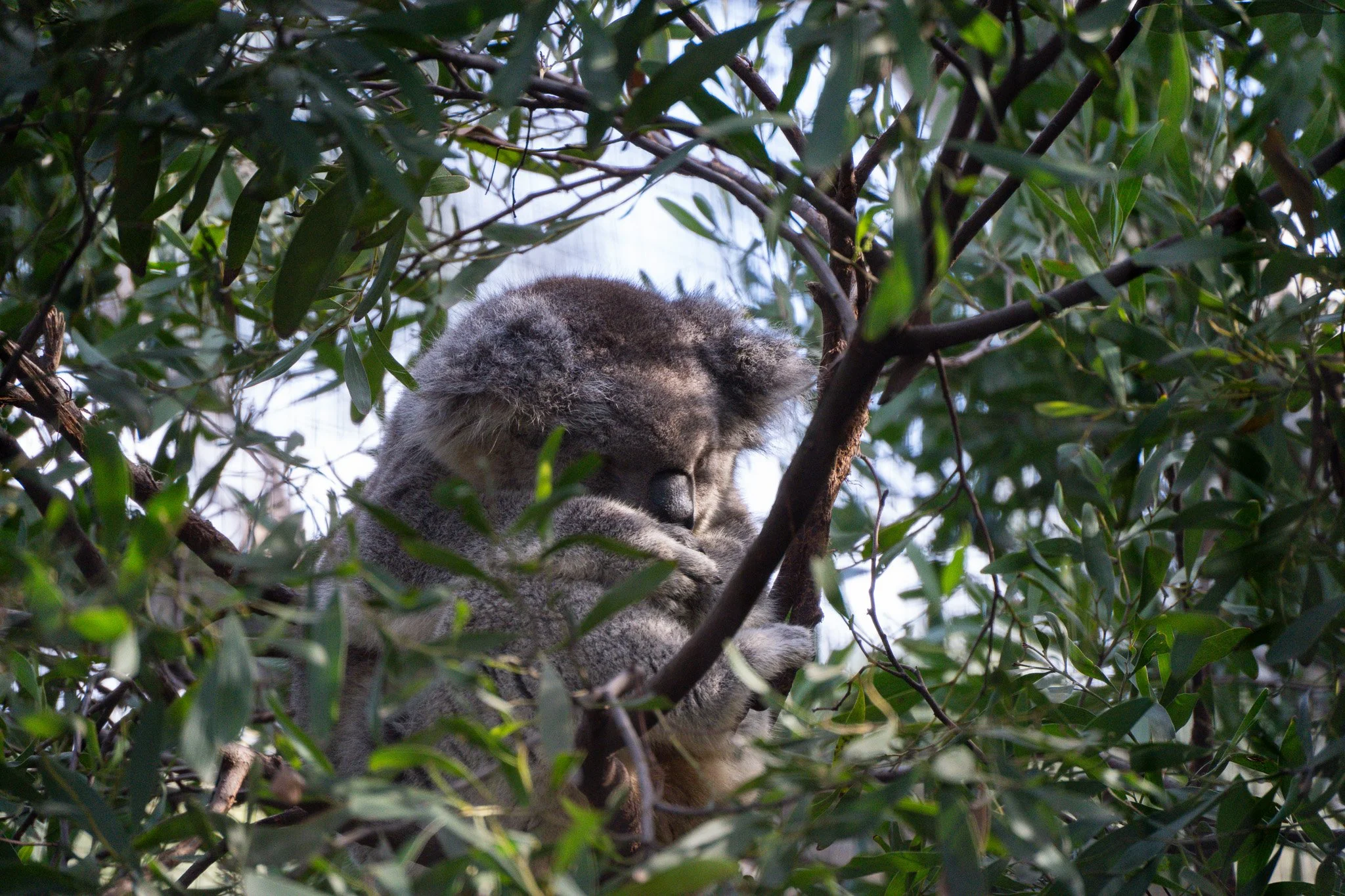
Koalas turned out to be the easiest animals to photograph—or so I thought. They spent almost the entire time perched on tree branches, completely still, making them ideal subjects for practising focus and composition. Yet capturing a good portrait proved to be surprisingly difficult. Like most koalas, they slept for much of the day with their heads tucked down against their bodies, hiding almost all of their faces. Photographing a sleeping koala was easy; photographing its expression required patience. Every now and then, one would briefly lift its head before settling back into its slumber. Those few precious seconds were all it took to capture the face that had been hidden for so long.
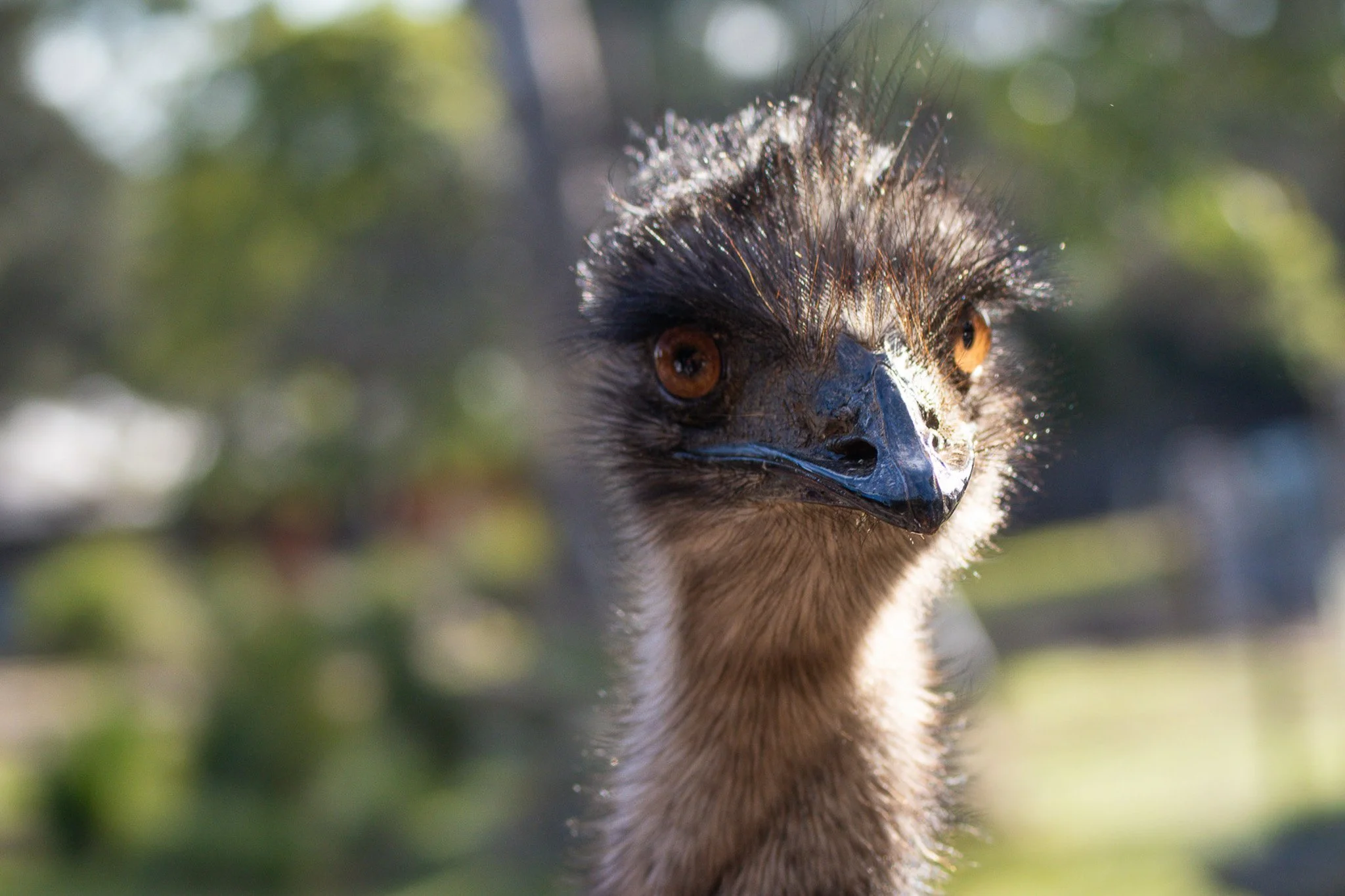
The emu, on the other hand, was the complete opposite. It never seemed to stop moving. Throughout our time at its enclosure, it paced back and forth, often coming right up to the fence. Although it was close enough to fill the frame, its head was in constant motion, bobbing up and down with every step. The proximity made it tempting to keep shooting, but without a moment of stillness, achieving sharp focus was far more difficult than it appeared.
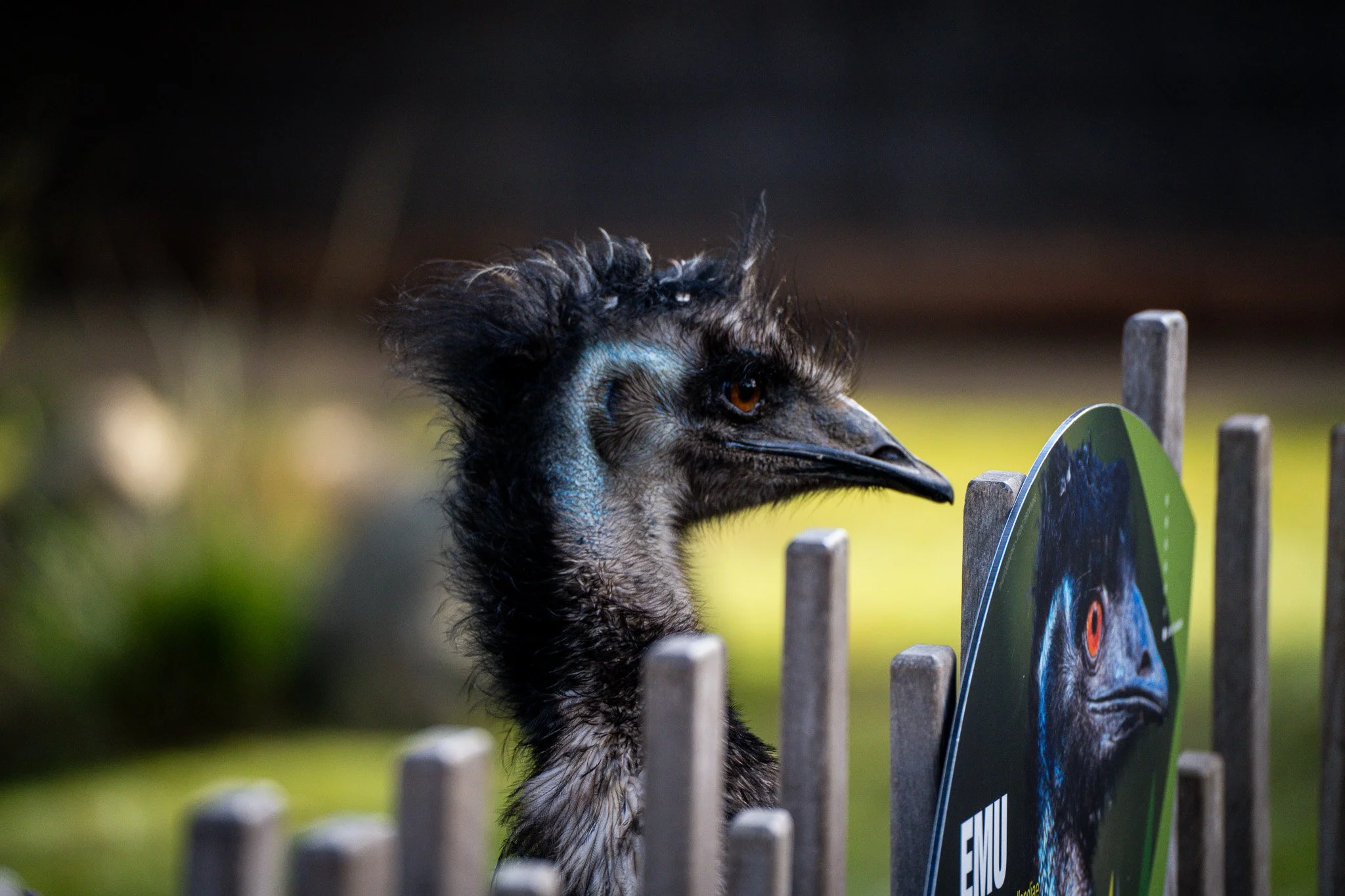
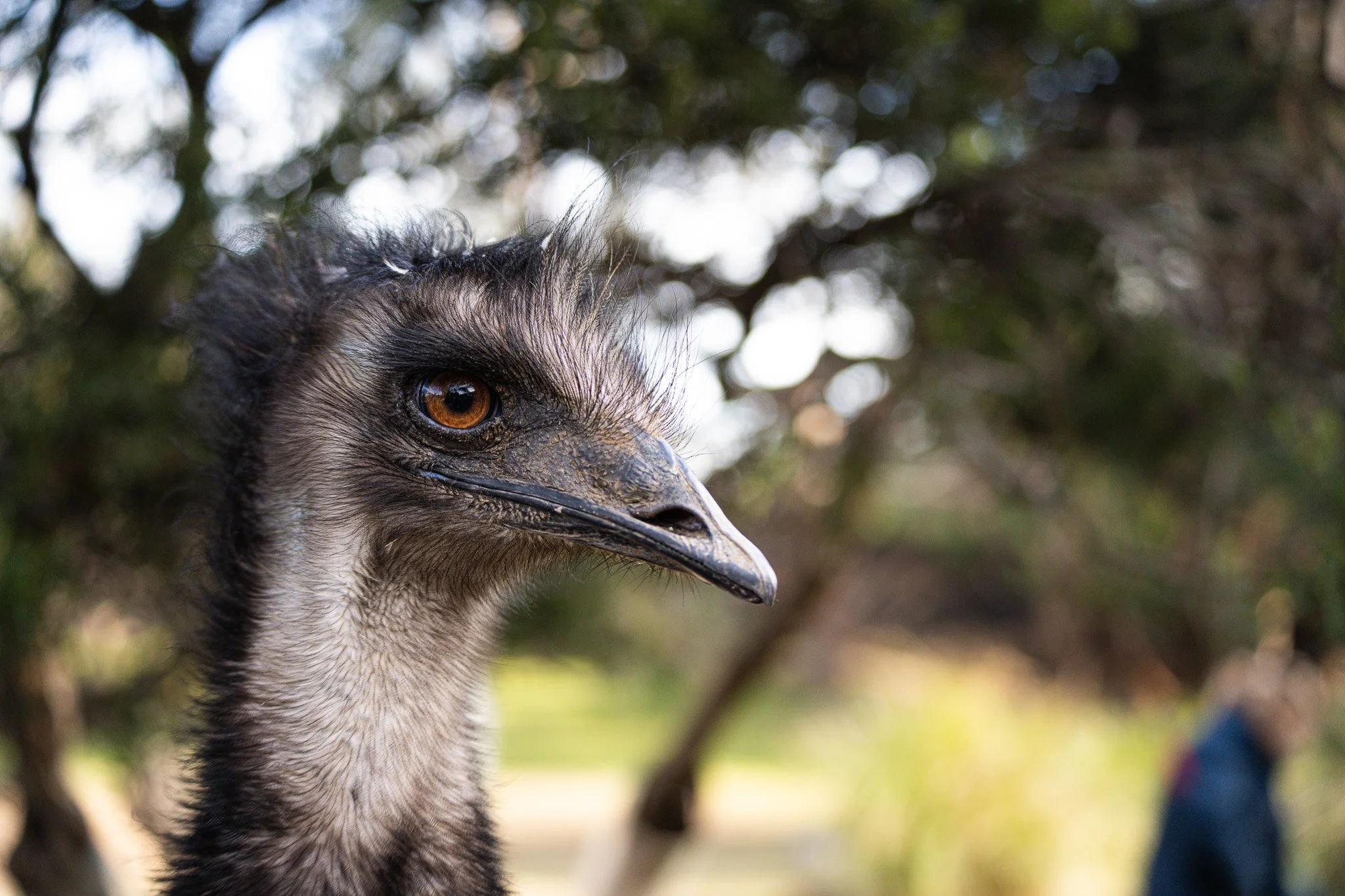
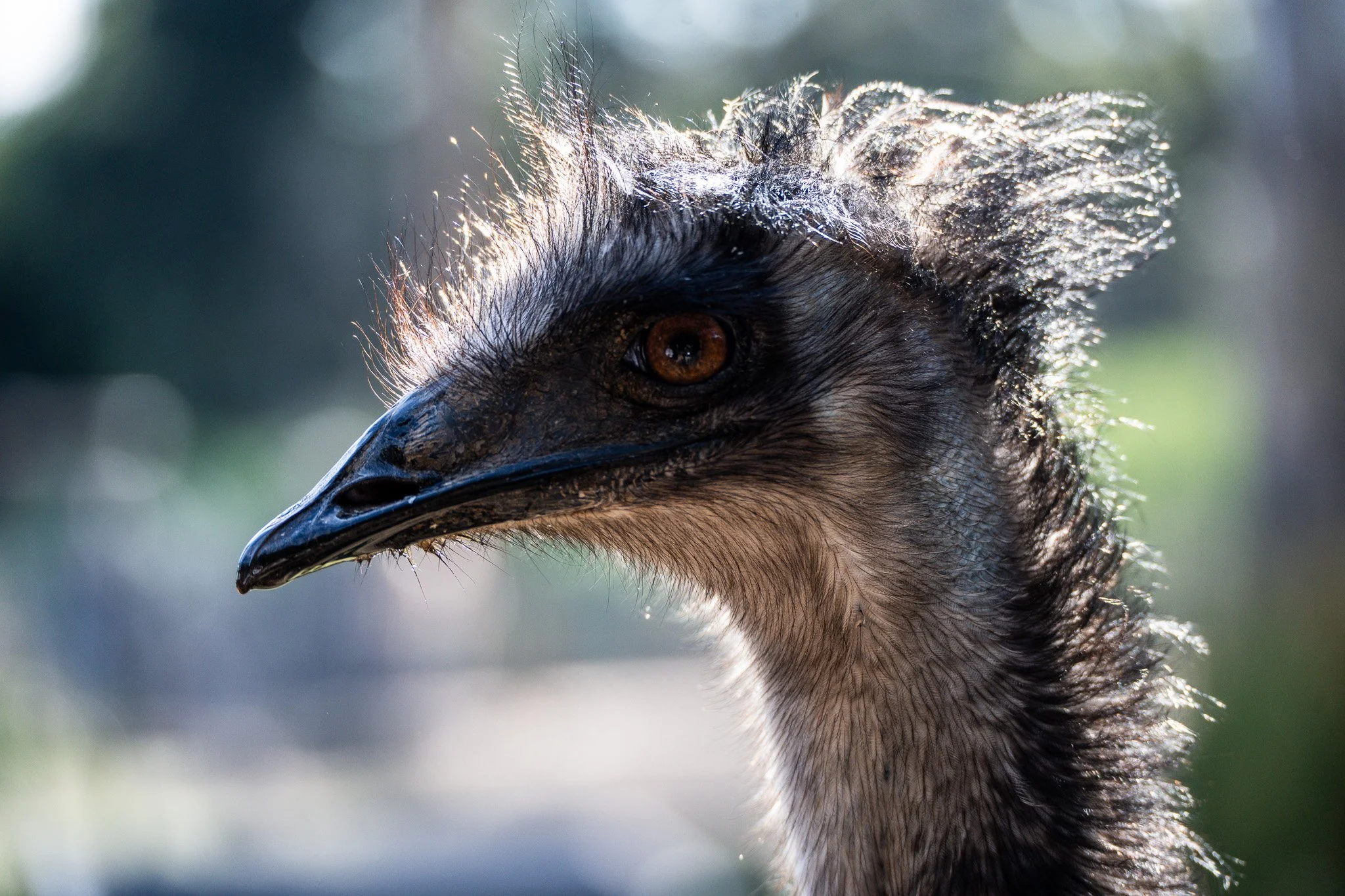
For the entire time we watched, the emu probably stood still for less than two minutes. Those brief moments were enough to capture a few sharply focused portraits, its curious eyes looking directly towards us. Then came the unexpected highlight. The emu paused to take a drink, and as it lifted its head, it remained perfectly still for a few precious seconds while the water travelled down its long neck. It was the kind of fleeting moment that photographers wait for. Looking back through all the images I captured that day, only one showed the emu staring straight into the camera. It lasted no more than an instant, but it became one of my favourite photographs from the lesson.
Until that morning, I had never realised there was a technique for photographing white birds in bright sunlight. To demonstrate the problem, our instructor stopped beside a shrub where the winter sun filtered through the branches, illuminating a single broad leaf from behind. It was a simple scene, but a perfect classroom.
He explained how a camera interprets light and dark. Left to its own judgement, the camera often tries to turn bright whites into a dull grey in an attempt to balance the overall exposure. That was when he introduced us to a feature I had rarely used before—exposure compensation.
Following his instructions, I reduced the exposure and pointed my camera at the backlit leaf. The difference was immediate. The glowing leaf retained its brilliance without losing its delicate details. I was genuinely amazed by the result. For years, I had loved photographing leaves illuminated by sunlight filtering through the trees, but I could never quite capture them the way I remembered seeing them. The highlights were usually too bright or the colours too washed out. In a matter of minutes, I had learned why—and more importantly, how to correct it. It was one of the most valuable lessons of the day.
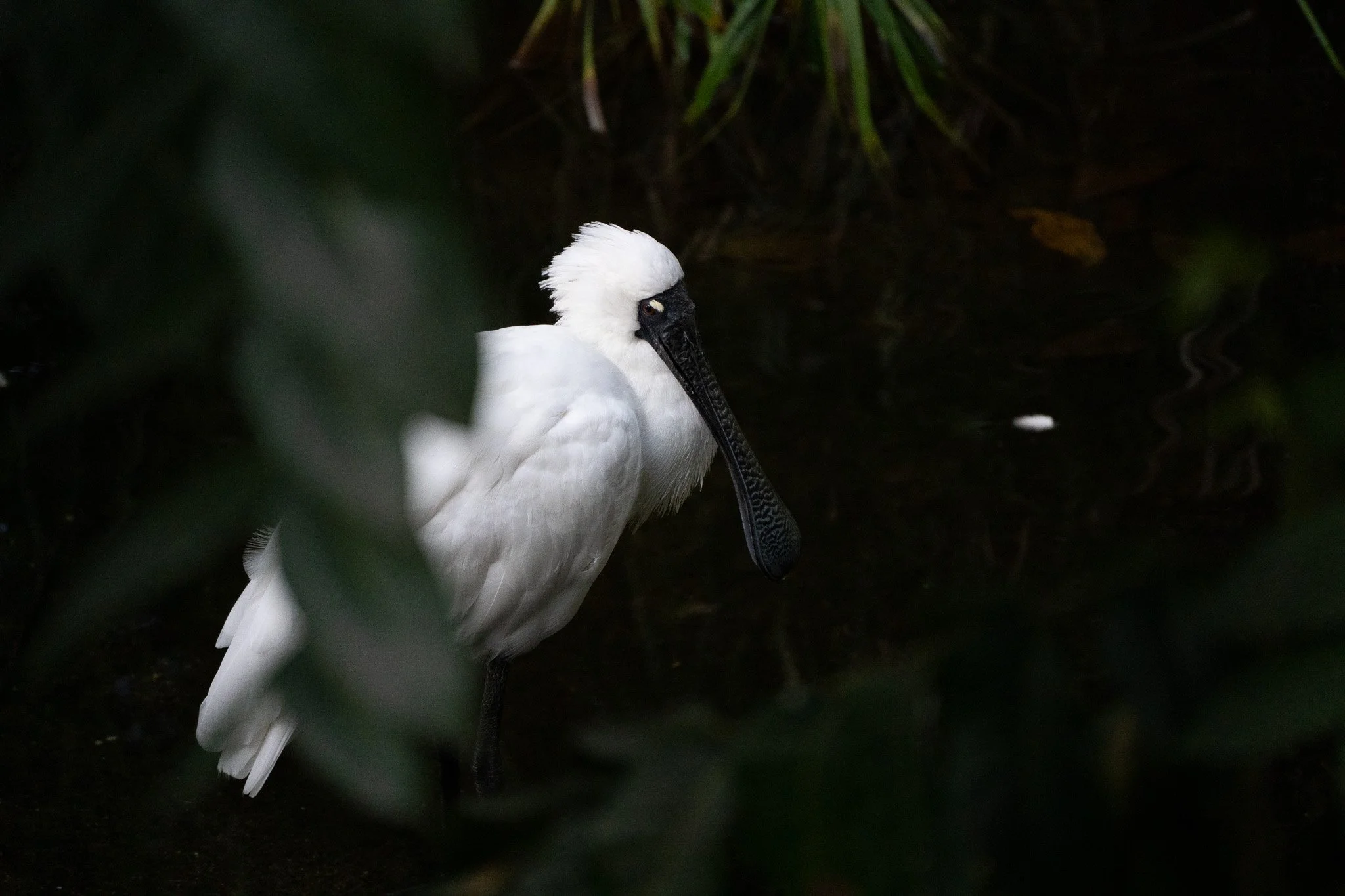
We soon put that lesson into practice inside the aviary. Surprisingly, our attention was drawn not to the birds flying overhead, but to a flock of Royal Spoonbills resting beside a muddy pond. Their brilliant white feathers glowed in the morning sunlight, creating the perfect opportunity to apply what we had just learned.
Rather than photographing the entire flock, I chose a single bird. I didn't want distractions in the frame, and one spoonbill stood beneath a cluster of overhanging plants that formed a natural frame around it. It was exactly the kind of composition I enjoy creating.
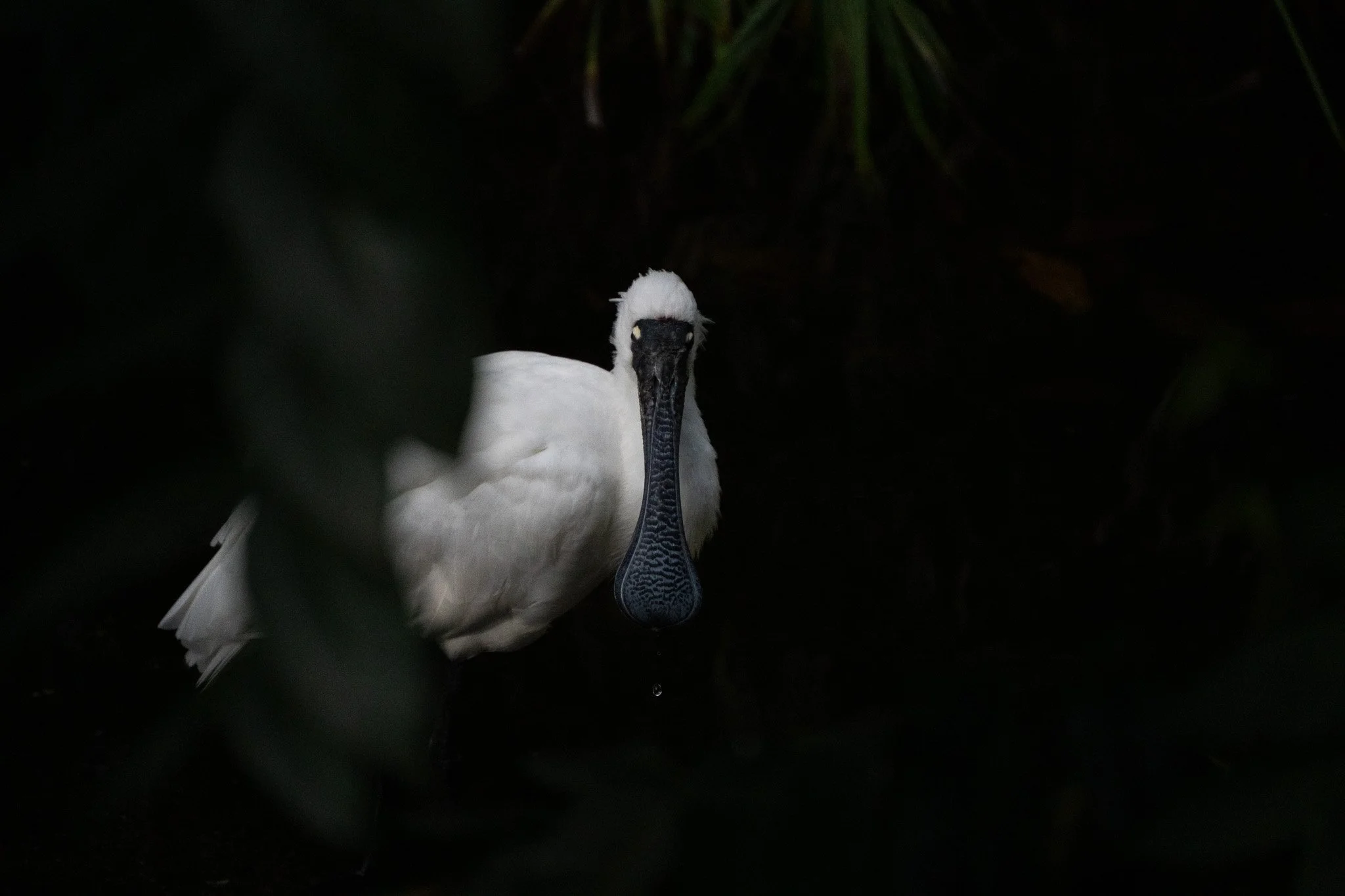
I adjusted the exposure compensation, taking several photographs at different settings to see how each one affected the image. Some frames were underexposed, but with each attempt I came closer to the result I wanted. Looking at the images on the back of the camera, I could immediately see the difference. With the exposure correctly adjusted, the spoonbill's white feathers retained their texture and detail instead of becoming a bright, featureless patch.
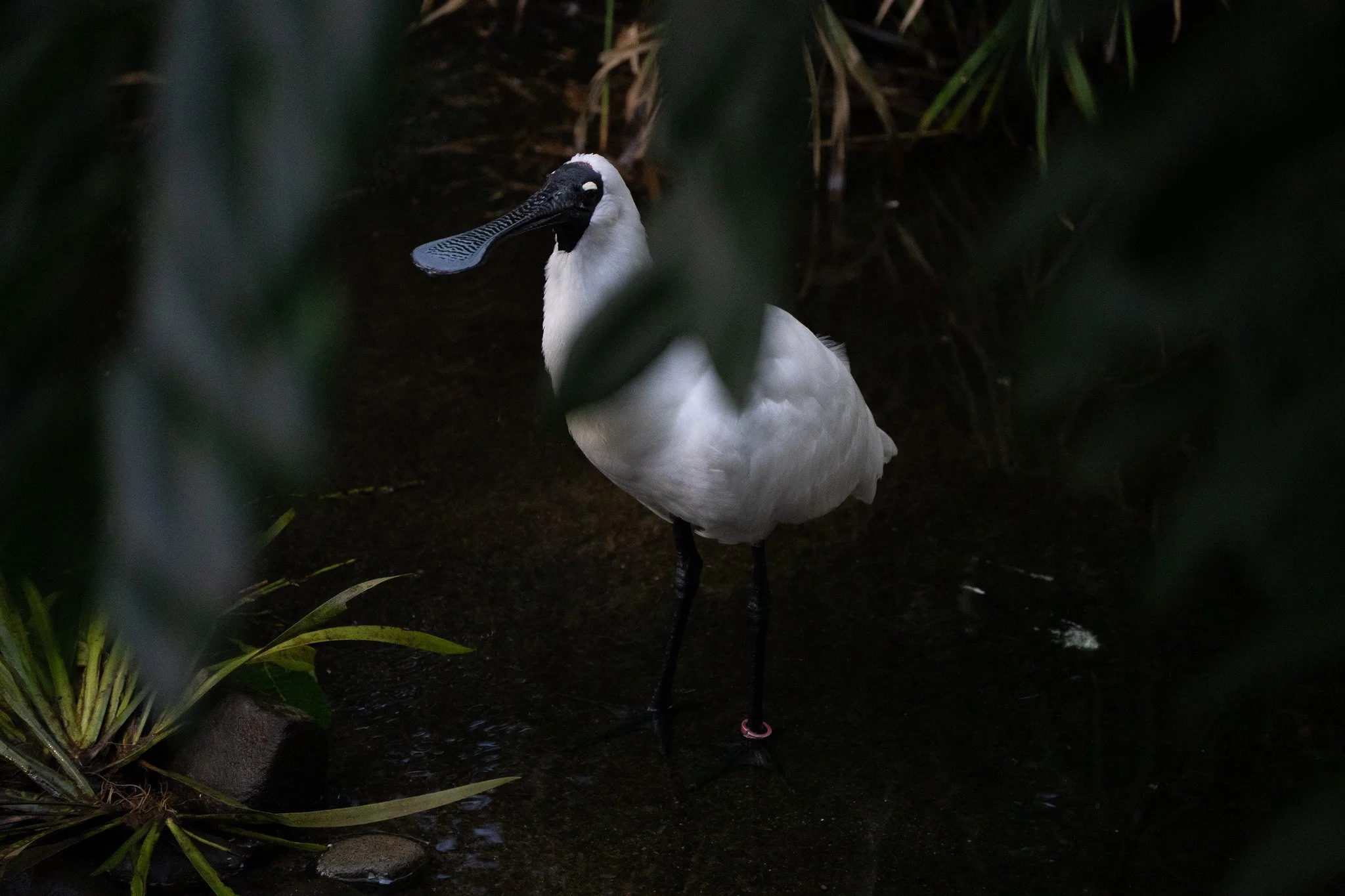
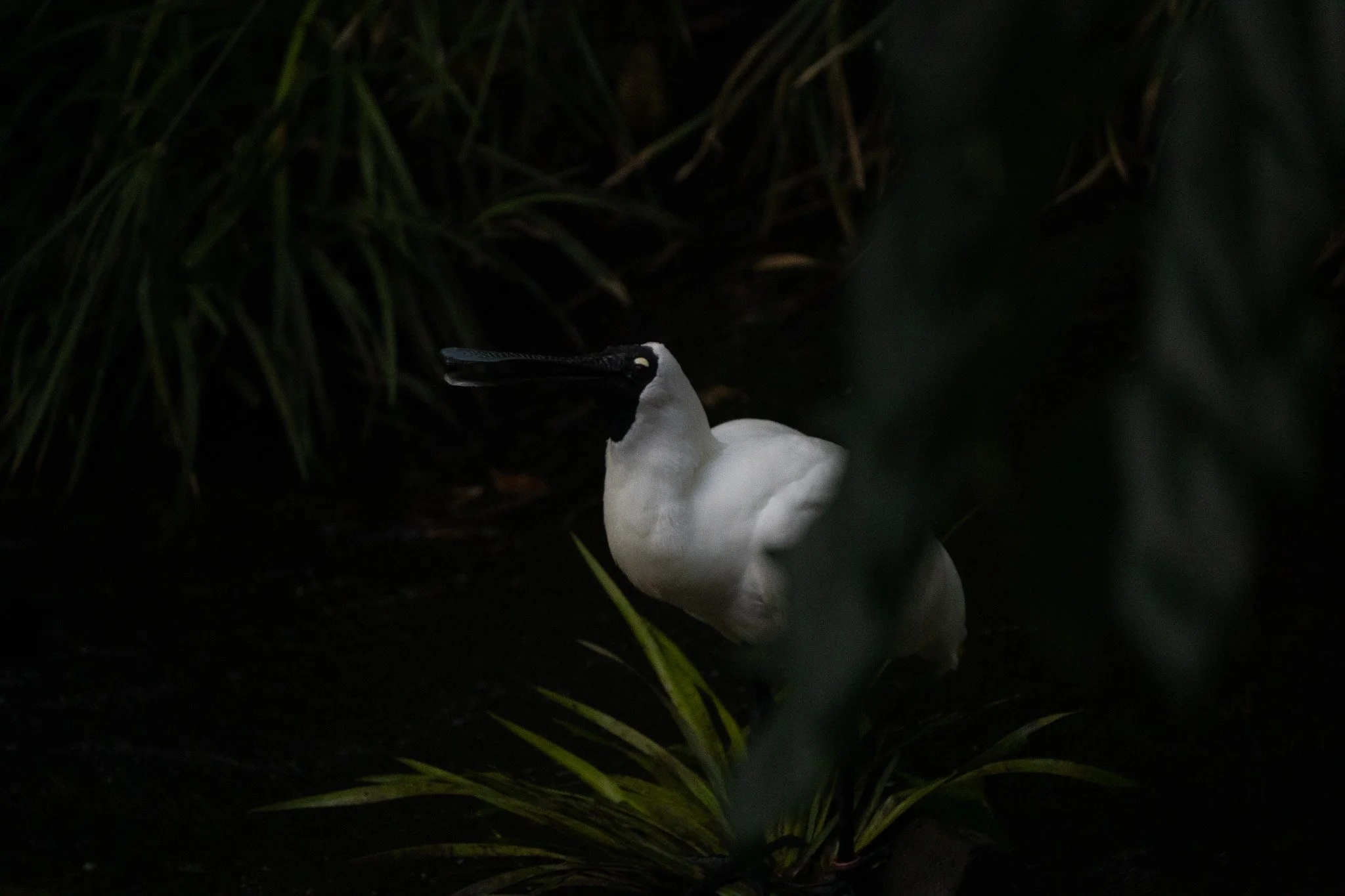
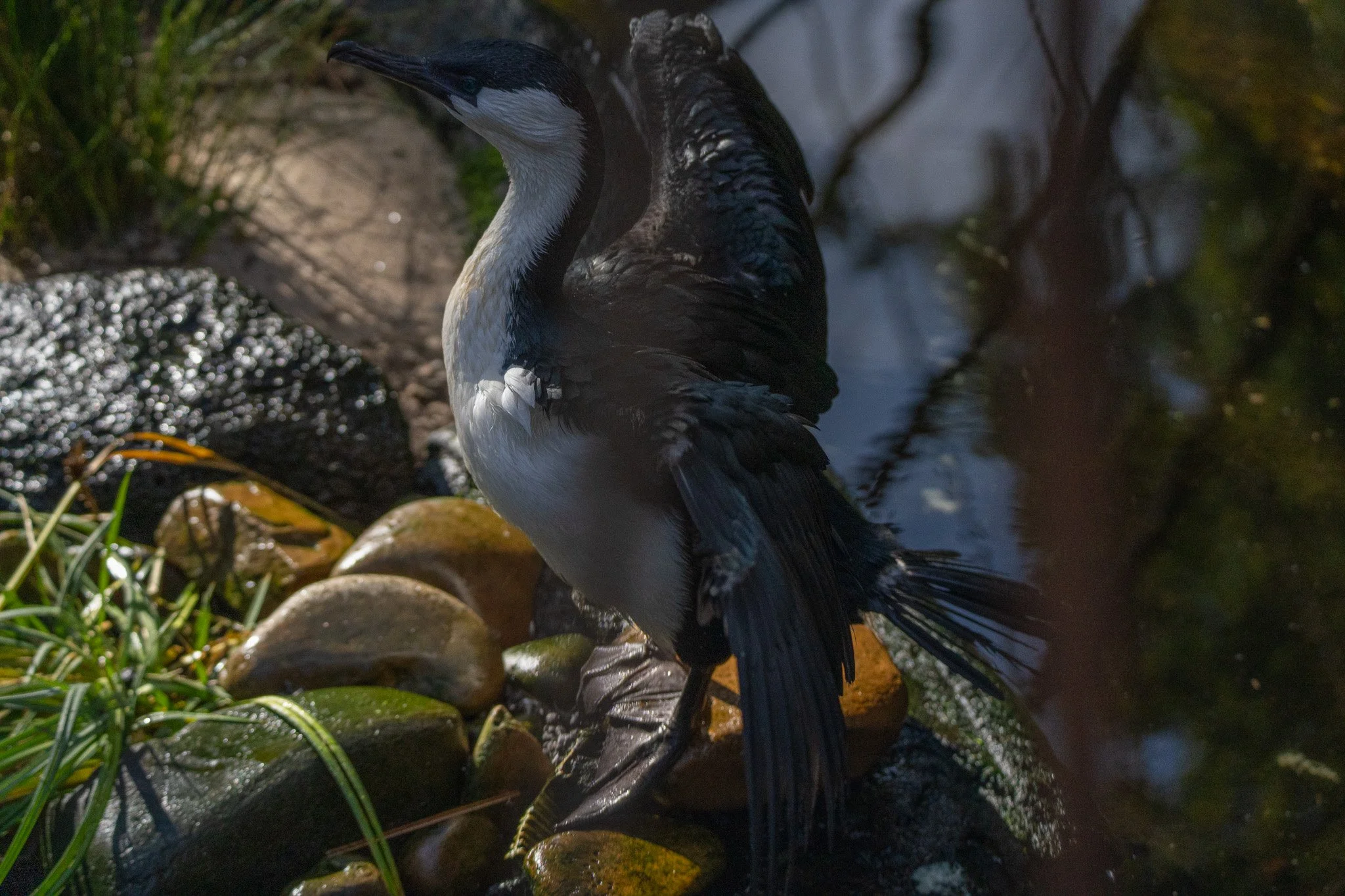
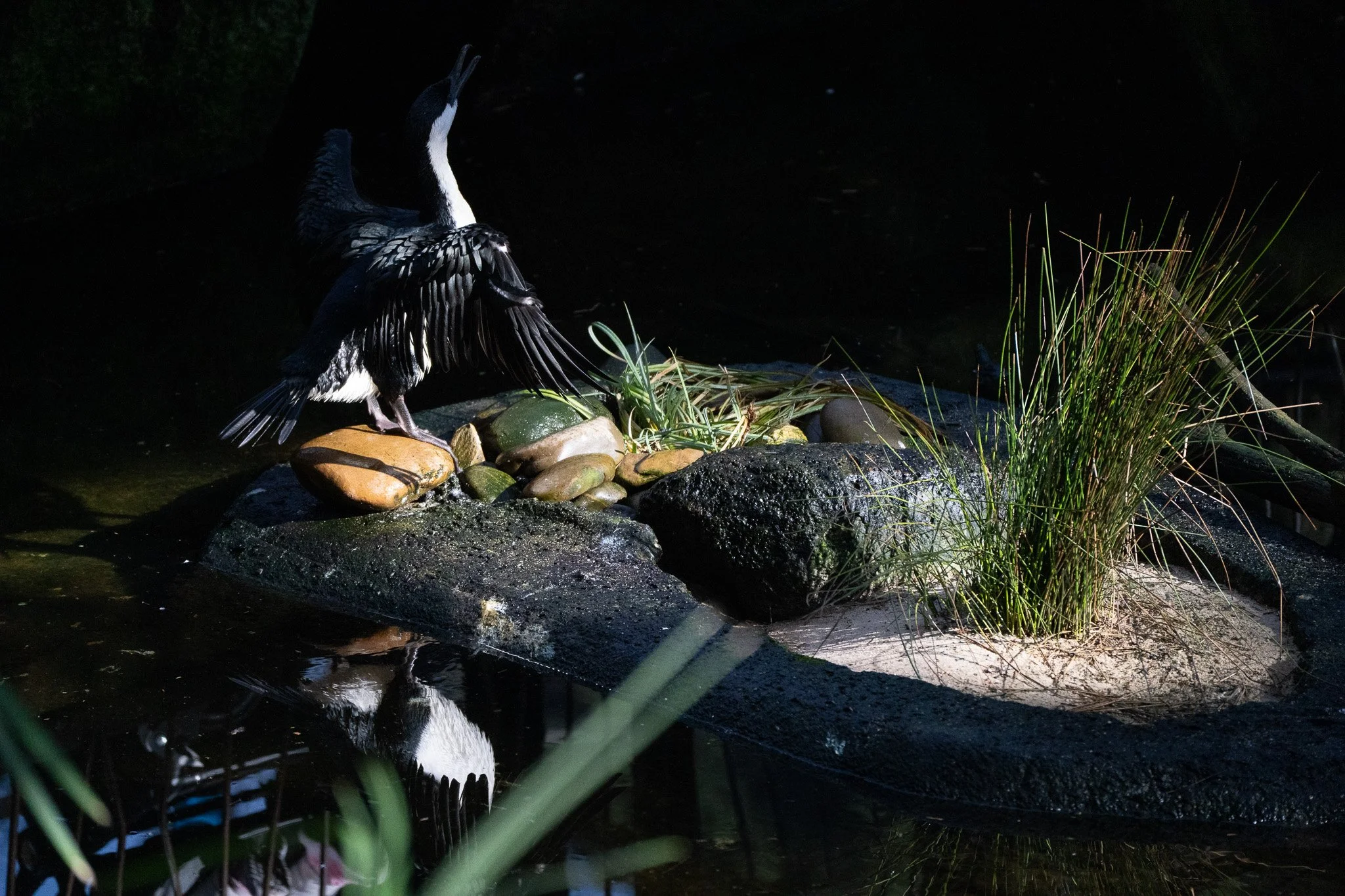
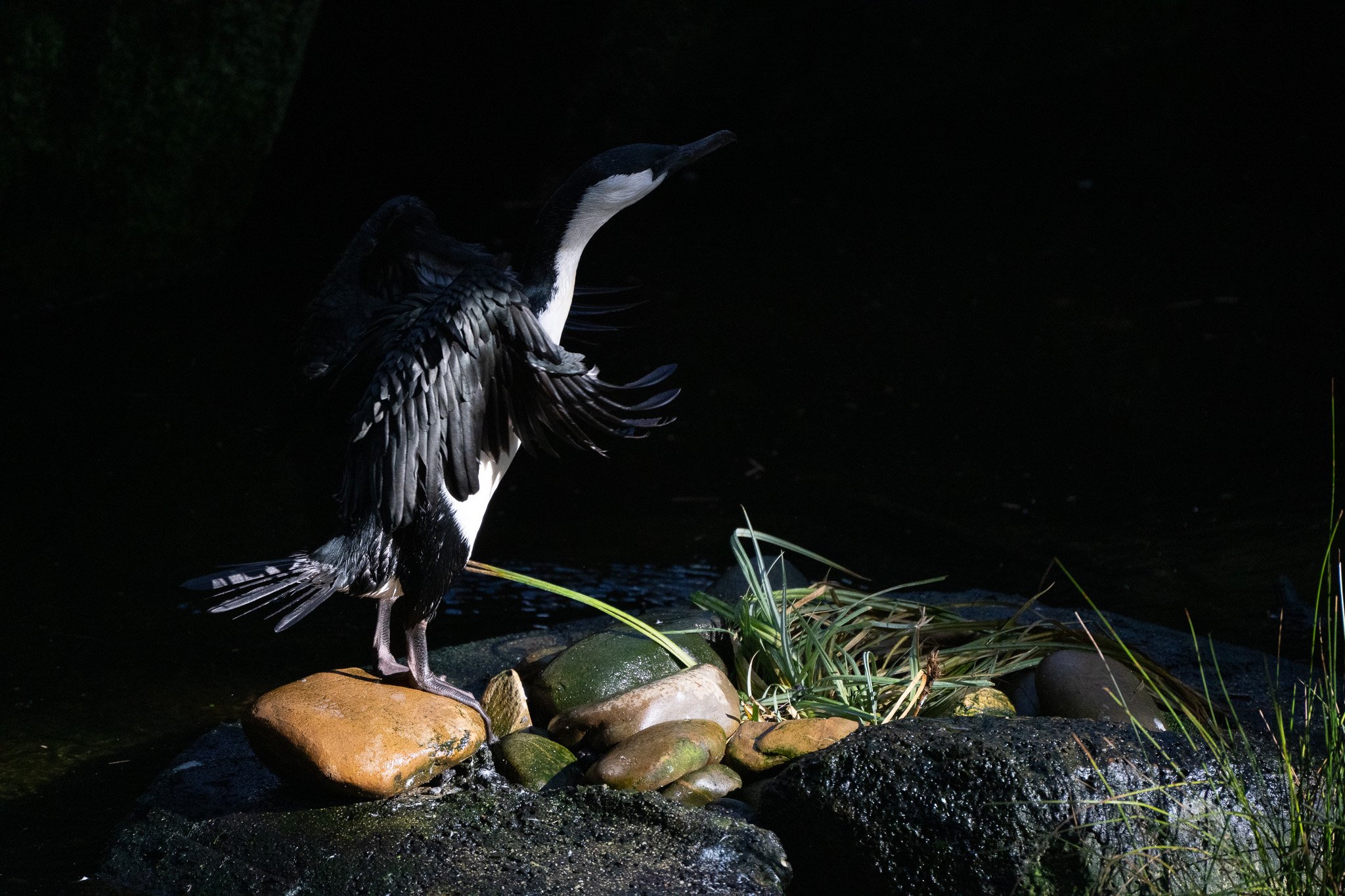
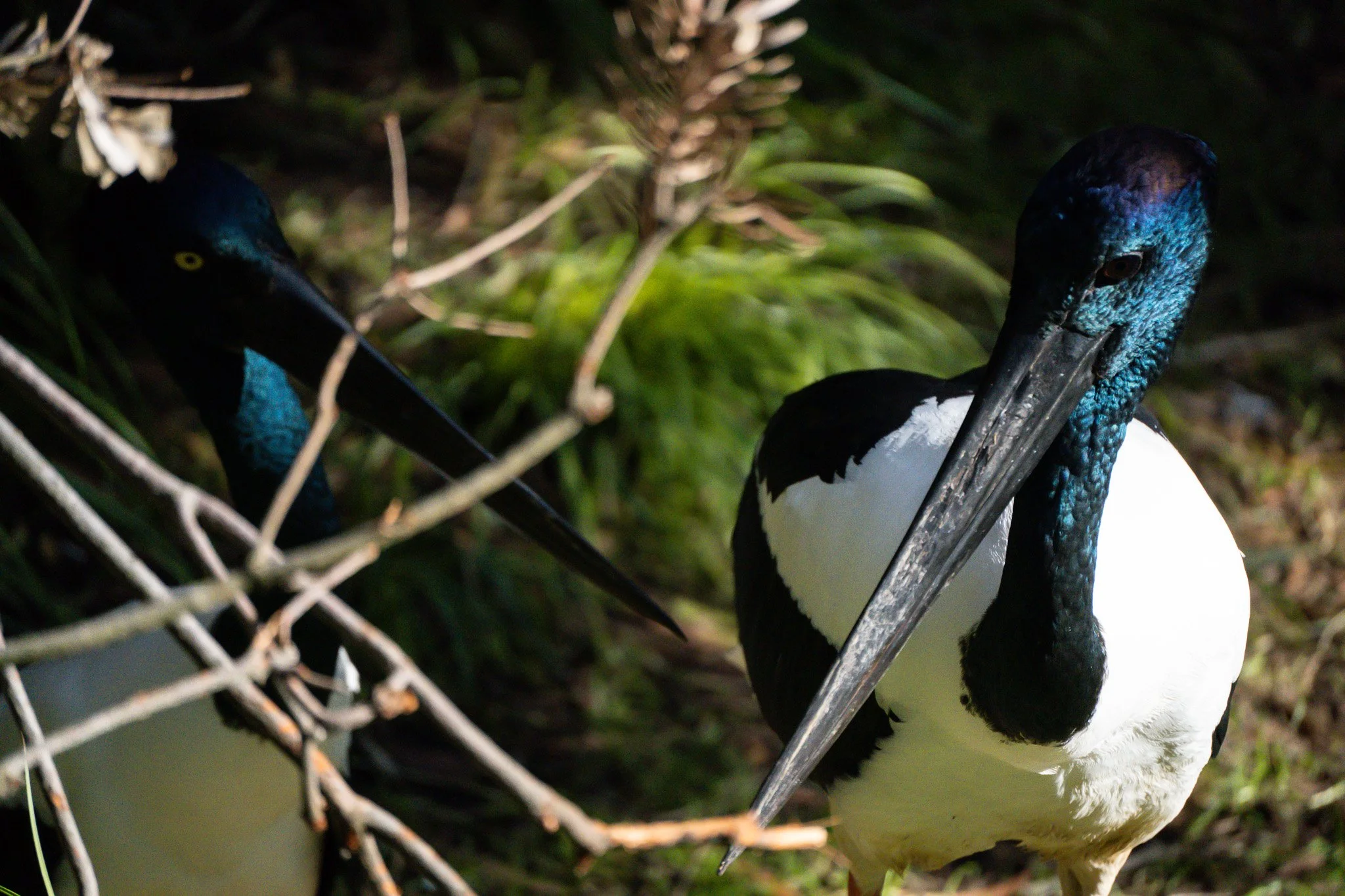
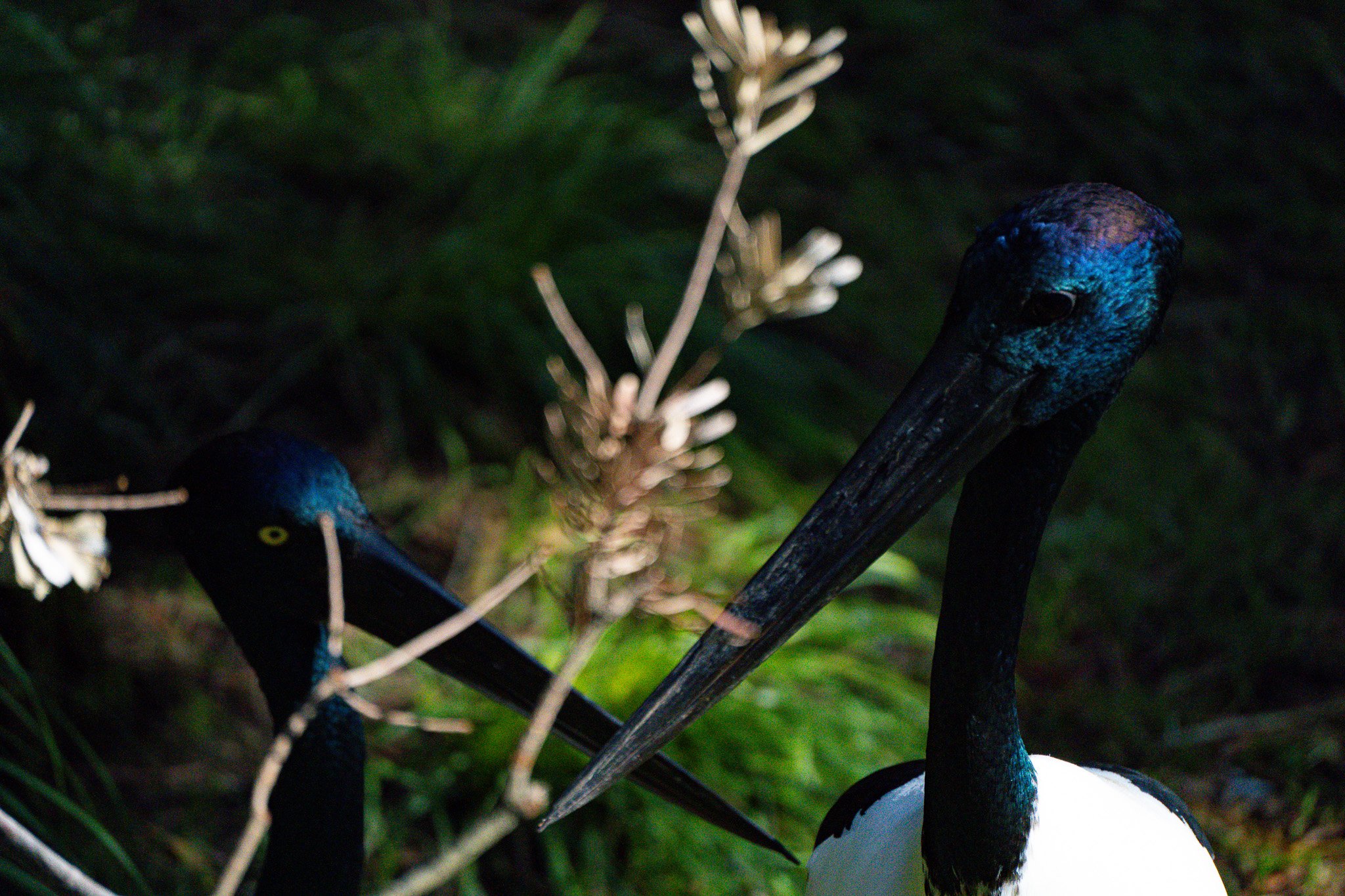
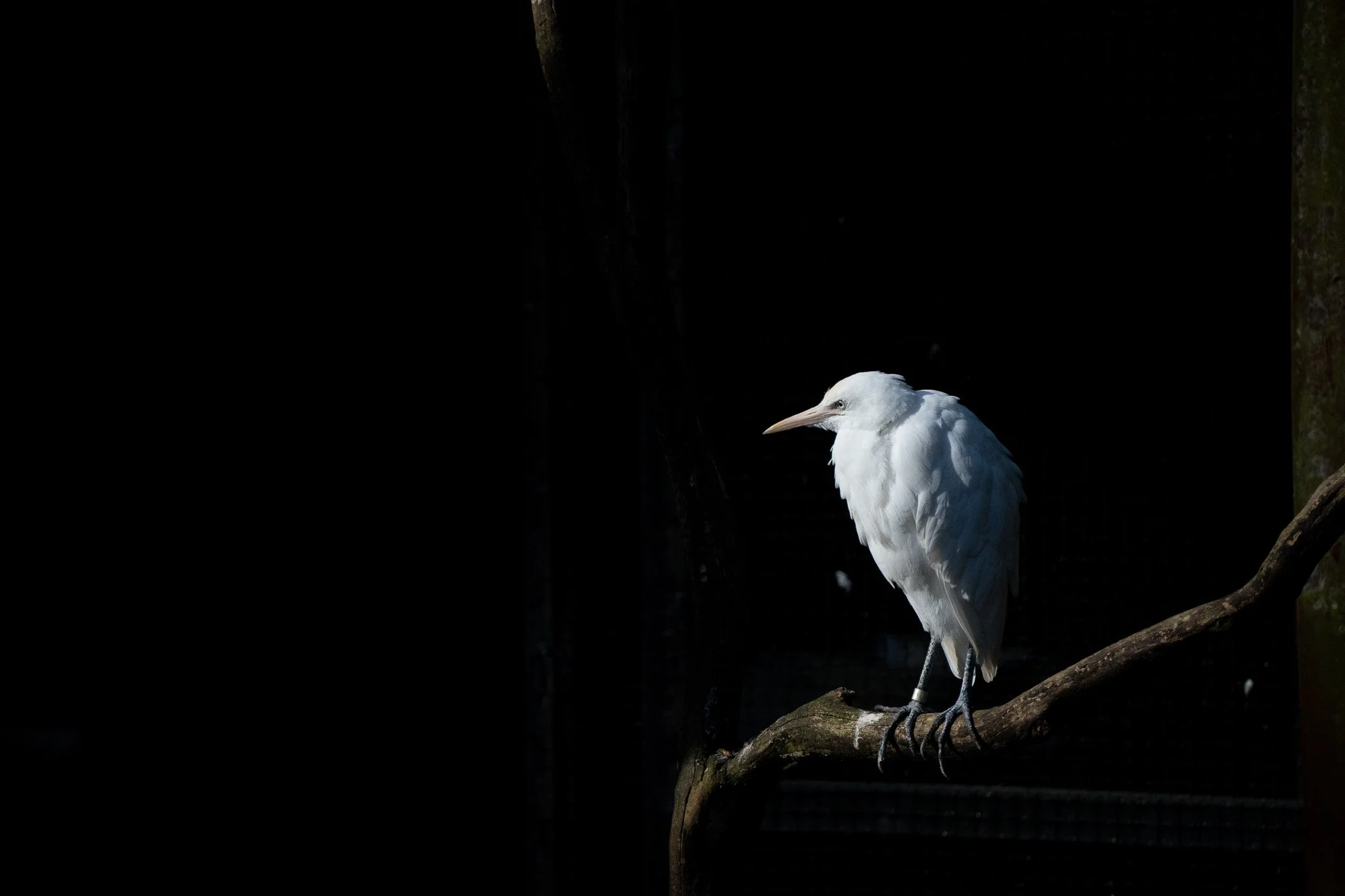
I probably spent almost half of my photographs that morning experimenting with this one technique, and I didn't regret a single frame. It was one of those rare moments when a piece of technical knowledge instantly changed the way I saw photography. From now on, every time I photograph white feathers or backlit leaves, I'll remember that simple lesson beneath a sunlit shrub at Melbourne Zoo.
Photographing the butterflies was, without question, the most rewarding experience of the day. Stepping into the enclosure felt like entering a world from a children's storybook. Butterflies of every size drifted effortlessly through the air, their delicate wings shimmering with brilliant colours as they floated past us, sometimes so close that they almost brushed against our faces.
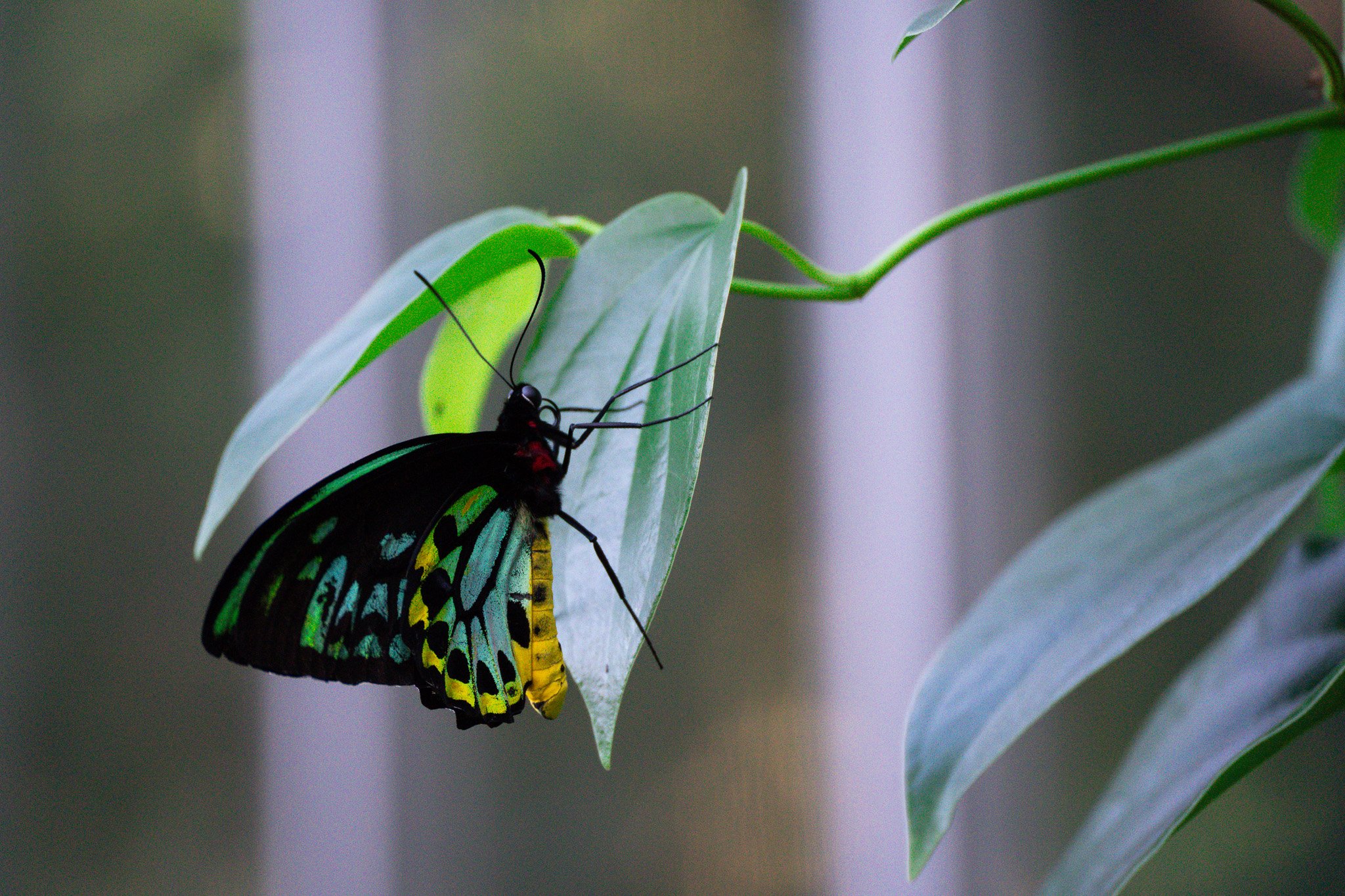
Watching them, I couldn't help but marvel at how such fragile creatures could glide so gracefully before landing with remarkable precision on the exact leaf or flower they had chosen. Their flight seemed almost weightless, as if they were being carried by the air rather than beating their tiny wings.
The humid air inside the enclosure greeted us immediately. Within seconds, my glasses and camera lens fogged over, turning the colourful world into a soft blur. We had no choice but to wait patiently while everything slowly acclimatised to the warmth and humidity.
When the lens finally cleared, the scene before me was breathtaking. The vivid colours of the butterflies stood out beautifully against the soft green backdrop of leaves and foliage. It was exactly the kind of background our instructor had encouraged us to look for. Remembering the lesson, I deliberately positioned myself so that the butterflies were framed against the blurred greenery whenever possible. The smooth background allowed their intricate wing patterns and vibrant colours to become the true focus of the photograph.
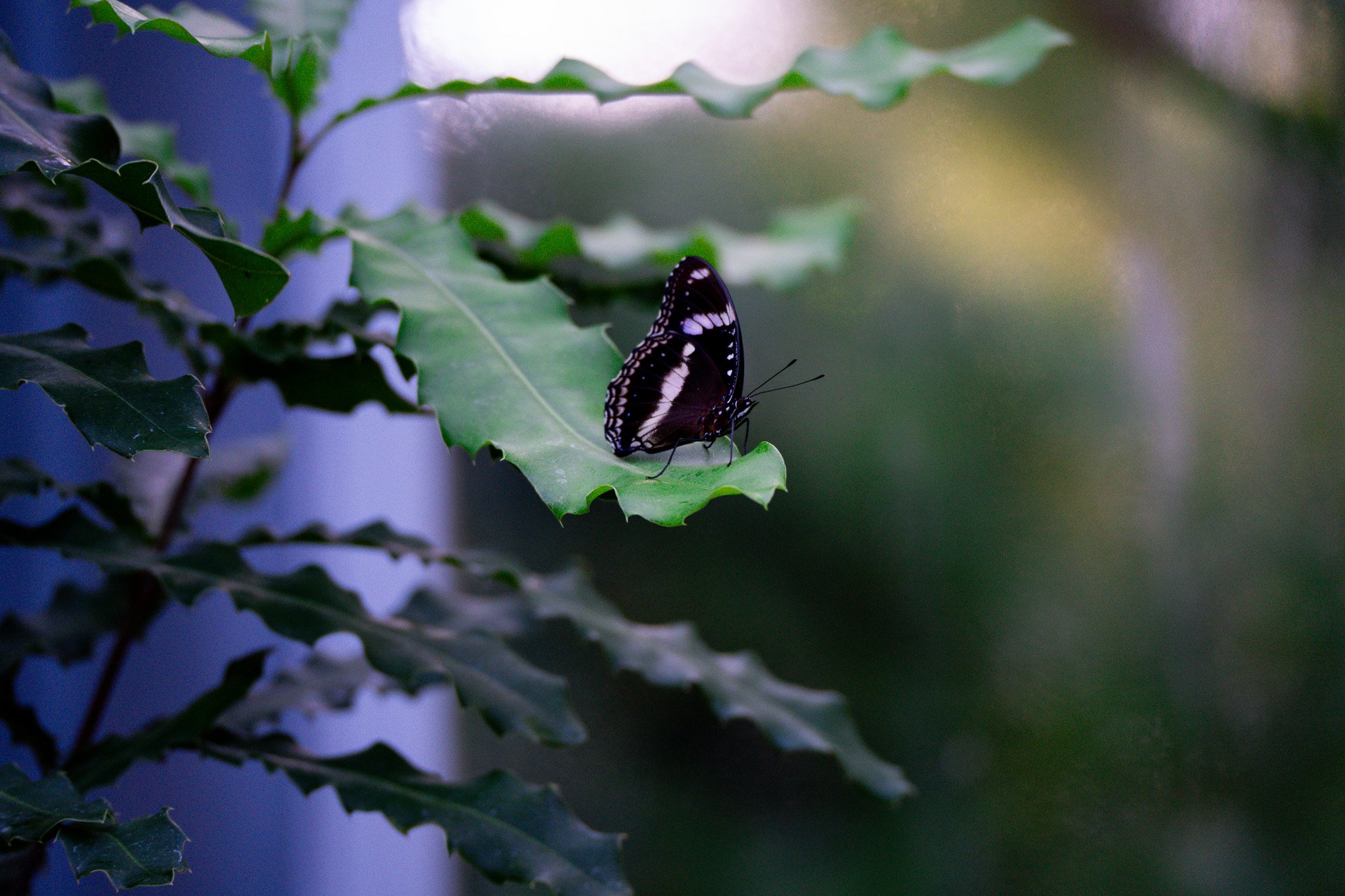
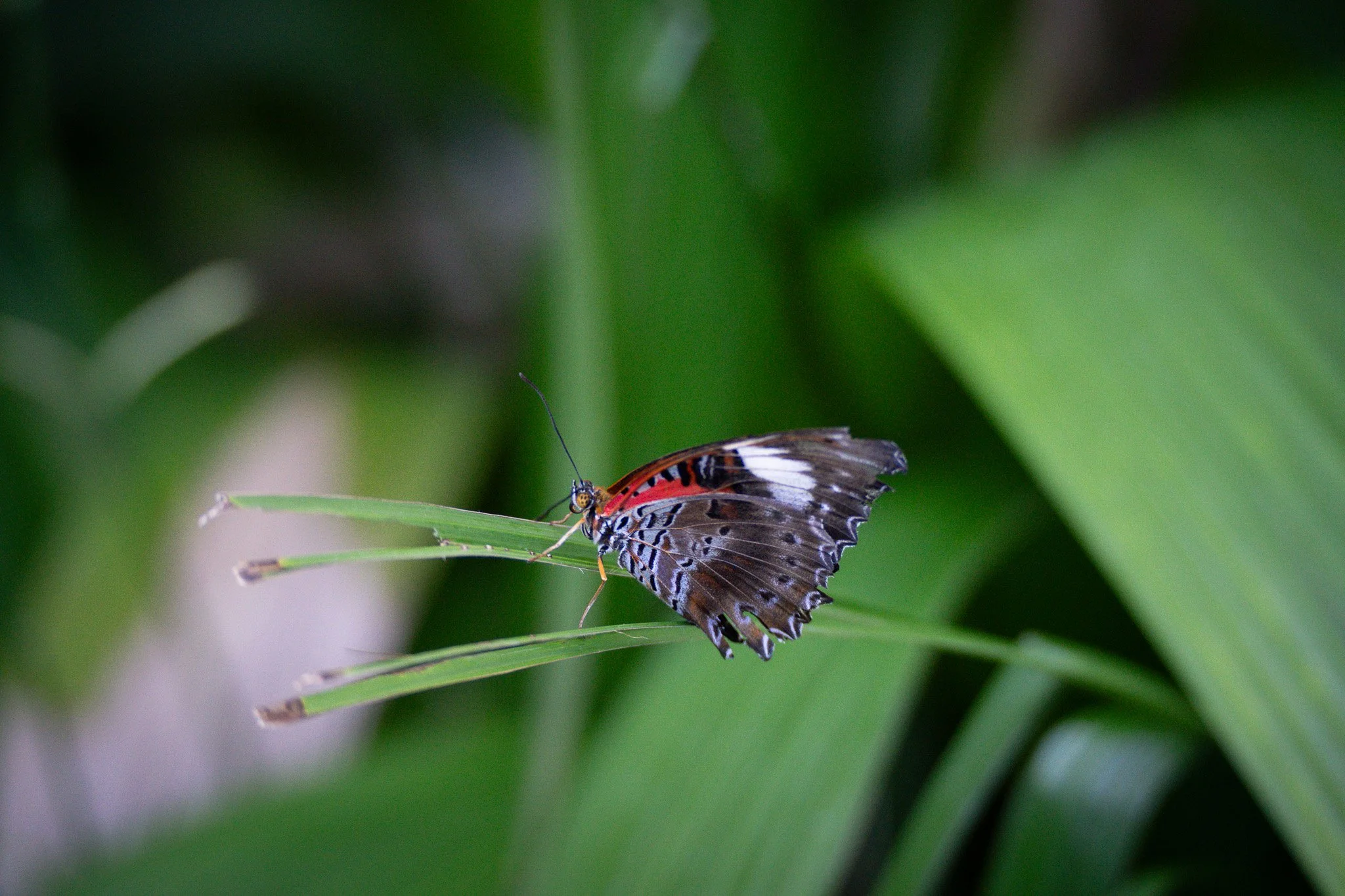
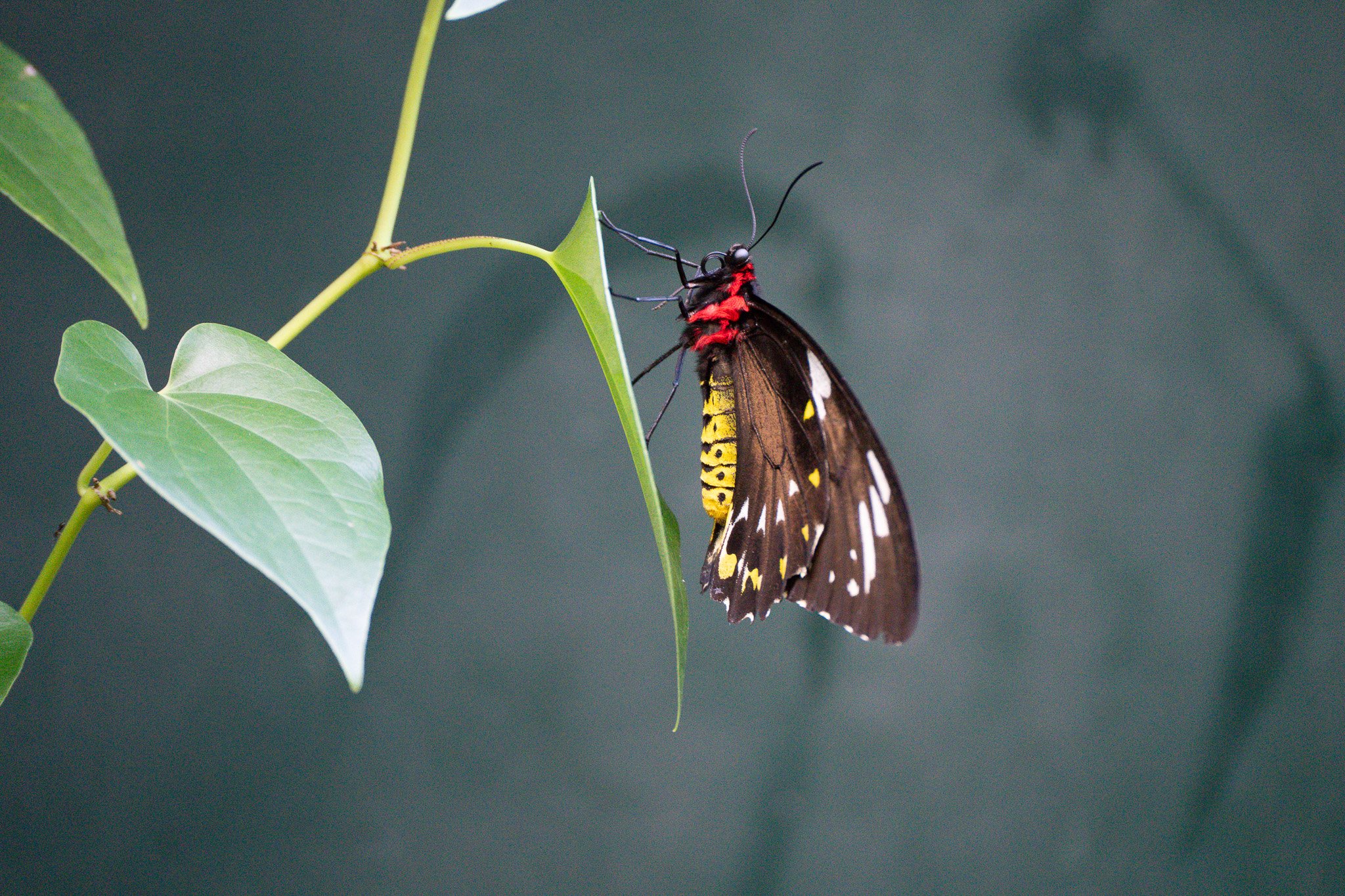
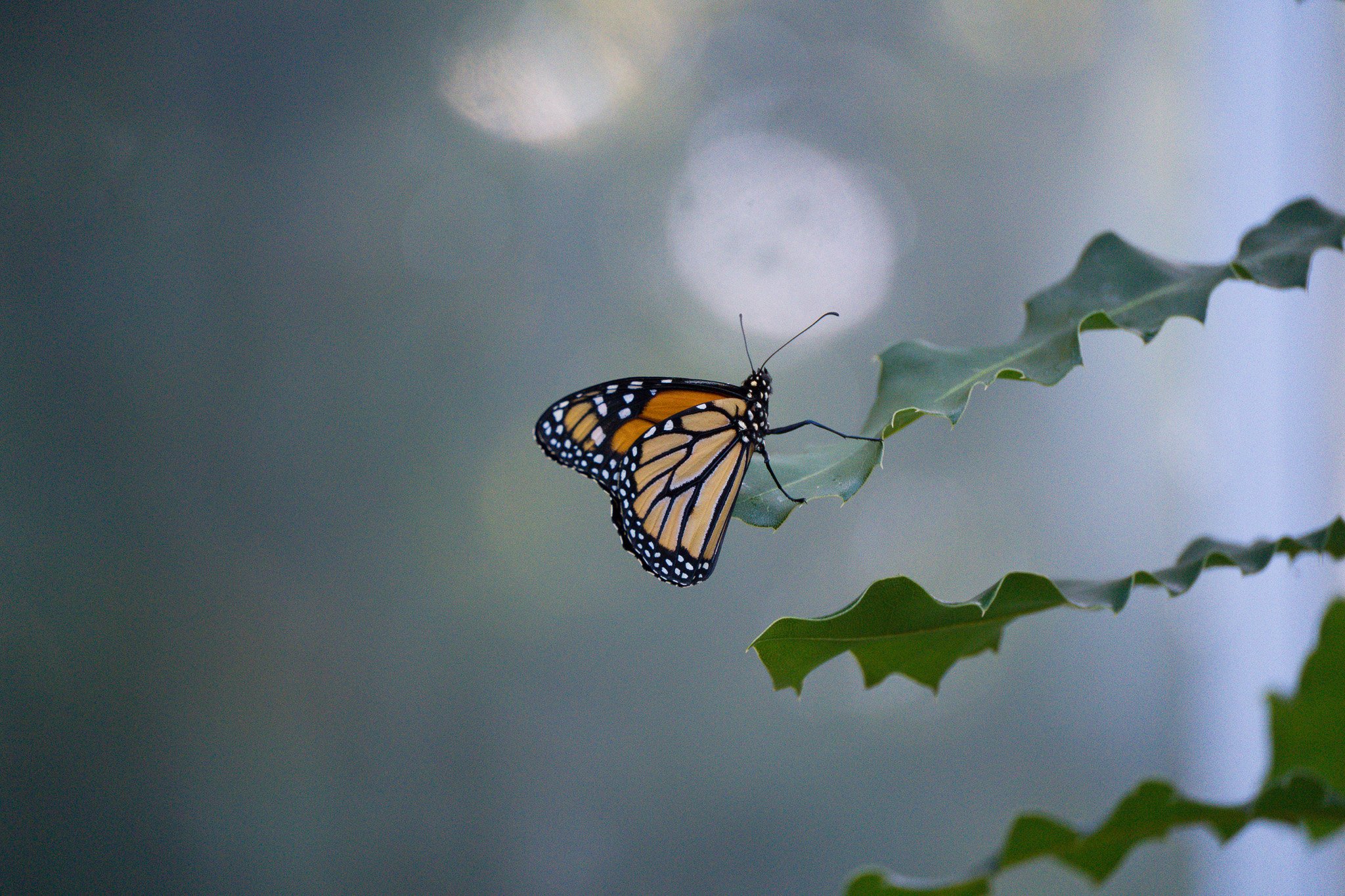
For me, the butterfly enclosure brought together everything we had been learning throughout the morning—finding good light, choosing a clean background, composing the image carefully, and waiting patiently for the right moment. It reminded me that the best photographs are often a combination of technique and a little bit of magic.
The lemurs became the final opportunity to put everything we had learned into practice before the lesson came to an end. By this stage, we had gone through the camera settings and techniques step by step, gaining a much deeper understanding of what the camera could actually do.
For a long time, I had approached photography with the mindset of a point-and-shoot photographer—relying on the camera's automatic settings to interpret the scene for me. This lesson began to change that. Instead of simply hoping the camera would produce the image I imagined, I was starting to understand how to use its capabilities to create the photograph I wanted.
The lemur enclosure provided the perfect environment to practise. Unlike many of the other exhibits, there was no glass or wire fence separating us from the animals. The open space allowed us to photograph them naturally, without the technical challenges that had accompanied many of the earlier encounters.
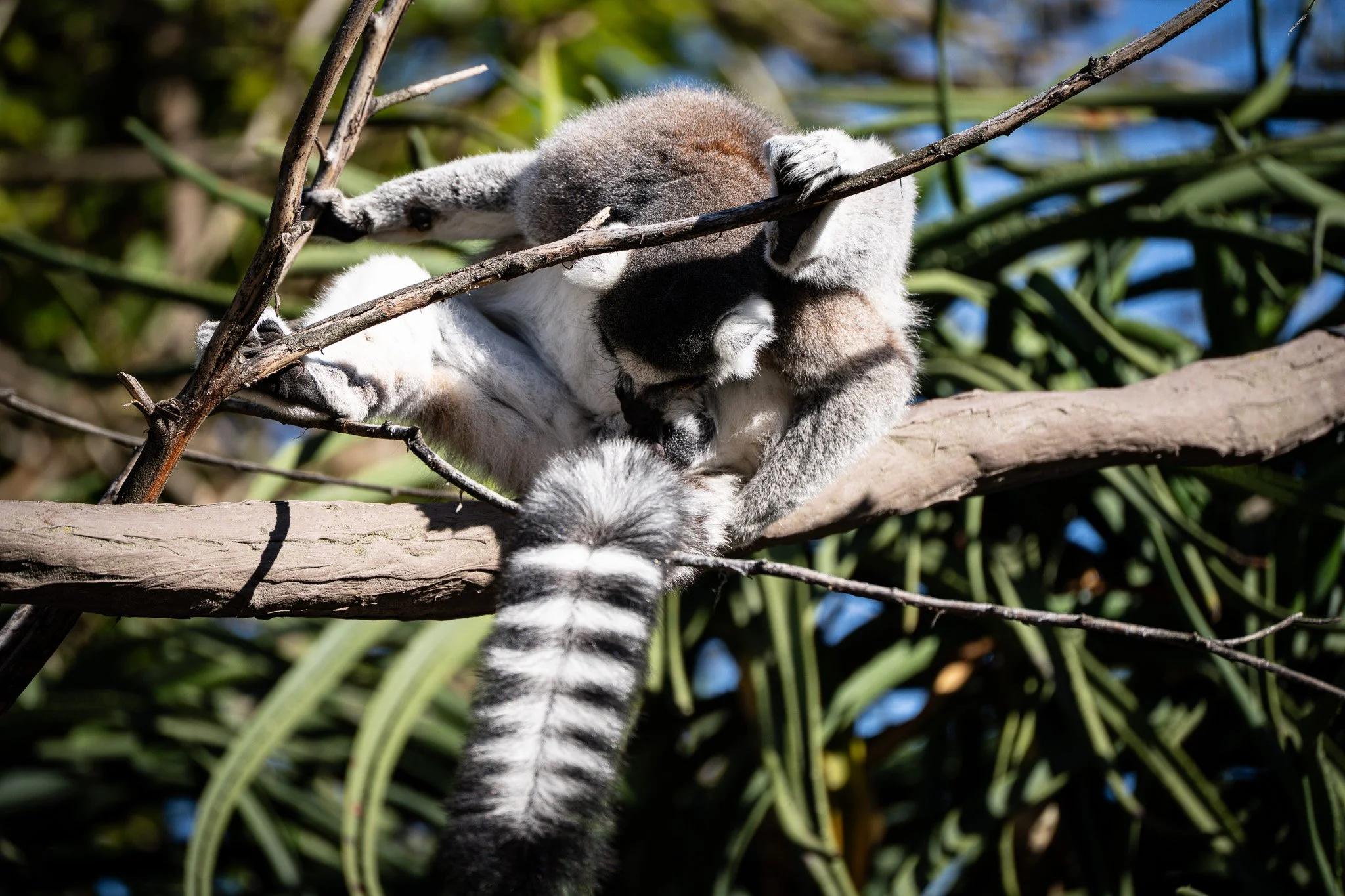
The lemurs themselves were wonderful subjects. Most of the time, they remained still, moving slowly and deliberately as if they had all the time in the world. Yet, when they wanted to move, their agility and speed were surprising. Their calm behaviour gave us precious moments to compose and focus before they suddenly changed position.
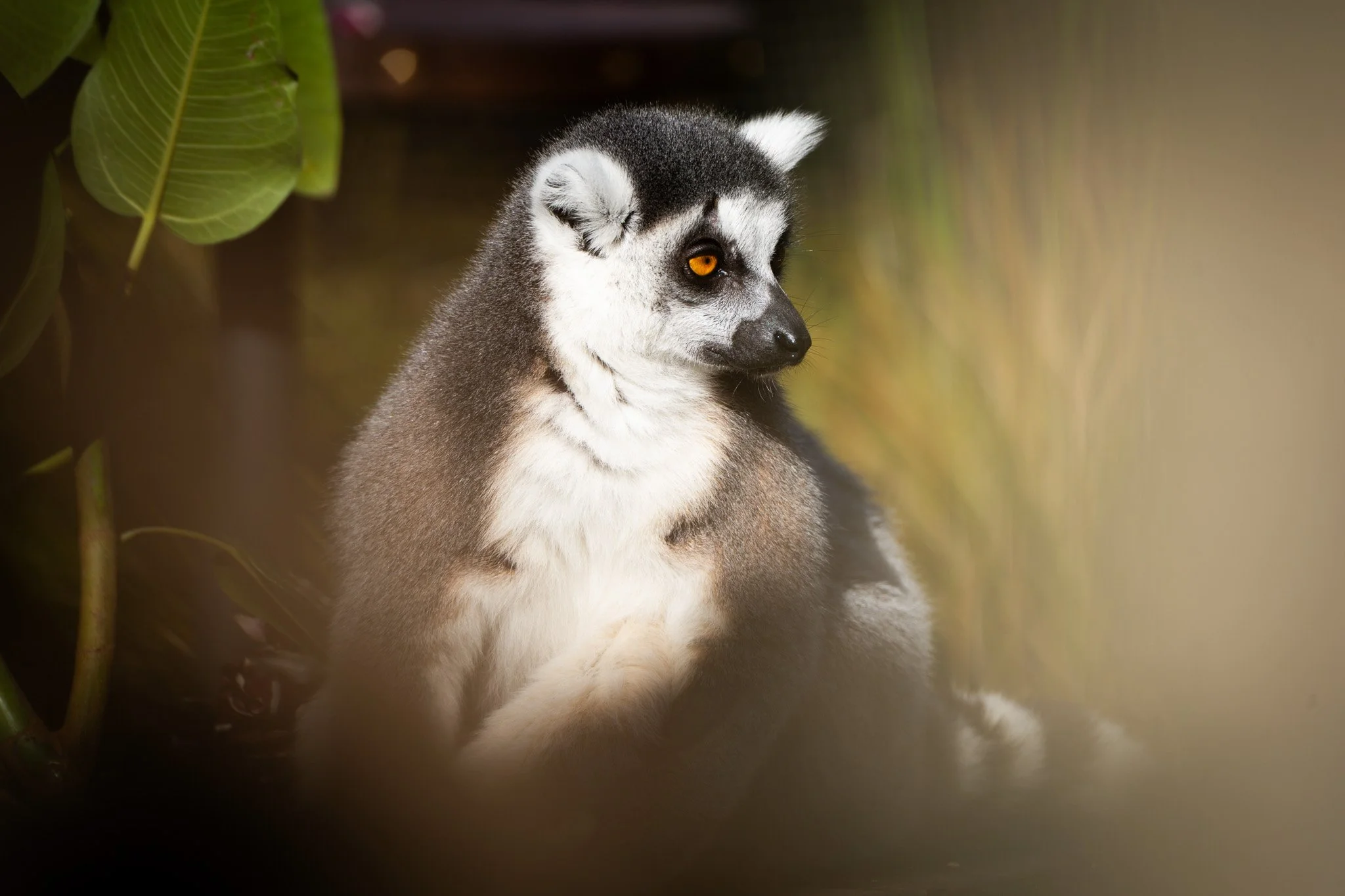
What fascinated me most about the lemurs was their eyes. Bright yellow-orange irises surrounded by a dark ring, with black pupils at the centre, gave them an almost mysterious, mischievous expression. Their eyes carried an intensity that seemed almost otherworldly, a striking contrast to their gentle, playful and undeniably cute appearance.
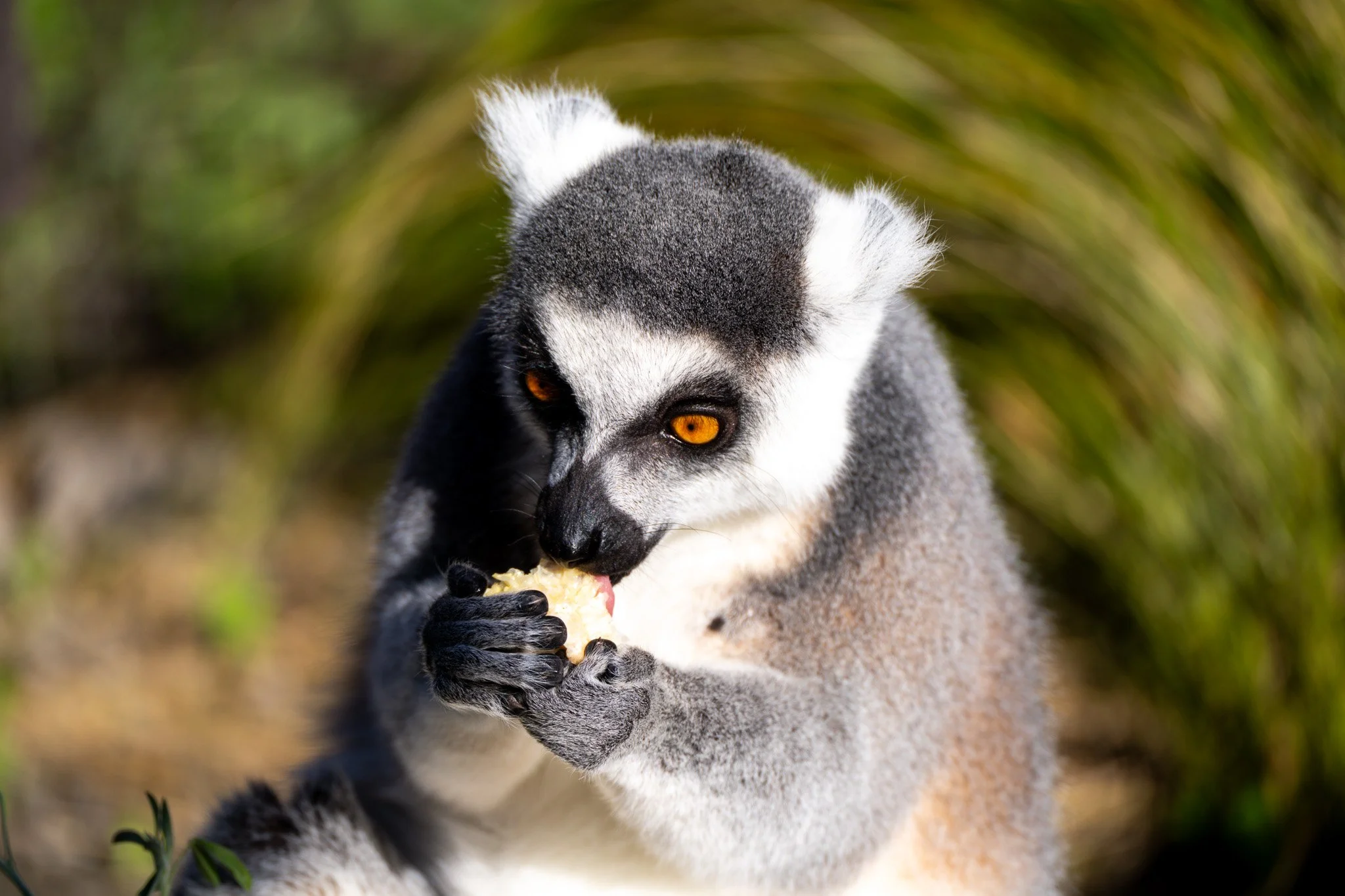
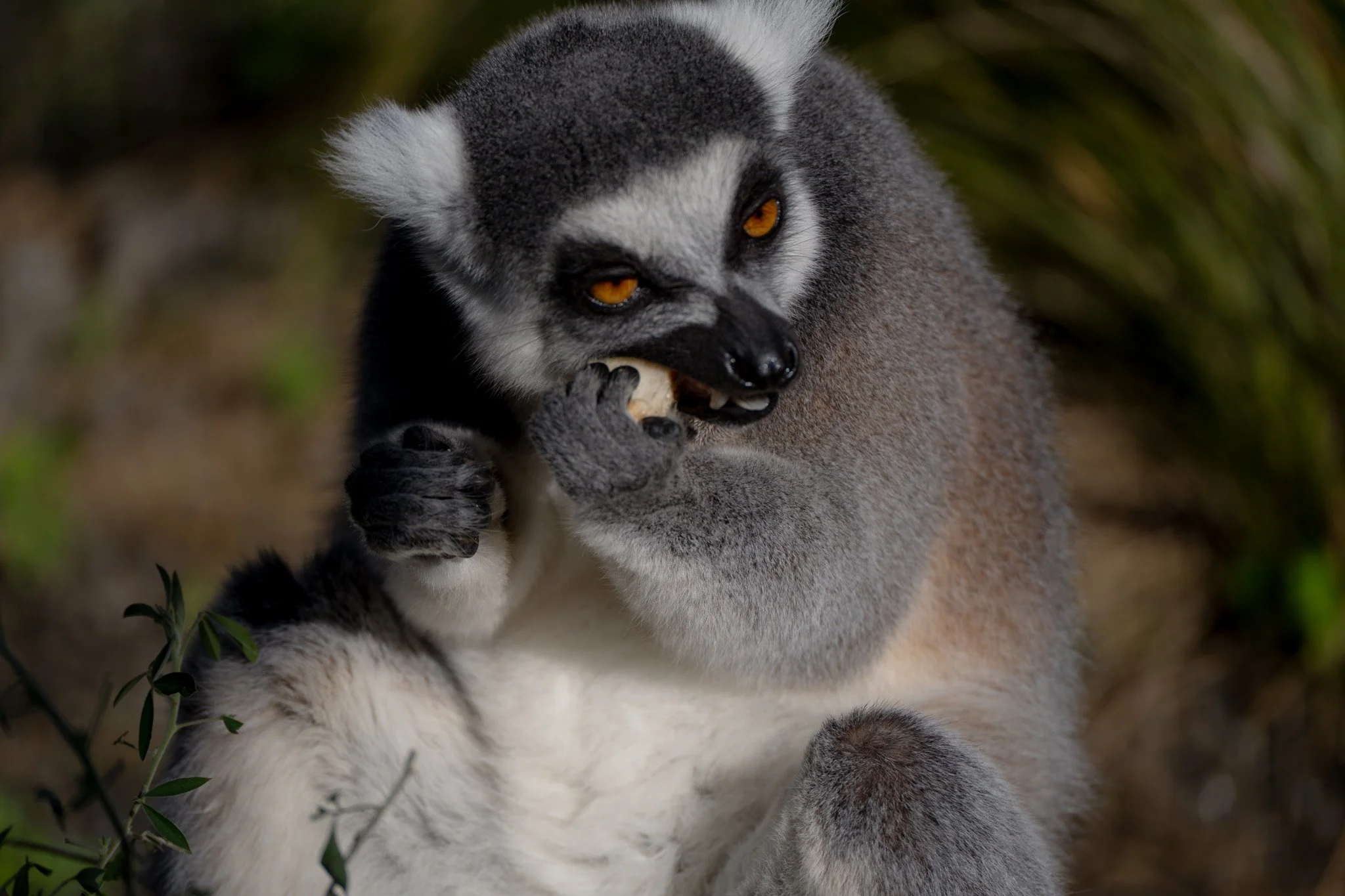
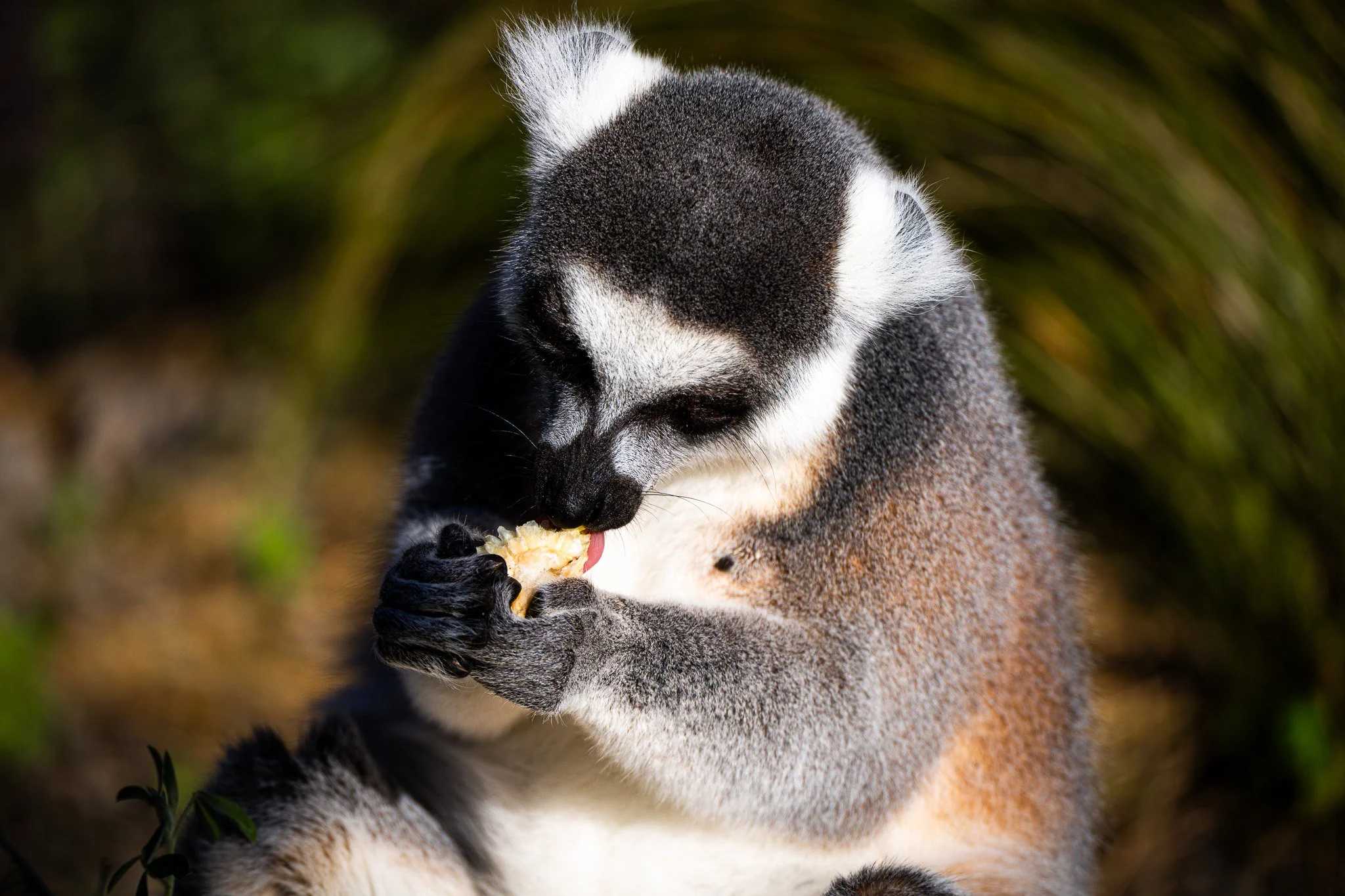
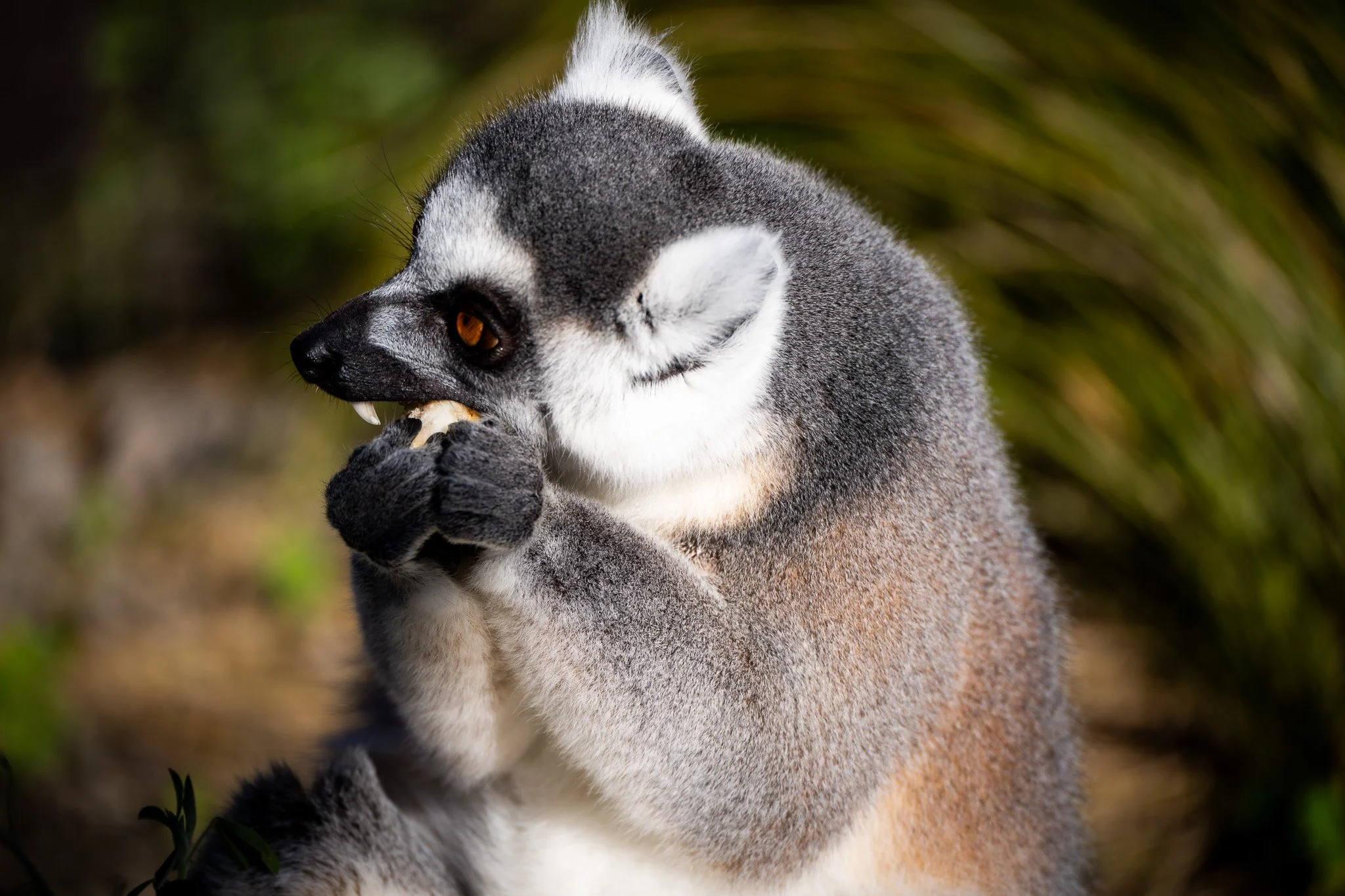
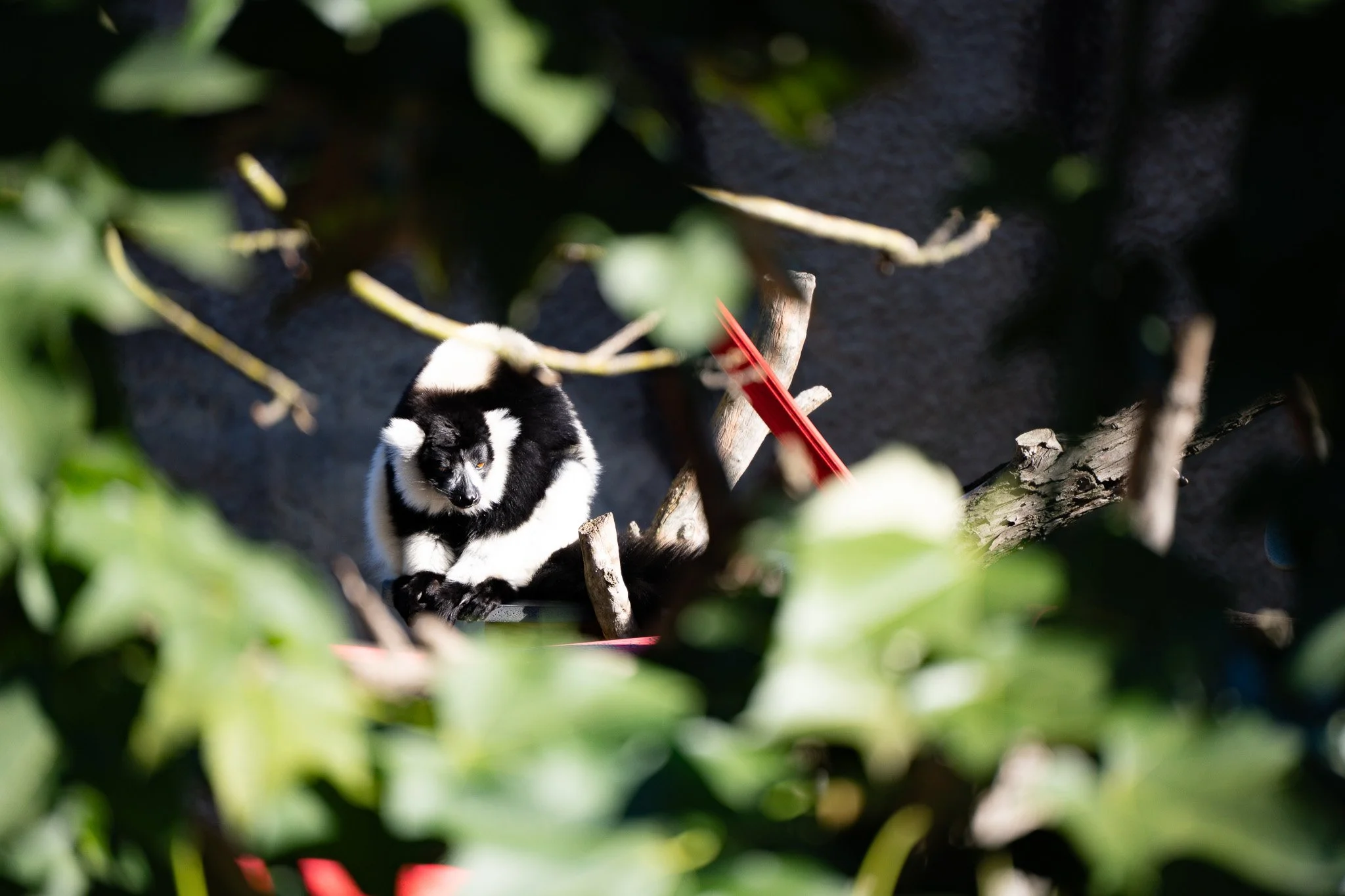
The most iconic lemur pose is perhaps their sunbathing posture—sitting upright with their arms stretched out, absorbing the warmth of the sun. I was fortunate enough to capture this moment with both the ring-tailed lemurs and the black-and-white ruffed lemurs. It was the perfect way to end the lesson: not just capturing an animal, but using everything I had learned to capture a moment.
Of all the animals we encountered that morning, some could easily have been missed—and some were. We never managed to photograph the tigers, including the magnificent Sumatran tiger. The gibbons were another missed opportunity, as they were inside during feeding time. It was a reminder that wildlife photography is not just about having the right camera or knowing the right settings; sometimes, it simply comes down to being in the right place at the right time.
Fortunately, there was one animal that was almost guaranteed to provide a perfect opportunity to practise what we had learned—the meerkats.
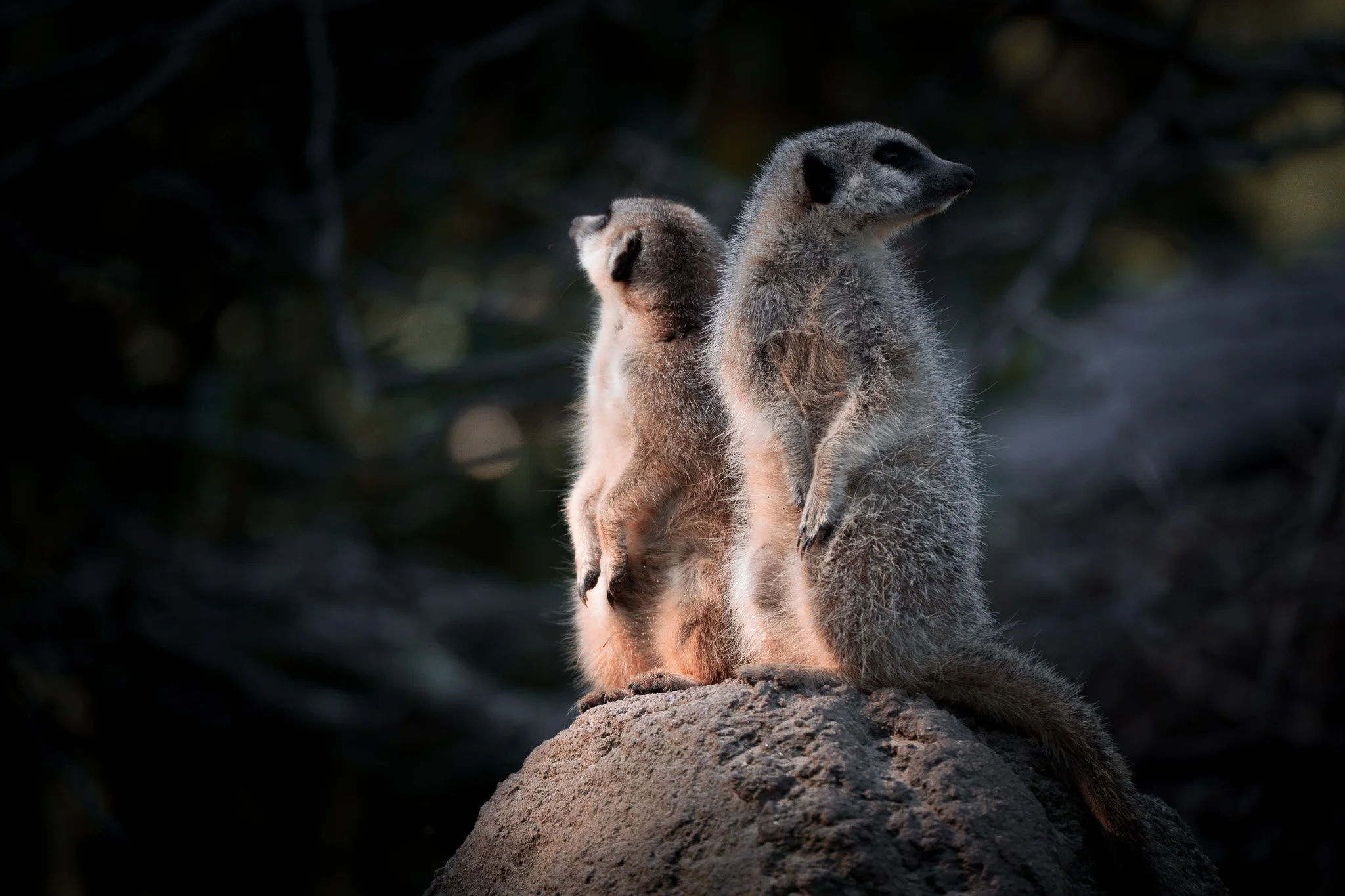
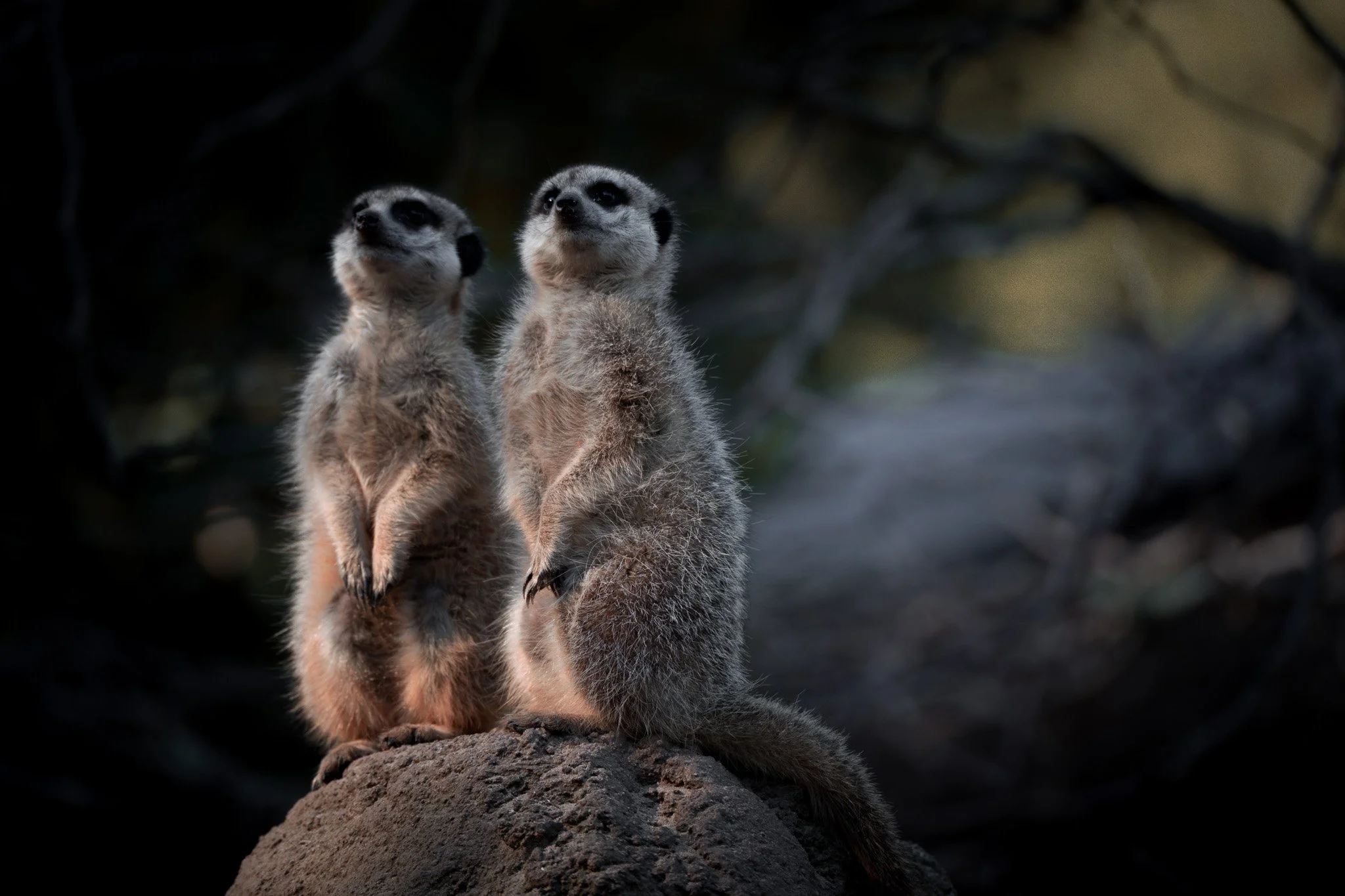
The meerkat enclosure was designed around their natural behaviour, with a raised lookout point where one member of the group could always stand guard. True to their reputation, there was always one meerkat on patrol, standing upright and scanning the surroundings while the others went about their business.
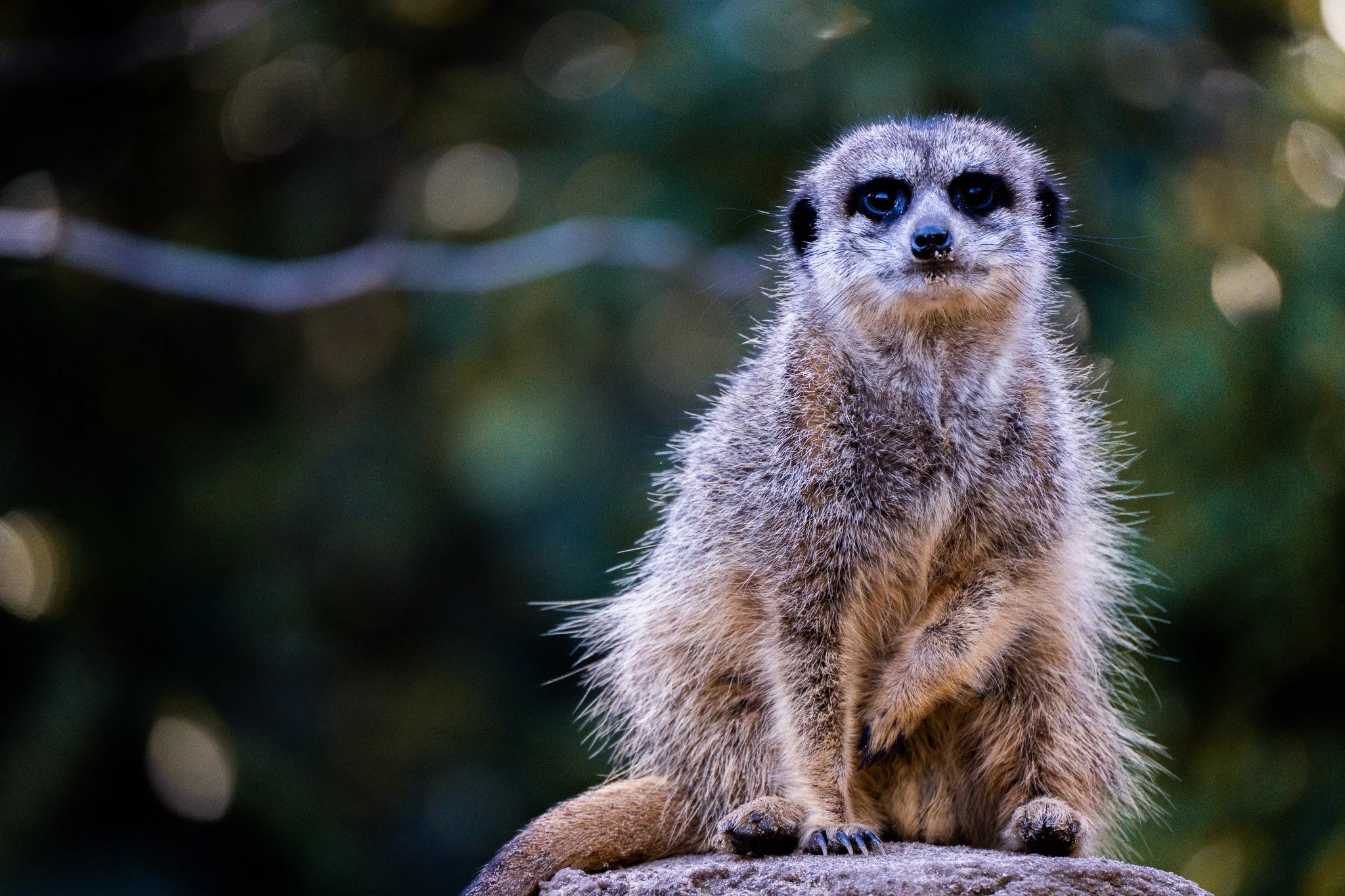
What made the morning special was the gentle winter sunlight. As the sun illuminated their soft fur, each individual strand caught the light, creating a beautiful golden glow around their tiny bodies. The backlighting transformed an ordinary scene into something magical.
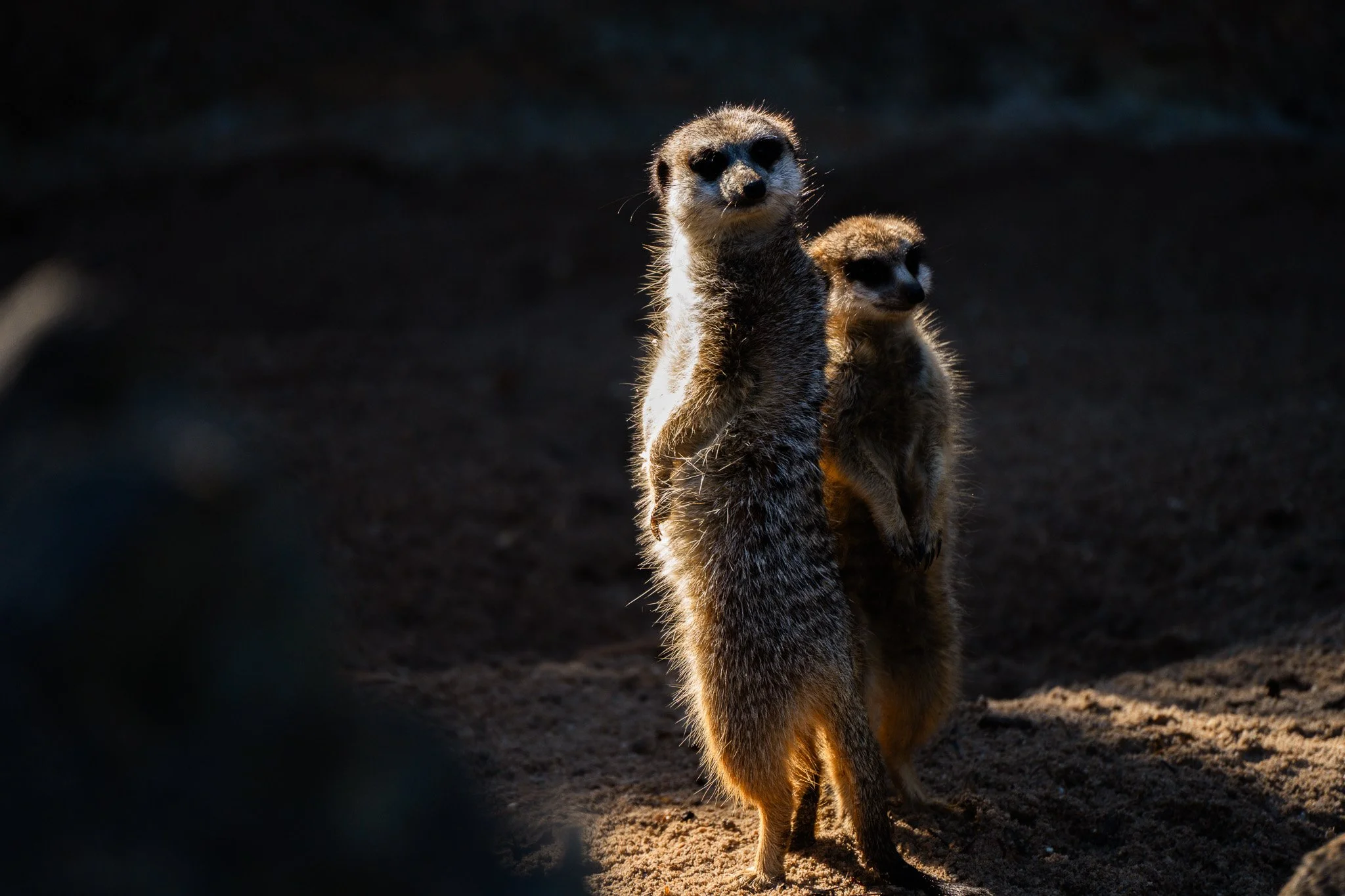
The meerkats themselves were full of personality. While the lookout provided endless photographic opportunities with its alert posture, the others added the entertainment—playing, moving around and creating those unpredictable moments that make wildlife photography so rewarding.
Before the lesson came to an end, we made one final visit to the snow leopard enclosure. Earlier in the day, we had hoped to see them but left disappointed. This time, however, luck was on our side. The snow leopard family was outside—mother, father and their playful cubs.
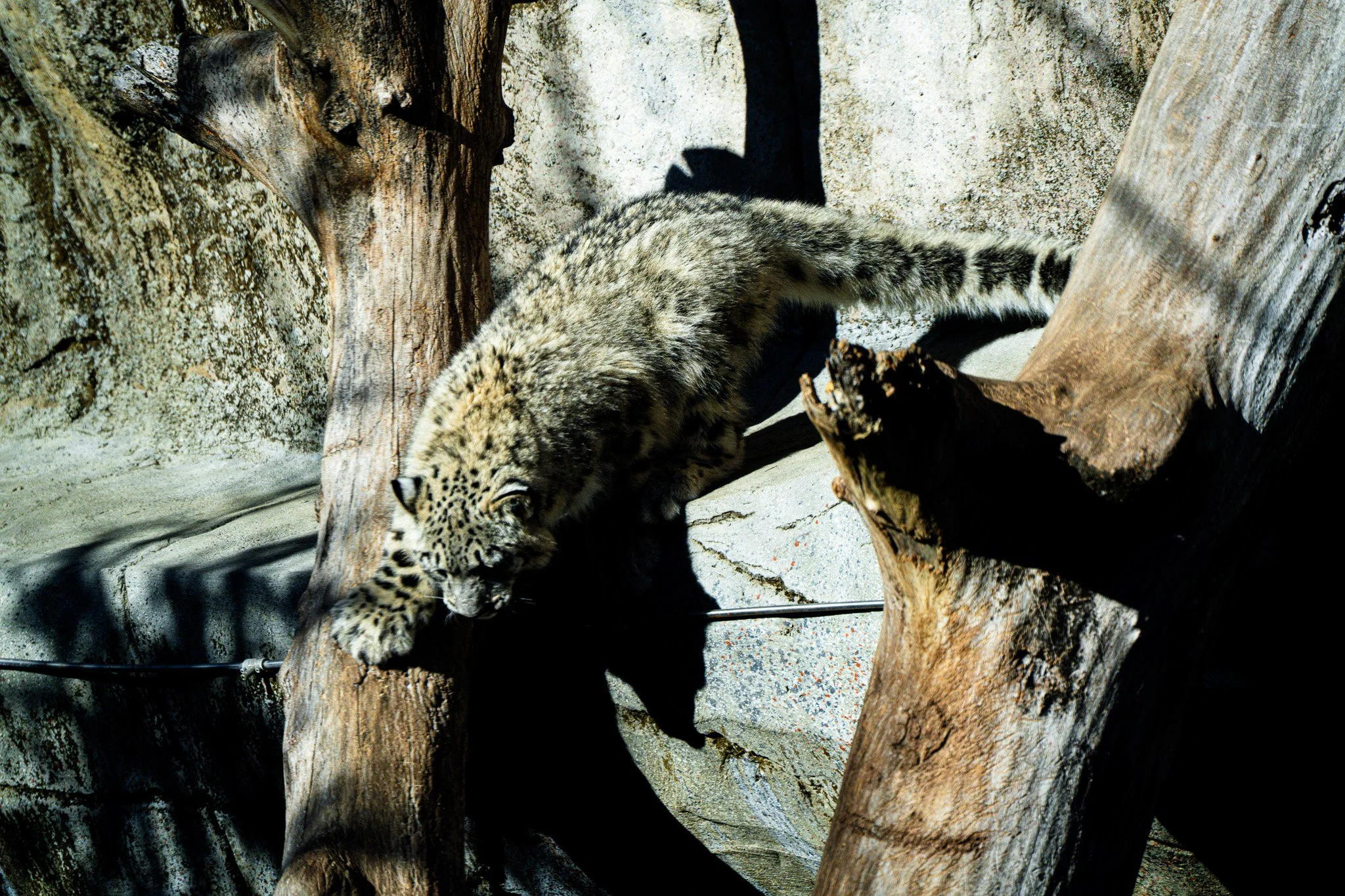
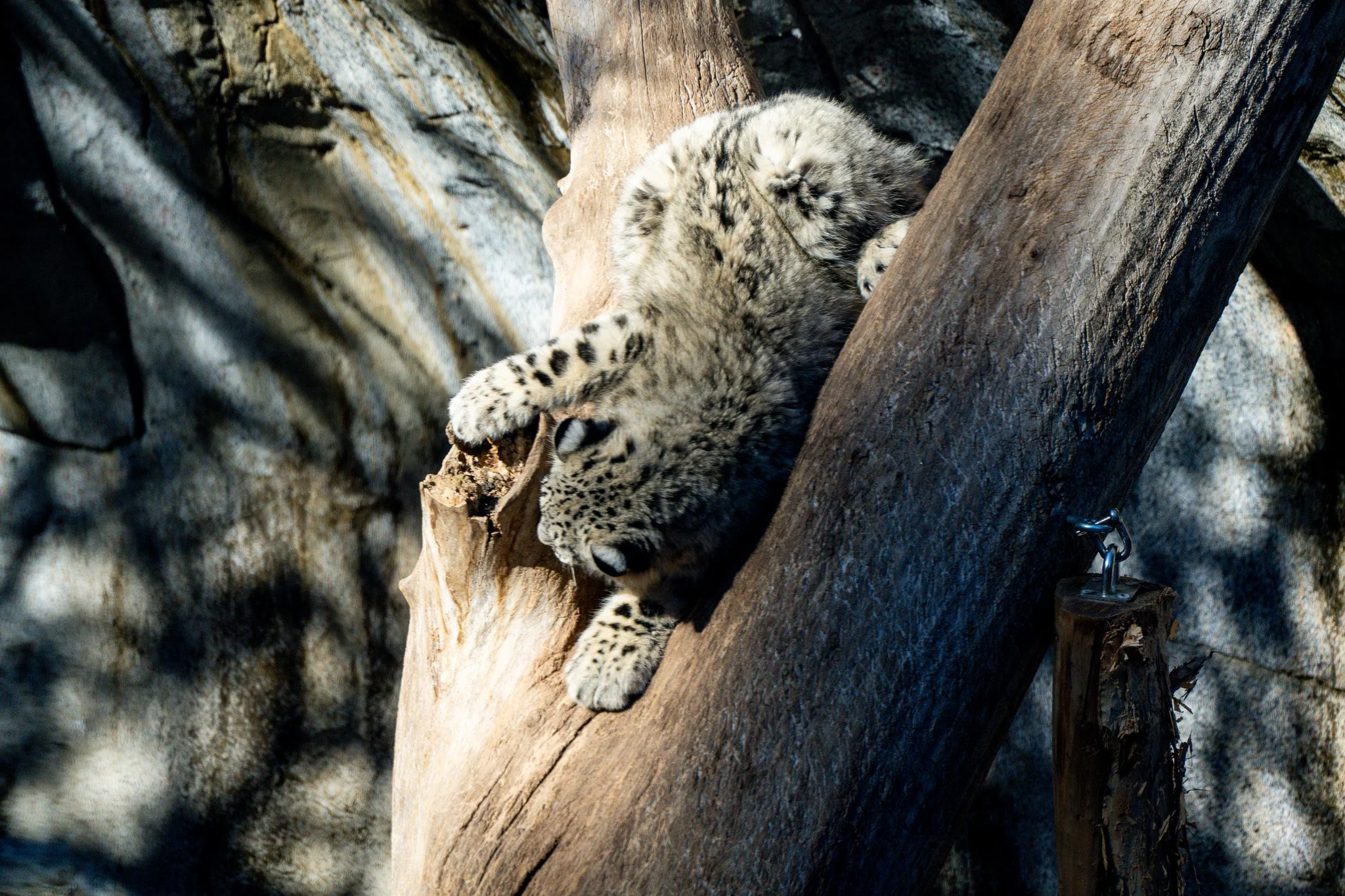
The cubs moved with curiosity and energy, exploring their surroundings while their mother kept a watchful eye over them. Then came the final gift of the day. The mother snow leopard paused, stood perfectly still and began to yawn, revealing her sharp teeth and pink tongue. It was a classic big-cat portrait—the kind of moment every wildlife photographer hopes to capture.
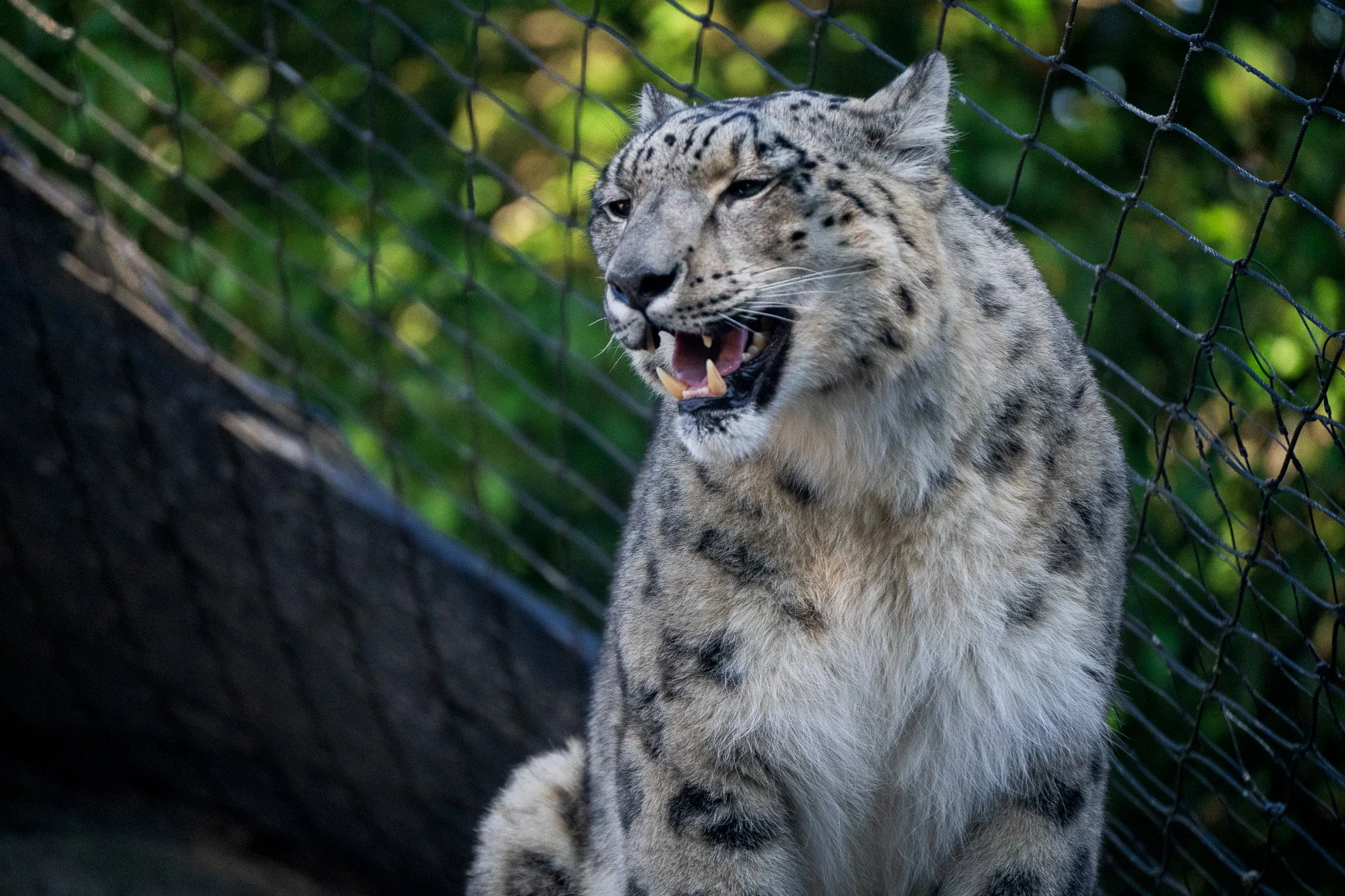
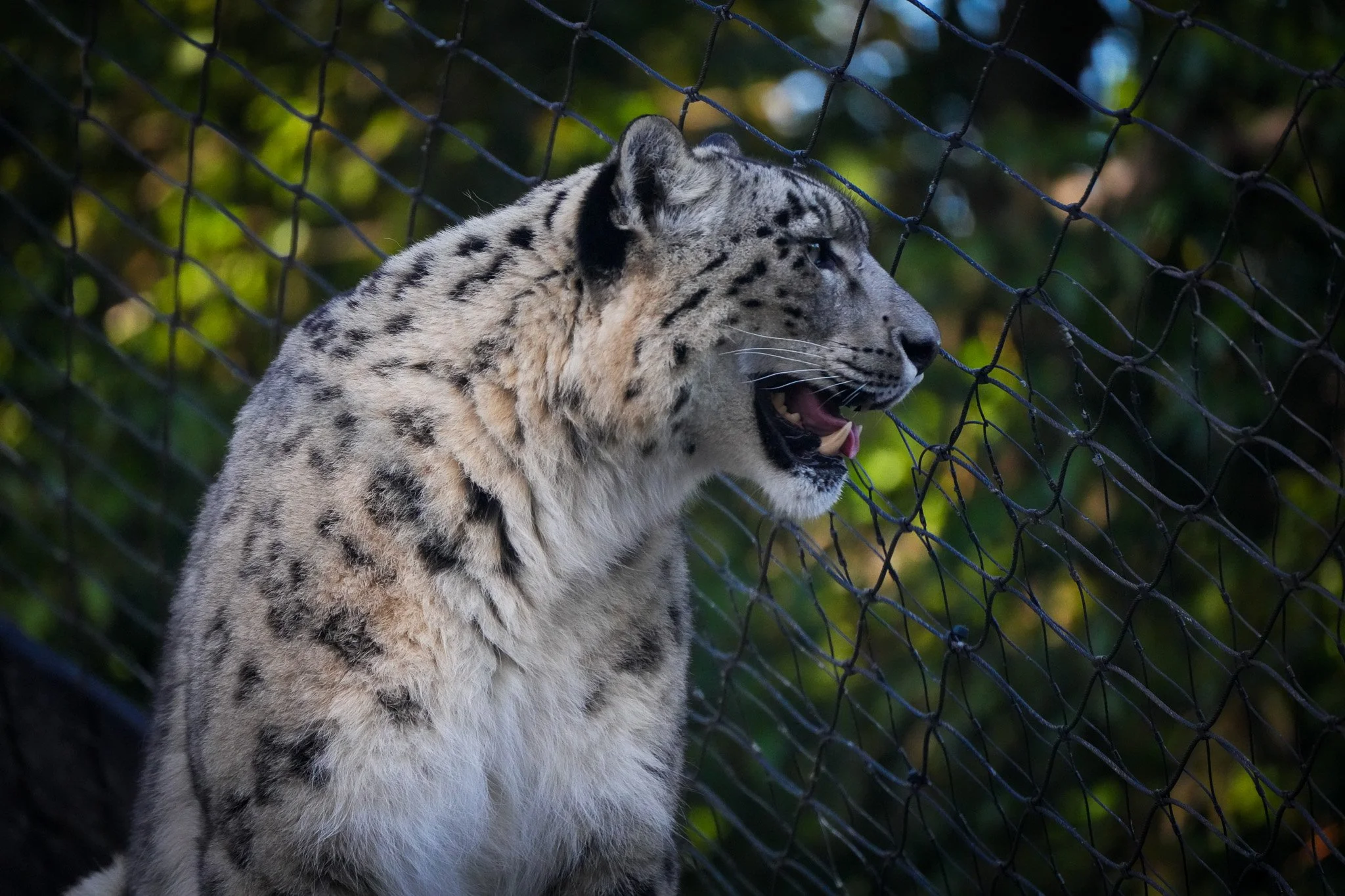
After a morning filled with challenges, missed opportunities and small discoveries, ending the lesson with the snow leopard felt like the perfect finale.
I walked away from the lesson with a much better understanding of how to use my camera to its full potential. More importantly, I began to see it not simply as a device that records what is in front of me, but as a tool that can help me share how I see the world.
I hope that, with practice, the camera becomes an extension of my own vision—allowing me to capture not only what I see, but what I want others to feel and experience. To preserve the emotion, the atmosphere and the fleeting moments that exist within a single frame.