When the Night Came Alive: Discovering Wyndham Park’s Light Festival
Summer had quietly slipped away.
The days were becoming shorter, the evenings cooler, and autumn was beginning to settle across Melbourne. It was the kind of weather that invited you to spend more time outdoors—not under the intensity of the summer sun, but in the comfortable space between day and night.
With the school holidays approaching, Melbourne began filling with activities designed to bring families together. Among them was Wyndham City’s annual Light Festival at Wyndham Park in Werribee—a free evening event where the park would be transformed with illuminated installations from late March into April.
We had never been to the festival before, but it seemed like a good excuse for a Friday night outing.
For me, there was another reason.
I wanted to practise night photography.
Capturing images after sunset has always been a challenge. The lack of light changes everything. The camera settings need more attention, movements become more obvious, and patience becomes just as important as technical skill. Unlike photographing a landscape in daylight, where the scene patiently waits, night photography often requires waiting for a small window when everything comes together.
So, armed with a camera and curiosity, we headed towards Wyndham Park.
Werribee itself is not unfamiliar to us. Over the years, we have visited several of its attractions, including the African-themed Werribee Open Range Zoo, the beautiful Werribee State Rose Garden, and the surprisingly fascinating Werribee Water Treatment Plant.
Of the three, the Water Treatment Plant tour remains the one that stayed with me the most. It was not the obvious tourist destination, but it revealed a different side of the city—one that showed the hidden systems working quietly behind everyday life.
This time, however, we were heading somewhere much lighter.
A celebration of light.
We relied on Google Maps to guide us there, as this was our first visit to this part of Werribee.
As we approached the destination, something did not feel quite right.
The directions had brought us close to the location, but there was no obvious sign of a festival. No glowing lights. No crowds. No clear entrance.
For a moment, doubt crept in.
Had we parked in the wrong place? Were we even at the right location?
After finding a parking spot, we noticed another couple nearby standing with their phones, looking around with the same uncertainty we were feeling. They seemed just as lost as we were.
They eventually chose a direction and started walking.
It was not the way I thought we should go.
Fortunately, we noticed some construction workers nearby packing up for the evening. We asked them for directions, and they pointed us in the opposite direction.
My instinct had been right.
About 200 metres along the path, the signs began appearing. Then came the sounds—the laughter of children, voices drifting through the evening air, and the faint glow of lights ahead.
We had found it.
The cooler evening breeze was noticeable, but it was still a pleasant night for walking.
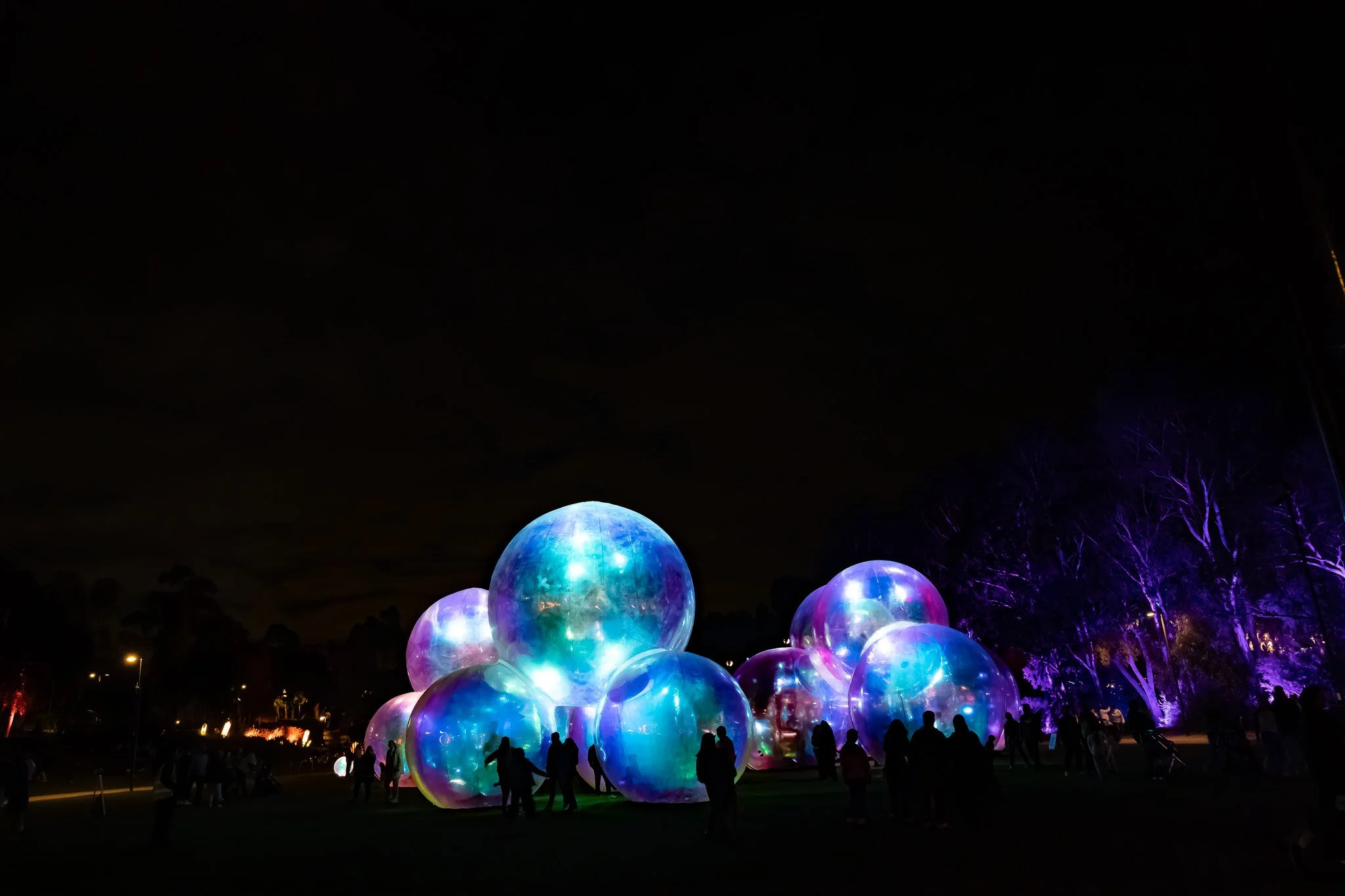
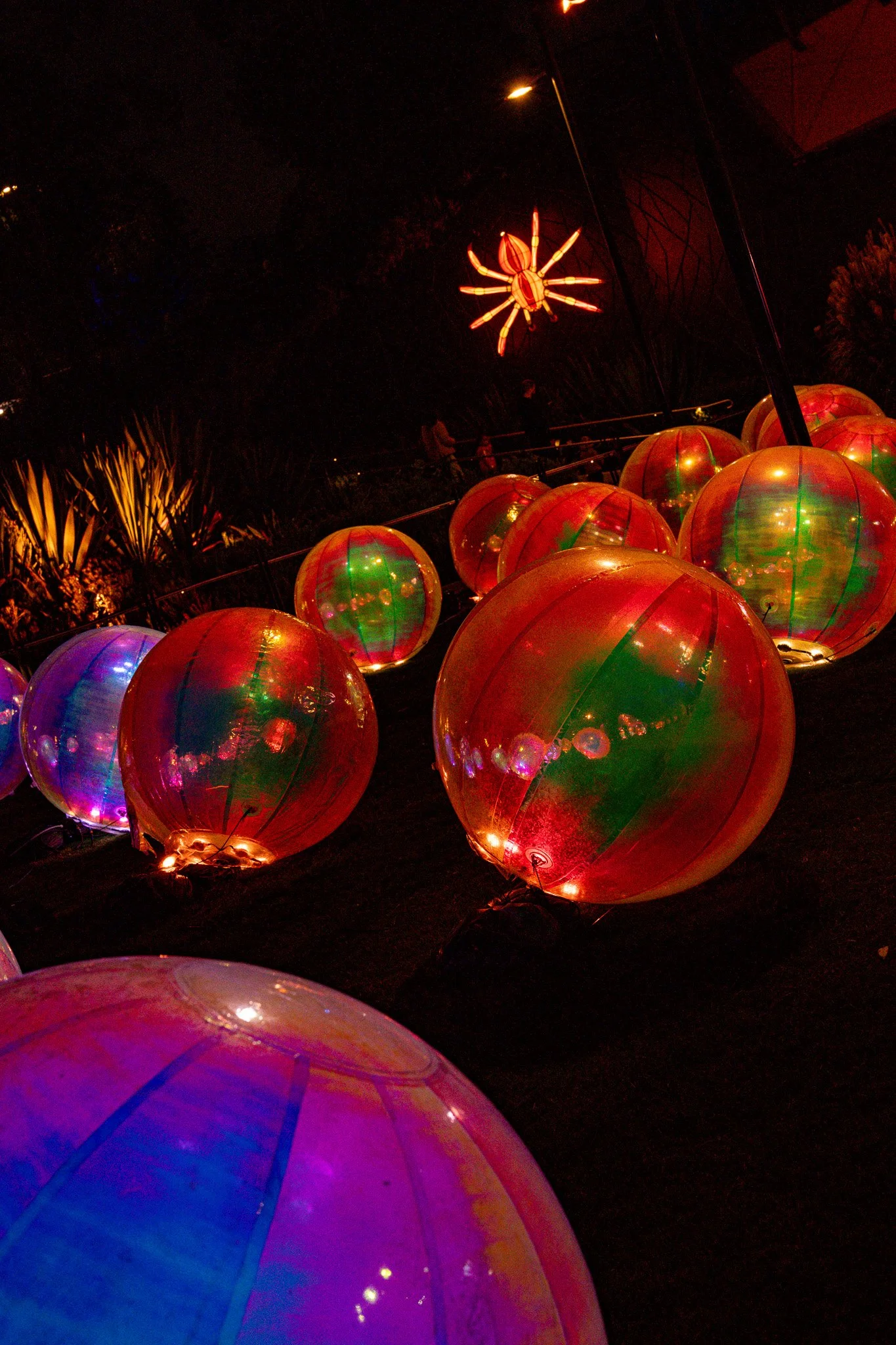
As we entered Wyndham Park, the first thing that caught our attention was a collection of enormous glowing spheres.
They looked almost like giant bubbles floating together, stacked one above another, their colours slowly changing from within. Against the darkness of the evening, they immediately became the focal point of the festival.
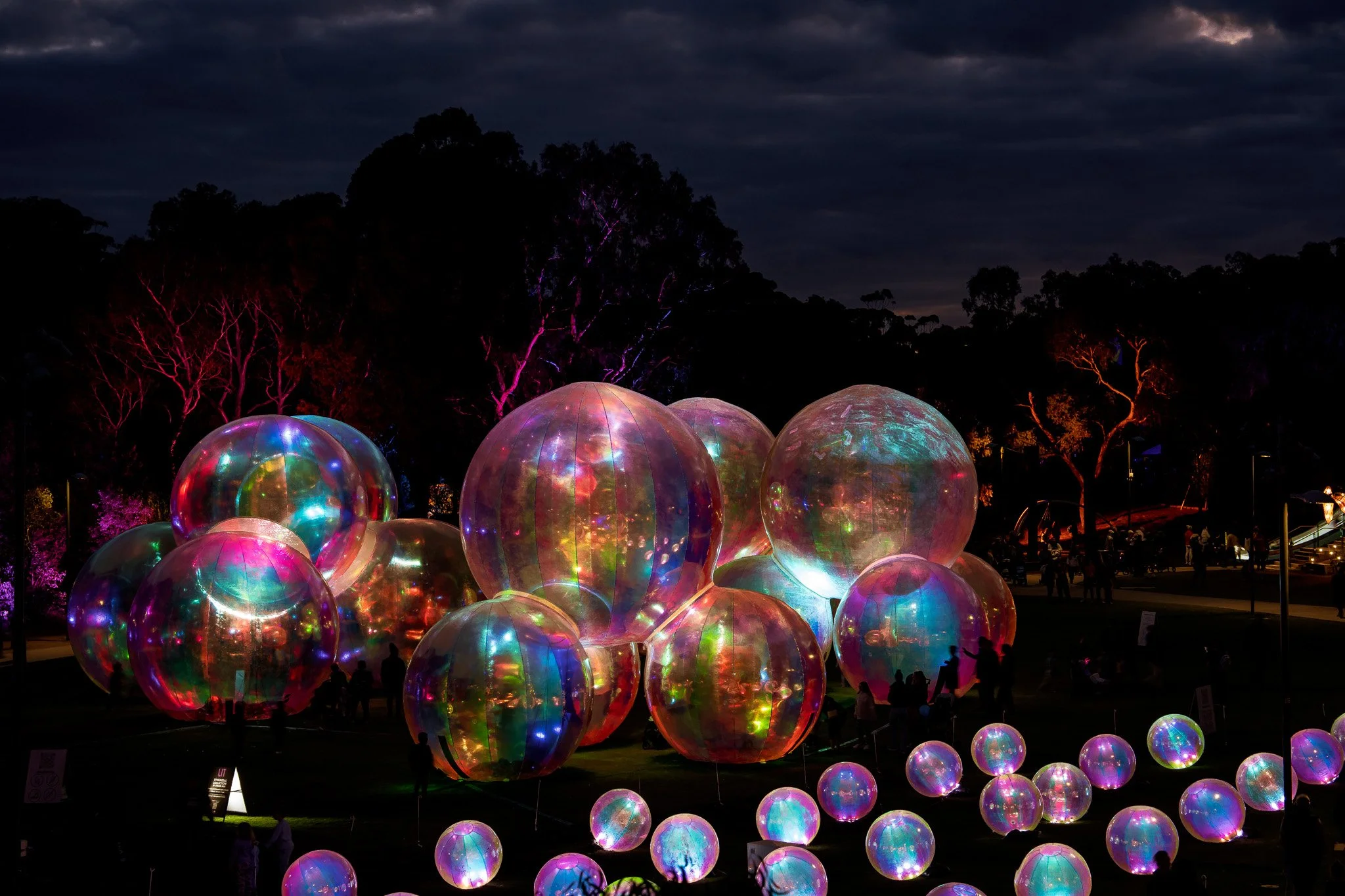
The park was busy, but not overwhelming.
Families wandered along the paths, children moved excitedly between installations, and groups stopped occasionally to admire the changing lights. There was a relaxed energy in the air—the kind of atmosphere where people were not rushing to get somewhere else, but simply enjoying being there.
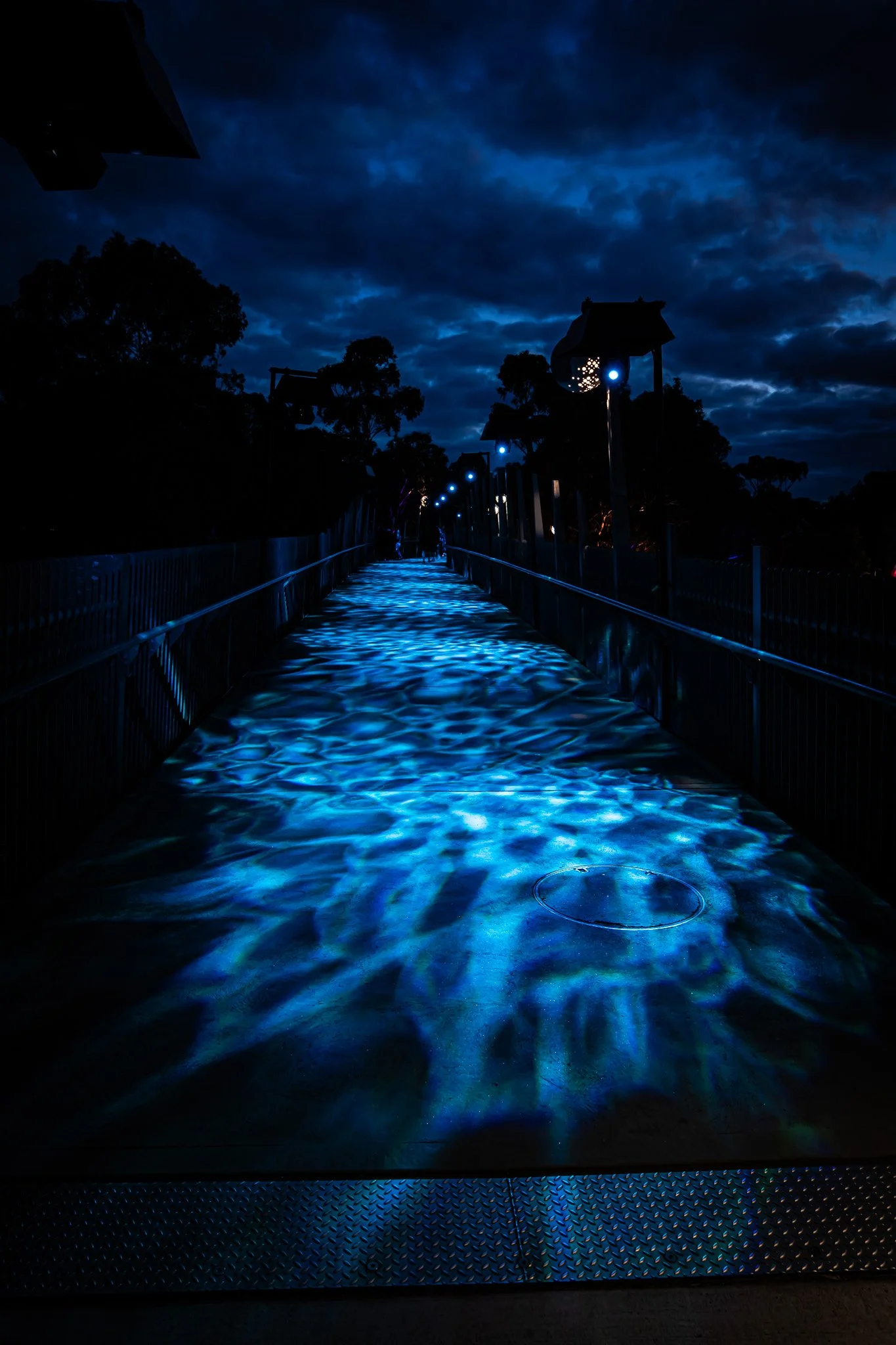
We walked towards a bridge that gave us a wider view of the festival.
From above, the lights appeared scattered across the park like small pockets of colour in the darkness. It was a completely different perspective from standing among the installations themselves.
We decided to explore one side of the park first before returning to the glowing bubbles.
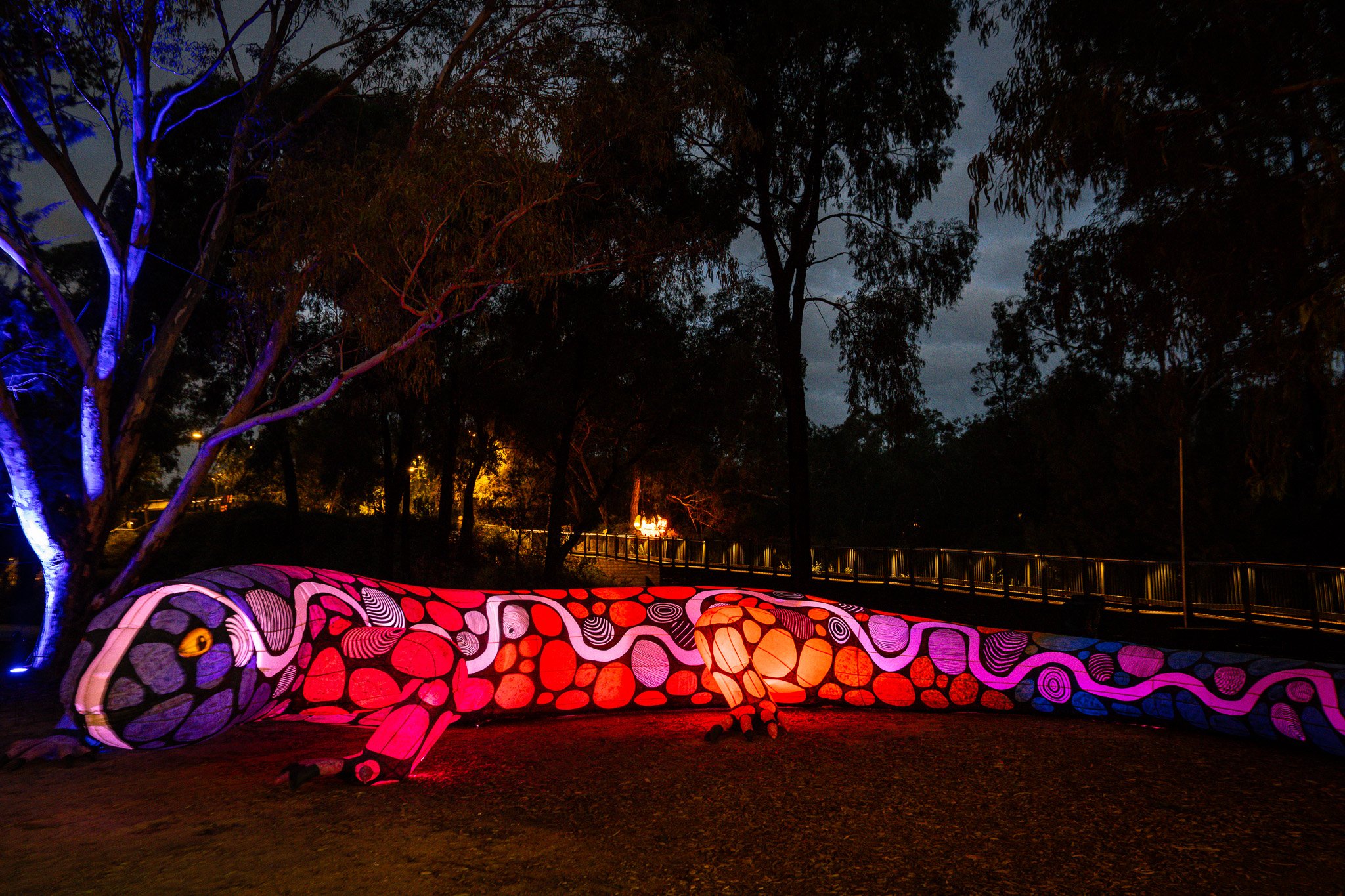
Along the way, we discovered a large lizard sculpture. It was not just a visual installation—the display included an audio story explaining its character and background.
It was an interesting idea, although the area around it felt quieter compared with the main part of the festival.
Soon, we found ourselves drawn back towards the glowing spheres.
They were clearly the star attraction.
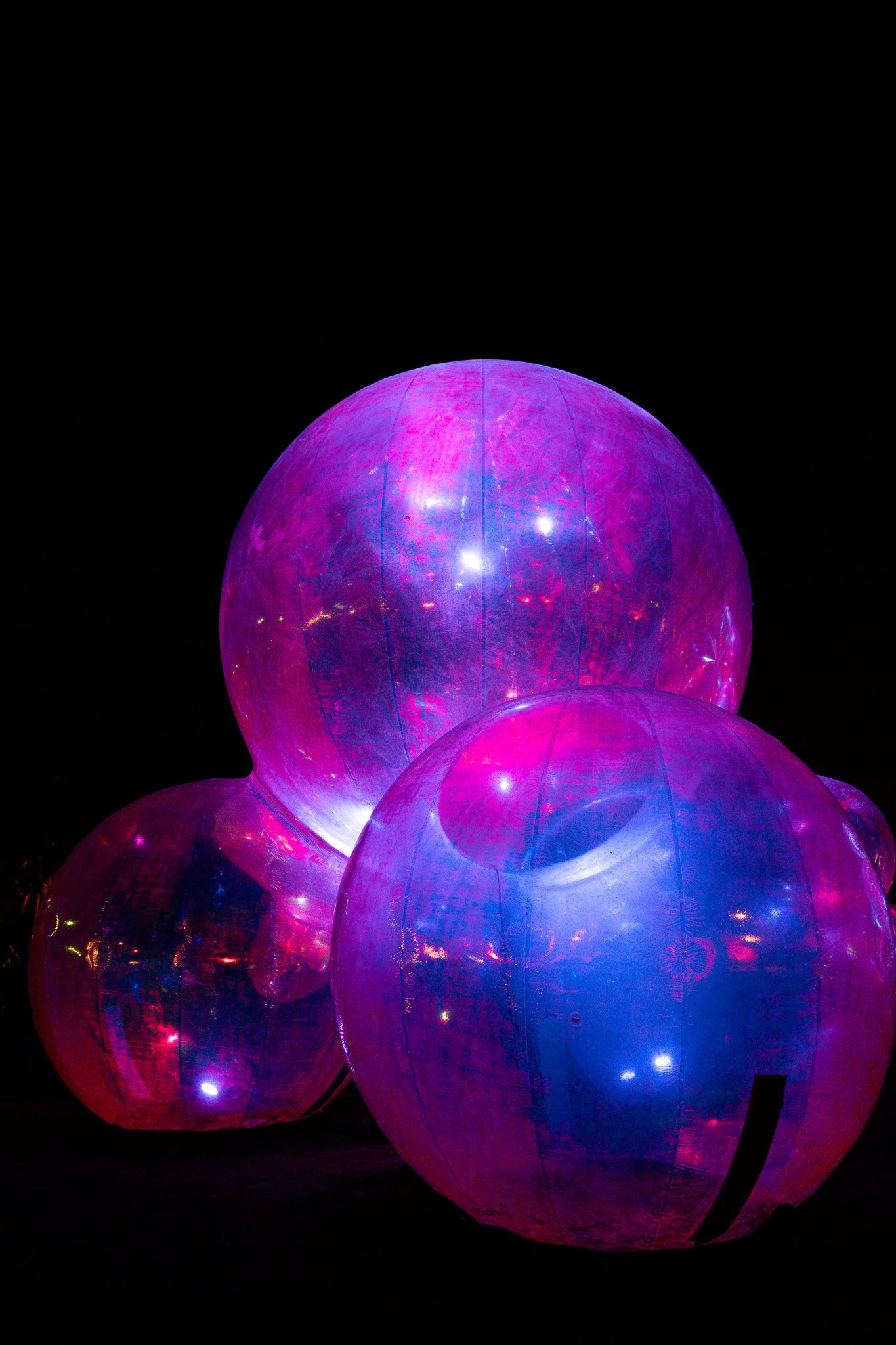
Photographing them was more challenging than I expected.
The installations looked impressive to the eye, but capturing that feeling through a camera was another matter. The constant movement of people made it difficult to find a clear frame.
Normally, when I photograph places, I try to avoid including people—especially recognisable faces. I prefer landscapes and objects to stand on their own.
But this evening was different.
The people became part of the story.
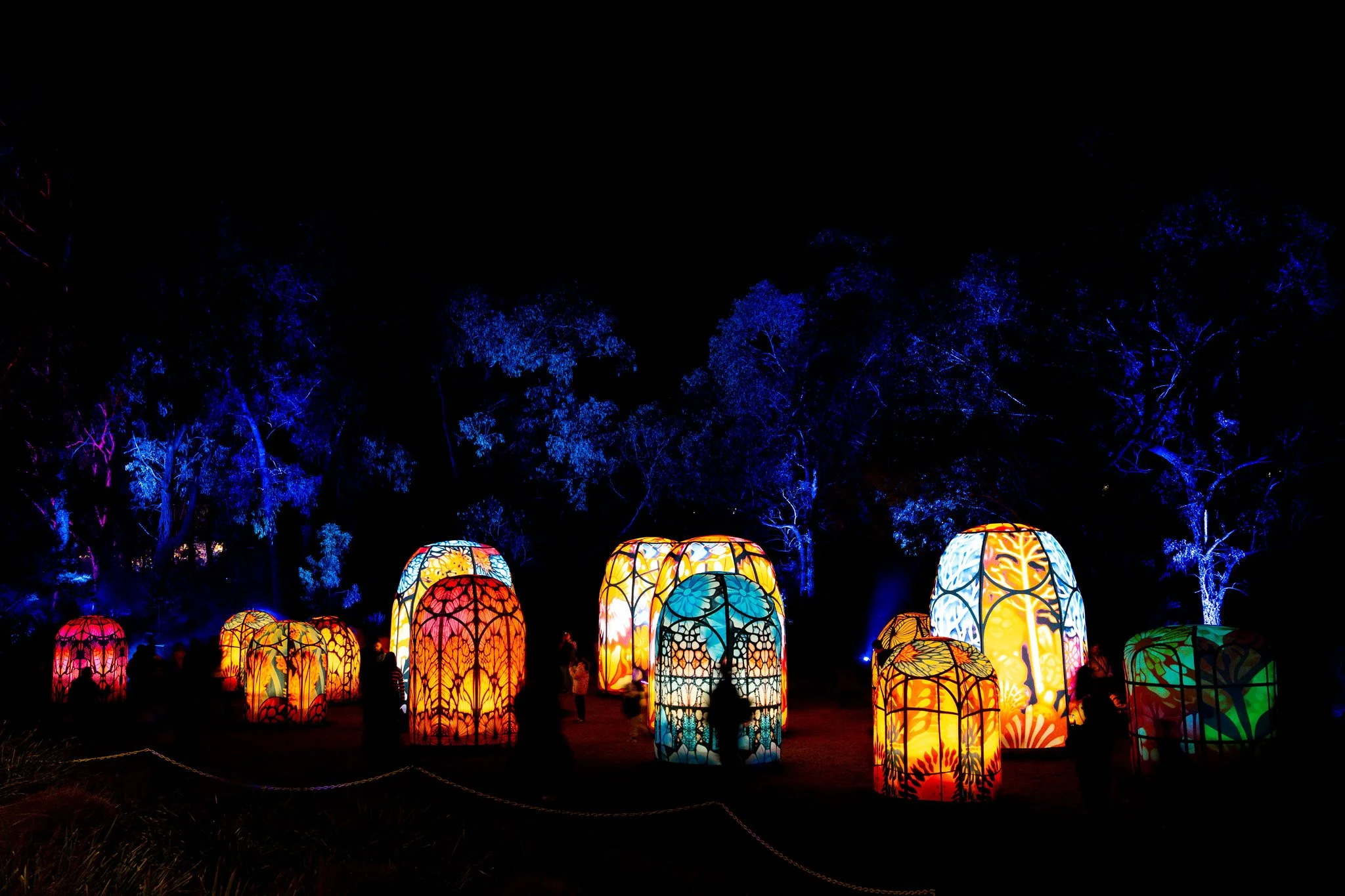
Children running beneath the lights, families gathering around the glowing structures, and visitors appearing only as silhouettes against the colour added a sense of scale and life to the images.
Instead of distracting from the scene, they helped tell the story of the evening.
After waiting patiently, watching people move through the frame, I managed to capture a few moments when everything aligned.
A quiet space.
A glowing structure.
A passing silhouette.
Sometimes a photograph is not about removing everything from the frame, but allowing the right elements to remain.
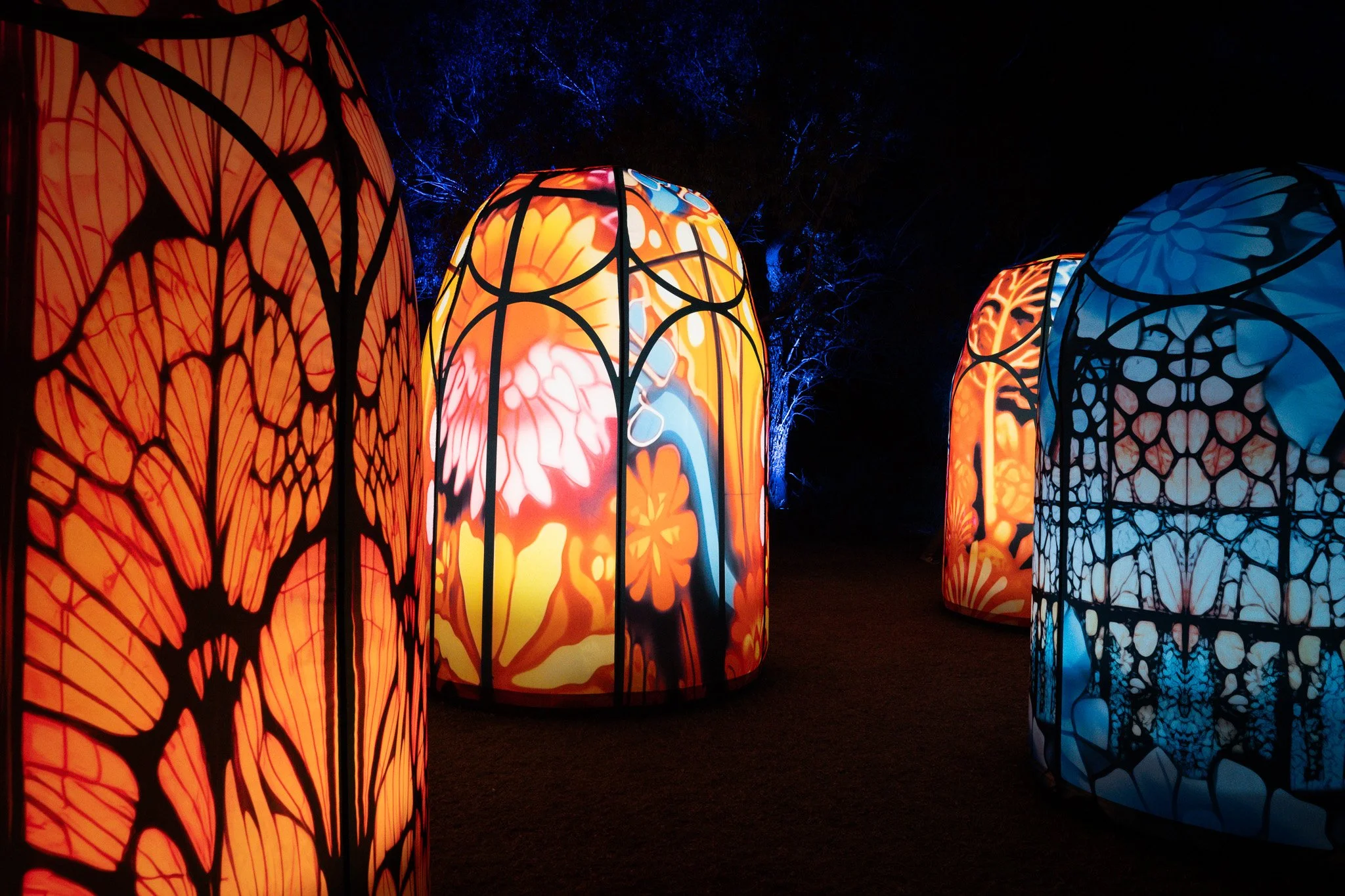
Further along the path, we discovered another installation—large lantern-like structures glowing softly in the darkness.
Unlike the vibrant energy of the bubbles, these created a much calmer atmosphere. Their gentle light invited people to slow down and simply observe.
We walked around the edge of the park before making our way back.
By then, the crowd had noticeably grown. More families were arriving, and the pathways had become busier.
As we left, I wondered about the couple we had seen earlier, still trying to find their way.
Hopefully, they had eventually discovered the festival too.
With several entry points around the park, finding the right path was really just a matter of knowing where you had parked.
Sometimes the hardest part of an adventure is simply finding the beginning.
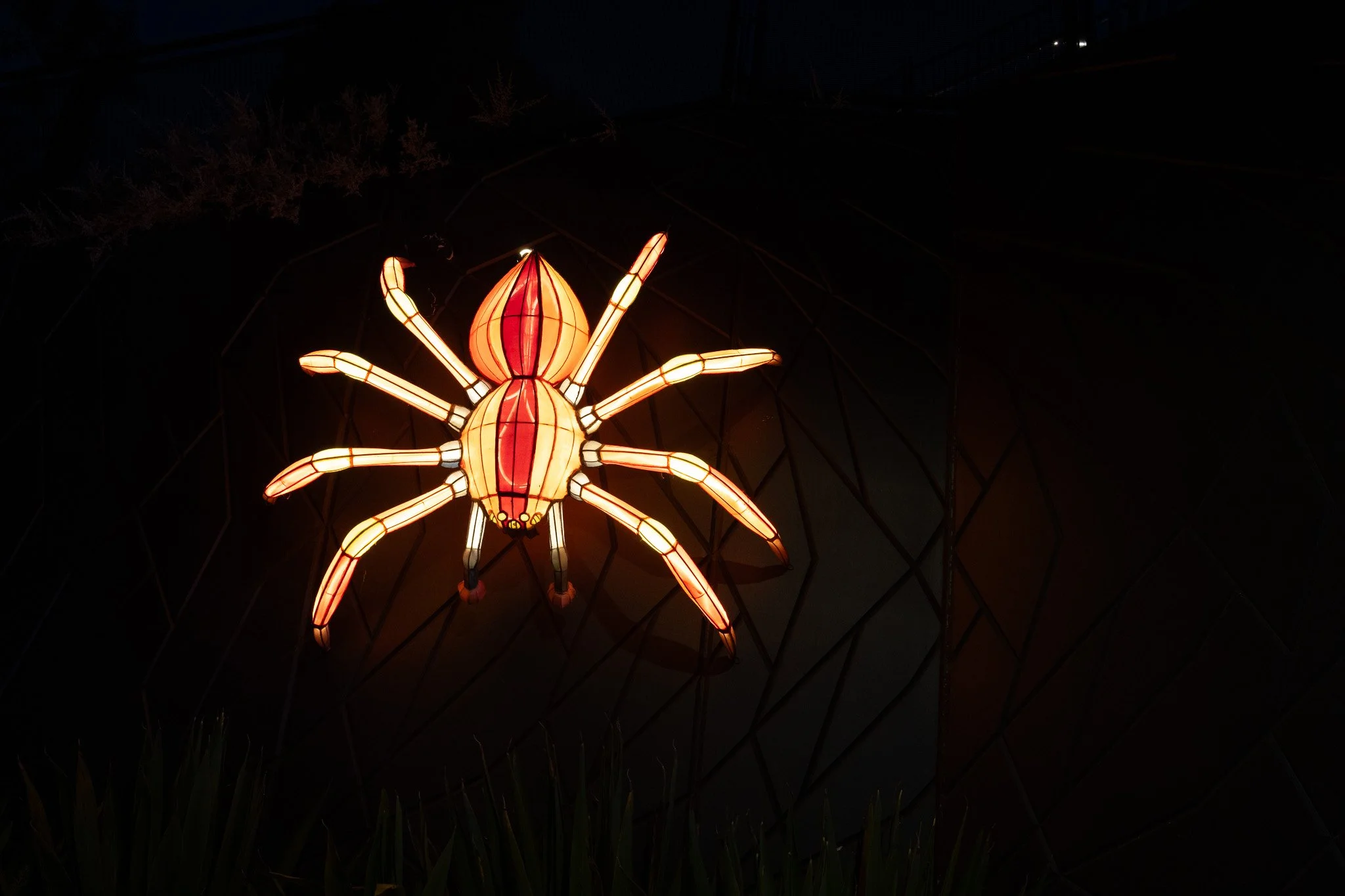
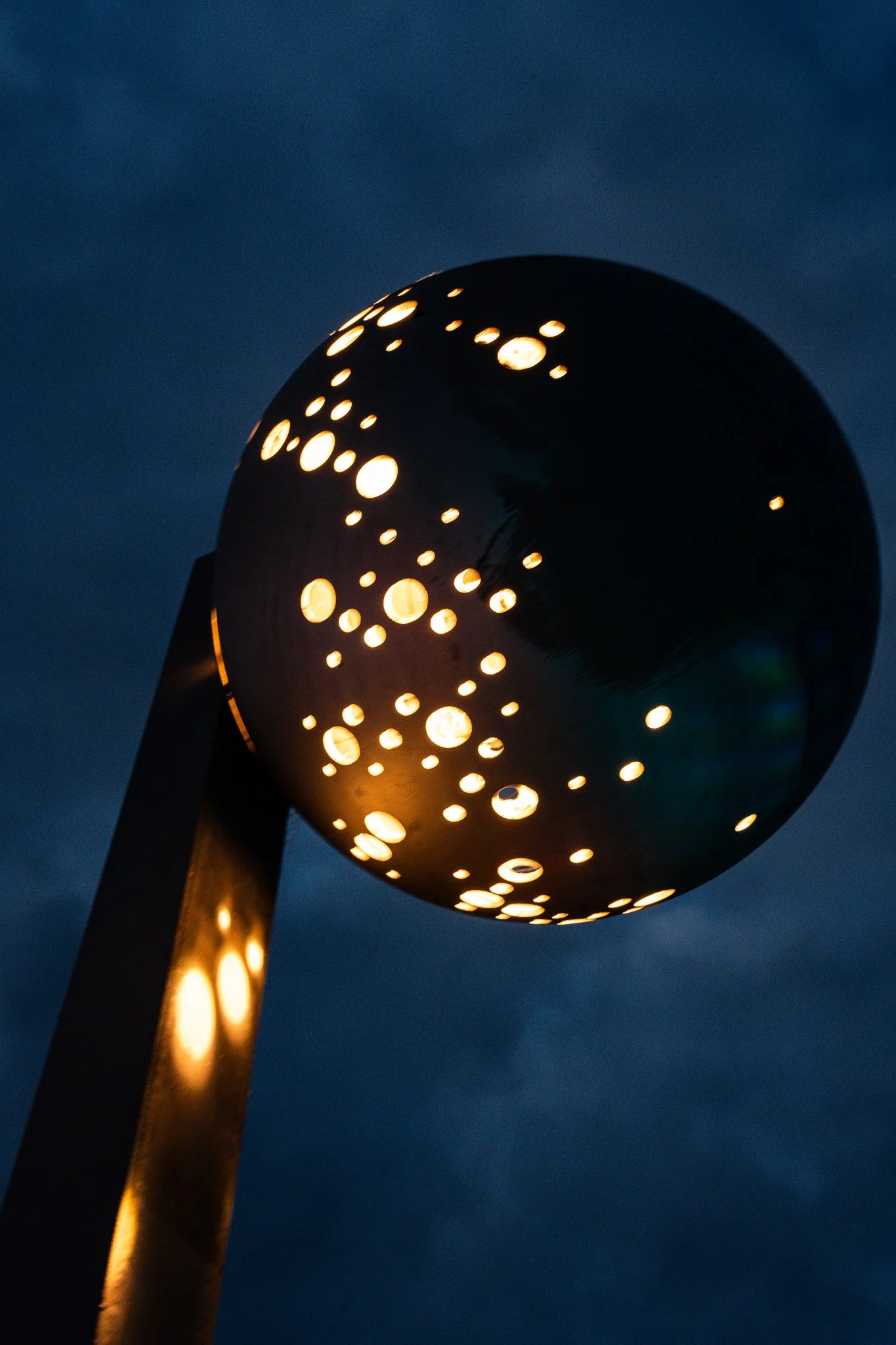
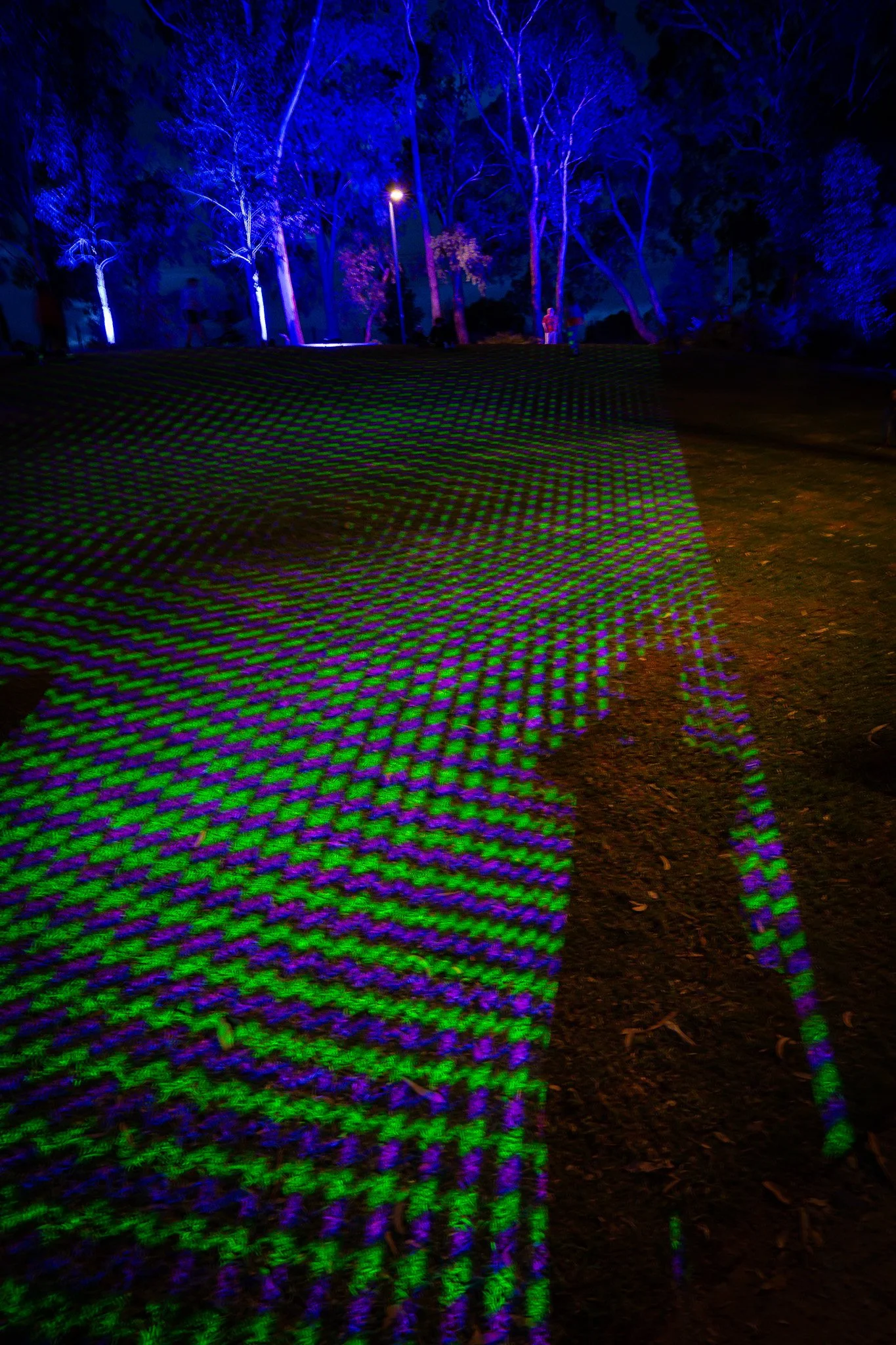
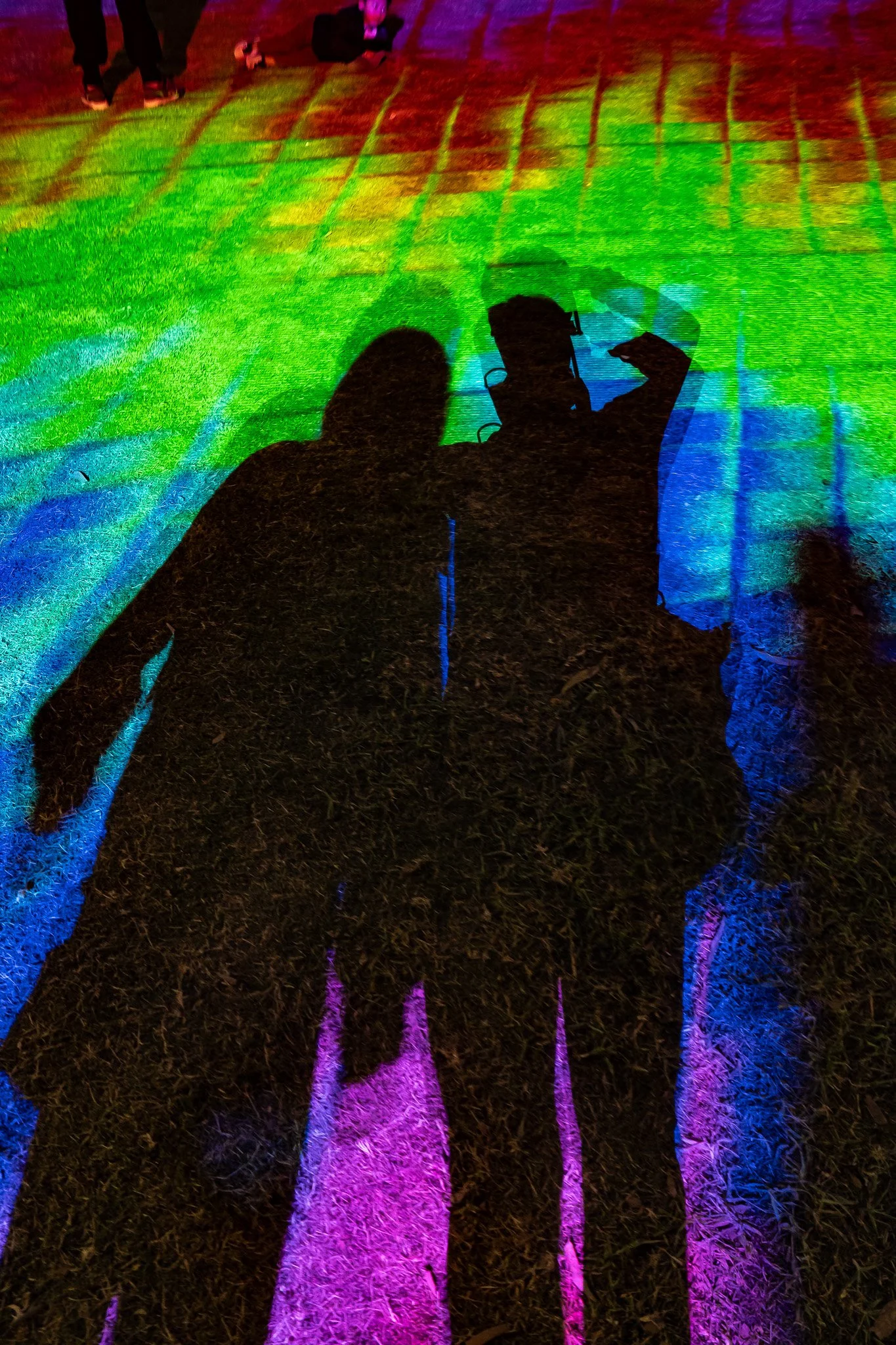
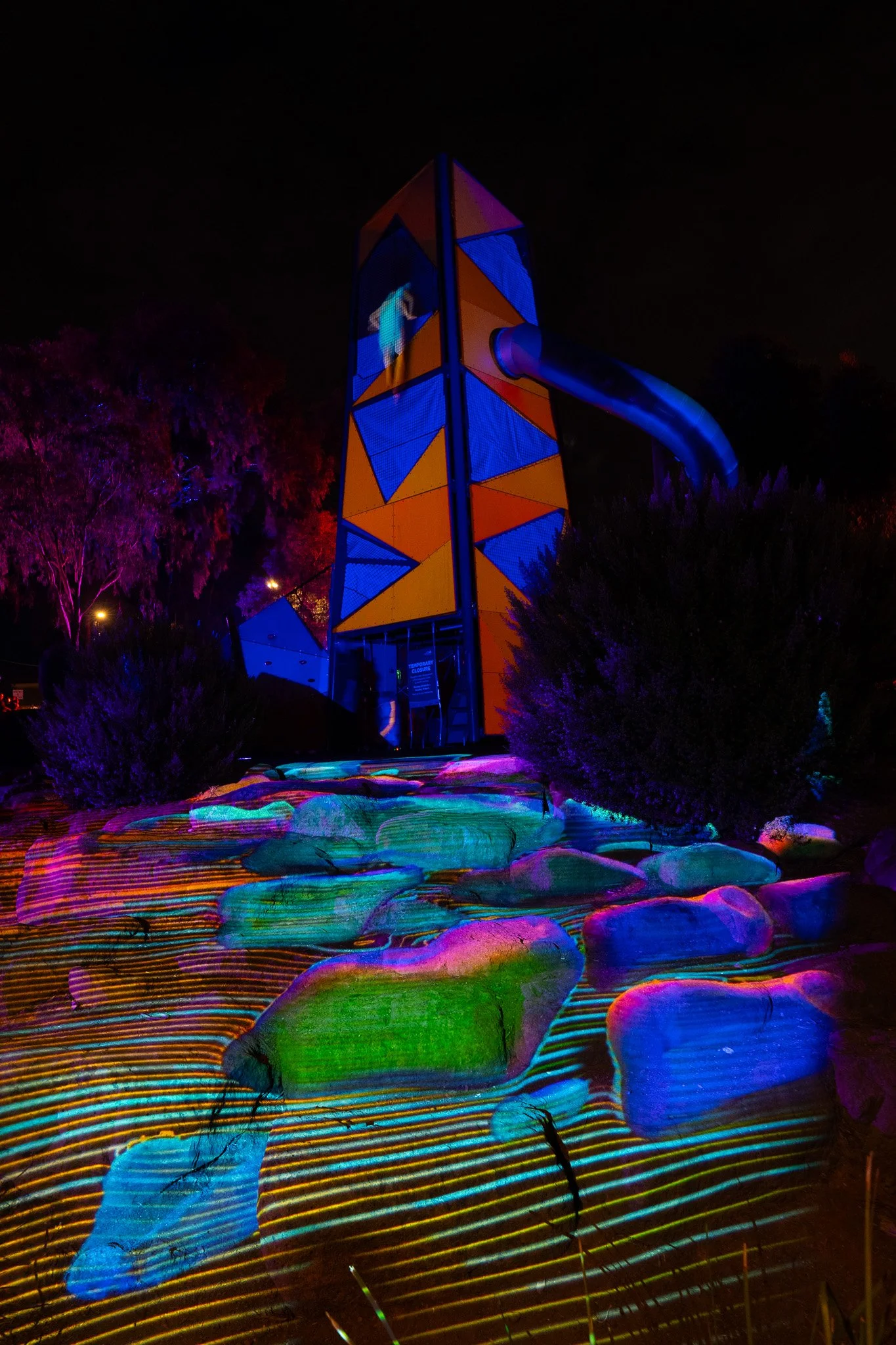
On the way home, I reflected on the challenge of photographing at night.
The camera behaves differently when light disappears. Slower shutter speeds require steadier hands, and higher ISO settings introduce their own compromises. I still have not completely worked out my limit for handheld night photography, but that is part of the reason I keep trying.
Every outing teaches something new.
The Wyndham Park Light Festival was not a grand adventure that required travelling far away. It was simply an evening spent discovering something new in our own backyard.
A wrong turn.
A quiet search for the entrance.
A park transformed by light.
And a few photographs captured while the night was still alive.
Sometimes, those simple moments are the ones that stay.