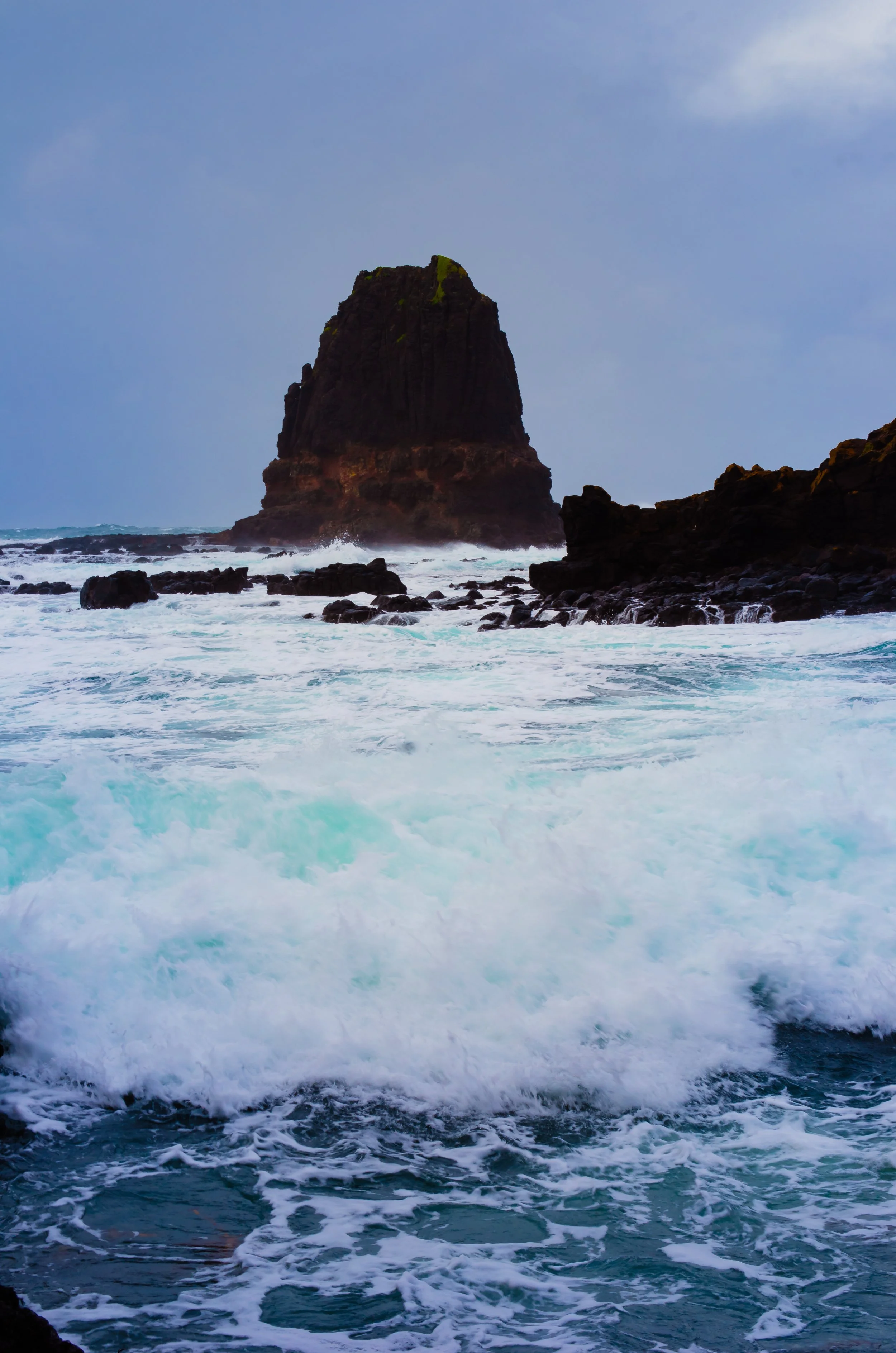
When the Sea Roared: A Winter Walk to Pulpit Rock at Cape Schanck
A winter storm led me to Cape Schanck in search of dramatic coastal photographs. What I found was far more than a landscape. Fierce winds, crashing waves, rattling pebbles, and the raw power of the Southern Ocean turned a simple photography outing into an unforgettable experience that engaged every sense.
The rain had been falling since the night before.
It was the kind of winter weather that made staying indoors seem like the sensible choice — cold, wet, and accompanied by a relentless wind that rattled everything in its path. By morning, the rain had finally eased, but the wind remained, sweeping across the Mornington Peninsula with the force and determination of a storm that had no intention of leaving.
Most people would probably have chosen a warm café, a hot drink, and a quiet afternoon. Yet, standing there in the middle of winter, already on the peninsula, a strange thought entered my mind.
Perhaps this was exactly the moment to visit Cape Schanck.
Bad weather often hides the beauty of the coast, but it can also reveal another side of it — a wildness that is absent on calm and sunny days. I had always wanted to photograph the ocean in its more powerful state, when waves and wind transform the coastline into something dramatic and untamed.
I had heard about Pulpit Rock, the 30-metre-high volcanic plug that rises from the coastline like a stone church pulpit overlooking the sea. At low tide, the landscape changes completely. The base of the towering rock formation, including the flat rock shelf known as Devil’s Desk, emerges from the water, surrounded by countless rock pools reflecting the sky above.
I checked the tide times.
It was perfect.
The tide was just beginning to retreat, revealing the rocky landscape that is hidden beneath the ocean for much of the day.
From the car park, a long wooden boardwalk stretched towards the beach, guiding visitors down through the coastal landscape. Above me, the winter sun had unexpectedly broken through the clouds, casting a warm glow over the path. The wind, however, had not softened.
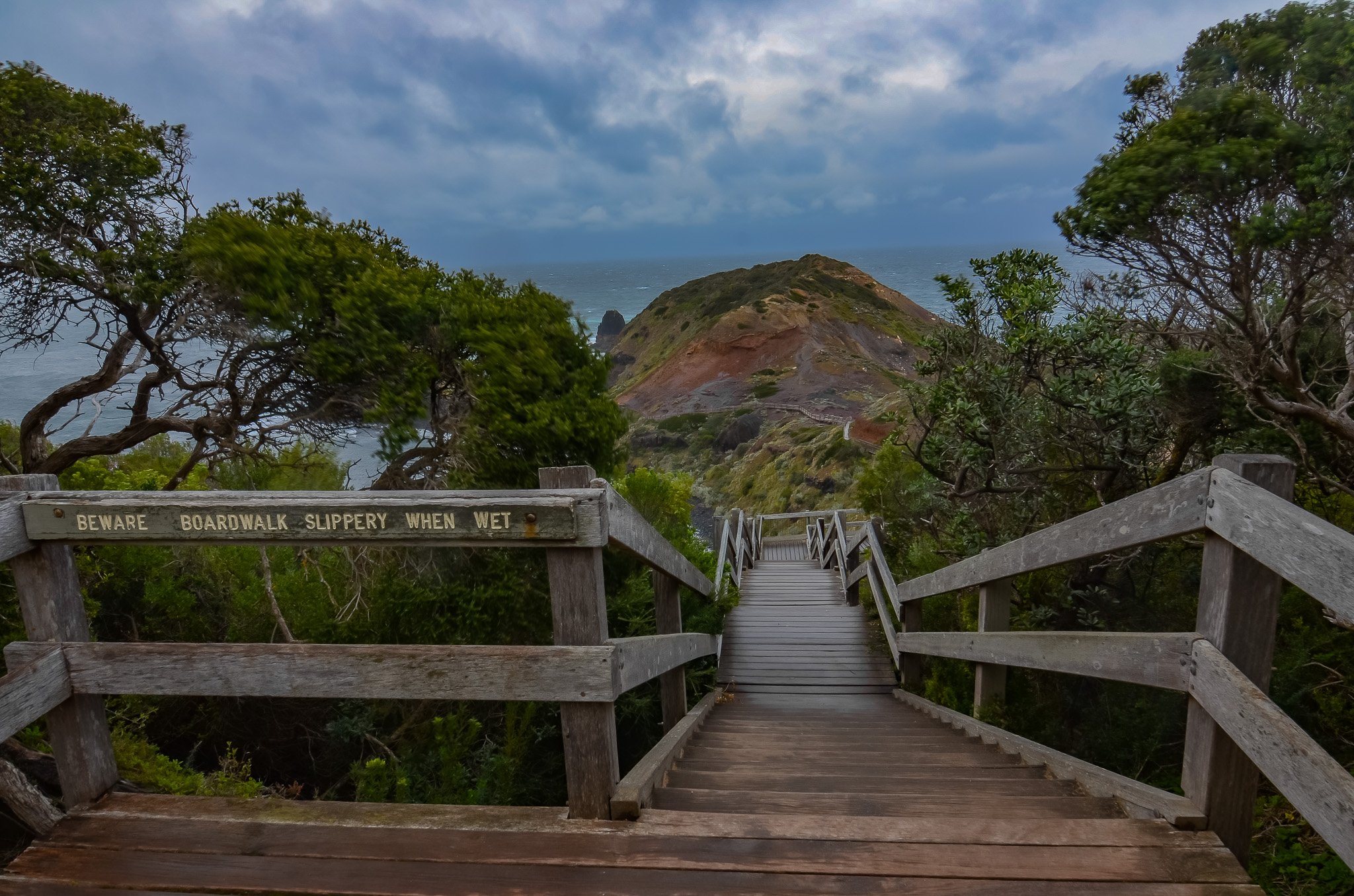
At the beginning of the walk, I barely noticed it. The boardwalk was sheltered by the tall dunes and cliffs on the right side of the peninsula, creating a surprisingly peaceful passage towards the ocean. For a moment, it felt like an ordinary coastal walk on a beautiful winter afternoon.
But looking down towards the water revealed a very different story.
The calmness of the walk was an illusion.
Below, the Southern Ocean was in complete contrast to the peaceful path above. Powerful currents pushed wave after wave towards the black volcanic rocks, exploding on impact and sending sheets of white spray across the coastline. These were not the gentle waves of a summer beach. They were the wild, restless waves created by the combination of strong wind and open ocean.
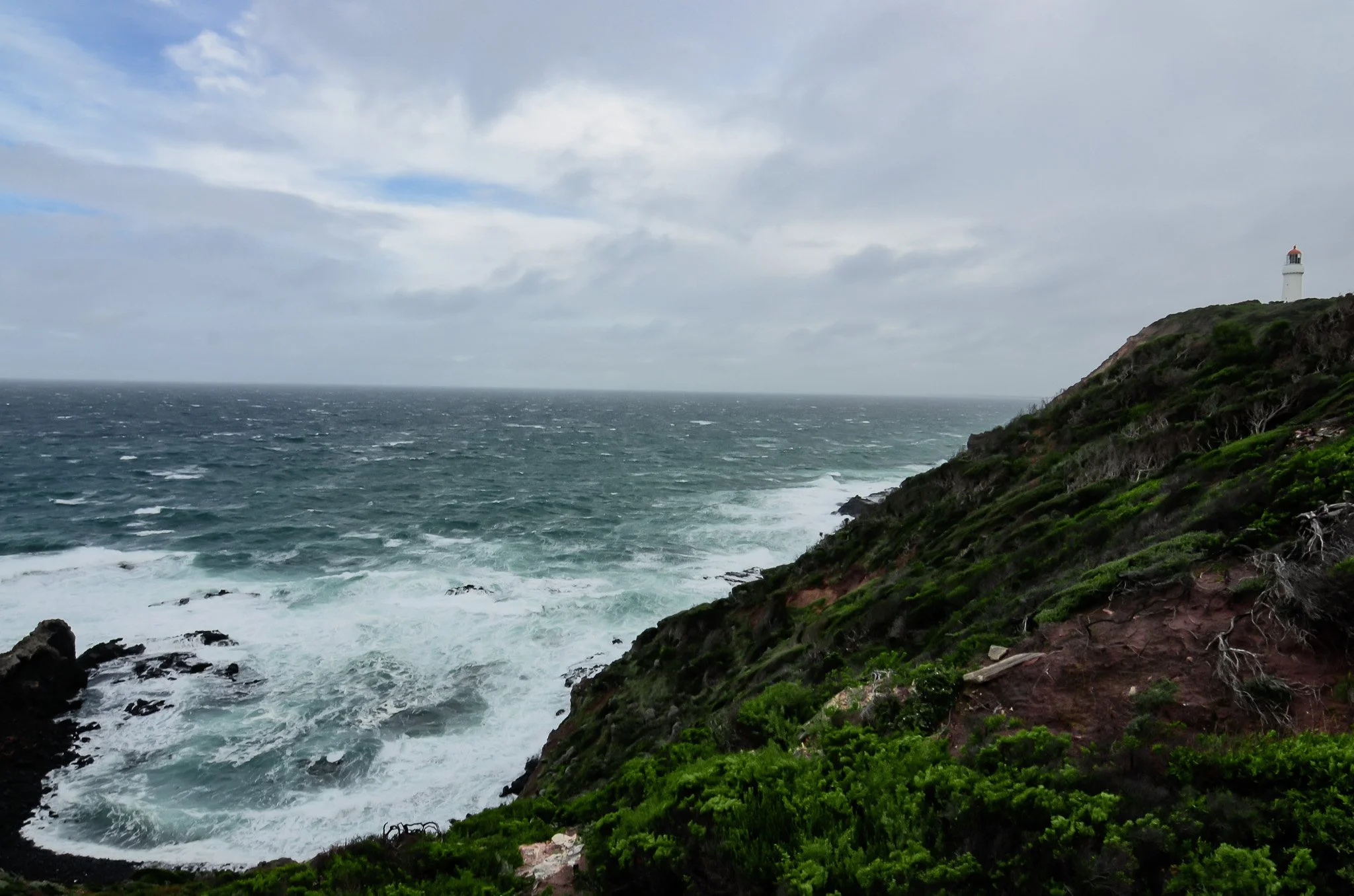
As I continued down the boardwalk, the sound of the sea grew louder.
The coast was beginning to reveal its true character.
As I approached the exposed section of the boardwalk, where the shelter of the dunes and cliffs finally disappeared, I immediately felt the full force of the wind.
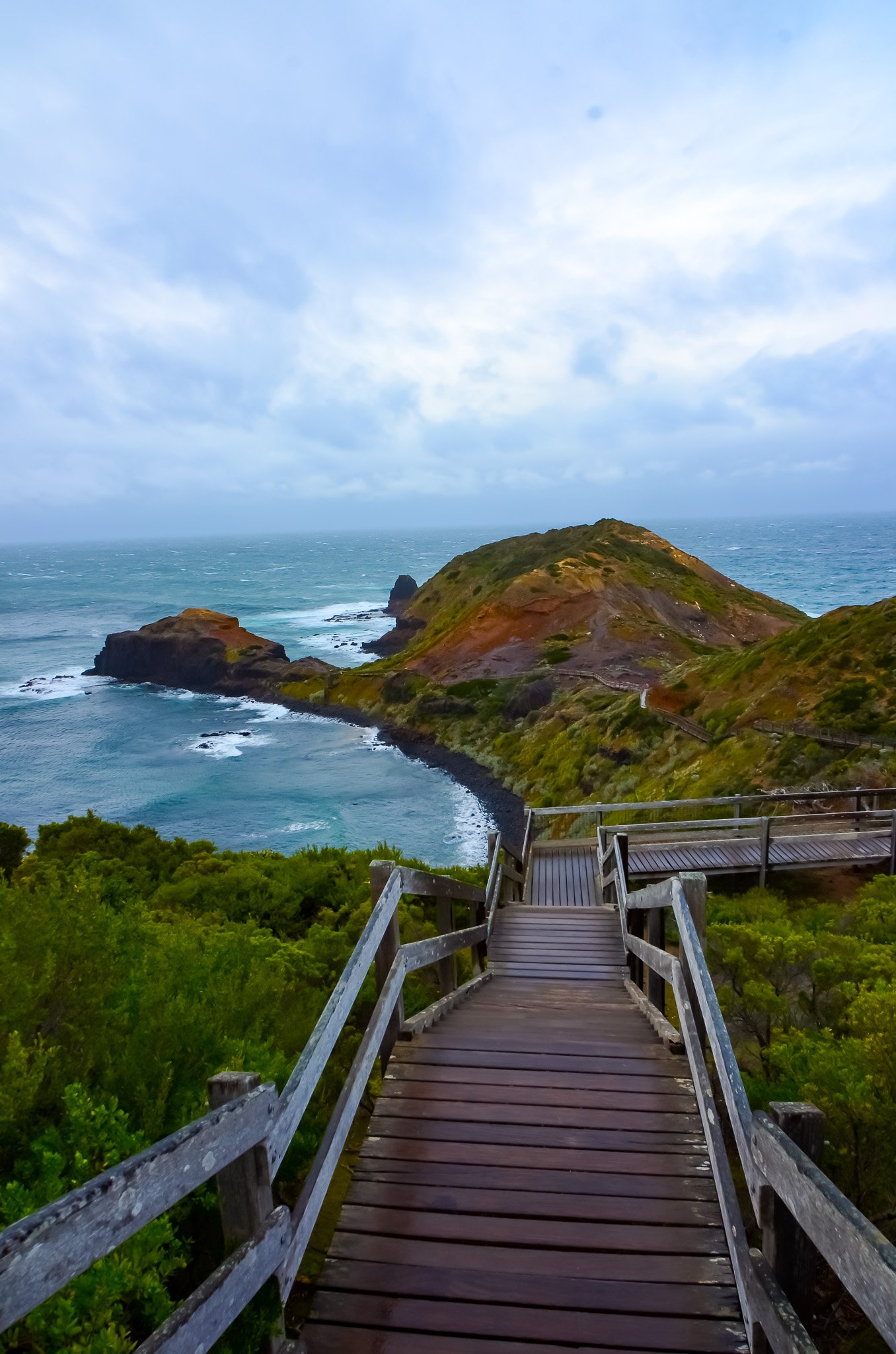
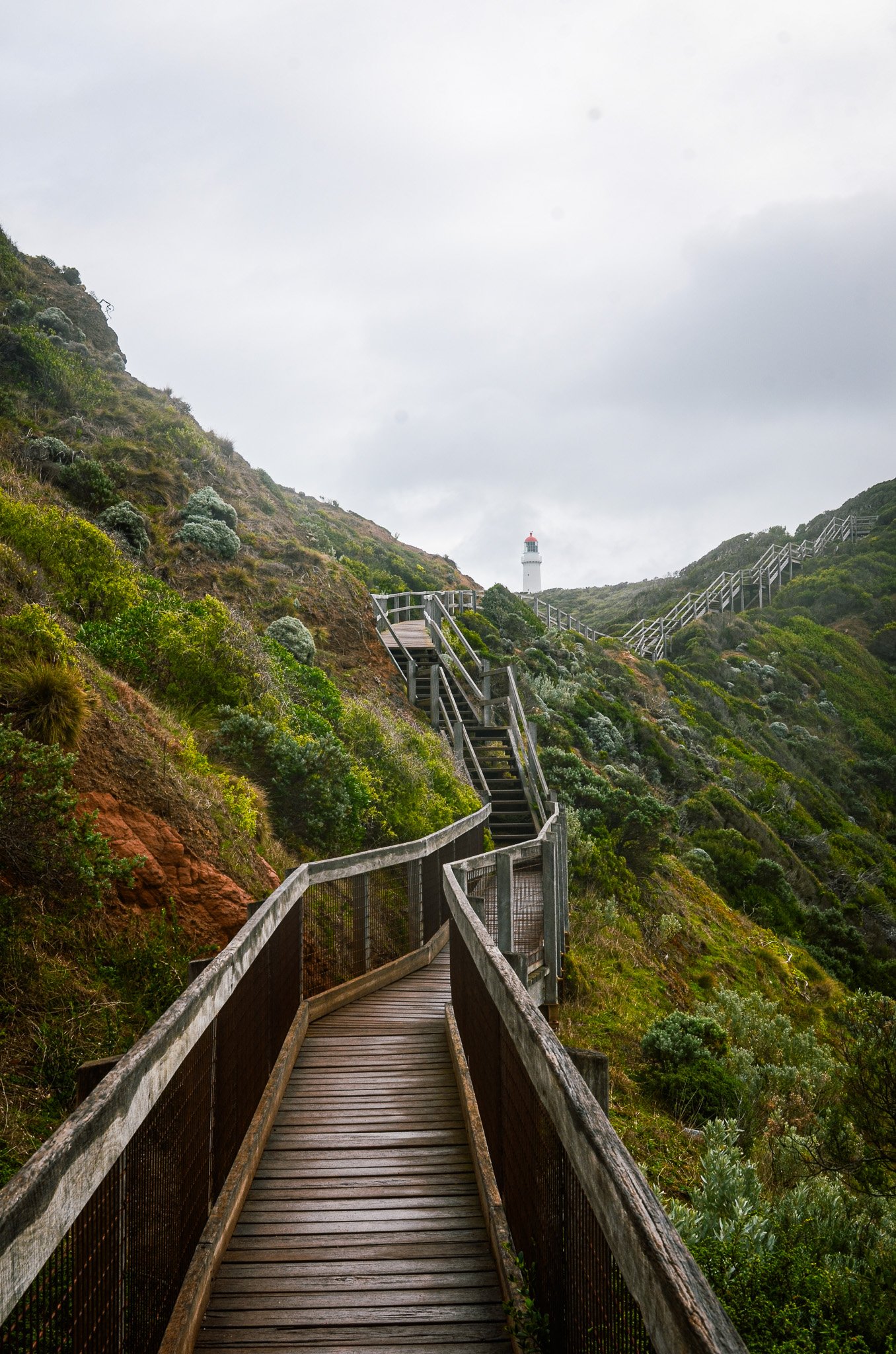
The protection I had enjoyed earlier was an illusion. Out here, there was nothing between me and the wild weather sweeping in from the ocean.
The wind was so strong that I instinctively reached for the railing and held on tightly. My confident walk became a slow, careful movement, each step placed deliberately in front of the other. I kept my feet close together, almost shuffling forward, as the wind pushed me from behind and then sideways without warning.
For the first time that morning, doubt entered my mind.
I was completely alone.
There was no one in the car park when I left, and I could not see anyone ahead of me on the boardwalk or down near the beach. The thought suddenly occurred to me — if something happened, who would even know? Who would come looking for me?
That thought stayed with me as I tightened my grip on the railing and focused only on the next step.
The wind felt powerful enough to take control of my body. If I let go, I had no doubt I would be pushed wherever it wanted me to go, like a broken kite caught in a violent gust, with no ability to control its own direction.
More than once, I told myself, this was a bad idea.
But then I looked towards the ocean.
The waves were crashing against the dark volcanic rocks, exploding into clouds of white spray before being swept away by the wind. The contrast was extraordinary — the deep black of the coastline against the brilliant white of the ocean’s fury.
I knew this was not an ordinary winter afternoon.
This was the kind of scene that might only reveal itself for a brief moment, created by a rare combination of tide, wind, and weather. Perhaps I would never return to witness it again.
The desire to capture that single image — not just a photograph of the place, but a photograph that carried the feeling of standing there — kept me moving forward.
Slowly.
Cautiously.
One careful step at a time.
Fortunately, the exposed section of the boardwalk was not long. Before long, I was once again sheltered by the cliffs, and the fierce wind lost much of its grip.
Relief washed over me.
It almost felt as though nature had tested my determination before allowing me to witness the coastline at its wildest.
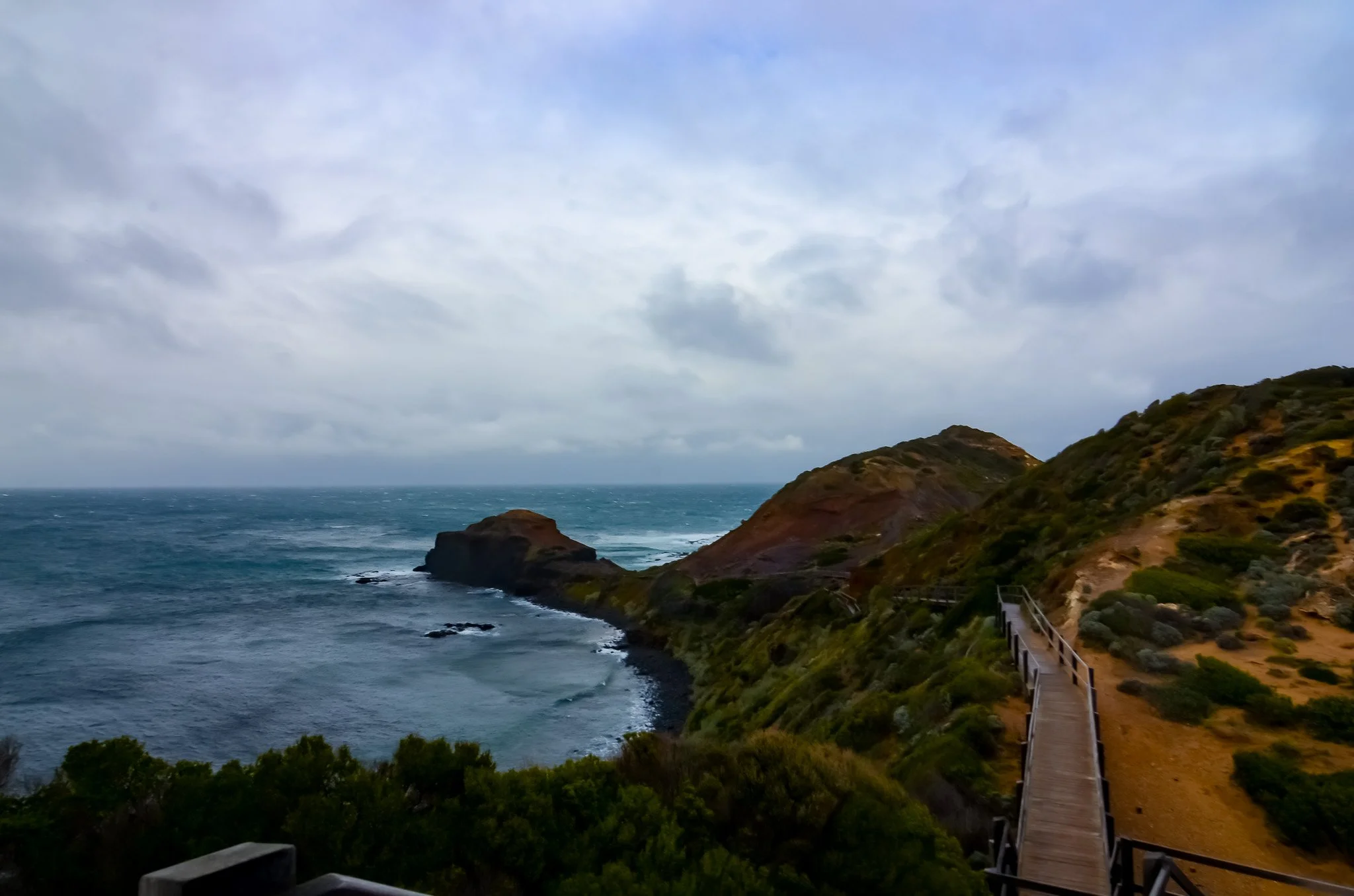
The path led me to a small cove overlooking the ocean. Pulpit Rock stood in the distance on the far right, rising proudly above the sea like a stone sentinel. Although the tide had begun to fall, the water had not yet receded far enough for me to make my way closer. For now, all I could do was wait and watch.
Then I heard it.
A rapid rattling sound.
It wasn't particularly loud, but it was unmistakable. It sounded remarkably like rocks tumbling down a cliff.
Instinctively, I looked up at the steep slopes surrounding the cove. My heart quickened. The last place I wanted to be was trapped beneath a landslide, with the unforgiving ocean only metres away.
The sound stopped.
Then, a few moments later, it came again.
It was close—close enough to make me uneasy—yet I couldn't work out where it was coming from. I stood perfectly still, listening. Every few seconds the strange rattling returned, always the same, always just out of sight.
Then I noticed the beach.
Thousands upon thousands of smooth black pebbles lay scattered across the shoreline. As each wave retreated, the powerful current dragged the loose stones back towards the sea. They rolled over one another, colliding and scraping together before the next wave swept in again.
That was the sound.
Not falling rocks.
Moving rocks.
The ocean was powerful enough to shift an entire beach, pebble by pebble.
A smile replaced my anxiety. The mystery had been solved, and with it came an even greater appreciation of the forces at work before me.
Now I could finally take in the scene.
The sea remained wild, but the tide was steadily retreating. With every passing minute, more of the dark volcanic rock shelf emerged from beneath the churning water, revealing a pathway that would eventually lead me closer to Pulpit Rock. It was as though the ocean was slowly drawing back its curtain, unveiling a landscape that had been hidden only moments before.
I was completely alone.
Surrounded by nature at its wildest, I found myself sheltered beneath a shallow hollow in the volcanic cliff. The ocean raged only a short distance away, its power impossible to ignore, yet from where I sat I felt protected. I had no desire to challenge nature. I simply wanted to witness it and respect it.
For a while, I stopped thinking about photographs.
Instead, I sat quietly and allowed myself to absorb everything around me.
I watched the relentless waves crash against the dark rocks before dissolving into white foam. I listened to the rhythm of the sea, broken only by the rattling of thousands of pebbles being pulled back towards the ocean with each retreating wave. Fine droplets of seawater, carried by the wind, settled on my lips with their unmistakable taste of salt. The air was filled with the clean, briny scent of the Southern Ocean, while the winter sun, now shining through the passing clouds, brought a gentle warmth to my face despite the cold wind.
Every sense was engaged.
For those few quiet moments, I wasn't simply looking at the landscape—I was part of it. The sounds, the smells, the taste of the sea, the touch of the wind, and the warmth of the sun came together to create a memory that no photograph could ever fully capture.
As everything around me blended into a single experience, I finally raised my camera and began to photograph the coastline.
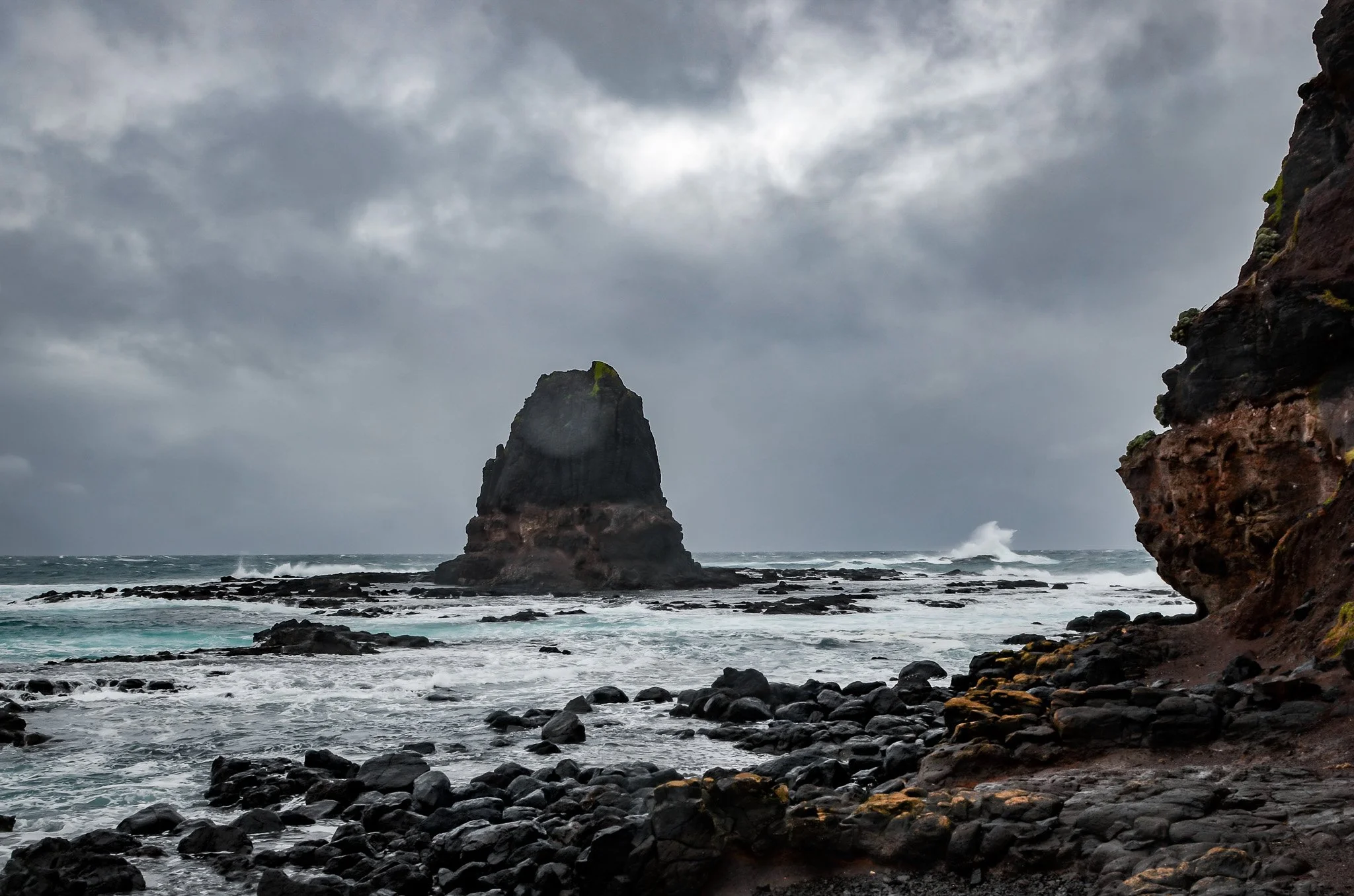
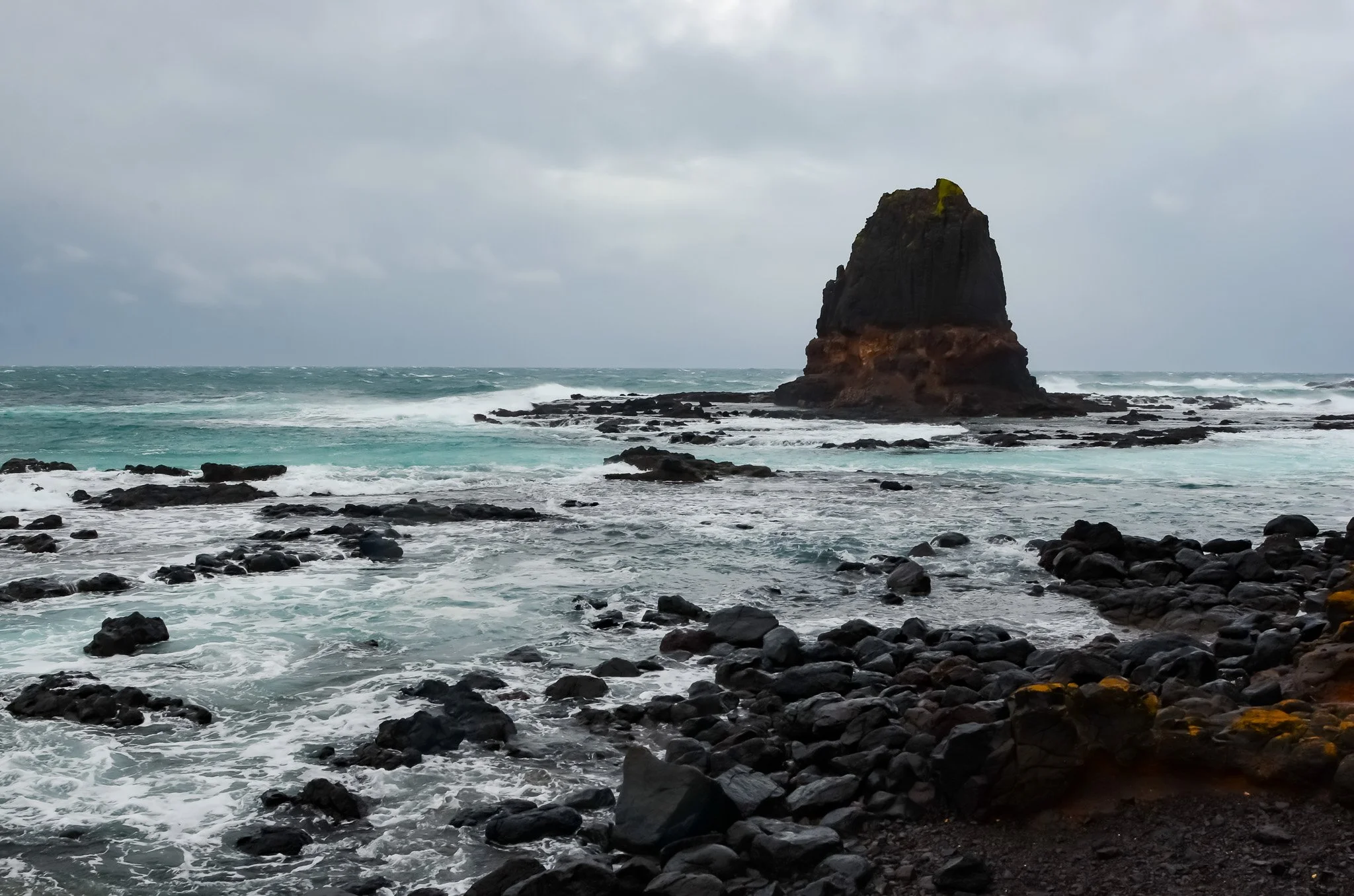
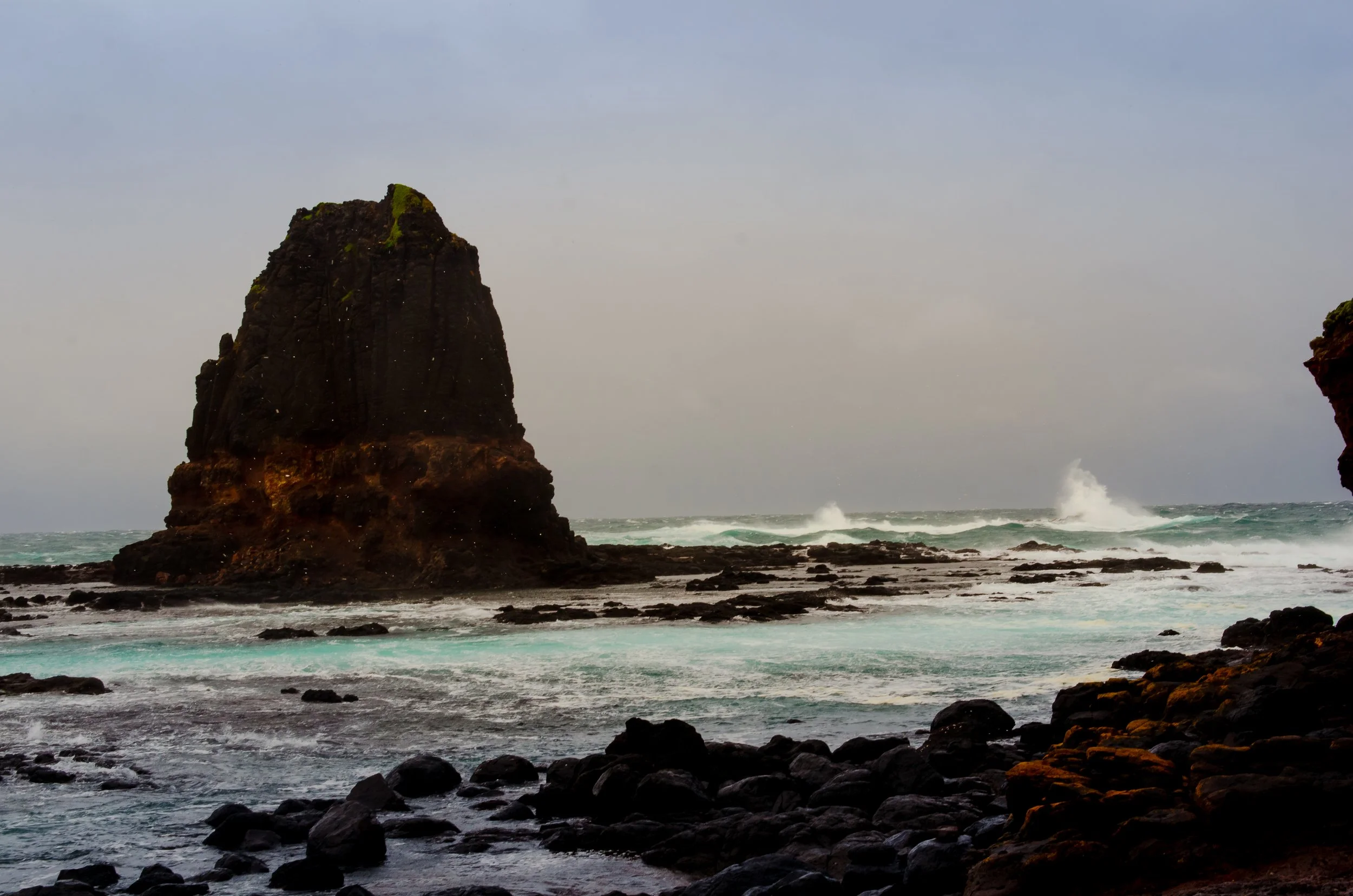
It felt effortless. For the first time that day, I wasn't looking at a view to capture—I was living in it.
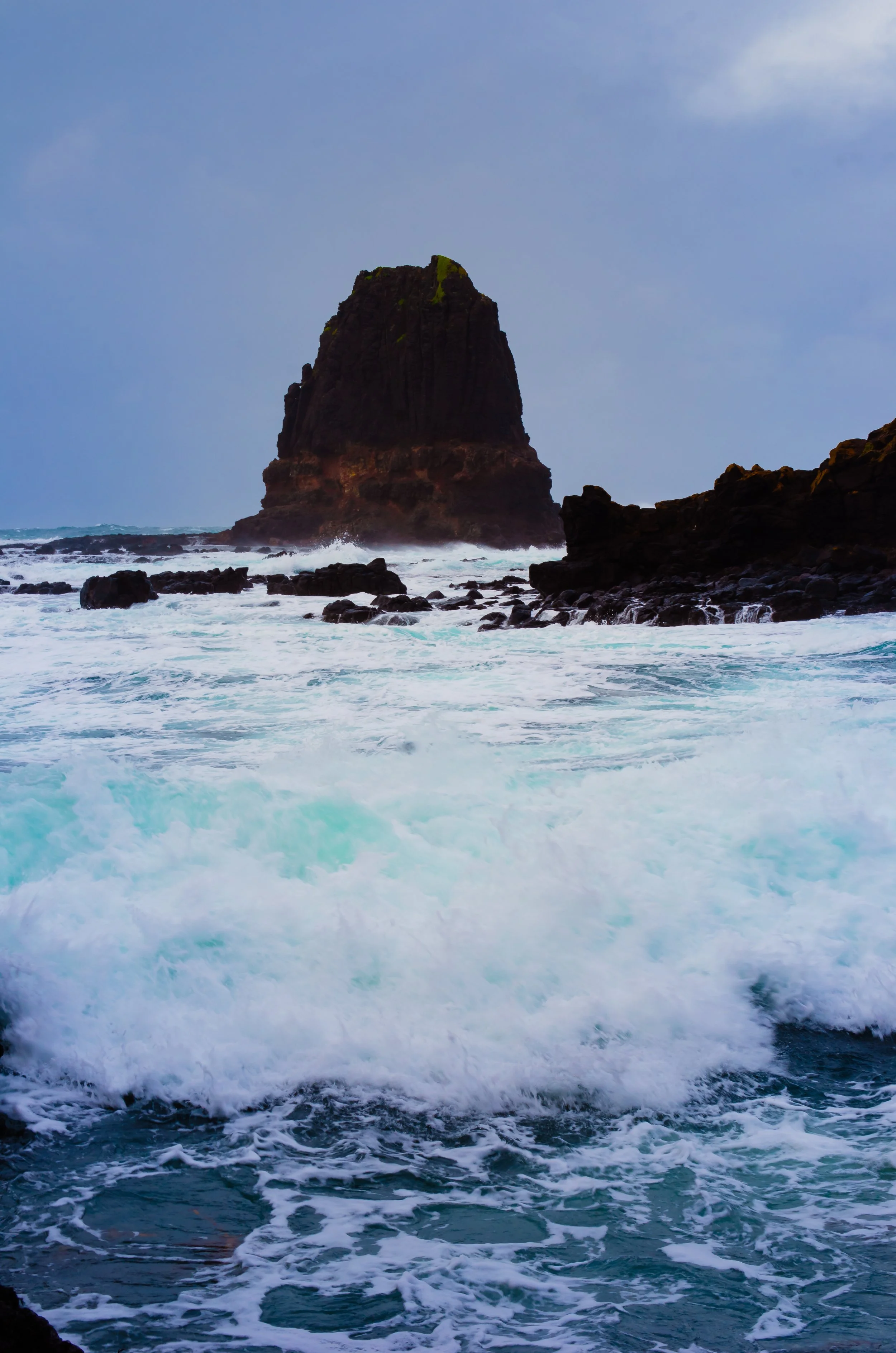
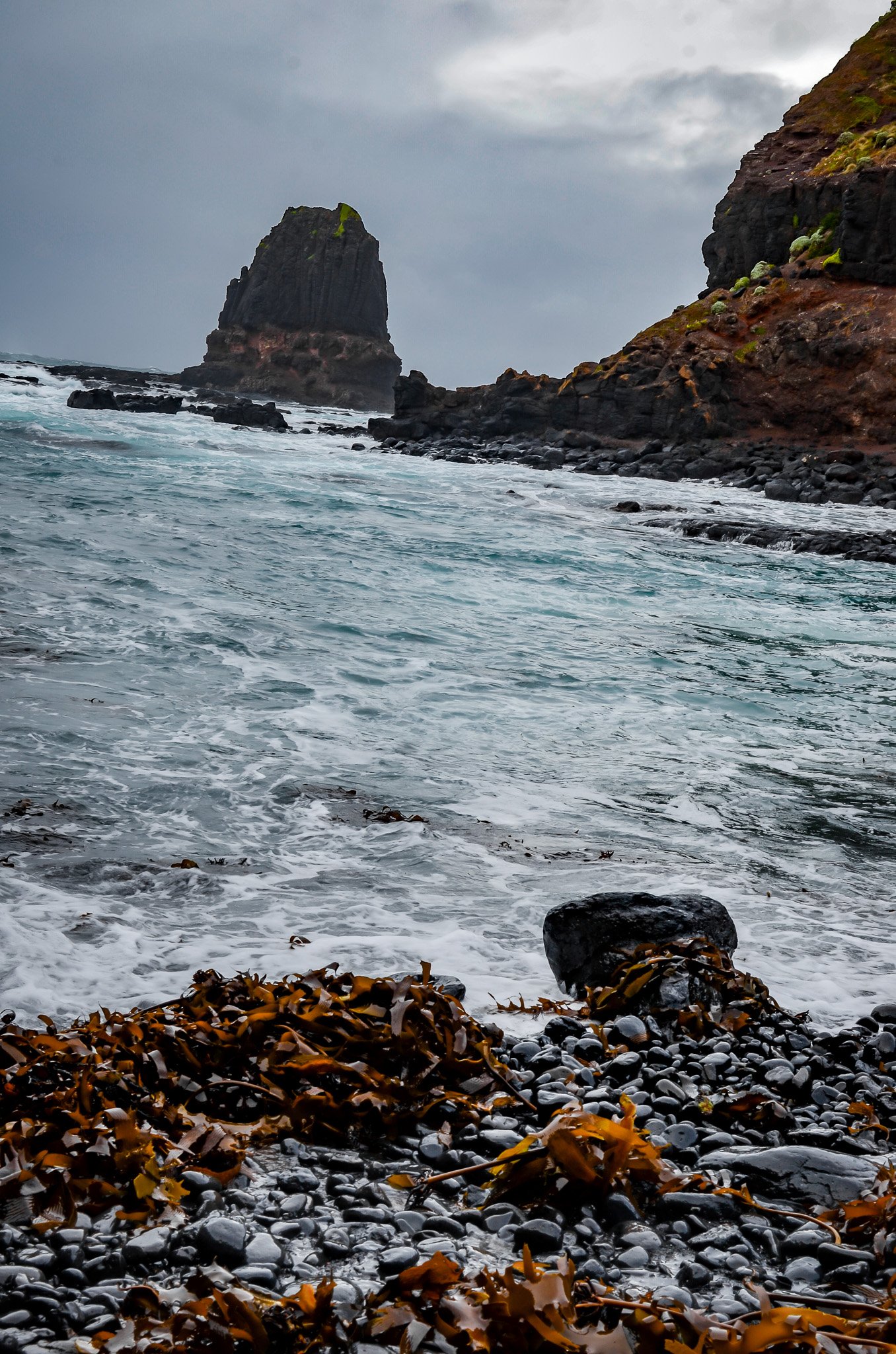
I came to Cape Schanck hoping to photograph the sea at its wildest. I left with photographs, certainly, but more importantly, with a memory that no image could ever completely contain. The wind, the crashing waves, the rattling pebbles, the salt on my lips, and the warmth of the winter sun had become part of the story. The photographs were simply my way of remembering it.