Two Weeks Across Japan - When Our Path Briefly Diverged
Leaving Fukuoka, we made our way to Hiroshima.
It was part of our broader plan to gradually move northward through Japan, stopping at different cities along the way. Some in our group would eventually continue on to Tokyo. My partner and I, however, had already set our endpoint in Osaka.
We had deliberately allocated two days to Hiroshima.
On my previous visit, it had only been a day trip, with Miyajima Island included in a tightly packed schedule. At the time, we had arrived too late to enter the Hiroshima Peace Memorial Museum — just as the final visitors were being admitted. That moment had stayed with me as an unfinished experience, a quiet regret that I had always intended to return to correct.
This time, we made sure there would be enough space in the itinerary.
The Shinkansen from Fukuoka carried us smoothly into Hiroshima Station.
Like many major stations in Japan, it was vast and constantly in motion. People moved with certainty and urgency, flowing through the space in coordinated waves. Those unfamiliar with the system — ourselves included, at first — tended to drift to the side, momentarily absorbed into the edges of that movement.
By now, however, we had become more accustomed to Japan’s railway environments.
The layered stations, the numbered exits leading to entirely different parts of the city, the long transfers between lines, the separation between local and JR networks, the ticket gates, the signage, the shops — all of it had slowly become familiar through repetition.
Still, Hiroshima introduced something slightly different.
Trams.
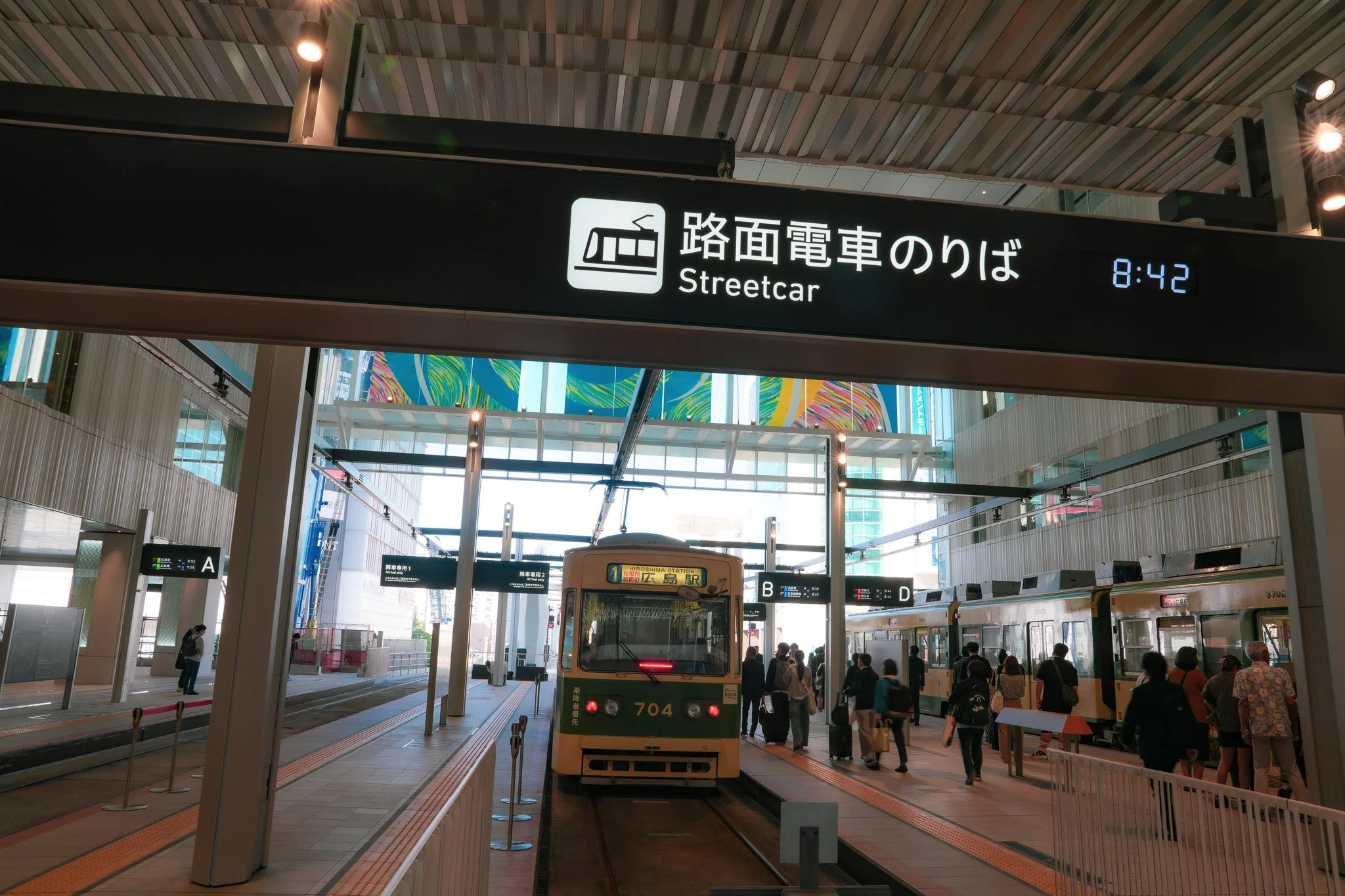
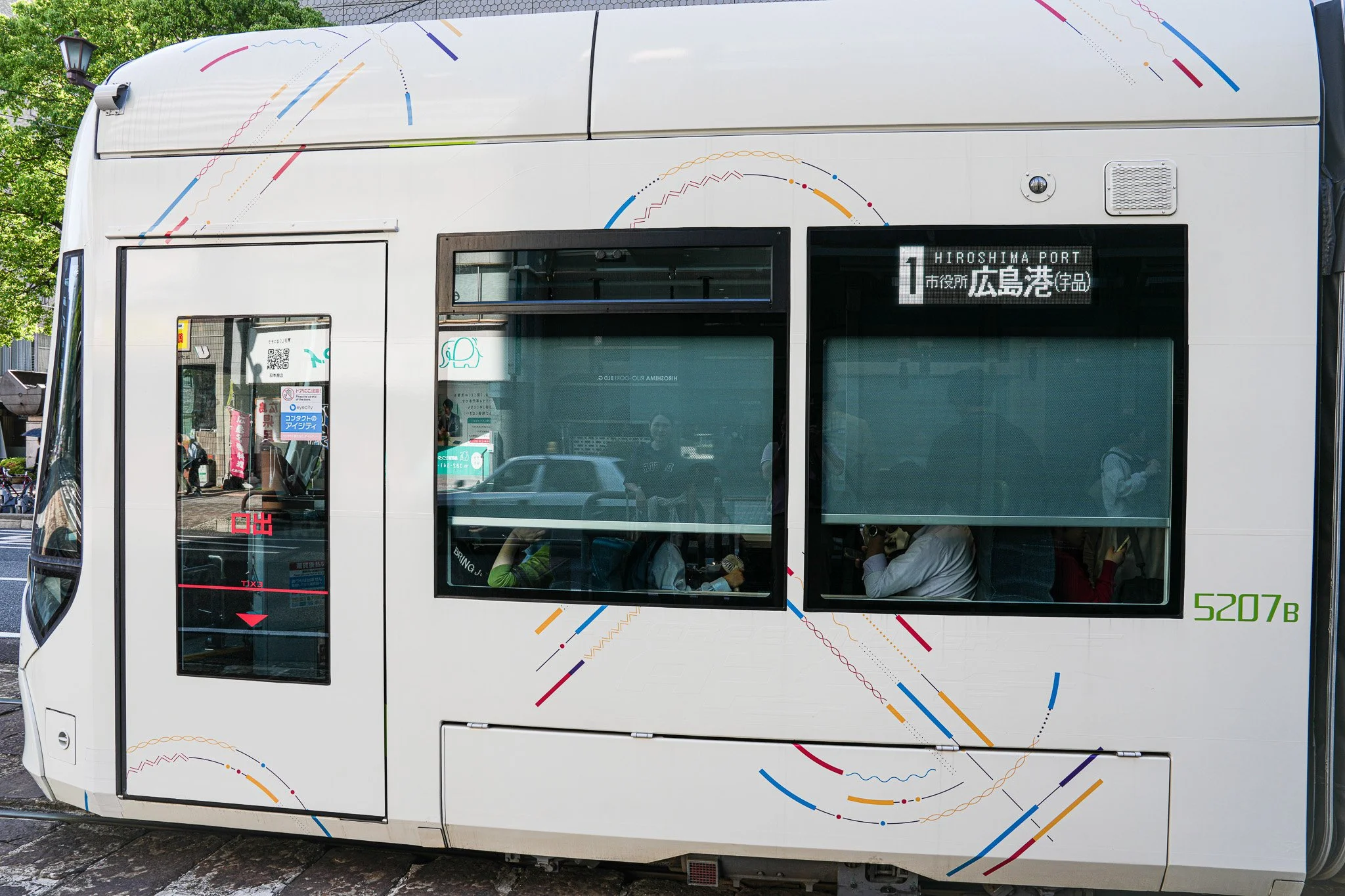
A network of street-level movement that immediately reminded us of Melbourne — of familiar intersections where tram lines cut through the rhythm of traffic, governed by rules that required a different kind of awareness.
We chose the simplest and safest route out of the station.
The plan was to take a tram directly to our hotel, but we paused briefly at the information counter to confirm the details.
While the staff was explaining the route, my attention drifted to a small box on the counter. Inside were several folded paper cranes.
The symbol of Hiroshima.
I asked if I could take one.
The staff smiled and nodded — saying they were there for anyone who wanted one.
I chose one carefully, selecting a colour that immediately caught my heart.
It was a simple gesture, but in that moment, it felt heavier than its size suggested.
Unlike something I could make myself, this one had been folded here — in this city — by someone else. That small distance, between maker and place, gave it a quiet significance.
And so I carried it with me as we stepped back into the flow of the station, and into Hiroshima itself.
After securing our luggage at the hotel — where we would not be able to check in until later in the afternoon — we set out on foot to explore the city.
Our main destination was the Hiroshima Peace Memorial Park.
We knew it was within walking distance. And given the weather, walking felt like the natural choice. The sky was clear, the sun was bright but not harsh, and a cool breeze moved through the streets — the kind of weather that makes a city feel immediately more open.
Hiroshima, at least in our sense of scale, did not feel like a large city. The main sites were relatively close together, and moving between them on foot often felt faster and more direct than relying on transport.
Still, we needed the map to guide us through unfamiliar turns.
Eventually, we reached the river.
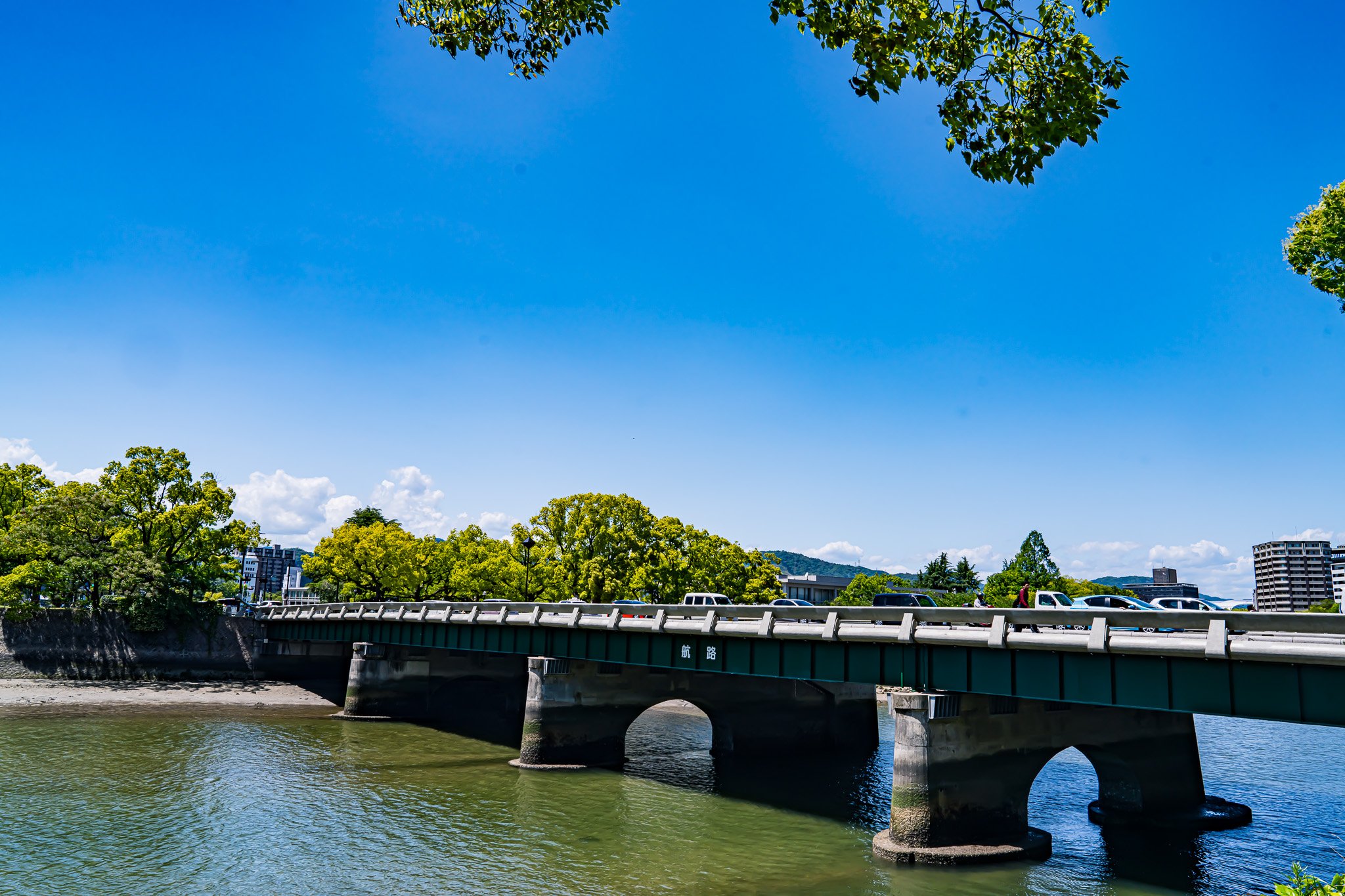
It was another defining feature of the city — wide, calm, and cutting gently through the urban landscape. Some of the bridges crossing it carried traces of history that had shaped Hiroshima into what it is today.
Following the river terrace naturally led us toward the edge of the park.
There were many points along the way that could have drawn our attention — small paths, memorials, open spaces — but our intention was already clear. We were heading directly to the museum.
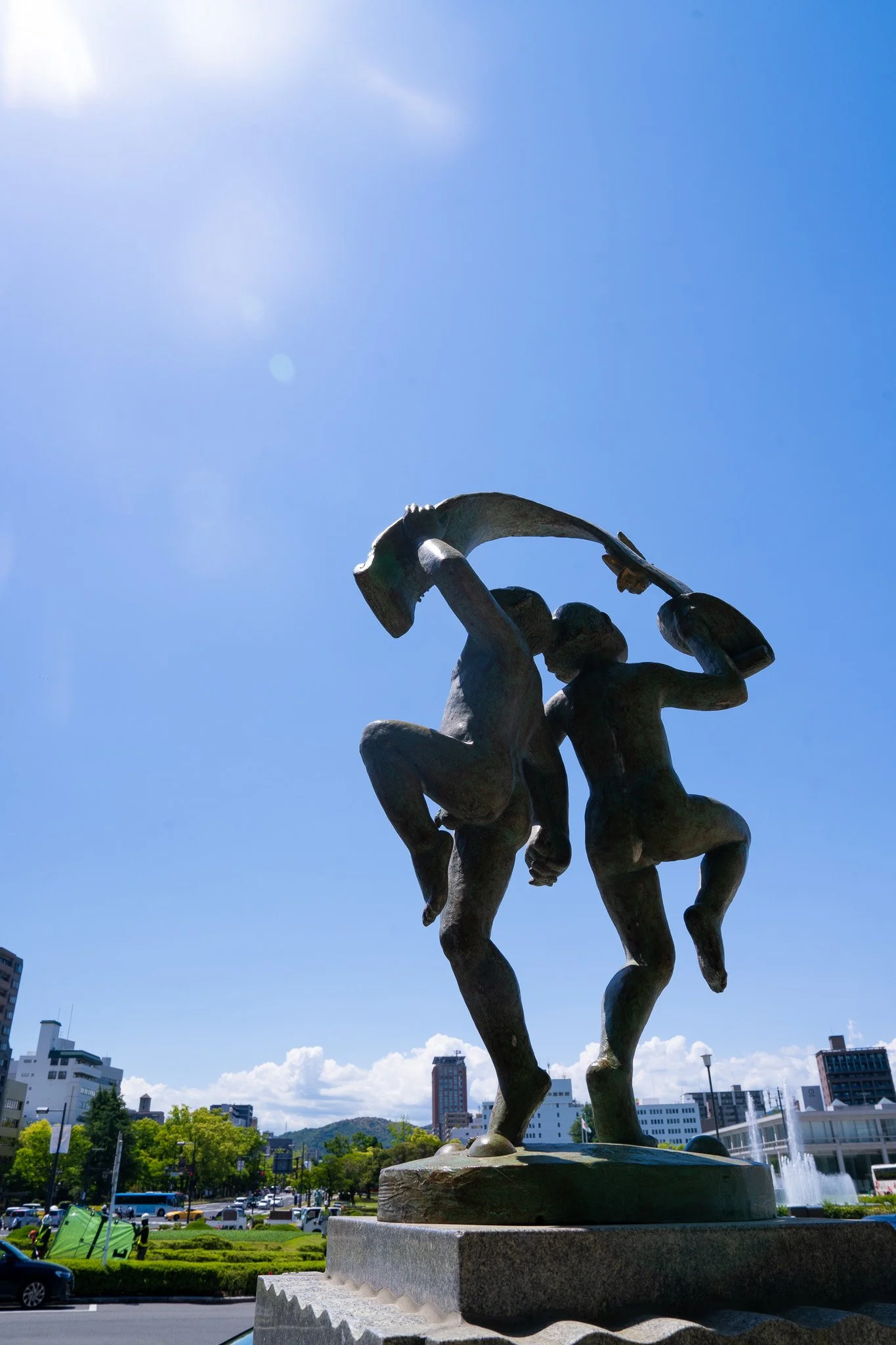
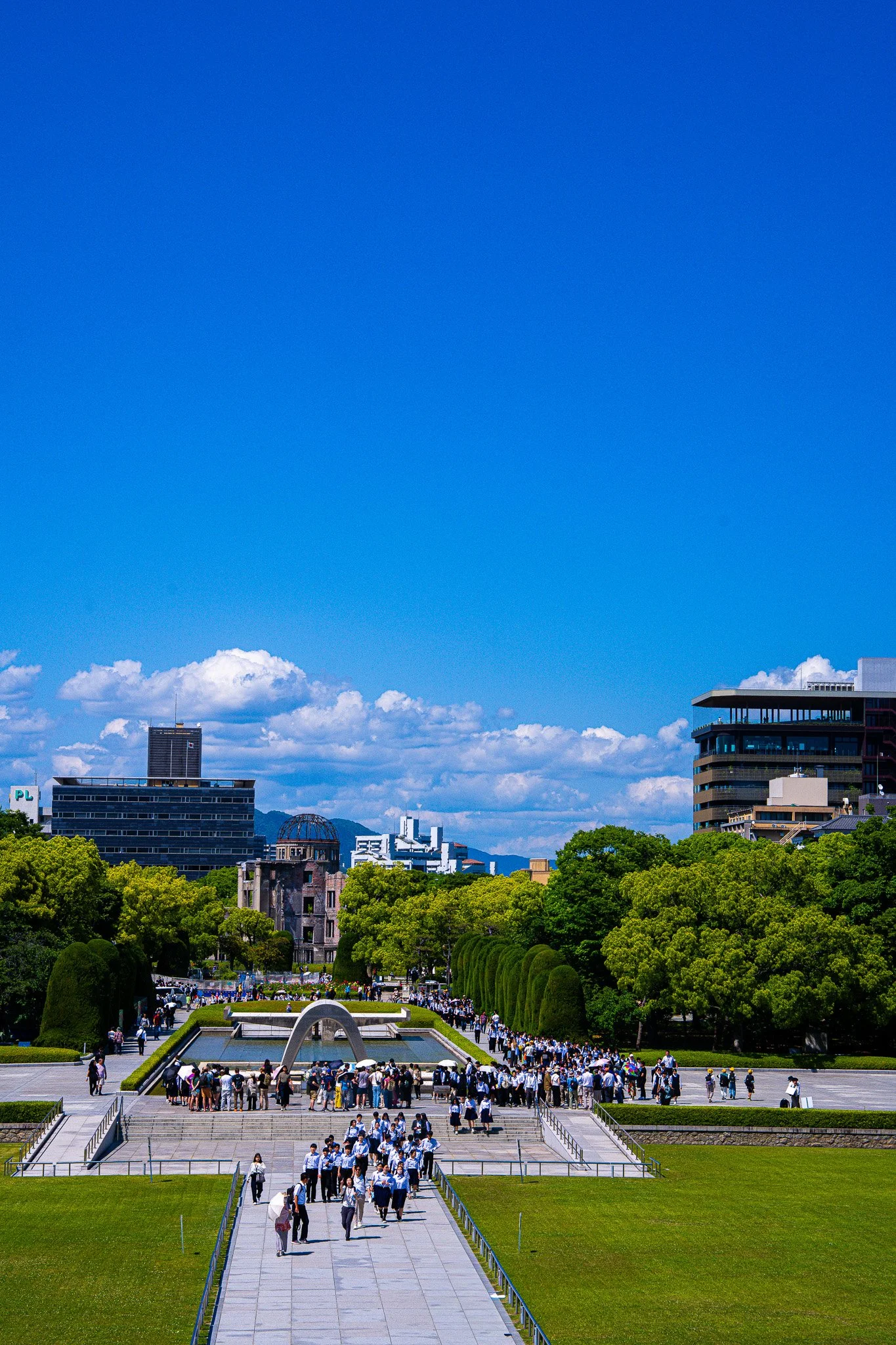
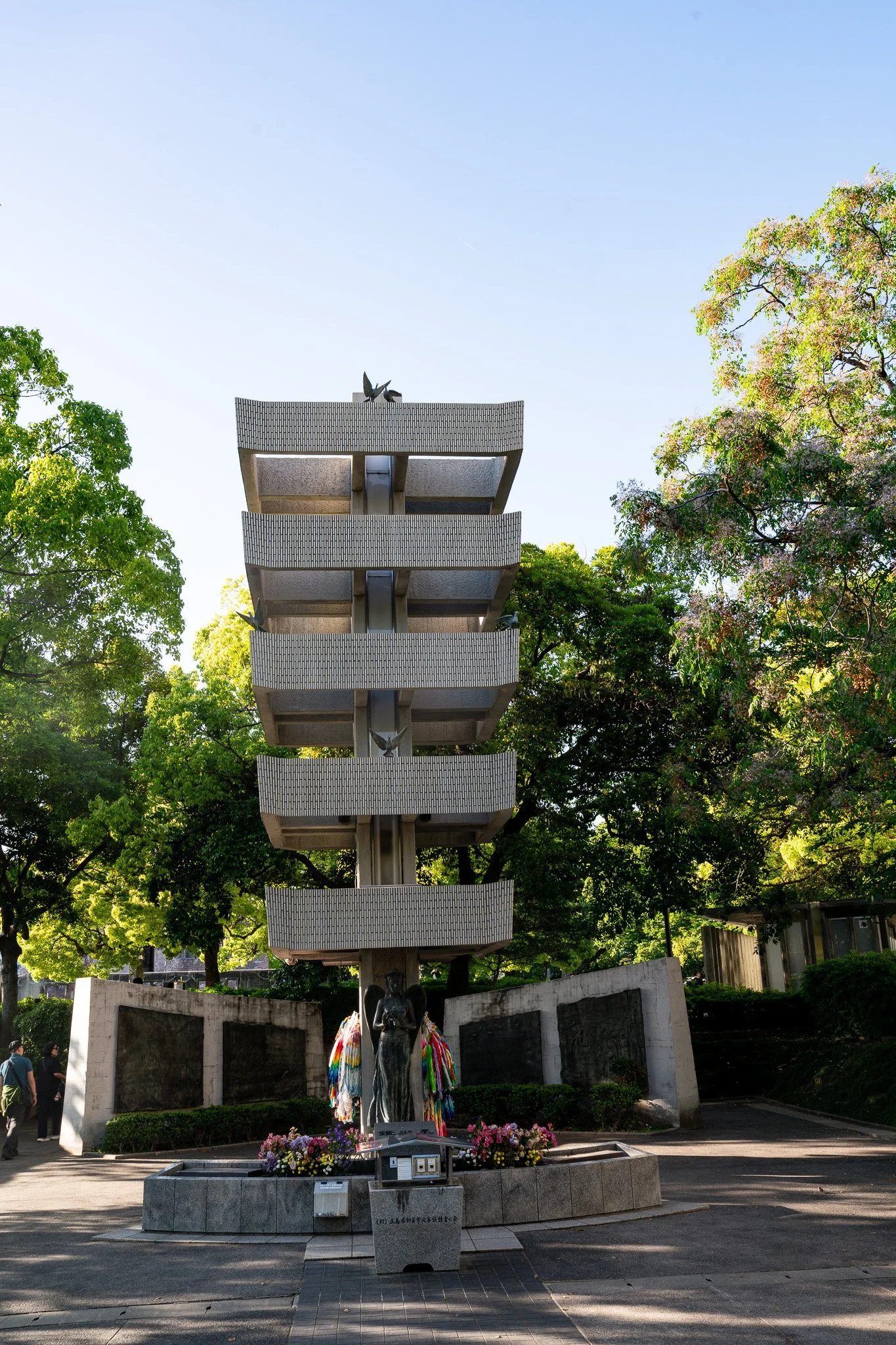
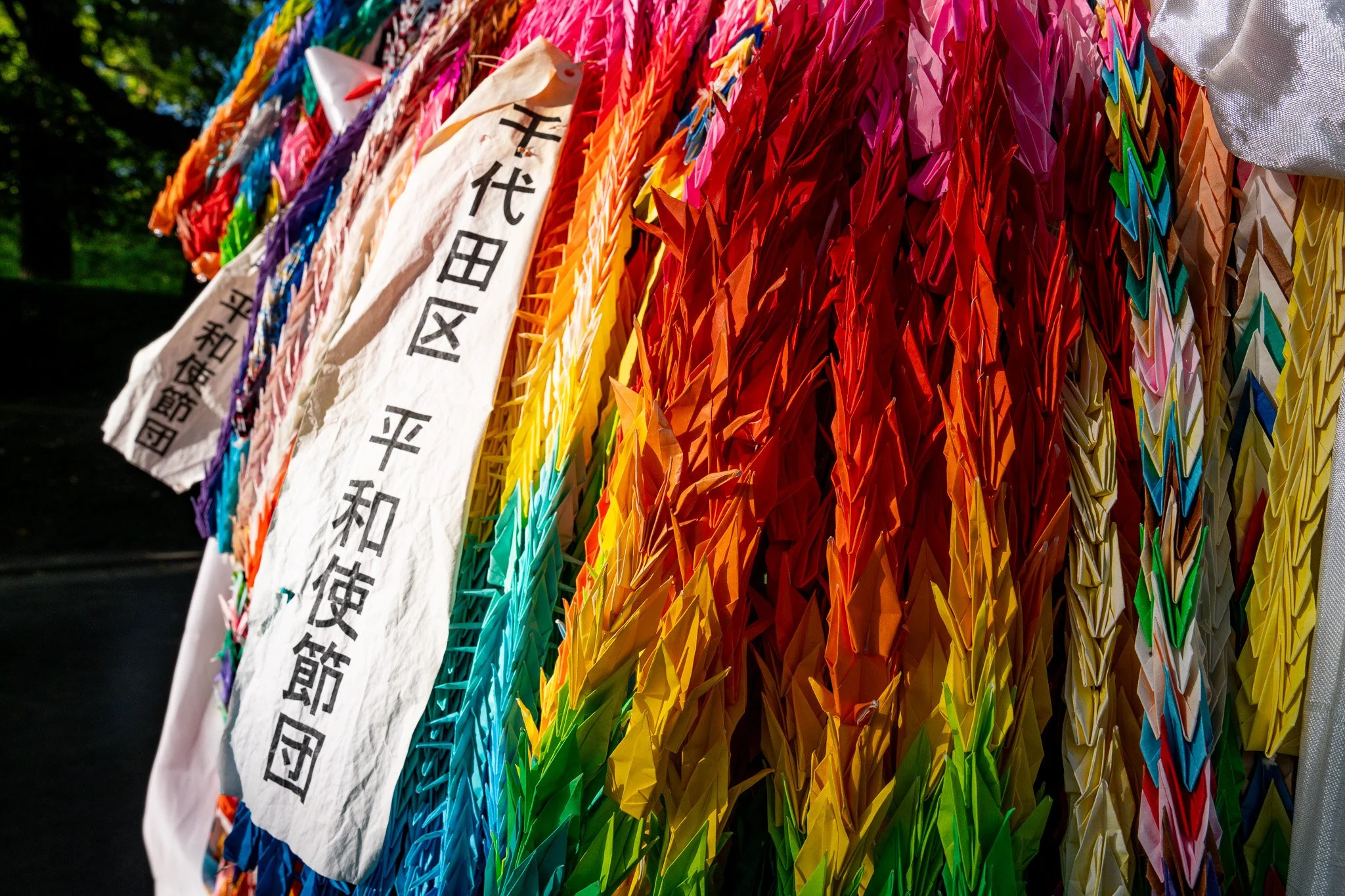
We had read beforehand that entry could be limited, and that tickets were not always guaranteed, especially during busy periods. Not wanting to risk missing the opportunity again, we made our way there without delay.
What stood out, as we moved through the park, was not the number of visitors, but the presence of school groups.
Groups of high school students — boys and girls — moving together in organised clusters, each group distinguished by uniforms, badges, or small identifying details that marked them as belonging to different schools.
There was a quiet order to their movement.
A sense that this was not just a visit, but a shared, structured moment of learning — taking place in the same space we were simply passing through.
We collected our tickets and were directed almost immediately toward the entrance of the Hiroshima Peace Memorial Museum.
The atmosphere revealed itself the moment we stepped inside.
This was not the kind of museum people visit to admire beauty, craftsmanship, or technological achievement. There was nothing celebratory about what was being preserved here.
Instead, the museum carried the weight of human suffering concentrated into a single event.
Every room, every artefact, every photograph seemed less concerned with presenting history and more concerned with ensuring remembrance.
It was not simply about what happened on that day, but about what violence at that scale leaves behind long after the moment itself has passed.
We found ourselves gathered around one of the visual displays reconstructing the city before the bombing, and then after.
People stood quietly around it.
No one rushed.
The movement inside the museum seemed to slow naturally on its own, as though the space quietly demanded a different pace from those entering it.
I remember looking not only at the display itself, but also at the students surrounding us.
Groups of school children, moving through the museum together with their teachers.
And almost instinctively, the same thought surfaced among some of us later.
What did this place mean to them?
Not in an abstract historical sense, but personally.
For some, the connection may have been distant — simply part of the nation’s history taught through school excursions and textbooks. For others, perhaps the connection was closer, carried through family stories, memories, or inherited silences passed quietly across generations.
We did not know.
And perhaps it was not ours to know.
But standing there among them, the tragedy no longer felt confined to the past.
The artefacts made certain of that.
The burnt belongings, the damaged objects, the photographs — they existed not as cinematic recreations, but as physical proof that ordinary lives had once occupied these spaces before being interrupted with unimaginable violence.
What stayed with me most was not only the scale of destruction itself, but the awareness that each generation must somehow decide how to carry the memory forward.
How much to hold onto.
How much to understand.
And how to continue living beyond it.
There was something profoundly human in witnessing that process quietly unfolding around us inside the museum.
Not dramatic.
Not loudly emotional.
Just heavy in a way that settled slowly into silence.
Leaving the Hiroshima Peace Memorial Museum, I found myself carrying a deeper appreciation for how the city and its people have chosen to preserve what remains of the tragedy.
Not as a monument to destruction itself.
And not simply as a reminder of violence.
What is preserved here feels far more human than that — the consequences of a single moment carried across generations, shaping lives far beyond the boundaries of the city itself.
Every artefact, every testimony, every preserved fragment seemed to point toward the same quiet message:
No more Hiroshima.
Not as a slogan, but as a collective plea.
That once was already too much.
That suffering on such a scale should never again become something another city, another generation, or another people must endure.
It was a heavy message to walk away with.
But perhaps it was meant to be.
Naturally, the next place we were drawn toward was the Atomic Bomb Dome.
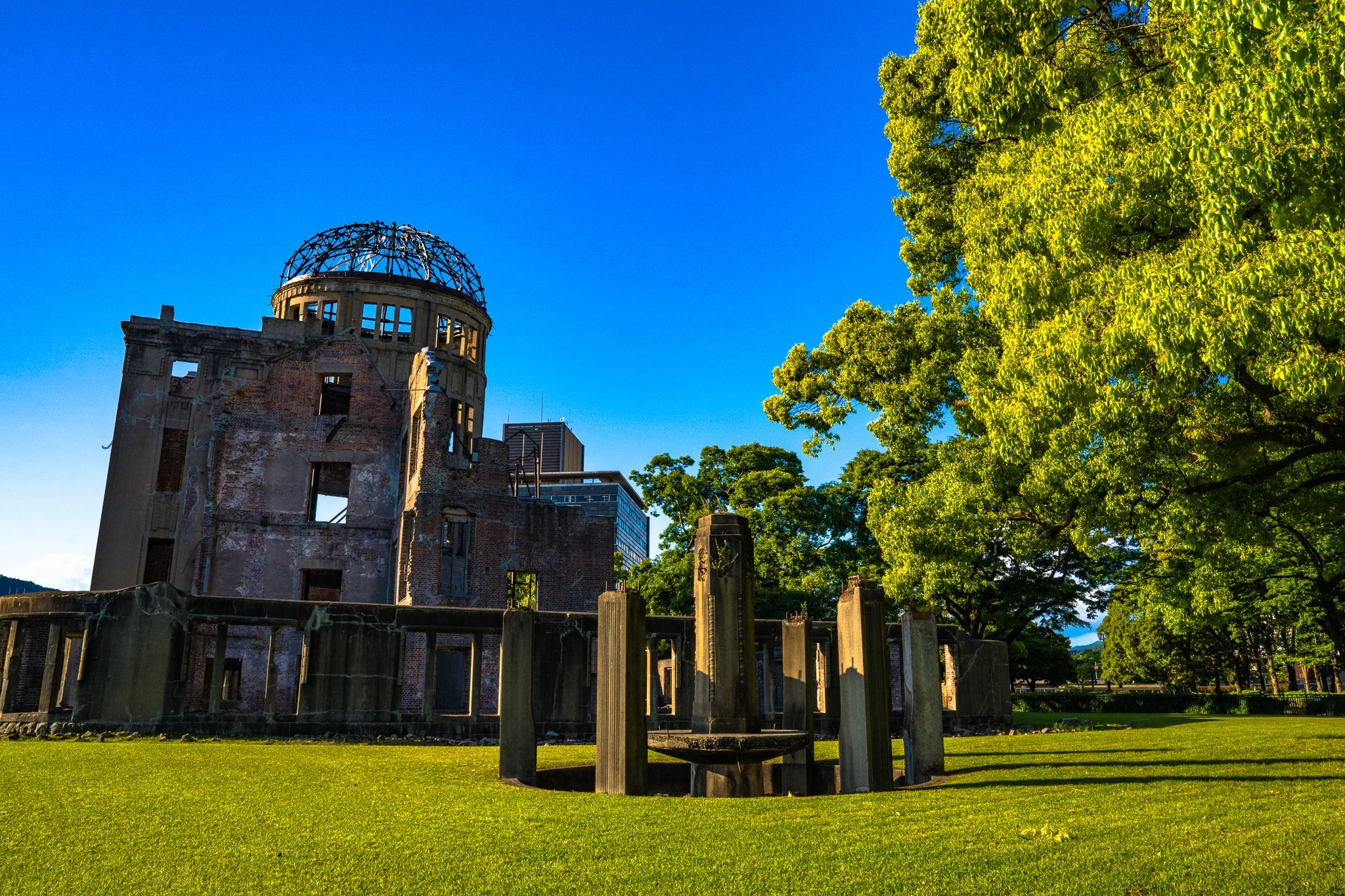
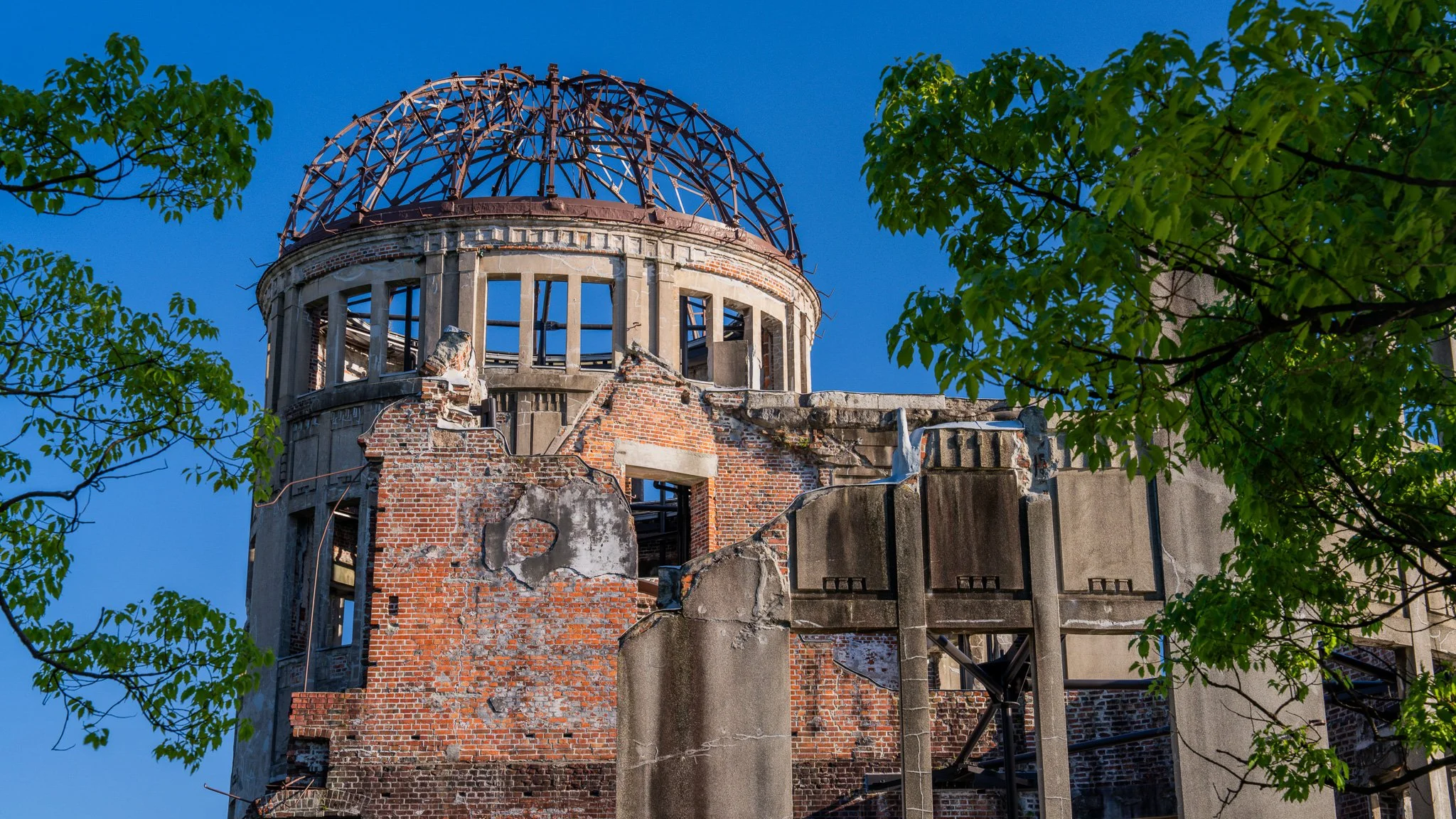
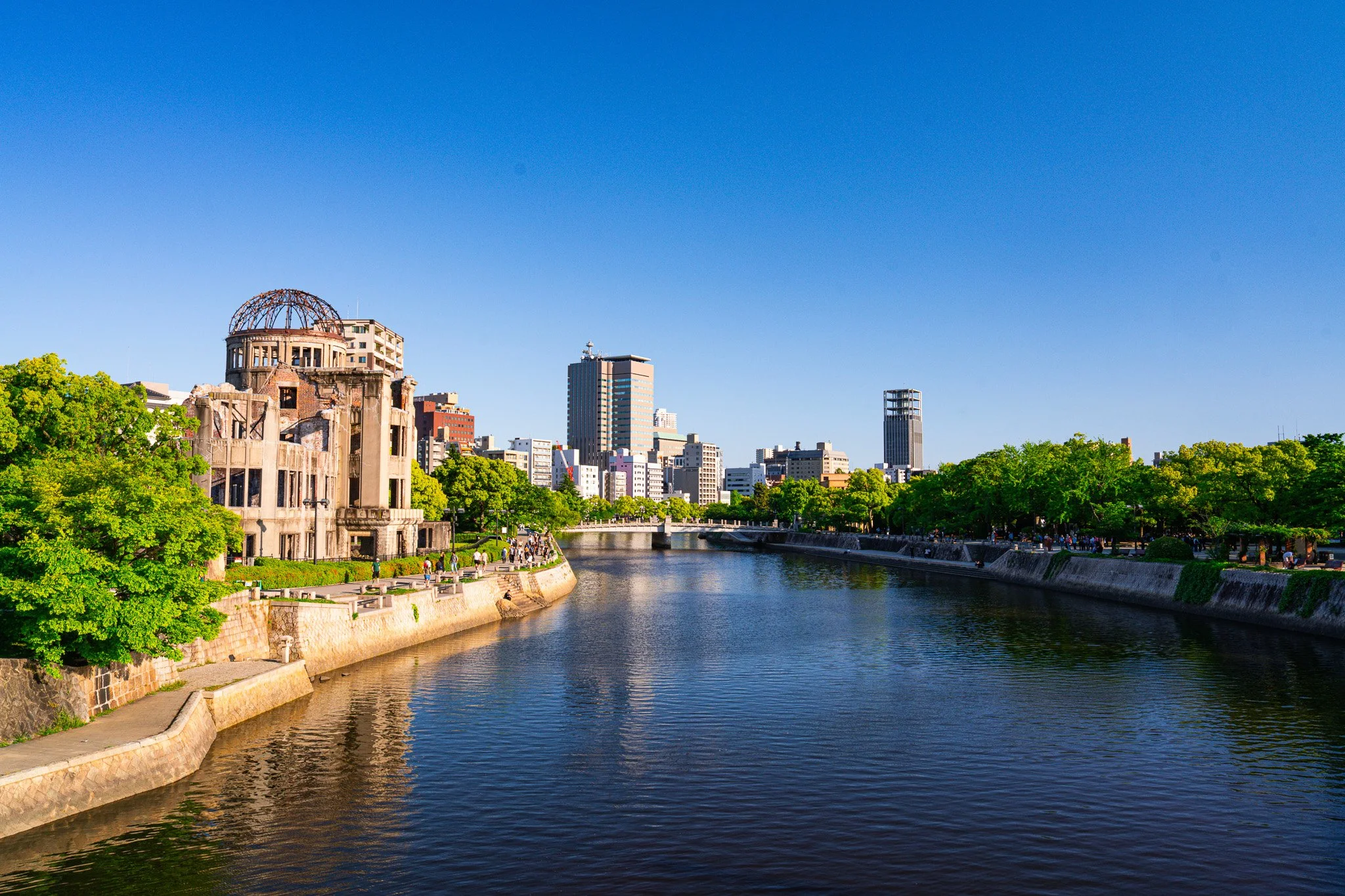
Of everything within the park, it remains the most recognisable image of Hiroshima — the building that somehow withstood the atomic bombing while so much around it disappeared.
I still remembered the first time I saw it years ago.
Once, it had stood as a symbol of architectural ambition and civic pride. Now it remains in ruin — not through age, weather, or neglect, but because of something far more violent and unimaginable.
And yet, it survived.
Barely.
There was something profoundly human in that fragile survival.
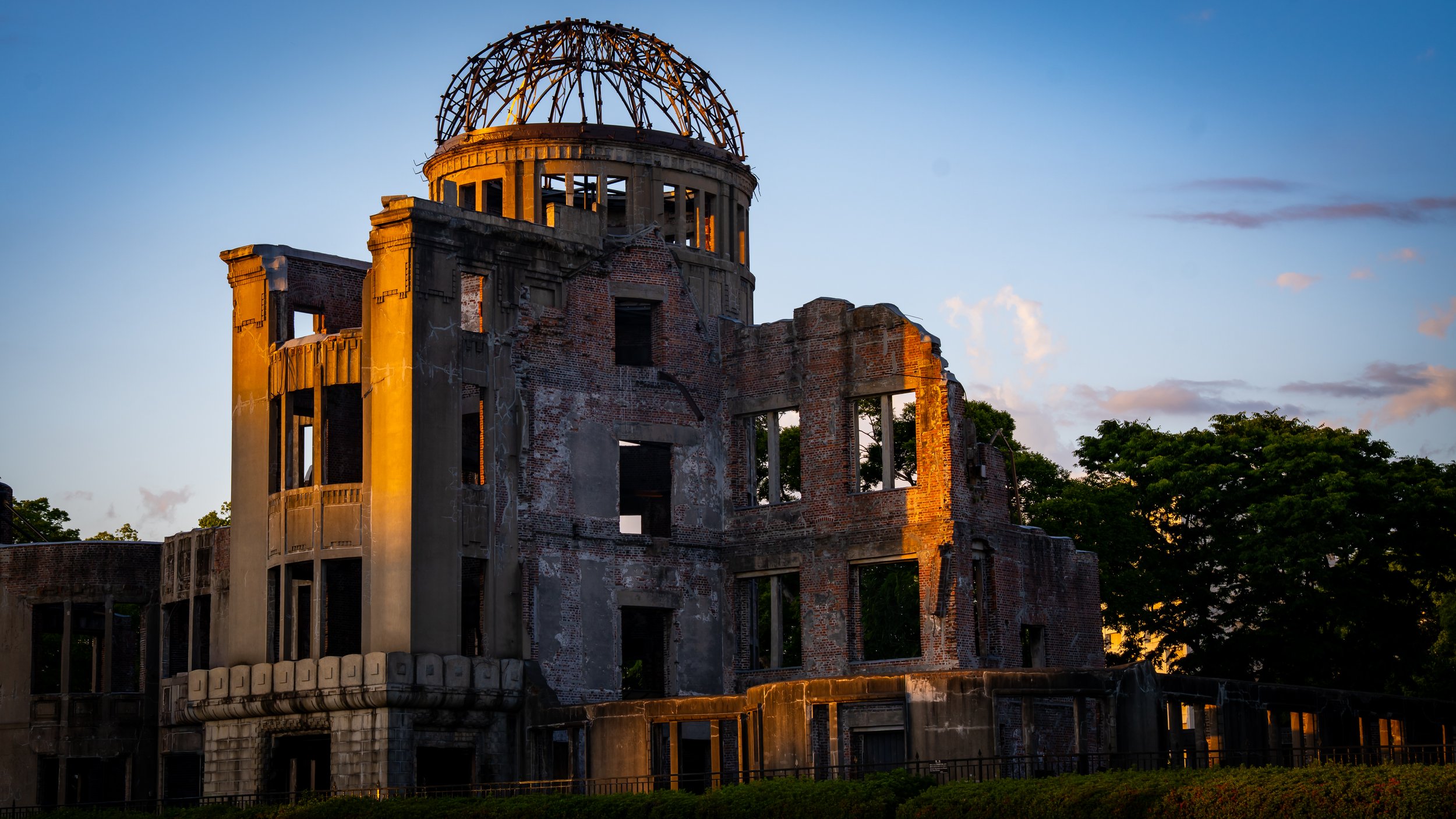
The exposed steel skeleton of the dome, still standing against the sky, seemed to embody the idea that even amid overwhelming destruction, something can remain. Not untouched. Not whole. But present enough to bear witness.
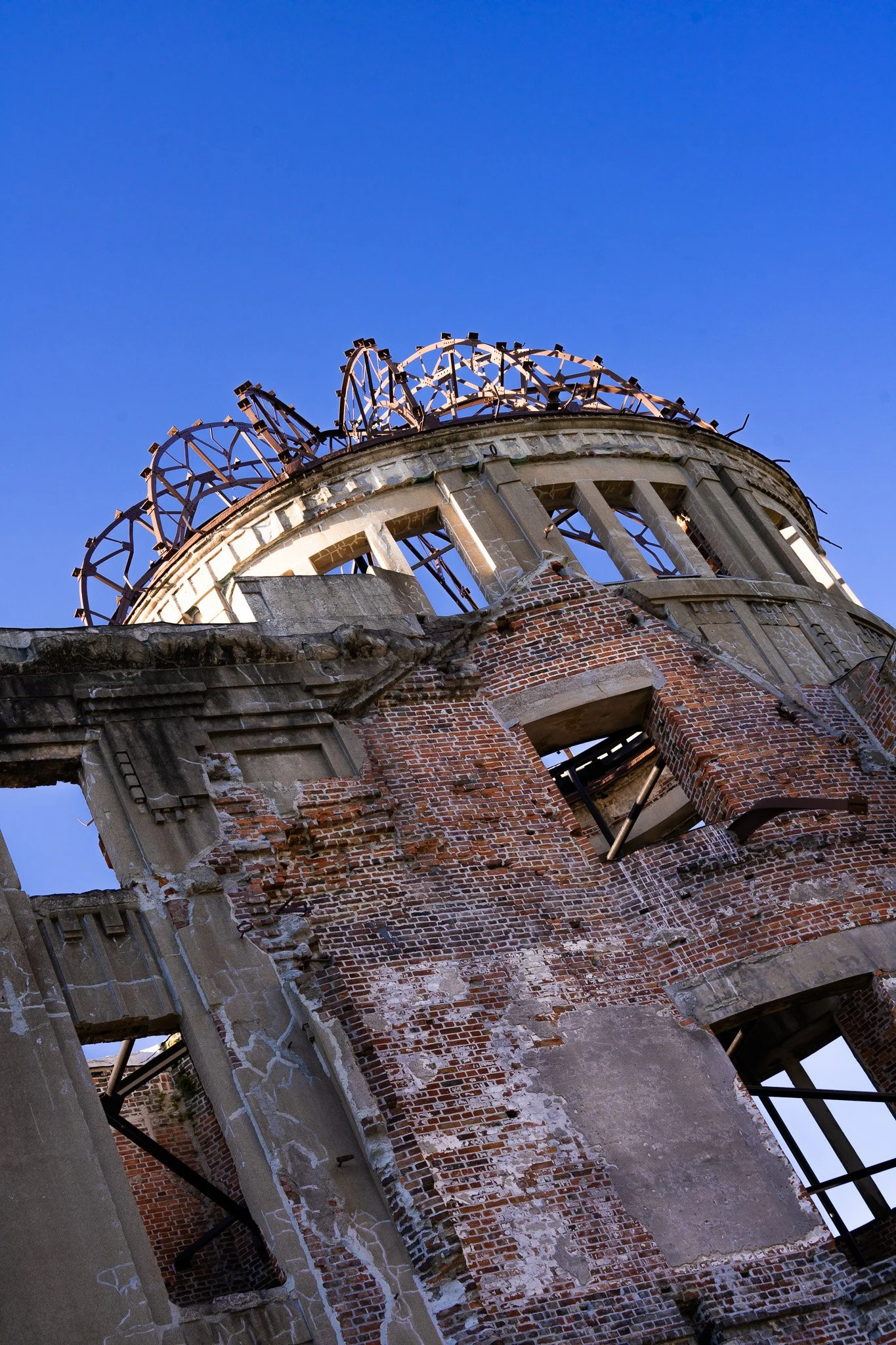
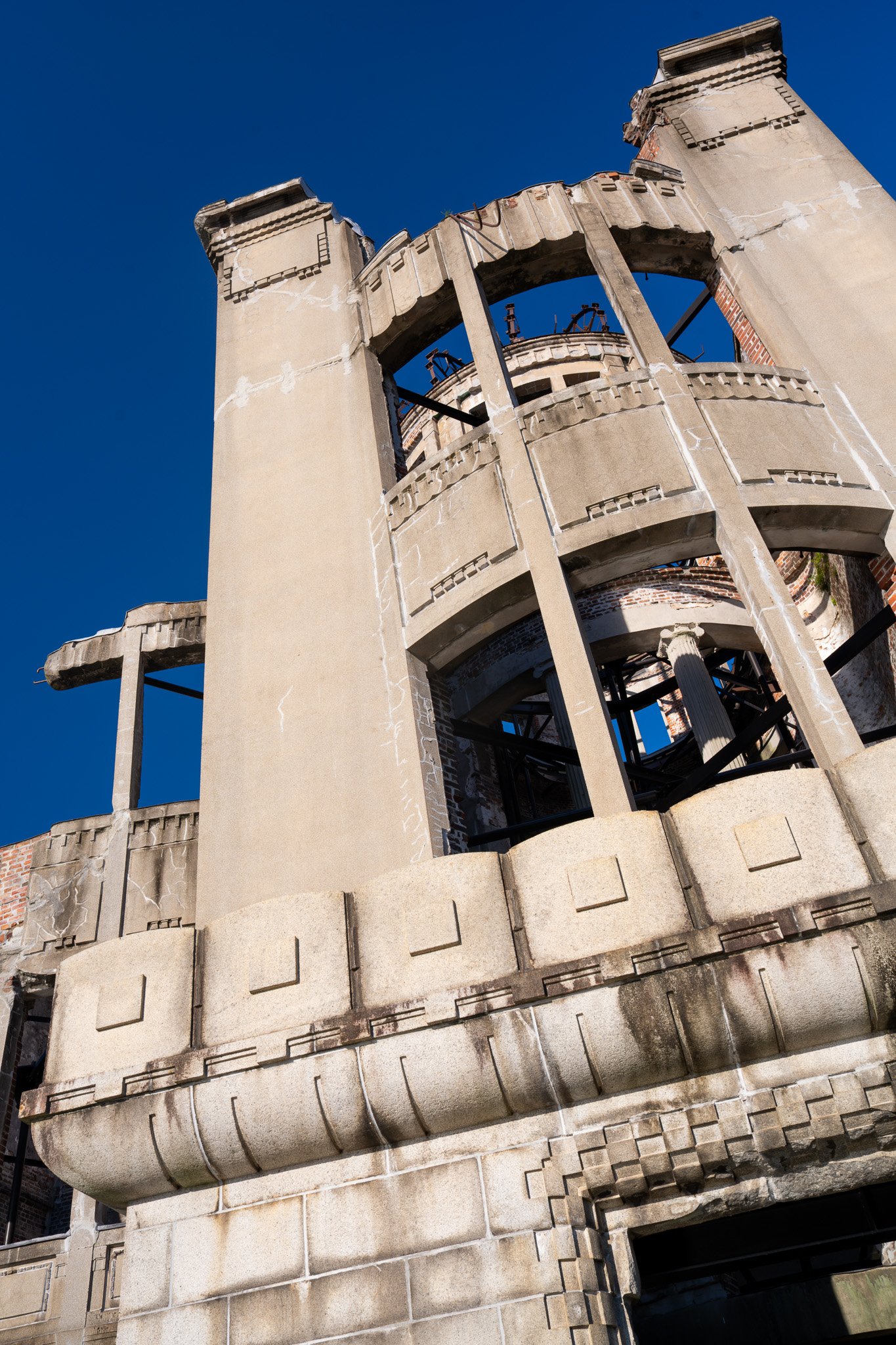
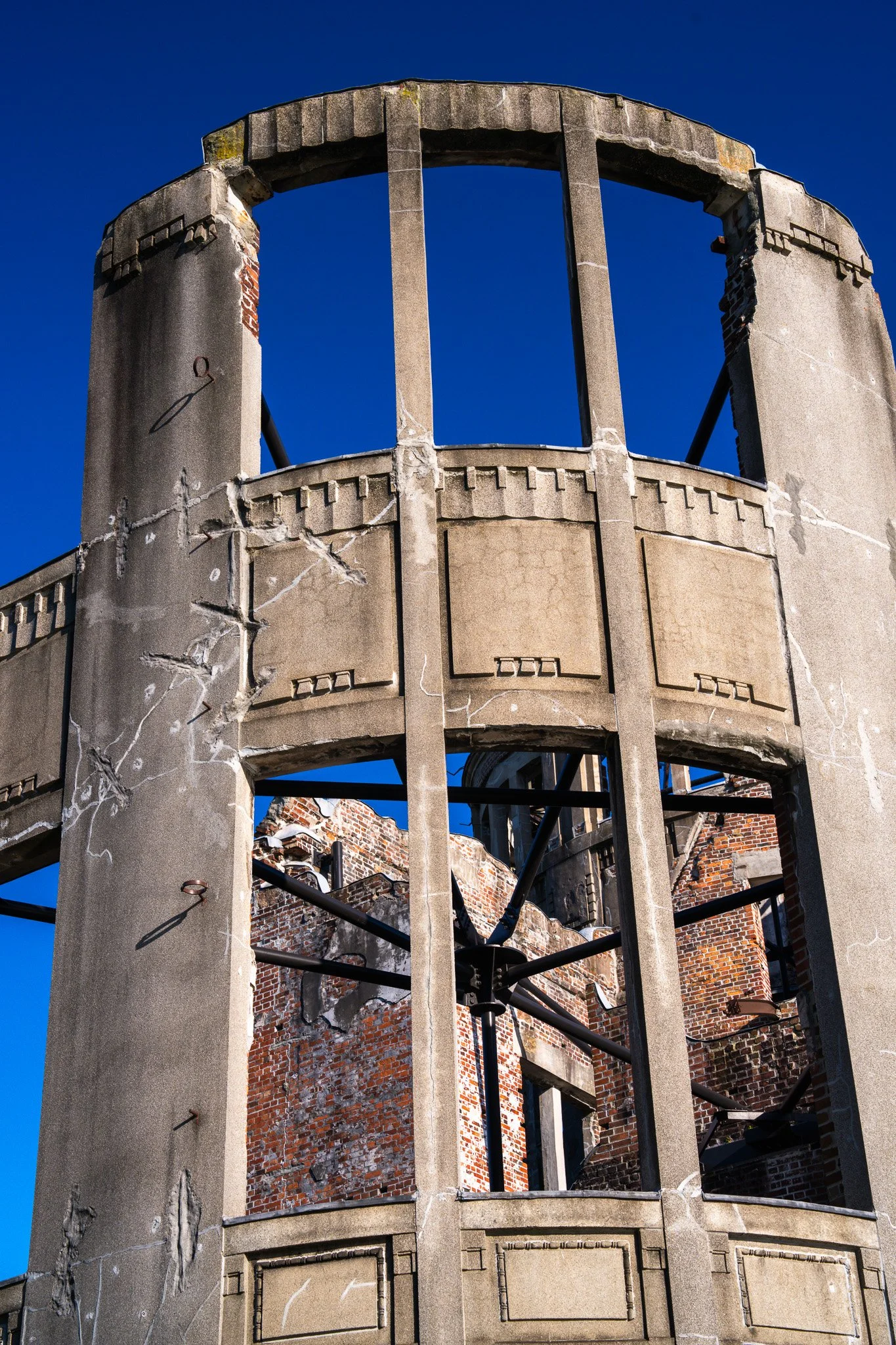
Perhaps that is why the structure resonates so deeply with people who have experienced tragedy in their own lives.
Not because it represents strength in the heroic sense, but because it represents endurance.
The ability to remain standing at all.
But as I stood there again, I noticed something that unsettled me quietly.
I remembered, from my previous visit, being able to look at the dome almost in isolation — its skeletal frame exposed cleanly against the open blue sky, with nothing around it competing for attention.
This time, however, a tall apartment building rose behind it.
Its colour and shape blended strangely into the background of the dome itself, softening the stark visual contrast that I remembered so vividly.
Perhaps it was simply the inevitable evolution of a growing city.
Perhaps I was only reacting to the difference between memory and reality.
But standing there, I could not help feeling that something of the dome’s solitude had been diminished.
Not the meaning of the place itself.
Never that.
But the quiet visual power of encountering it against the emptiness of the sky.
Eventually, hunger began pulling us away from the park.
And so, slowly, we drifted back into the ordinary rhythm of travel again — searching for lunch.
By this point, it had already become one of the defining patterns of our trip: we rarely planned exactly where or when we would eat. Meals were usually left to the moment, shaped more by circumstance, exhaustion, and proximity than careful research.
At times, that spontaneity worked beautifully.
At others, it quietly consumed more time than we realised.
Finding food as a group often meant navigating different cravings, varying levels of energy, and the endless uncertainty of unfamiliar streets. Sometimes one person wanted noodles, another rice, another something lighter. The discussion itself could prolong the search far beyond the hunger that had initiated it.
Of course, we still carried vague ideas with us — dishes we hoped to try, restaurants mentioned online, recommendations saved somewhere in our phones.
But apart from the ramen in Fukuoka and the grilled beef meal we were already anticipating later in Osaka, most of our meals throughout the journey were chosen simply because they appeared at the right moment, with doors open and seats available.
In Hiroshima, we knew we wanted to try Hiroshima-style okonomiyaki and oysters — two dishes so strongly associated with the city itself.
Eventually, we came across a restaurant that immediately made some of us hesitant.
It was almost empty.
In Japan, we had already begun developing the instinctive belief that crowded places signalled quality. Long queues often felt reassuring, as though local approval itself guaranteed the meal would be worthwhile.
An empty restaurant, on the other hand, introduced doubt.
Still, by then we were tired enough to stop searching.
So we went in.
What we had imagined was an experience similar to some of the restaurants we had seen online — the okonomiyaki cooked directly at our table while we watched it being prepared in front of us. Each table had a small heated cooking plate built into it, and naturally we assumed that was where the cooking would happen.
Instead, the chef prepared everything at the main counter.
From where we sat, we could still watch the process unfold — the layering of cabbage, noodles, batter, sauce, and egg assembled with the kind of rhythm and precision that seemed so characteristic of Japanese cooking.
Once completed, the okonomiyaki was brought over and placed onto the heated plate at our table to keep it warm while we ate.
Even though it was not quite the experience we had imagined, there was still something enjoyable about observing the preparation from afar — watching the quiet concentration behind what at first appeared to be such a simple dish.
With little direct comparison to draw from, we could not confidently declare whether it was exceptional Hiroshima-style okonomiyaki.
But sitting there together, tired from the morning and finally slowing down, it tasted more than good enough.
With time to spare, we wandered further into the city and stumbled upon a smaller version of a shopping street, reminiscent of Dotonbori.
It was the beginning of a rhythm that would quietly define the next part of our journey — through Osaka, Kyoto, and Nagoya.
Less structured sightseeing, more drifting between shops, food, and streetscapes. The focus slowly shifted away from landmarks and toward the act of moving through places themselves.
In those cities, sightseeing gradually took a secondary role.
That shift, however, did not sit evenly with everyone in the group.
What felt natural to some — the freedom to wander, to enter and leave spaces without a fixed plan — felt less satisfying to others who were still orientated toward more defined destinations and experiences.
It was not a disagreement, not openly spoken as conflict.
But something in the rhythm had begun to change.
A slight misalignment in pace.
A quiet divergence in expectation.
And perhaps, without any of us fully naming it at the time, this was the first small crack appearing in what had so far felt like a fluid and adaptive way of travelling together.
One thing I began to notice within our group dynamic was the absence of a fixed sense of leadership.
Leadership, instead, emerged situationally — assumed by whoever happened to take initiative in finding information, or whoever felt most confident in a particular moment.
In Japan, the rhythm of public transport requires a certain decisiveness. Knowing which train to take, which line to follow, which exit to use — these are not always intuitive processes for first-time visitors. They demand coordination, attention, and a level of certainty that we did not always possess collectively.
More often than not, we would find ourselves paused at station entrances, momentarily unsure whether we were heading in the right direction.
Sometimes someone would make a decision — this is the correct gate — only for another voice to question it just as tickets were about to be tapped. On occasion, one or two of us would already have moved through, only to be called back after a last-minute correction.
And sometimes, hesitation itself was enough for us to miss a train entirely.
These were small moments, but they accumulated quietly.
Not as conflict, but as friction.
Unintended, yet noticeable.
Still, over time, we adapted.
We learned to slow down just enough to check with one another, to accept corrections without resistance, and to share the responsibility of moving six people through an unfamiliar system.
In that sense, navigation became less about transport, and more about learning how to move together.
A shared skill developed gradually through repetition, uncertainty, and compromise.
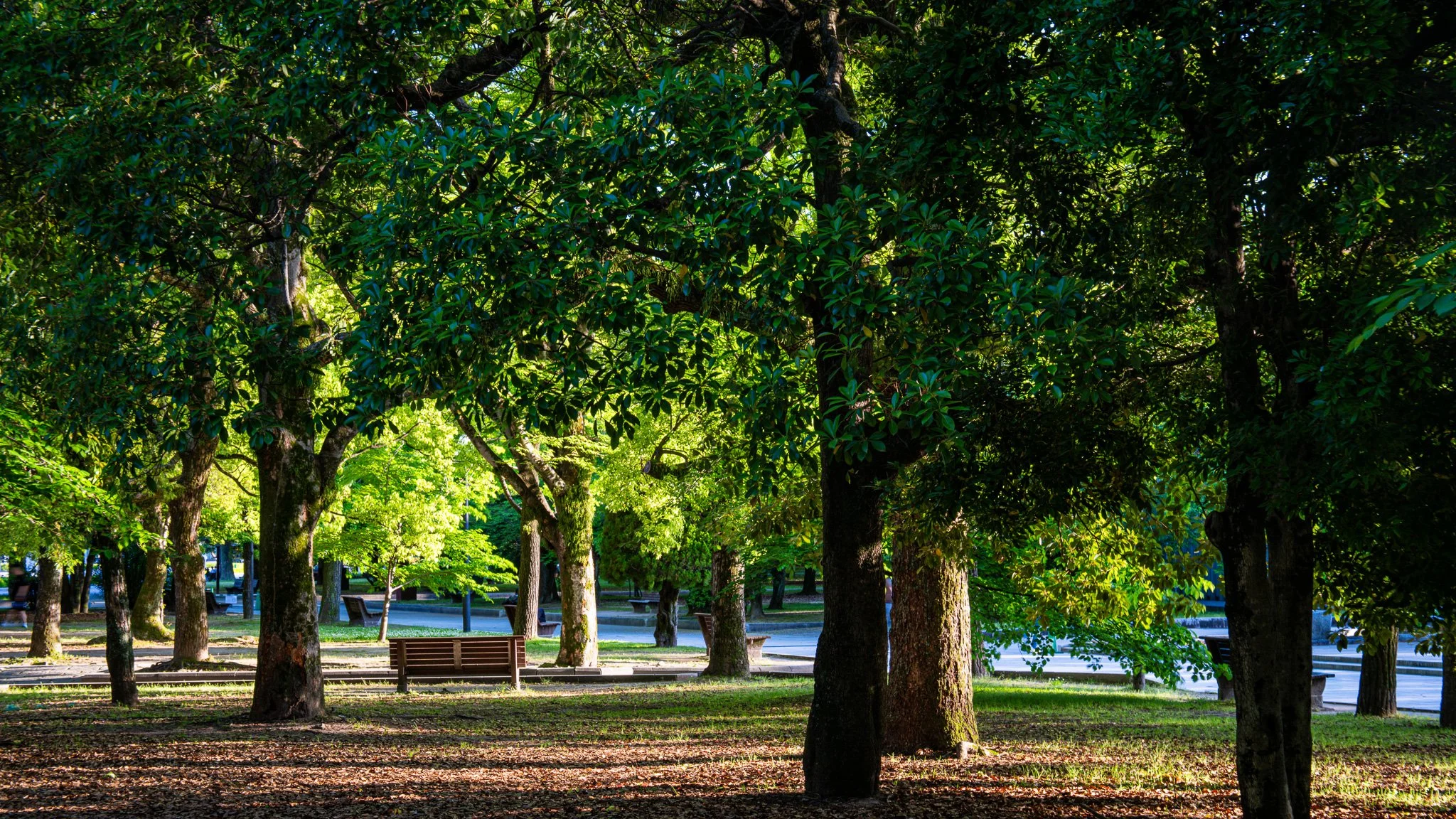
With nowhere else within walking distance, we eventually made our way back to the park.
This time, we took a slower path, allowing ourselves to move without urgency and to take in both the landscape and the people moving through it.
The school groups were still the most visible presence.
In fact, over the next few days, we would continue to encounter similar groups wherever we went — a quiet constant across cities, museums, and public spaces.
Their presence was both reassuring and, at times, slightly disruptive in scale. Large groups moving together naturally occupied space in a way that reshaped how others moved around them.
We found ourselves discussing what the atmosphere might be like without them.
At the museum, for instance, the experience would have been very different. Without the flow of school groups moving through in organised waves, there would have been more room — physically and mentally — to linger, to pause, to stand longer in front of certain displays.
Instead, at times, we moved with them, carried gently along by their collective movement through the space.
And yet, there was no sense of judgment in that observation.
If anything, it was an awareness of a different layer to what we were witnessing.
These excursions were clearly important.
Not only as travel, but as a form of education outside the classroom — an opportunity to encounter history, place, and memory in a direct and physical way.
Standing in places like the museum or the park, it felt like they were being exposed to something that could not be fully contained in textbooks.
Something that asked to be experienced in person.
And watching that, I found myself thinking less about disruption or convenience, and more about how different generations occupy the same spaces in different ways.
We were all present in the same places.
But not moving through them in the same rhythm.
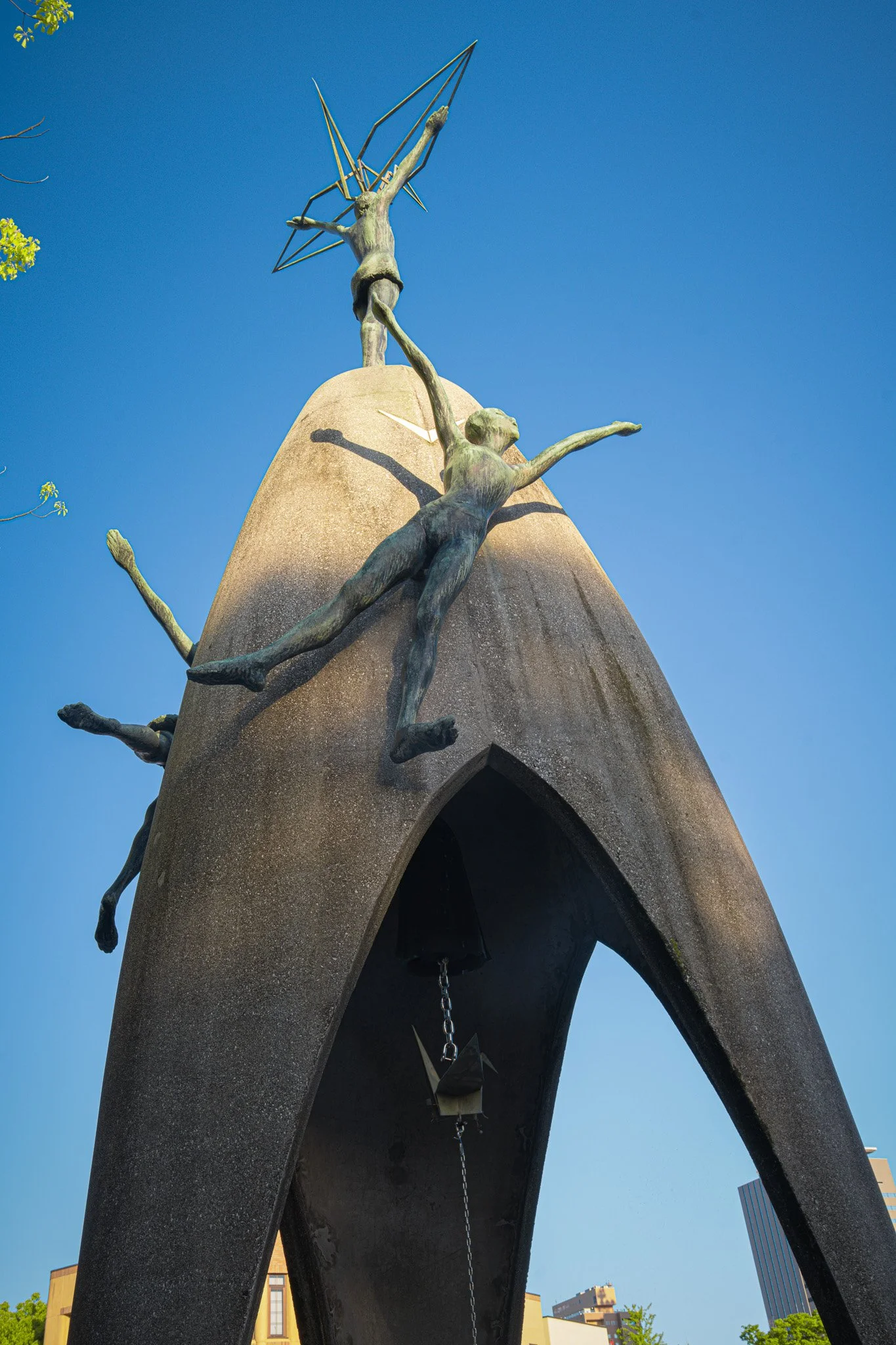
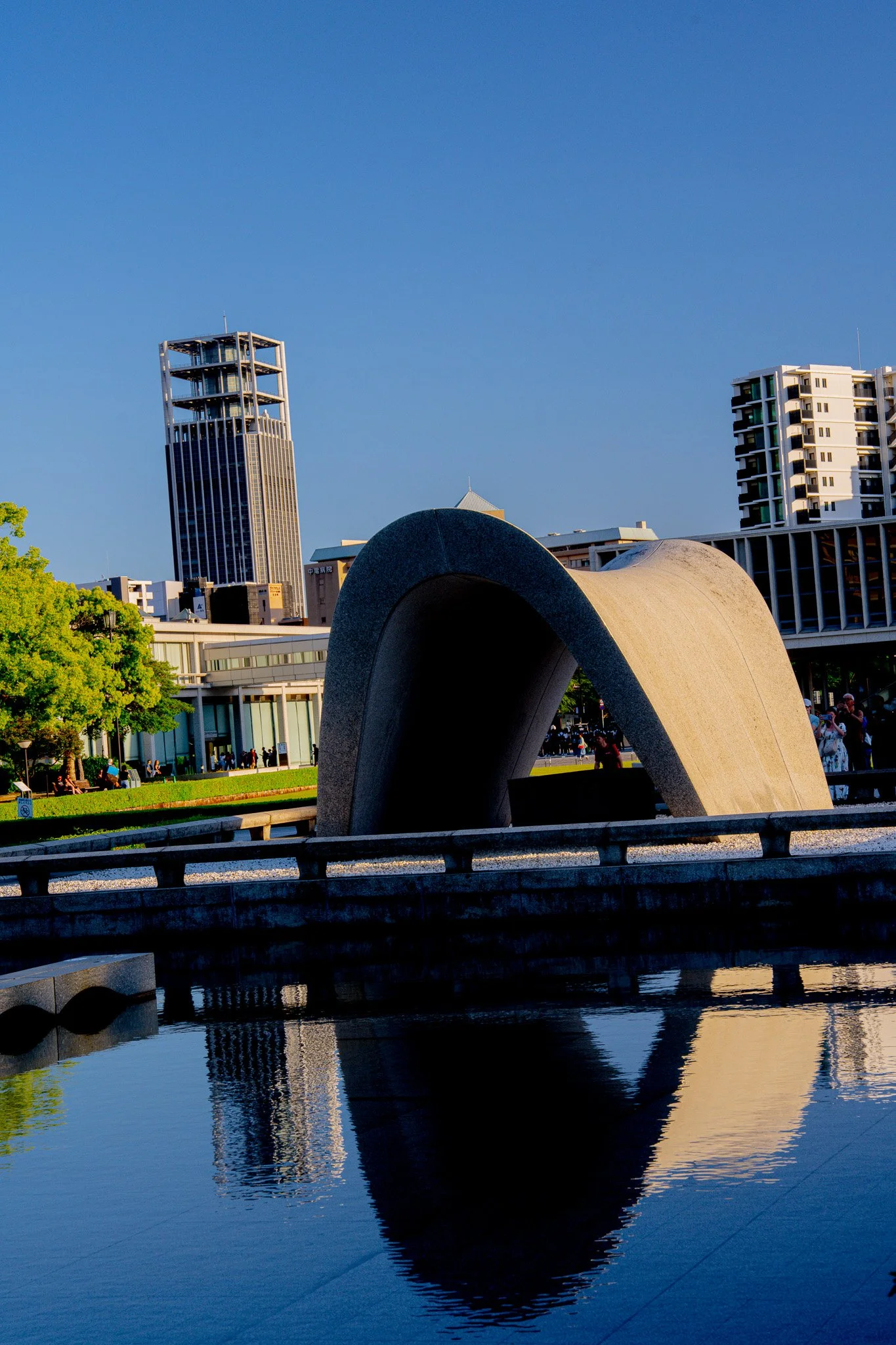
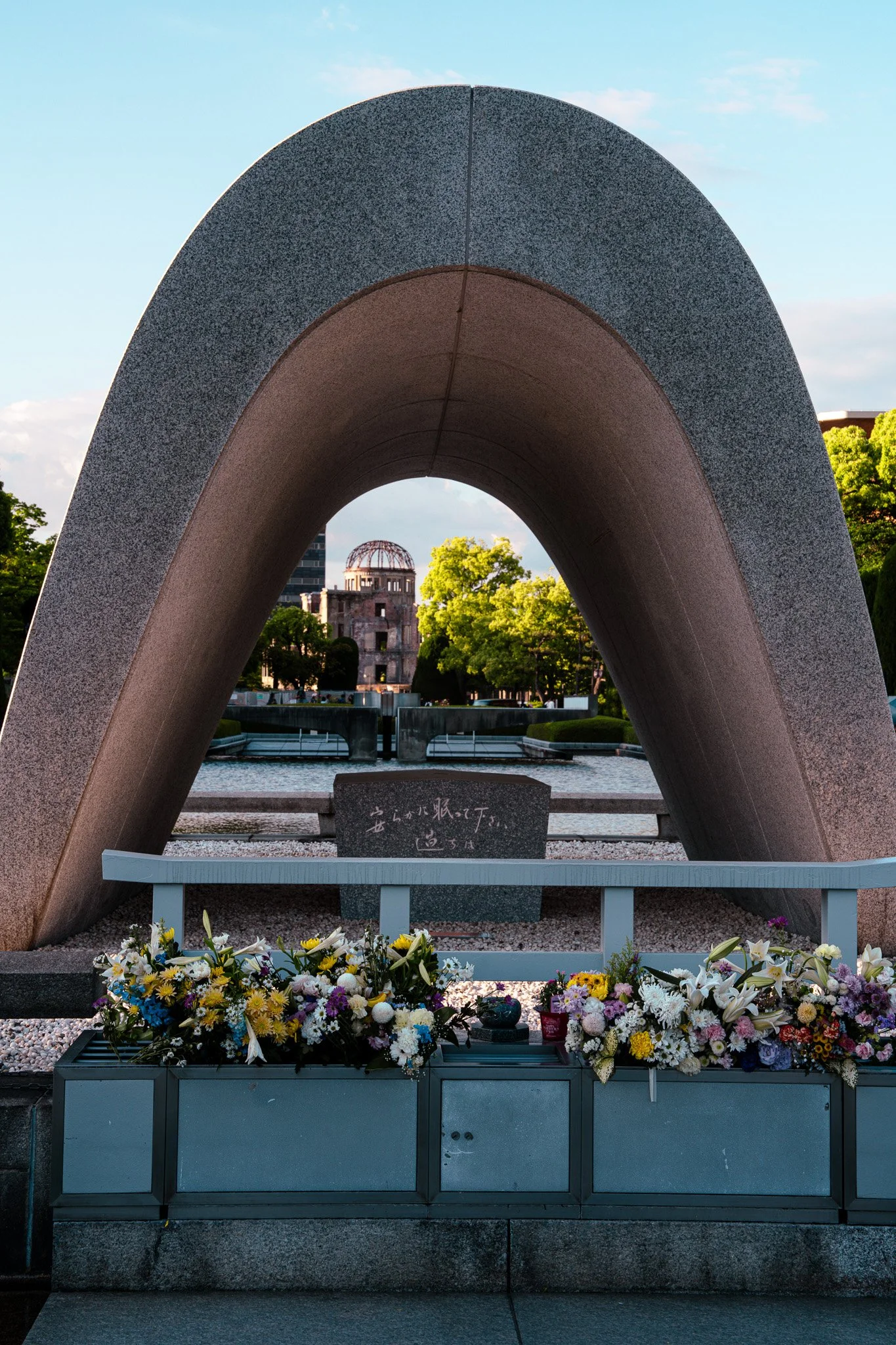
I was drawn again toward the site of the dome.
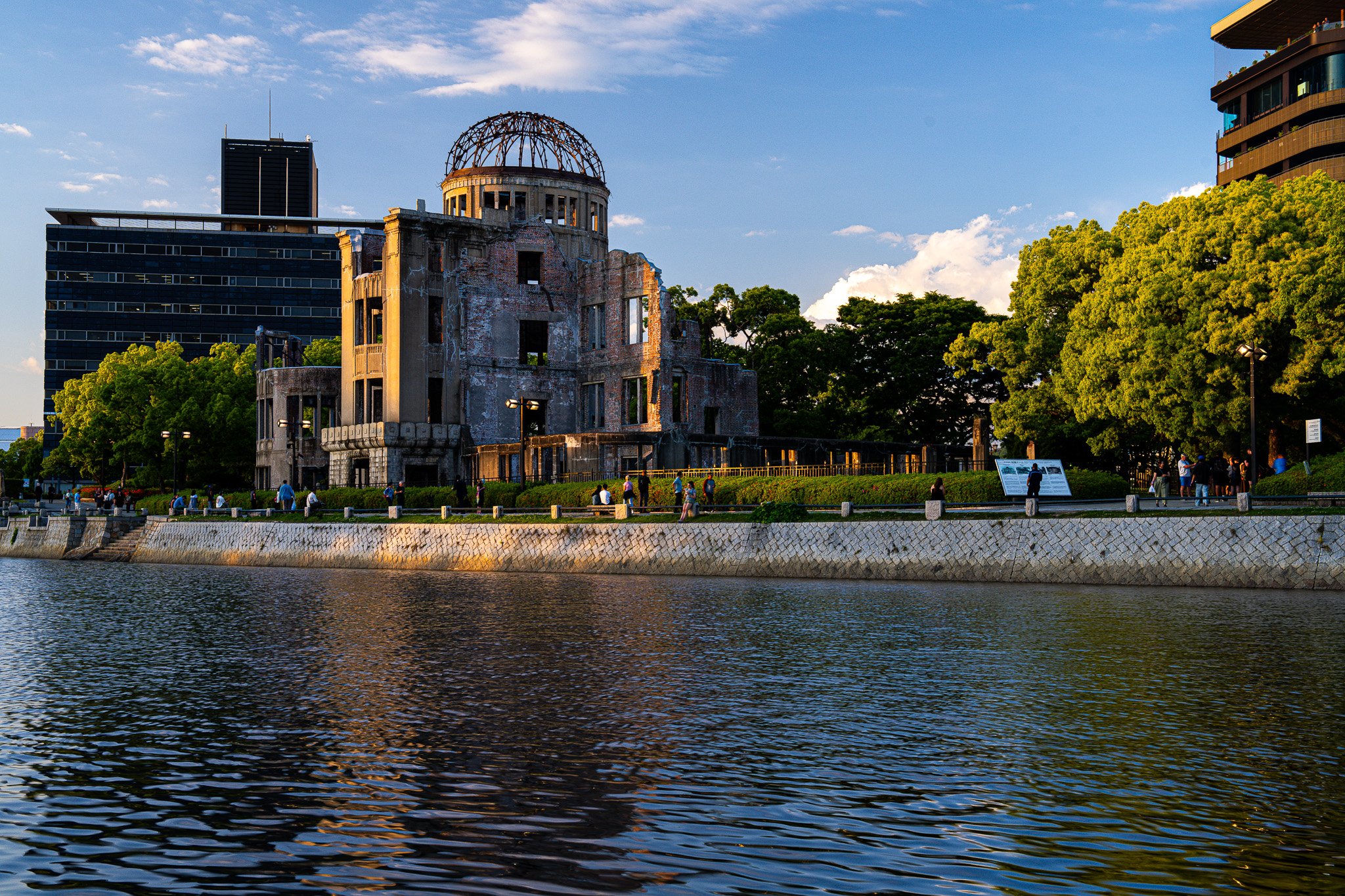
This time, I chose to sit across the river, allowing the water to run between us.
It was still too early for the golden hour. The sun remained high, and the light was still sharp, exposing rather than softening the scene.
Earlier, one of the group had mentioned that the dome took on a different quality in the late afternoon. He showed me photographs of it online — the structure glowing under warm light, framed by a softer sky. I remember being intrigued, wondering if I should stay and wait for that moment.
But the group continued moving, and I moved with them.
We drifted further away from the dome, without a fixed direction, occasionally stopping to rest, to talk, to simply exist without urgency. After the intensity of the previous days, it felt good to have space for slower conversation and shared laughter.
Then, as the sun began to lower and the light started to shift, I was reminded again of that moment.
The golden hour was approaching.
Some in the group were less interested in returning. For them, it felt unnecessary — another detour for a photograph that did not require repetition.
I could understand that view.
If I were not chasing that particular frame, I might have felt the same.
Still, I found myself pulled between both impulses.
To stay.
And to return.
As we crossed the bridge back toward the city centre, the group paused. In that pause, someone suggested that I break away and go back alone if I wanted to capture the shot.
It was offered simply, without debate.
A quiet accommodation within the flow of the group.
Grateful for that space, I turned back.
I moved quickly toward the river again, aware that time was narrowing into light.
What I learned in that moment about travelling together was not that individual interest needed to be sacrificed for the group.
It was something more subtle than that.
That within a shared journey, there are moments when different rhythms can coexist — and when someone, without needing to make it formal or final, simply creates space for another to follow theirs.