Flowers, Markets and Curious Swan: A Festival Day in Ballarat
The Ballarat Begonia Festival is a free annual event that has been held since 1953. We had been impressed by the remarkable range of begonias on display when we visited a few years ago, so this year we made a point of returning.
Getting there from the Melbourne CBD is straightforward. Heading northwest, you simply follow the Western Freeway (M8), which for most of the journey carries a 110 km/h speed limit. In about an hour and a half, the city gradually gives way to the historic gold-rush town of Ballarat.
We have actually found ourselves visiting Ballarat quite often over the past year—and for good reason. With the festival held during the Labour Day long weekend in March, it provides the perfect excuse for a small getaway.
From past experience, we knew that finding parking close to the festival site could be difficult. On the first day of the festival, several roads are also closed for the parade. To avoid the hassle, we decided to drive up on Friday evening so we would not need to rush on Saturday morning.
With that settled, we took our time the next day and only left around 11 a.m. Since we were staying near the lake, we decided to walk. We knew the festival was somewhere around its shores.
The lake is Lake Wendouree, a man-made lake famous for hosting the rowing events during the 1956 Summer Olympics. Today it features a six-kilometre walking and cycling path known as the Steve Moneghetti Track, named after Ballarat’s own Olympian, Steve Moneghetti.
It took us about forty-five minutes to walk from where we joined the track to the festival site at the Ballarat Botanical Gardens. We chose to head south, roughly in the direction of the city centre.
The walk began with wide open views across the lake, occasionally broken by clusters of small boathouses. At times the path drifted away from the water before gently curving back toward it again. It was a pleasant walk. The weather was warm but comfortable, and the trees along parts of the track offered welcome shade.




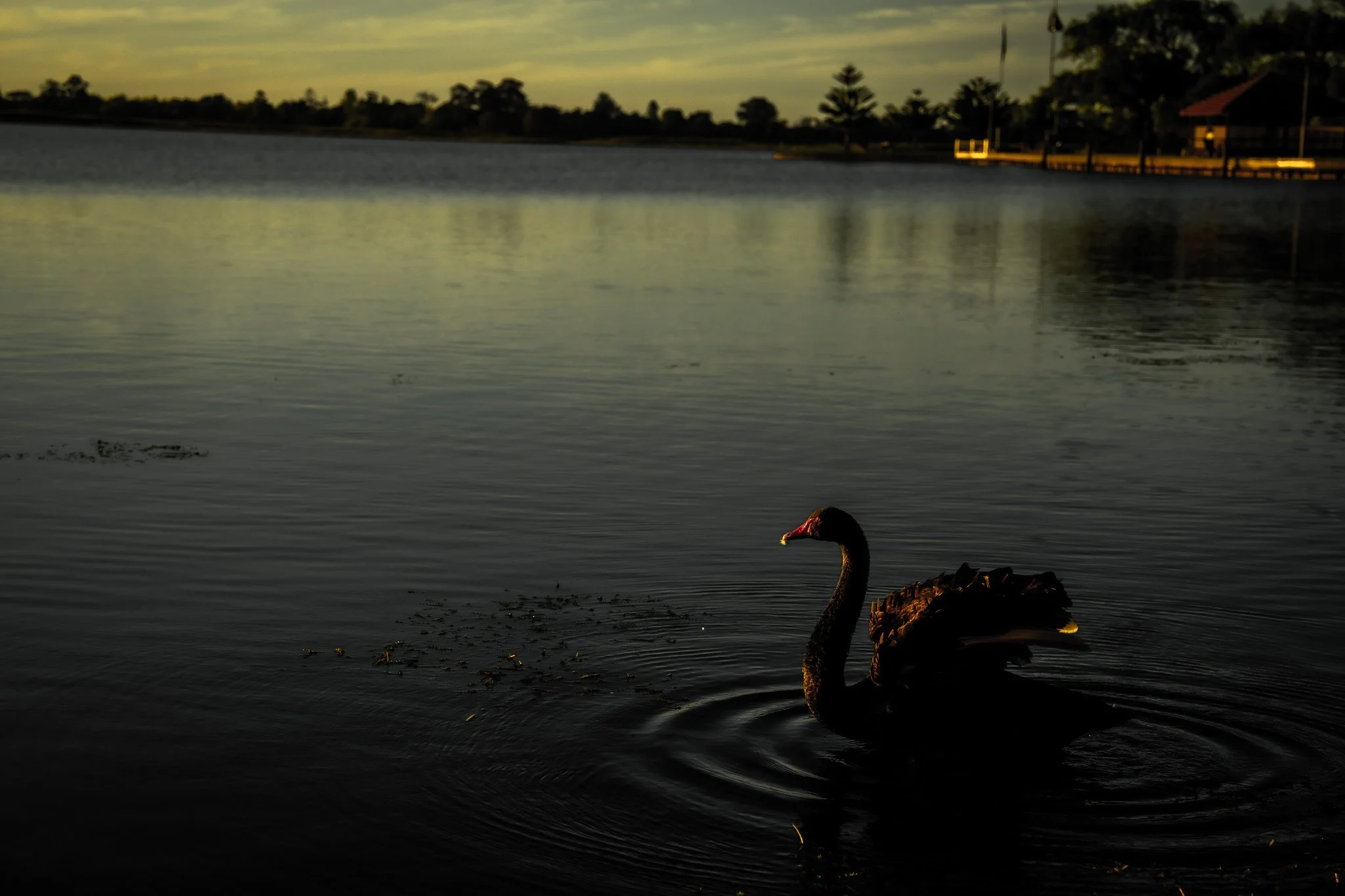
The lake itself was alive with wildlife. Waterbirds and ducks dotted the surface, but the most prominent were the elegant black swans. Some were sunbathing while carefully preening their feathers, others drifted lazily across the water, and a few performed quiet, almost ceremonial gestures that only their partners could fully understand. Watching them enjoying the day brought with it a quiet sense of peace.

We knew we were getting close to the site as voices and music began drifting towards us across the park. The sounds grew louder as we quickened our pace. Soon we could see people ahead—lots of them—all slowly converging toward the entrance gate.
The air at the entrance was heavy with the unmistakable aroma of food, as rows of mobile vendors lined the path just beyond the gate. With the time edging toward midday, queues had already formed at many of the stalls.
We were still full from the late breakfast we had grabbed earlier at a café, so we simply continued our walk deeper into the garden.
Before long we came across beds of dahlias in full bloom—rows upon rows of them in an astonishing variety of colours, shapes, and sizes. Some were deep crimson, others soft pink, bright orange, or creamy white, and a few carried delicate blends of two colours brushed across their petals. Each bloom seemed to compete for attention.
Up close, the flowers revealed their intricate architecture. Some were the perfectly rounded pompon dahlias, their petals packed so tightly that each bloom formed a near-perfect ball, like a carefully stitched cushion of colour. Others were the larger decorative dahlias, with wide, layered petals spreading outward in generous symmetry. A few stood out with dramatic cactus-style petals, long and narrow, twisting slightly at the tips as if tiny fireworks had been frozen in mid-burst.
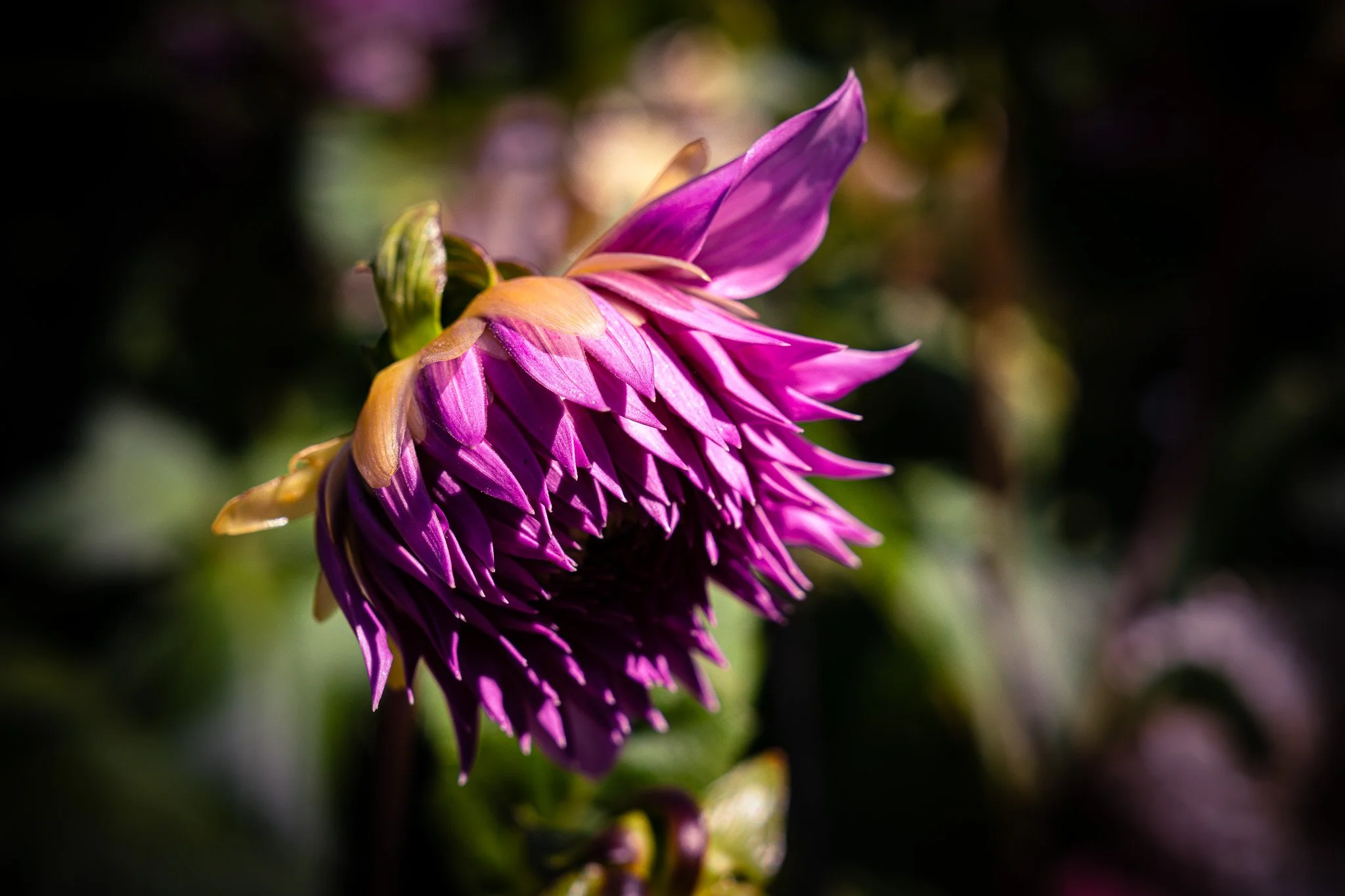
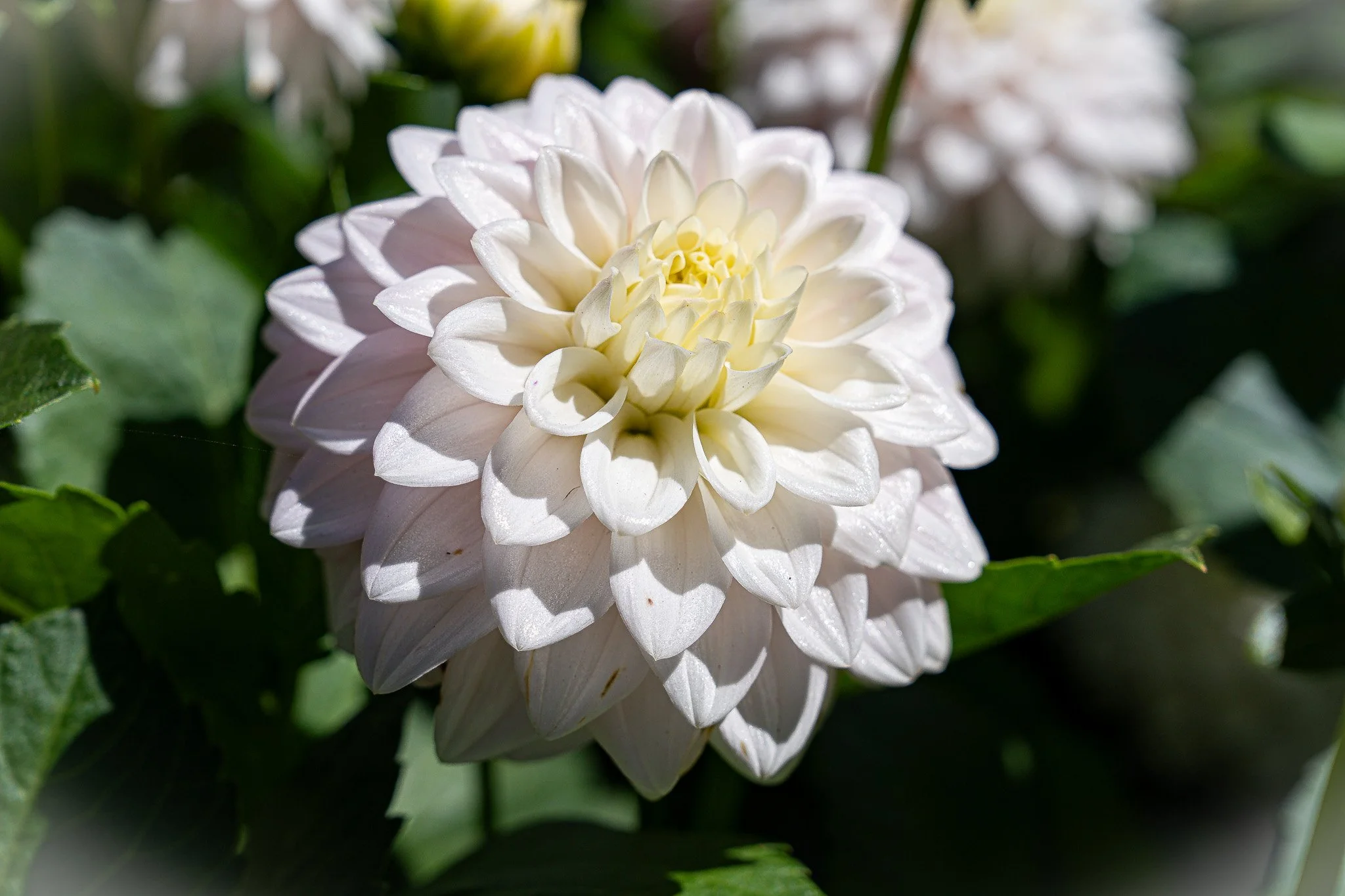
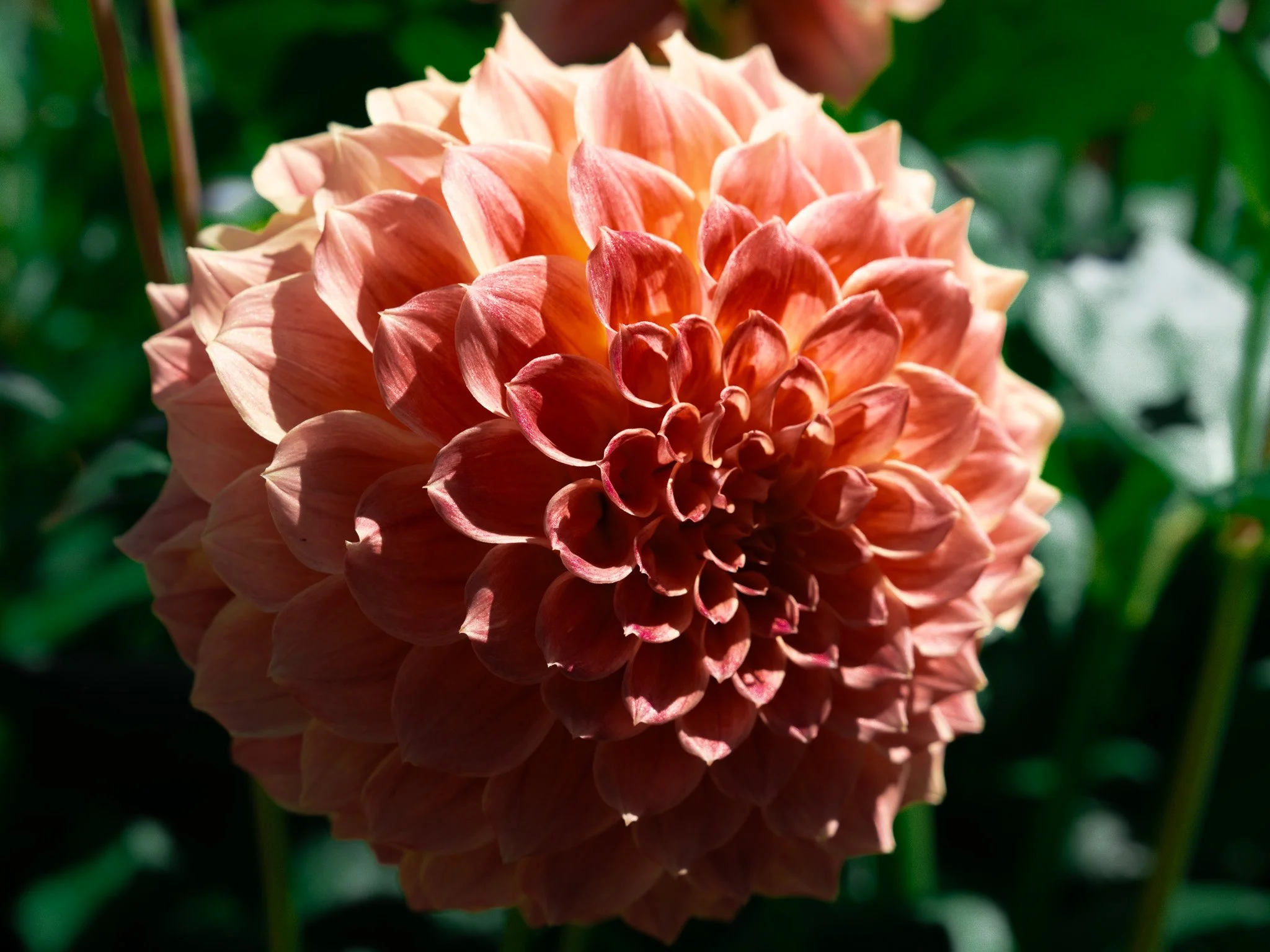
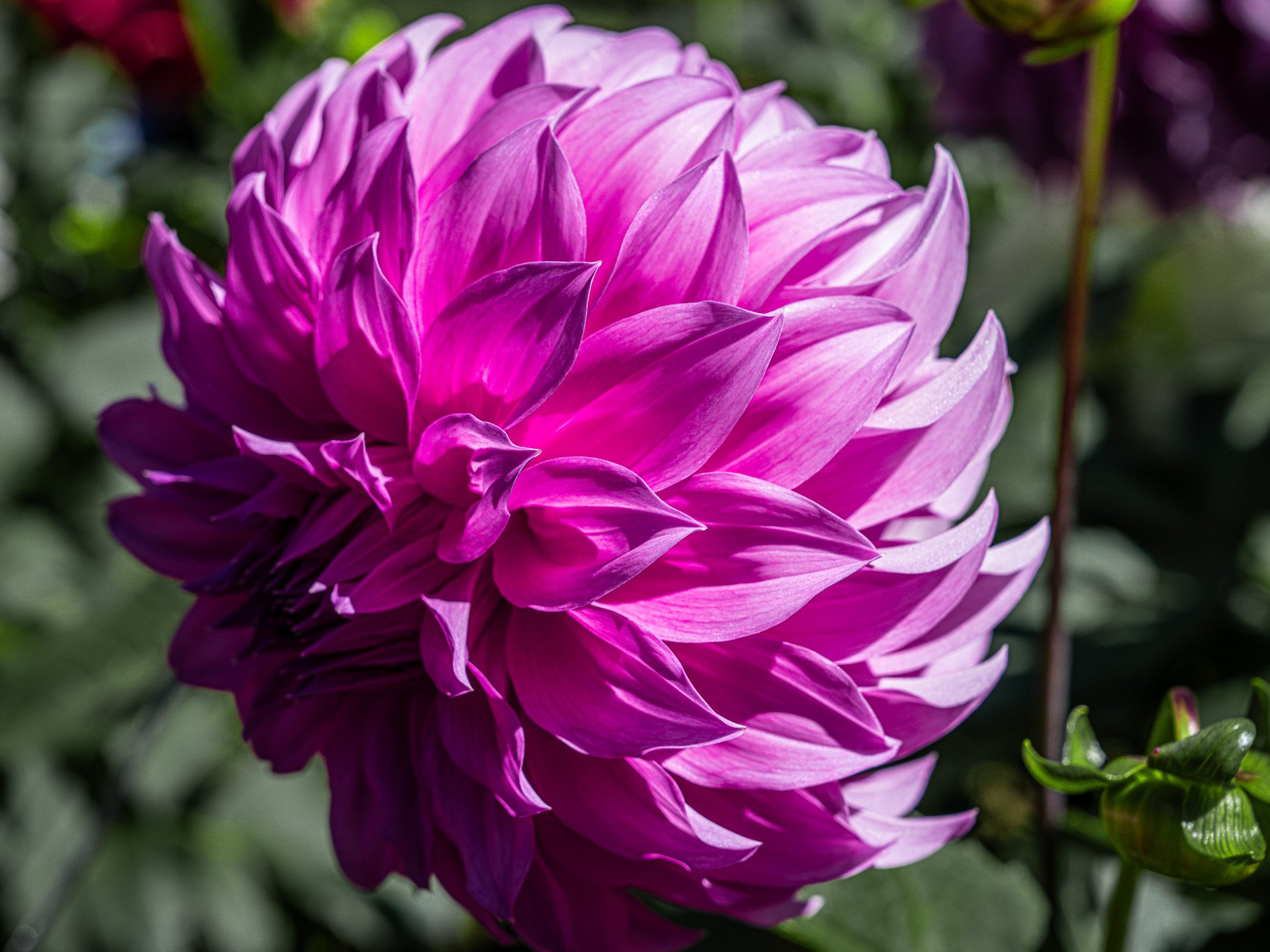
One particular bloom caught my attention. I had grown this variety before and treasured it in my garden, but I lost it during a round of garden re-design some time ago. Ever since, I had been quietly searching for a replacement.
The bloom itself was enormous, easily the size of an open hand. Its petals carried the vivid colour of a red coral reef—deep, luminous red with darker crimson streaks running delicately along each petal like fine brushstrokes. The petals were layered in tight symmetry, gradually unfolding from the centre and curving gently outward, giving the flower both fullness and grace.
In full bloom, the flower had a commanding presence. It stood out among its neighbours, not merely because of its size, but because of the richness of its colour and the precision of its form. It was one of those flowers that naturally draws the eye, inviting you to lean in a little closer and admire the careful geometry of its petals. Seeing it again stirred a small sense of nostalgia, reminding me of the time when it once thrived in my own garden.
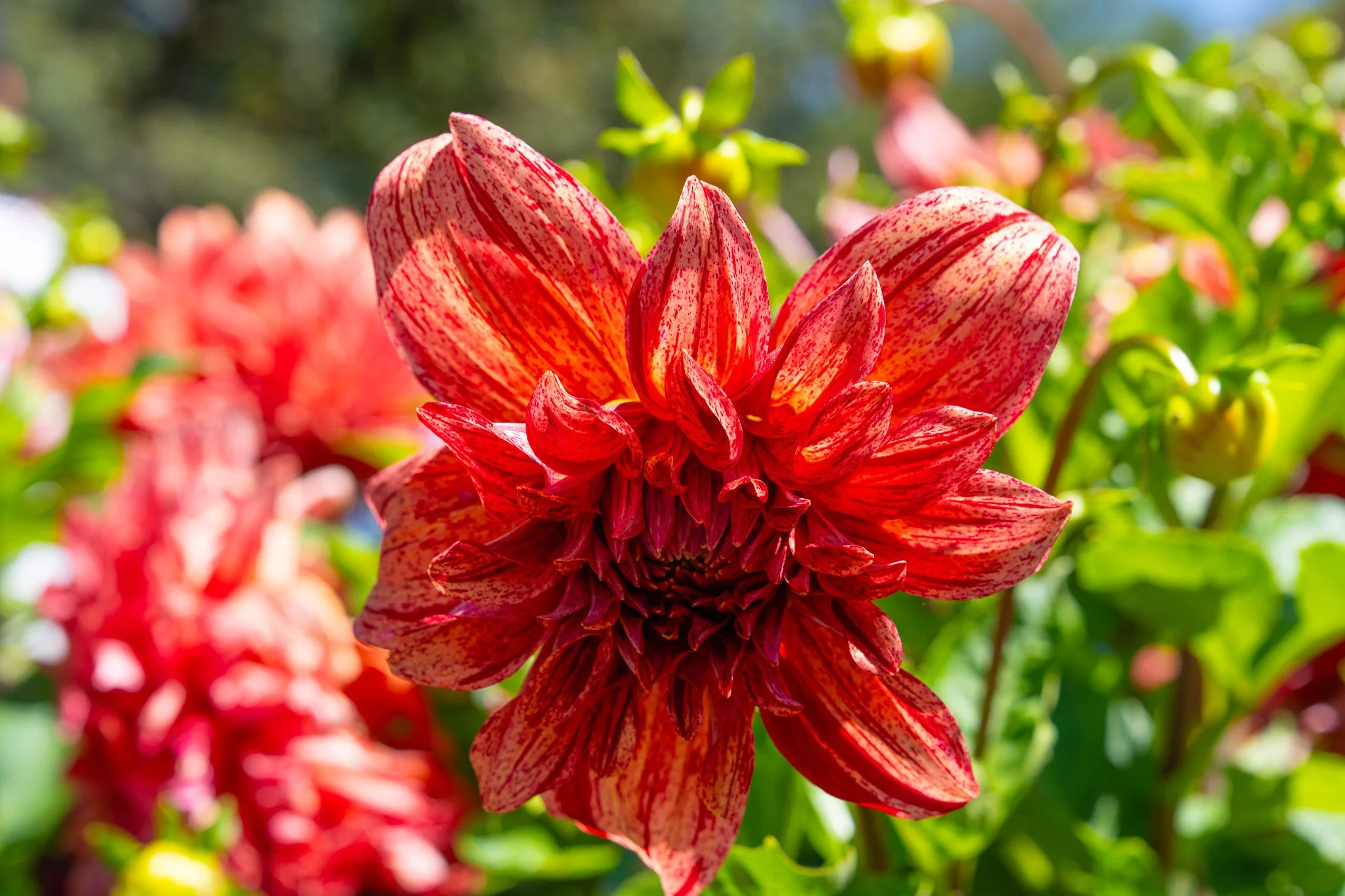
The leaves beneath the blooms were broad and deeply serrated, a rich green that provided a striking backdrop to the vivid colours above. They grew in opposite pairs along the sturdy stalks, creating dense foliage that made the flowers stand out even more dramatically.
The stalks themselves were tall and surprisingly strong, rising confidently from the beds and holding the large blooms upright. Some stretched well above waist height, swaying gently whenever a breeze passed through the garden. Despite the size and weight of the blossoms they carried, the stems held them with quiet resilience.
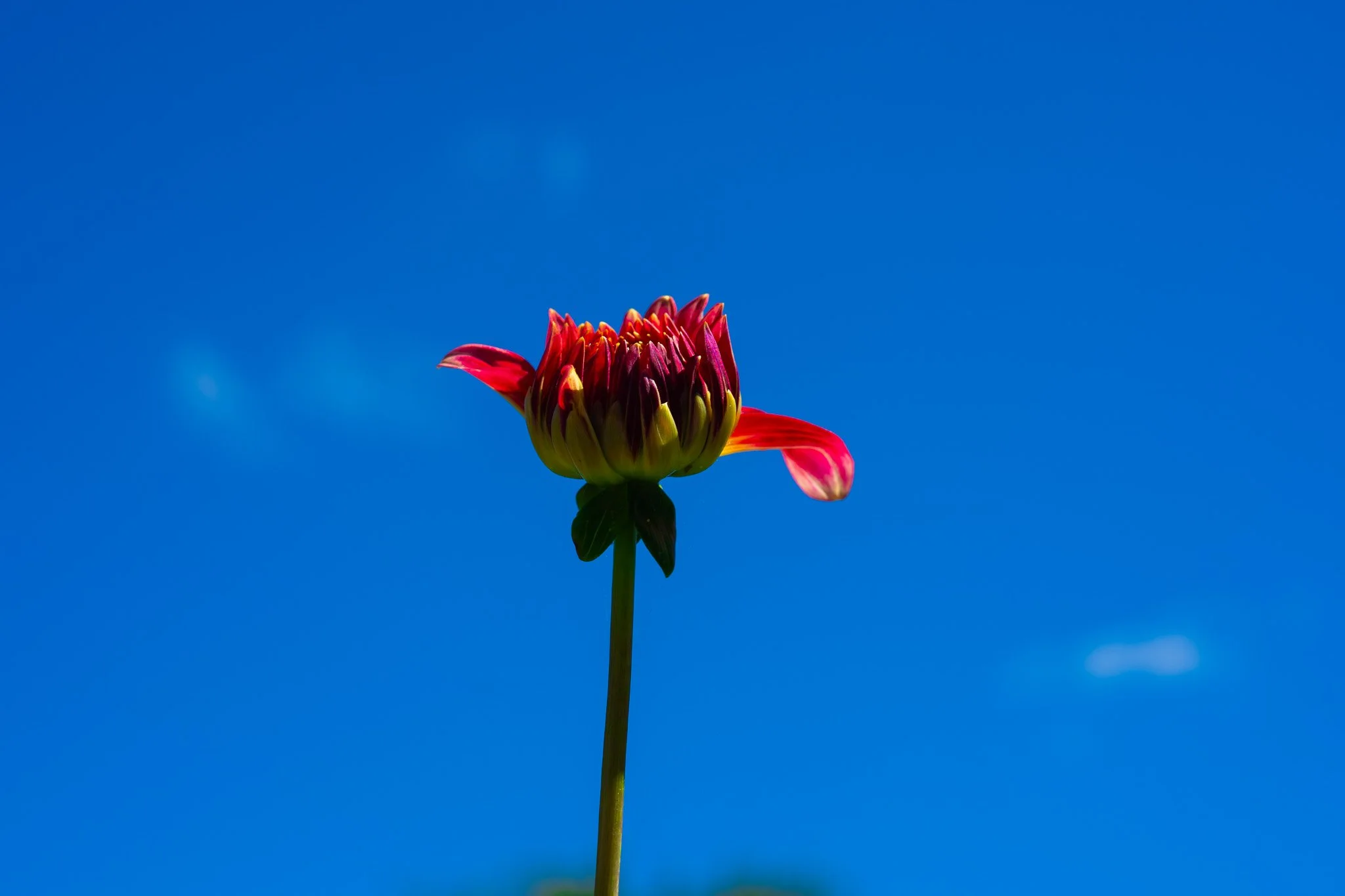
We paused there for a while, slowly moving from one row to the next, admiring the delicate symmetry of the petals. Some blooms looked almost too perfect to be real, as though they had been carefully sculpted rather than grown.
For a moment, the lively sounds of the festival faded into the background. Standing among those orderly rows of dahlias, it felt as though the garden had quietly invited us to slow down, breathe, and simply admire the quiet artistry of nature.
We drifted away from the dahlias and toward the market stalls. From previous visits I knew that some of the vendors would be selling begonias. I had bought a few during my last trip, though I later discovered that dahlias were not the easiest flowers to grow in my garden. Out of all the tubers I planted, only one managed to survive.
This time I promised myself I would simply admire them and resist the temptation to buy more.
Among the stalls, I noticed that the latest trend in gardening seemed to be succulents. Their popularity had grown steadily since the drought years not long ago. Hardy and water-wise, they had found their way into many Australian gardens. They came in an astonishing range of shapes and sizes—tight rosettes, plump bead-like leaves, spiky architectural forms. Many of the seedlings on display were tiny, almost miniature sculptures, each one delicate and perfectly formed. I found myself drawn to several of them and made a mental note to return the next day. I did not want to carry any plants during the long walk back.
But my real mission was to find a particular vendor I remembered from previous festivals—the one who sold cuttings of epiphyllums.
Epiphyllums are a type of cactus originating from the tropical forests of Central and South America. Unlike the desert cacti that most people are familiar with, these are epiphytic plants, meaning they naturally grow on trees or rocks rather than in the ground. Their long, flattened stems drape and cascade like ribbons of green, sometimes arching gracefully over the edge of a pot or climbing gently along a support. At first glance they hardly look like cacti at all. Their stems resemble thick leaves, soft and slightly scalloped along the edges, giving them a surprisingly elegant appearance.
What makes them truly special, however, are their flowers.
There are many varieties—often called orchid cacti or leaf cacti—each producing blooms that can rival some of the most spectacular flowers in the plant world. The blossoms are often large, elaborate, and deeply layered, with petals that radiate outward in intricate arrangements.
One variety I have known since childhood is the famous Queen of the Night, scientifically known as Epiphyllum oxypetalum. Growing up, it carried an almost mystical reputation. People believed that when it bloomed it brought good fortune to the household, and the more flowers it produced, the greater the blessings to come.
The flower itself is extraordinary. It blooms only at night, usually opening slowly after dusk. The large white petals gradually unfurl, revealing a luminous blossom that can reach nearly the size of a dinner plate. Its fragrance is sweet and intense, filling the surrounding air with a perfume that seems almost otherworldly. By dawn, however, the flower fades and begins to close again, making each bloom fleeting and precious. To witness it fully open is considered something of a small privilege.
Perhaps that sense of rarity is what first sparked my fascination.
By chance, I found my first Queen of the Night plant while wandering through a Sunday market many years ago. I still remember the quiet excitement of bringing it home, wondering if it would one day reward me with its famous midnight bloom.
It did, eventually.
The first time I noticed the flower buds forming along the flat green stems, anticipation began to build. Each day I watched them slowly swell and lengthen, knowing that the moment was getting closer. As the buds matured, I made it a small ritual to check the plant at dusk, hoping that tonight might finally be the night.
When the long-awaited moment arrived, the experience felt almost surreal. The petals slowly began to unfurl, layer by layer, as though the flower were stretching itself awake in the darkness. Watching it bloom was like witnessing a living time-lapse. Over the course of an hour or two the flower gradually opened to its full splendour, revealing its luminous white petals and golden centre.
For that brief window of the night, the plant transformed completely.
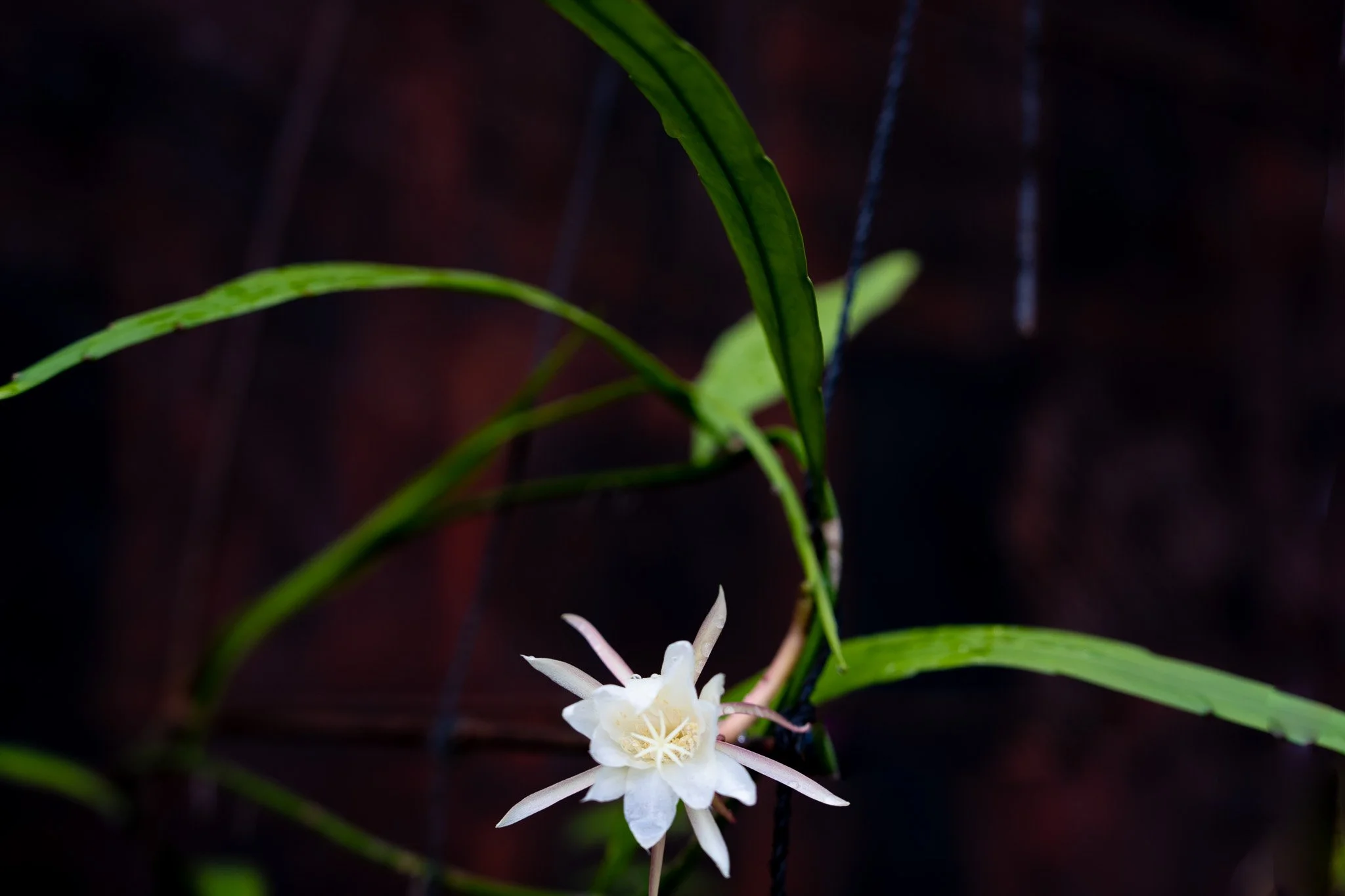
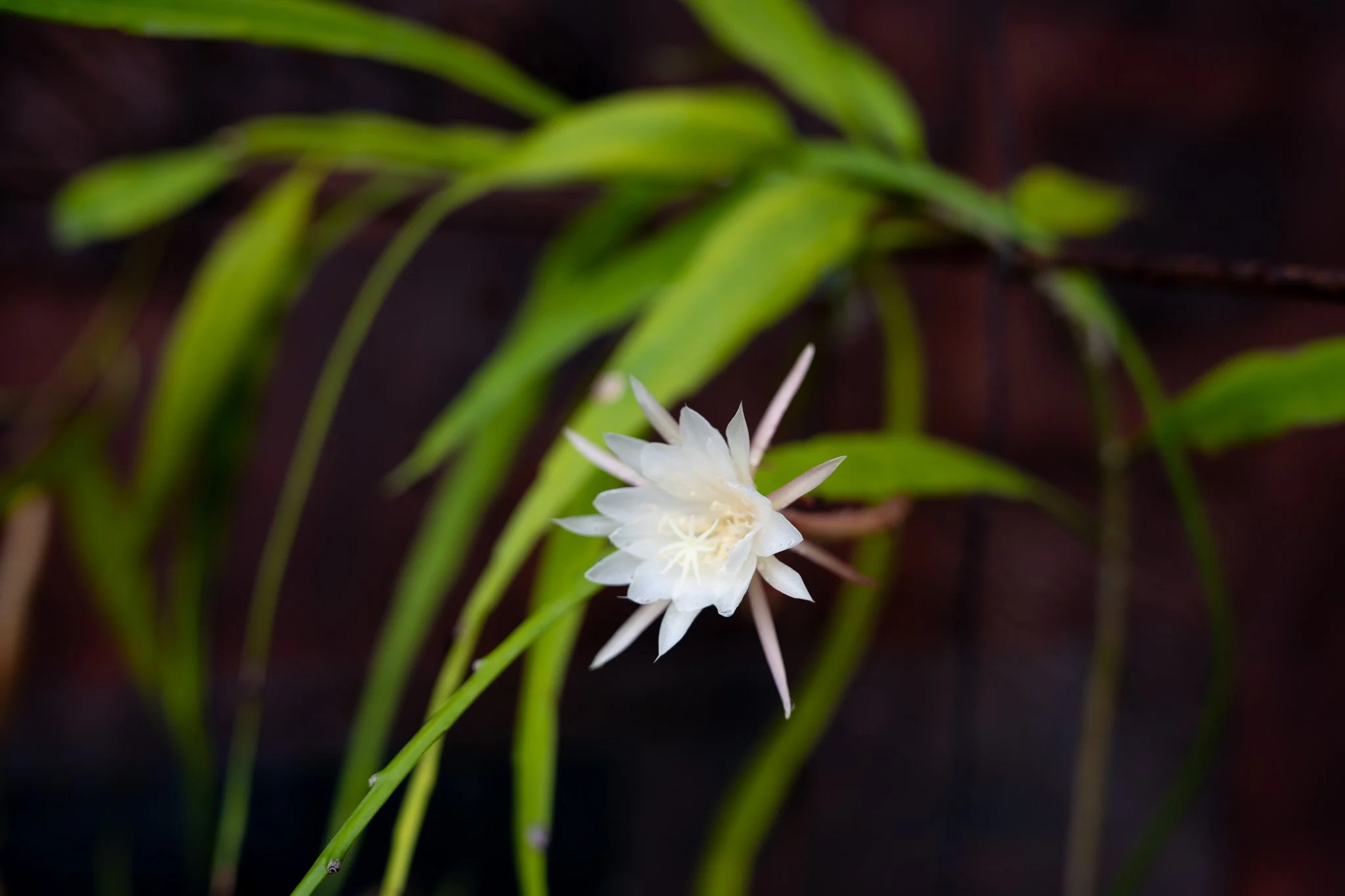
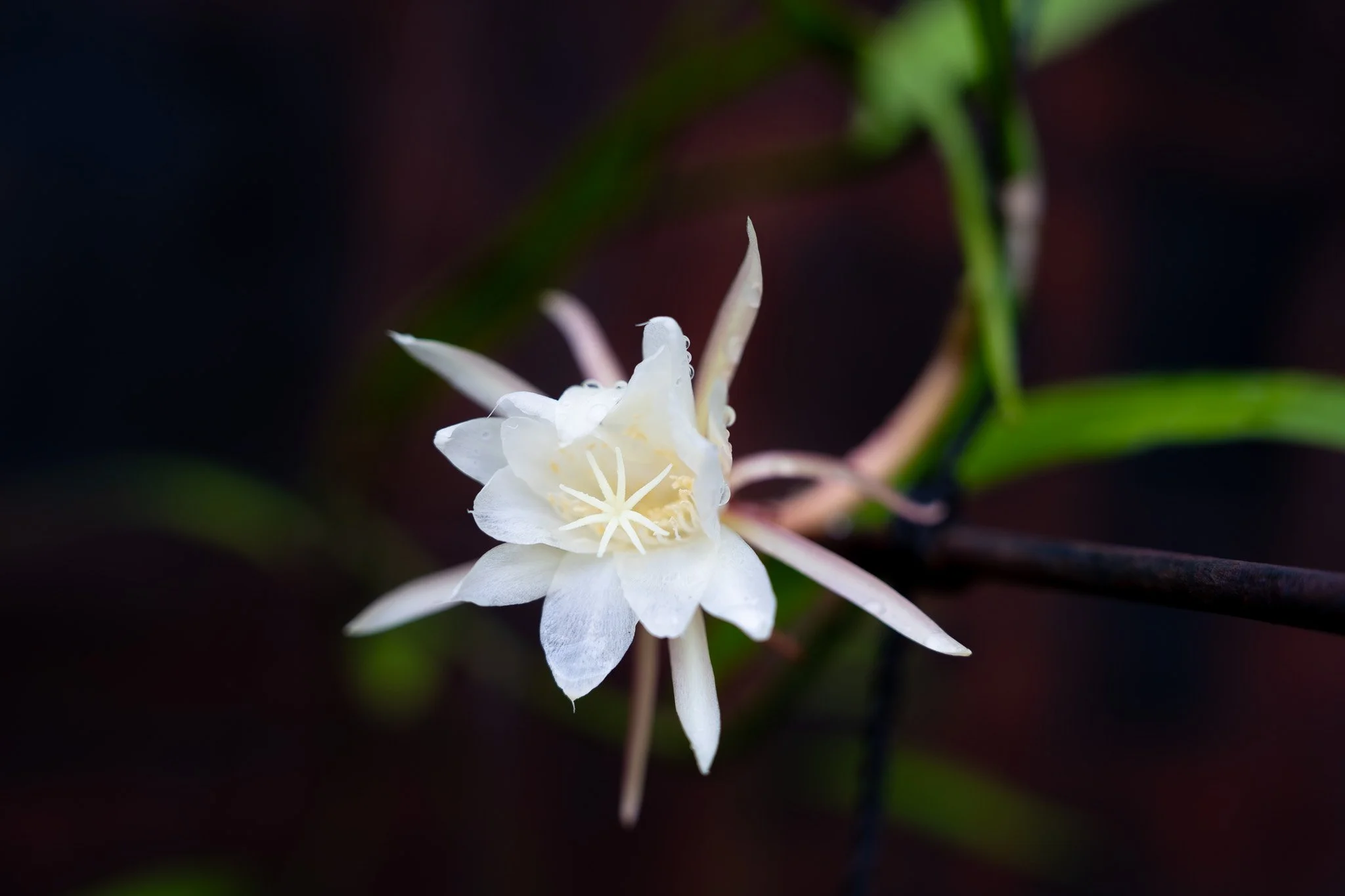
By morning, the magic had already faded. The petals softened and slowly closed, leaving behind the quiet memory of a flower that had existed only for a single night.
Beyond the classic white Queen of the Night, epiphyllums come in a remarkable range of colours. Some varieties bloom in deep velvety reds, others in shades of coral, pink, or violet. There are brilliant oranges, soft apricots, and warm yellows that glow in the sunlight. The flowers also vary greatly in size and form—some wide and dramatic, others more delicate with narrow petals that extend like graceful starbursts.
To me, epiphyllums have always felt a little magical. Their plants look modest for most of the year, quietly growing long green stems without much fanfare. But when the flowering season arrives, they suddenly reveal an entirely different character, producing blooms so extravagant that they seem almost impossible for such a humble plant.
Over the years I have managed to collect several varieties, finding them at various markets around Melbourne and beyond. Each time I came across one, I would ask the seller the essential questions: what colour would the flower be, how large would it grow, and how long had the cutting been planted in the pot?
At home they hang or spill gently from their pots, their long green stems slowly lengthening as the seasons pass. I keep many of them along the sheltered edge of the garden where they receive soft morning light. Most of the time they appear rather unassuming, blending quietly into the rest of the garden. Yet in the stillness of the evening, when the light softens and the garden begins to settle for the night, their long green stems seem almost sculptural against the fading sky. And hidden within those plain stems lies the potential for something extraordinary.
Perhaps that is part of their charm—the patience they demand, and the quiet anticipation that builds while waiting for the flowering season.
And that, perhaps, is why I kept searching for that stall, hoping to add another variety to my ever-growing collection. Finding a good cutting of an epiphyllum always feels like the beginning of a small promise—the promise that, with patience, one day it might reward you with a bloom just as spectacular.
I spotted the stall tucked away at the far corner. Like a little boy in a toy shop, a newfound burst of energy returned to my steps, making them lighter despite the long walk we had already taken.
We were greeted by a row of unusual plants that immediately caught my eye. I have always loved these quirky plants. Each one seems to tell a different story—stories of distant places, strange adaptations, and quiet resilience. They always make interesting additions to a garden.
But I stuck to my resolution. I would not buy any—at least not for the time being.
Instead, I slowly looked around the stall, taking mental notes for the next day.
At the back of the stall, on a long table, lay the epiphyllum cuttings I had been searching for. Each cutting had a small photo of the flower attached to it, showing what the plant would eventually become. The pictures made it easier to choose, displaying blooms in a range of colours—deep reds, glowing pinks, fiery oranges, and soft yellows.
I eventually selected a few that I found most attractive. They were light and easy to carry, and there was always the possibility that the best ones might be gone by the next day.
Before leaving, I asked the seller how best to plant the cuttings. I had tried planting broken stems before with little success. Whenever I found one, I would simply stick it into the soil. Some managed to grow new shoots, but most eventually rotted away.
The seller shared a useful tip. Before planting, she suggested leaving the cuttings in a dark, dry place—such as inside a paper bag—for a couple of days so the cut ends could callus over. This would help prevent them from rotting once planted.
It was a simple piece of advice, but one I was eager to try. Perhaps it would help me multiply my collection in the future.
Happy with this small purchase, we continued on and joined the queue to see the main attraction—the begonia displays.
The begonia display is housed inside the Robert Clark Conservatory. By the time we arrived, a long queue had already formed outside. A sign informed us that the wait would be about fifteen minutes.
To manage the steady stream of visitors, both the entrance and exit were positioned on the same side of the conservatory. Once inside, visitors followed a carefully planned U-shaped path that guided everyone around the display before returning to the exit. It was a simple yet effective design, clearly refined through years of experience managing the festival crowds.
The system worked remarkably well. The flow of people moved steadily without any congestion. Visitors were courteous to one another, instinctively giving a little space whenever someone paused to take a photo or lingered a moment longer to admire a particular bloom.
Above us, beneath the glass roof of the conservatory, hanging baskets were suspended from the metal beams. Each basket overflowed with begonias in full bloom, their stems cascading downward in waves of colour. The flowers spilled over the edges like a living curtain, creating a canopy of blossoms that greeted visitors the moment they stepped inside.
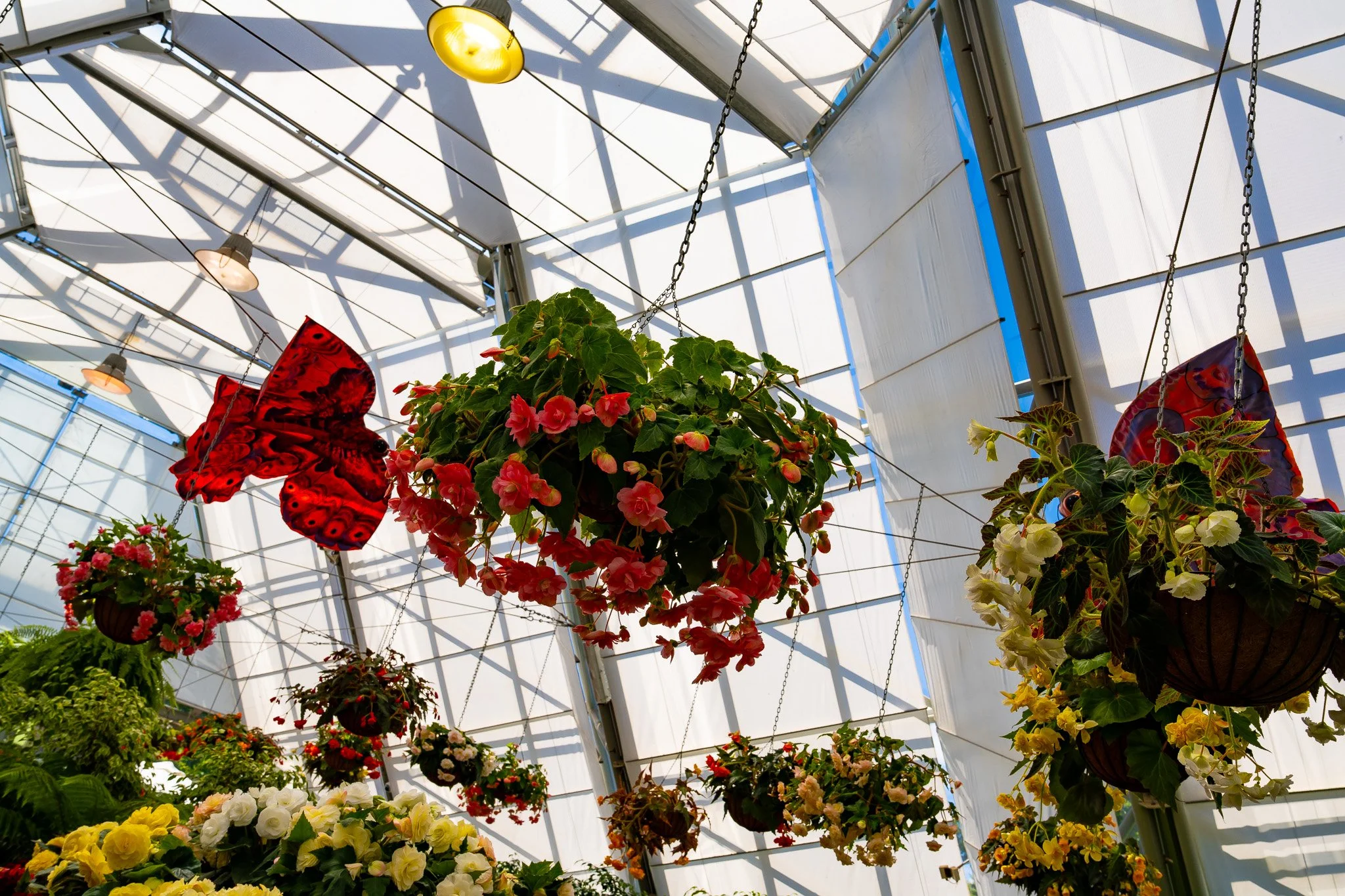
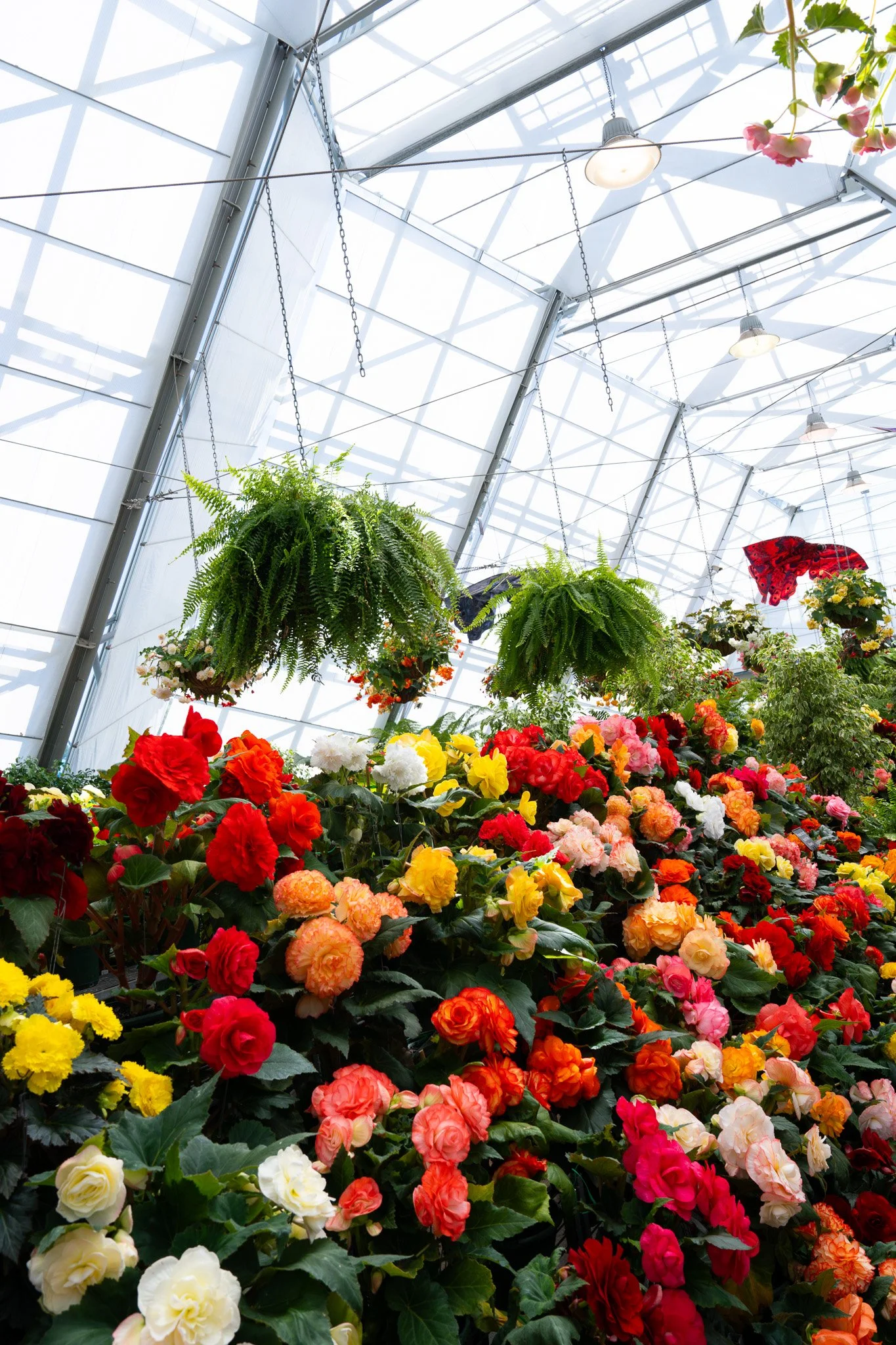
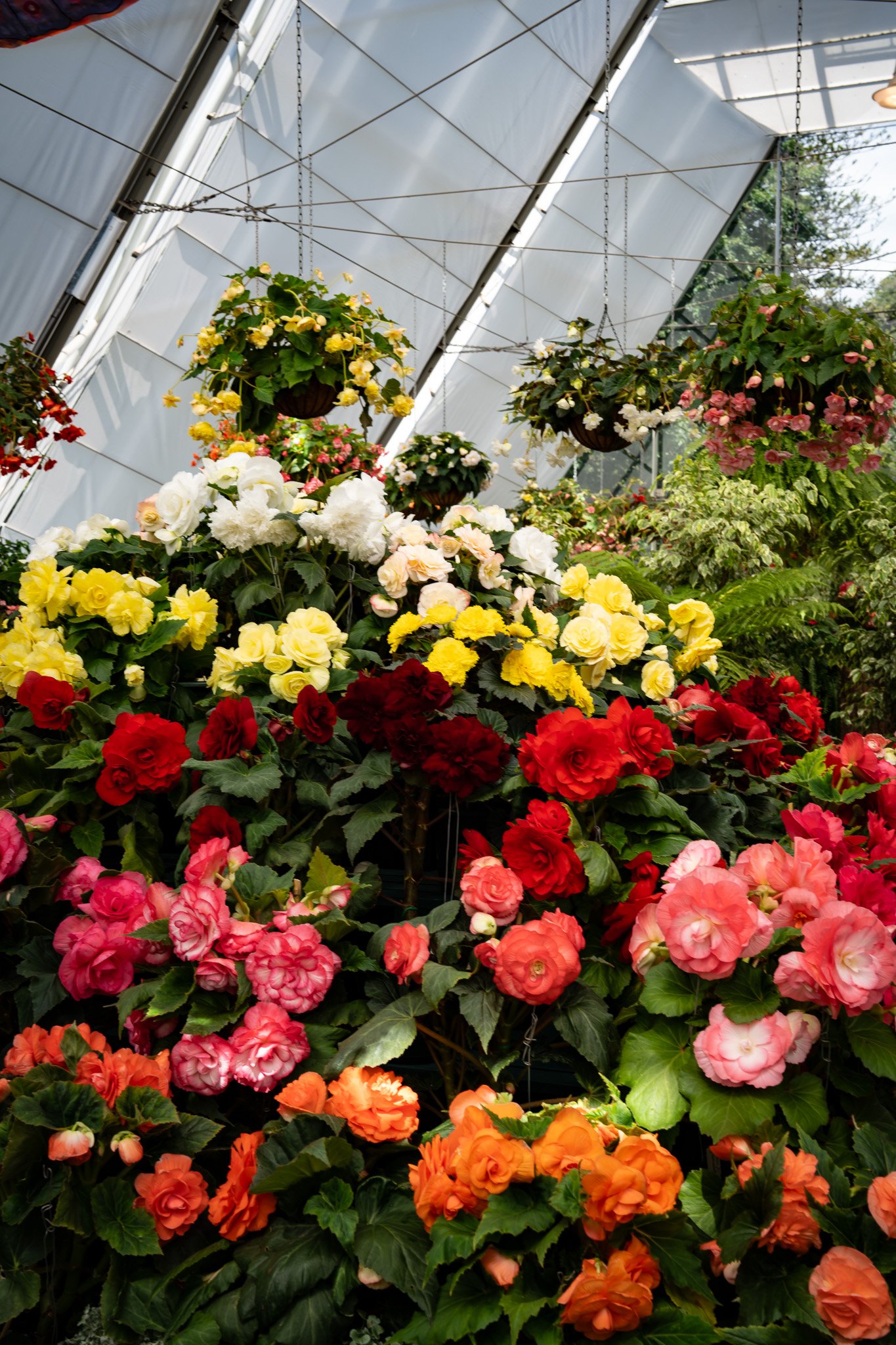
At the centre of the U-shaped walkway stood the main display—the true masterpiece of the conservatory.
Here, begonias of countless varieties were arranged in sweeping beds and tiers, forming a vibrant mosaic of colours. There were deep crimson blooms, glowing pinks, fiery oranges, creamy whites, and soft pastel shades that seemed almost luminous under the filtered sunlight from the glass roof.
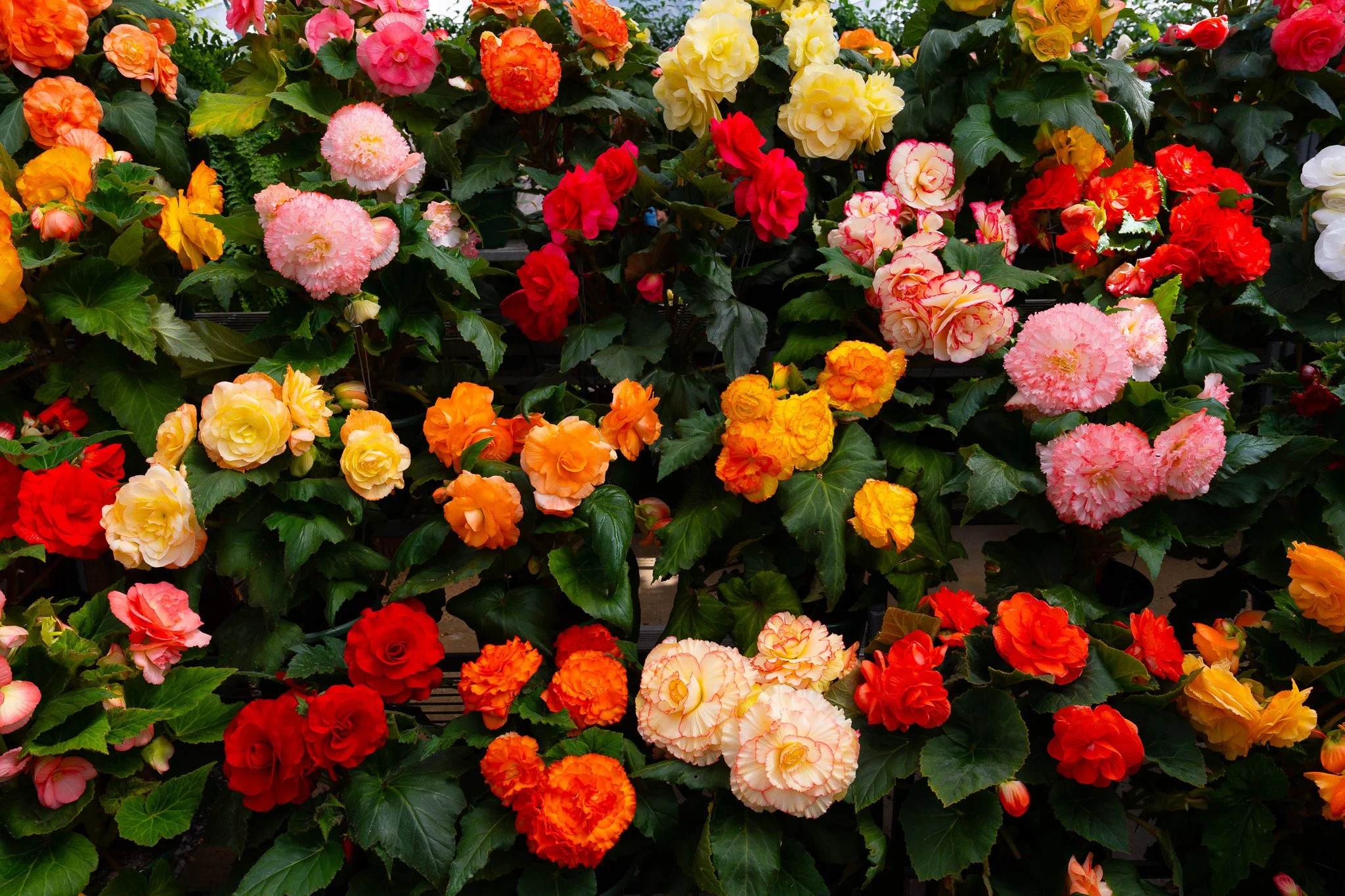
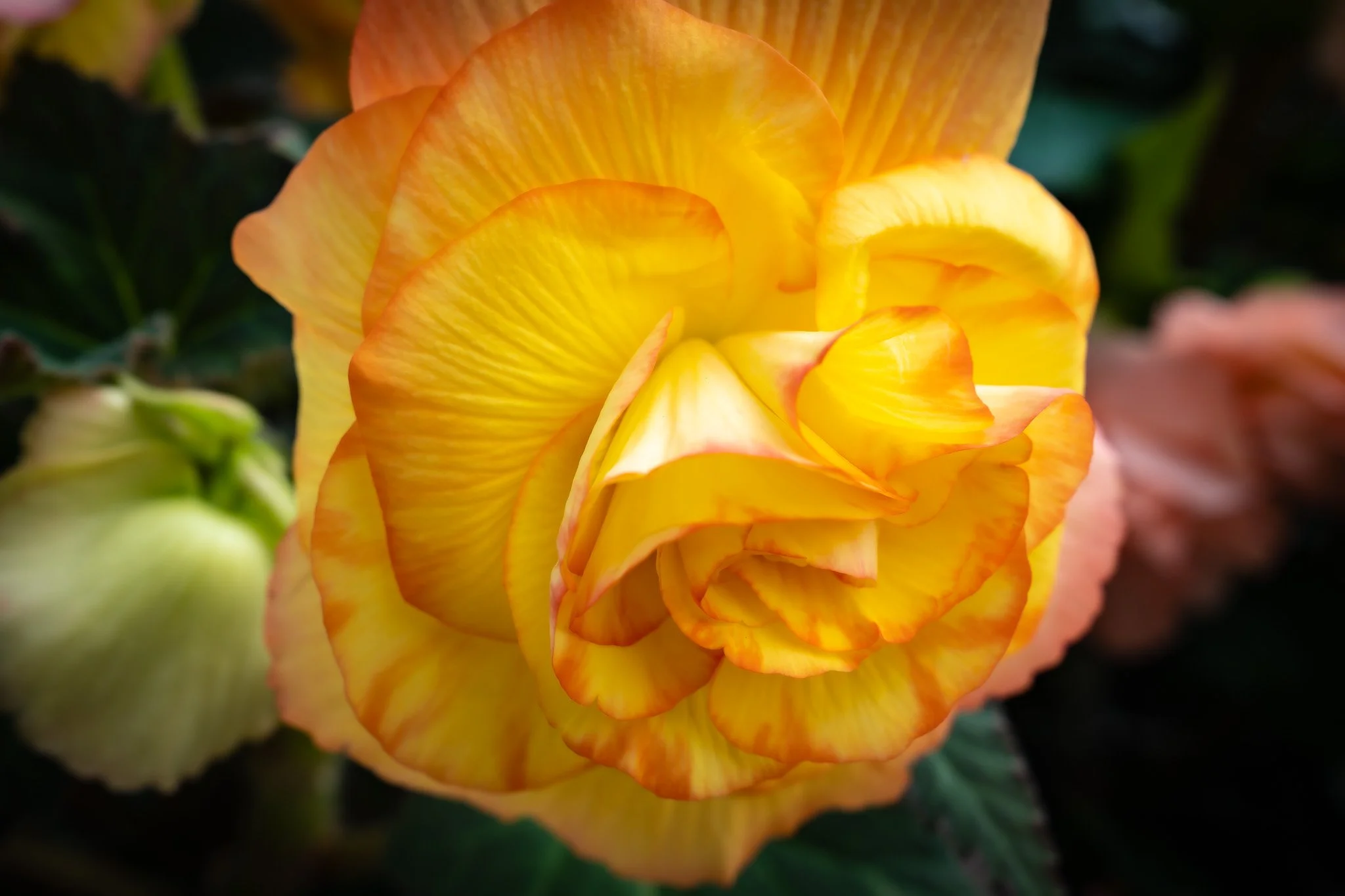
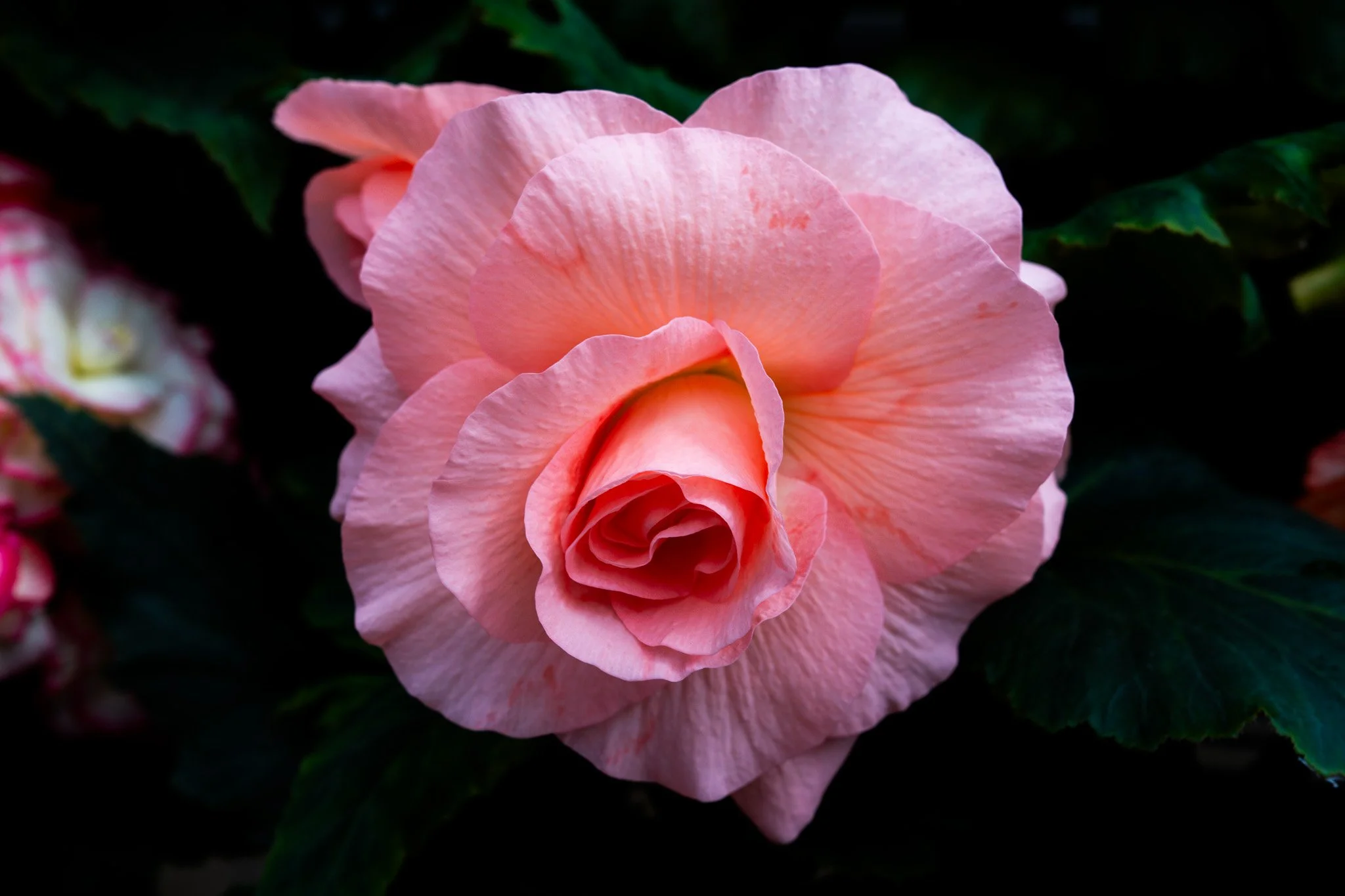
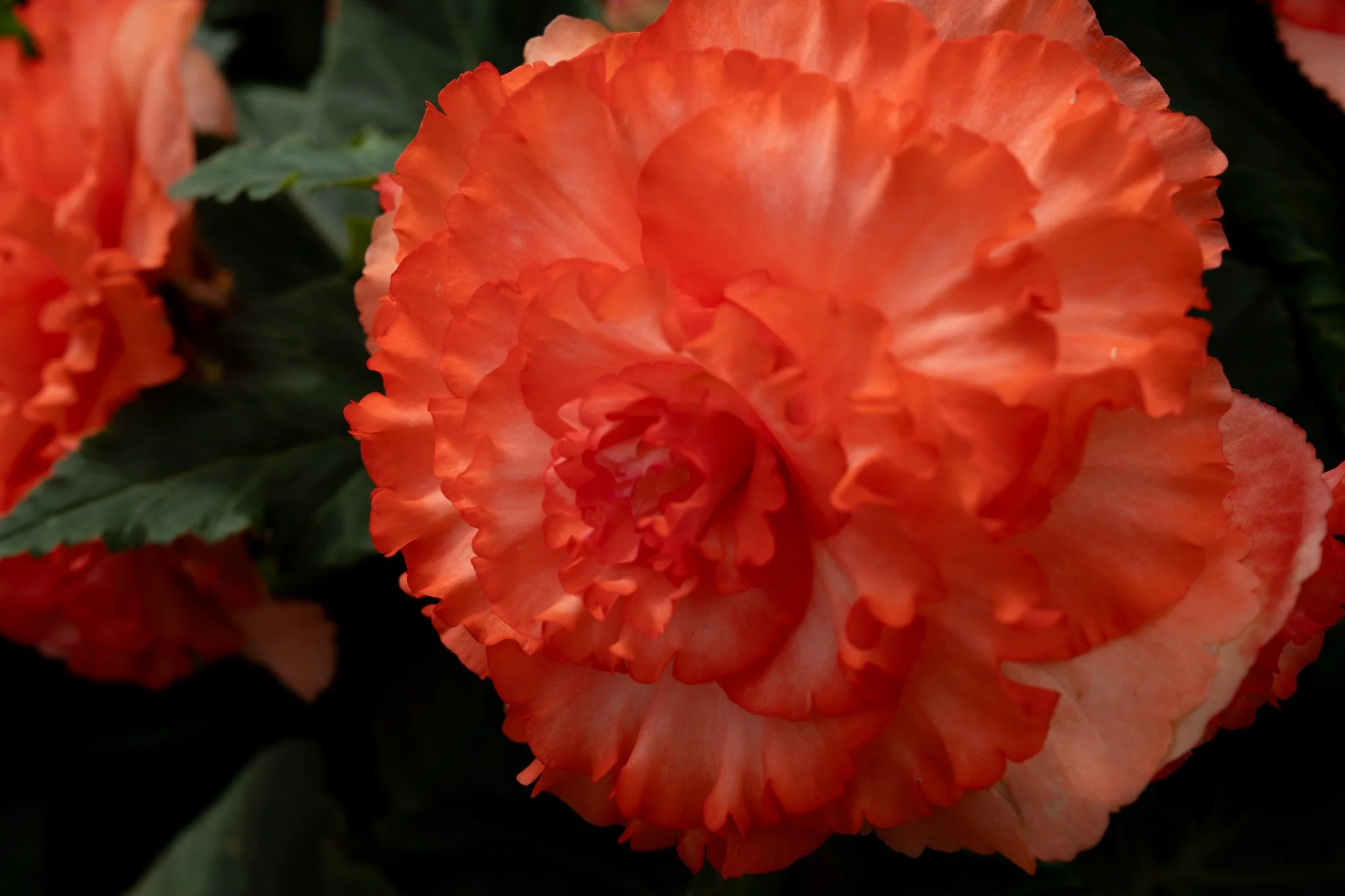
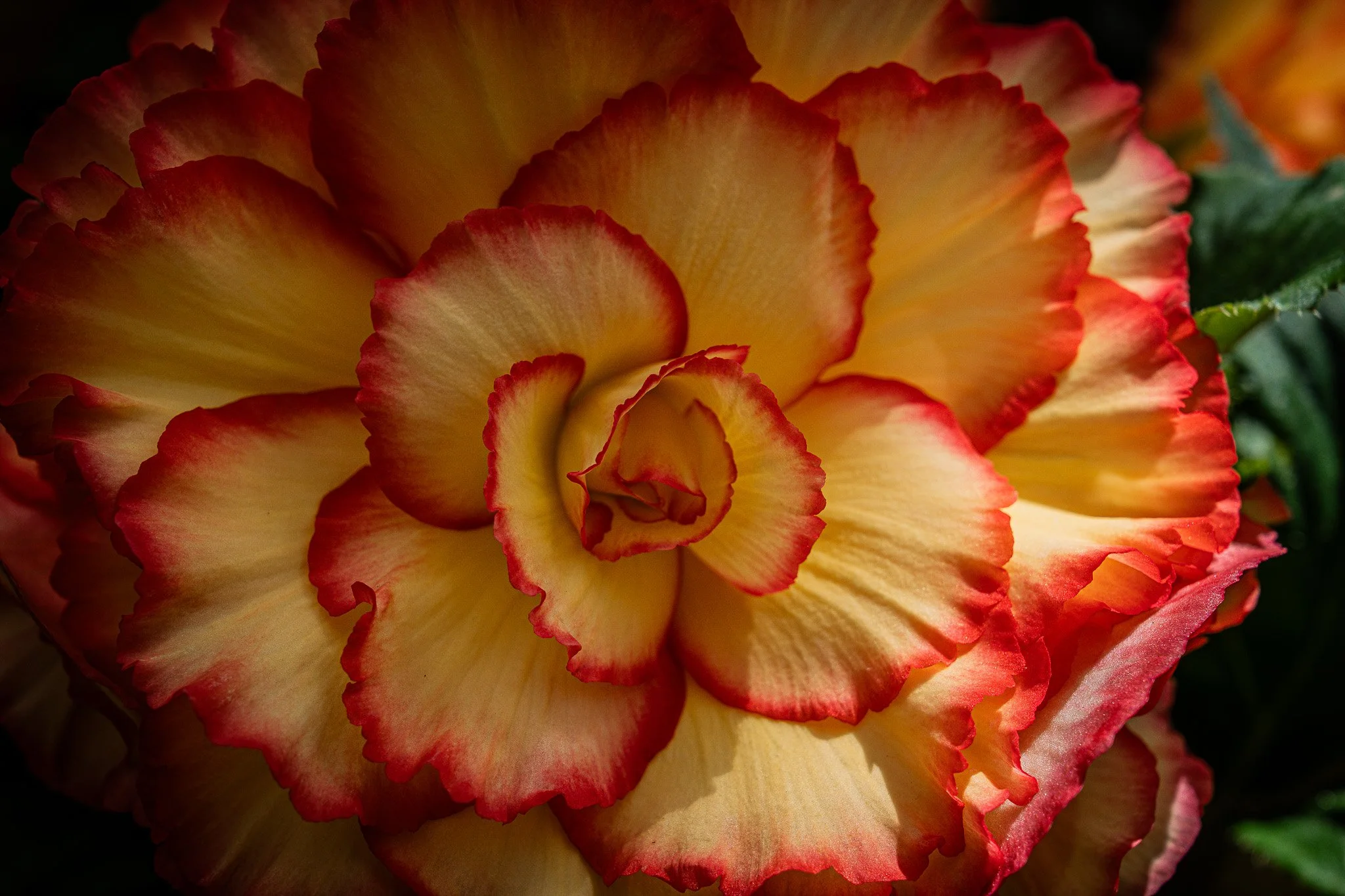
Up close, the flowers revealed their remarkable texture. Many of the petals had a velvety surface that seemed to absorb the light, giving the blooms a richness and depth of colour that photographs rarely capture. The petals were thin and delicate, layered in graceful folds that gave each flower a sense of softness and fragility. They looked so tender that one almost felt that even the gentlest touch might bruise them.
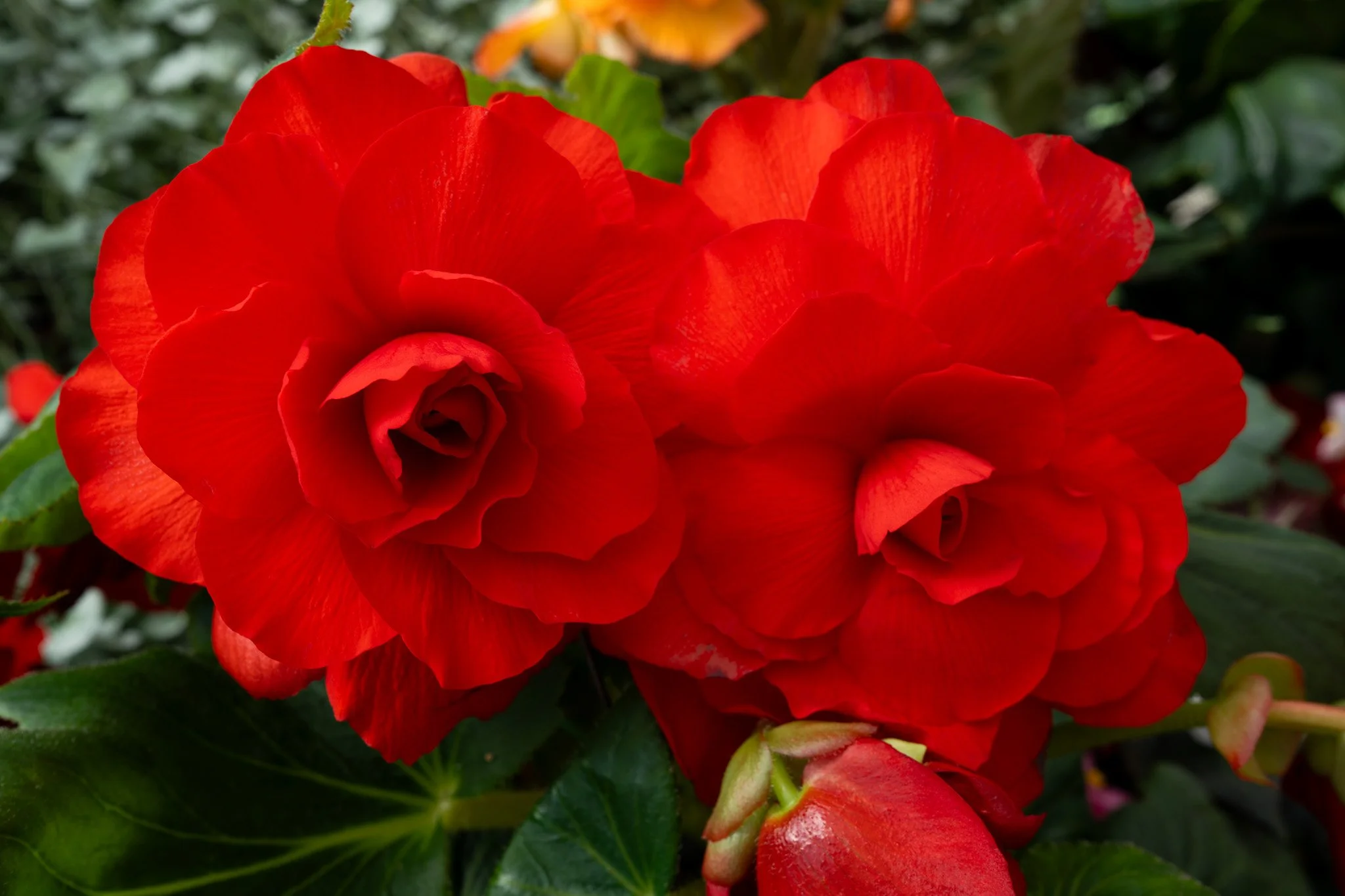
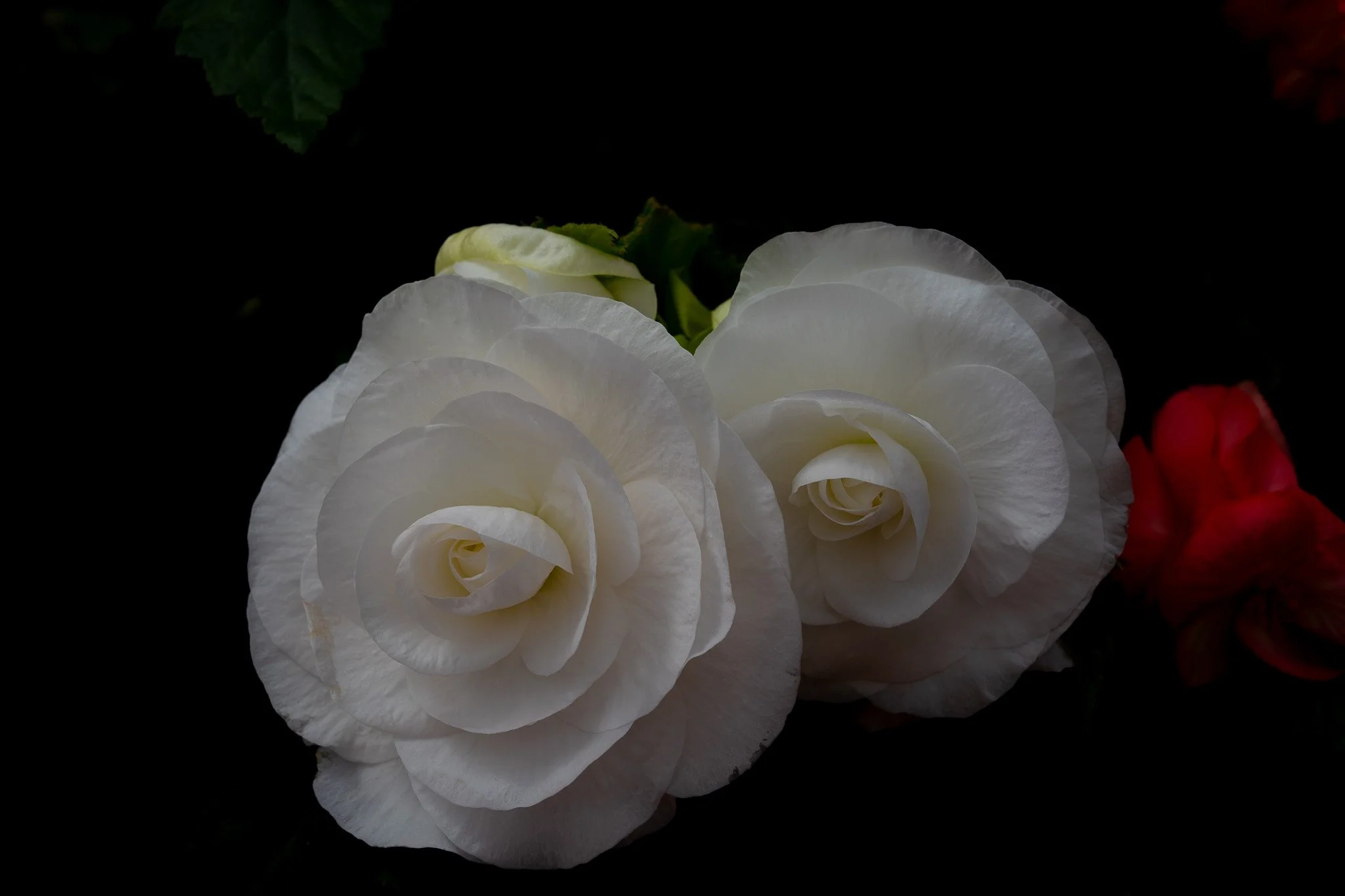
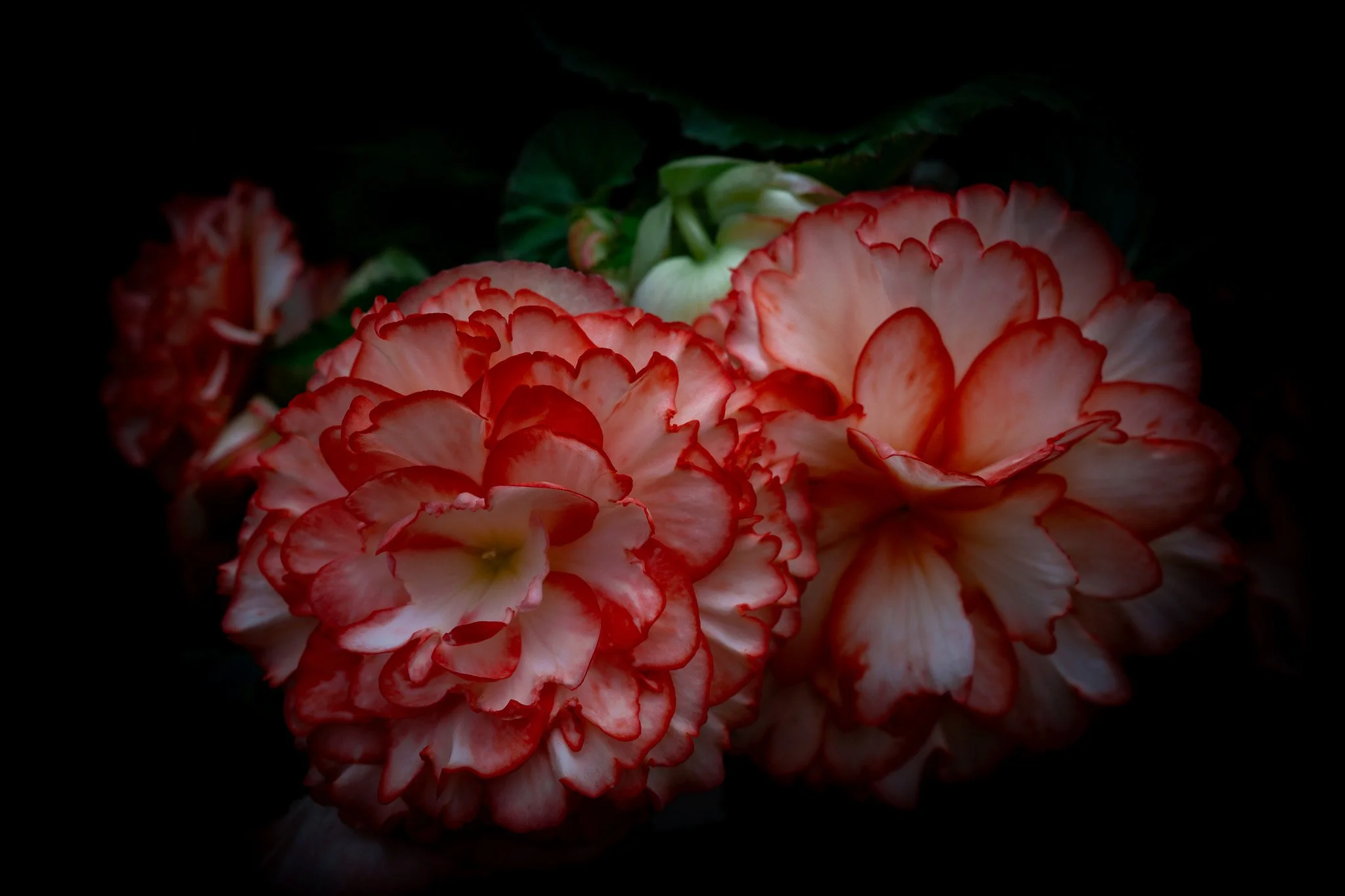
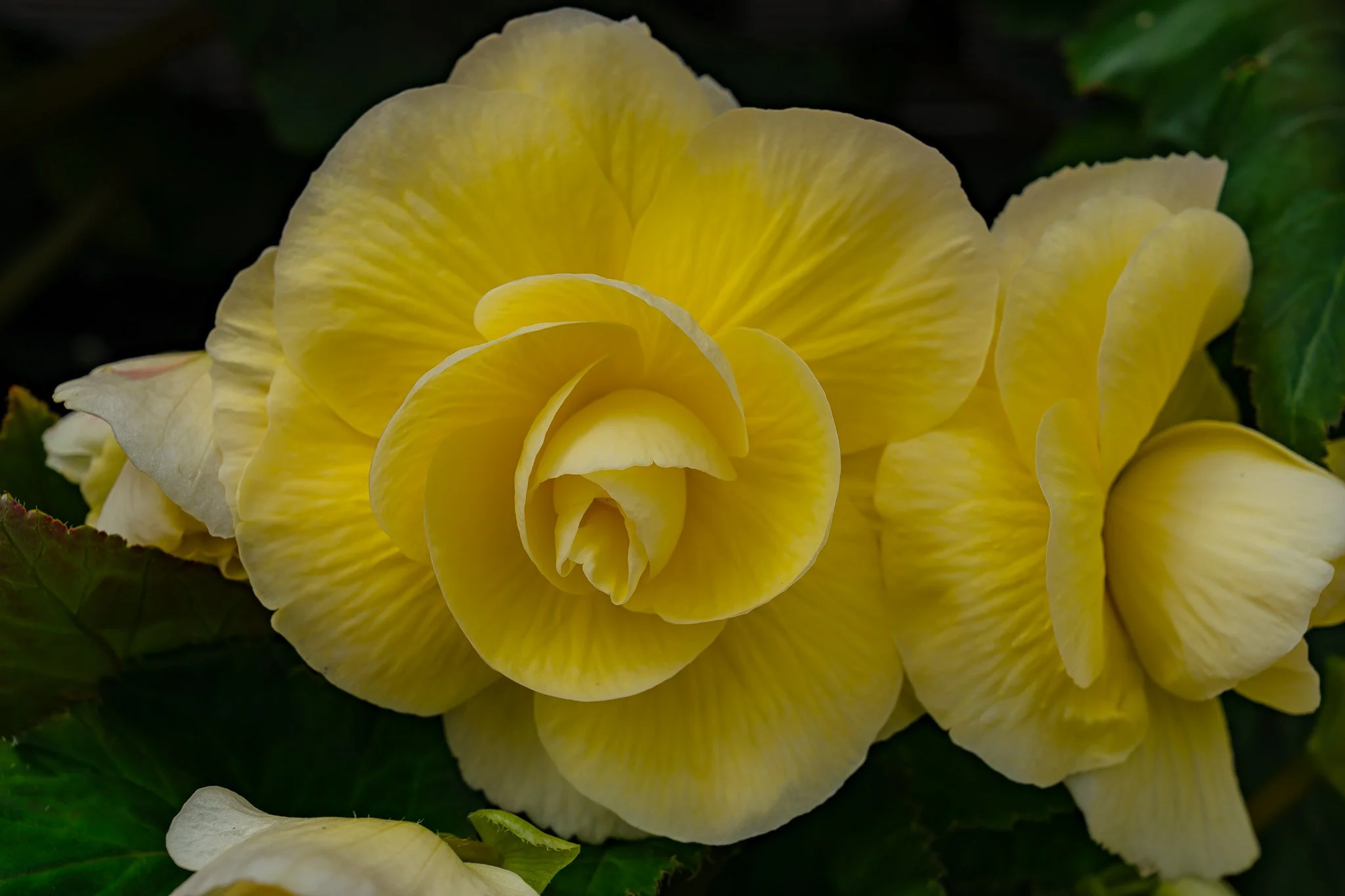
Yet despite their delicate appearance, the plants stood confidently in their displays.
The stems were slender and translucent, often tinged with pale green or reddish hues. They carried the flowers lightly, almost effortlessly, while the leaves formed dense clusters beneath the blooms. The leaves themselves were striking—broad, glossy, and slightly asymmetrical, with rich green tones that created the perfect backdrop for the vibrant flowers above.
Together, the flowers, leaves, and carefully arranged beds formed a living tapestry of colour and texture.
For a moment, the bustle of the festival outside faded away, and all that existed was this cascade of colour, light, and life. Walking slowly along the U-shaped path, I felt almost as if I had stepped into a painter’s palette come to life—each bloom more vivid than the last, each arrangement carefully composed to draw the eye and lift the spirit. By the time I reached the end of the display, I carried with me not just the memory of flowers, but a quiet sense of wonder, as though the begonias had whispered a gentle reminder of nature’s artistry and patience.
By the time we left the begonia display, lunch was calling. With so many food choices at the festival, we finally settled on Korean fried chicken and chips. We wanted something light, since we had planned an early dinner at a Malaysian restaurant that boasted authentic, handed-down family recipes. That sounded promising—family recipes often carry their own distinct, unique combinations of flavours, passed carefully from one generation to the next.
The makeshift outdoor dining area was packed, with no empty seats to spare. After a short search, we found a quiet, shaded corner where we could sit and enjoy our simple lunch in relative peace.
Afterward, we wandered over to the kids’ zone. The area was alive with activity, designed to entertain and engage young visitors. There was face painting, colouring and drawing stations, and even sections where children could paint pre-cut wooden shapes turned into animals or objects. Another area focused on teaching kids about plants and caring for the environment in fun, hands-on ways. It was wonderful to see how much effort the festival organizers had put into creating experiences that were not only entertaining but also educational.
With nothing else to focus on, we simply wandered through the garden, letting the space guide us. Music drifted lazily from the live band, its rhythm gentle yet insistent, inviting our steps to fall in tune with the beat. It mingled effortlessly with the soft murmur of conversations and the occasional burst of laughter from other visitors, forming a subtle, comforting soundtrack to the afternoon.

The air itself seemed alive. The aroma of sizzling food from nearby stalls interwove with the fresh scent of the earth, warmed by the mild afternoon sun. Every now and then, a light breeze carried with it the delicate perfumes of the blooms around us, sweet and intoxicating, teasing our senses as we passed. The colours were everywhere—pinks, reds, oranges, yellows—bursting from every flower bed and hanging basket, painting the garden with exuberant joy.
The warmth of the sun on our skin combined with the gentle caress of the breeze, making the heat feel soft rather than harsh. Even the rustle of leaves overhead and the occasional brush of petals against our fingertips seemed amplified, heightening our awareness of the garden in every small detail.
It was the kind of afternoon that seemed to slow time, where every sense felt alive and attuned, and the world outside the festival simply faded away. Perfectly balanced, perfectly inviting—it was a moment that felt both vibrant and peaceful, a warm embrace of nature and human celebration all at once.
Our walk eventually brought us back to where we had started earlier in the day. With the festival behind us, we decided it was time to head back, knowing we still had a fair distance to walk.
By coincidence, the Ballarat Botanical Gardens had been almost the midpoint of our walk. From here, we had two equal options: retrace our steps along the same path we had taken earlier, or continue forward and complete the circuit around Lake Wendouree.
The choice was obvious—forward. We had not yet experienced this half of the track, and it felt like the perfect excuse to explore something new.

The character of the path soon changed. Along parts of the shore, the lake gradually gave way to marshy patches where reeds and water plants clustered near the water’s edge. It almost resembled a small swamp in places, yet the area was still full of wildlife. Birds moved constantly among the reeds, some gliding across the water while others busied themselves along the muddy banks.

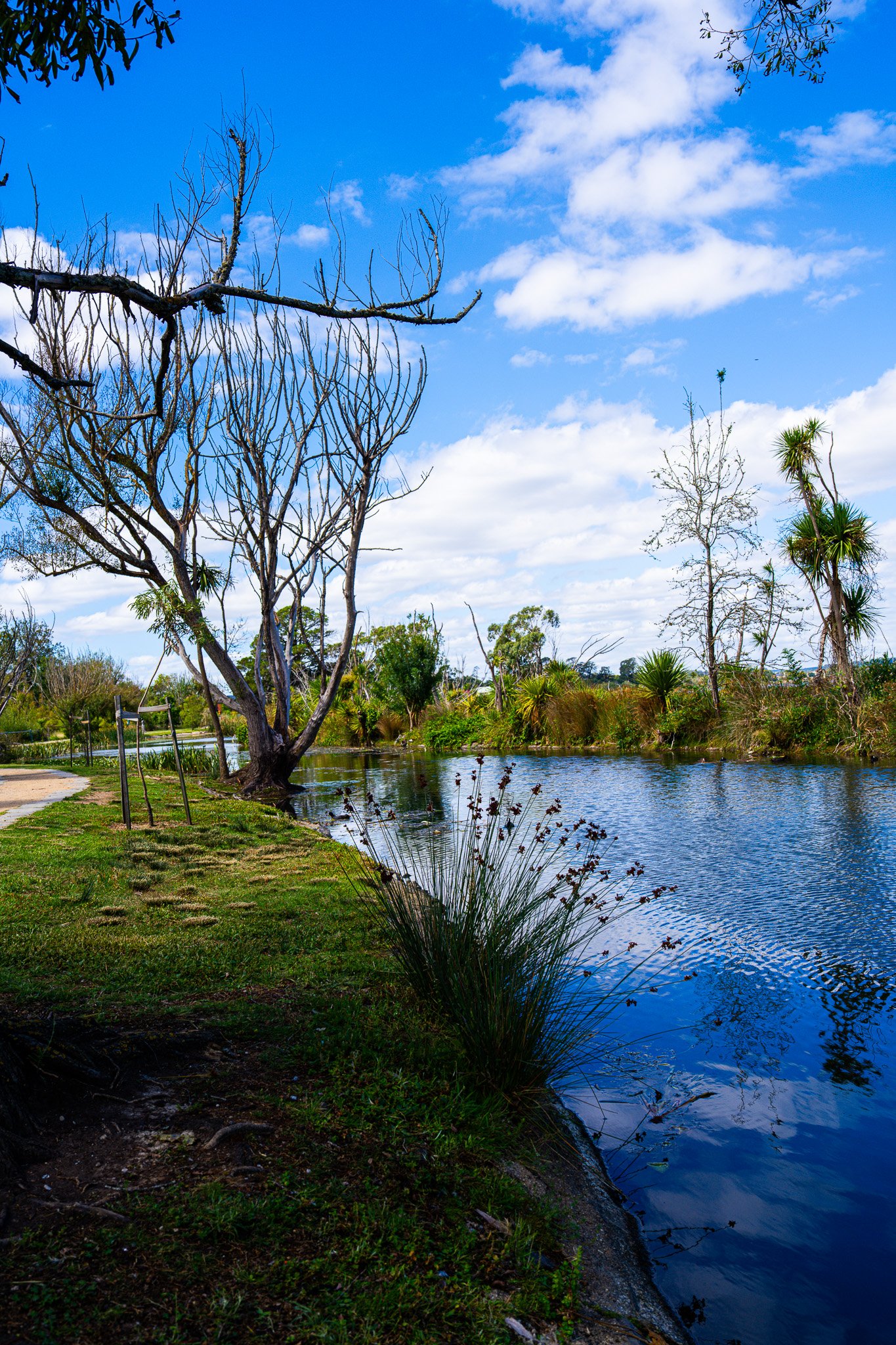

At one point we came across a bench facing the open lake and decided to sit for a while. The water stretched calmly before us, rippling gently in the afternoon light.
A small group of waterbirds swam nearby, paddling playfully across the surface. One of them seemed especially curious and slowly edged closer to inspect us. Its cautious approach was almost comical. Tempted to reward its bravery, I rummaged through my backpack to see if I had anything suitable to offer. I found the leftover muffin from earlier and pinched off a tiny piece before tossing it toward the bird.
The bird snapped it up immediately and darted away, trailed by several others that had suddenly joined the chase.
What happened next nearly gave me a heart attack.
Unbeknownst to me, a large black swan had quietly approached from my right while I was still facing the lake. When I finally turned my head, I came face to face with it—its long slender neck arched elegantly, its powerful bill only a short distance away, and its dark, intelligent eyes studying me with unmistakable interest.
Those eyes were not watching me. They were watching my hand.
In my right hand I was holding a small packet of sweets, and the swan’s gaze followed every movement. It stood perfectly still, as though patiently calculating the exact moment to snatch the package if I became careless.
I tried to shoo it away, but the swan did not move an inch. Its eyes remained locked firmly on my hand.
At that point I decided it was wiser to stand up and leave. The last thing I wanted was to become the subject of a news headline: Man attacked by black swan at Lake Wendouree.
Lesson learned. Wildlife is best admired from a respectful distance. Interfering with their routines—especially with food involved—can quickly turn a peaceful encounter into an uncomfortable one. It was a gentle reminder that in places like this, we are only visitors in their world.
As we continued our walk along the quiet edge of Lake Wendouree, the excitement of the festival slowly gave way to the calm rhythm of the afternoon. The laughter, music, and colourful blooms we had just experienced at the Ballarat Begonia Festival felt almost dreamlike now, replaced by the gentle ripple of water and the distant calls of birds settling for the evening.
Looking back, the day had unfolded in layers—vivid flowers, lively market stalls, the joy of discovering new plants, and the simple pleasure of wandering through the gardens without any particular plan. There were moments of beauty, moments of curiosity, and even a small lesson from a rather determined swan.
By the time we completed the circuit and the familiar paths that would lead us back to our temporary home came back into view, the sun had softened and the day felt satisfyingly full. We left with tired legs, a few new plant cuttings in hand, and the quiet contentment that comes from a day spent outdoors—surrounded by flowers, fresh air, and the gentle companionship of nature.
If there is one thing that stood out about Ballarat beyond its beautiful gardens, it would have to be its roundabouts. By the end of the day, we began joking that the city could easily be called the City of Roundabouts. On our drive to dinner—and later while searching for an EV charging station—we seemed to encounter them at almost every intersection. I quickly lost count of how many we passed through. Each one guided the traffic in its quiet circular choreography, sending cars smoothly in all directions without the need for traffic lights.
Eventually we arrived at the small Malaysian restaurant we had been looking forward to all day. It was modest and welcoming, clearly a family-run business. When we stepped inside, the dining room was already about three-quarters full, and while we waited for our order, a steady stream of diners continued to arrive. The gentle hum of conversation and the comforting aroma of spices drifting from the kitchen made the place feel warm and inviting.
We decided to order their recommended specialty: Nasi Lemak with ayam—coconut rice served with fried chicken, one of the most beloved traditional dishes in Malaysian cuisine.
When the dish arrived, it looked simple yet satisfying. The fragrant coconut rice was fluffy and aromatic, accompanied by crisp fried chicken, sambal, and the familiar assortment of sides. The flavours carried the essence of the traditional dish, yet we could tell there was a subtle difference. The rice was slightly milder, and the sambal gentler on the palate than the versions we had tasted elsewhere. Rather than overpowering the dish, the softer flavours worked together harmoniously.
It turned out to be exactly what we needed—a comforting, light dinner after a long day of walking through gardens and festival crowds. A simple but satisfying meal, and a fitting way to bring our day in Ballarat to a close.
The next morning we woke early, packed our bags, and loaded everything into the car. We were leaving Ballarat, but not before making one last stop at the Ballarat Begonia Festival.
My plan was simple: get there early and park as close as possible to the entrance near the market stalls. I had already made up my mind—I was going to return for a few plants I had been quietly eyeing the day before.
We arrived almost thirty minutes before the gates opened and, to our delight, managed to secure a parking spot just across from the entrance. Even at that early hour, people had already begun gathering. By the time the gates were about to open, a lively crowd had formed.
As soon as the gates swung open, a group of young children burst forward with infectious excitement, darting into the garden as if racing toward hidden treasures. Their parents followed closely behind, calling out for them to slow down. The whole scene carried a cheerful energy—the kind of simple, heartening atmosphere that festivals always seem to bring.
For us, the mission was clear. We knew exactly where we needed to go.
Even so, we became slightly disoriented among the rows of stalls before finally locating the vendor I had been searching for. Once there, I quickly picked up the plants I had already chosen the day before. But as I looked more carefully around the display, I realised there were several others I had somehow missed.
One in particular immediately caught my attention.
It had the most unusual form. The base of the plant looked like a small trunk, covered with uneven, irregularly sized scales that formed raised pentagonal shapes—almost like the protective plates of a turtle’s shell. At first glance it appeared completely leafless. From the centre of this strange, textured base, a few thin branches extended upward.
Curious, I leaned closer and noticed tiny buds forming along the slender stems.
The plant was called Dioscorea elephantipes, more commonly known as the Elephant’s Foot.
Its strange armour-like trunk instantly fascinated me, and I could easily imagine how impressive it would look once fully matured. I chose a small young one, thinking it would be rewarding to watch it grow over the years. According to the seller, the trunk—called a caudex—was still very small in this young specimen, no bigger than a penny and still mostly hidden beneath the soil. Over time it would slowly expand above the surface, forming the remarkable sculptural base that gives the plant its character.
Another plant nearby also caught my attention. At first it looked rather plain—just a tangle of green branching stems. But the photograph attached to the pot revealed its secret: the flower looked strikingly similar to the famous Queen of the Night bloom. Intrigued by the promise of such a flower, I added that one to my growing collection as well.
As I stepped out from under the marquee to pay for my small treasure trove, one last plant stopped me in my tracks.
It was hanging quietly near the edge of the stall, and at first glance it looked almost like a cluster of dry, lifeless branches. I even wondered why such a plant was being offered for sale.
Then I looked at the flower.
The bloom was extraordinary. Its colours mirrored the tones of the branches themselves—shades of black, grey, and deep brown. The flower was relatively small, shaped somewhat like a lily, but each petal tapered into a long, narrow, needle-like point.
It was unlike anything I had seen before.
The branches that had initially appeared brittle and dry turned out to be surprisingly flexible when I gently touched them—elastic rather than fragile. The plant had a wonderfully deceptive appearance, hiding its beauty until the moment it bloomed.
I knew immediately that I had to take this one home as well.
With the mission finally accomplished and my carefully chosen plants safely packed away, we left the festival grounds for the last time. The road stretched ahead for the familiar hour-and-a-half drive back to Melbourne.
As we drove back toward Melbourne, the morning sun slowly brightened the road ahead. Behind us, Ballarat was already settling into another lively festival day at the Ballarat Begonia Festival.
In the back of the car, the small collection of plants rested quietly, each one carrying the promise of something yet to come. Some might take years before revealing their full character. Others might surprise me sooner. But that, perhaps, is part of the joy of gardening—the patience, the anticipation, and the quiet hope that one day a flower will appear that makes the wait worthwhile.
And when that happens, I know I will remember exactly where the journey began.