Blue Lotus Garden, Yarra Junction
Where the Water became a Painting
We had been meaning to visit this garden for quite some time, always talking about it, never quite finding a free weekend to make it happen. When Australia Day arrived, we decided this was the perfect excuse. A public holiday, a summer morning, and the promise of lotus in bloom — we set off early, hopeful that an early start would mean quiet pathways and gentle stillness.
By the time we arrived, however, it was clear that many others had the same idea. The main carpark was already full, cars squeezed tightly into every available space. We were directed to the second carpark further up the road. The drive there felt almost rural — the road unsealed, dry, and powdery. Each passing vehicle stirred up clouds of fine red dust that hung in the air before settling slowly back onto everything in its path.
Inside the carpark itself, the air shimmered with heat and dust. Every time a car rolled past, another wave lifted and drifted across us. My car, freshly washed just the day before, now wore a soft coating of outback red, as though it had travelled far beyond the suburbs. There was something almost comical about watching it change colour within minutes of arrival.
Fortunately, the entrance from this second carpark was surprisingly convenient — perhaps even closer than from the main lot. A short walk brought us to the garden gate, and immediately the atmosphere shifted. The dust and bustle of the carpark gave way to a calmer, greener welcome.
Just inside, an open yard displayed rows of lotus plants for sale. Buckets and tubs of young plants sat neatly arranged, their round leaves floating gently in shallow water. It felt like being invited to take a small piece of the garden home. I lingered for a moment, already imagining one growing in my own yard, but decided to look more closely before we left — perhaps this would finally be the year I attempt to grow lotus myself.
Despite the number of cars we had seen outside, there was no queue at the ticket counter. The absence of crowds at the entrance felt almost surprising, as though the garden had quietly absorbed everyone.
Beyond the gate lay a decent-sized pond — and it immediately stole our attention. Lotus leaves spread across the water in a vast green mosaic, nearly covering the entire surface. The leaves, broad and perfectly round, rose above the water like little platforms, their edges catching the sunlight. Between them, the flowers emerged — soft pinks and creamy whites — standing tall on slender stems.
A gentle breeze set the leaves swaying in slow, rhythmic motion. Sunlight flashed silver where small gaps revealed the water beneath. Dragonflies hovered and darted above the pond, occasionally landing before lifting off again. The air felt warm but not oppressive, scented faintly with water and earth.
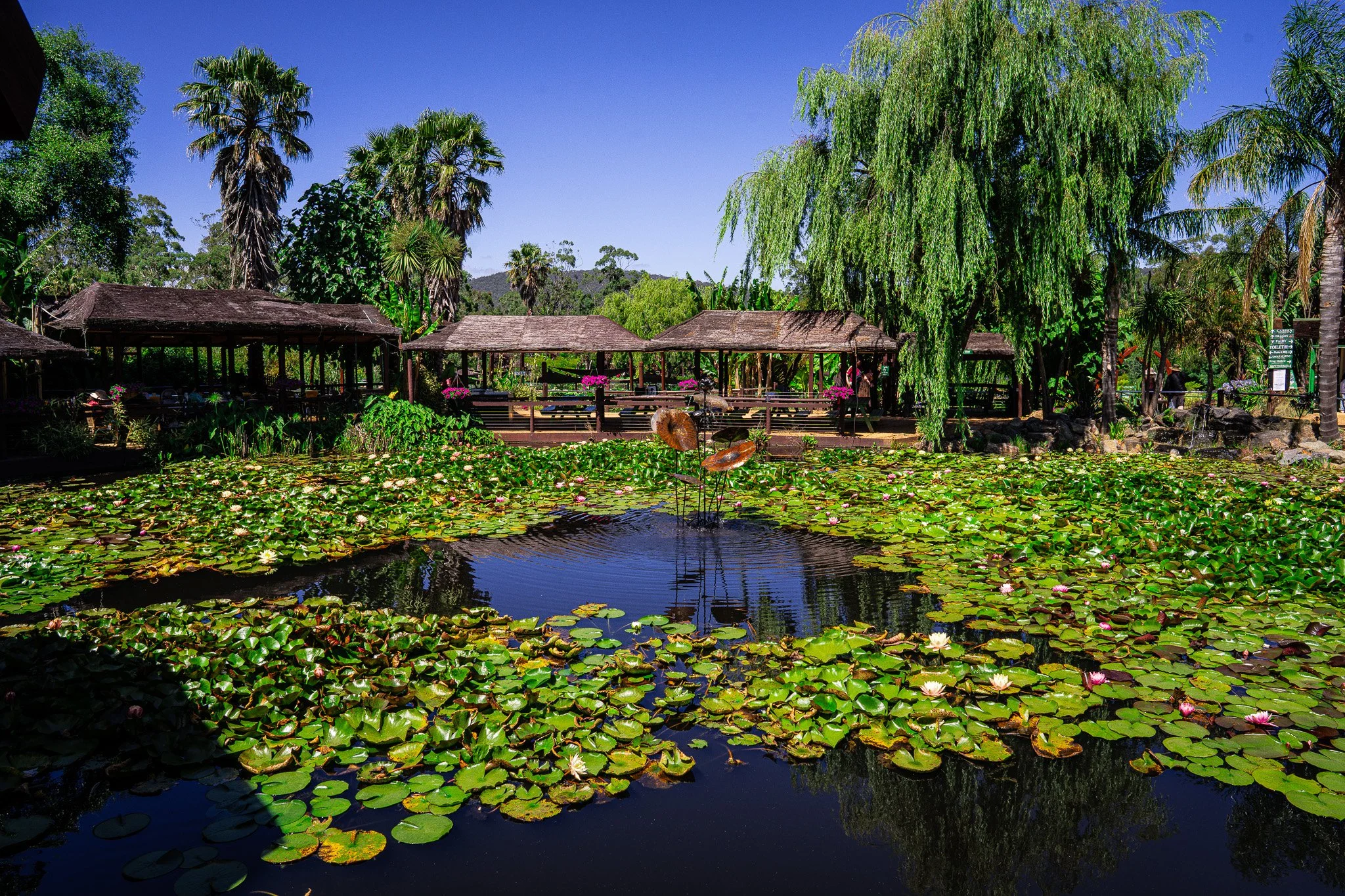
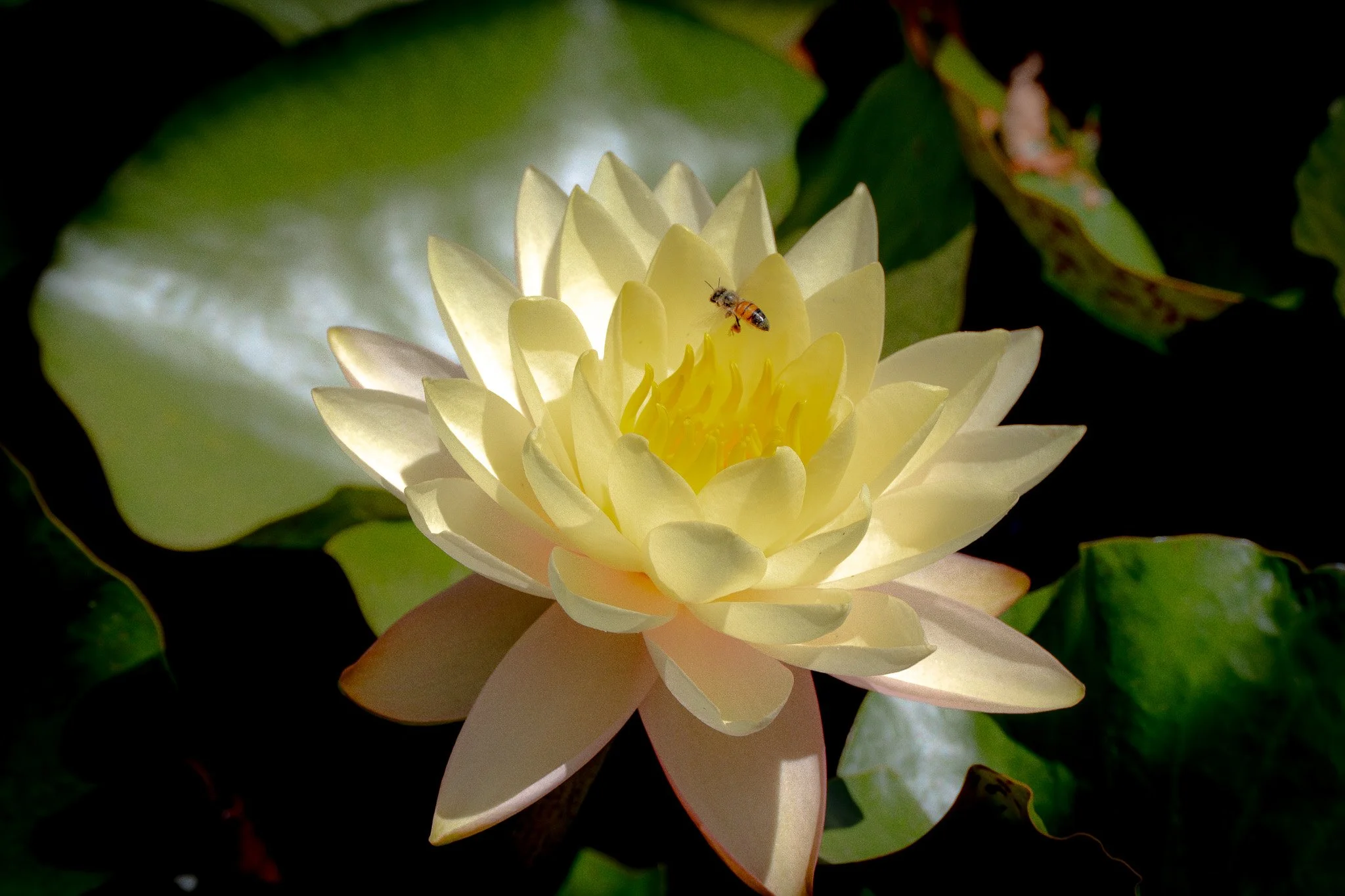
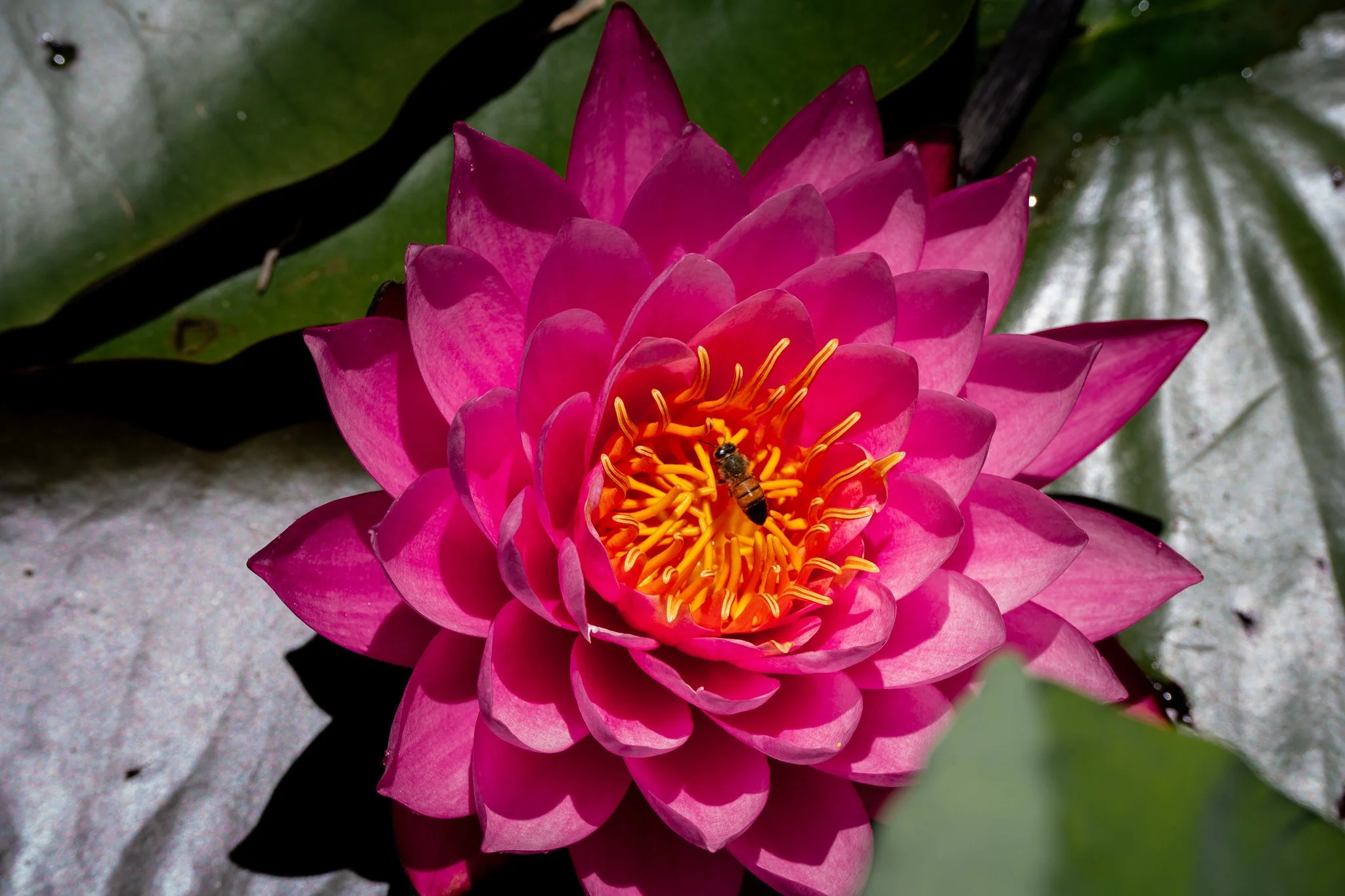
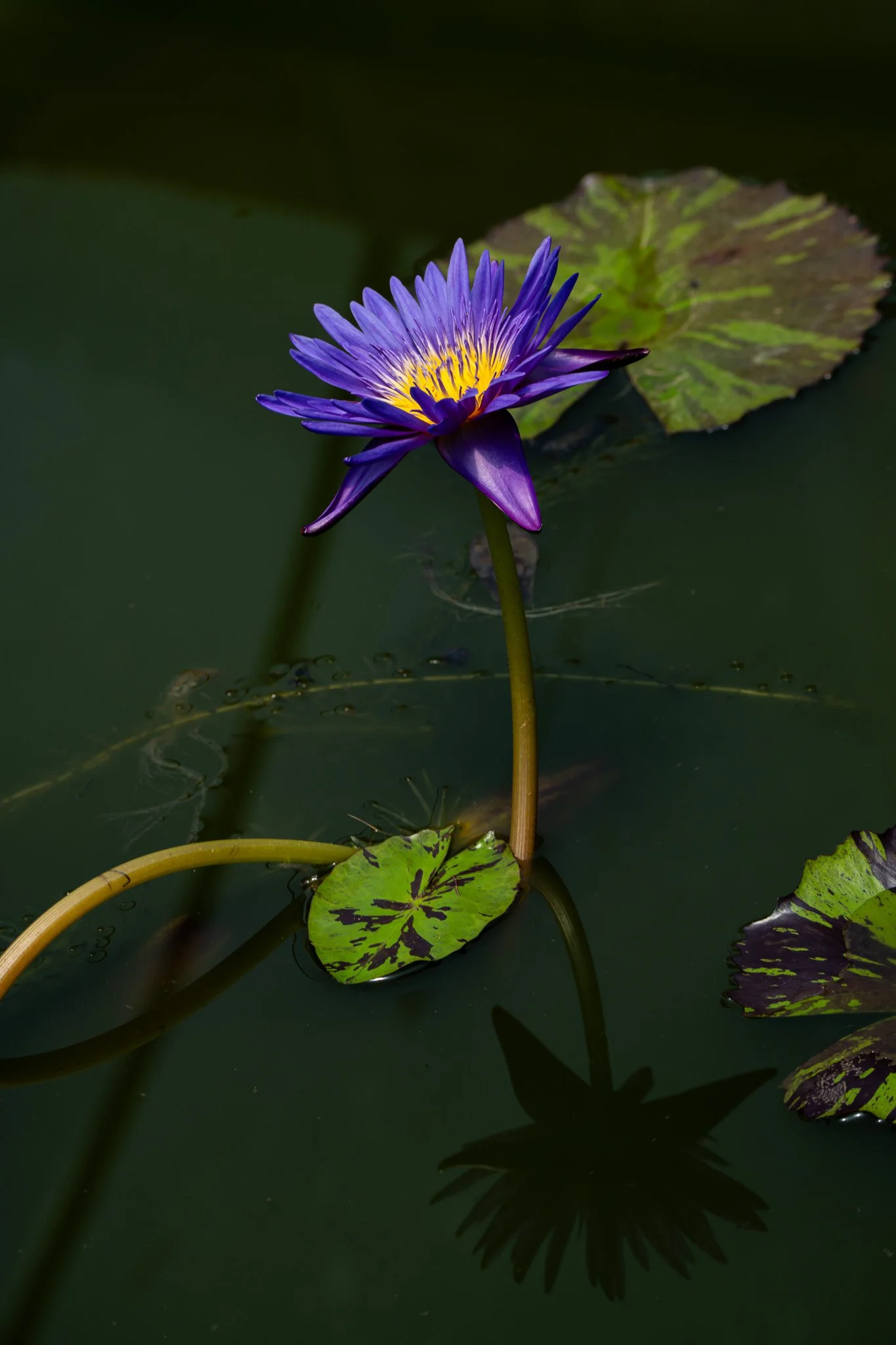
Directly opposite lay an even larger pond, more expansive and dramatic. From where we stood, it looked like a living tapestry of colour. Beyond the familiar pinks and whites were vivid reds, sunny yellows, and even purplish-blue blooms that seemed almost unreal against the green — a sea of flowers stretching across the water.
Benches lined the edges — some exposed to the sun, others sheltered beneath small huts with simple timber roofs. Visitors sat quietly, some chatting softly, others simply gazing across the water. The scene invited stillness, encouraging us to slow down and linger.
After some time, we moved on toward the larger pond marked on the map, the one designed to resemble Monet’s famous water garden. The thought alone quickened our steps.
The path curved gently, framed by low shrubs and summer blooms, before opening into a wide clearing — and there it was.
At first glance, it did not feel real.
The pond stretched out before us like a living canvas. Lotus leaves spread across the water in layered clusters, overlapping in soft, organic patterns. The colours were richer here — deeper pinks, velvety reds, pale yellows glowing in the sunlight, and occasional purplish-blue blooms placed as if by an artist’s hand.
And then there was the bridge.
Arcing gracefully over part of the pond, its gentle curve instantly evoked Monet’s iconic Japanese bridge. Its bright red structure sat in perfect harmony with the colours below, like a signature across the composition. Visitors crossed slowly, pausing midway to look down at the blossoms beneath them.
For a fleeting moment, it felt as though we had stepped into a painting.
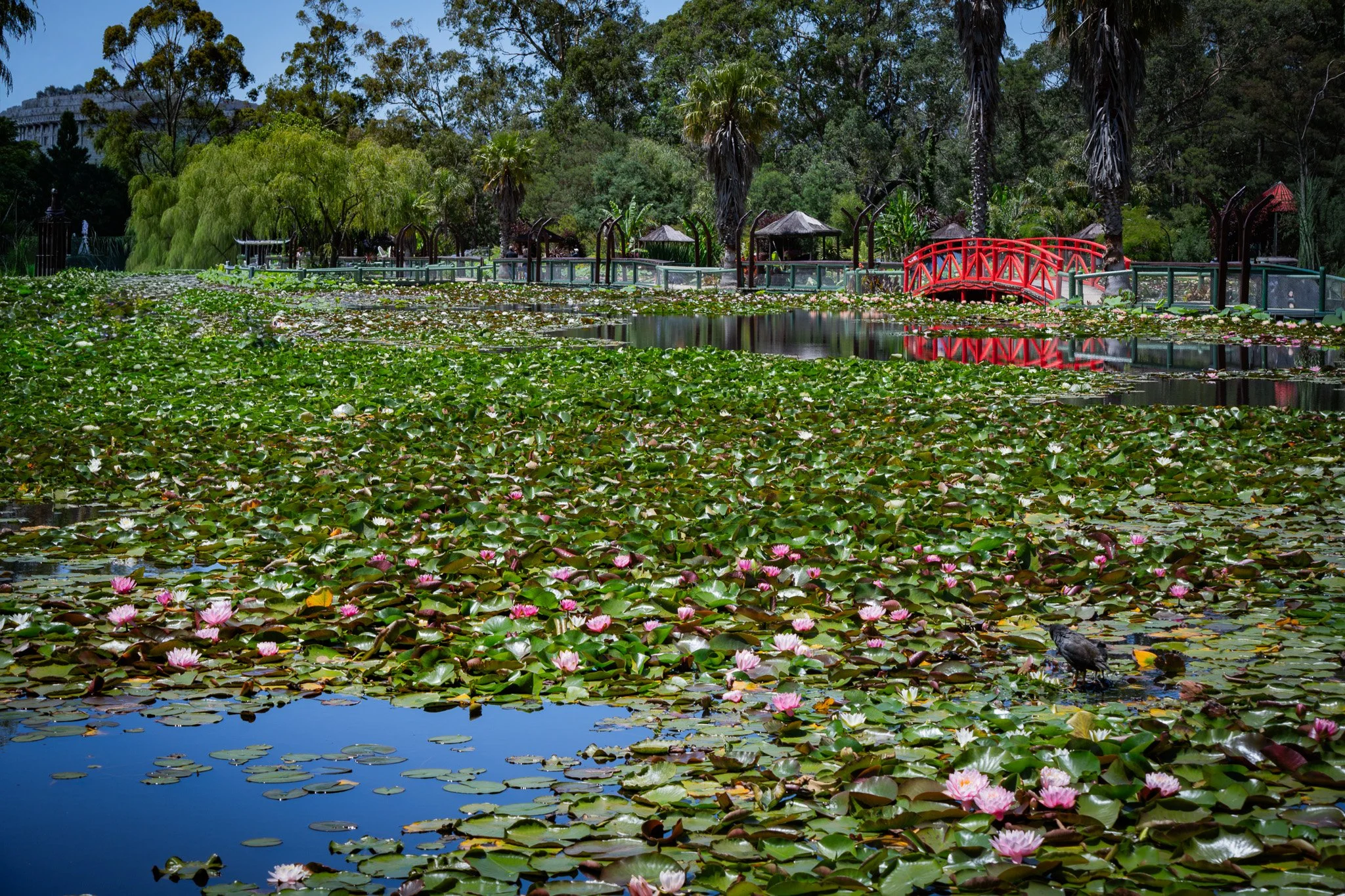
Leaves layered into depth, shadows pooling beneath their edges. Sunlight filtered through in patches, illuminating certain flowers while leaving others in softer tones. Where water appeared, it reflected sky and colour in shimmering fragments.
The subtle movement around us reminded us it was real — the sway of leaves, the flicker of dragonflies, the quiet murmur of visitors. The slow procession of people crossing the bridge became part of the scene, like figures placed carefully to give scale and life.
We stood there for a long while, almost reluctant to speak. It was not just the number of lotus, nor simply their colours, nor even the elegant curve of the bridge. It was the harmony between them.
For a while, the world beyond the pond ceased to exist.
Reluctantly, we stepped away and continued along the path. The next two ponds were far smaller, yet what they lacked in scale they offered in intimacy.
Here the lotus were astonishingly close. The path ran alongside the water’s edge, bringing us within arm’s reach. Some flowers leaned gently toward the walkway, as though curious about their admirers.
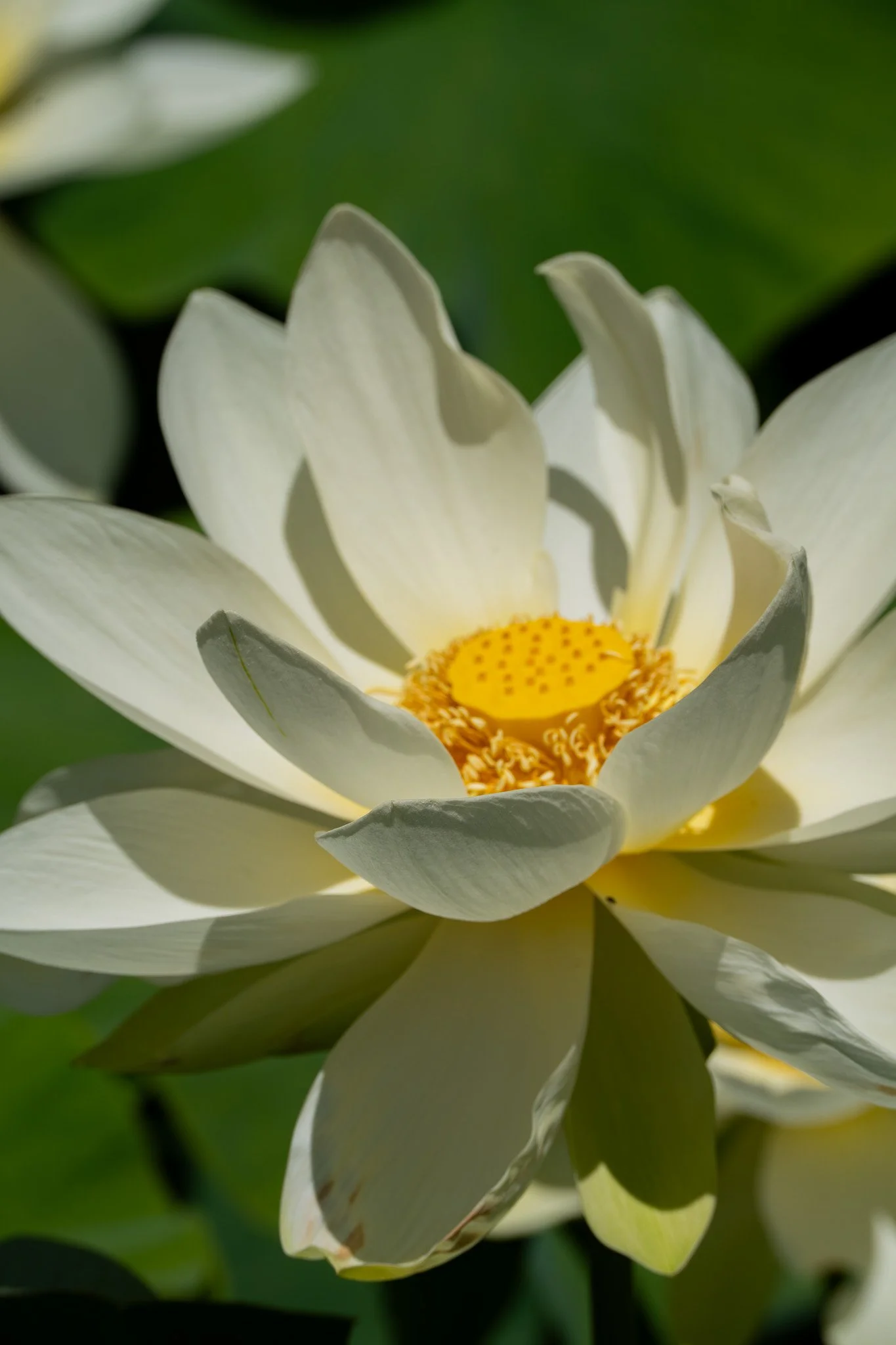
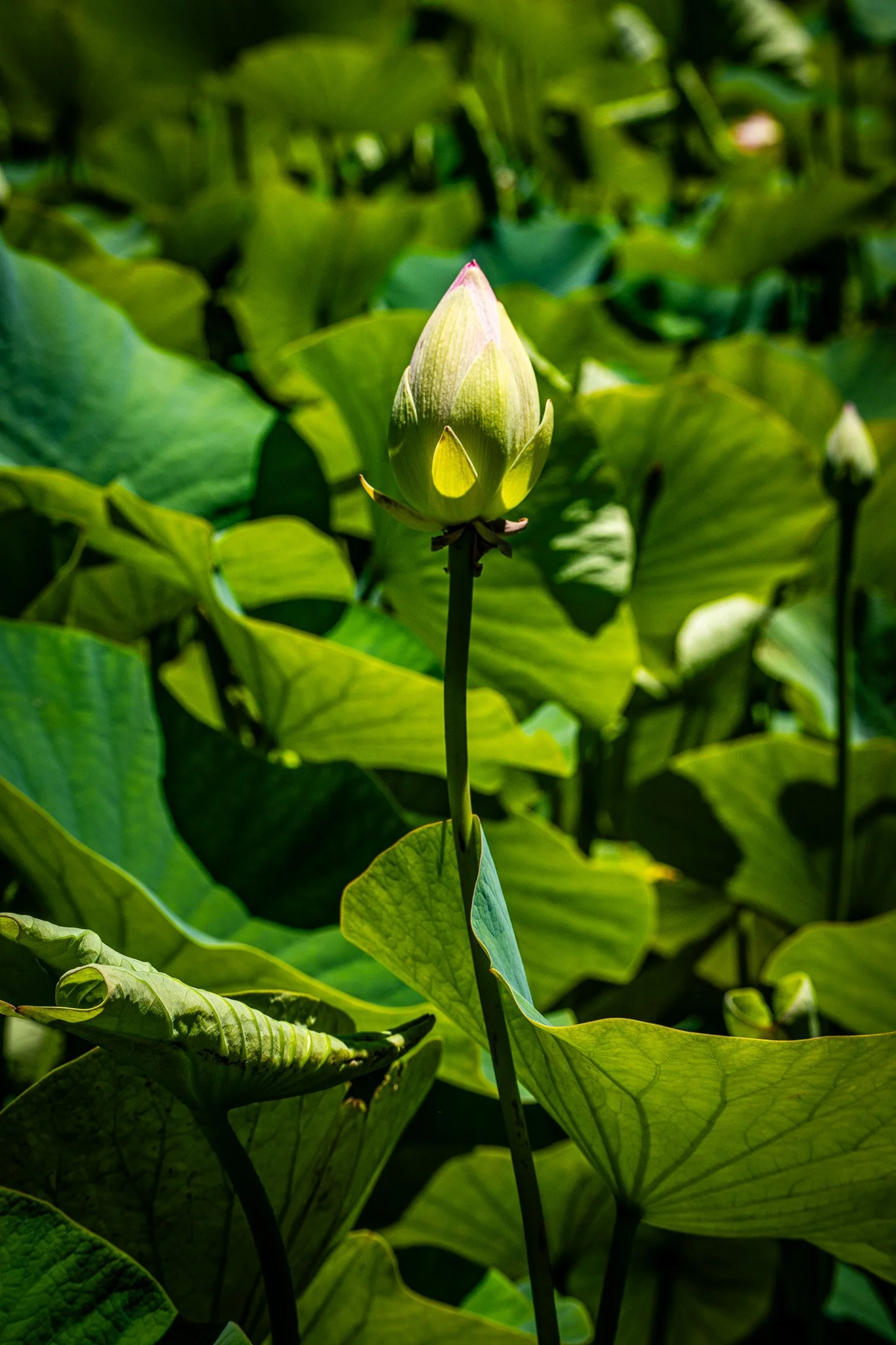
The blossoms were at every stage — tight buds, half-open spirals, and full blooms stretched wide to the sun. Standing so near, the scale of the leaves became strikingly clear. Some were as wide as serving platters, their surfaces catching droplets that rolled like quicksilver across their waxy skin.
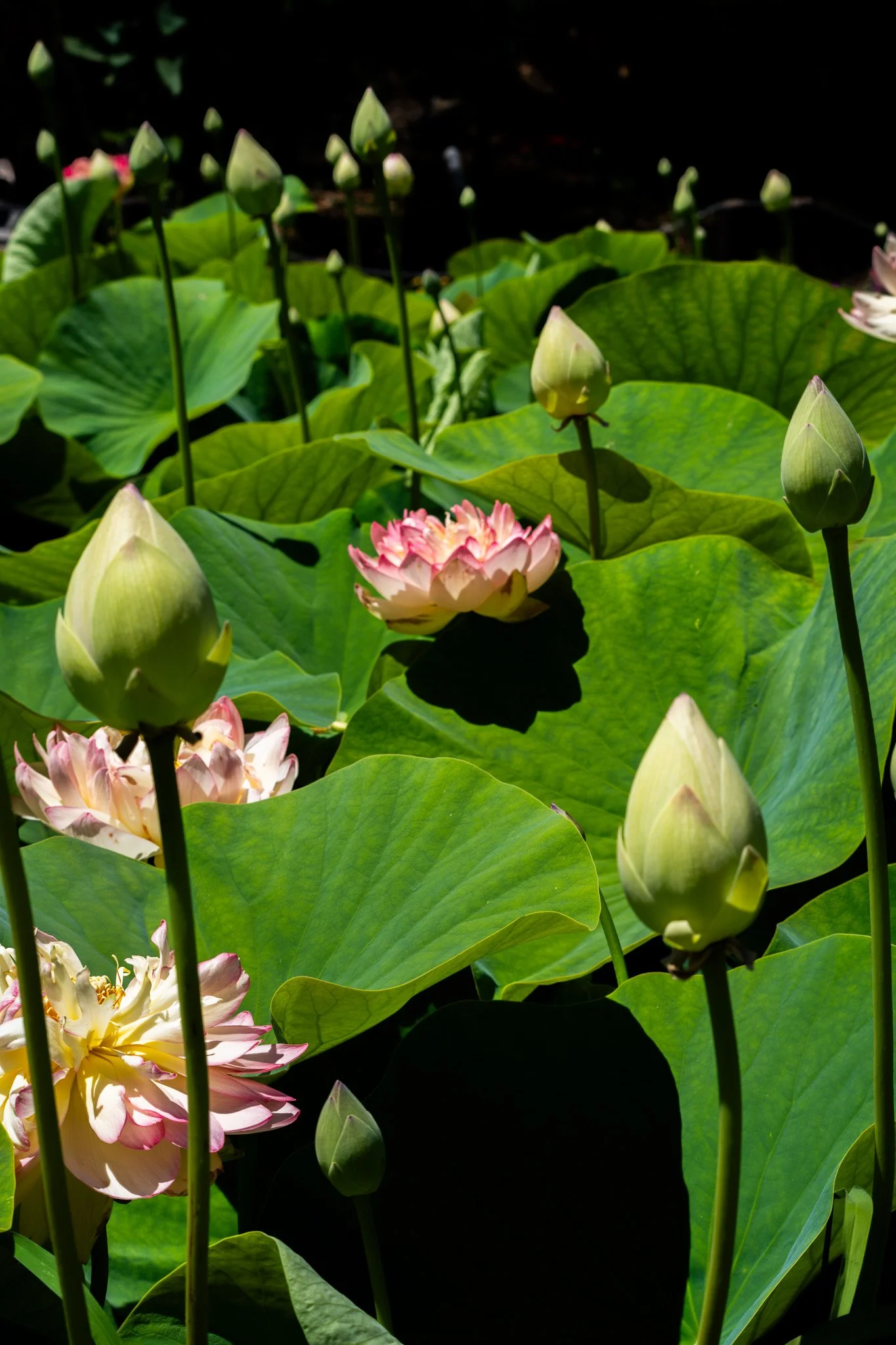
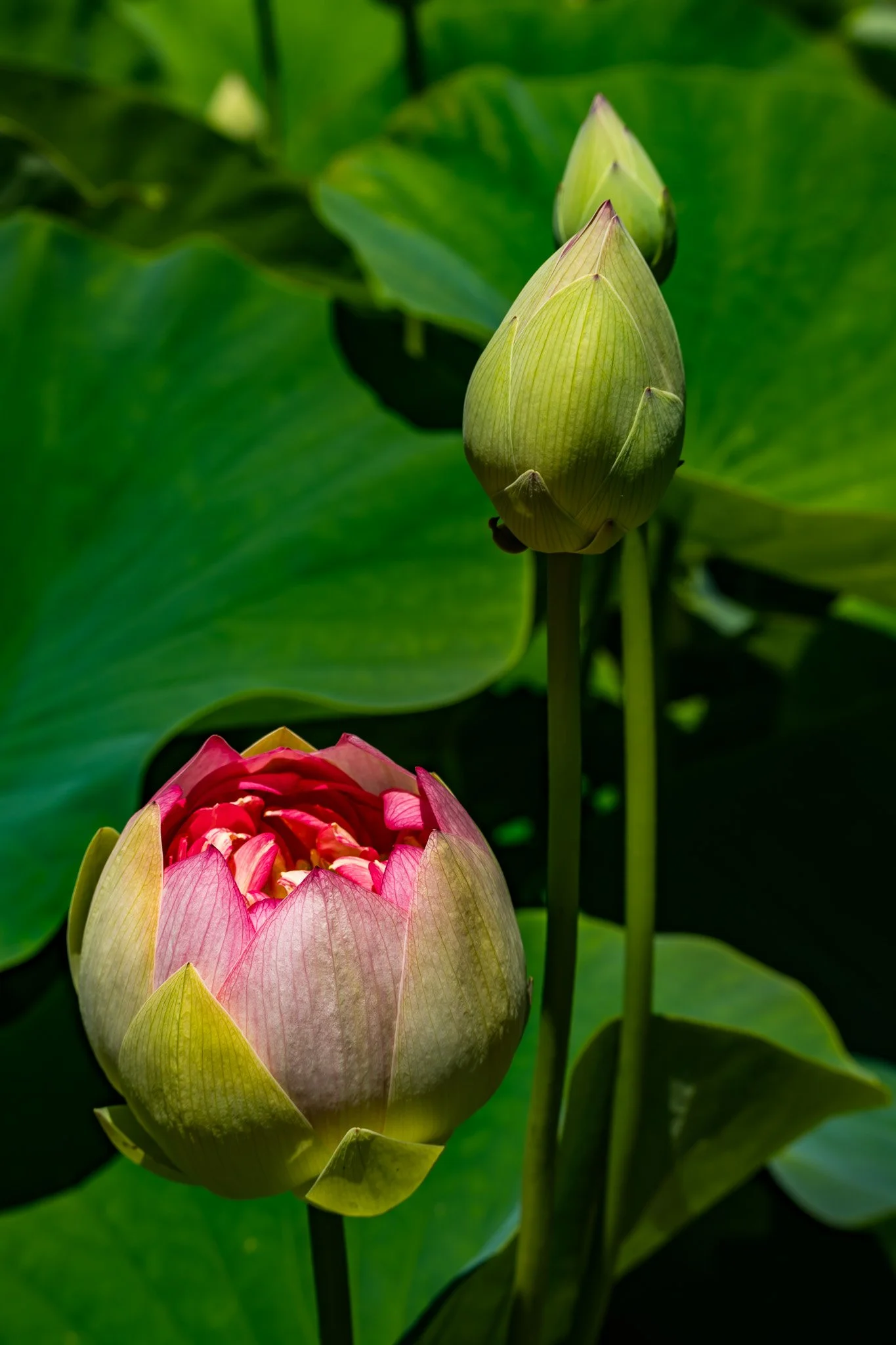
Up close, the petals revealed subtle gradients — pink deepening toward the tips, creamy white warmed with yellow at the base. Sunlight filtered through them, giving the flowers a luminous glow. A faint, clean fragrance lingered in the warm air.
Here, admiration shifted into appreciation. Instead of viewing a grand composition, we examined the details — the overlapping petals, the sculptural seed pods, the way stems flexed gracefully with the wind rather than resisting it.
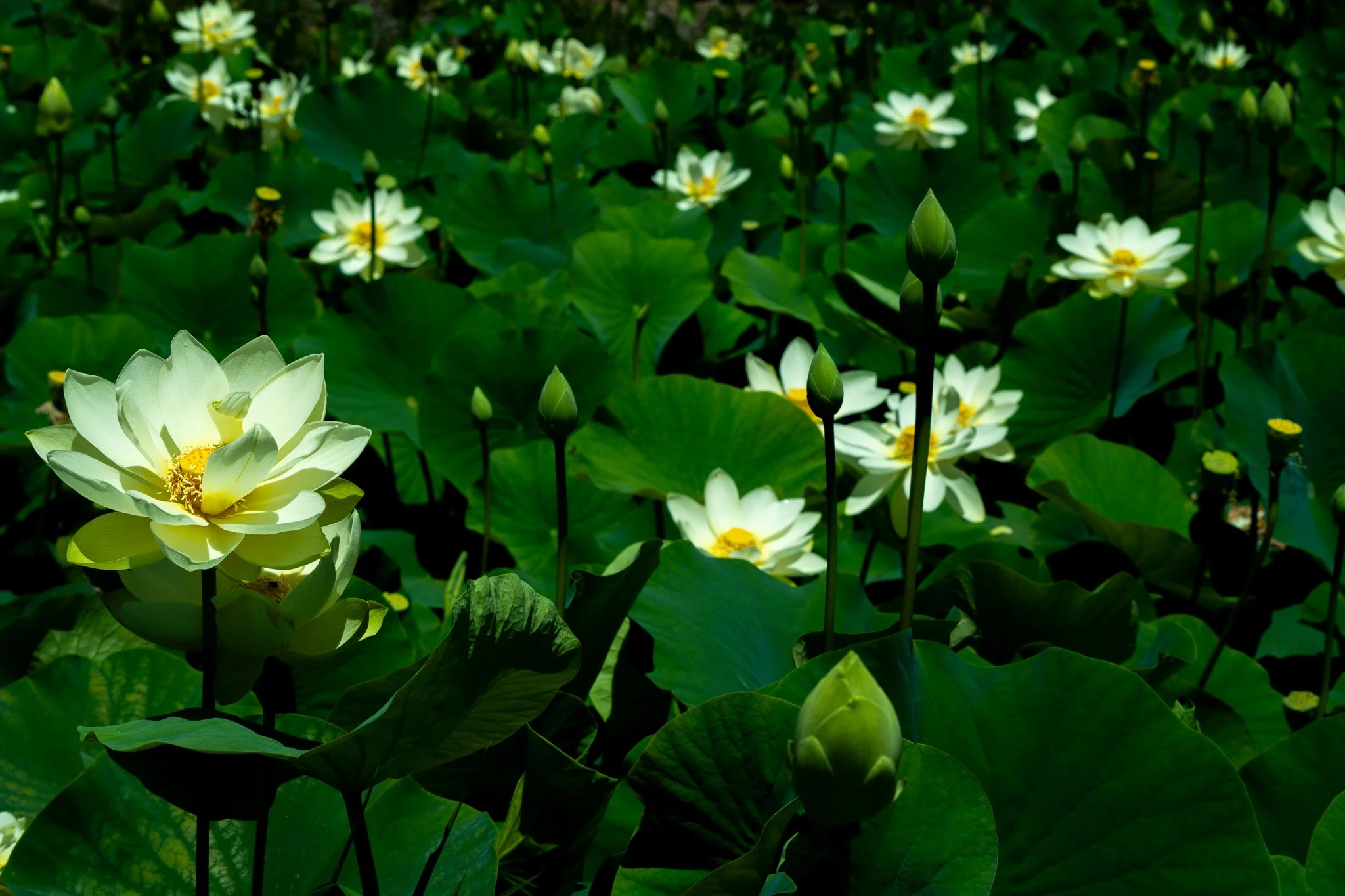
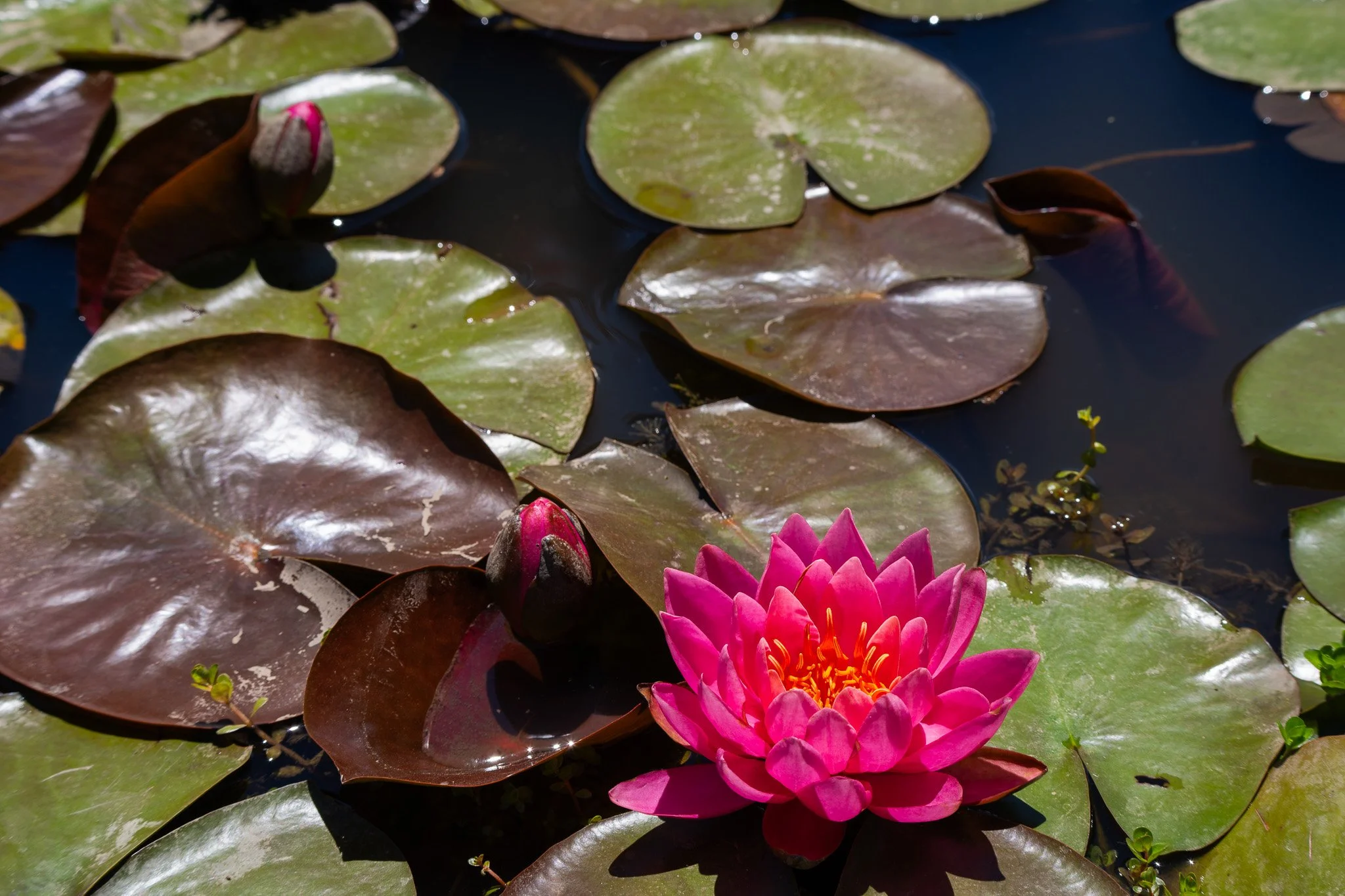
Though smaller, these ponds offered a quieter kind of wonder.
By now, lunch beckoned. We had skipped breakfast, expecting to stop along the way, but the early start had offered little opportunity. We ordered simple meals — warm pies and lotus root chips, surprisingly delicious.
The pies were comforting, their warmth welcome against the rising heat. The lotus root chips felt especially fitting — thin, crisp slices revealing their intricate lace-like pattern. Even in food, the lotus carried its artistry.
Refreshed, we returned to the Monet-like pond and crossed the bridge.
From the centre, the view unfolded differently — a vast landscape of leaves and blossoms stretching outward. Colours appeared more intense under the midday sun, reflections shimmering between stems.
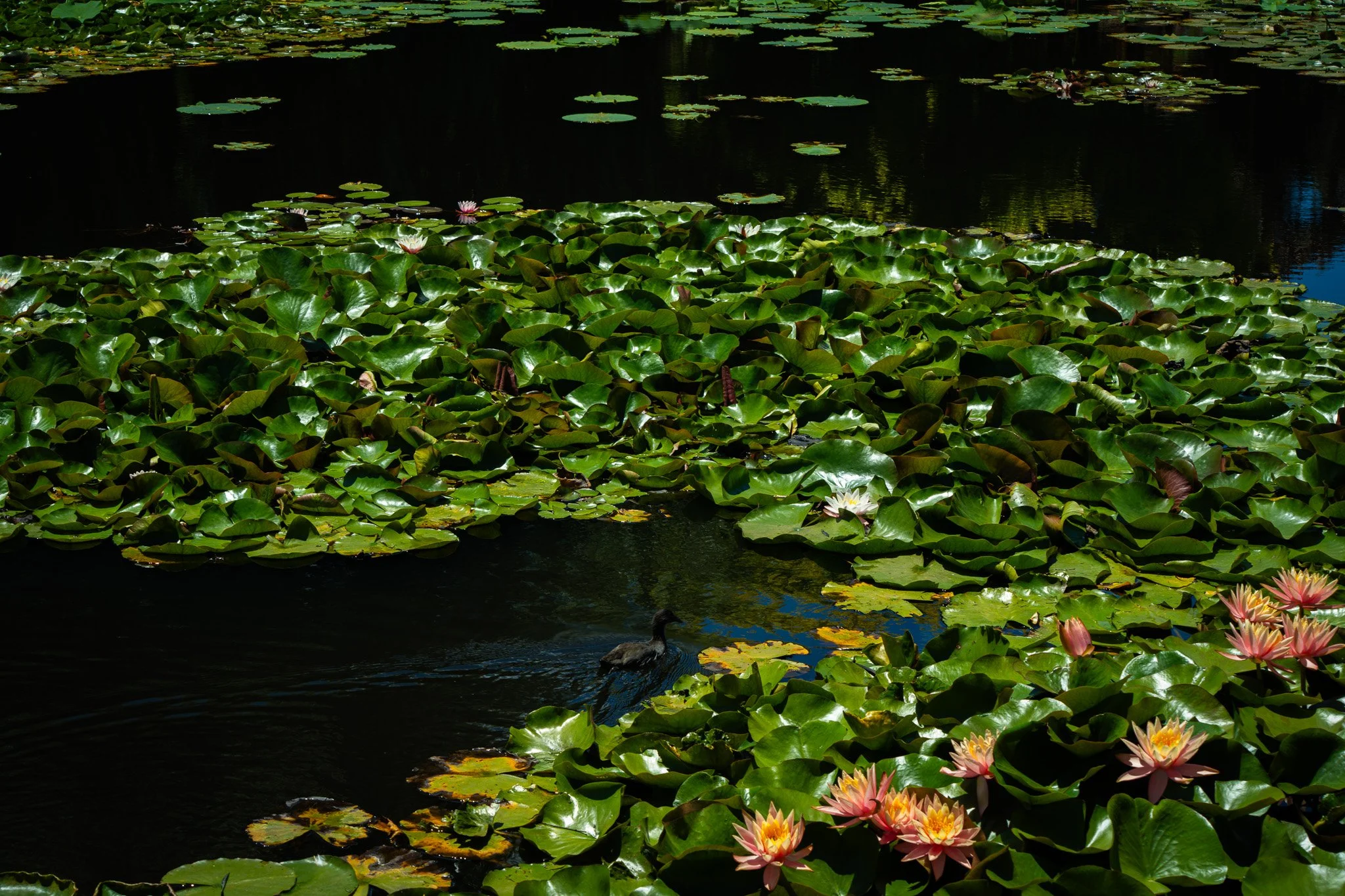
The heat had risen considerably. In the open spaces, it pressed sharply against the skin. Yet shaded walkways offered immediate relief, tall trees filtering the sunlight into softer patterns. We moved between brightness and shade, lingering where it was cool before stepping back into the light.
Eventually the path brought us full circle to the entrance — but one final highlight awaited: the Giant Amazon Waterlilies.
Housed in a sheltered enclosure, the air felt warmer and more humid. And there they were — enormous.
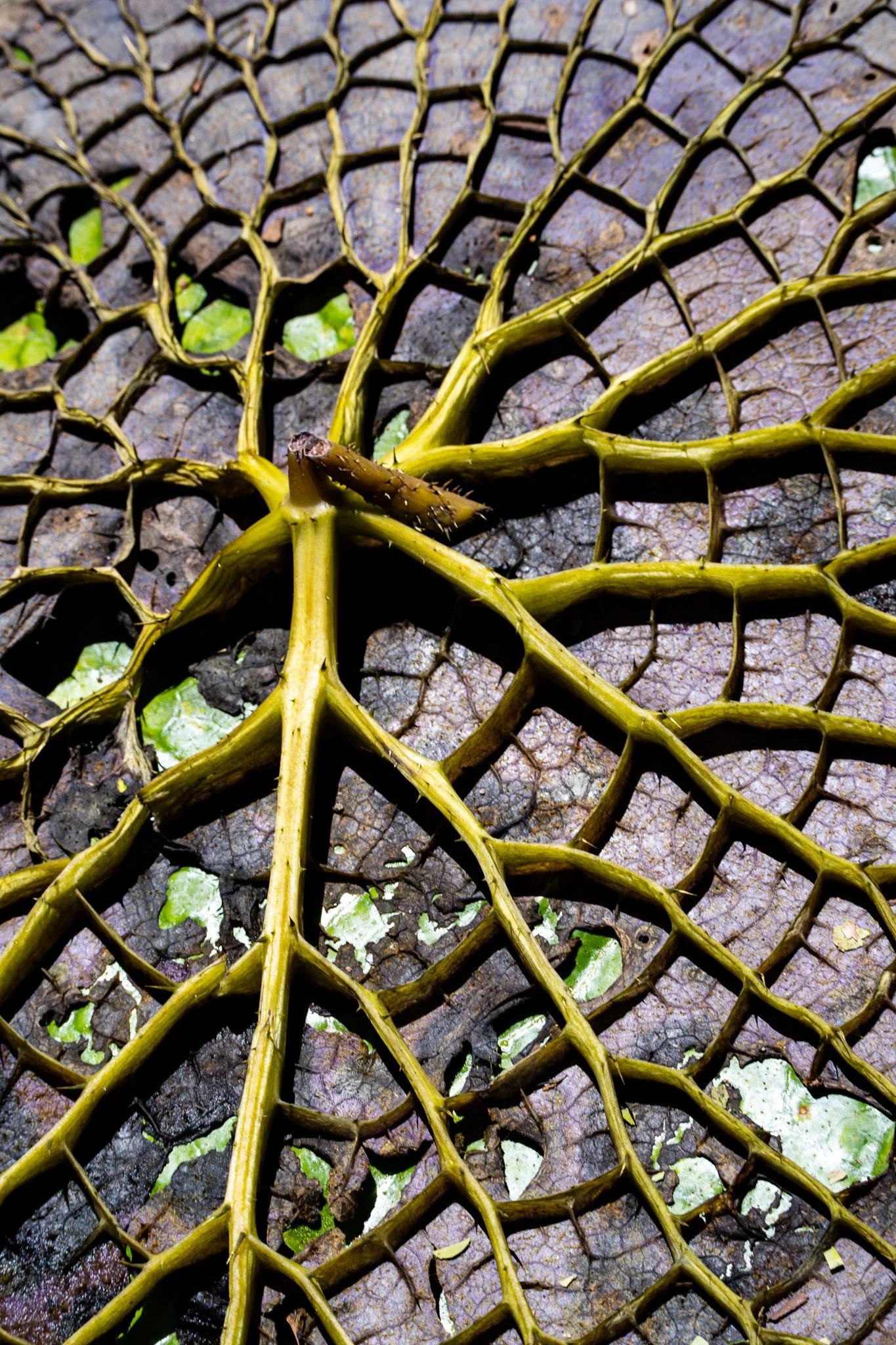
Unlike the lotus, these leaves floated directly on the surface, vast green discs with rims curved upward like shallow trays. Their colour was rich and glossy, the water beneath dark and mirror-like, reflecting each leaf so precisely it felt like seeing double.
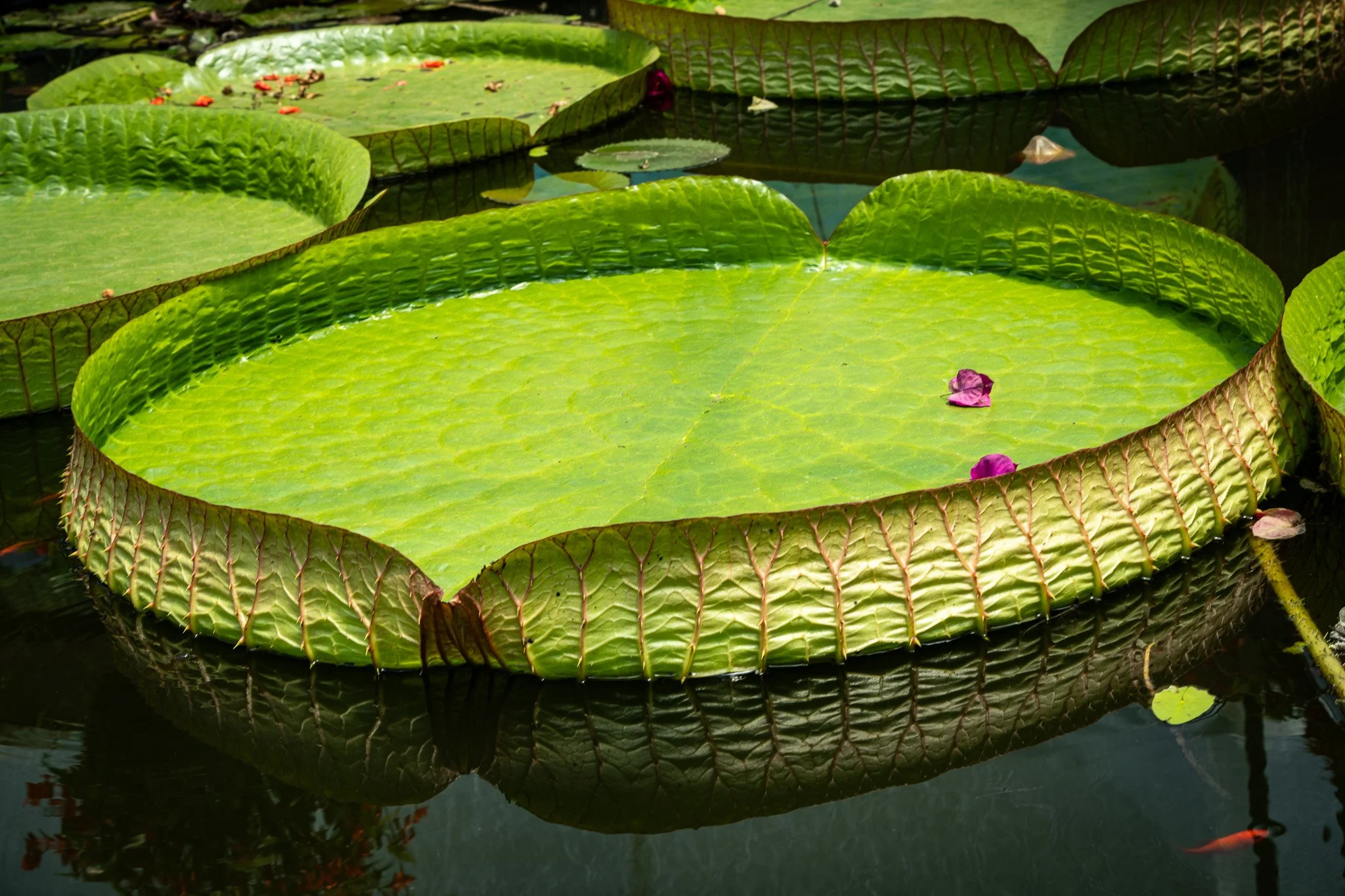
Where the lotus had offered elegance and colour, these commanded awe through scale and strength. Their veins formed bold structural patterns, hinting at the engineering beneath.
At last, we returned to the display of lotus plants near the entrance. After a day immersed in such beauty, leaving empty-handed felt impossible.
I took my time choosing, studying each young plant as though selecting a future memory.
Finally, I chose one.
Carrying it back to the car — now thoroughly dusted in red — felt symbolic. A small continuation of the day’s beauty, something living to take home.
A gift to myself.
And with it, the hope that one day, when it blooms, I might again feel as though I am standing inside that painting.