Between Plans and Places: Two Weeks Across Japan - When the Day Chose its Own Direction
The exhaustion from the previous day still lingered even after a full night’s sleep. But it was the kind of fatigue that no longer weighed heavily — softened instead by anticipation.
We were all up early, sharing breakfast and preparing to begin the carefully planned itinerary. Yet, as often happens when travelling together, the plan itself began to shift almost quietly, without resistance.
Along the way, we decided to make a slight detour — a stop at Yame for a tea experience before continuing on to Beppu and its famous hot springs, the so-called “Hells of Beppu.”
It was a small adjustment on paper, but in reality it subtly reshaped the rhythm of the day. What had been designed as a direct journey became something more fluid, slightly slower, more open to pause.
We hadn’t planned to spend long in Yame. Yet time, as it often does when you are not watching it too closely, expanded.
This is perhaps one of the quiet dynamics of travelling in a group — not a matter of one person leading or deciding, but of different attentions pulling gently in different directions. Some moments are stretched because someone lingers a little longer, notices something others almost miss, or simply wants to stay in a place just a bit more.
And yet, rather than feeling like compromise, it felt like participation.
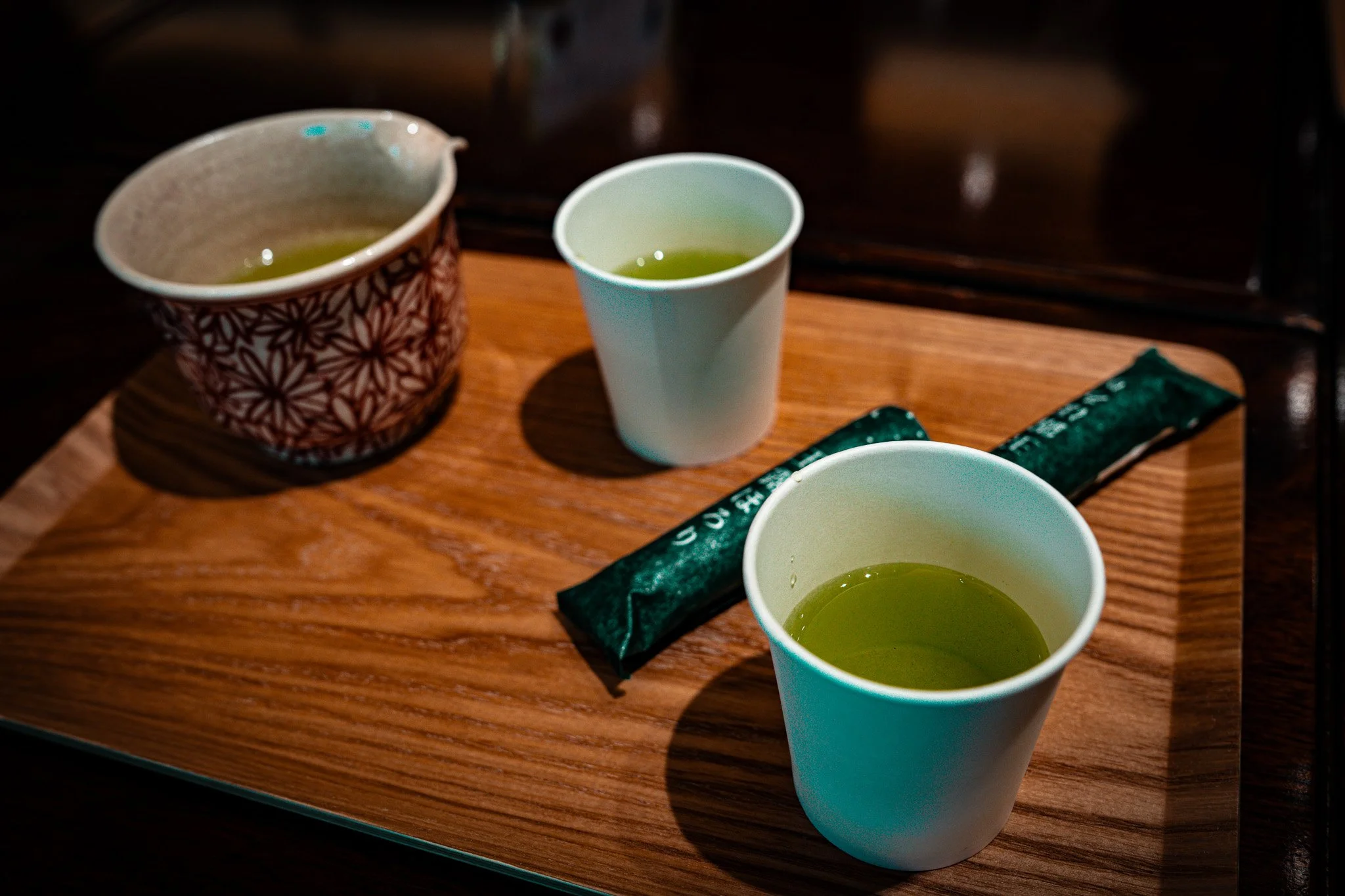
Yame itself was calm and deliberate. The tea experience had a quiet refinement to it — not extraordinary in novelty, but deeply rooted in place. The selection felt curated not for spectacle, but for expression. Each cup seemed to reflect something specific about the land it came from, subtle rather than dramatic.
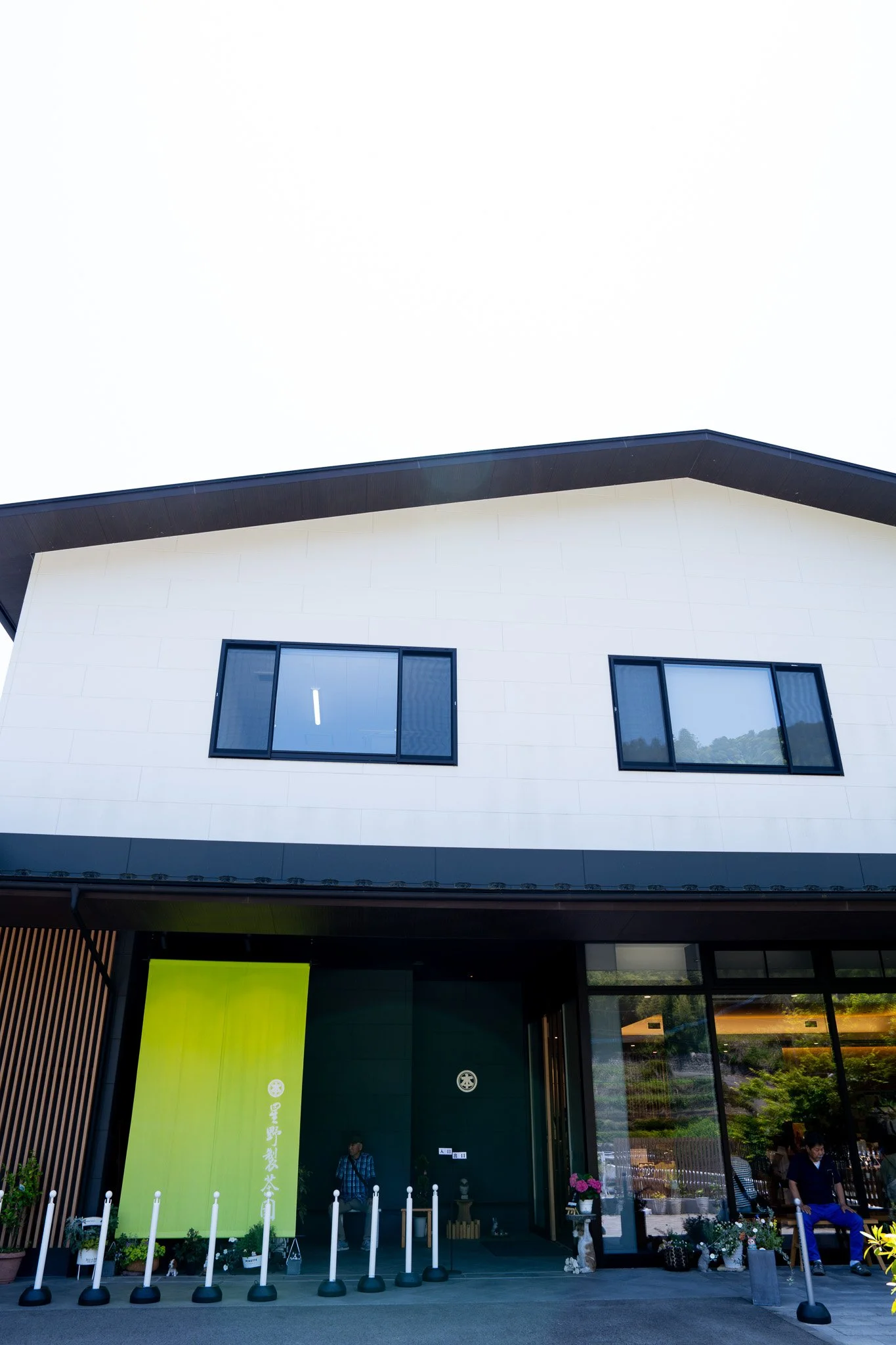
It wasn’t about discovering new flavours in a surprising sense. It was about recognising how familiar something like tea could still feel distinct when shaped by a particular landscape and craft.
We were unsure which direction to take after Yame — Beppu or Yufuin. A brief discussion followed, the kind that happens quickly when time is already beginning to tighten around the edges of the day. In the end, we decided on Beppu first, leaving Yufuin for later in the afternoon.
With that decision, the shape of the day shifted again.
Lunch, which had once been loosely planned around a small café somewhere along the road to Yufuin, now became uncertain. There was no longer a clear pause built into the itinerary. The time we had lingered over tea in Yame had quietly reshuffled everything that came after it.
By the time we reached Beppu, the pace of the day had already accelerated.
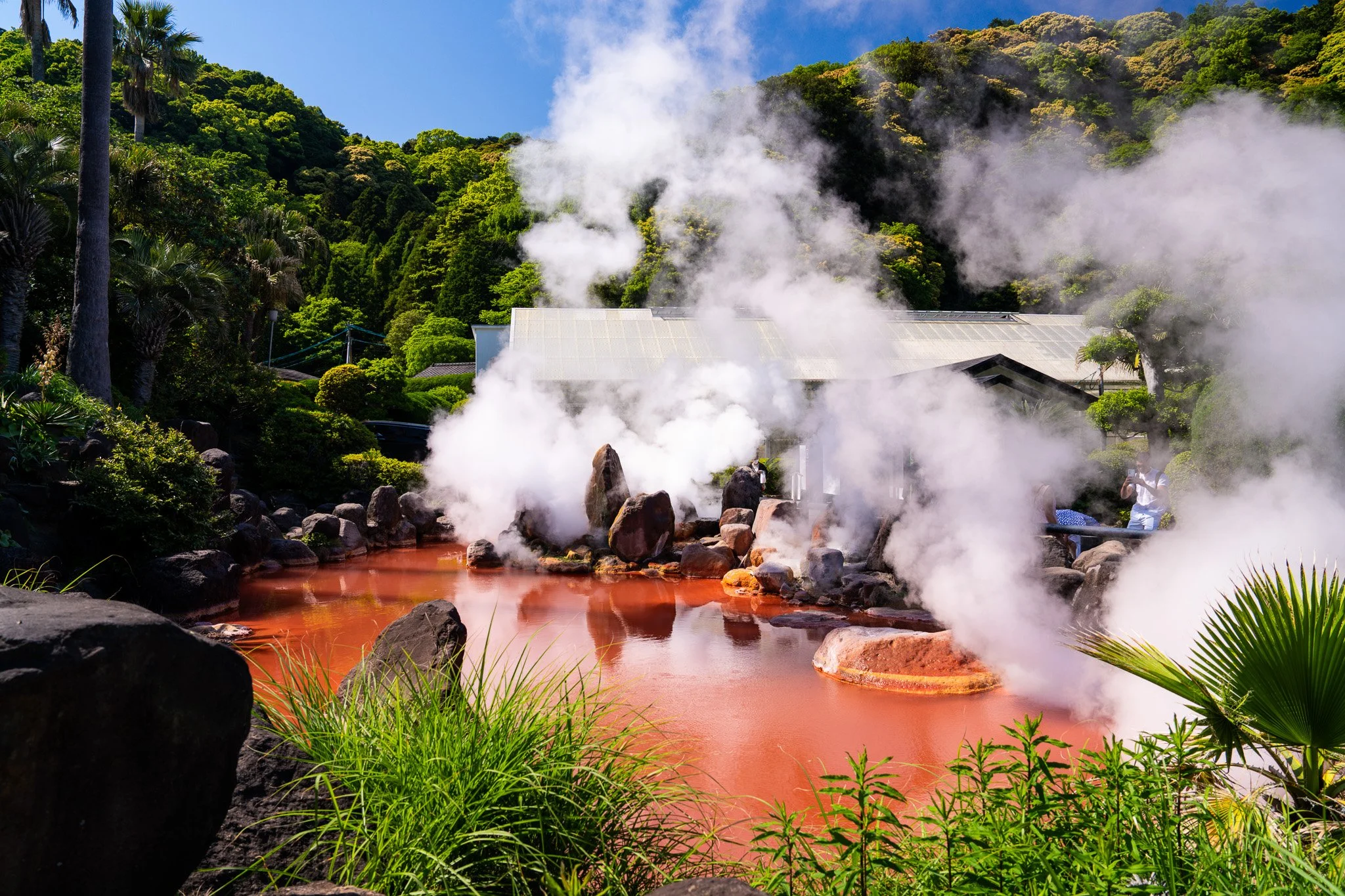
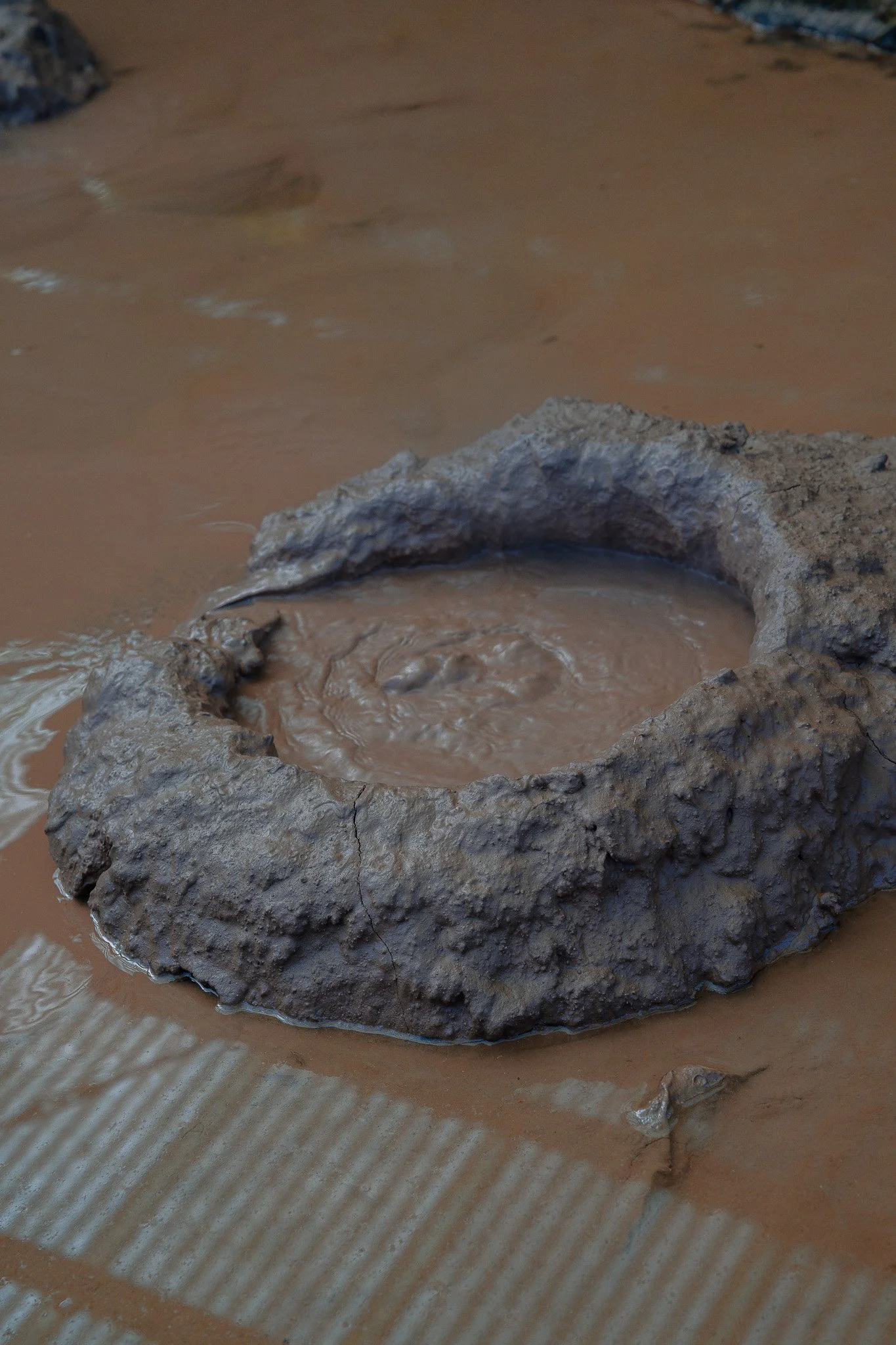
It was a brief visit — almost compressed. Instead of the four or five “Hells” we had originally imagined seeing, we managed only two. Not out of disappointment, but simply because time no longer stretched the way it had in the morning.
There was a quiet awareness among all of us that the day was now moving on its own terms.
Yufuin, our next destination, would begin to close its streets and shops by around five. If we stayed too long in Beppu, there would be nothing left to experience when we arrived. So the decision was unspoken but understood: we would need to leave earlier than we had intended.
The visit to Beppu became something of a passing encounter — brief, vivid, but unfinished. Steam, colour, movement, and then departure again.
And yet, even in its brevity, there was a shared understanding among us that nothing felt wasted. It was simply the nature of the day — each place giving only what time allowed.
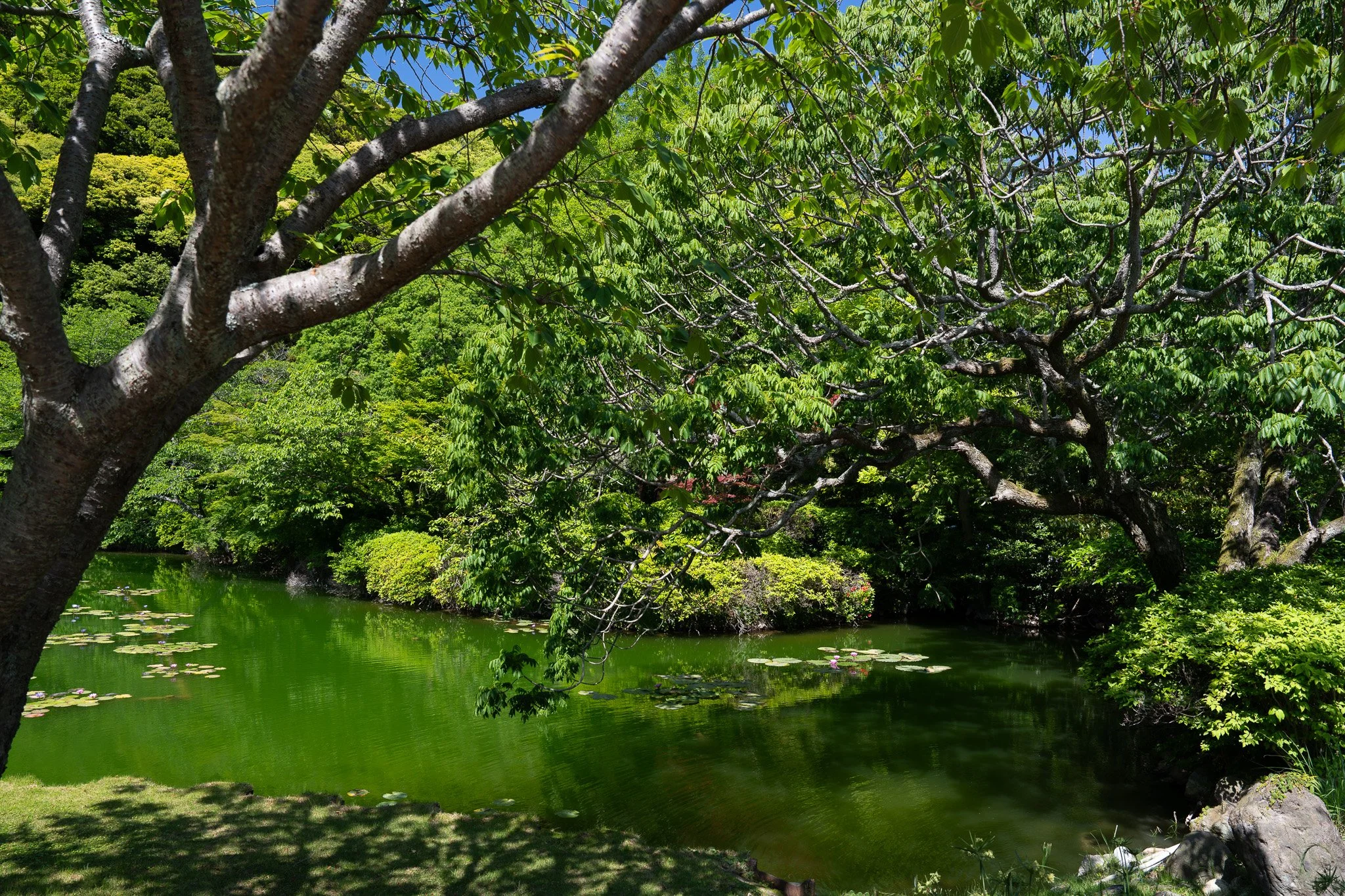
In those brief moments we had at Beppu, we finally slowed down enough to take it in.
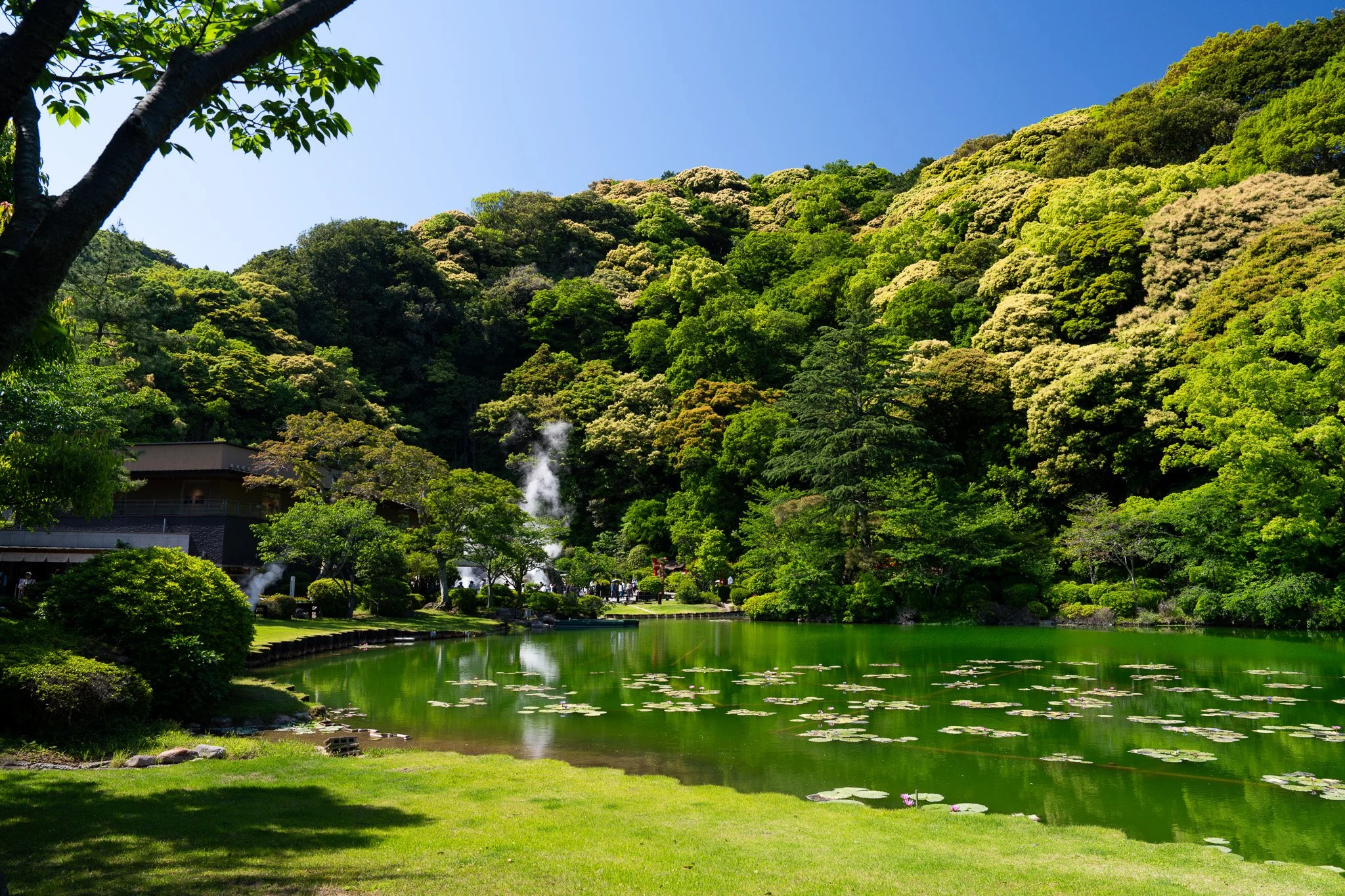
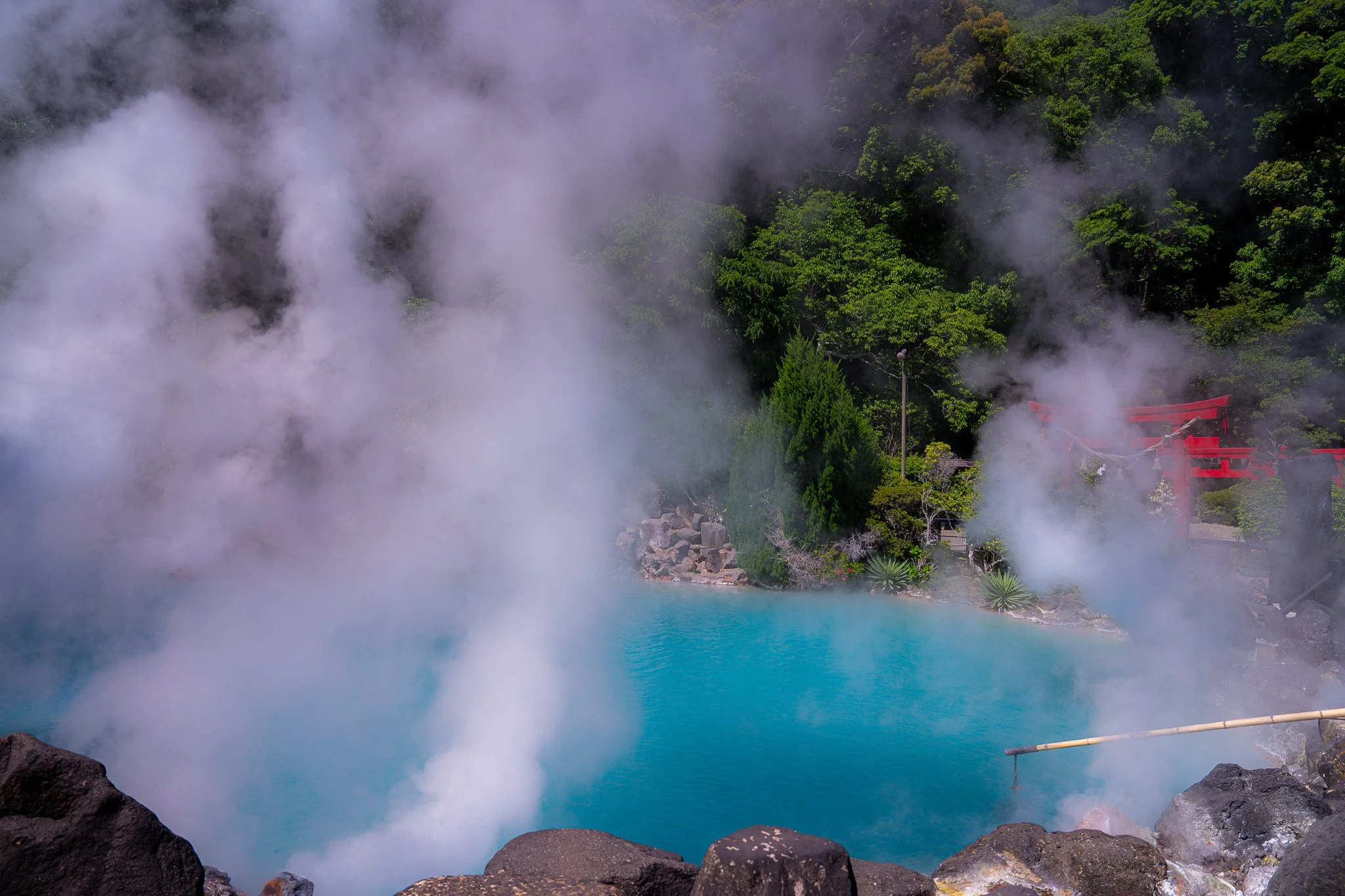
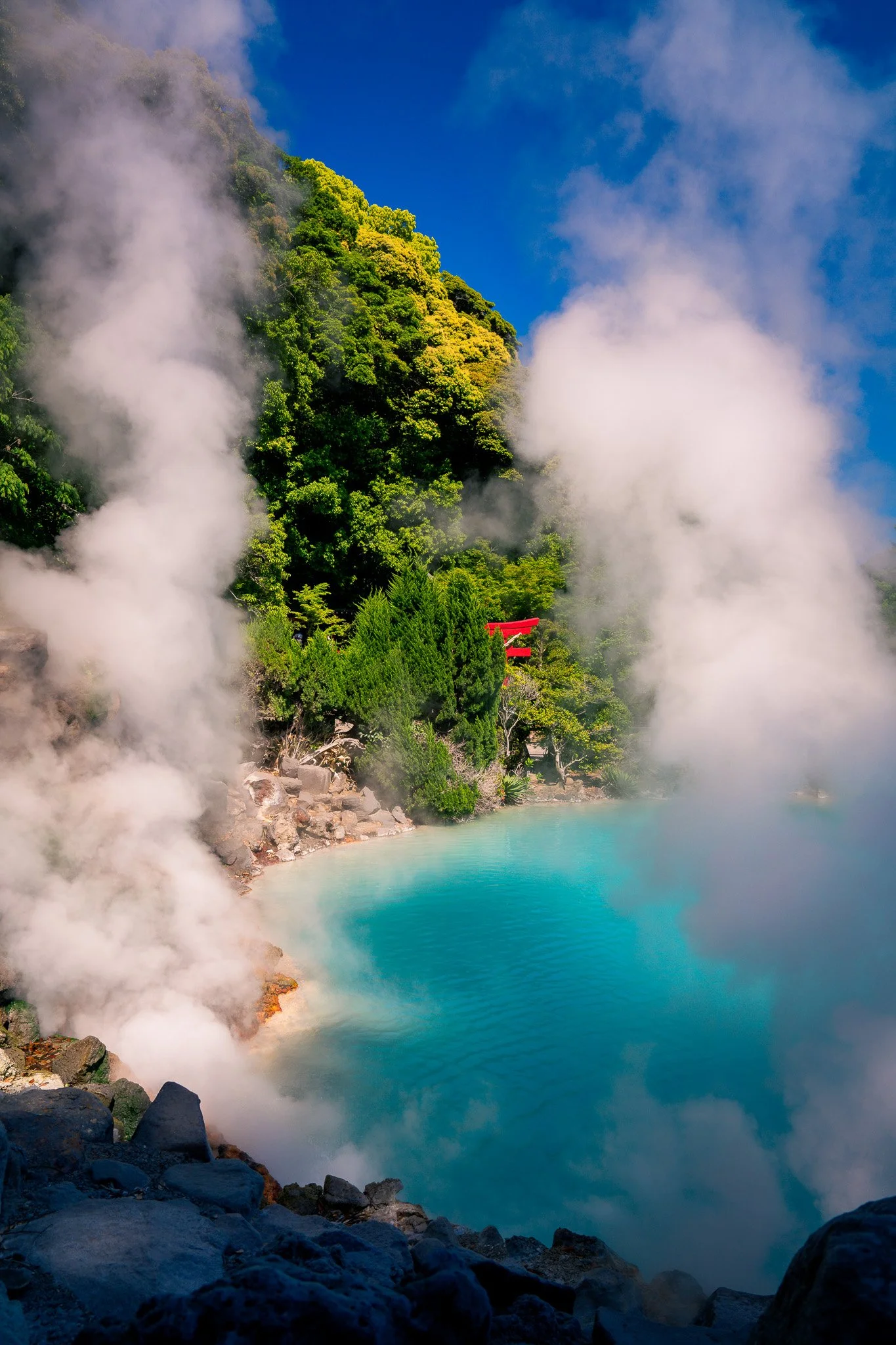
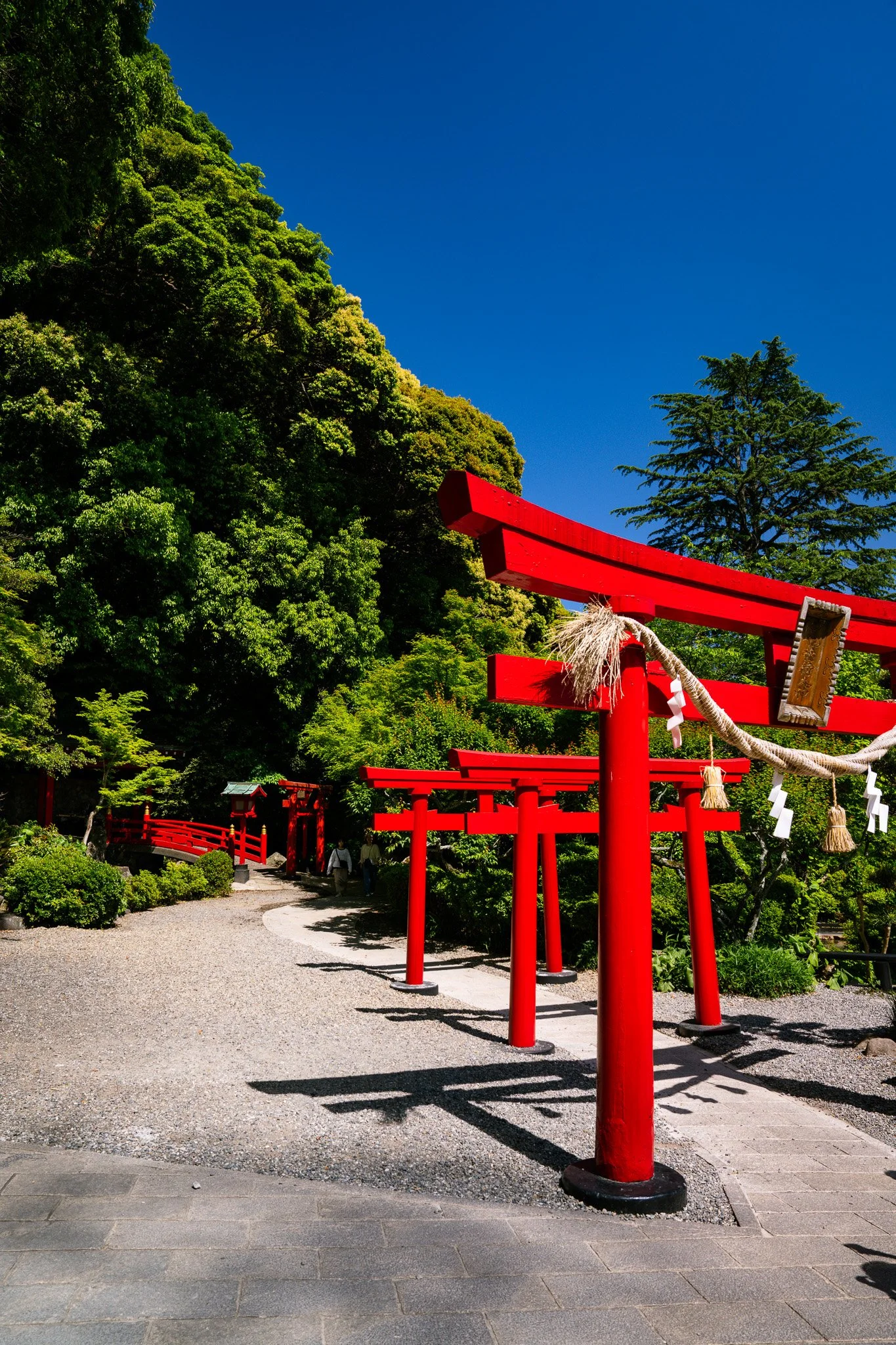
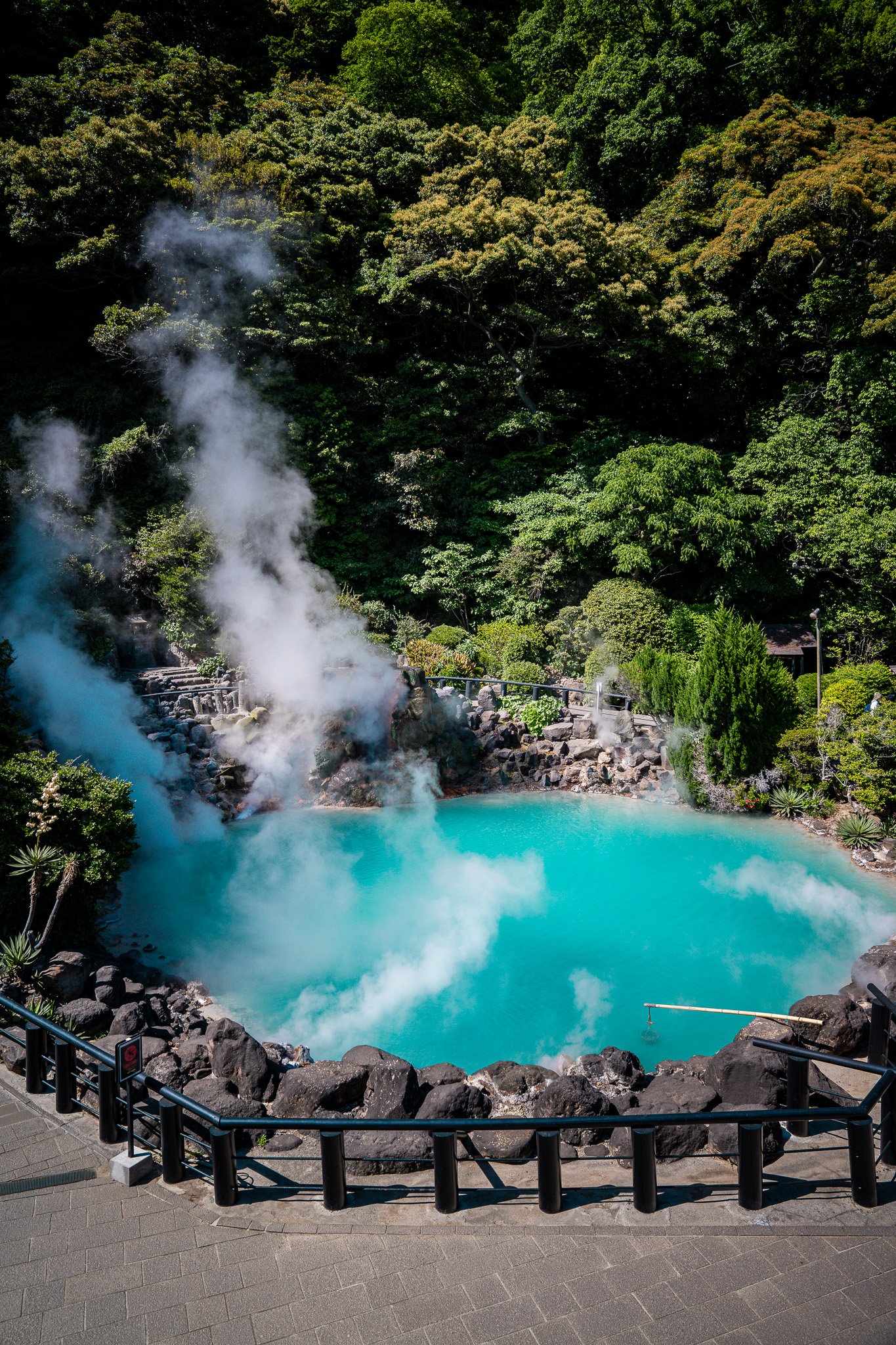
Steam rose continuously from the landscape, drifting across the air in soft white plumes. The cobalt-blue pond sat quietly beneath it all, almost surreal in colour, as if the heat below the earth had briefly surfaced into view. It was mesmerising in a quiet, understated way — not something that demanded attention, but something that held it.
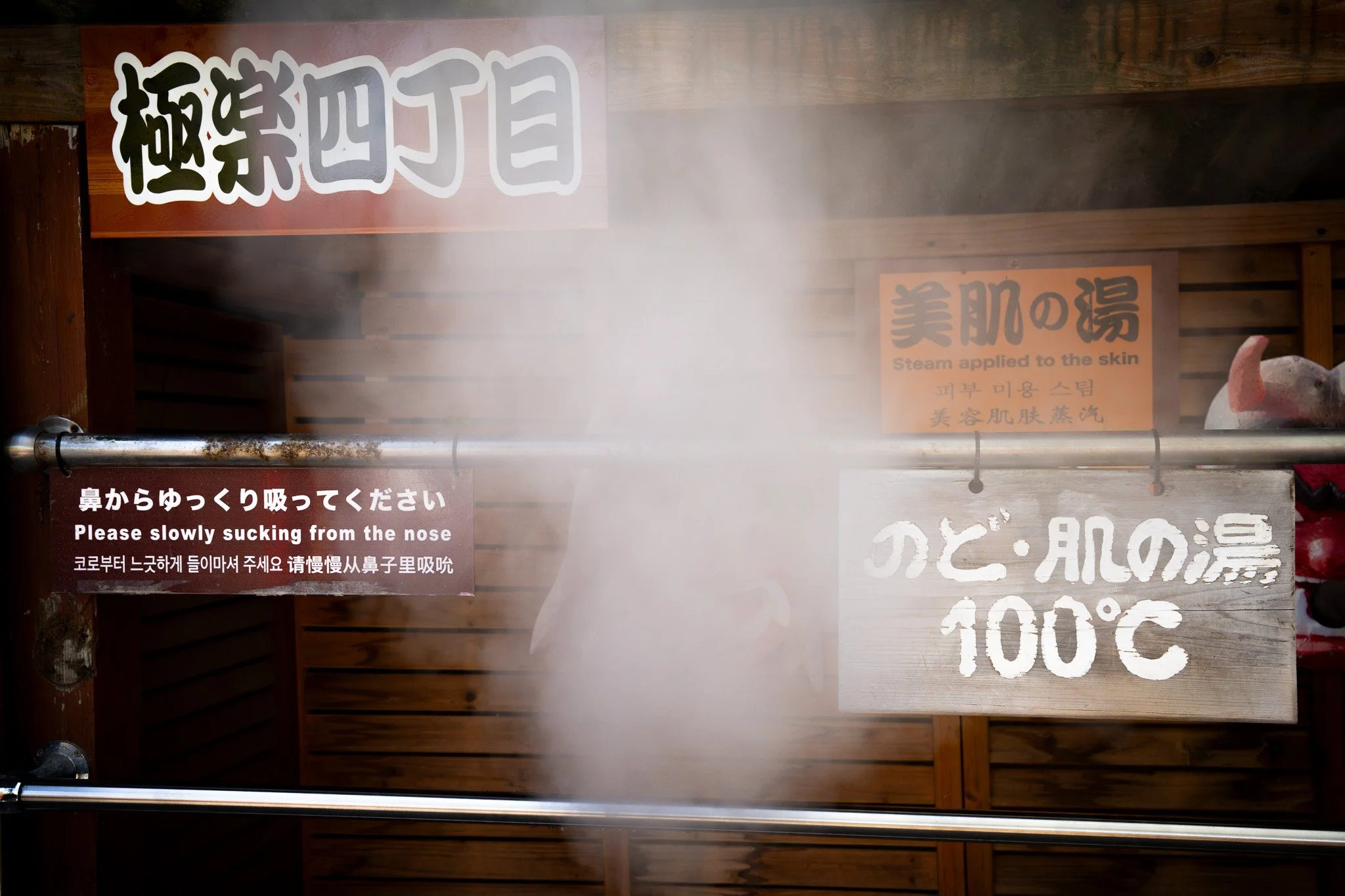
We tried the eggs, slowly boiled in the natural steam. Someone joked about their health benefits, though none of us really knew whether it was true. It didn’t matter. The experience itself was the point — small, simple, and strangely grounding in the middle of a day that had otherwise been moving too quickly.
But the moment that stayed with me most was something even simpler.
We all decided to try the public foot bath.
At first, the water felt almost deceptively calm. The moment your feet entered, there was an immediate rush of heat — sharp, surprising, almost too intense to stay still. But slowly, over time, the heat softened. Your body adjusted. Conversation slowed. And without realising it, we all stayed longer than we had planned.
There was something quietly communal about it — six of us sitting side by side, suspended in a pause that none of us had explicitly agreed to, but all of us somehow needed.
And yet, even then, time remained just out of reach.
We could have stayed longer. We wanted to. But the rhythm of the day had already moved ahead of us.

As we entered Yufuin, the landscape unfolded in a way that could only truly be appreciated from a moving car.
Rolling hills stretched endlessly on one side — green, soft, and uninterrupted. I had seen images of this place before, read about it, even heard it recommended by others. But none of that prepared me for the quiet scale of it in person. It was only when we were driving through it, surrounded by it, that I fully understood what people meant.
Without saying it out loud, we all seemed to recognise the same thing at the same time — that we would come back here after Yufuin, properly, to experience it again without rush, and to truly let the landscape settle in.
Driving through Japan felt, in many ways, both familiar and unfamiliar at once.
On one hand, it was surprisingly easy. The driver’s seat on the same side as Australia, the generally calm traffic, the orderly flow of roads — all of it made the experience more intuitive than expected.
And yet, there were small details that constantly disrupted that familiarity.
The stop signs, for instance. In Australia, stopping points feel almost uniform — predictable, placed just before intersections or lights. In Japan, however, the stopping point sometimes felt unexpectedly distant. More than once, we found ourselves either creeping too far forward or stopping earlier than necessary, uncertain whether we had judged it correctly. At times, we would pause in hesitation, unsure whether we were obstructing traffic or simply overthinking the rules.
Even the highways carried a subtle layer of uncertainty. The roads were clear, but the moment lanes began to diverge, we found ourselves constantly negotiating decisions in real time — should we stay, or shift lanes? The map on the screen offered direction, but not always clarity.
We only missed a turn a few times, but each time reminded us that familiarity and unfamiliarity can exist side by side, even within the same journey.
So far, we had moved through the journey as a group — always waiting, always regrouping before heading to the next place together. That rhythm had become unspoken, almost natural.
In Yufuin, it began the same way.
We hadn’t yet had lunch, and there was a quiet uncertainty about whether we should stop for a proper sit-down meal or simply continue exploring. That question lingered as we walked through the streets, until it was interrupted by something simple — a small stall advertising croquettes, described confidently as the best in Japan.
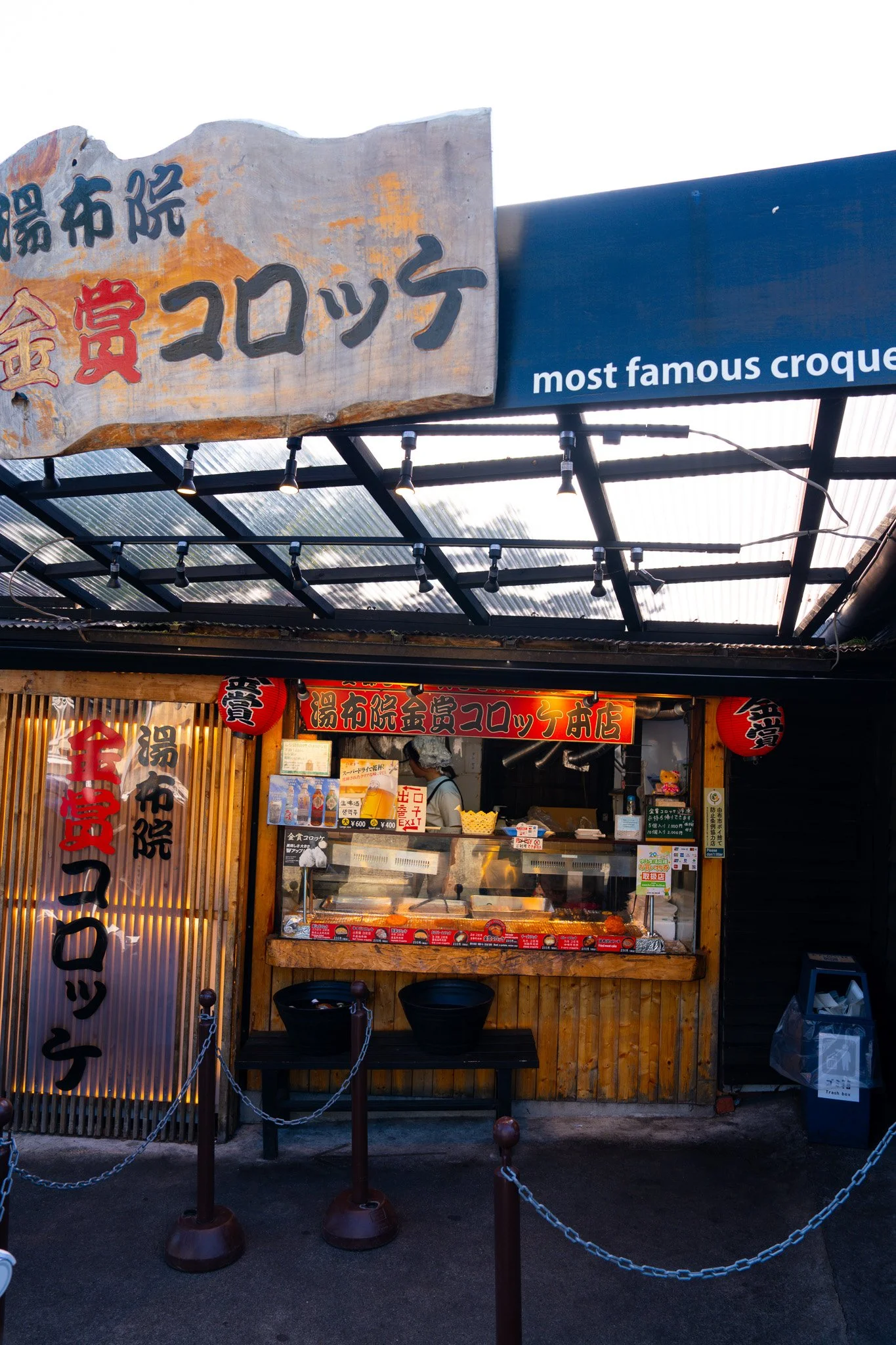
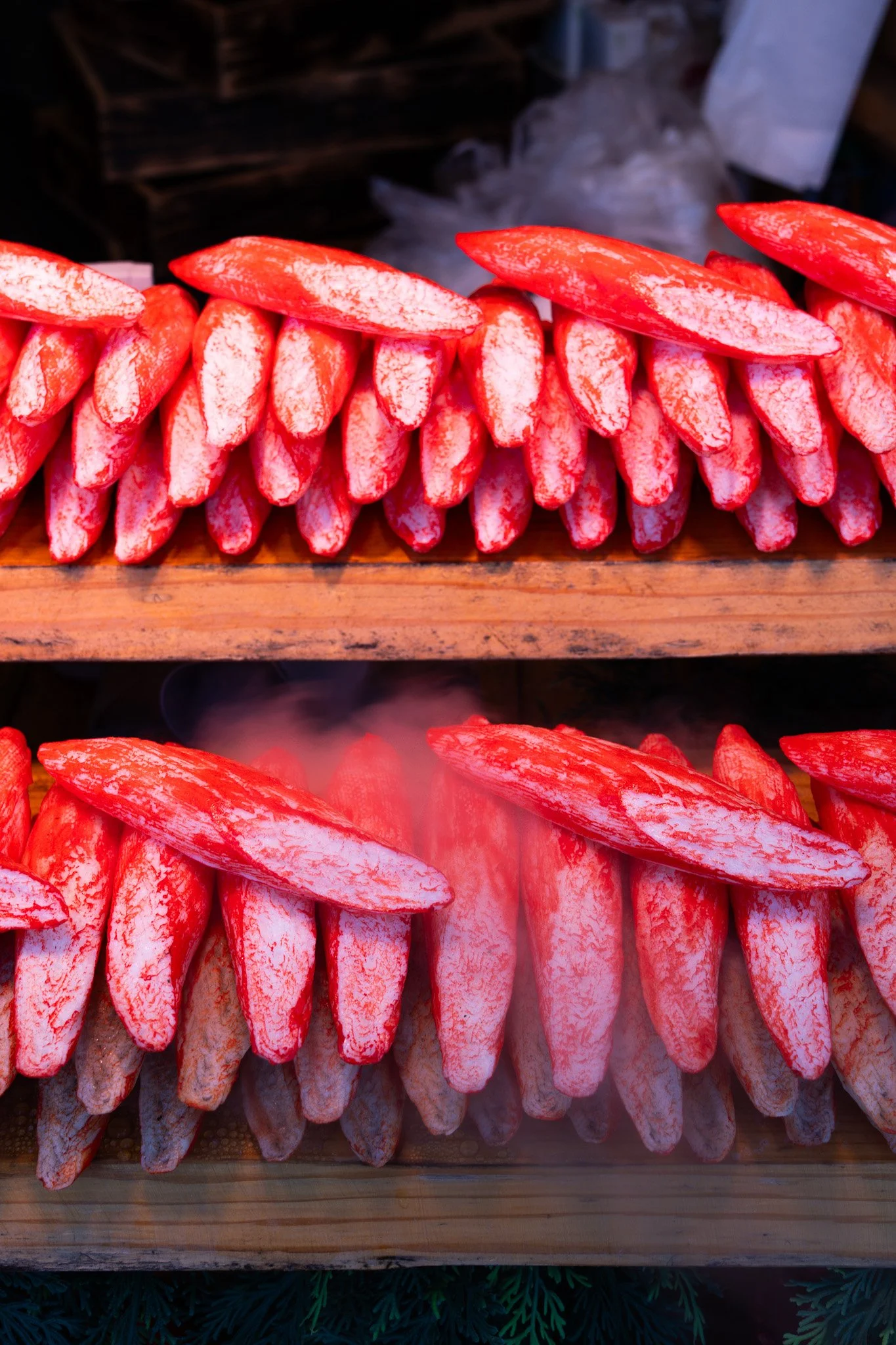
We hesitated.
Then one of us decided to try it.
And in that moment, the decision spread through the group almost instinctively. Not out of pressure, but out of shared curiosity. One choice became six.
The croquette, when it arrived, was everything it claimed to be — crisp on the outside, warm and rich inside, unexpectedly satisfying in the way simple food sometimes is when it is made well. There was a shared agreement around it without needing to say much. So much so that I found myself going back for a second before we eventually left the area.
As we continued through Yufuin, the rhythm began to shift again.
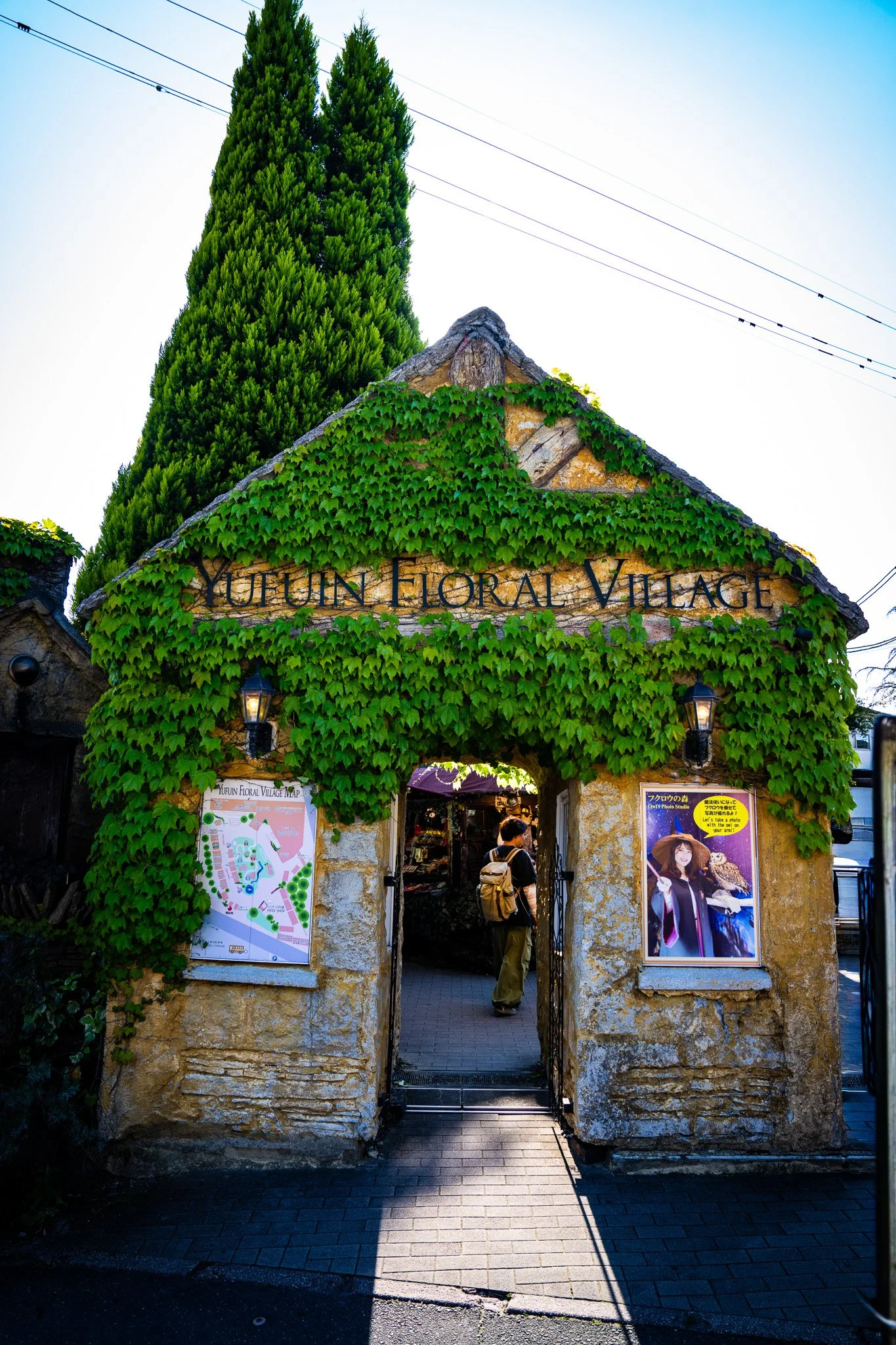
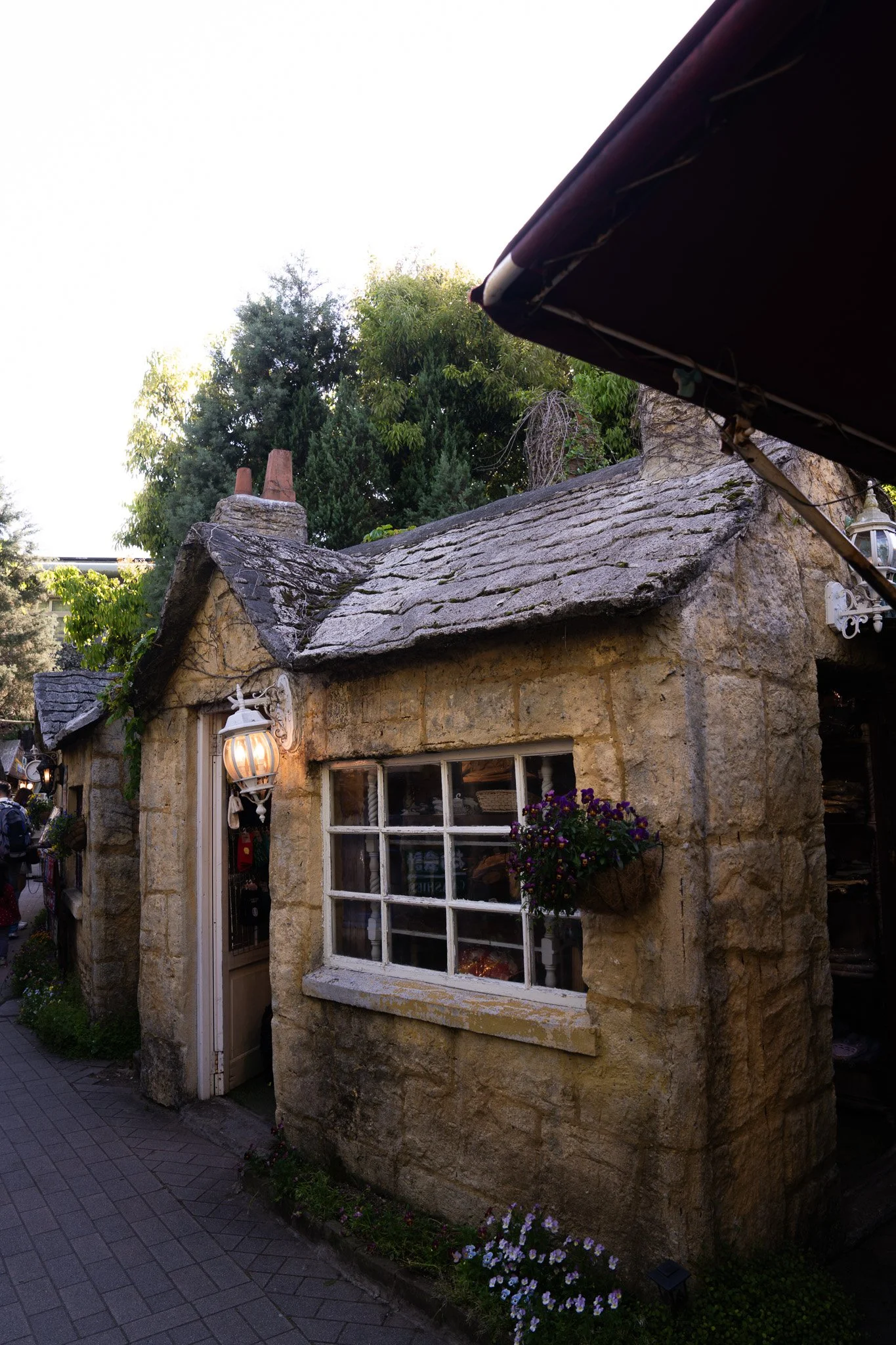
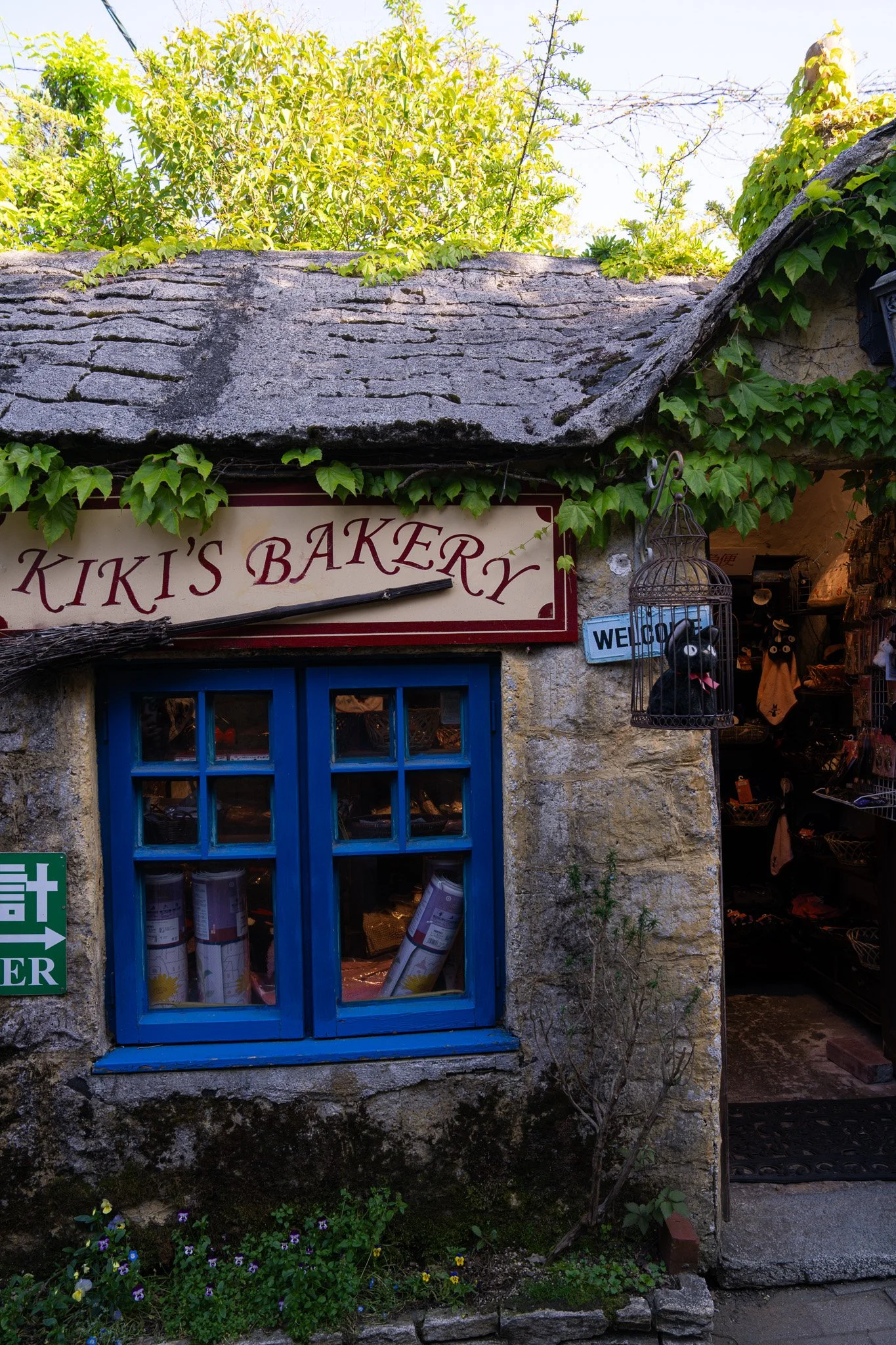
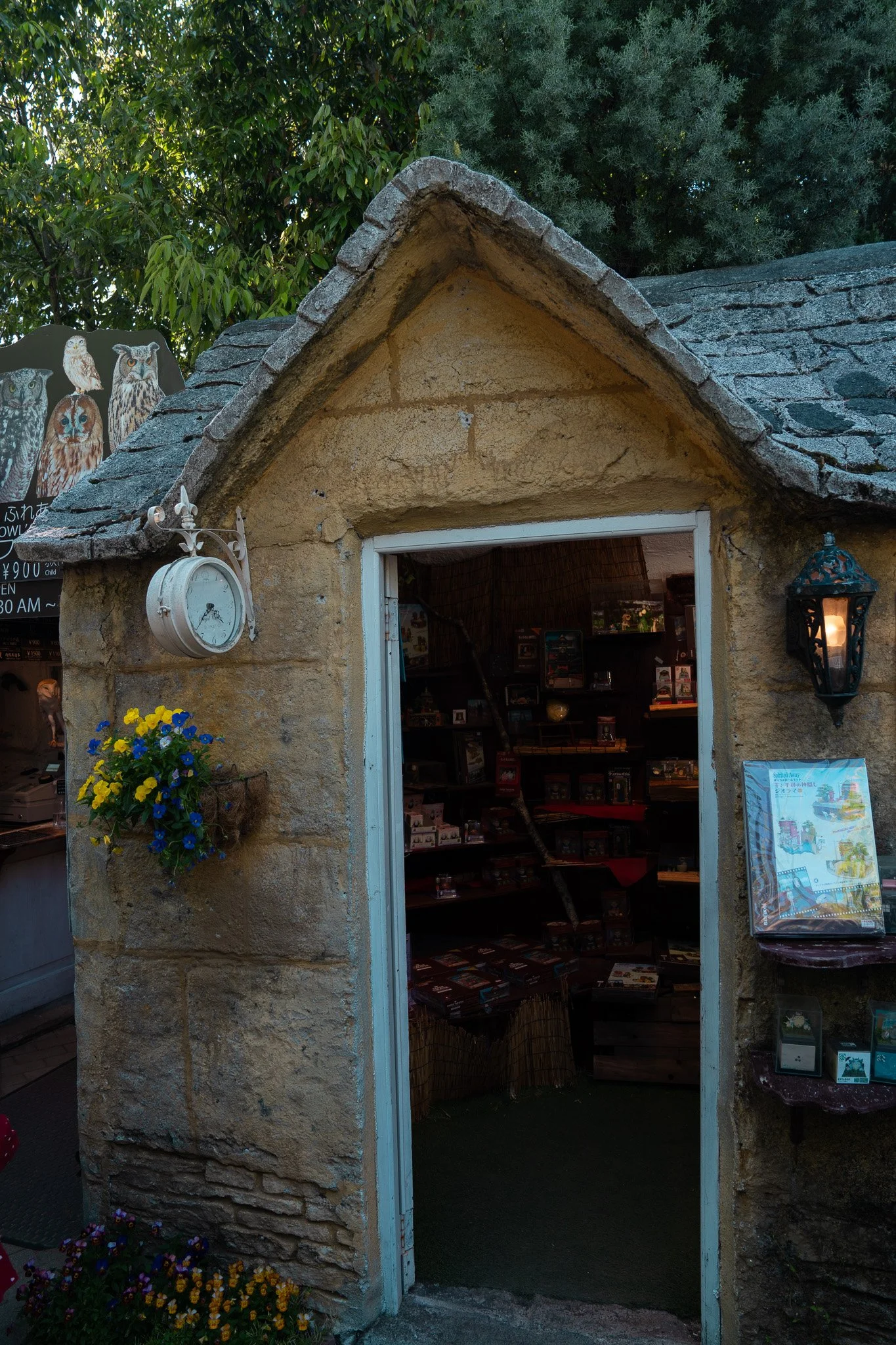
With its small, carefully curated shops and quiet streets, it became natural for us to drift apart. Instead of moving as one unit, we slowly separated without planning to. Each of us lingered where our attention was drawn — stepping into different stores, pausing longer in some places, skipping others entirely.
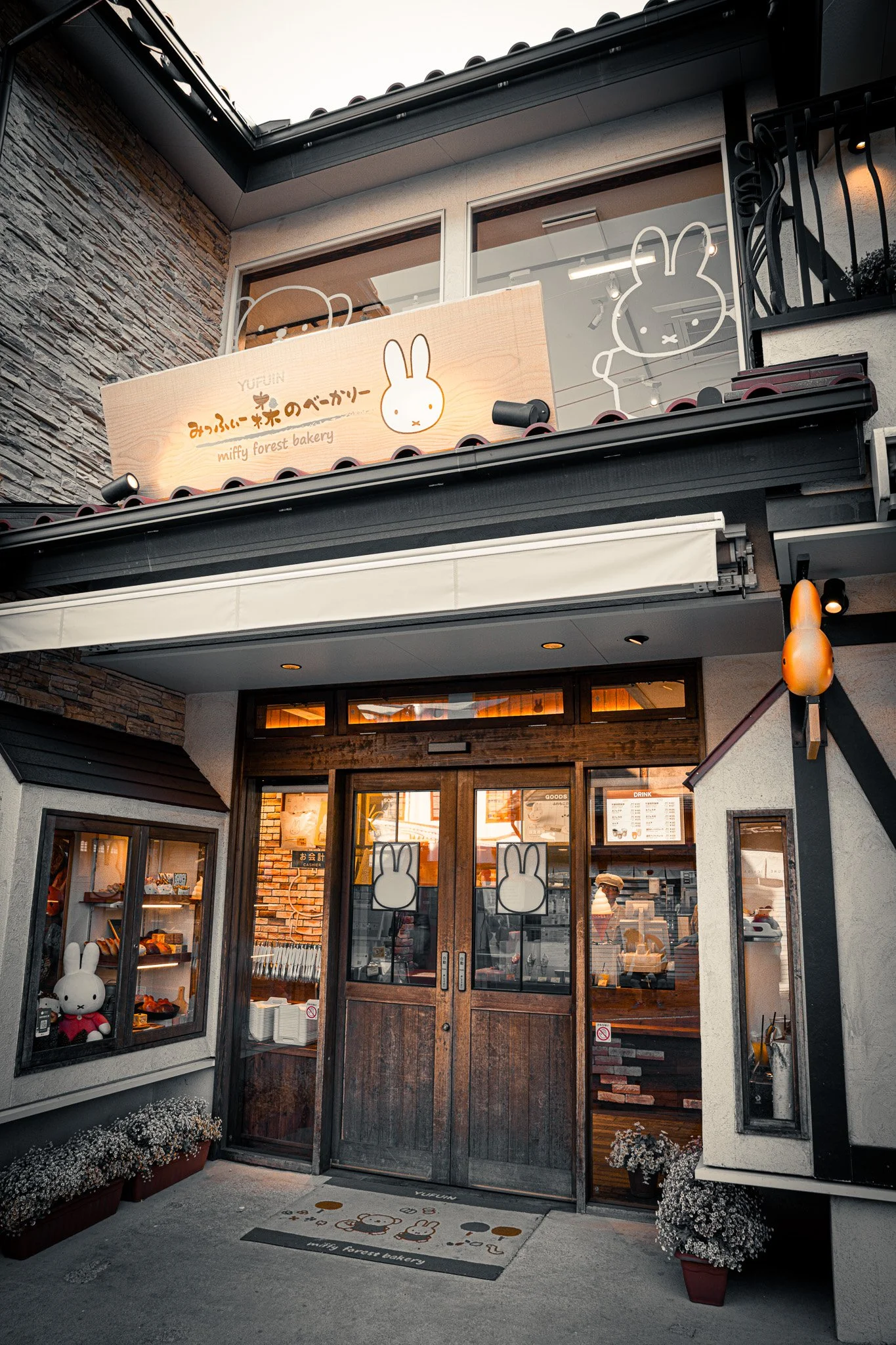
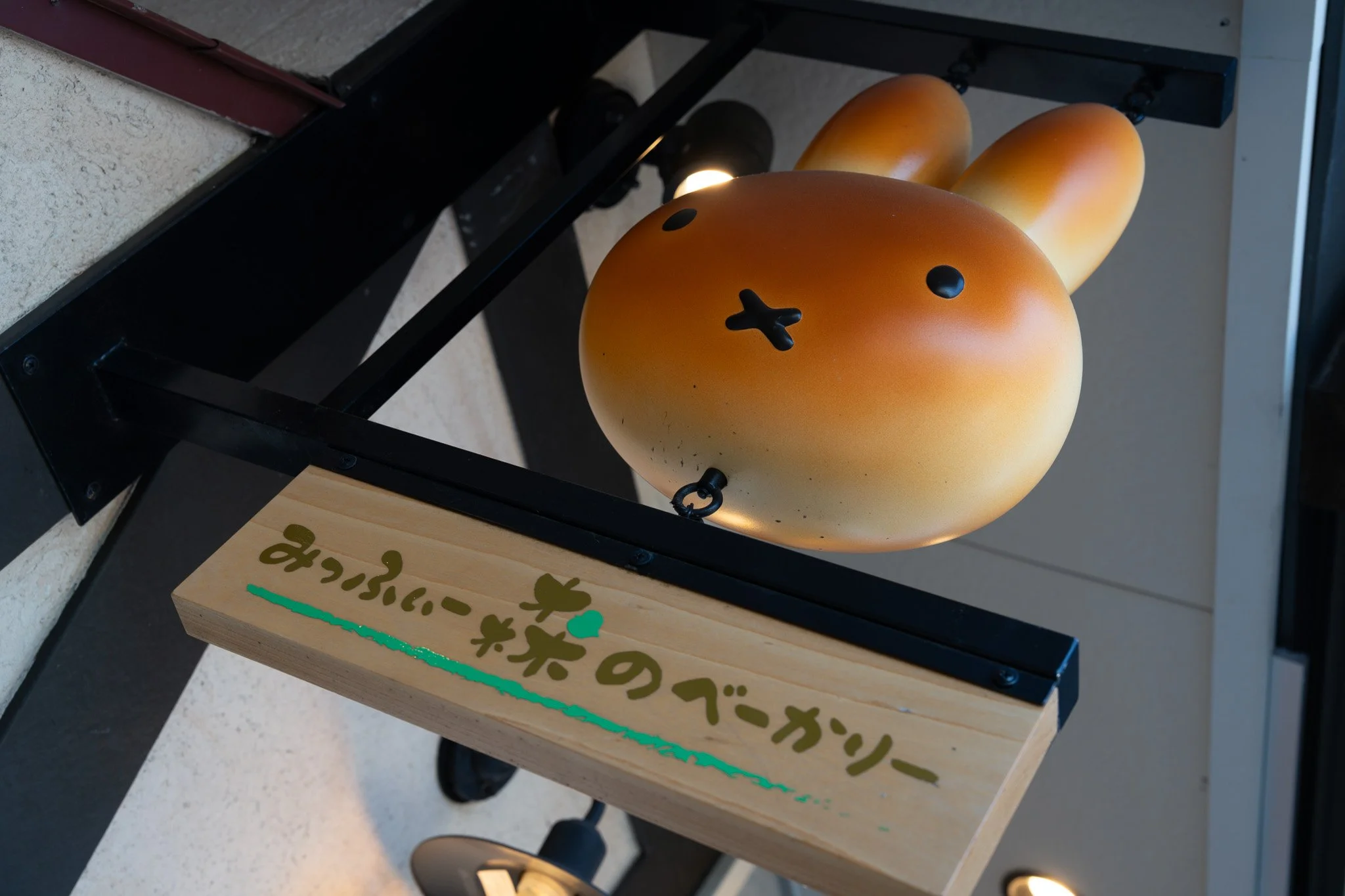
And yet there was no confusion in it.
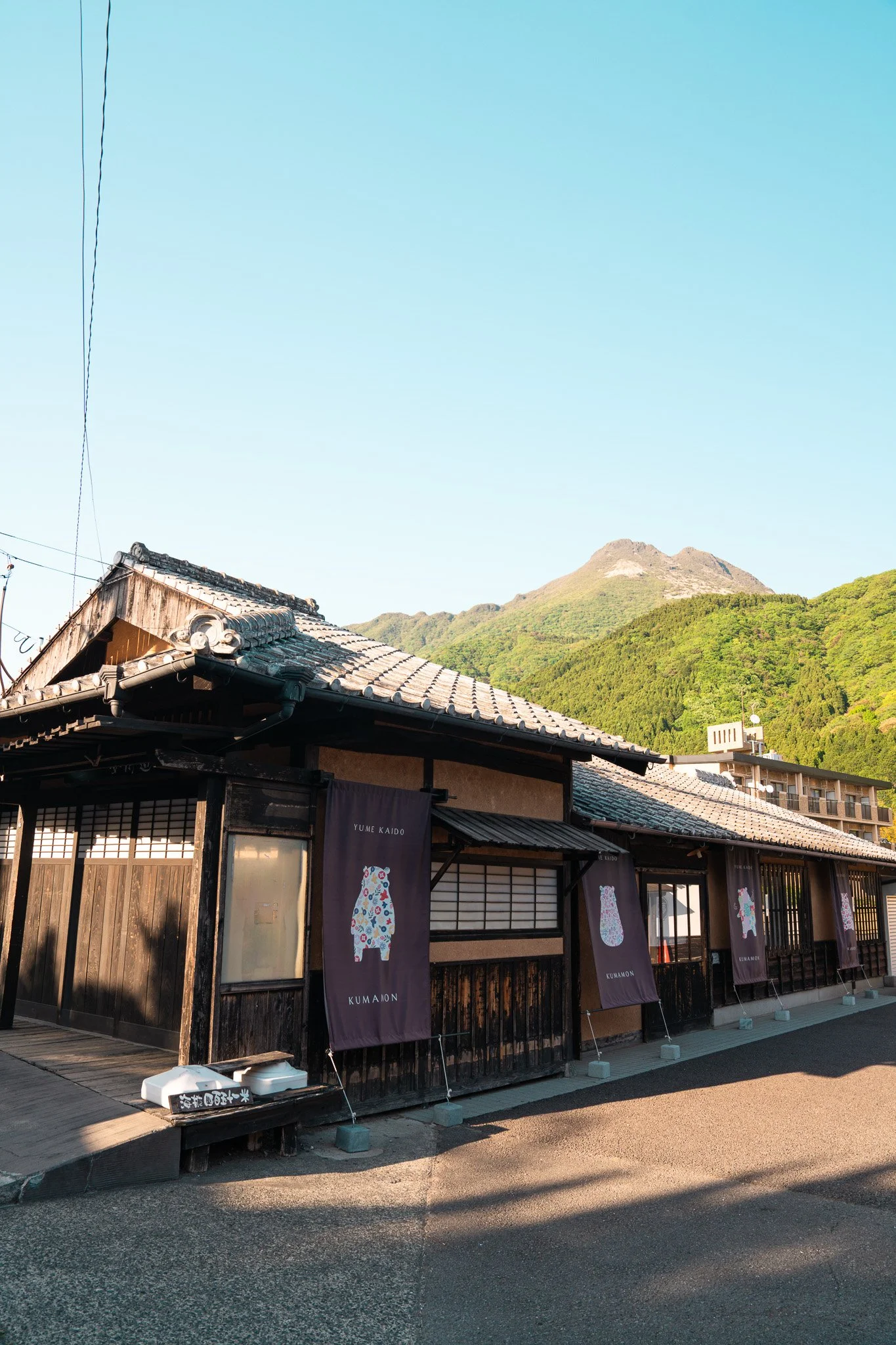
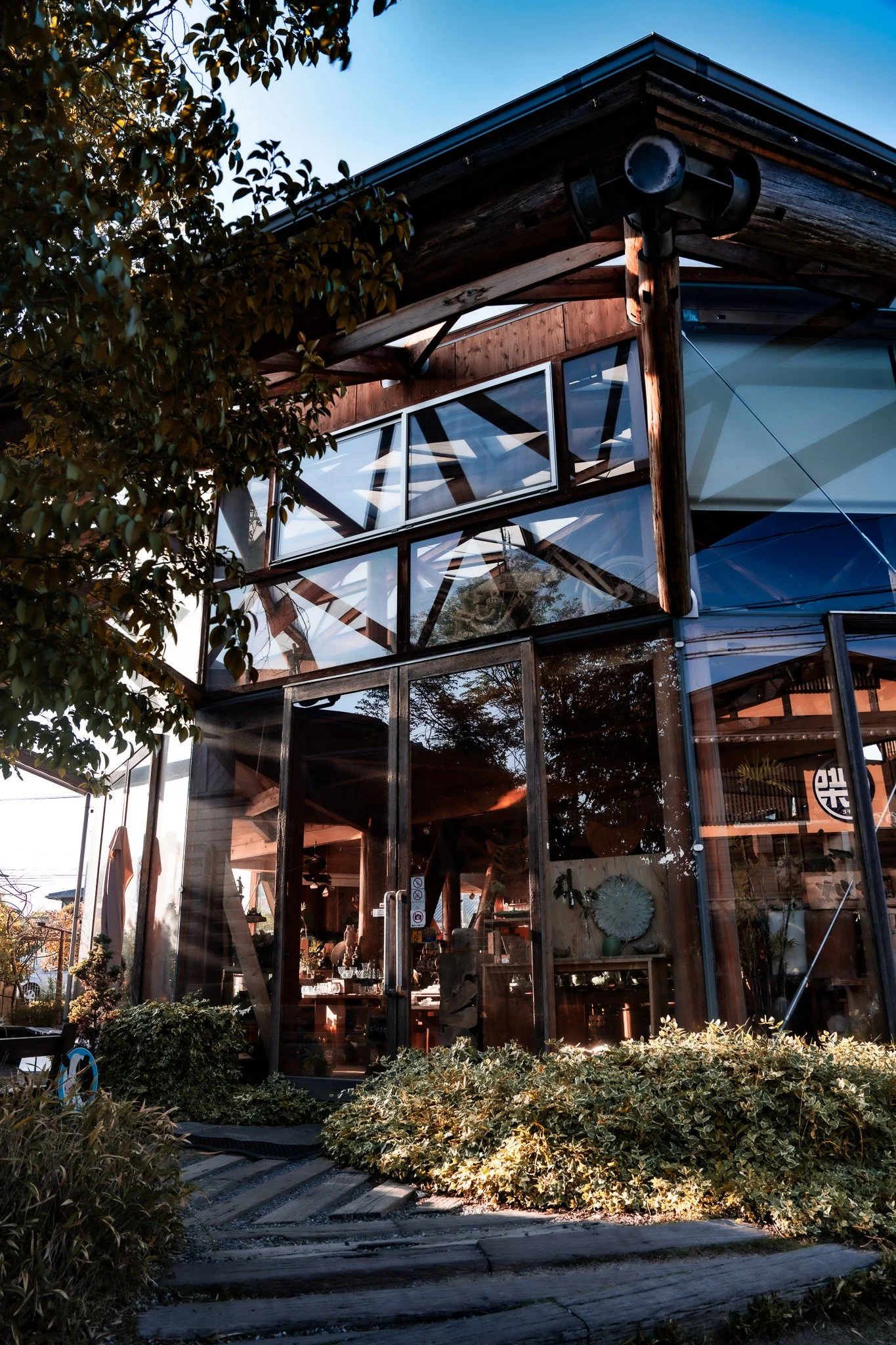
Somewhere along the way, an unspoken understanding formed — that this was the moment to move individually, to explore at our own pace, and that we would find each other again when it was time to leave.
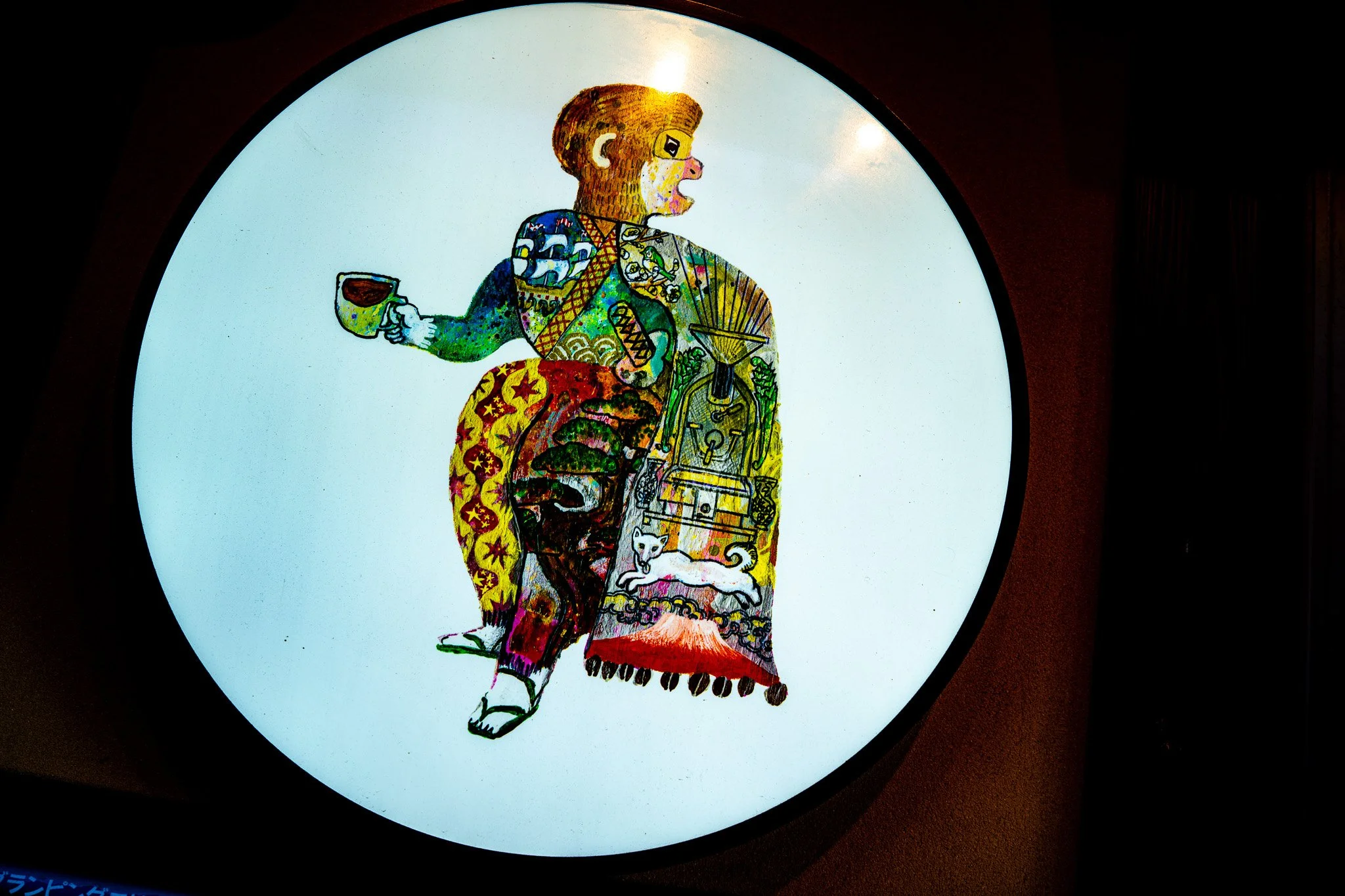
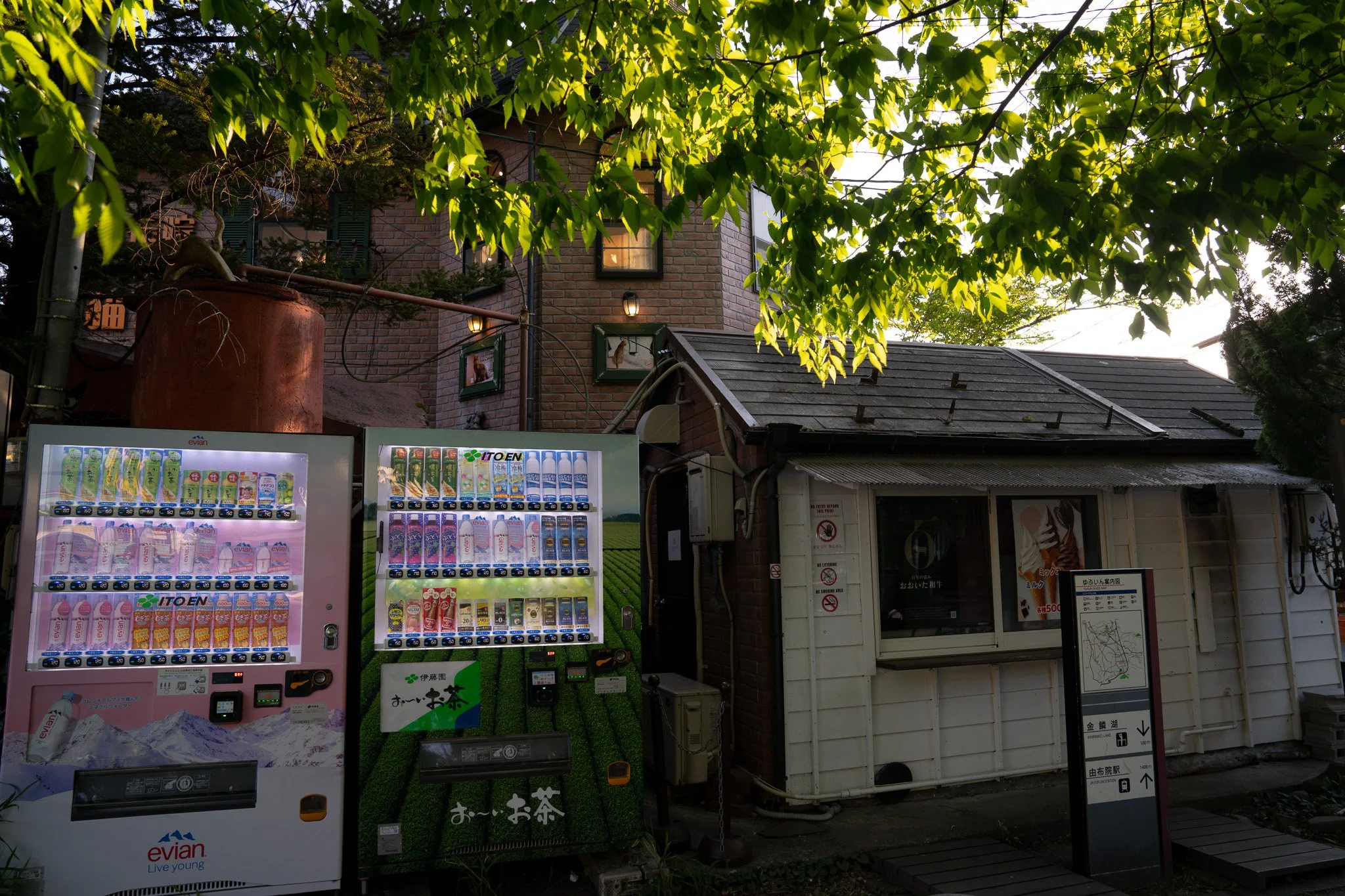
We regrouped as agreed before sunset, leaving ourselves enough daylight to reach the rolling hills we had marked earlier in the day.
Everything had been planned around that moment.
But as we drove uphill, a parking area appeared unexpectedly, offering a panoramic view over Yufuin from above. Without much discussion, we detoured.
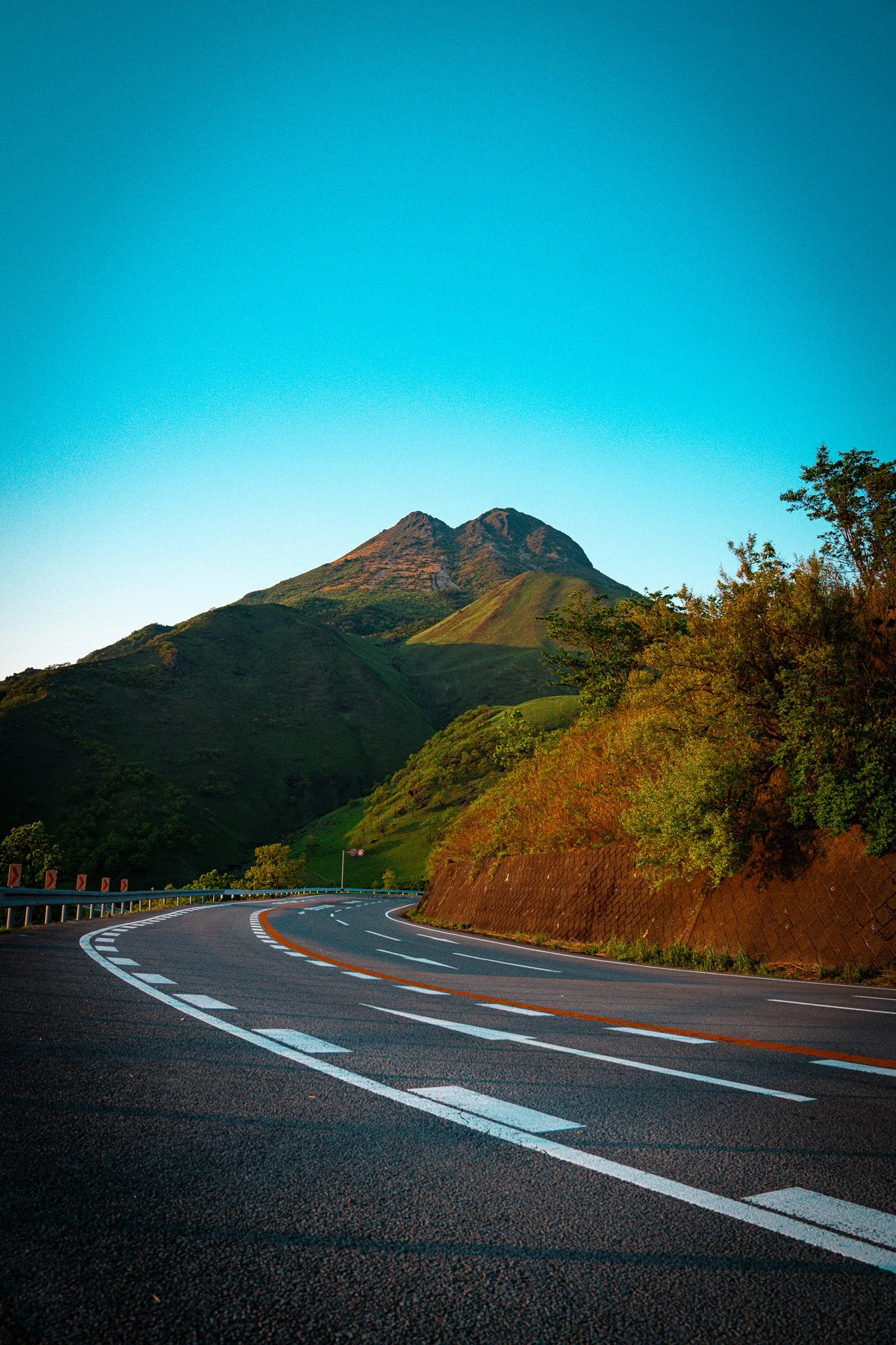
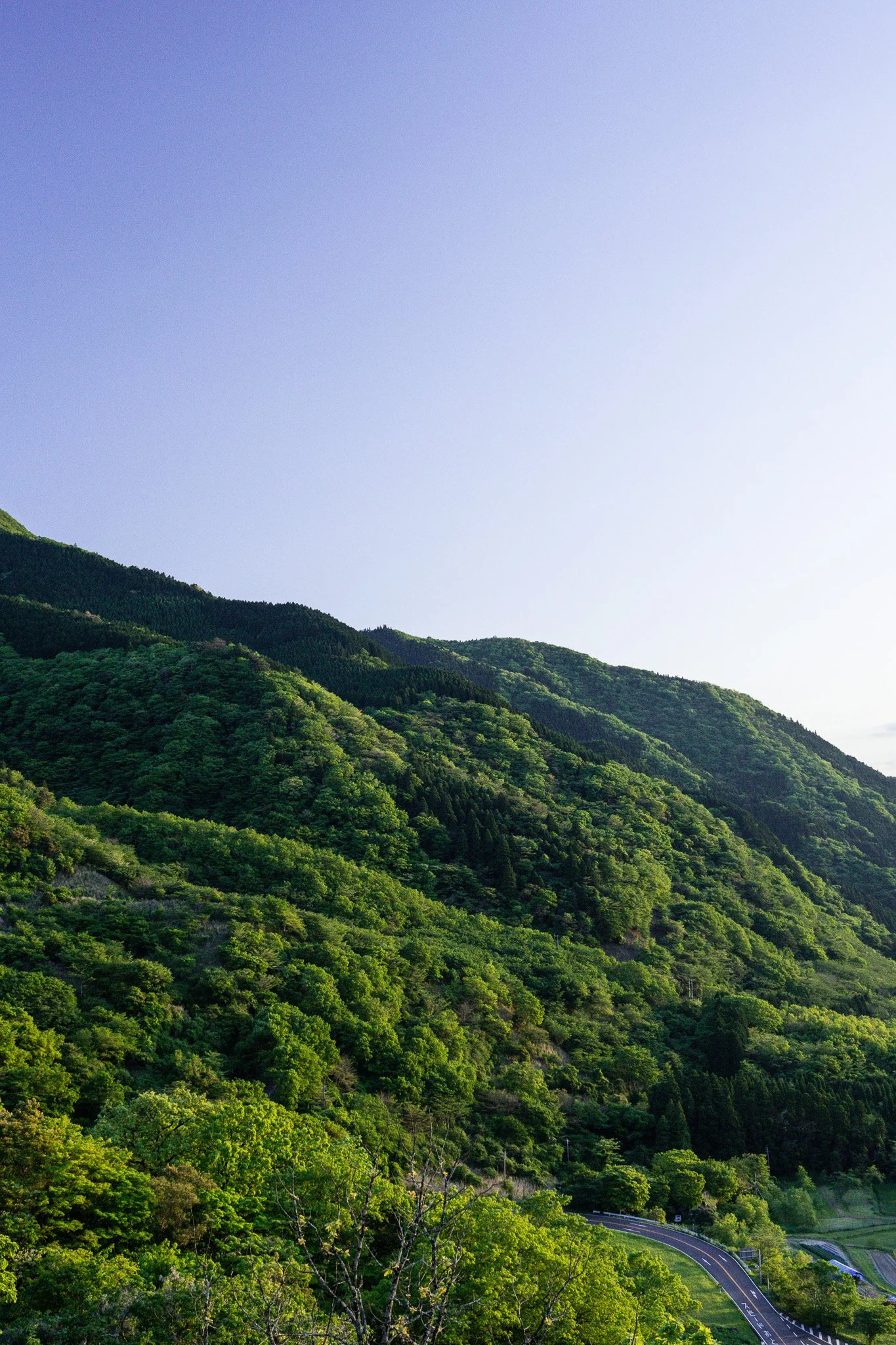
And in hindsight, it was one of those unplanned decisions that quietly becomes the highlight.
From there, the view unfolded in a way that made time feel temporarily irrelevant. The soft afternoon light settled over the valley, the wind carried a quiet coolness, and the entire landscape seemed to slow in response. It was the kind of moment that invites silence without asking for it.
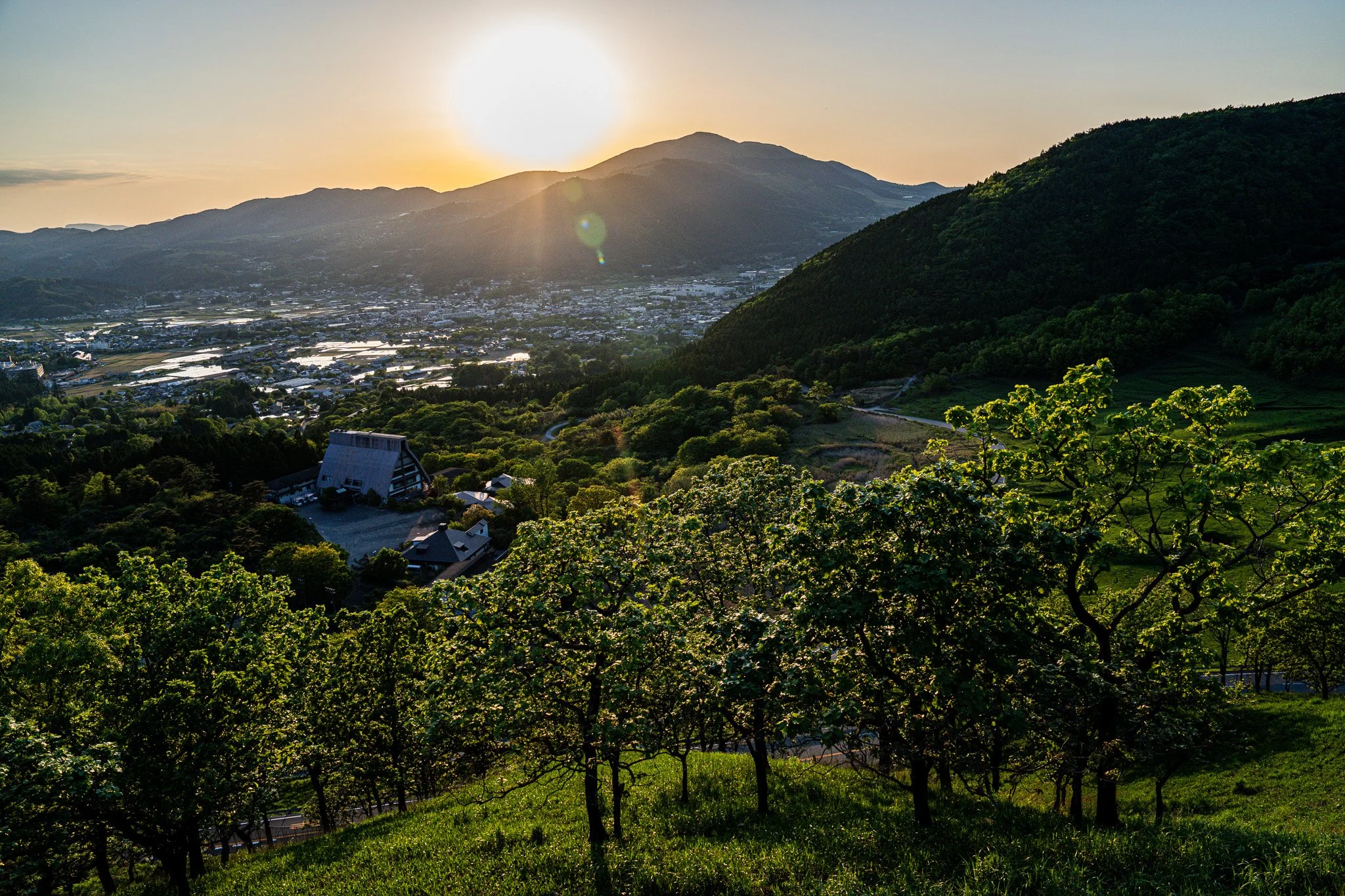
If I had been alone, I would have stayed much longer — simply sitting there, watching the light shift over the town below, letting the scene dissolve into evening at its own pace.
Instead, we moved through it more quickly than the moment deserved — pausing for photos, shifting positions, trying to capture what could not really be captured, before eventually continuing on.
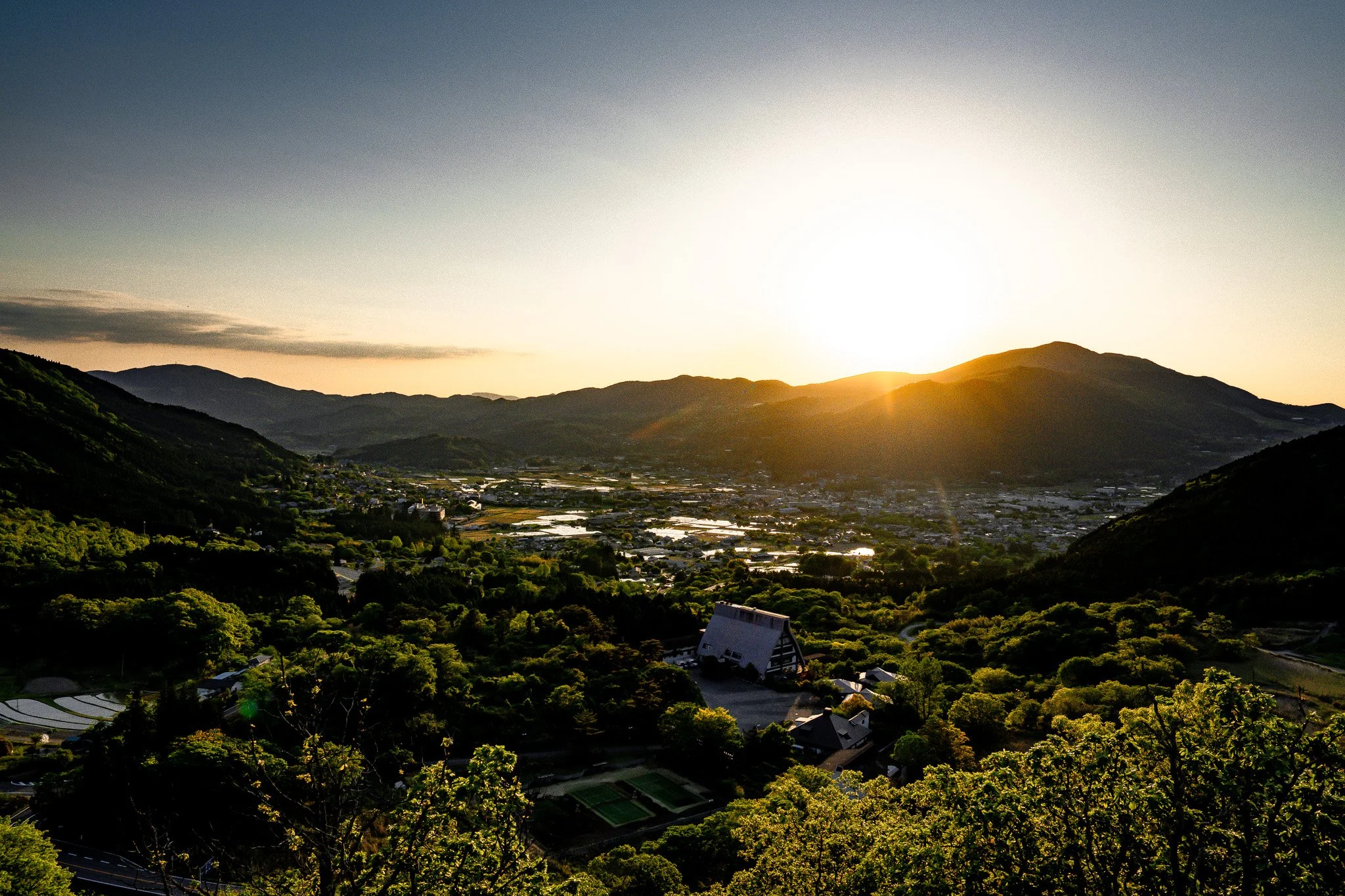
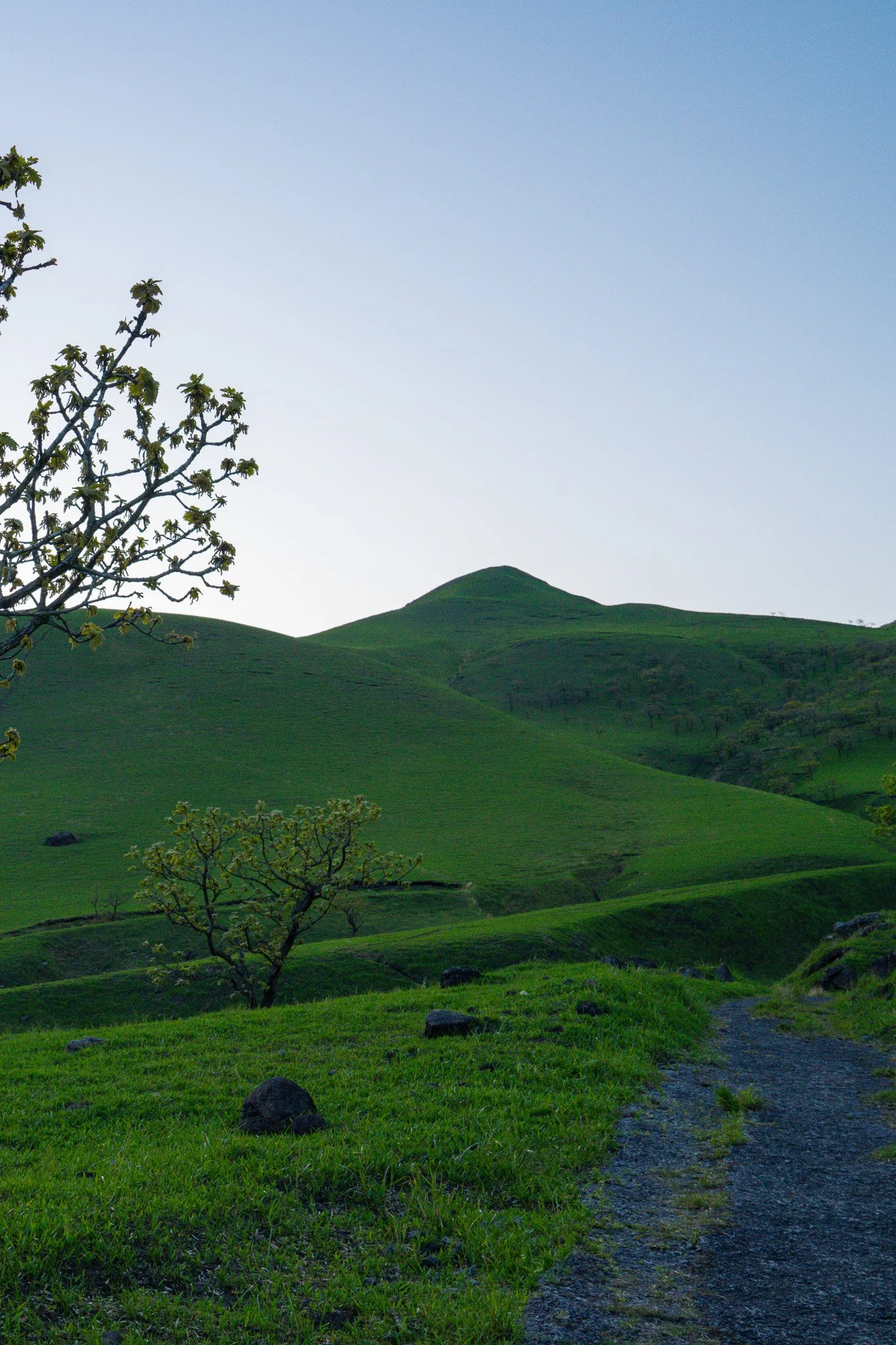
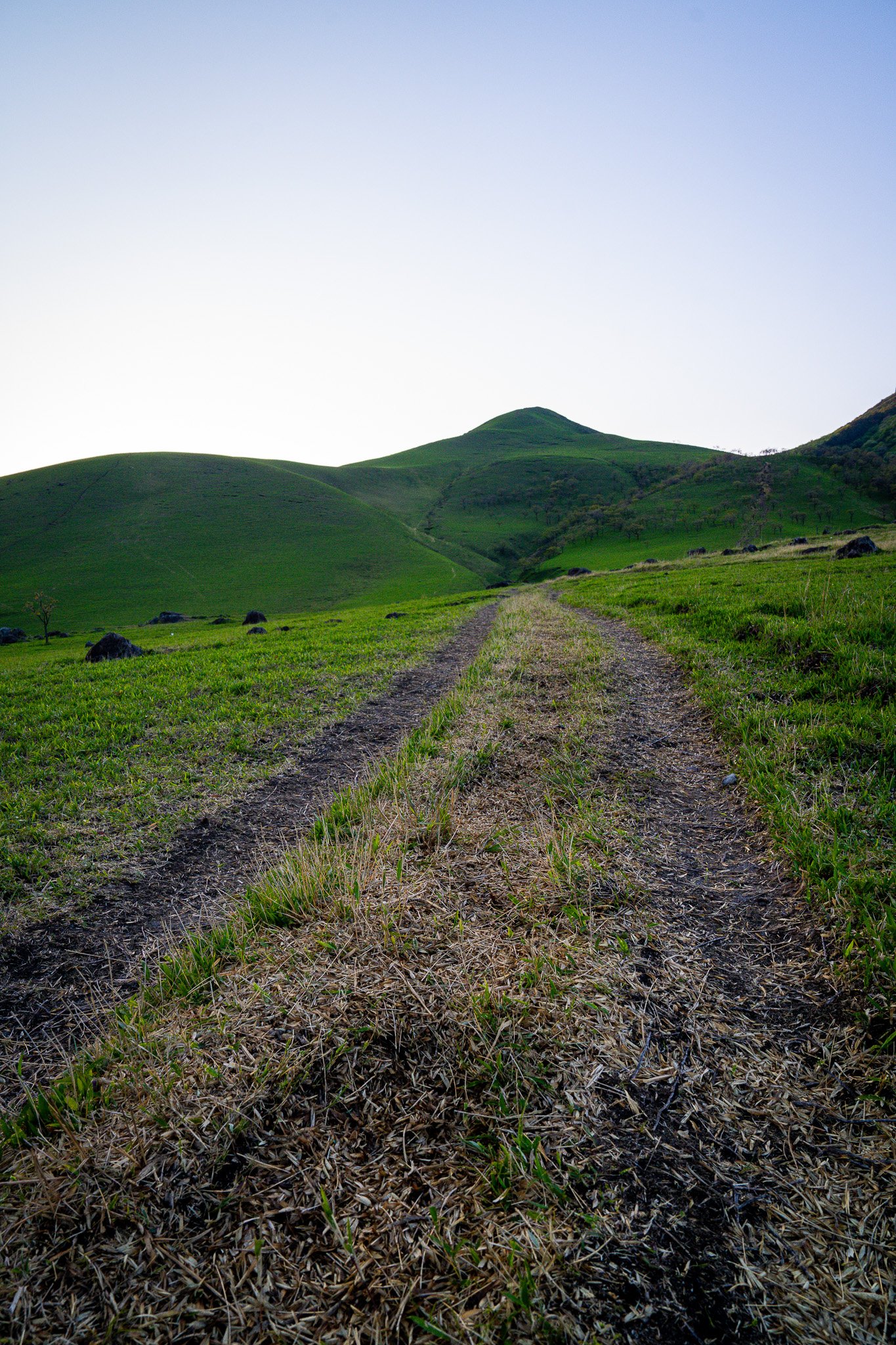
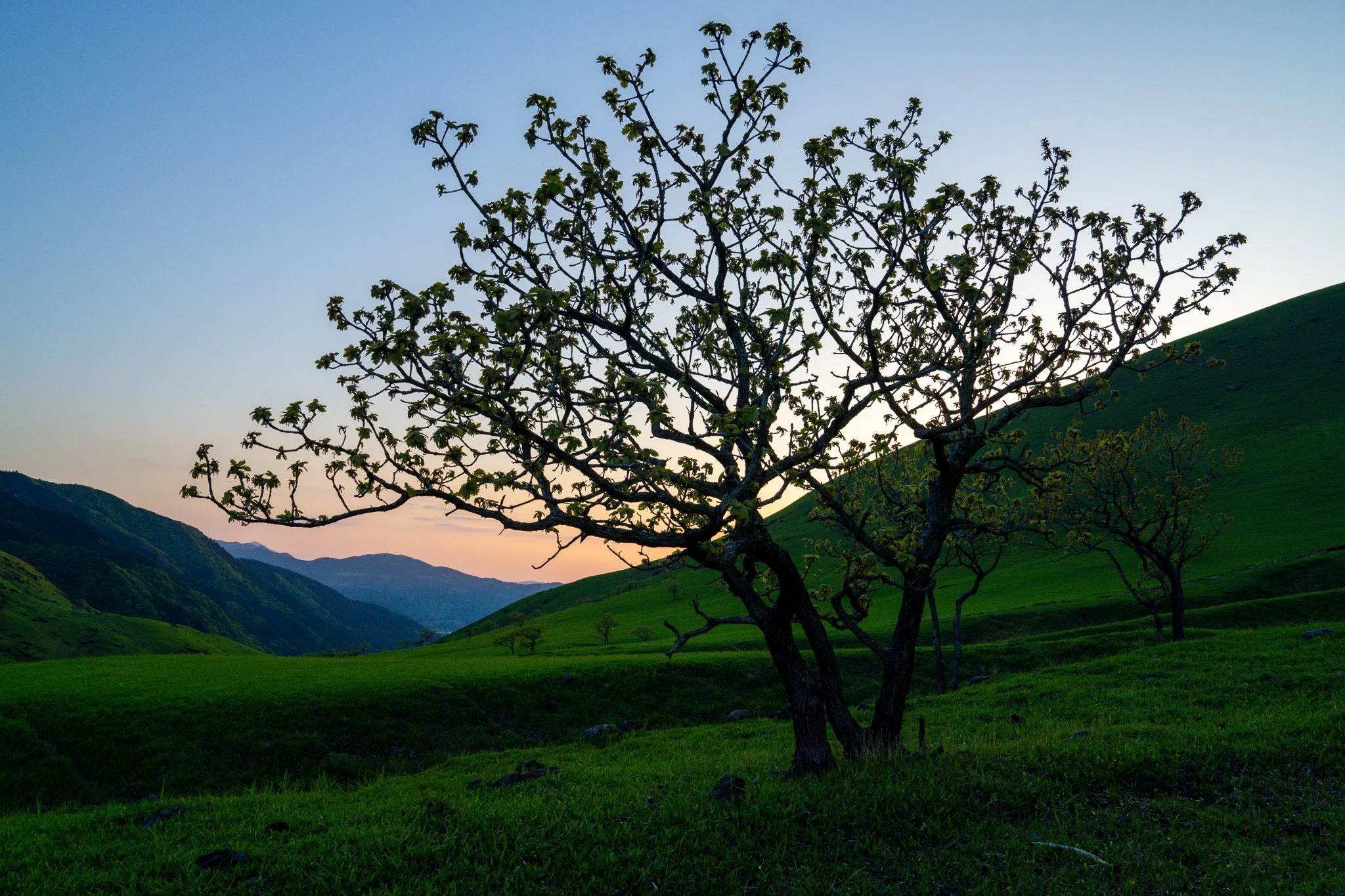
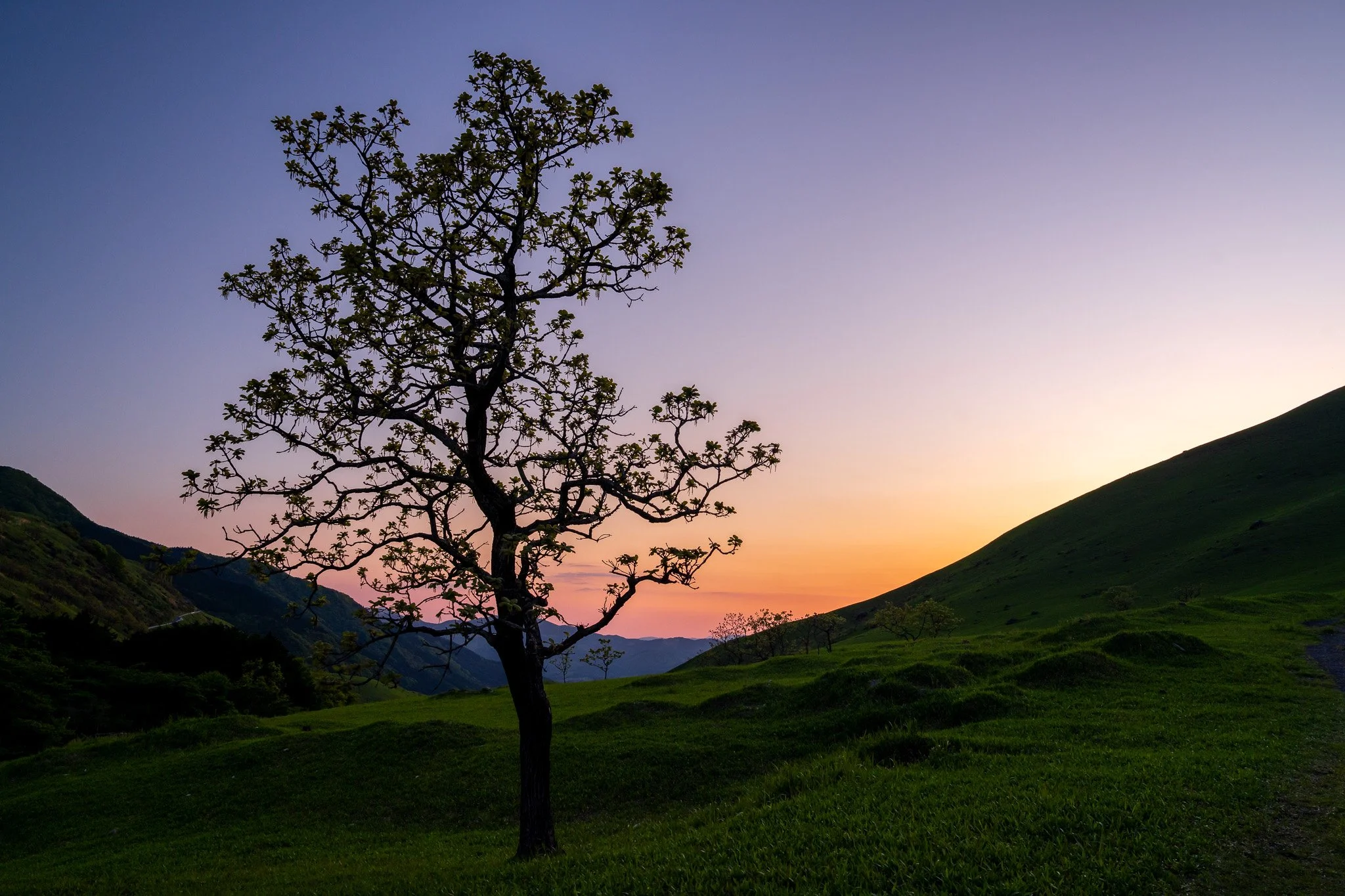
The rolling hills themselves felt almost unreal in that light. By then, the sun had not yet set, but it had retreated behind the hills, leaving only a softened glow that outlined the contours of the land. The scattered trees stood in silhouette, sparse and quiet against the fading sky.
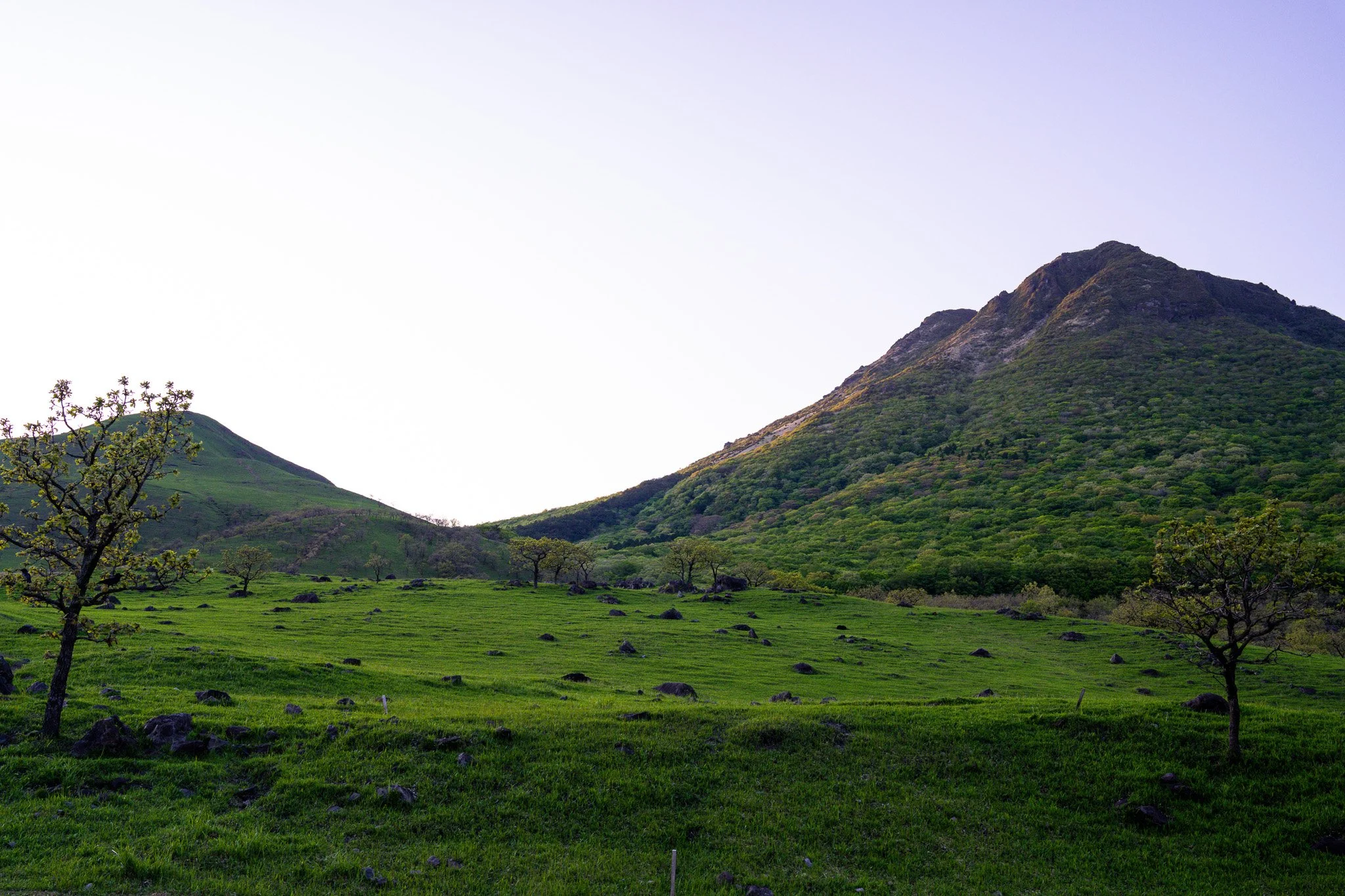
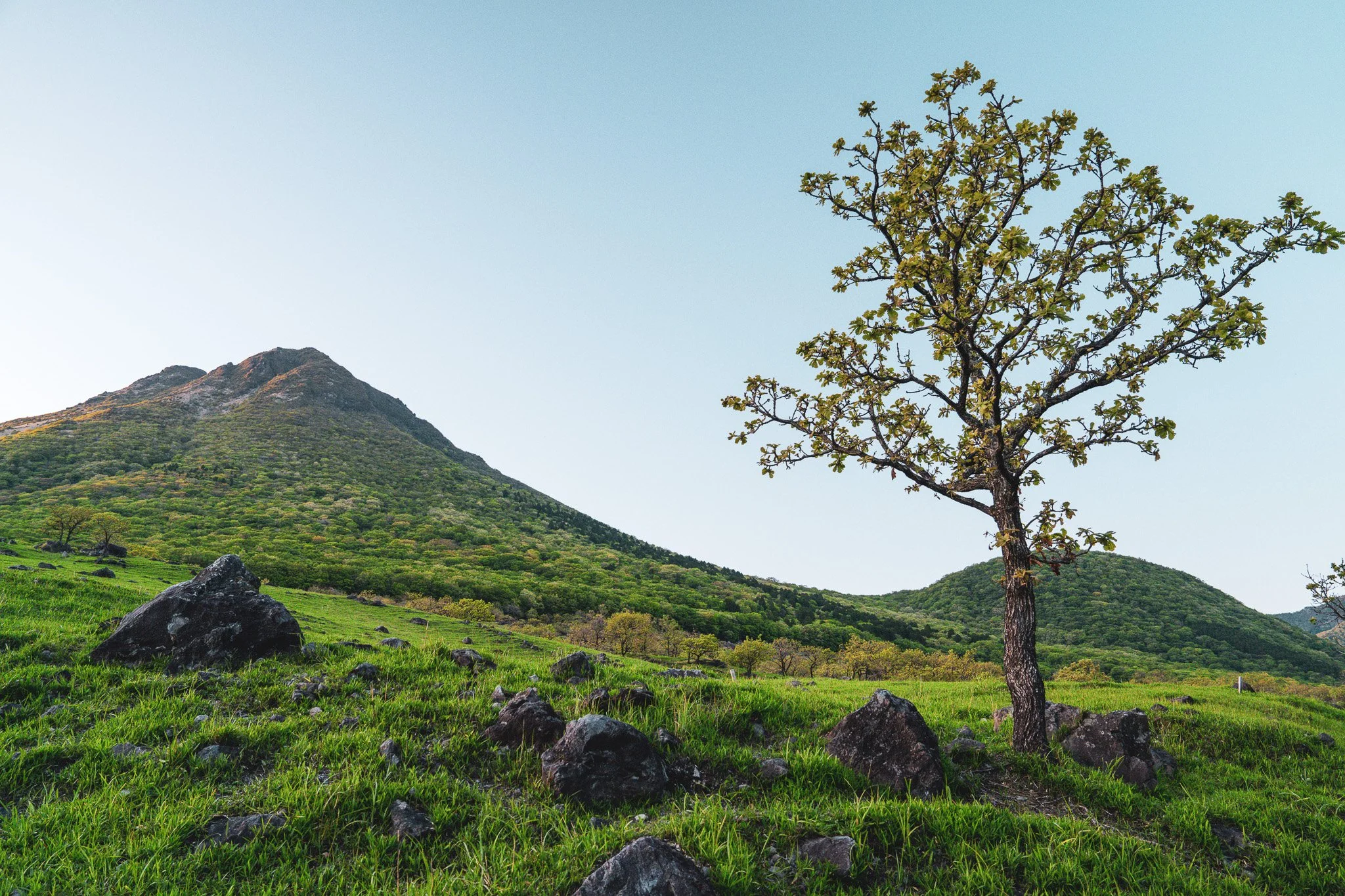
It was a scene that did not ask for attention, but held it anyway.
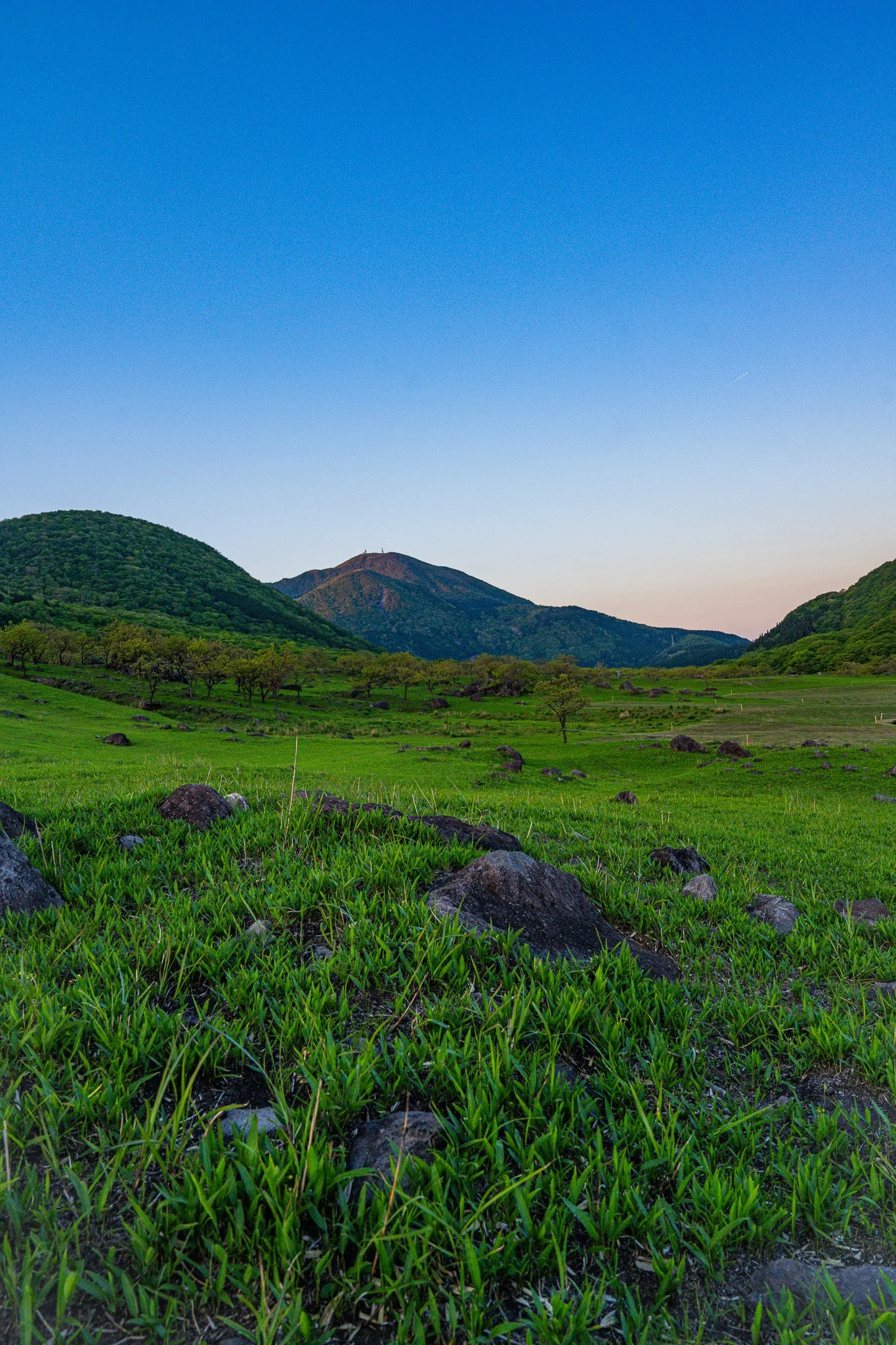
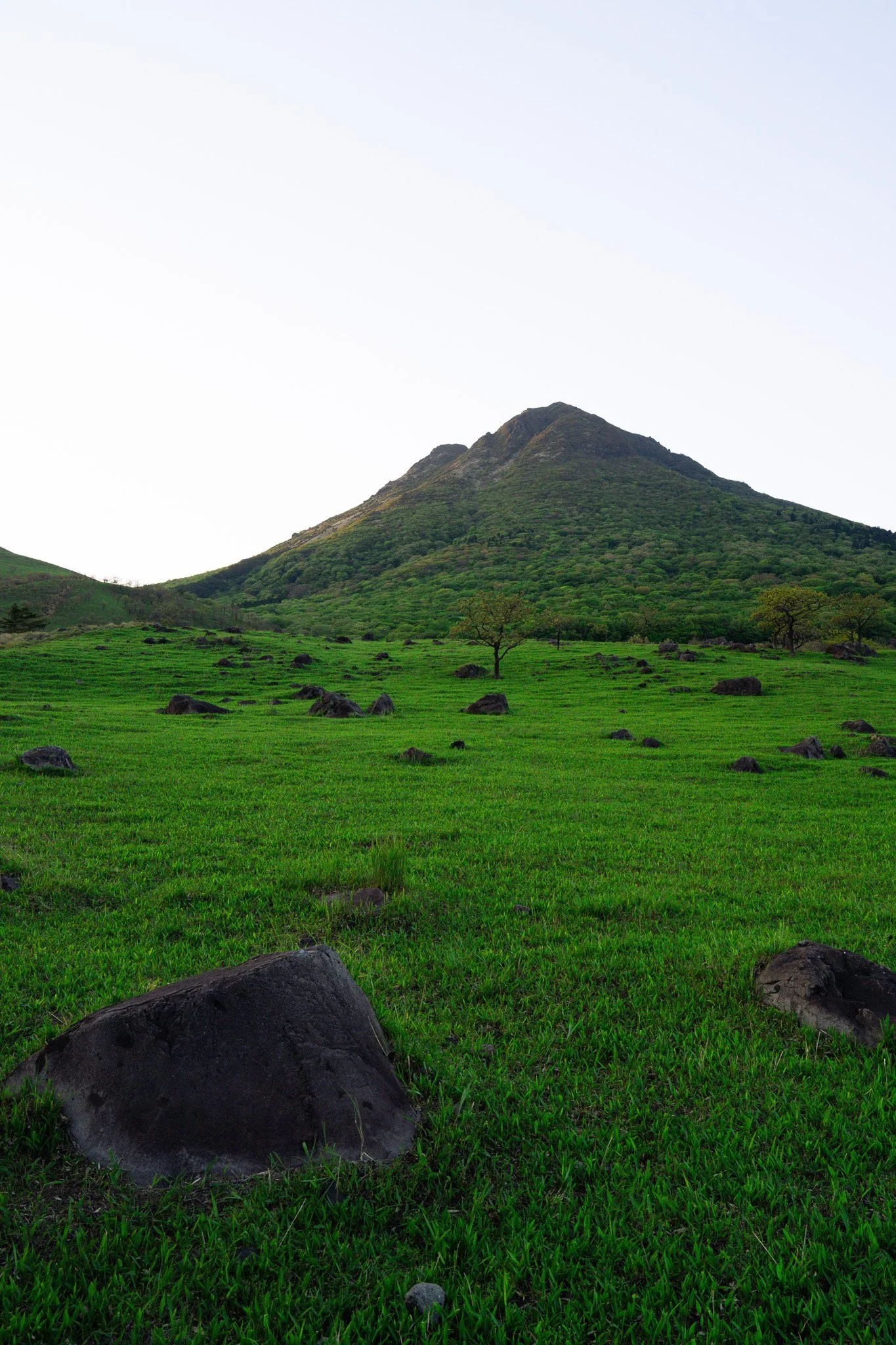
We followed a narrow footpath across the hills. The ground beneath us was dry and firm, crunching softly with each step. I found myself noticing the sound more than expected — a small, repeating texture that stayed with me even after the moment had passed.
I never quite figured out what caused it — the soil, the grass, or something else entirely — but the sound lingered in memory, oddly distinct for something so simple.
It became one of those rare walks that feels both ordinary and completely unforgettable at the same time.
As we drove back into Fukuoka, one thought quietly settled over all of us.
Dinner.
Unlike the previous night, there was no plan, no reservation, no shared agreement about what or where we would eat. It was simply another unmarked decision waiting to be made.
And in the days that followed, this would become a familiar rhythm of the trip — this unplanned search for food, the quiet uncertainty of where the day would end. It revealed how something as ordinary as dinner, something that should feel simple and inevitable, could easily reshape the flow of an entire itinerary.
With no immediate idea from the group, I suggested a yakitori restaurant I had seen recommended by a YouTuber. Coincidentally, it was located not far from where we were staying. It felt, in that moment, like a small stroke of timing — almost like the day was offering us a direction.
I was quietly looking forward to it.
The image in my mind was clear: skewers of chicken grilled in front of us, smoke rising gently, a small intimate counter where food was prepared within arm’s reach. Something halfway between Korean barbecue in Melbourne and the quiet counter-style restaurants we had already begun to encounter in Japan.
I imagined a place with the same understated atmosphere as the ramen shop the night before — small, warm, and focused entirely on the food and the people in front of it.
But when we arrived, reality shifted the expectation immediately.
The restaurant was fully booked.
There were no seats available for the night.
Just like that, the plan dissolved.
What followed was a familiar pattern we were now beginning to recognise — wandering the streets, phones in hand, searching, checking, re-checking, and quietly recalibrating what dinner might become. At one point, we even joked about simply returning to a convenience store and eating in our rooms together.
Our hotel, unfortunately, had no communal space where we could sit as a group. And yet, none of us really wanted to split up. Not that night. It was Mother’s Day, and there was an unspoken sense that dinner should still be shared, even if everything else had fallen apart around it.
After some searching, we eventually found a restaurant that could accommodate all six of us.
It served grilled chicken, though not quite in the form we had originally imagined. We were seated on tatami mats — our first experience of sitting in a traditional Japanese dining setting.
Different from what we had expected, but quietly fitting in its own way.
As we looked through the menu, translated line by line, we found ourselves once again in that familiar space of uncertainty — lost somewhere between language and assumption.
One item caught our attention: chicken skin.
I personally did not mind the idea of grilled or fried chicken skin, but within the group, there was hesitation. So we made a clear request to the waiter — no chicken skin, please.
For a brief moment, his expression shifted in a way we could not quite read. Polite, attentive, but slightly unclear in meaning. We wondered if we had said something odd, or perhaps even mildly offensive. But he simply nodded and assured us that what we had ordered contained no skin.
We accepted that explanation and continued with the meal.
What arrived was, in fact, delicious. And somewhere between conversation and eating, we began to realise we were probably eating parts of the chicken we had not consciously thought about — though no one said it out loud at first.
Curiosity eventually took over, and someone in the group checked the menu translation again. This time more carefully.
And slowly, the misunderstanding became clear.
The translation had not been wrong.
Chicken skin — grilled and seasoned — was actually a signature dish in Fukuoka, known locally as torikawa.
There was a brief silence as the realisation settled in.
We had, quite literally, asked to remove the very thing the restaurant was known for.
After a moment of hesitation — and a certain amount of shared embarrassment — we decided we should try it properly. Even those who had initially refused were now curious.
So we ordered a small portion.
There was a quiet awkwardness in the request, as if we were correcting ourselves too late. The waiter, if he noticed the change of mind, gave no obvious reaction. Or perhaps he understood perfectly and simply chose not to comment.
We, on the other hand, stayed unusually quiet.
When the dishes arrived, they looked almost deceptively ordinary — simple skewers, unassuming at first glance. There was nothing immediately that suggested what we had been debating earlier.
No obvious resemblance to what we had imagined as “chicken skin.”
But the moment we tried it, that assumption dissolved completely.
The texture and flavour were unexpectedly intoxicating. Crisp on the outside, slightly chewy within, and yet remarkably light. There was a juiciness that remained without the familiar oily heaviness I had always associated with grilled or fried chicken skin.
In fact, there was no trace of that greasiness at all — only depth of flavour, carefully built through heat and technique.
It was difficult to describe properly. It was one of those dishes that resists explanation and instead demands experience — something that only makes sense once it is in your mouth, moment by moment.
What stayed with me most was not just the taste itself, but the absence of what I expected to find. That absence felt intentional, almost like a quiet demonstration of how differently something familiar can be prepared when handled with care.
It was a reminder of attention — of technique refined to the point where expectation no longer applies.
And in the end, everyone enjoyed it, though not equally.
Some leaned into it more than others, discovering something unexpected in each bite, while a few remained more reserved. But that felt natural. After all, even within a shared meal, our tastes were never identical — only shared for a moment at the same table.
Unwilling for the night to end, we found ourselves walking toward a nearby convenience store in search of something small — a dessert, a final note to close the day.
Within a short walking distance, there were three different stores. It was something we would come to recognise quickly in Japan — the quiet presence of convenience stores almost everywhere, offering light, warmth, and familiarity no matter where you stayed. Their shelves held far more than necessity; they seemed to anticipate comfort.
We each chose something different, as expected, and made our way back to the hotel.
With no communal space available, we gathered instead in our room. Sitting around with small desserts and drinks, the day slowly loosened its grip on us.
It felt fitting in its own understated way — the end of a long second day in Japan, not marked by anything grand, but by something simple and shared.
A meal. A dessert. Conversation that drifted without direction.
And in that quiet space, the reason for travelling together felt less like something explained, and more like something quietly understood.