Between Stations - Part 1: The Journey Before the Journey
Travelling in a group of six was an entirely different rhythm from the solo journeys I had grown used to, or even the quiet simplicity of travelling as two. Every decision seemed to carry layers of consideration, hesitation, and competing opinions. Even before the trip had properly begun, I could already feel the shift. We arrived at the airport more than three hours before departure, far earlier than I would ever have planned for myself. Left to my own devices, I would have timed it differently, moving with the calm confidence that solo travel had taught me. But this trip was no longer shaped by one mind alone. The group wanted to leave early, and so I agreed, quietly surrendering to the unspoken compromise that seemed destined to define the journey ahead.
The reward of arriving early in Melbourne Airport was time — generous, unhurried time. We lingered at the gate without stress, comforted by the illusion that careful planning could protect a journey from chaos. That feeling vanished somewhere above the South China Sea.
Our flight out of Melbourne was slightly delayed, shaving precious minutes off an already tight connection in Hong Kong. By the time we landed, we knew there was no longer room for hesitation. The moment the aircraft doors opened, we moved quickly with the restless urgency shared by every passenger chasing a connecting flight.
From previous trips, I remembered that transiting through Hong Kong International Airport was never as simple as walking from one gate to another. There was always the checkpoint — passports scanned, bags inspected — a process that could take minutes or feel endless depending on how many flights had landed at once.
Sure enough, airport staff were already waiting outside the gate, holding signs and calling out connecting destinations. They gathered passengers from our flight and guided them briskly through the terminal. But not us. No one called our flight. No one waved us forward. We were left standing in the stream of moving people, disoriented and suddenly uncertain.
We searched for the transfer desks, only to discover there were far too many of them. Twice we joined the wrong queue. Twice we were redirected somewhere else. Each mistake quietly consumed more of the little time we had left.
Still, we did not panic. Not yet.
We reassured ourselves with the logic of international travel: this was a connecting flight, booked on the same ticket. The delay had not been our fault. Surely they would wait for us.
We were wrong.
Five of us cleared the checkpoint without issue. One did not. In that instant, a decision was made — four of us would surge ahead while one stayed behind. Then, in the chaos of navigating the terminal, the four of us split again, unintentionally becoming two groups of two.
What made it worse was the silence.
None of us had mobile service. In the rush, there had been no time to connect to the airport Wi-Fi. Once separated, we had no way of finding one another.
I remembered enough about the airport layout to keep moving. The gates stretched along a vast corridor, the numbers either rising or falling depending on which direction you faced. Ours was Gate 19. We had started somewhere in the sixties. I knew it would be a long walk, but at least it was straightforward.
Then the final boarding call echoed through the terminal.
That was the moment urgency became panic.
We broke into a sprint.
Halfway through the run, nature intervened with brutal timing. I had to stop briefly and told my partner to go ahead without me. Just like that, we too became separated.
I ran alone, eyes fixed on the gate numbers counting downward. 52. 47. 41.
I was certain I was heading the right way. As I sprinted through the corridor, I found myself repeatedly asking people standing still on the travelators or strolling leisurely ahead of me to excuse me and make way. The familiar terminal I had passed through over the past two years suddenly felt strangely different — suspended somewhere between recognition and unfamiliarity.
In that moment, I realised how fortunate we were not to be dragging luggage behind us. On this leg of the journey, all we carried were light backpacks. Sending our larger bags through had turned out to be one of the best decisions we had made.
Then, barely ten metres from where I expected to see Gate 19, the sign above me read: Gate 12.
I stopped dead.
Where was Gate 19?
I had assumed the numbering would continue in a simple, logical sequence. I had walked this corridor before, or at least I thought I had. In that moment, the familiarity of the airport felt unreliable, almost untrustworthy.
Had I somehow passed it? Missed it entirely? That seemed impossible.
With no better option, I kept moving forward, hoping exhaustion and panic were simply distorting my sense of direction. Then, a few metres later, I finally saw it: an arrow pointing sharply to the right.
Gates 13–19.
Relief flooded through me so suddenly it almost weakened my legs.
I had not gone the wrong way after all.
But the relief lasted only seconds.
I turned the corner expecting a short side corridor — six gates at most. Instead, another impossibly long passage stretched before me. I ran harder, the sound of my footsteps echoing through the enclosed space. At the end stood an escalator leading upward. No choice. Up I went.
The upper level revealed yet another endless corridor, enclosed like a bridge suspended above the terminal below. At its end, another escalator carried me back down.
By the time I reached the gate, it was empty.
No passengers. No queue. Only a ground staff member and one person from our group remained. The staff motioned urgently for me to hurry forward while scanning my passport and boarding pass.
Then suddenly, I was through.
Inside the plane.
Breathless, sweating, heart hammering against my ribs.
I looked up and saw my partner already seated.
Relief washed over me. The four of us had made it.
But where were the other two?
A few minutes later, just as the cabin crew began preparing the doors for departure, the remaining two finally appeared at the aircraft entrance.
The moment they stepped onto the plane, a quiet wave of relief swept through our group. Tension that had been tightening around us since landing in Hong Kong slowly released. We were all here. Somehow, all six of us had made it.
Only later did we learn how close it had been.
The airport staff had already been preparing to remove their luggage from the aircraft cargo hold — the final step before declaring passengers as no-shows. Had that happened, the flight would have left without them.
But in those final frantic moments, there had been pleading. Explanations. Repeated assurances that they were running through the terminal and would arrive any second. And, perhaps out of mercy or simple human understanding, the staff decided to wait.
That decision made all the difference.
As the aircraft finally pushed back from the gate, I sat there quietly absorbing the irony of it all. In Melbourne, arriving excessively early had felt unnecessary, almost inconvenient. Yet only hours later, in the sprawling maze of Hong Kong transit corridors, time had become the one thing we no longer possessed.
It was also my first real glimpse into how differently a journey unfolds when travelling as a group. Solo travel had always taught me self-reliance, instinct, and freedom of movement. But travelling with six people introduced another element entirely — shared responsibility. Every delay, wrong turn, and decision rippled outward, affecting everyone else. In the end, none of us arrived in Fukuoka alone. We arrived together, exhausted and scattered, carrying the strange relief that only comes after narrowly avoiding disaster.
As we disembarked from the plane, we noticed several Japan Airlines staff standing quietly along the side of the aerobridge, each holding makeshift cardboard signs with handwritten names. On one of them was the name of a member of our group.
Confused and curious, we approached them and explained that she had already passed through.
The staff member looked relieved to find us. She explained that one piece of baggage belonging to our group had been left behind in Hong Kong. We would need to arrange the delivery details with the staff at the baggage service counter inside the arrivals hall.
It felt as though the streak of bad luck that had begun during transit had followed us all the way to Japan.
Instead of the relief and excitement we had imagined upon arriving in Fukuoka, we found ourselves lingering inside the airport for another few hours, exhausted and slightly defeated, filling out forms and arranging for the missing luggage to be delivered to our hotel. By then, the adrenaline that had carried us through Hong Kong had long faded, leaving only fatigue behind.
Yet in a strange way, it also felt like an oddly fitting conclusion to the journey. The trip had begun not with smooth efficiency or graceful arrival, but with confusion, separation, delays, and small acts of improvisation. Travelling as a group, I was beginning to realise, meant that even a single misplaced suitcase could reshape the experience for everyone else.
Eventually, we finally stepped out of the airport and into the bright sunny afternoon of Fukuoka, carrying with us the exhaustion of a journey that already felt far longer than it should have been.
The shuttle bus toward the domestic terminal moved quietly along the airport roads, and something about the surrounding landscape unexpectedly reminded me of Brisbane Airport. Perhaps it was the openness of the roads, the low industrial edges of the airport precinct, or simply the strange emotional familiarity that airports sometimes carry. For a brief moment, I was pulled back into another period of life when airports had begun to feel almost like a second home — the repeated flights between Brisbane and Melbourne during school holidays, the departures for overseas trips, the strange rhythm of arrivals and goodbyes that once shaped our years.
After the chaos of Hong Kong, the train ride into the city felt almost unnaturally calm. No running. No announcements echoing through corridors. No fear of being left behind. Just the soft mechanical hum of the carriage gliding smoothly forward while passengers sat quietly around us.
By then, fatigue had settled over the group. The earlier panic had dissolved into silence, the kind that often follows shared stress once everyone finally knows they are safe.
Outside the station, we joined the familiar procession that exists in almost every Japanese city — travellers dragging suitcases neatly along the footpaths toward hotels tucked between office buildings, restaurants, and convenience stores.
And then came the sight that always signals arrival in Japan for me: the convenience stores.
The bright familiar glow drew us in almost instinctively. After the long day we had endured, there was something comforting about standing quietly among shelves of bottled tea, rice balls, sandwiches, and snacks, making our first small purchases in Japan. Nothing about the moment was remarkable, yet it carried the quiet satisfaction of finally arriving — not just physically, but emotionally. The frantic transit through Hong Kong was behind us now. At last, it felt like the journey could finally begin.
What excited me most about this trip was the opportunity to explore Kyushu — a part of Japan I had never visited before. Unlike my previous trips, this journey would unfold almost entirely by car, another experience that felt unfamiliar to me. Until then, my understanding of Japan had always been shaped by train lines, station platforms, and the quiet choreography of public transport moving with impossible precision.
People often spoke about driving in Japan with surprising affection — the orderly roads, the discipline of the drivers, the freedom to reach places untouched by train routes. There was something deeply appealing about that idea to me. A slower, more flexible way of travelling. The possibility of stopping not because an itinerary demanded it, but simply because something along the road caught your attention.
Part of me was curious to observe what driving culture in Japan would actually feel like from behind the wheel rather than from the passenger seat of a train.
And so, somewhat unexpectedly, I became the designated backup driver for the trip.
The role carried a quiet responsibility. Although I had driven extensively in Australia, the thought of navigating unfamiliar roads, Japanese traffic rules, narrow streets, and signboards written mostly in kanji still lingered somewhere at the back of my mind. Yet beneath that nervousness was excitement — the kind that only comes when a journey begins to move beyond the familiar patterns of how you usually travel.
We had planned to spend most of our time driving around Kyushu, moving from one part of the island to another. The only time we had intentionally set aside to properly explore Fukuoka was on the day of our arrival. But with the delays and chaos that had unfolded since Melbourne, much of that precious time had quietly disappeared inside airports, transit corridors, and baggage counters.
After finally checking into the hotel and freshening up, we quickly regrouped and headed back out into the city. Guided by Google Maps, we discovered another subway station closer to our hotel and made our way toward Canal City Hakata — the famous shopping complex built around an actual canal flowing through its centre.
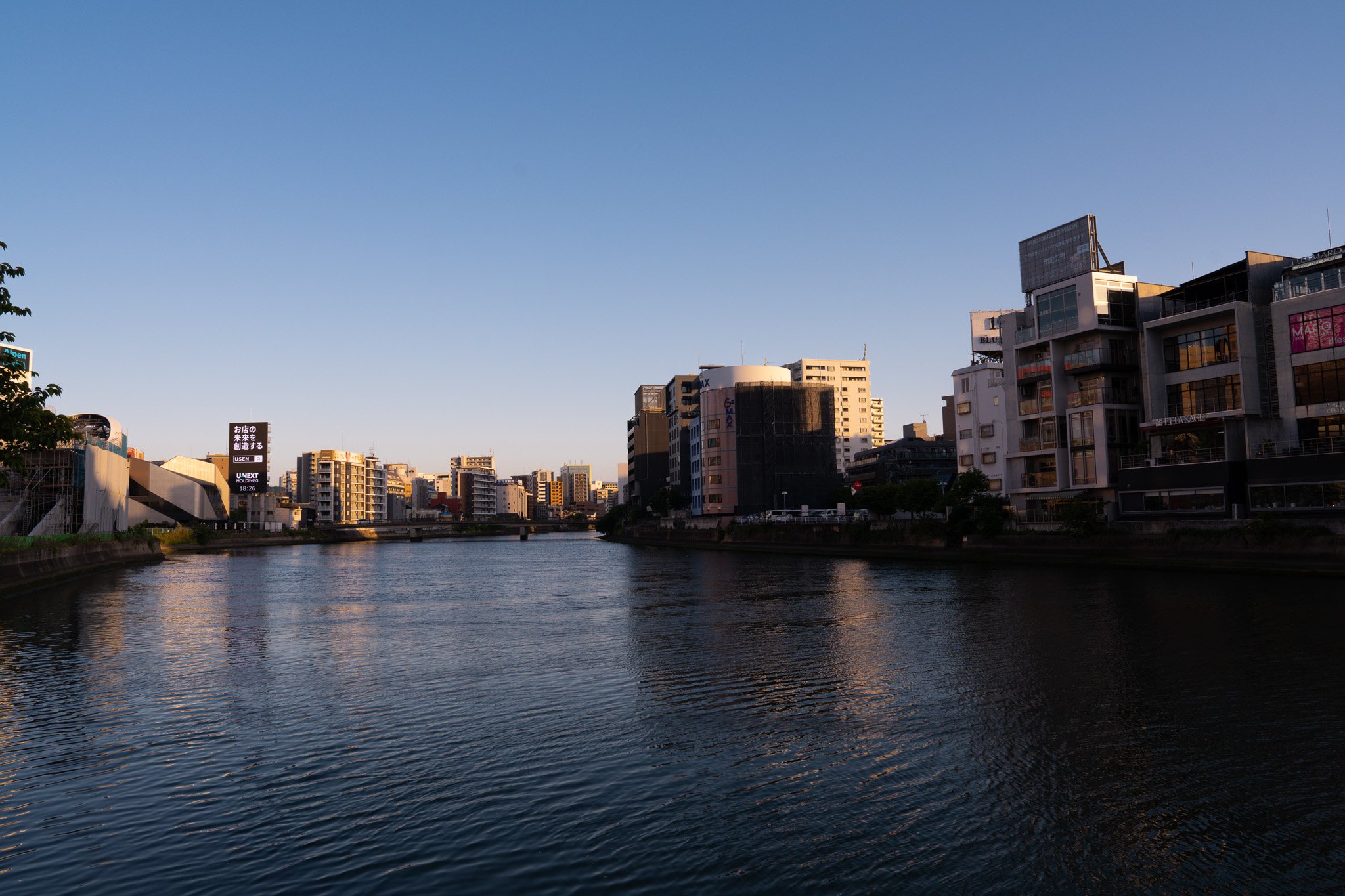
Yet strangely, it was not the shopping mall itself that captured my attention first.
As we walked toward Canal City, we passed through a street slowly transforming for the evening. Along both sides, small food carts were being rolled into position one by one. Vendors busied themselves arranging stools, unpacking ingredients, preparing broth, wiping counters, and setting up makeshift kitchens beneath the fading light. The entire street felt as though it was waking up for the night ahead.
I later learned these were the famous yatai stalls of Fukuoka, but at that moment, I simply stood there fascinated. I had never seen anything quite like it before.
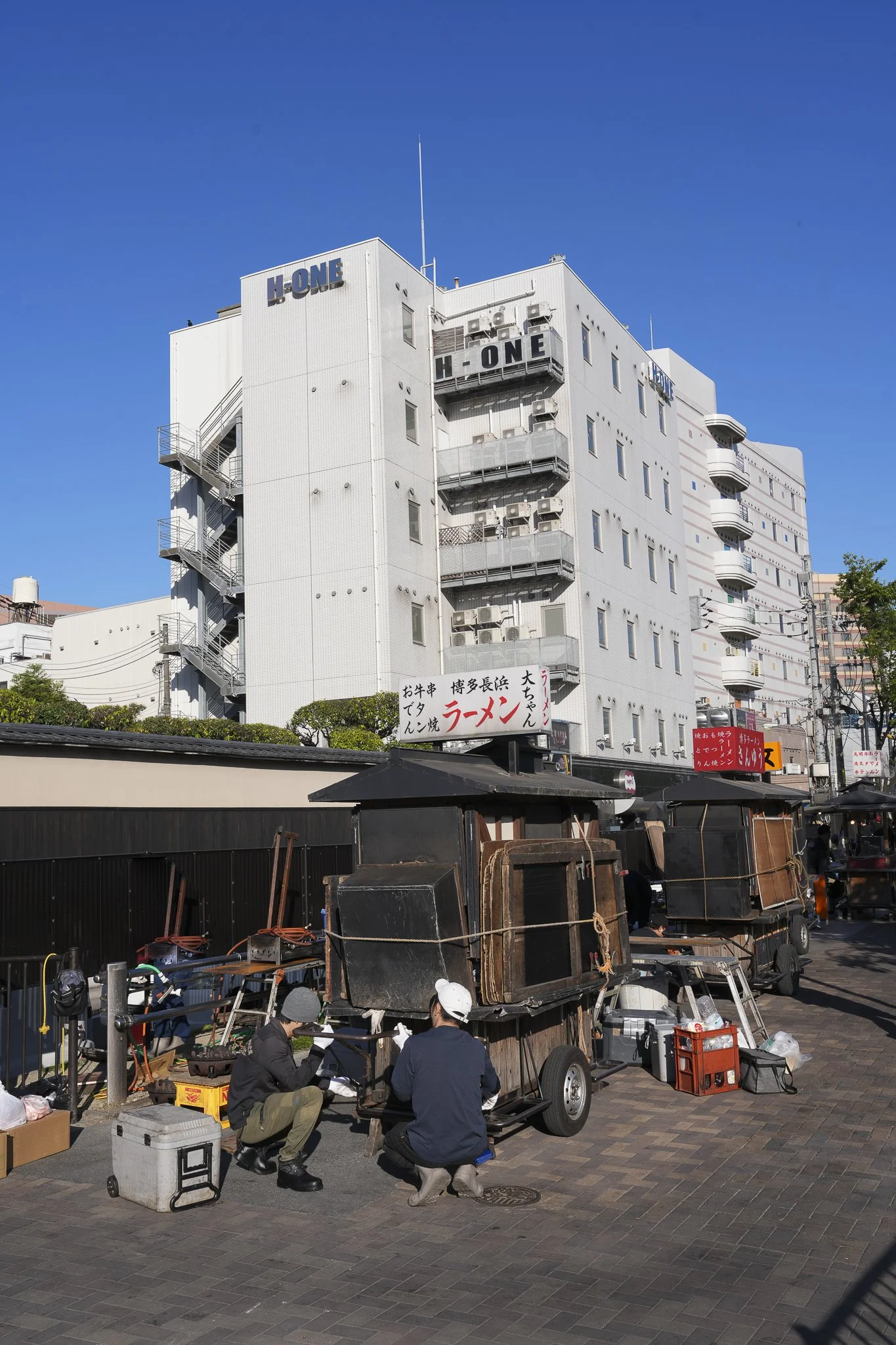
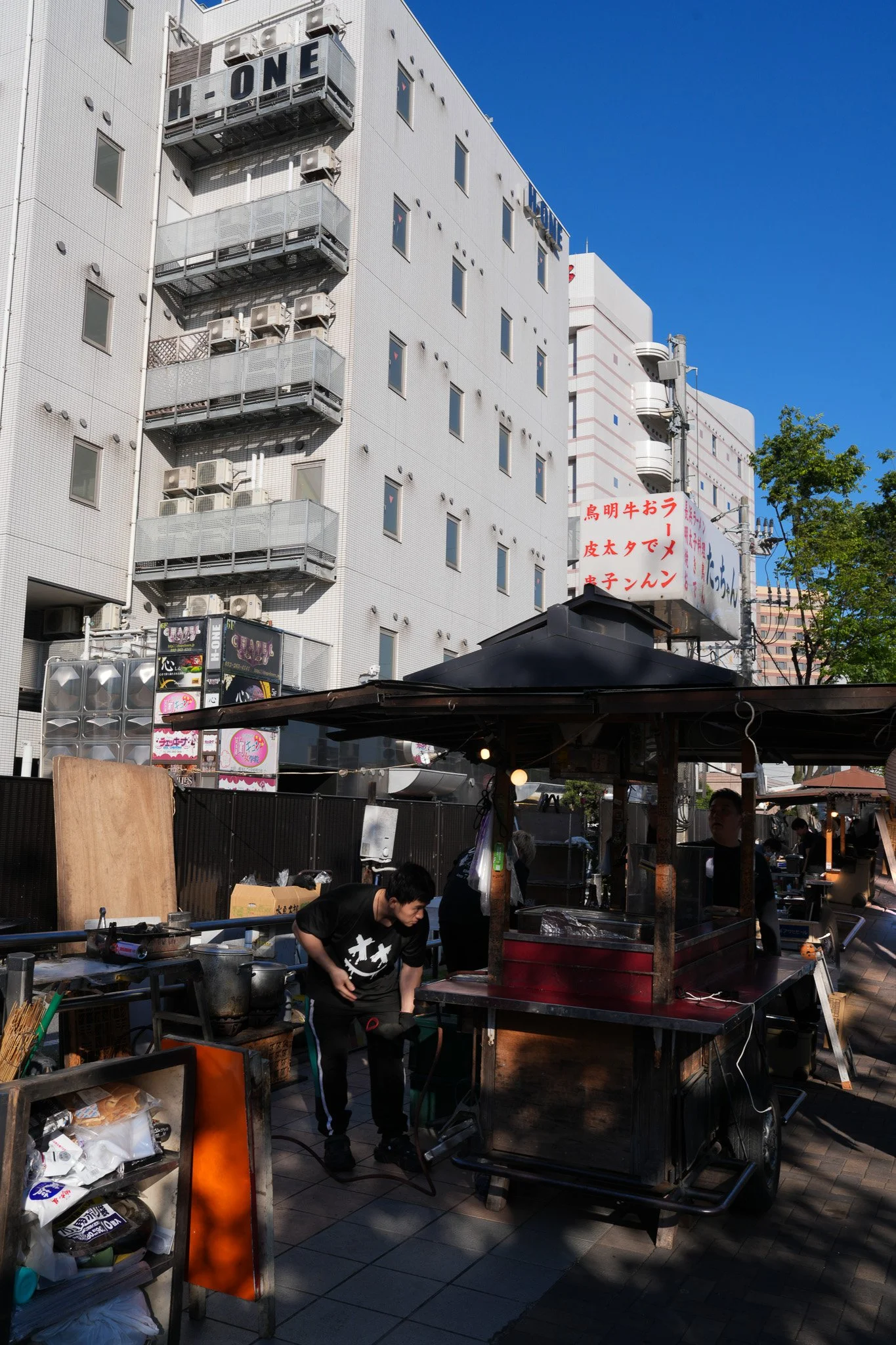
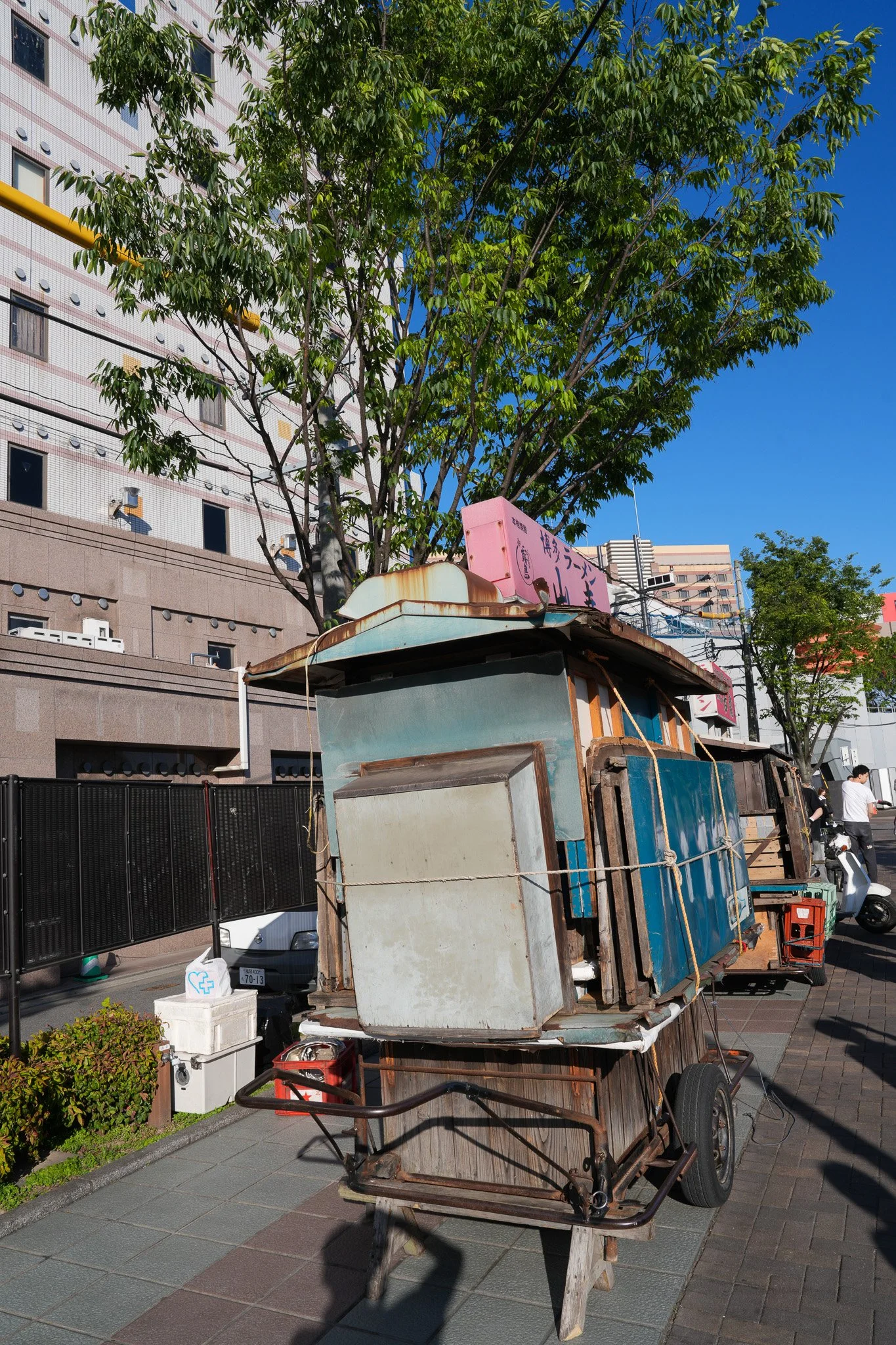
Inside Canal City itself, we wandered more than we shopped. Exhaustion still clung heavily to us after the journey. Our bodies had arrived in Japan, but part of our minds still felt stranded somewhere in the endless corridors of Hong Kong Airport. So we drifted quietly through the shops, mostly window shopping, conserving what little energy remained.
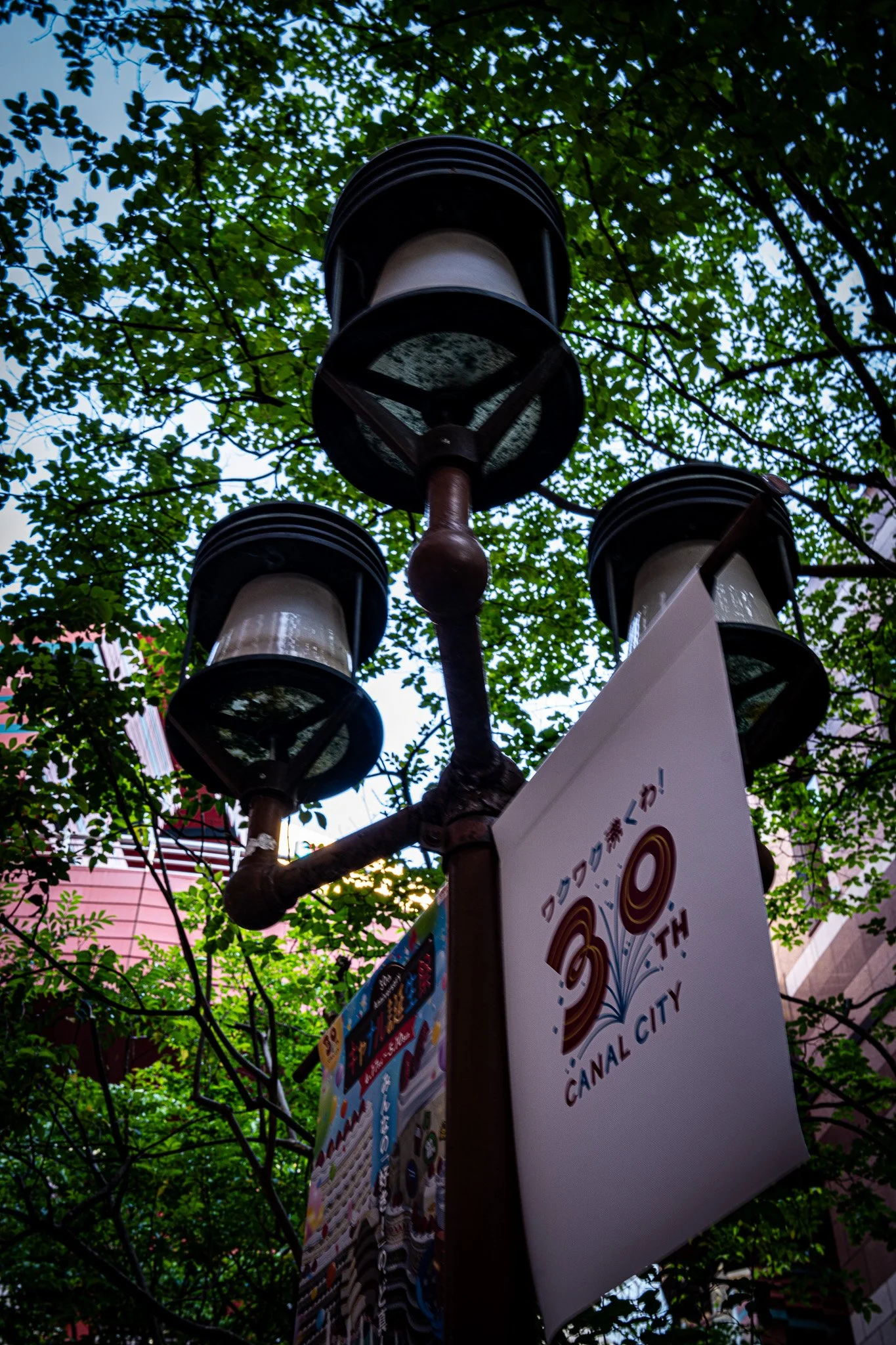
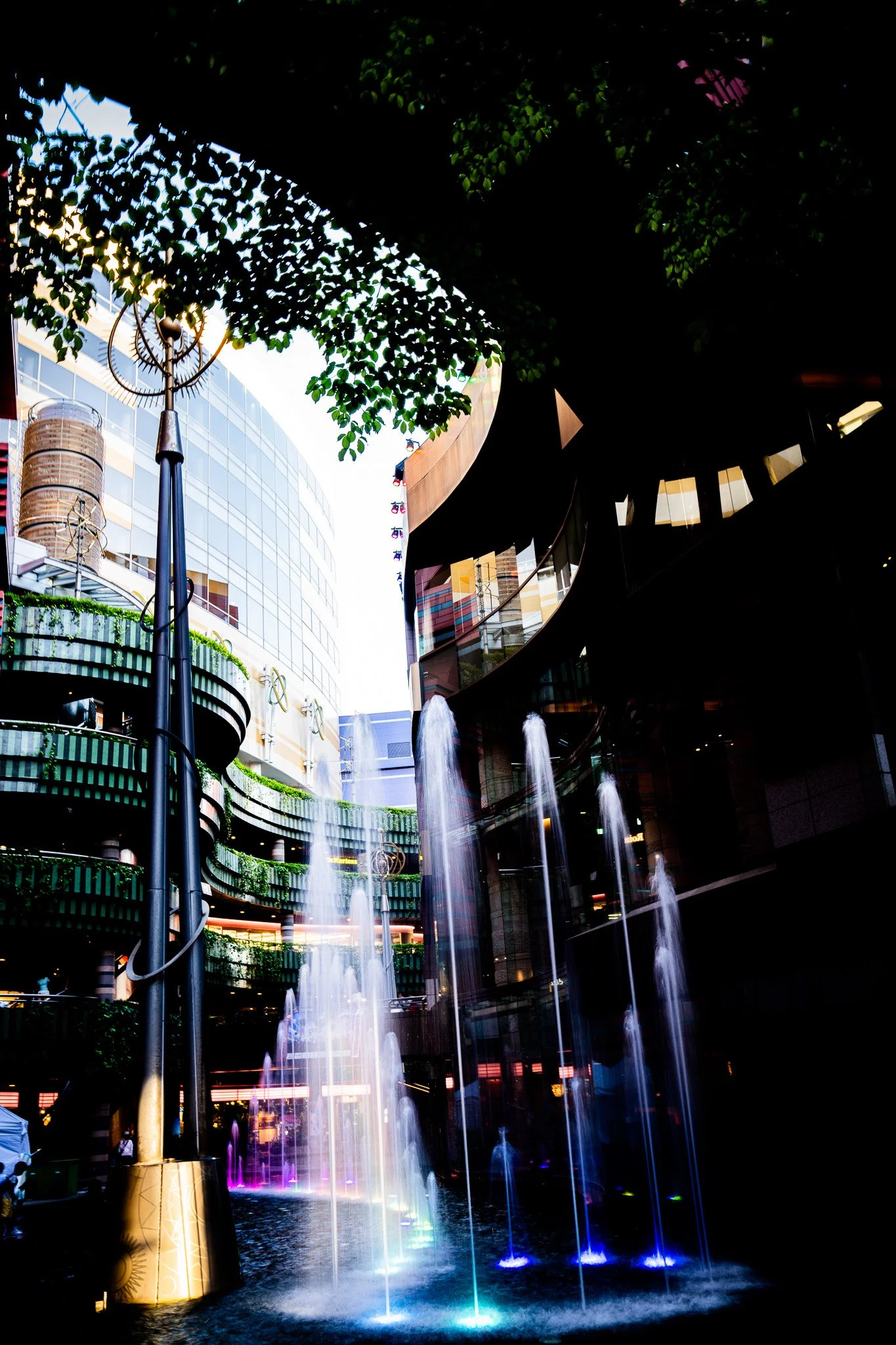
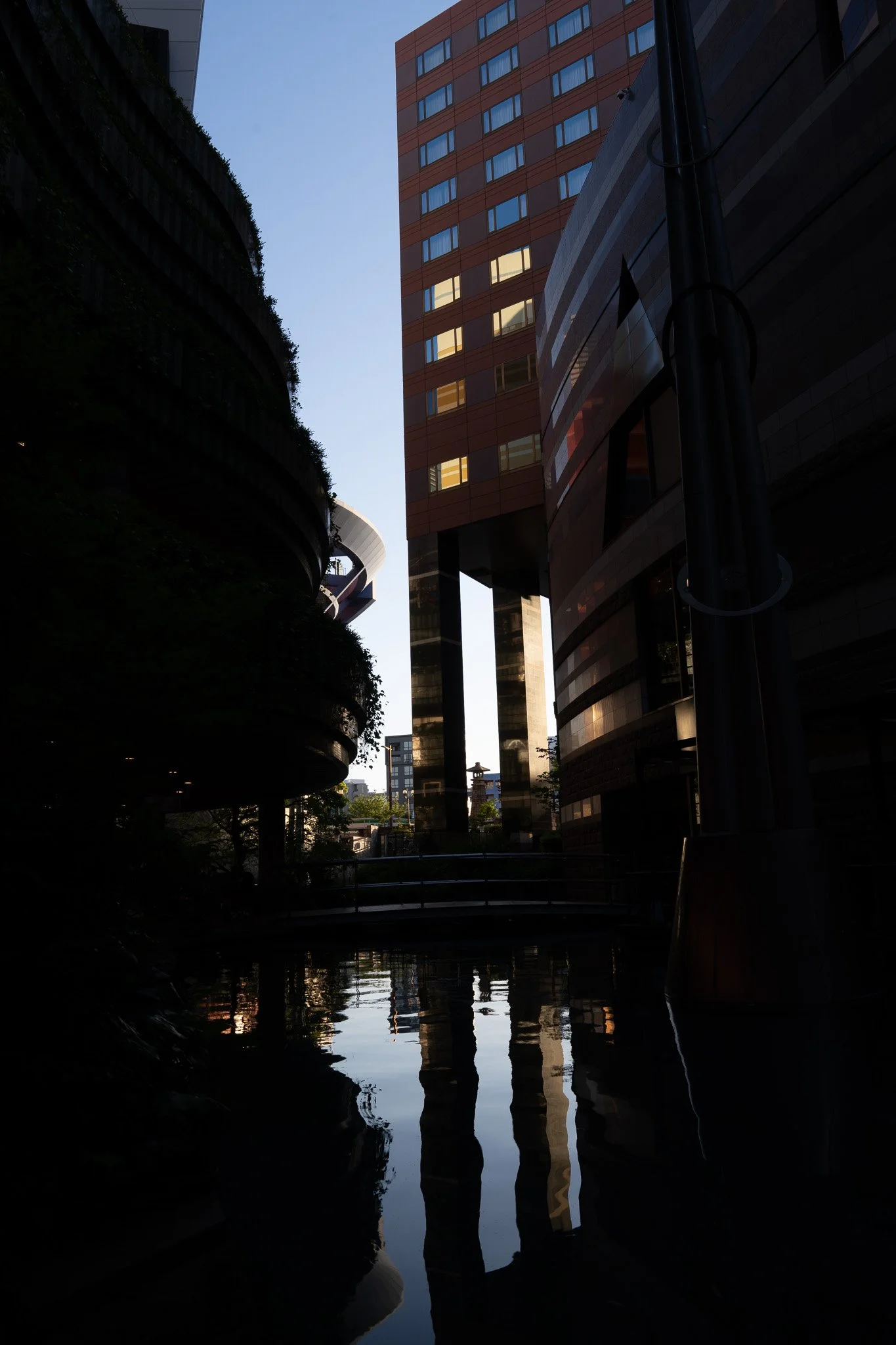
But when we returned to the street later that evening, everything had changed.
The once quiet preparation had transformed into life.
The narrow street now glowed beneath warm lights and rising steam. Conversations overlapped in the air while people leaned shoulder to shoulder around the tiny food carts, eating, drinking, laughing, and talking as though the world beyond that street no longer existed.
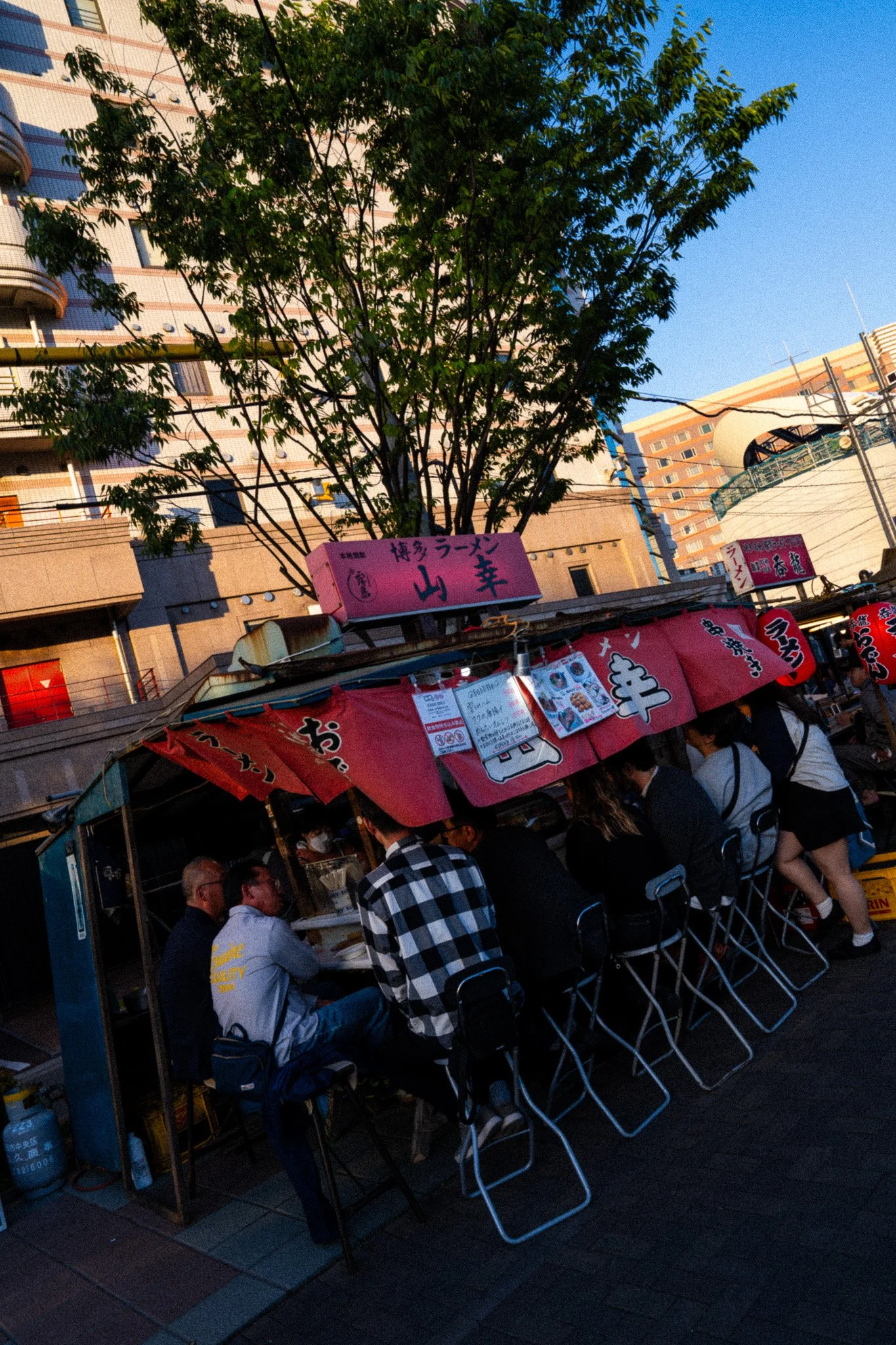
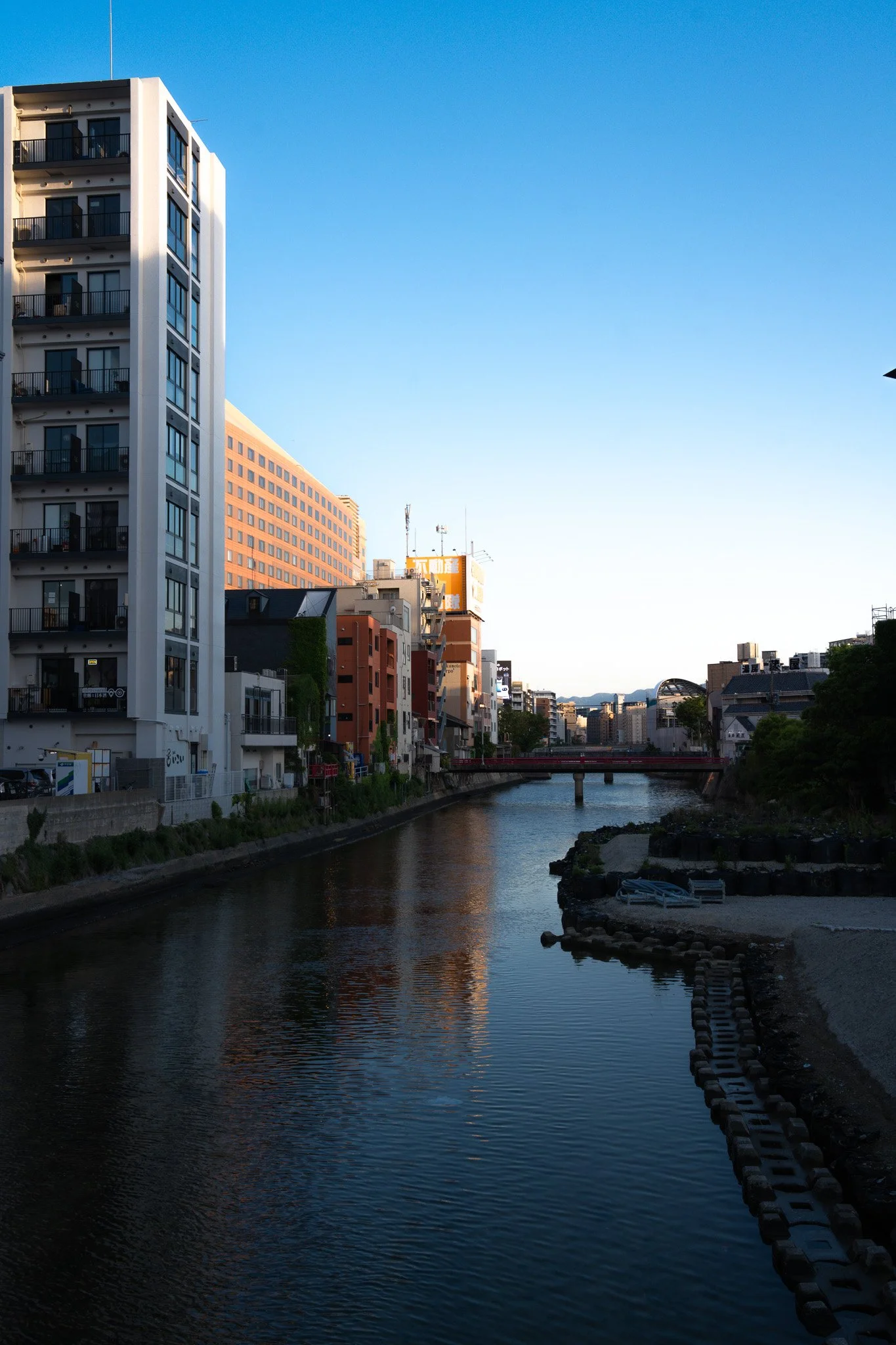
Something about the scene stirred an old memory inside me.
The yatai carts reminded me unexpectedly of my teenage years in Indonesia. After long weekends spent practising table tennis, a group of us would almost ritualistically gather around humble baso carts for bowls of steaming meatball soup. The setup felt strangely similar — the vendor working behind the cart, the steaming broth bubbling in the centre, customers gathered closely around the other side. Nothing about those meals had been extravagant. Yet somehow they became moments that stayed.
We would sit there for hours sometimes, eating slowly, talking about trivial things that felt important only because we were young enough to believe they were.
Standing in Fukuoka decades later, watching strangers gathered around these food carts, I realised it was never only about the food.
It was about the atmosphere of shared presence.
For a brief moment, people seemed to set aside loneliness, stress, responsibility, or whatever private burdens they carried through the day. They simply existed together within the warmth of conversation, steam, light, and food.
It was such a simple thing, yet it felt deeply alive.
And perhaps that was why the scene affected me so much. Somewhere along the way, this kind of communal spontaneity had become increasingly rare in Australia, or perhaps simply rarer in adulthood itself.
We were tempted to stop and join the crowd after slowly walking past cart after cart, studying the dishes being prepared before us. But eventually we resisted.
For tonight, we already had another destination in mind.
Tonight was reserved for ramen — specifically the dish Fukuoka was famous for: Hakata ramen.
And there was one particular restaurant we had come looking for.
We had expected a long queue by the time we arrived. Several YouTubers we had watched beforehand had warned that during dinner hours, waiting thirty minutes to an hour for a bowl of ramen was entirely normal.
Yet as we wandered along the street searching for the restaurant, uncertainty began to creep in. Unable to read Japanese properly, we mistakenly stopped in front of several similar-looking ramen shops. What confused us most was the absence of queues. Had we come to the wrong place? Or perhaps arrived too early?
Eventually, after several hesitant checks against Google Maps, we found it.
Like many restaurants in Japan, the process followed a quiet system that at first felt unfamiliar yet strangely efficient. Orders were placed through a vending machine near the entrance. You selected your dishes, inserted your money, and received small printed tickets to hand to the staff once seated.
Inside, the restaurant was small and tightly arranged, the kind of intimate setup I would become deeply familiar with over the following two weeks across Japan. There was very little separation between the diners and the kitchen. From our seats, we could watch almost every movement behind the counter — the careful assembly of bowls, the timing of noodles, the steam rising endlessly from the broth, the quiet rhythm shared between the staff as they worked.
And somehow, watching the food being prepared changed the experience of eating it.
You became aware that the bowl placed before you was not simply produced, but assembled through repetition, attention, and care. Every movement appeared deliberate. Nothing felt rushed despite the constant flow of customers entering and leaving.
It made me appreciate the meal differently.
Not simply as food to satisfy hunger, but as something shaped by craft and human effort.
Perhaps that was why it felt so different from eating fast food. In fast food restaurants, the preparation often disappears from view, hidden behind walls and machinery. Here, the act of making the ramen became part of the experience itself. Watching it unfold somehow slowed the meal down, making me more conscious of every mouthful, every flavour, every small detail placed into the bowl before me.
Eventually, exhaustion caught up with us.
By the time we finished our bowls of ramen — every bit as good, perhaps even better, than what others had enthusiastically described — the long day was finally beginning to settle heavily into our bodies. The adrenaline of missed connections, endless corridors, misplaced luggage, and unfamiliar stations had slowly faded into fatigue.
So instead of lingering longer in the city, we decided to call it a night.
Tomorrow, the journey would properly begin.
The next several days would be spent driving across Kyushu — long stretches of road, unfamiliar towns, coastal routes, mountain landscapes, and places I had only seen previously through photographs and videos online. More than anything else during those two weeks in Japan, this was the part of the trip I had been quietly looking forward to the most.
Not just the destinations themselves, but the feeling of movement between them.