Between Plans & Places: Two Weeks Across Japan - When the Journey Grew Quieter
The day started like yesterday, with breakfast together. The kind of slow beginning where nothing is rushed, as if the day is still deciding what it wants to become.
Today’s itinerary was different. We stuck to the original plan—no additions, no detours. Takachiho Gorge was the destination. It was a long drive, estimated at eight to nine hours return. But once we saw the photos, that hesitation disappeared. It became one of those decisions made quickly, almost collectively, as if we all already knew we were going. Three to four hours no longer felt unusual. In Australia, that distance is just part of getting somewhere worth going.
As we left Fukuoka, I started noticing something small, almost strange. Even when heading in different directions, the highway exits seemed to repeat themselves. I had expected that going a different direction would mean a different route from the start. But instead, everything seemed to funnel into the same stretches of road before splitting off later.
The group driver pointed out the speed limits—60, then 80, then up to 100 km/h. He was driving at the limit, steady and careful. But cars kept passing us. One after another. It made him quietly question whether he was going too slowly.
Over the next few days, we started to notice the pattern more clearly. On many stretches of highway, traffic simply moved faster than the posted limit. At 100 km/h, it wasn’t unusual to see cars doing 120, sometimes 140. Even when we increased our speed to 120, there were still cars overtaking us, pulling away quickly into the distance.
We weren’t sure what to make of it. Was this just the norm on Japanese highways, or were we only seeing a certain flow of traffic?
In Australia, it’s different. The speed limit feels like a boundary, not a reference point. Most people stay within it, except for brief overtaking. That difference stood out to me. It’s something I realised I’d need to understand better if I plan to drive in Japan again.
For now, it just became part of the road—another small layer of adjustment, another quiet observation from the passenger seat as the landscape kept moving past us.
Unbeknown to us at first, we had entered Takachiho from a different entrance. Not the wrong one, just one further away from the main attraction of the gorge.
After parking the car, we were immediately greeted by tall, long bridges stretching across the gorge. They stood majestically above the landscape, becoming part of what was already a beautiful scene.
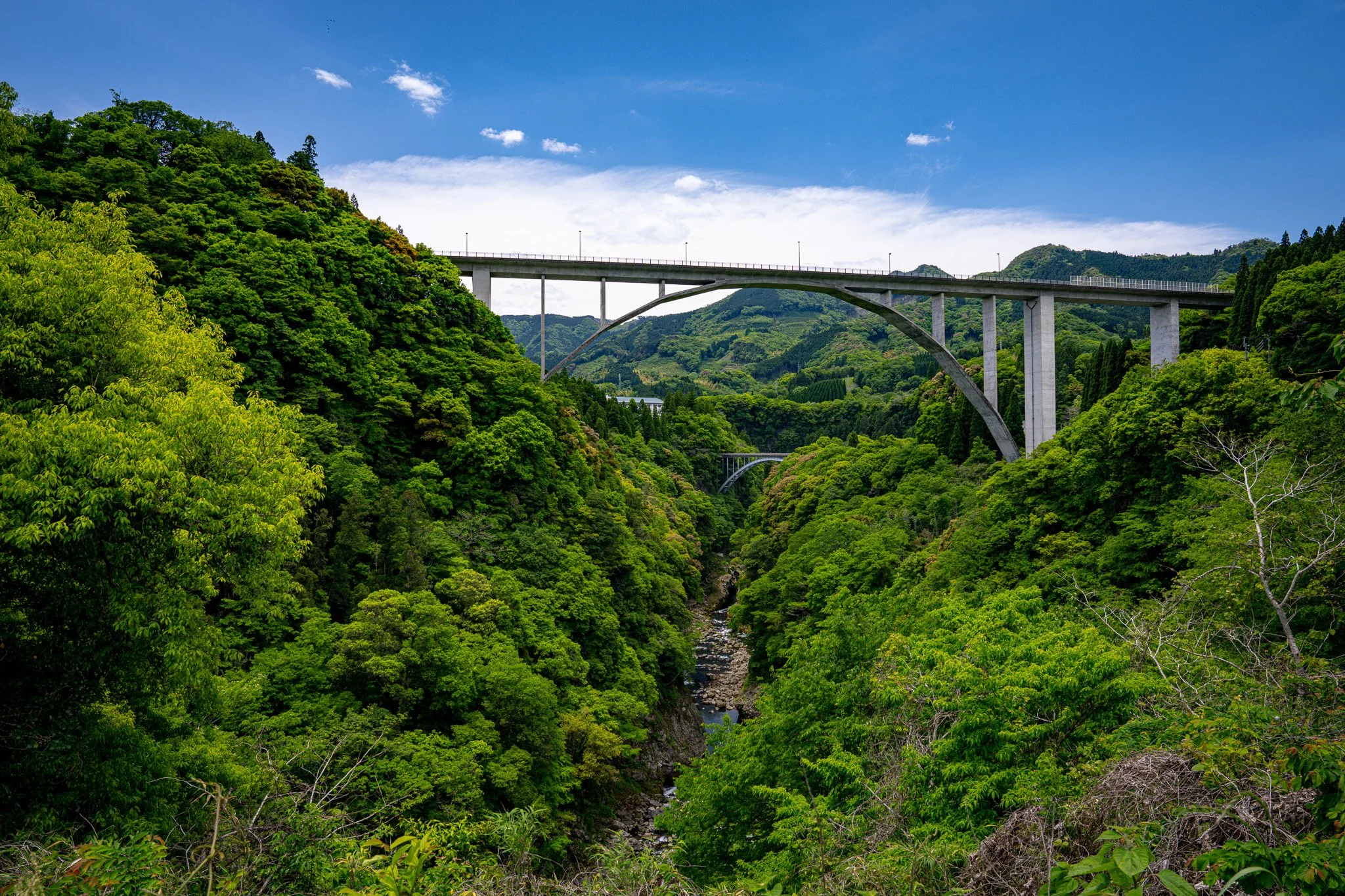
From where we parked, it was about a thirty-minute walk to the gorge entrance. We had wanted to do the boating, but tickets were already sold out for the day. Not too disappointed, we continued our walk down instead.
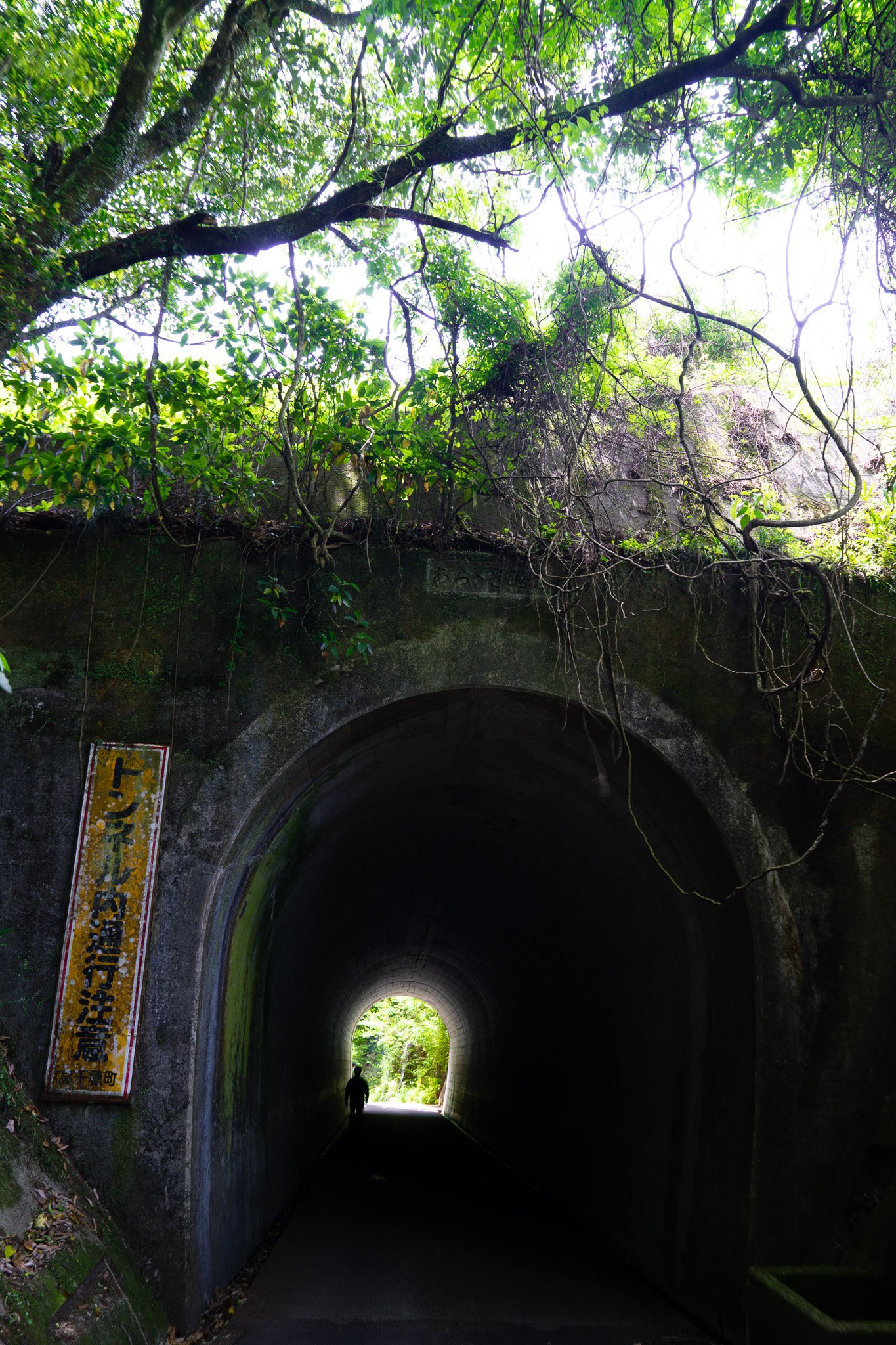
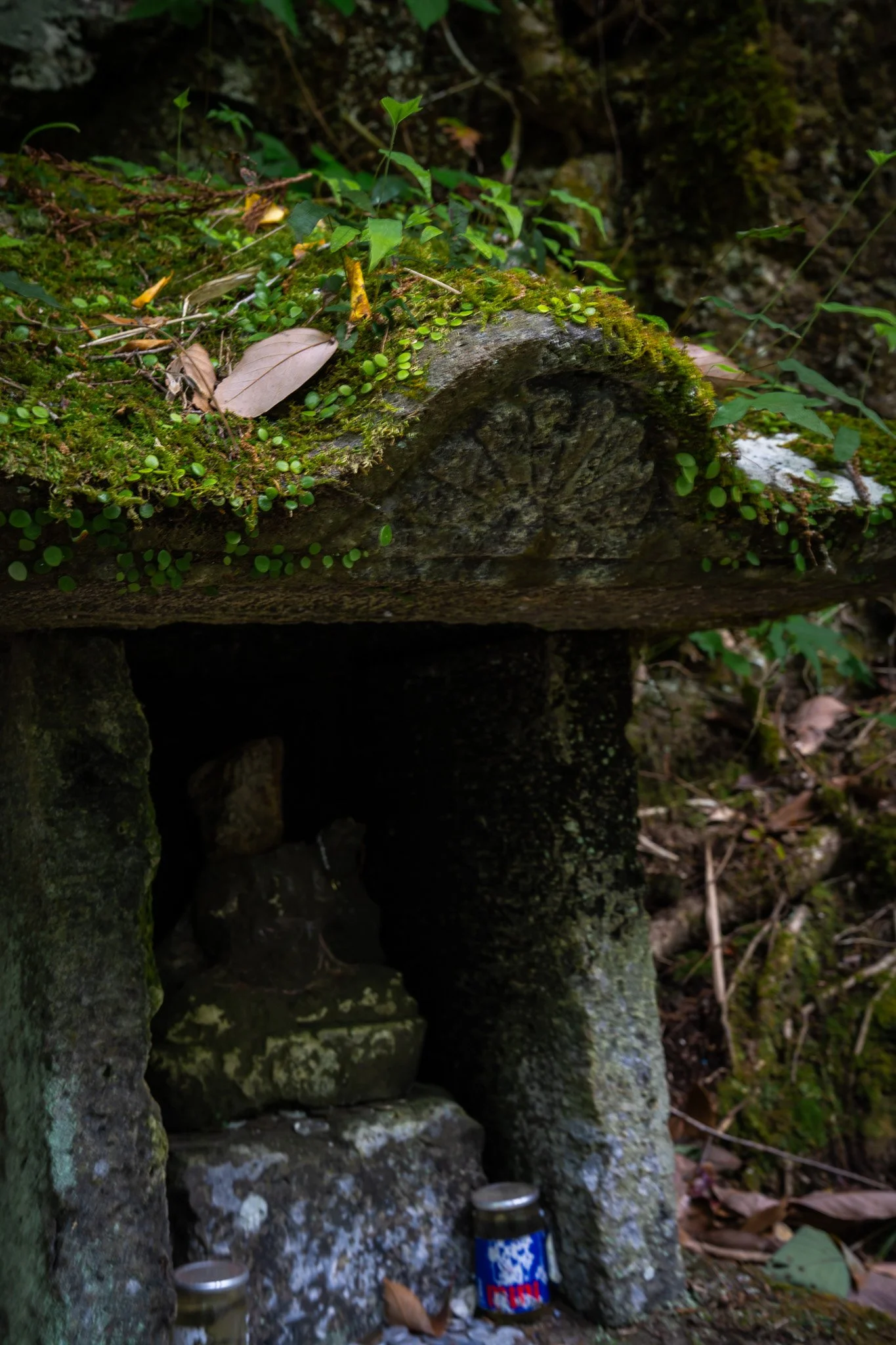
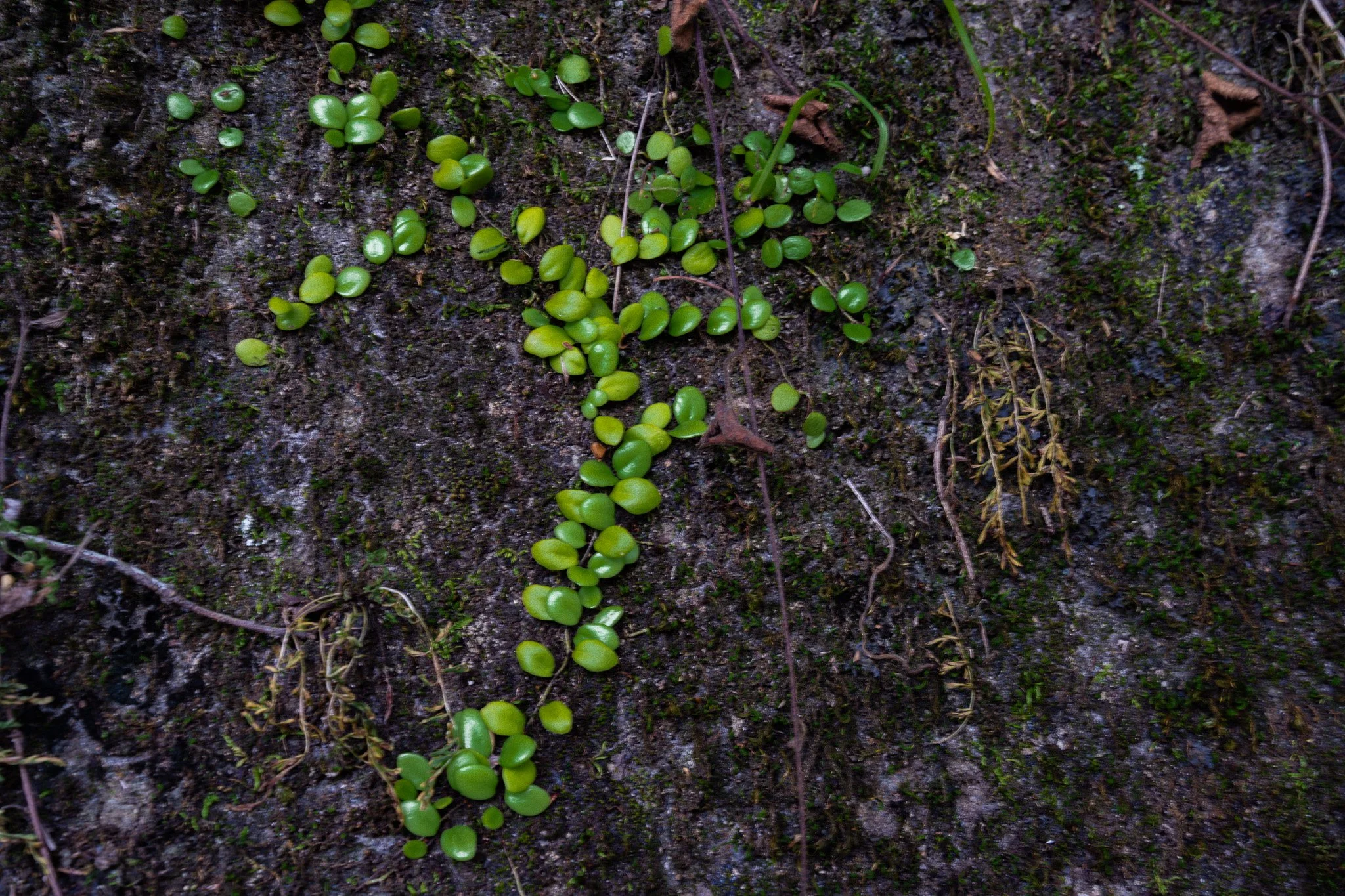
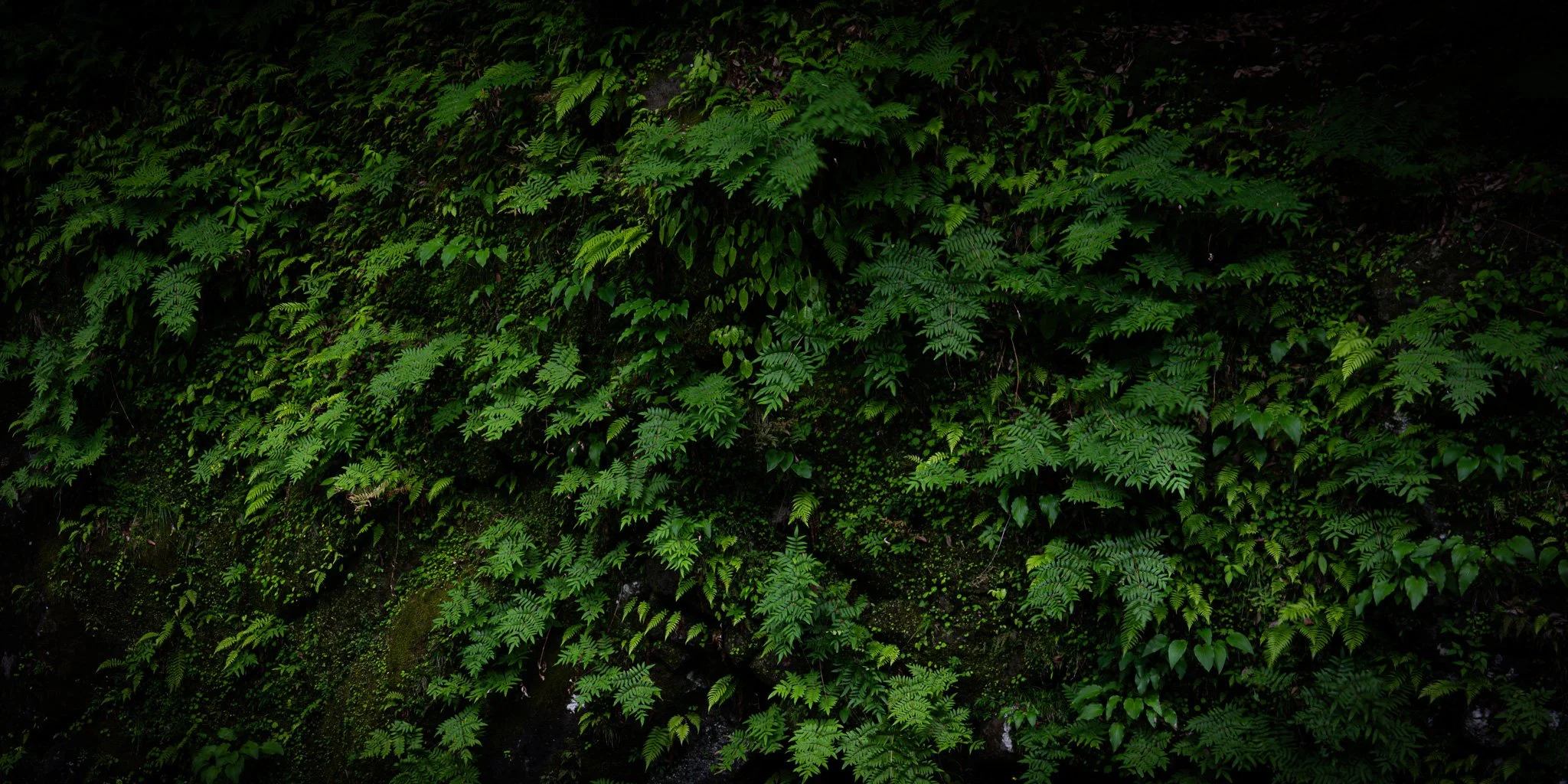
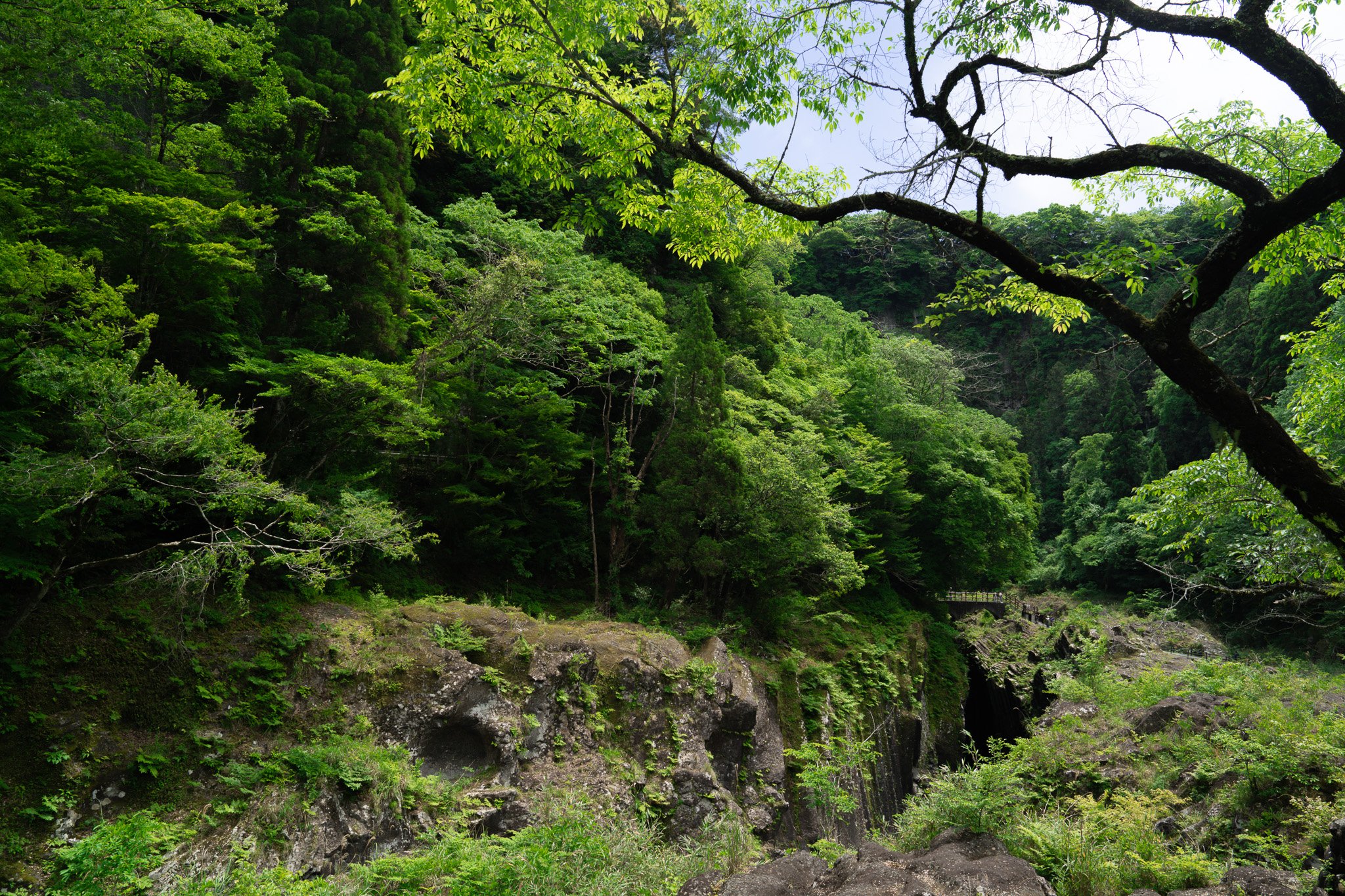
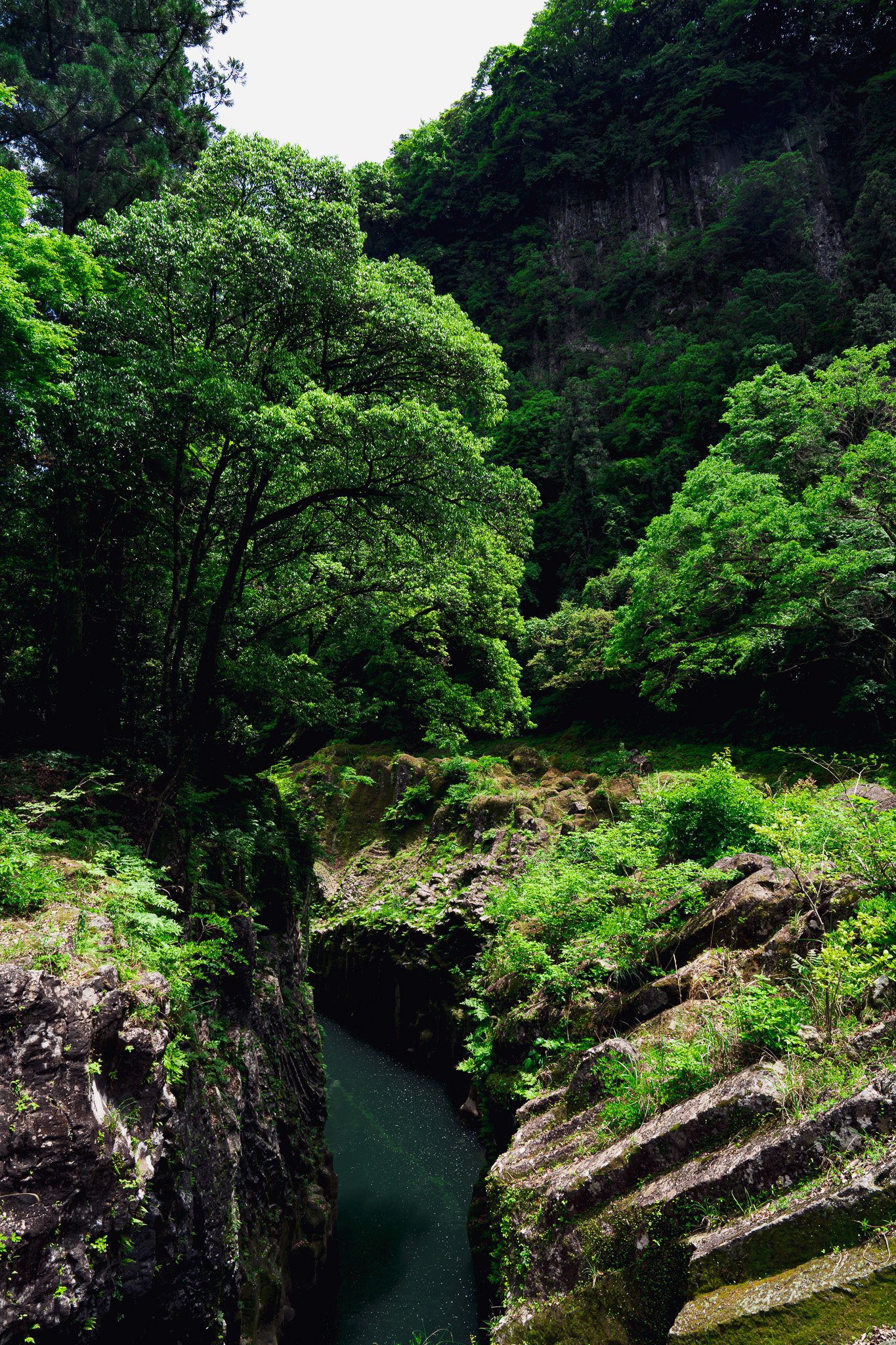
Along the way, I found myself noticing the vegetation. Being late spring, everything was intensely green. The trees were thick with healthy leaves glowing under the sunlight. Small ferns grew from the cliff walls, their young curled buds still unfolding. There were shrubs that reminded me of star jasmine back in Australia, carrying a faint jasmine-like perfume whenever the wind passed through them. It reminded me so much of home.
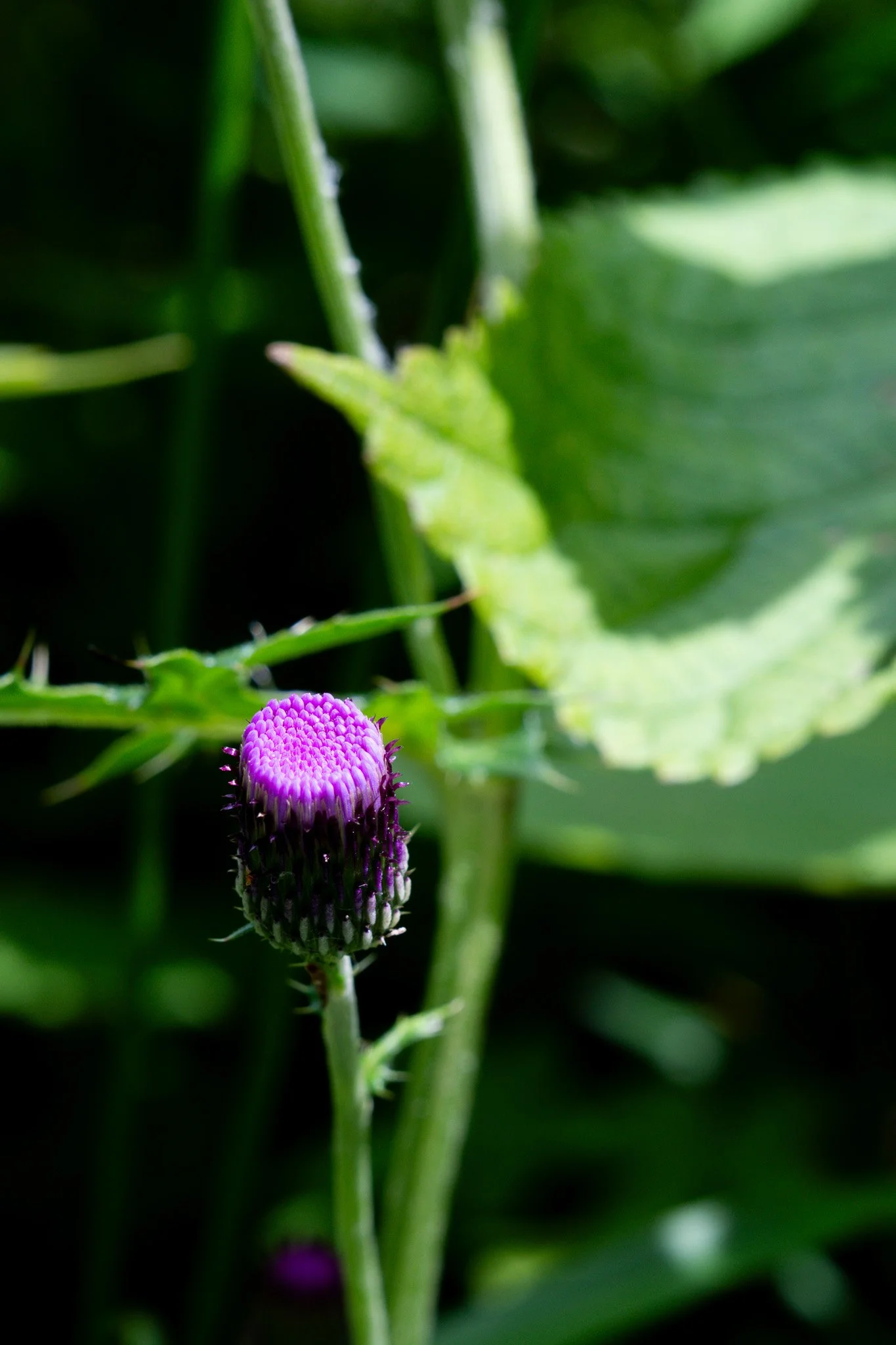
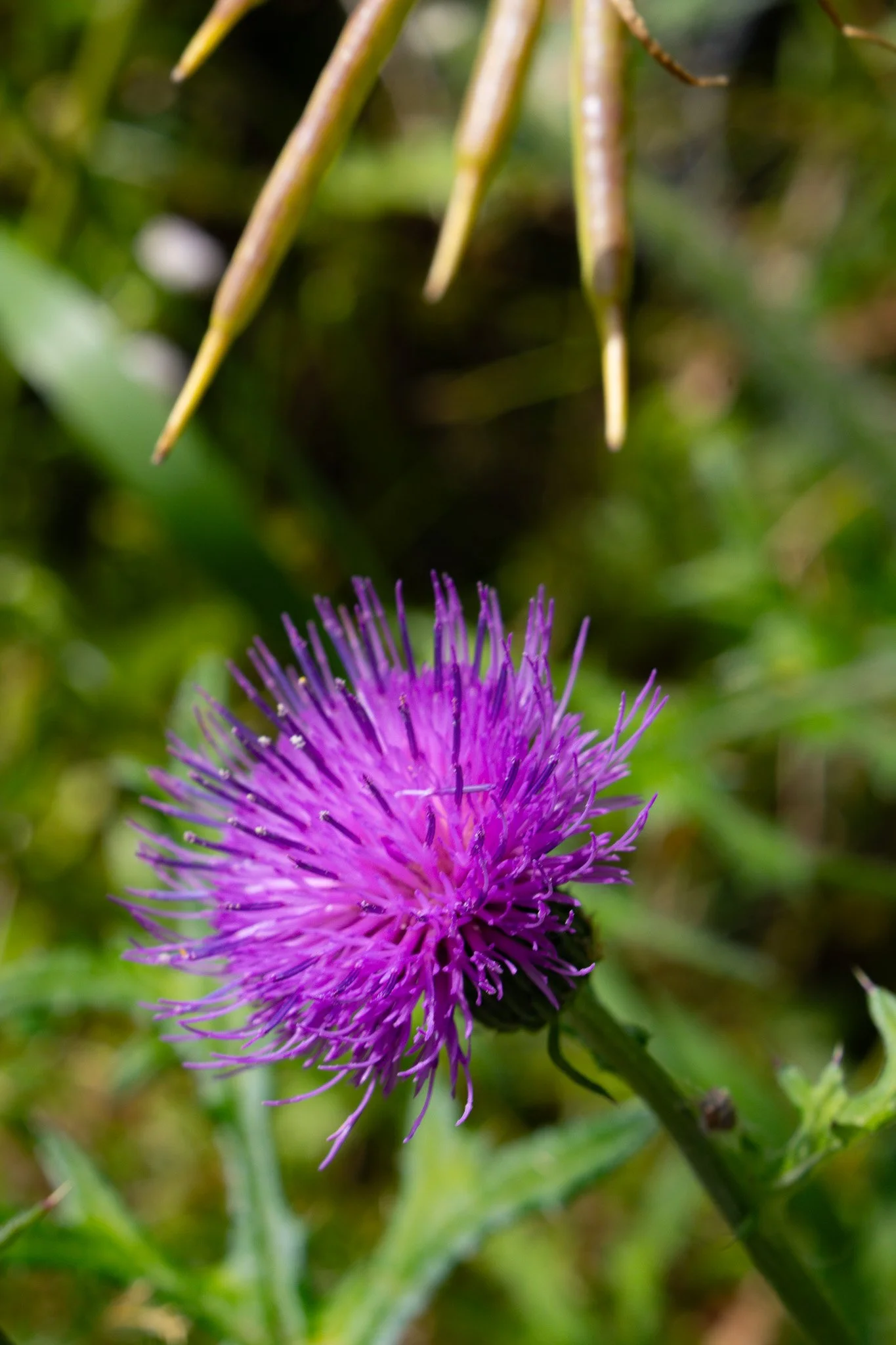
Among the greenery were different kinds of wildflowers. White daisy-like flowers with yellow centres lined parts of the path, growing freely among the shrubs and rocks. But the flower that caught my attention most was a small purple flower shaped almost like a sphere. I had never seen it before. It looked delicate, almost hidden among the other wildflowers.
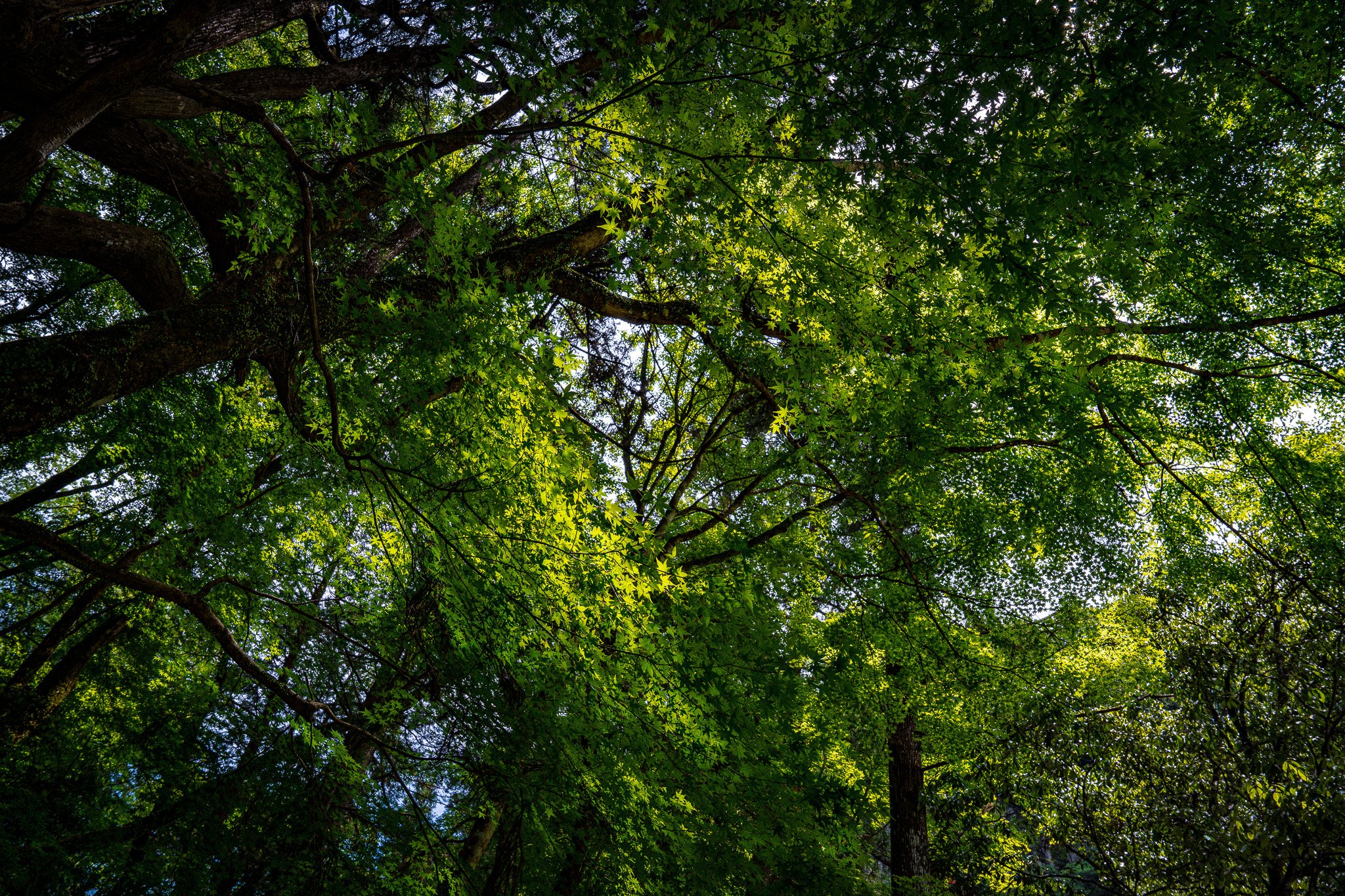
The real scenery was also quite different from the images we had seen online. Most of the photos on the internet showed Takachiho in autumn. We were seeing it in late spring instead.
Still, I could imagine what this place would look like in autumn. Having experienced autumn in Japan before, I could already recognise some of the trees that would eventually turn red, orange, and yellow. I could picture fallen leaves covering the footpaths and gathering along the edges of the gorge.
But spring gave the place a different feeling entirely. Softer, fuller, more alive. And standing there surrounded by all that green, I realised this was a version of Takachiho I was glad to experience first.
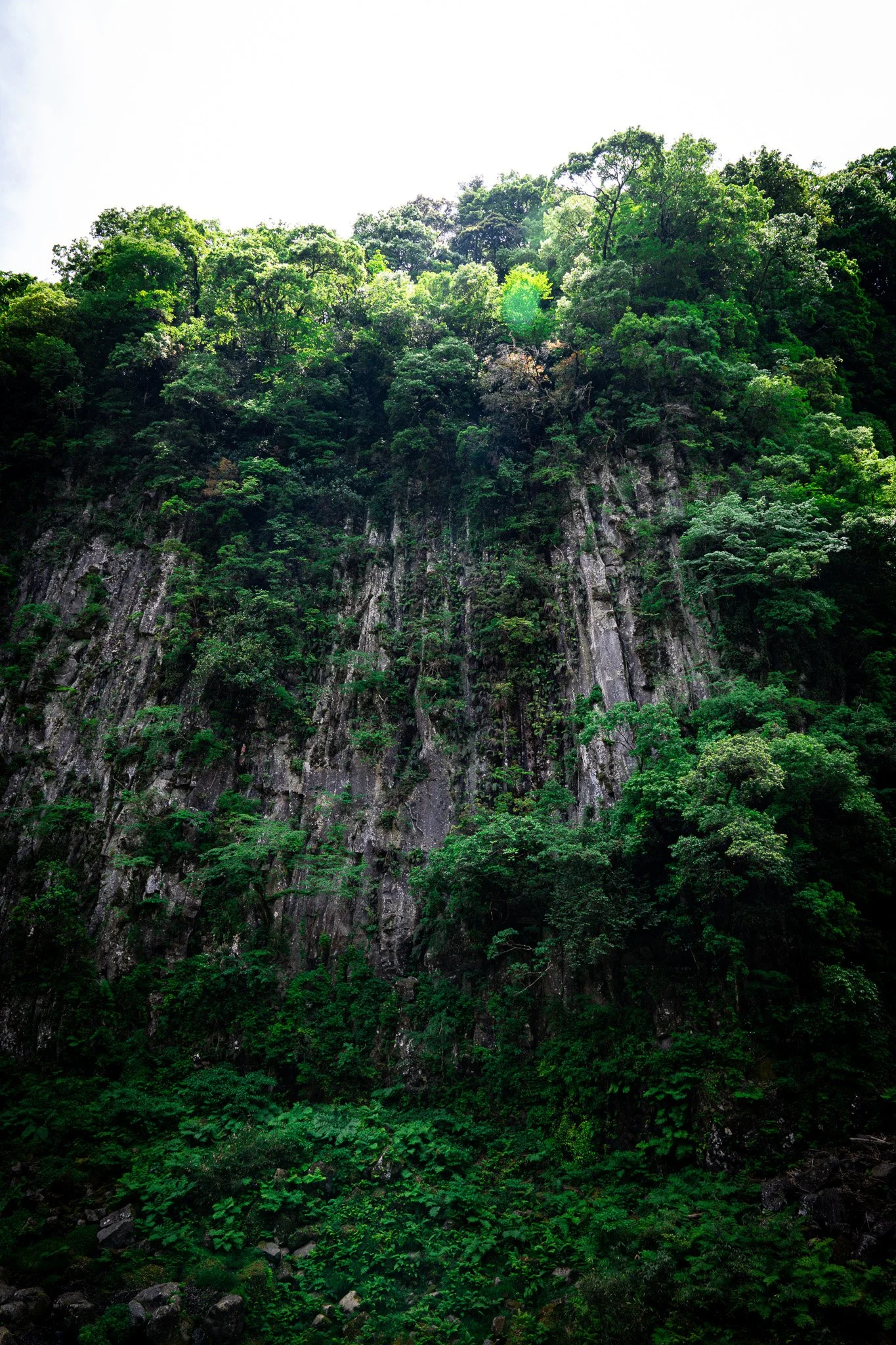
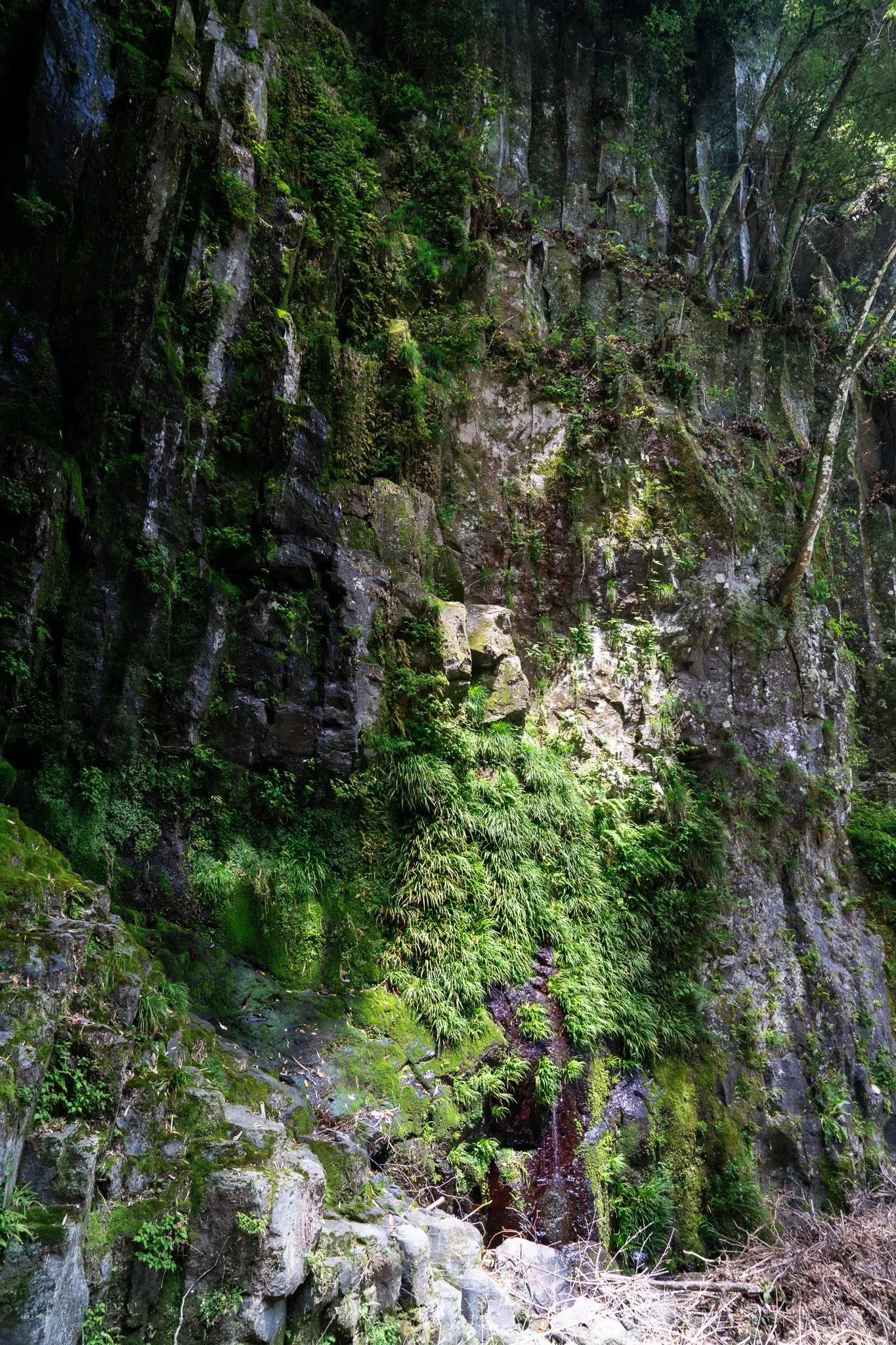
We stood on the bridge admiring the gorge, not yet realising that an even better view was waiting further down the path.
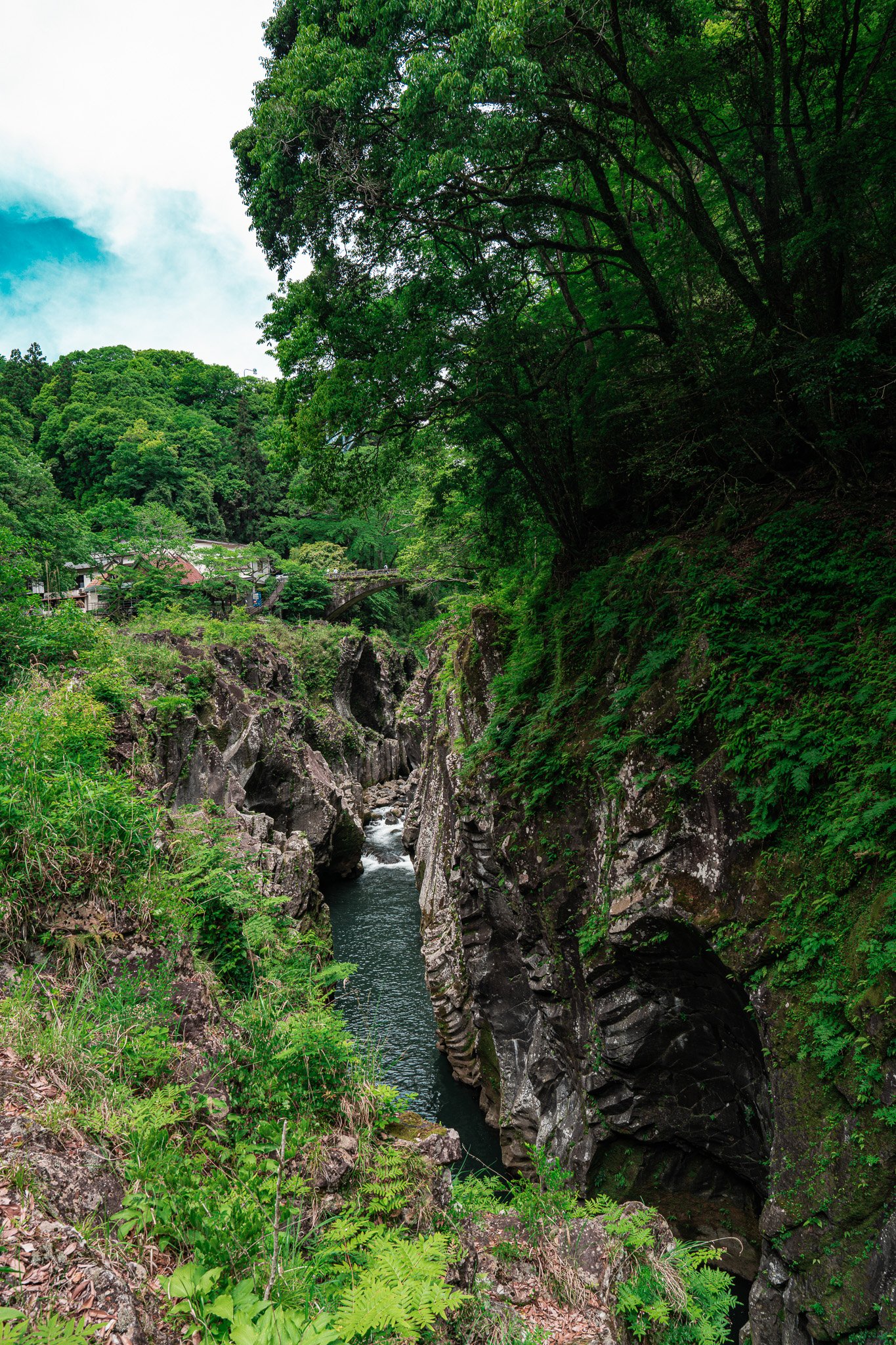
Even from there, the first sight of the gorge was already captivating. Shallow water flowed through the narrow cliffs, tightening in some places before widening again further ahead. The day was quite hot, but the mist rising from the water and the shelter of the trees brought moments of cool air whenever the wind passed through.
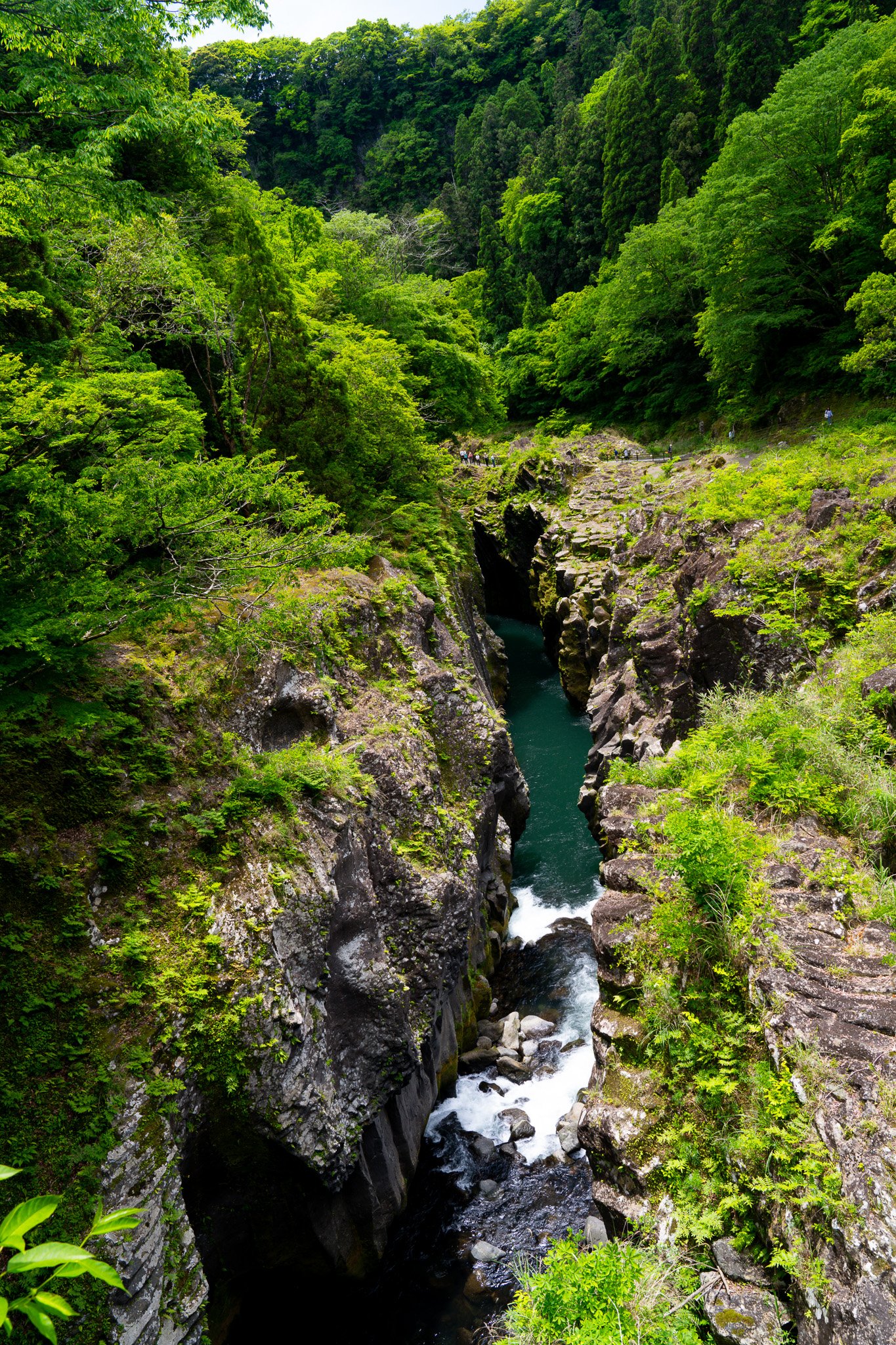
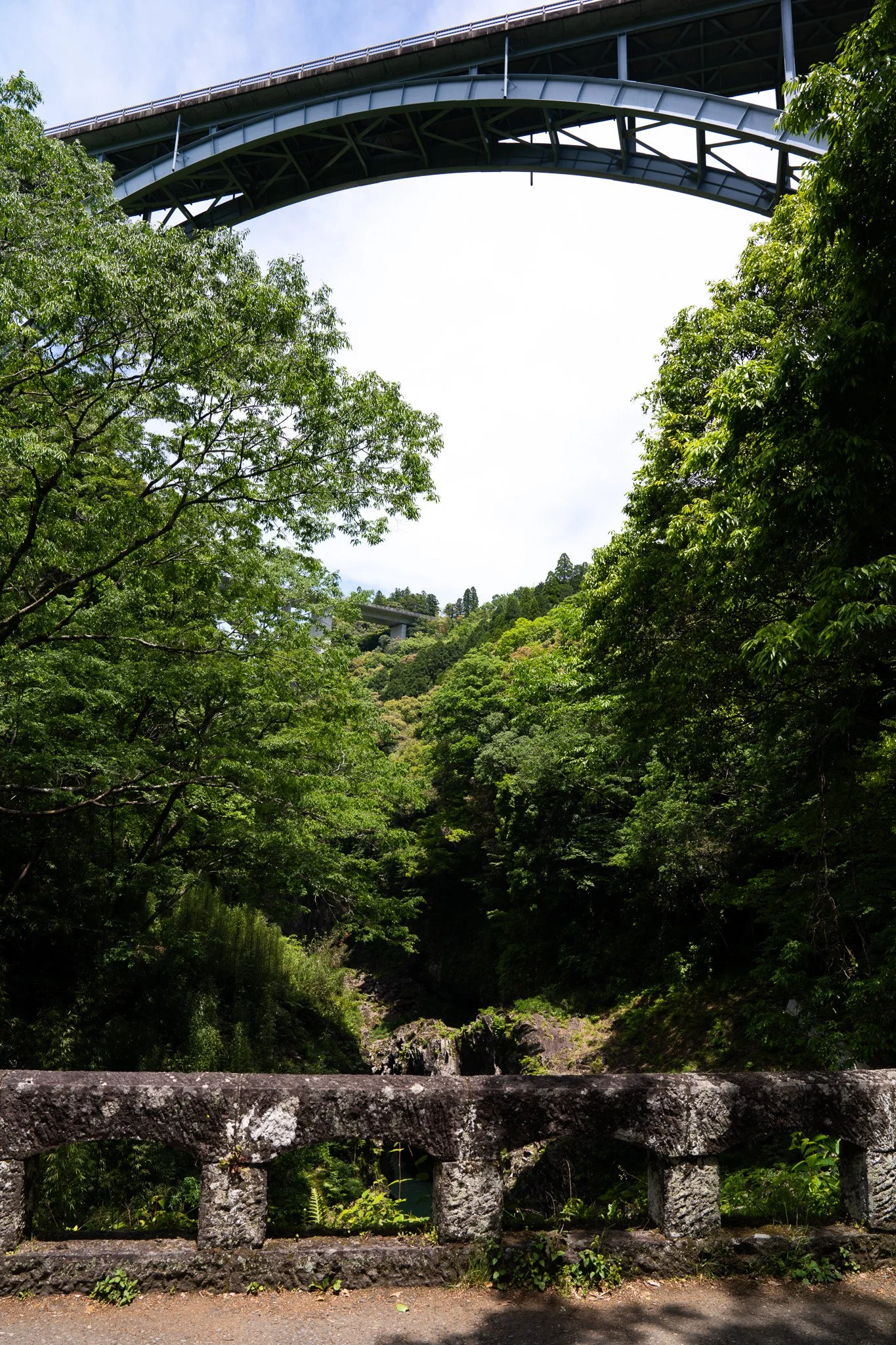
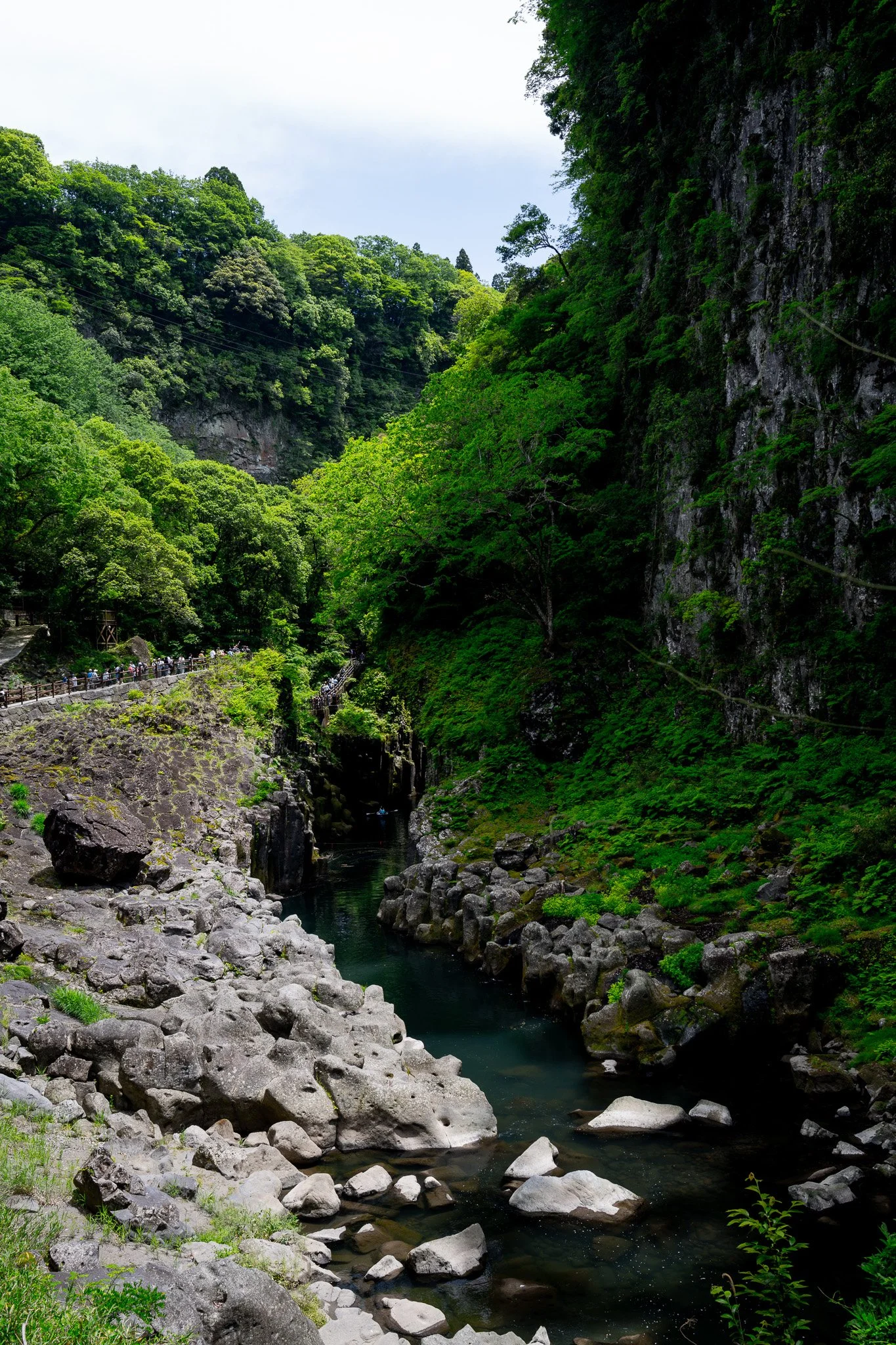
There were many people, all drawn to this majestic gorge. Tour groups moved through the pathways one after another, led by guides carrying flags or speaking through microphones. Some people looked like they wanted to linger a little longer, but the group kept moving, everyone trying to stay on schedule.
It was a completely different style of travelling from what I was used to.
Travelling in a group of six already came with its own challenges. I could only imagine travelling in a group of thirty with a fixed itinerary and limited time at each stop.
Even on this walk, I had already drifted behind the others. I kept stopping, trying to capture the perfect view with nobody in the frame. It required patience, timing, and sometimes just luck before quickly taking the shot.
At one point, I joked to the group that I was not built for tour-group travel. I could already imagine the frustration of a tour leader trying to keep me moving at the group’s pace, and the quiet annoyance of everyone waiting for me while I disappeared somewhere behind them taking photos.
And honestly, they would probably be right.
Still, we moved at a strangely synchronised pace.
Sometimes I was left behind. Other times I surged ahead, trying to find the best position for a photograph before the crowd arrived. But somehow we always remained within sight of one another.
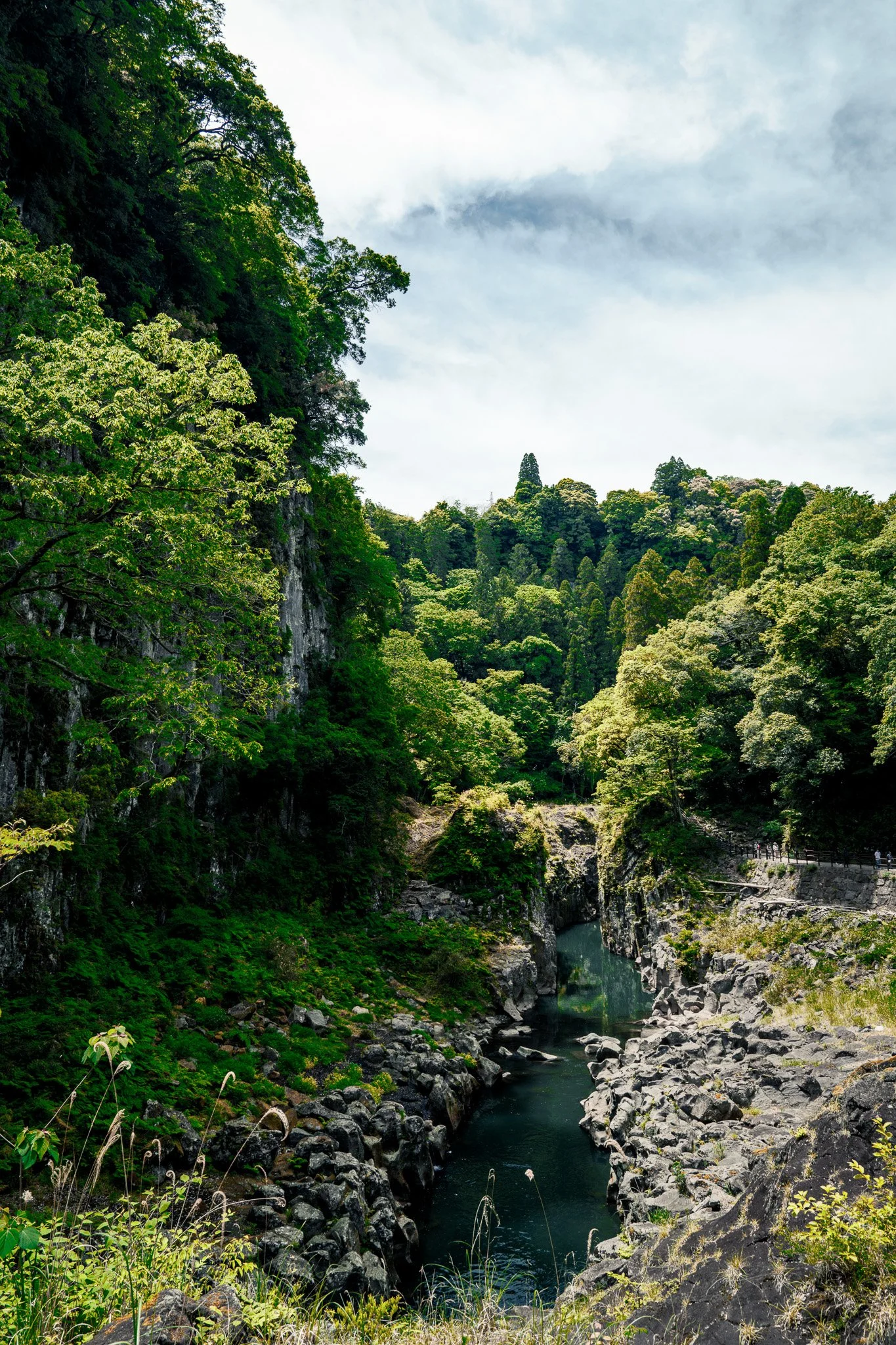
And honestly, the walk became much more enjoyable because we were travelling together.
If I had been there alone, I would still have admired the scenery, but there would have been no one to share those moments with. This time, we could point out the views that caught our attention and explain why they pulled us in. Sometimes someone else would notice something we had completely missed. It became the kind of place that felt better experienced together.
Eventually, we reached the main attraction.
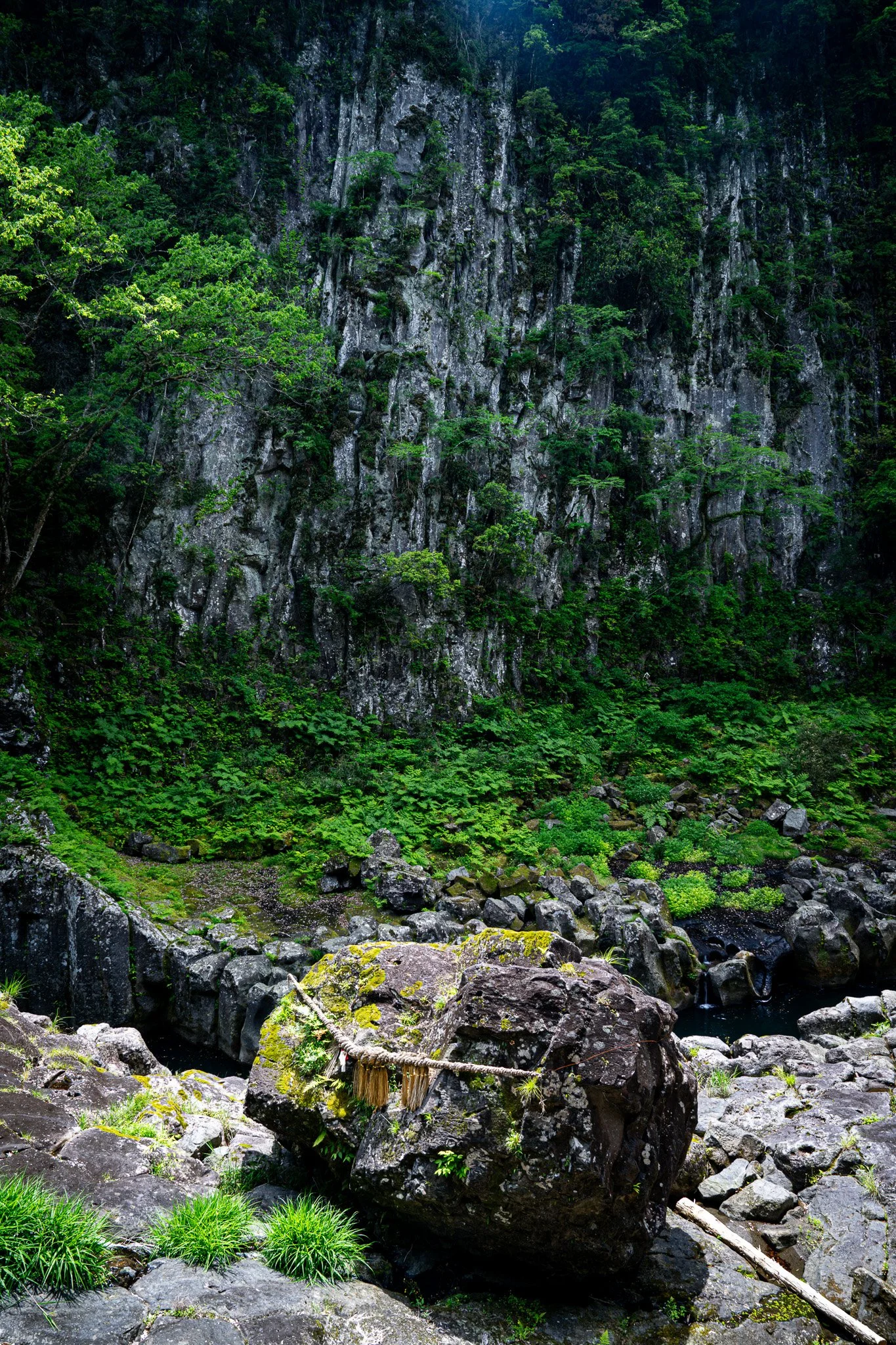
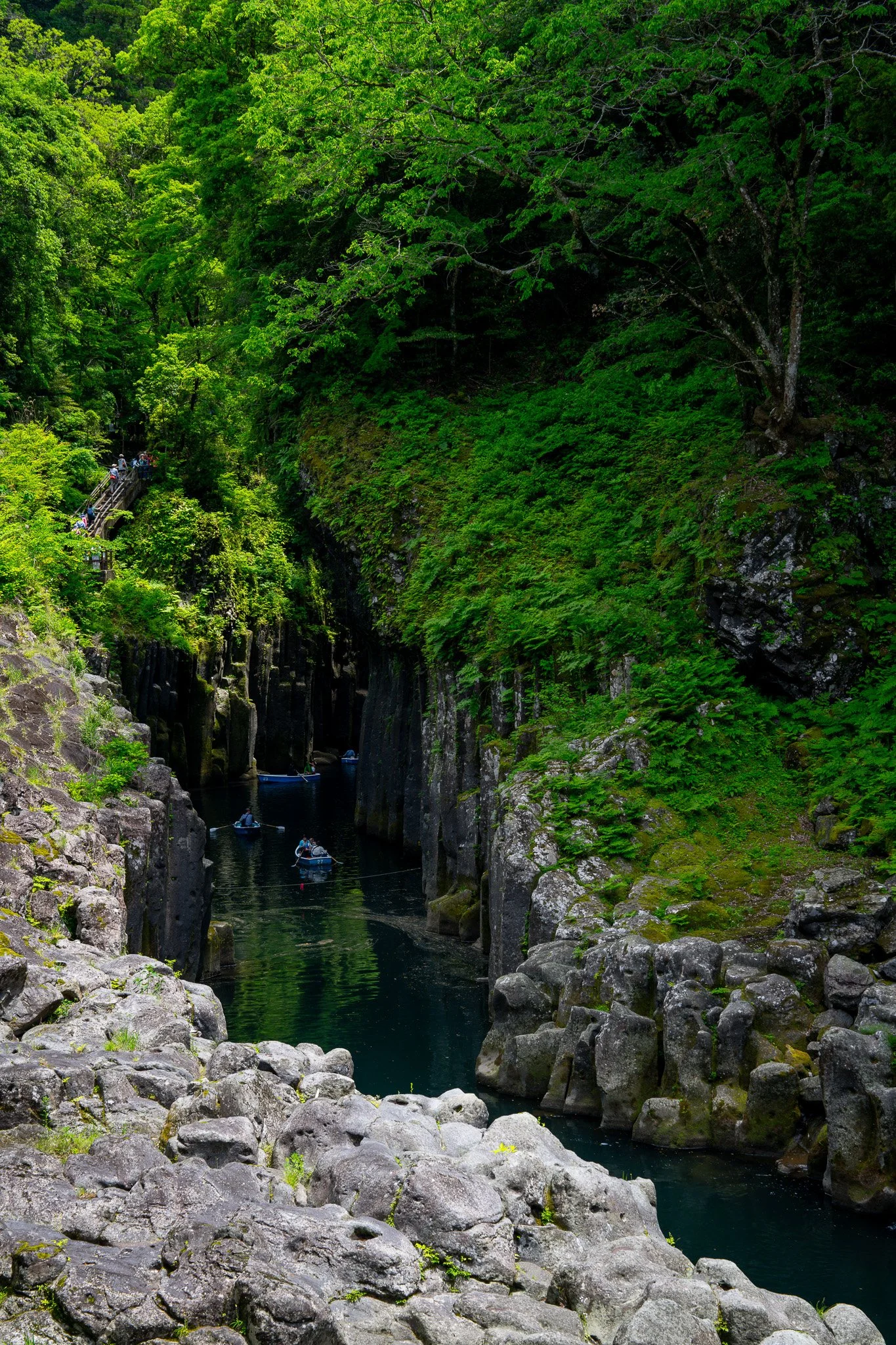
The gorge suddenly narrowed, almost unreal in appearance. Small waterfalls flowed gently down the cliff walls while boats drifted slowly through the water below. It was the exact postcard scene that appeared in almost every photo online. This spot.
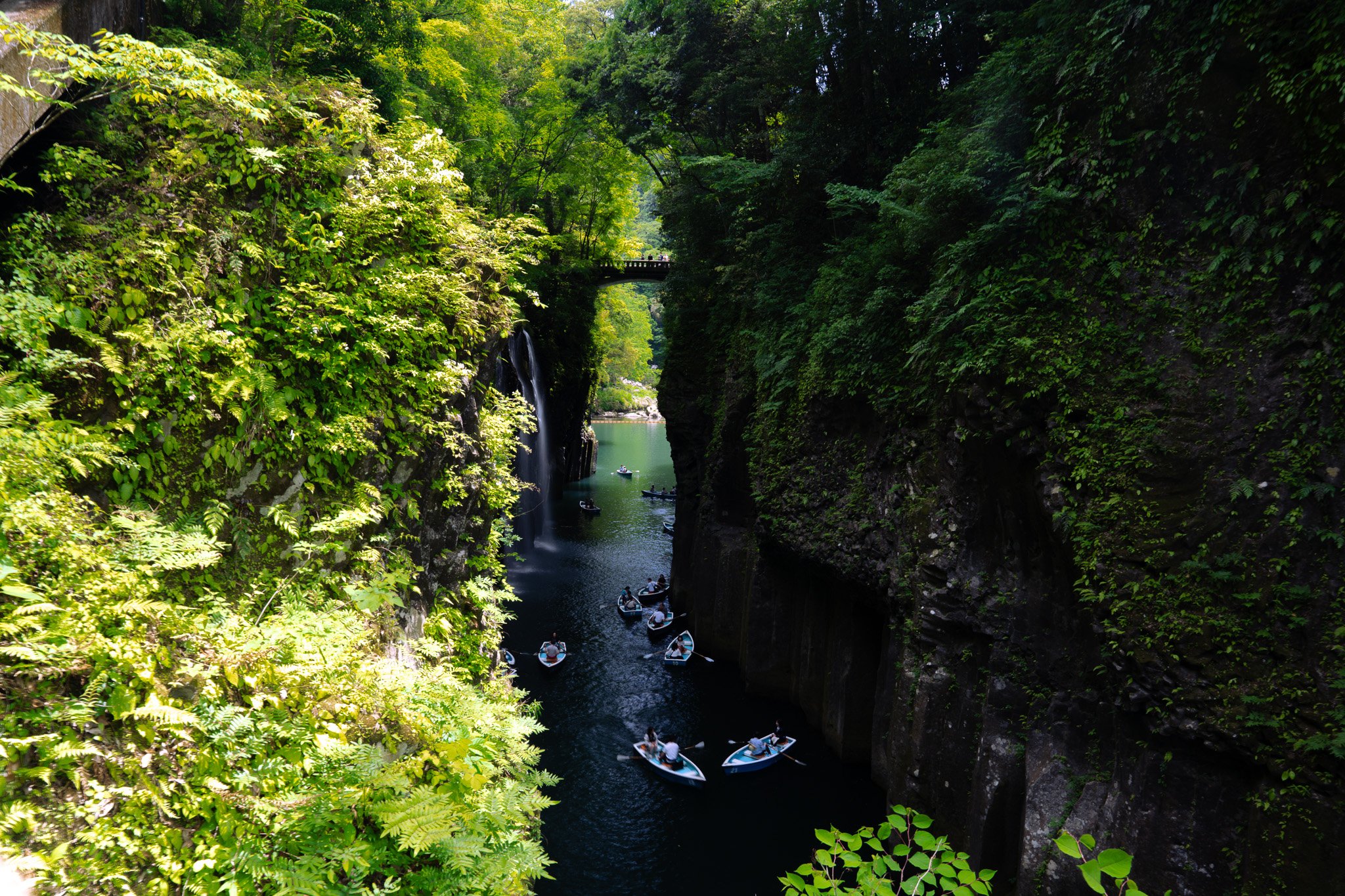
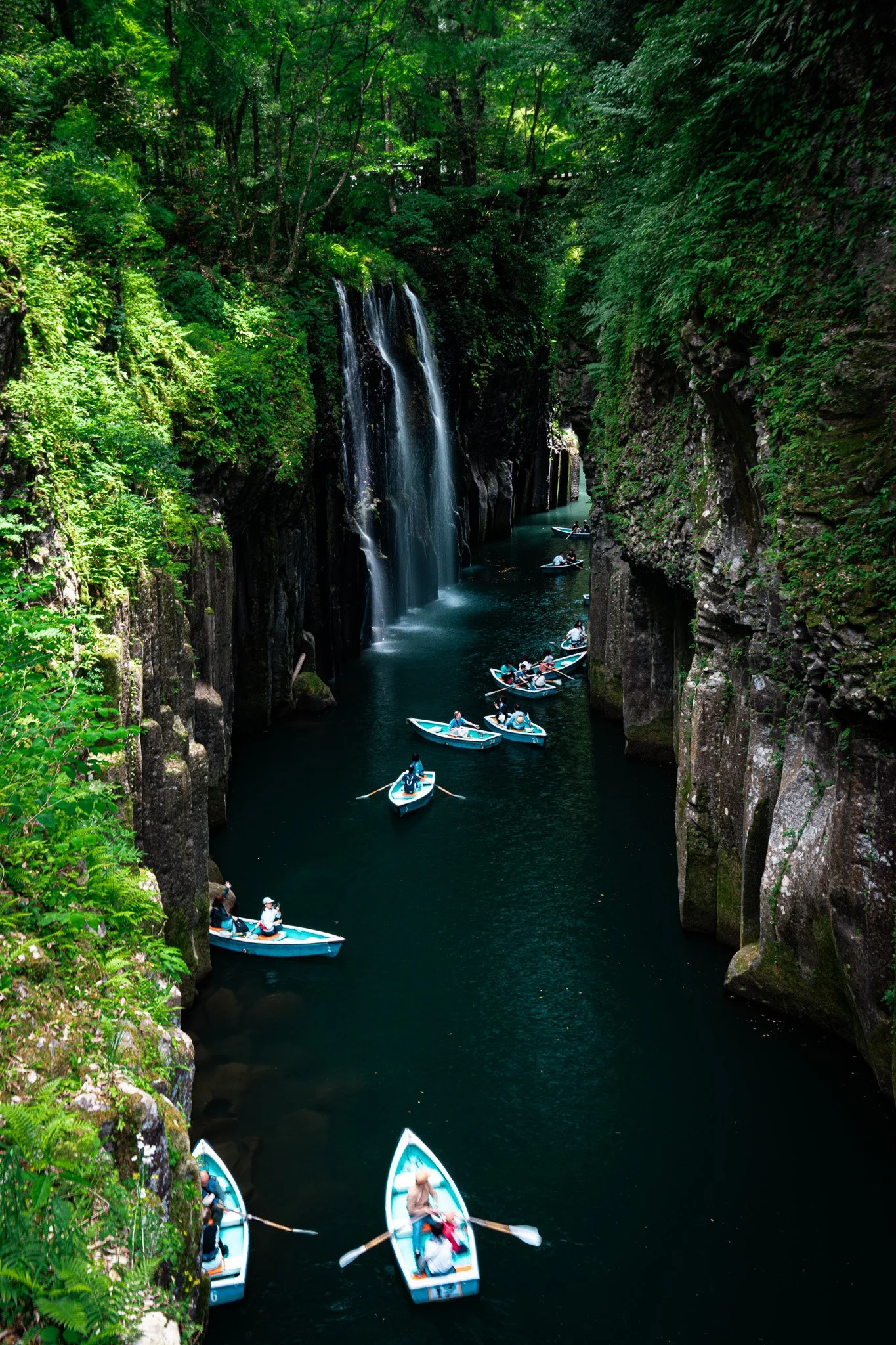
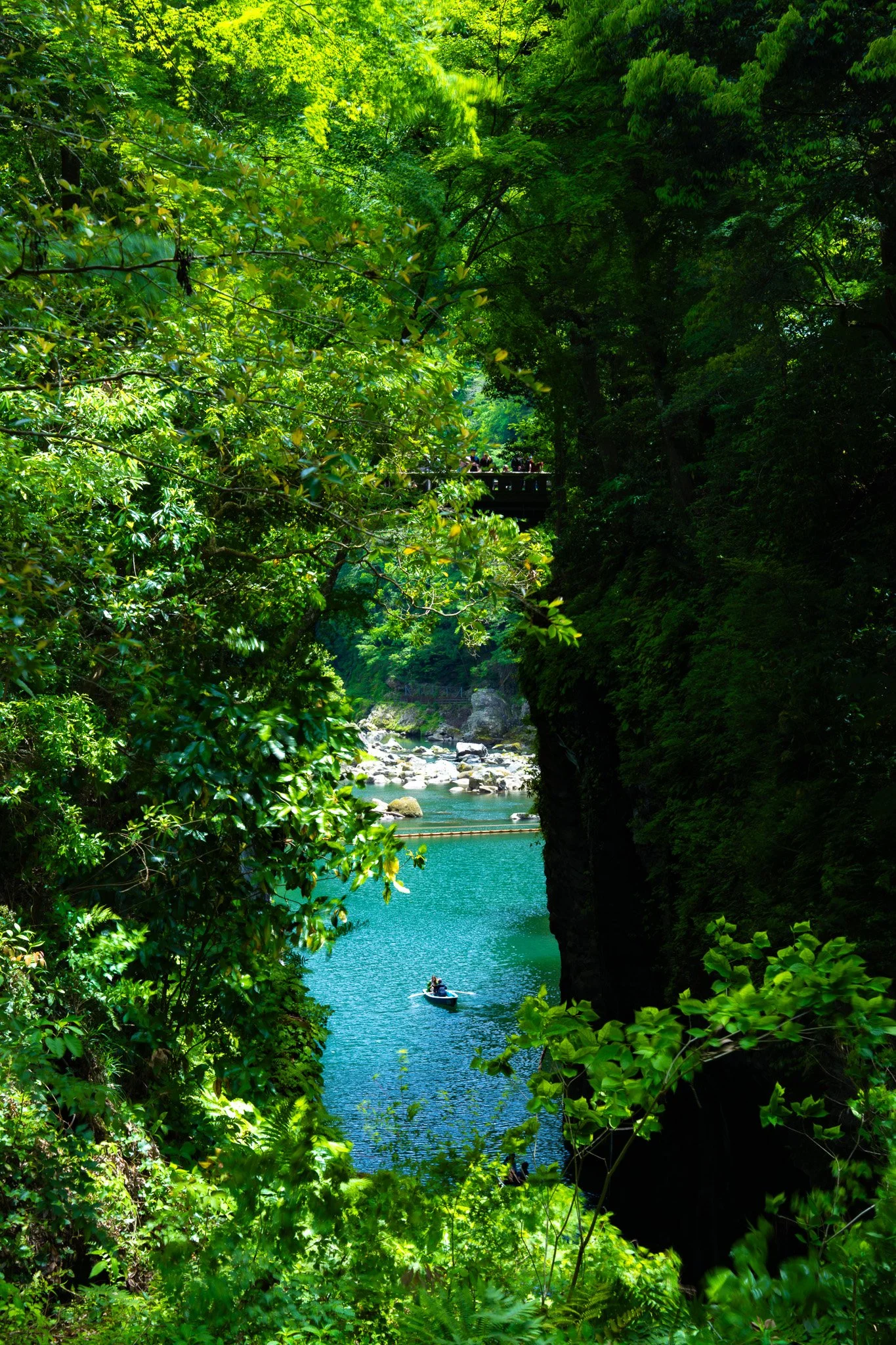
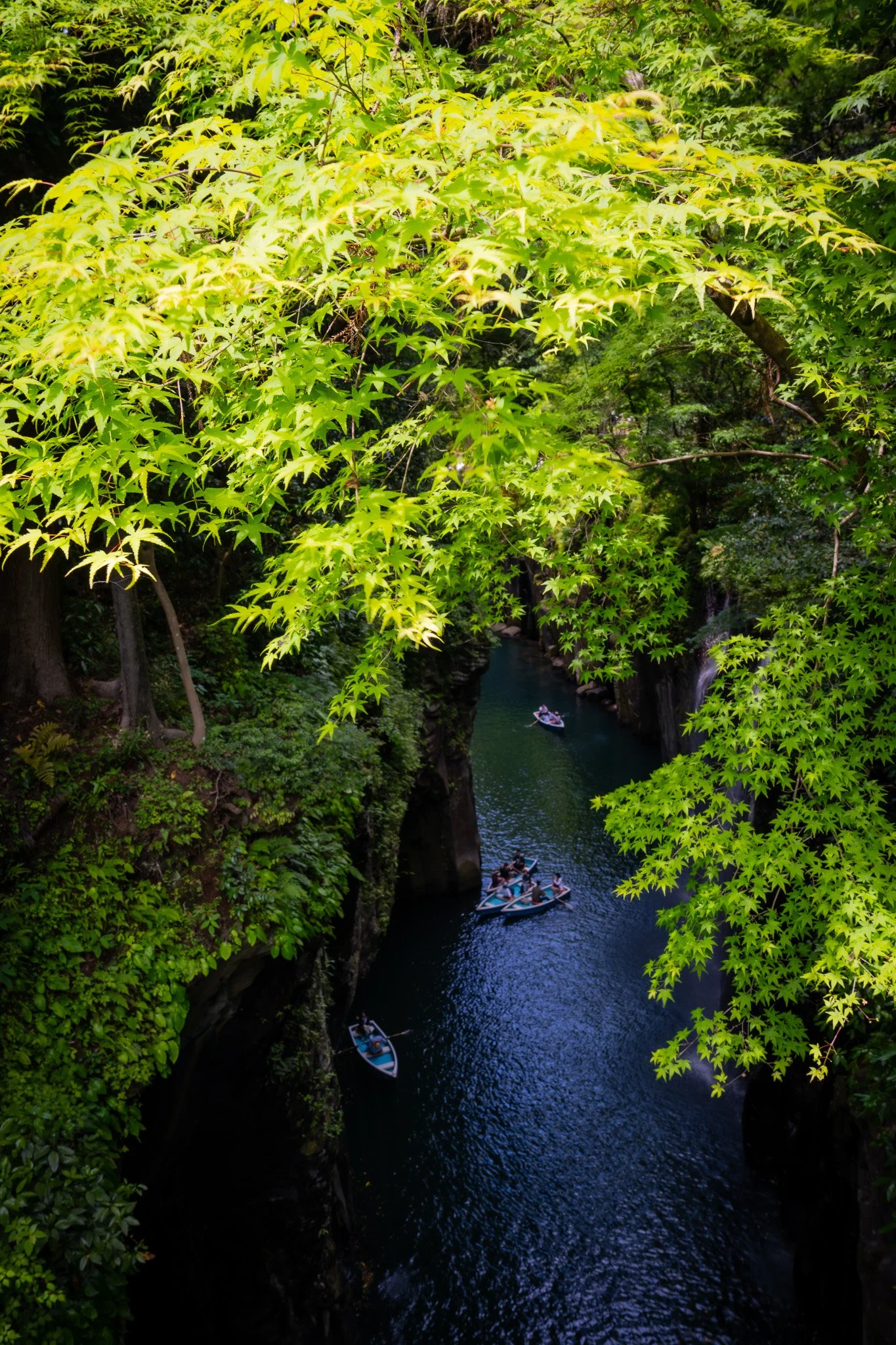
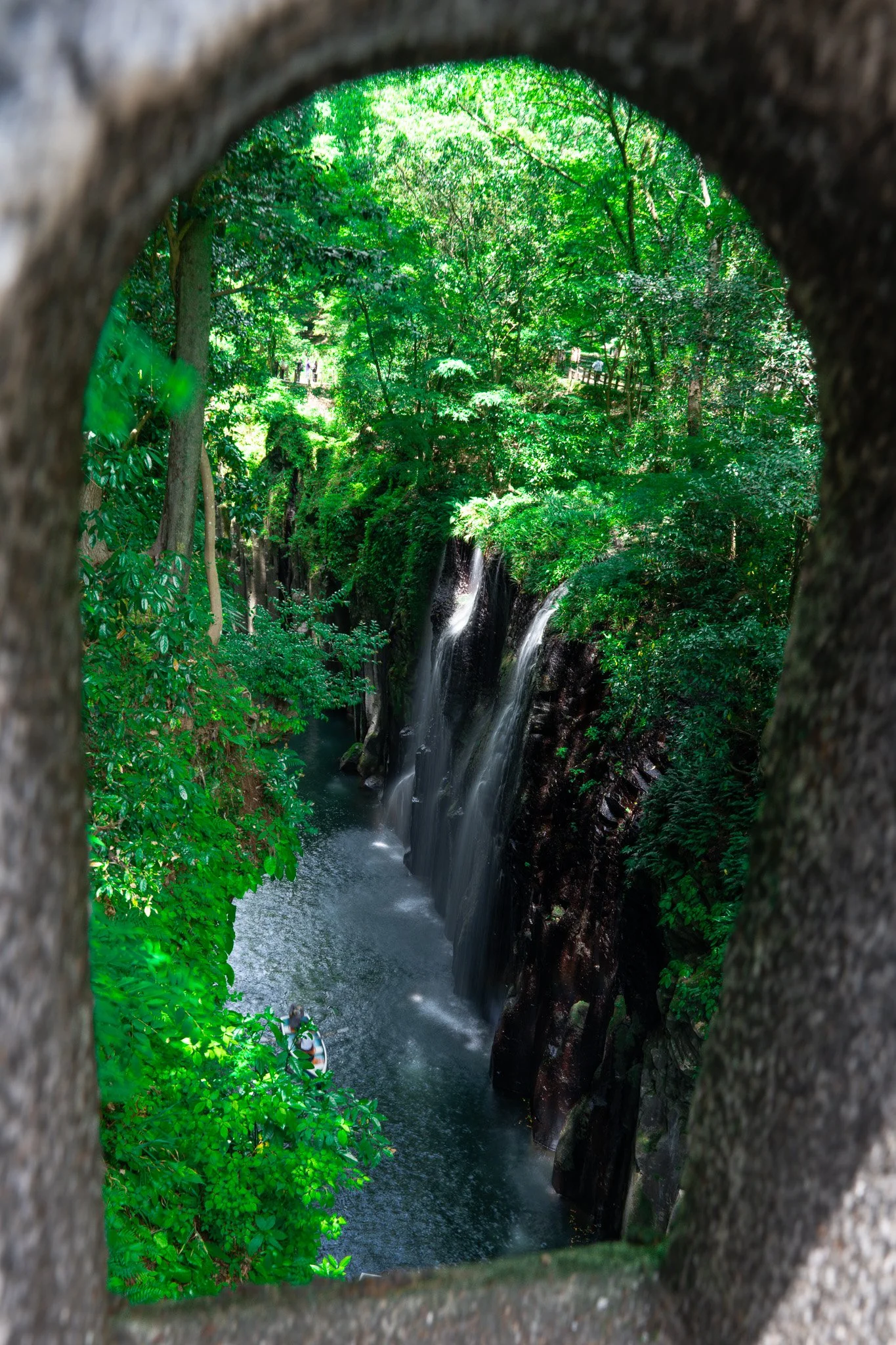
Like everyone else, we gathered there to take our group photo. A small keepsake of the journey. Proof that we had once stood together in this beautiful place, and a reminder of the fun we shared that would return again in the years to come.
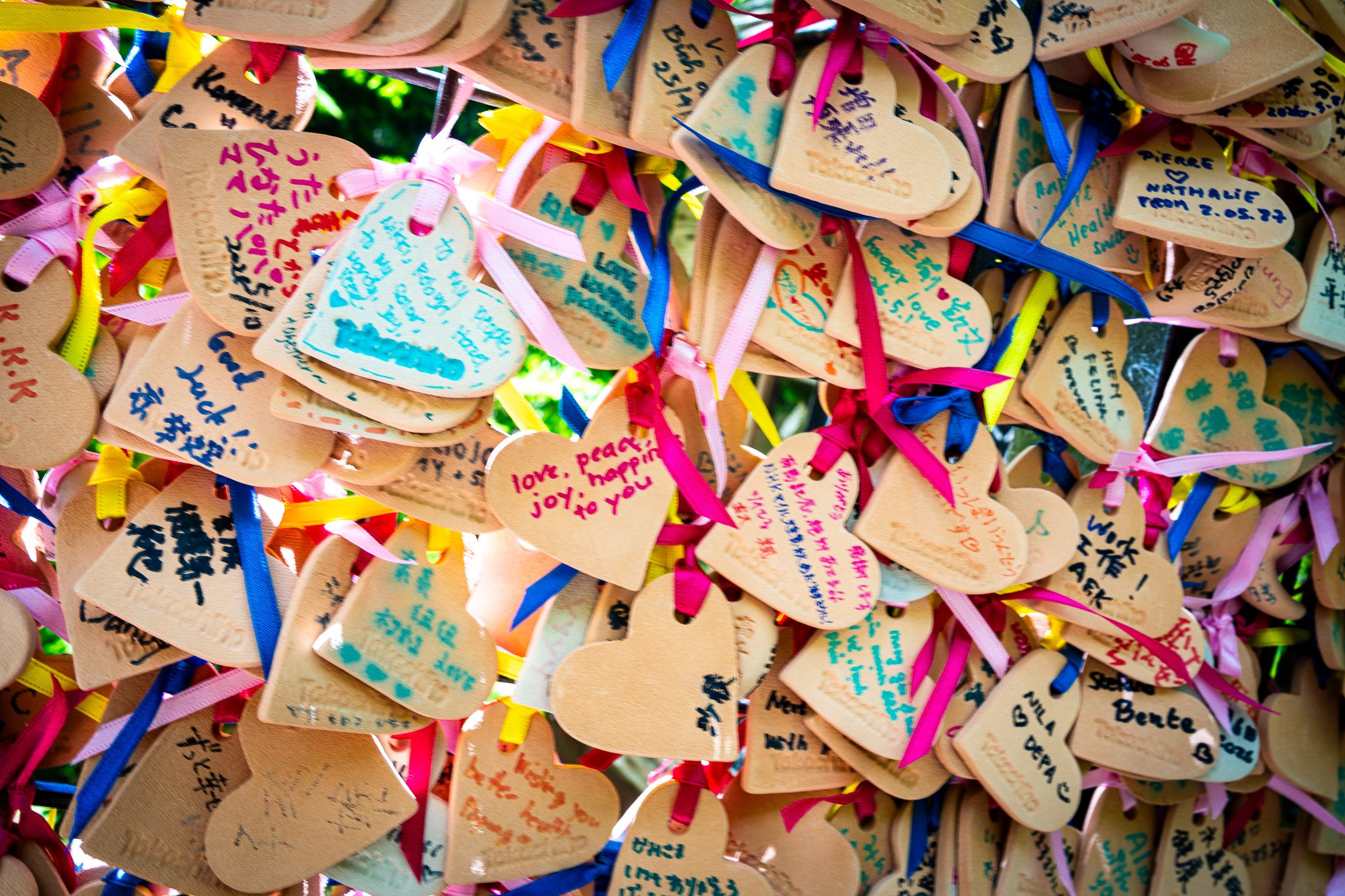
As we neared the exit, or what seemed to be the other entrance of the gorge, we passed a large board covered with messages left behind by visitors.
There were small blank heart-shaped clay plaques that you could buy for 100 yen, write a message on, and pin onto the board. Everyone gathered around, carefully writing their thoughts and little wishes onto the hearts.
I left that part to my partner.
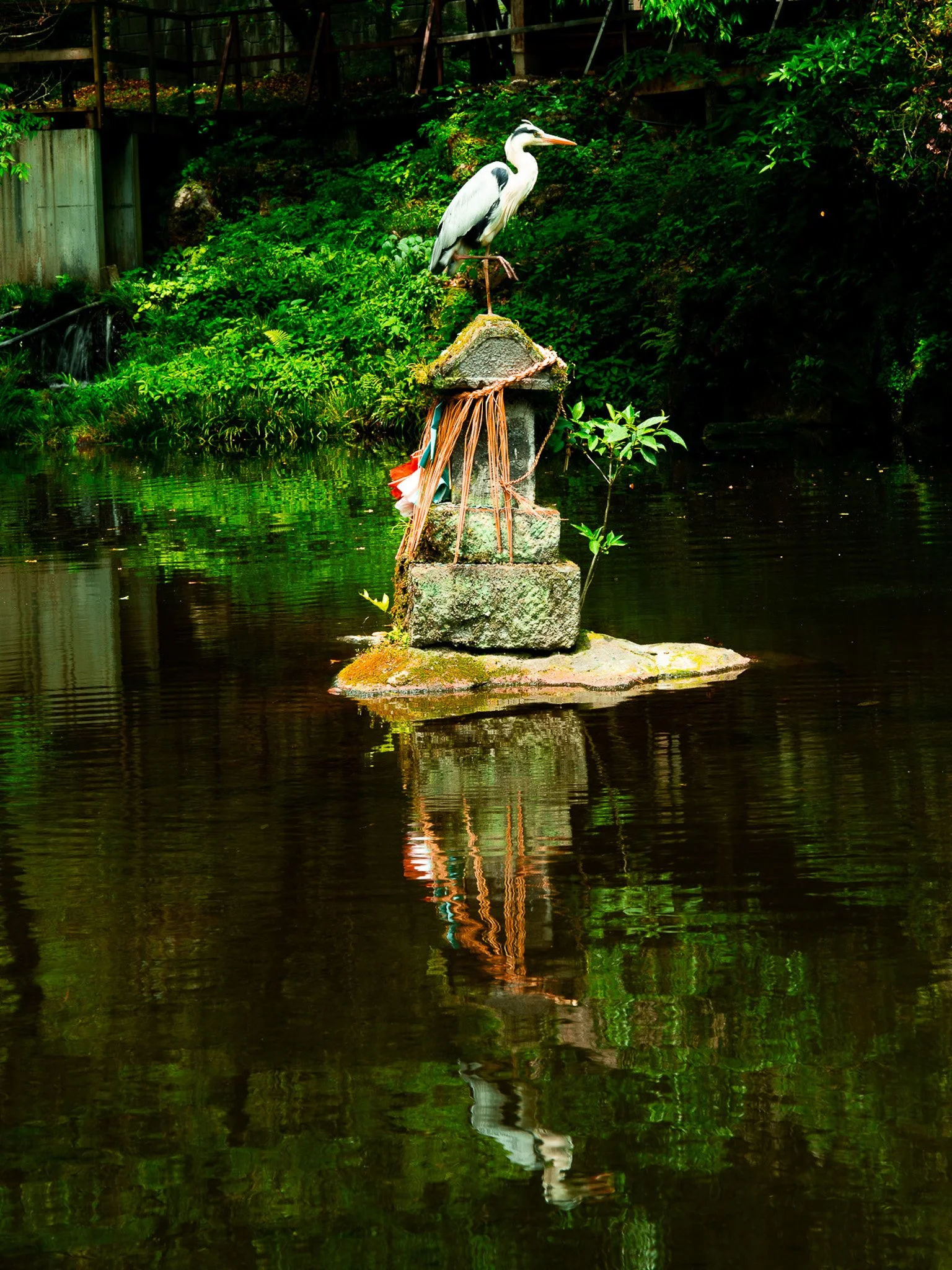
Instead, I wandered a little further and discovered a man-made pond nearby. Standing quietly in the middle of it was a white Japanese egret, perched majestically on top of a small shrine.
For a moment, everything felt still.
The bird stood there motionless, elegant and completely aware of its own presence, as if posing deliberately against the calm water around it. Seeing it there felt strangely symbolic, almost like a good omen quietly revealing itself at the end of the walk.
It was one of those small unexpected moments that stayed with me just as much as the gorge itself.
Checking the map, we realised that we were completely at the opposite end of our car. There was no short cut except backtracking. By now lunch was beckoning. Yet we did not know what we wanted to eat nor where in this place to find a place to eat. After a short exchange we decided to backtrack, got to the car and decide lunch later. We backtracked with much faster pace.
Once we got back to the car, the question of lunch came up again. By this point, everyone was tired and quite hungry.
Fortunately, one of us had been keeping track of our plans and the recommended food stops. It turned out we had already earmarked a noodle restaurant known for a rather unusual experience—diners catching noodles as the chef throws them to you.
Immediately intrigued, we all agreed in unison to go.
The restaurant was near the other entrance of the gorge, so we drove over expecting a simple stop. That’s when a small comedic misunderstanding unfolded.
We were meant to turn left at a junction that also led into a car park. As we approached, two staff members stood in the middle of the road, blocking entry and signalling for us to continue straight.
We tried to indicate that we wanted to turn in, but struggled to explain that we were not trying to enter the full car park—we were just trying to reach the restaurant beyond it.
In the end, we continued forward, thinking we would find another way around. But we were soon redirected back to the same junction.
This time, the situation escalated slightly. One staff member gestured for us to turn in, while the other firmly insisted we continue straight. For a moment, it turned into a silent disagreement between the two of them, right in front of us.
We simply sat in the car, watching, unsure of what decision was actually being made on our behalf.
Eventually, the more insistent of the two gave way, and we were allowed to turn in.
We laughed, thinking the confusion was finally over. The guards must have thought we were either very stubborn visitors or simply extremely confused.
But the story didn’t end there.
We drove all the way down the road, only to find it ended in a car park—and no sign of the restaurant.
Still slightly bemused, we did a U-turn and ended up back at the same two staff members.
At that point, they must have thought we were playing with them.
Moments earlier they had debated whether to let us in at all, and now we were reappearing after being redirected—twice—without ever reaching where we intended to go.
As we were leaving the junction, we came to a realisation. Maybe we were meant to park the car and walk to the restaurant. The map showed it just beyond the car park, but it didn’t clearly show whether the road leading in was actually drivable.
The realisation came a little too late, and we were already joking about whether we should turn back and make a third attempt. At that point, we wondered what the two staff members must have been thinking. Perhaps they believed we were playing some kind of prank on them.
With no certainty about whether we would even find the restaurant, we eventually decided to give up for the moment and drive into the town centre instead. Surely there would be food there.
There were restaurants—but we had arrived at that awkward in-between hour when most of them were closed, only set to reopen at five.
We couldn’t wait until five. Hunger had already moved past its peak and settled into something quieter, but still present. We just wanted something before the long drive back.
After what felt like an endless search, and almost giving up, we eventually found a small café—most likely a chain café—serving simple packaged meals.
It wasn’t memorable food in itself.
But the effort it took to find it, and the quiet relief of sitting down somewhere open and almost empty, made the experience feel unexpectedly satisfying.
In the end, it wasn’t about the meal at all. It was about finally stopping.
As we drove back, the afternoon light began to soften. We knew we would arrive at the hotel in the early evening, which was perfect timing. We had planned to head to Hakata Station afterwards in search of tickets to Hiroshima.
We had been there just days earlier when we picked up the car. At that time, we were in a rush, moving quickly between places we wanted to see. This time, apart from buying the Hiroshima tickets, we had no urgent plans. It gave us a chance to simply explore the station itself—something we had completely rushed through before.
The ticketing process turned out to be an experience in itself.
After finding the ticket office, we took a number and waited for it to be called. When our turn came, three of us stepped up together, each representing our families.
Communication was not easy. The staff member had very limited English, and we had to rely on gestures, slow explanations, and repeated attempts to make ourselves understood. Still, somehow, things moved forward.
But there was a moment that caught us off guard.
His attitude shifted suddenly—abrupt, almost sharp. When one of us placed the pen back on the table instead of returning it to its holder, he immediately gestured in a frustrated way, insisting it be put back properly.
We were taken aback. We had become so used to the politeness of Japanese customer service that this reaction felt completely out of place.
Later, we realised we had actually gone to the wrong office. There had been a sign we completely missed, indicating that English-speaking service was located elsewhere.
At that point, we weren’t sure what had happened. Perhaps he was already flustered by the language barrier. Perhaps he was dealing with pressure beyond what we could see. Or perhaps it was simply an honest moment of frustration.
We would never really know.
But for me, the encounter stayed with me.
It was a reminder that we were always dealing with human beings—not a system of service, not a cultural ideal. People are generally kind, patient, and accommodating, but under certain circumstances, that can shift quickly.
And perhaps that is the point.
When travelling, it is easy to expect consistency, especially in a place known for politeness. But underneath every interaction is still someone having a day, carrying their own limits, reacting in real time just like we do.
In the end, we weren’t encountering a “culture” alone.
We were encountering people.