Between Plans & Places: Two Weeks Across Japan - When We Chose Not to Turn Back
Breakfast slowly became our shared ritual at the beginning of each day — a quiet gathering before setting off on the road again. The menu at the hotel remained consistent throughout our stay, and over time we stopped trying everything on offer, instead beginning to gravitate toward the small selections we each preferred.
There was something unexpectedly luxurious about an inclusive breakfast — the ease of it, the absence of decision-making, the simplicity of just sitting down together before the day unfolded.
I knew even then that this would not last.
In the hotels that followed, breakfast would no longer be something provided in the same way. We would find it ourselves — drifting between cafés and convenience stores, shaping the morning as we went. And strangely, that too felt like part of the experience. In Japan, even the simplest convenience store breakfast carried enough variety to last for weeks of exploration.
That morning, like the first day, we had one unplanned addition to the itinerary.
Unlike before, however, this one lay in the opposite direction of our intended route.
It was not far — perhaps an hour and a half’s drive outside the city — but it required a deliberate detour, a gentle break from the flow of our planned movement.
We were heading toward Tōhō Village, a pottery town known for its long tradition of kiln-fired ceramics. The region is especially recognised for its Koishiwara-yaki, defined by its distinctive geometric patterns — subtle, rhythmic, and deeply tied to the landscape in which it is made.
At that stage, we only knew it as a pottery village with dozens of active kilns scattered across it.
But as we would soon discover, it was less a place of explanation and more a place of quiet repetition — something to be observed slowly rather than understood immediately.
The detour in the opposite direction immediately introduced tension into the day’s rhythm.
The other two planned stops lay in the same general direction, each relatively close to one another — a simple sequence of short drives that would have made the day feel orderly and contained. This, instead, disrupted that simplicity.
Time, however, quickly became the deciding factor.
The kiln village would not open until later in the morning, and arriving too early would mean waiting without purpose. At the same time, online notes suggested that Yanagawa would become increasingly crowded as the day progressed. Another stop — Itoshima — quietly emerged as the most flexible, and therefore the most expendable, should the schedule tighten further.
In that space between intention and constraint, the familiar rhythm of group travel reappeared.
Each of us had slightly different priorities, different places we were drawn to more than others. None of them were in conflict, but they did not perfectly align either.
So the decision formed in the only way it could — not as a single agreement, but as a gradual convergence.
Yanagawa first, then the pottery village, and if time allowed, Itoshima at the end of the day.
It was not the most efficient route. In fact, by any logical measure, it was the opposite — looping, flexible, slightly uncertain in structure.
But it was the one that allowed all considerations to coexist without forcing anything to be left behind too early.
And so the plan held, not because it was perfect, but because it was shared.
Yanagawa was, in many ways, exactly as it had been portrayed in the countless videos we had watched before the trip.
Yet I had arrived with a quiet sense of doubt.
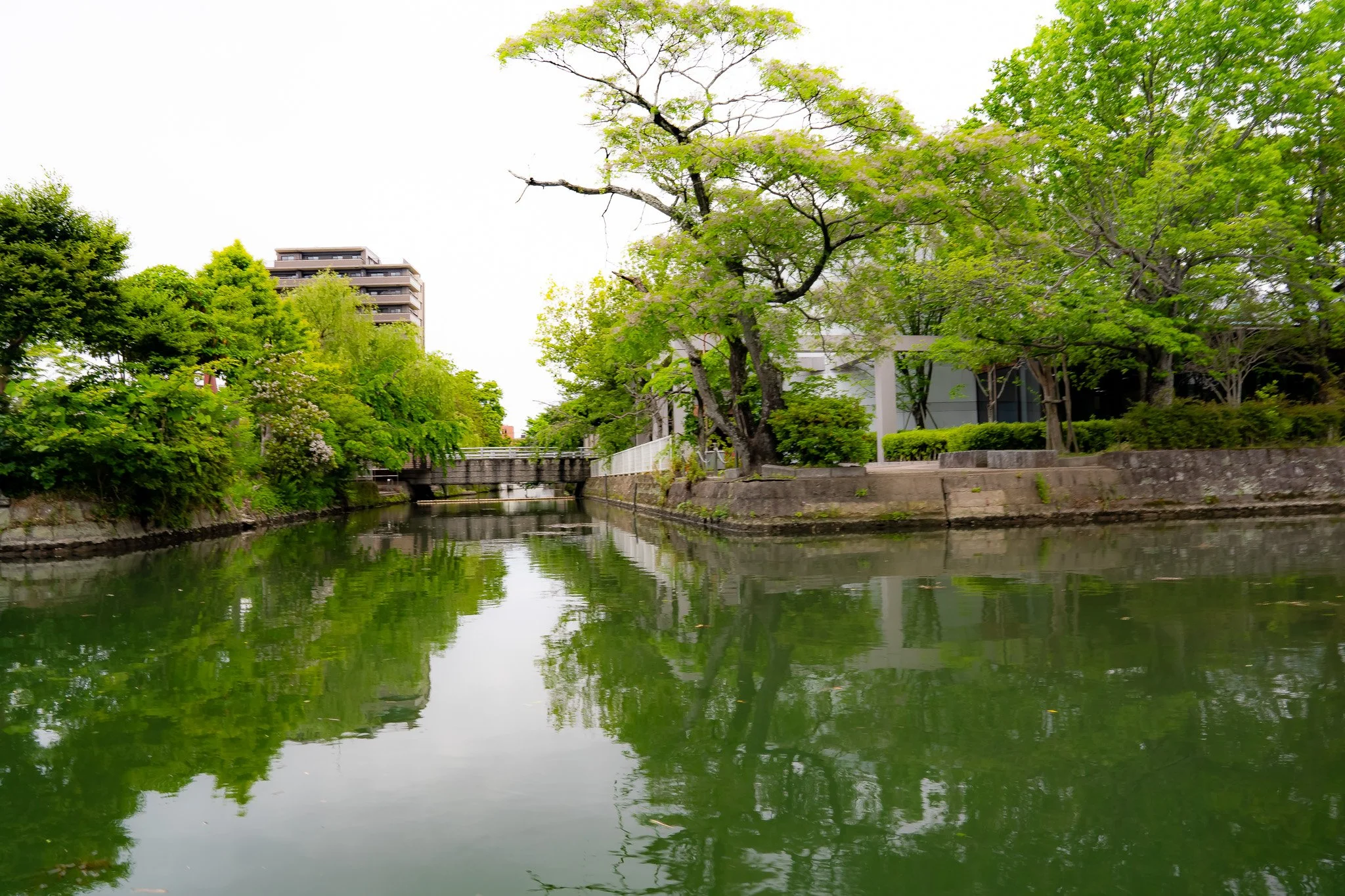
At its core, it is a town shaped by water — canals running through it, boats drifting slowly along narrow waterways. On paper, it is not so different from many river towns around the world. Even Melbourne, with the Yarra River running through its centre, shares a similar relationship with water.
And yet, Yanagawa is defined not by the presence of the river itself, but by what happens on it.
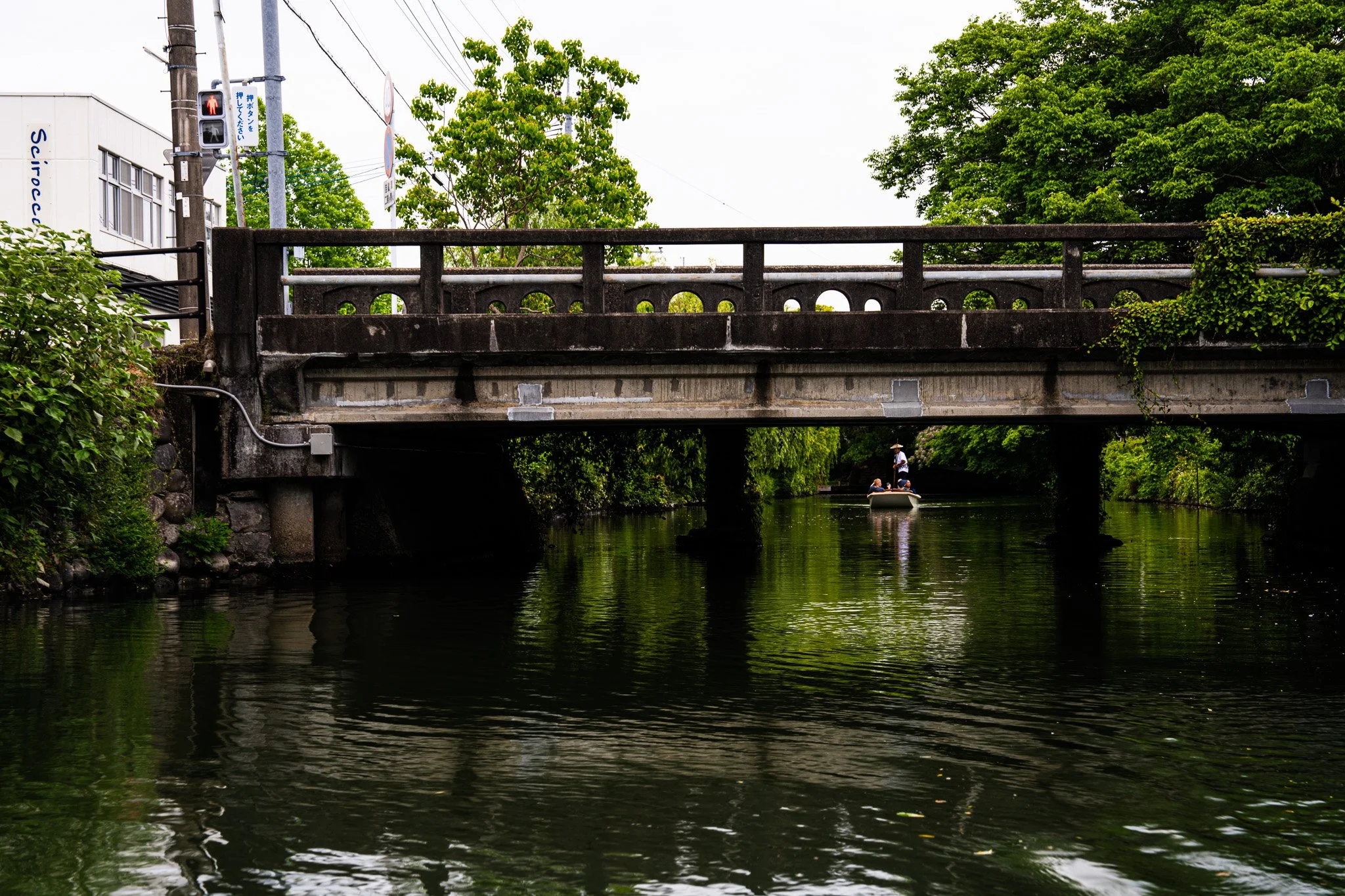
The boat ride — guided by a punter who rows while singing traditional Japanese songs — gives the journey a rhythm that feels almost theatrical. At certain low bridges, passengers must duck as the boat glides beneath, a quiet, shared instinct that briefly breaks the stillness of the ride.
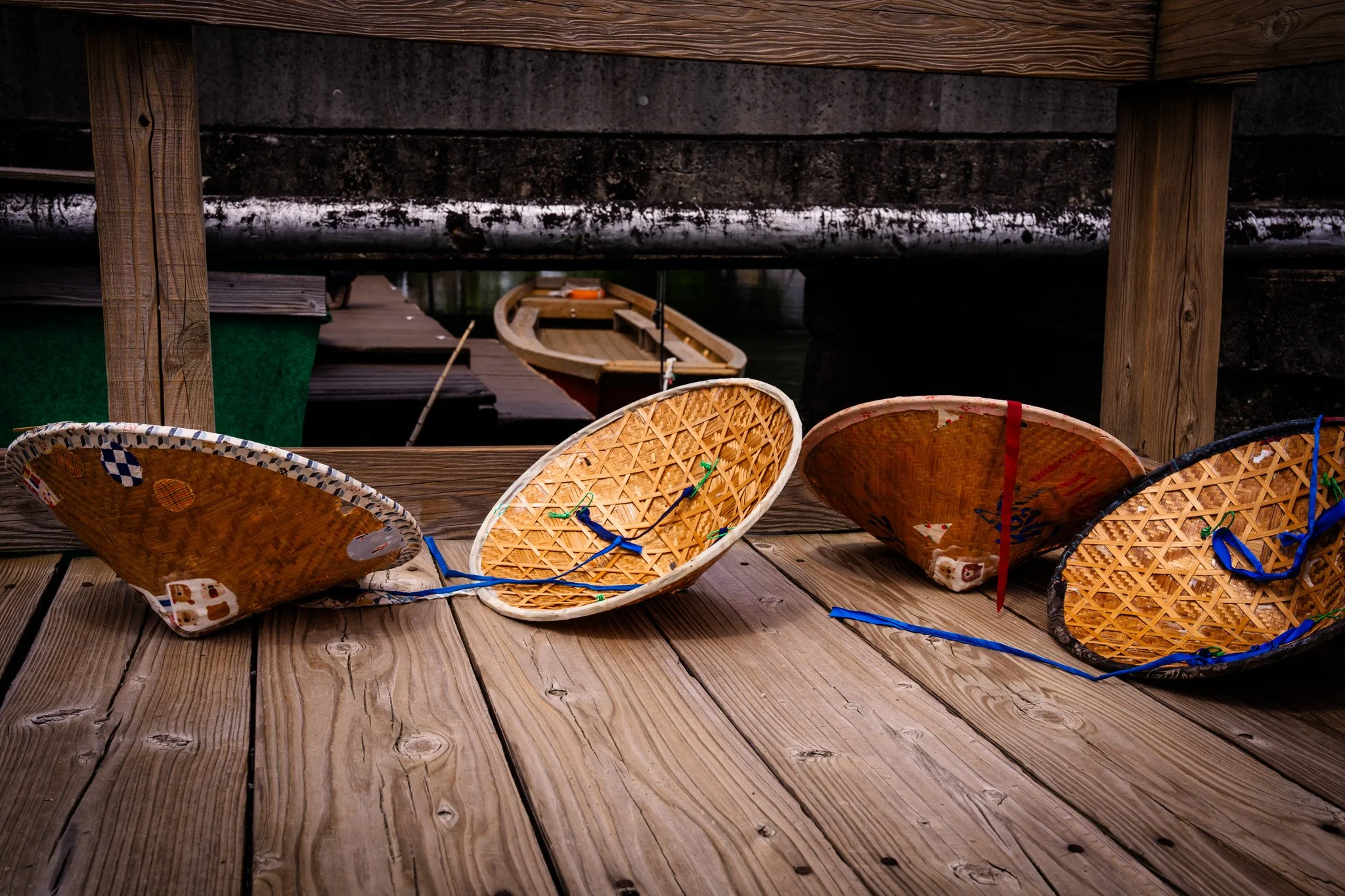
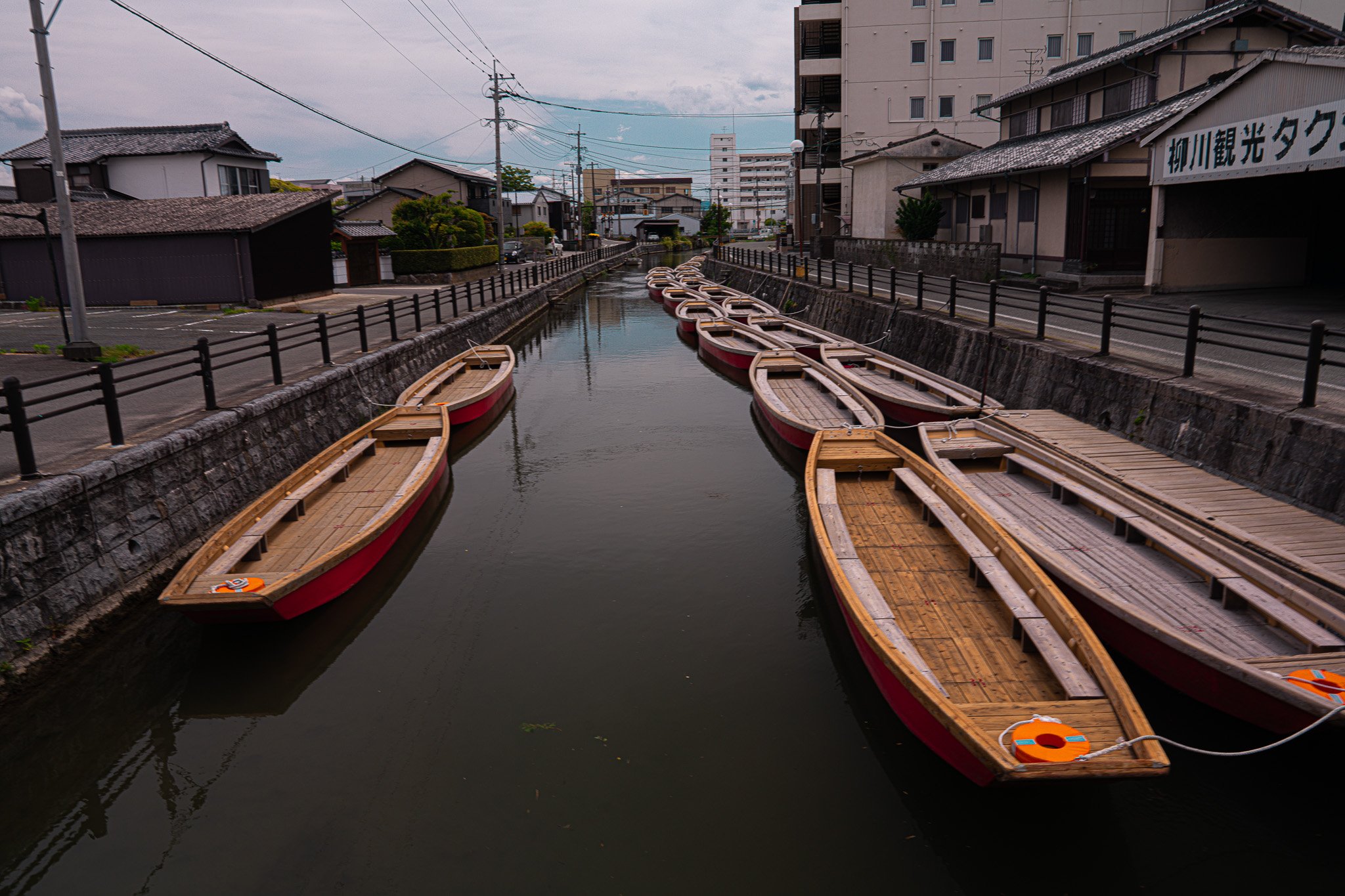
And then there is the moment that appears in almost every video — the sudden jump.
The punter stepping onto a bridge, letting the boat drift underneath, and then dropping back down in a fluid motion that feels part performance, part skill, part folklore.
Having seen it repeatedly online, I found myself less surprised than I expected to be. The anticipation had already been consumed long before I arrived.
At first, I thought that might diminish the experience.
But it didn’t.
Instead, the boat ride revealed something more subtle.
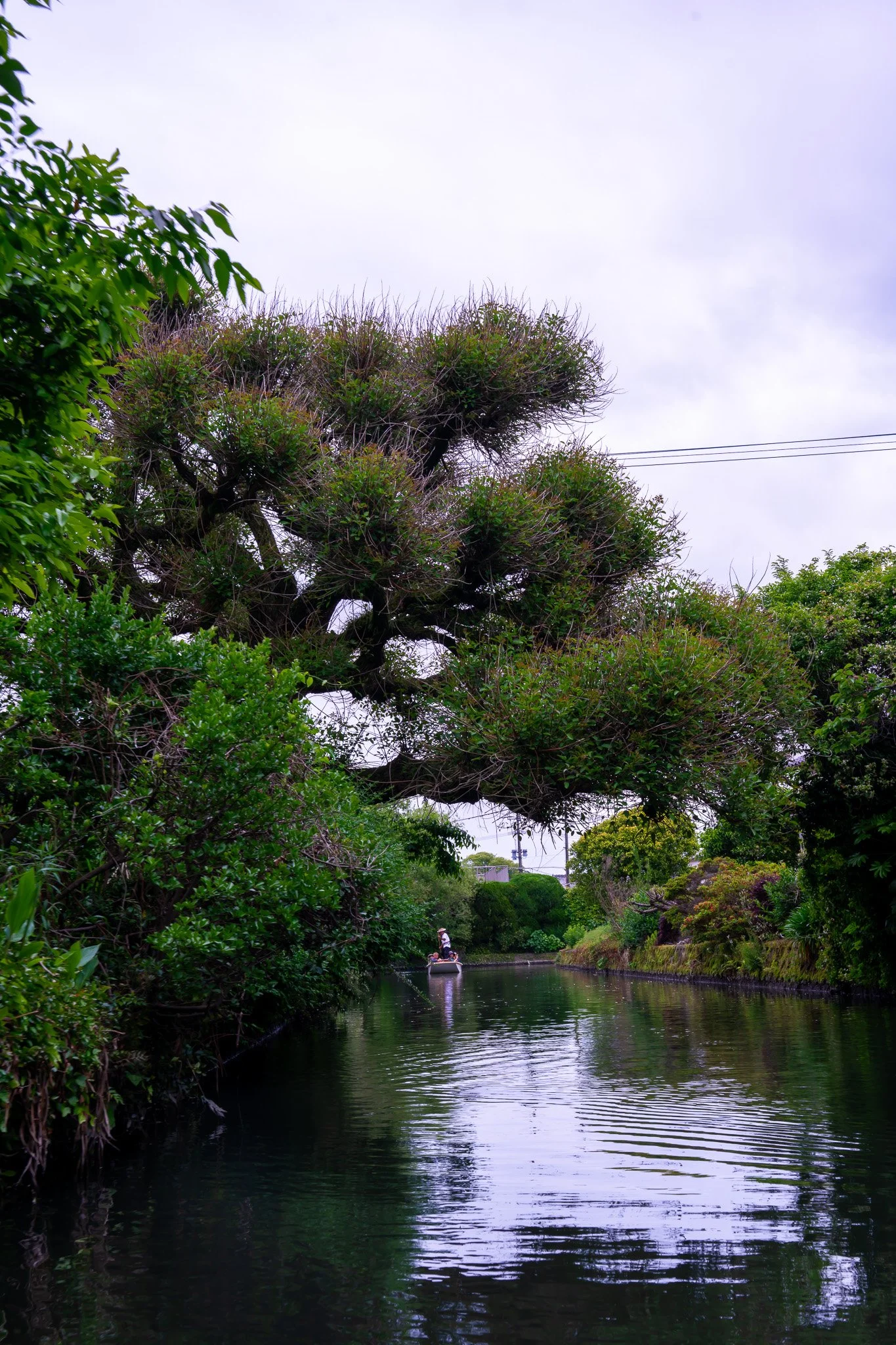
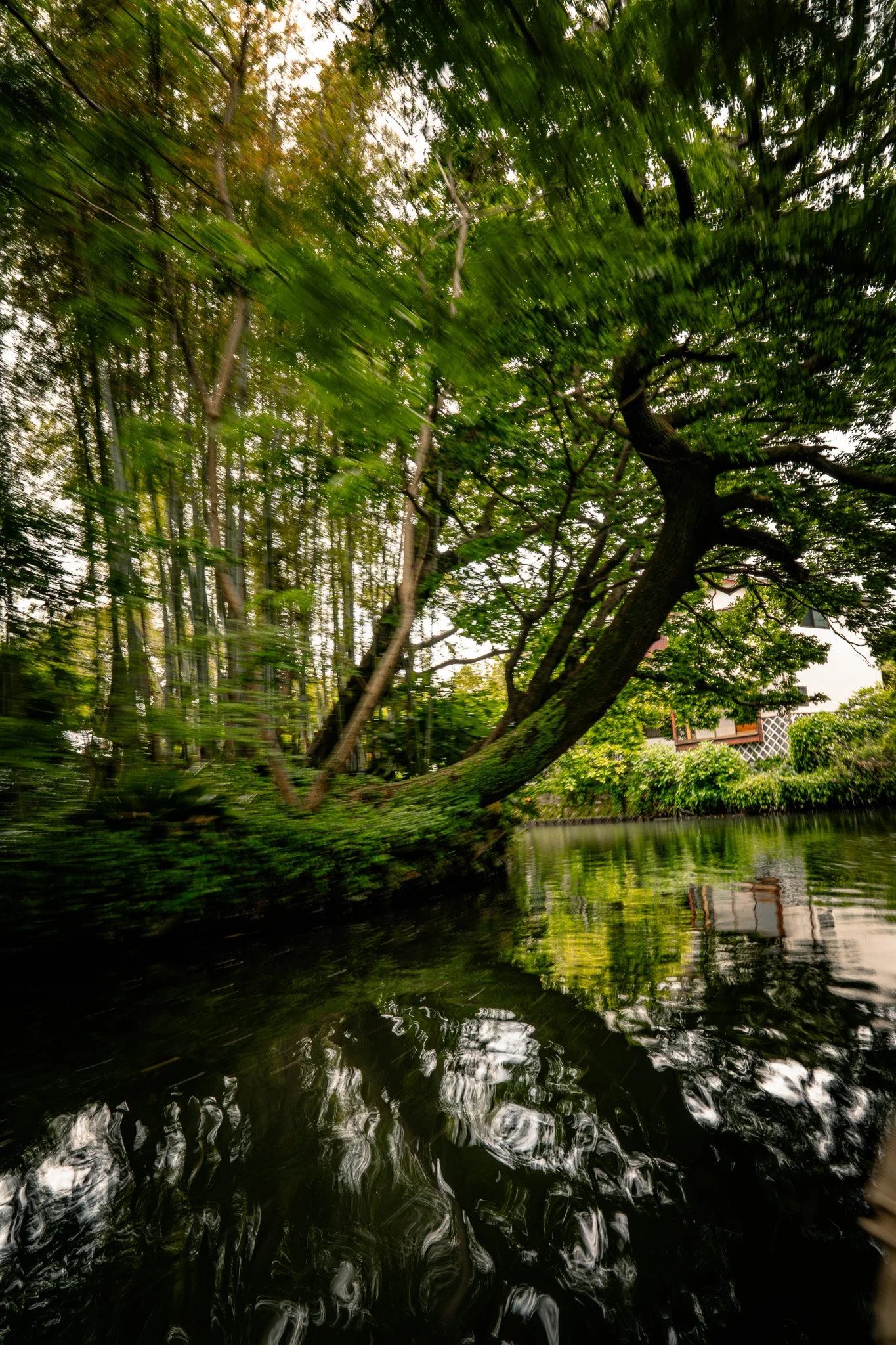
There was a quiet intimacy to it — not just in the performance, but in the way the canal runs so close to everyday life. Houses, small gardens, and lived-in spaces line the water’s edge. It is not a staged setting separated from daily existence, but one woven directly into it.
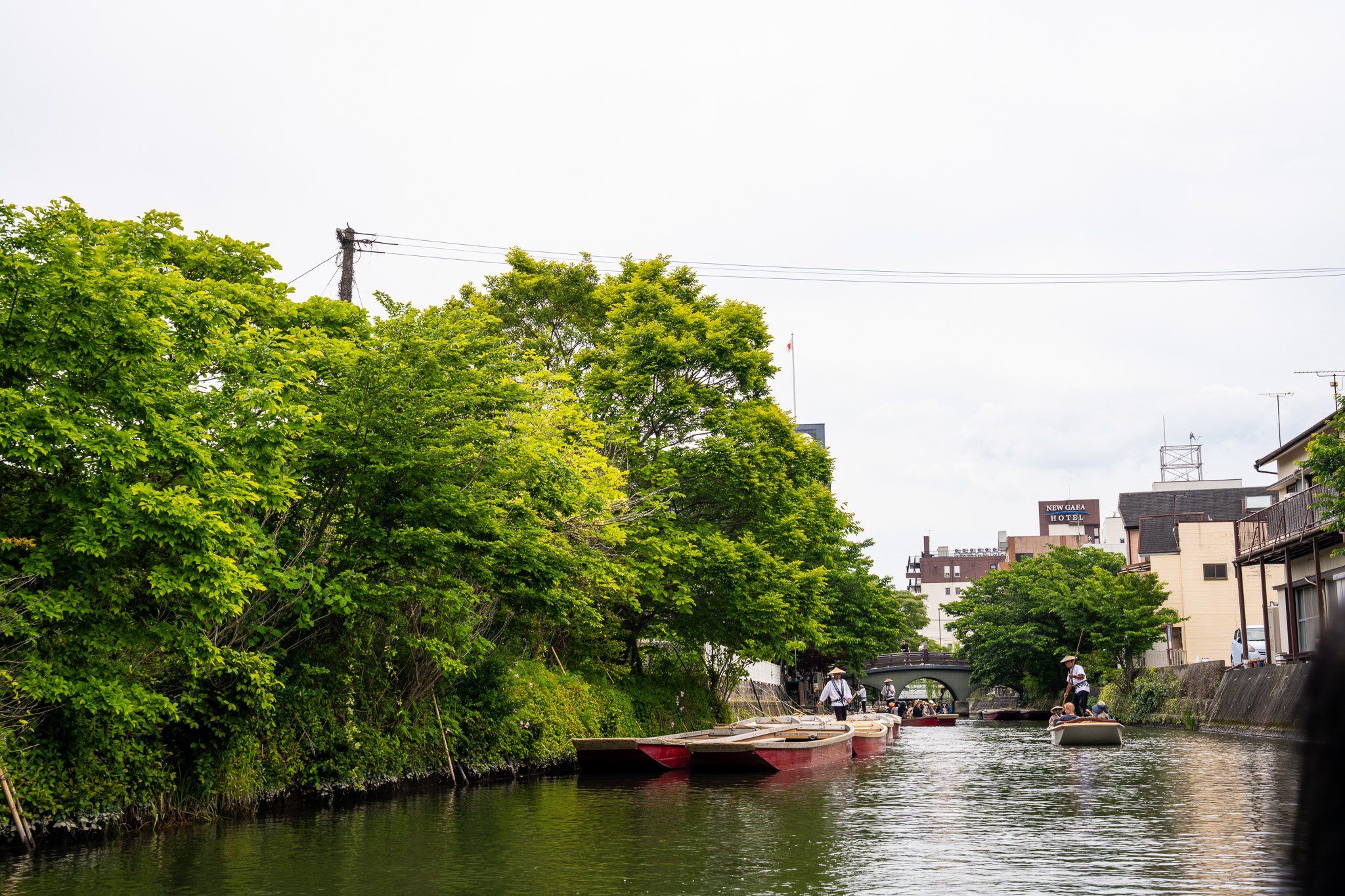
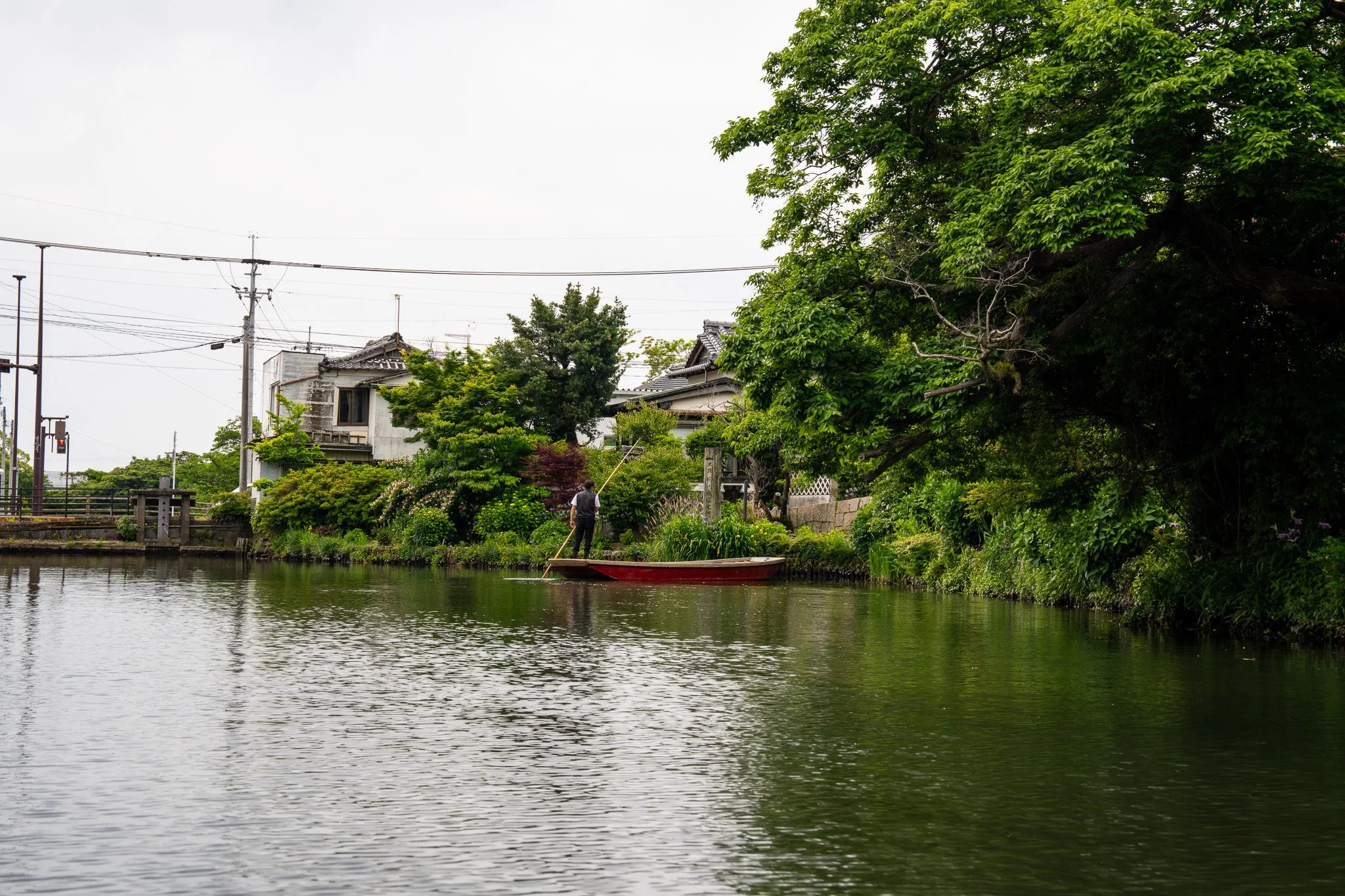
In that sense, it reminded me of other slow river experiences I had taken elsewhere — moments where the value was not in novelty, but in proximity. Not in spectacle, but in closeness to ordinary life unfolding at the edge of water.
And perhaps that is what stayed with me most.
This was not just a ride designed to be watched or admired.
It was a way of moving through a living neighbourhood, at the same pace as the place itself.
And that made it feel unexpectedly personal.
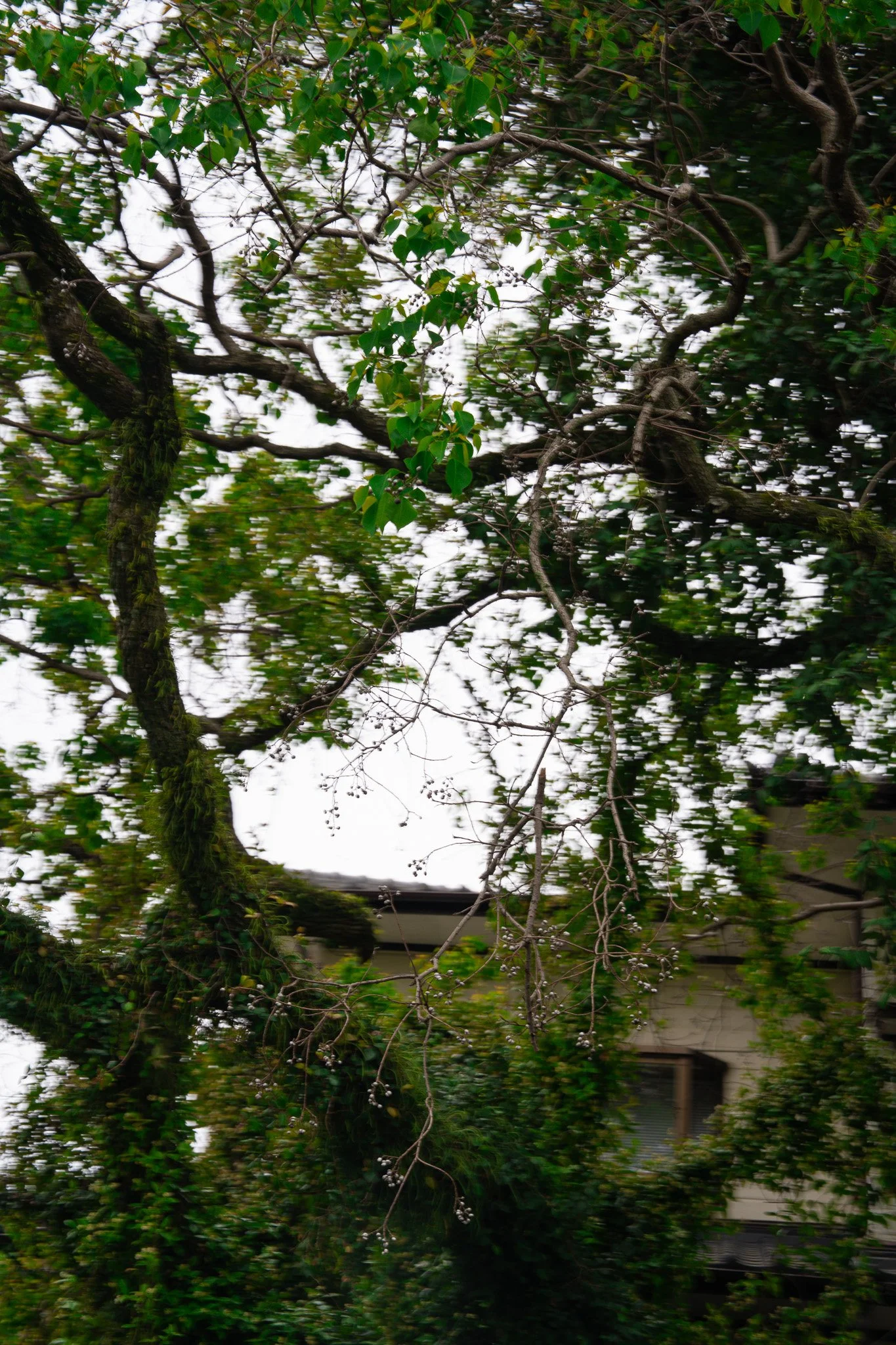
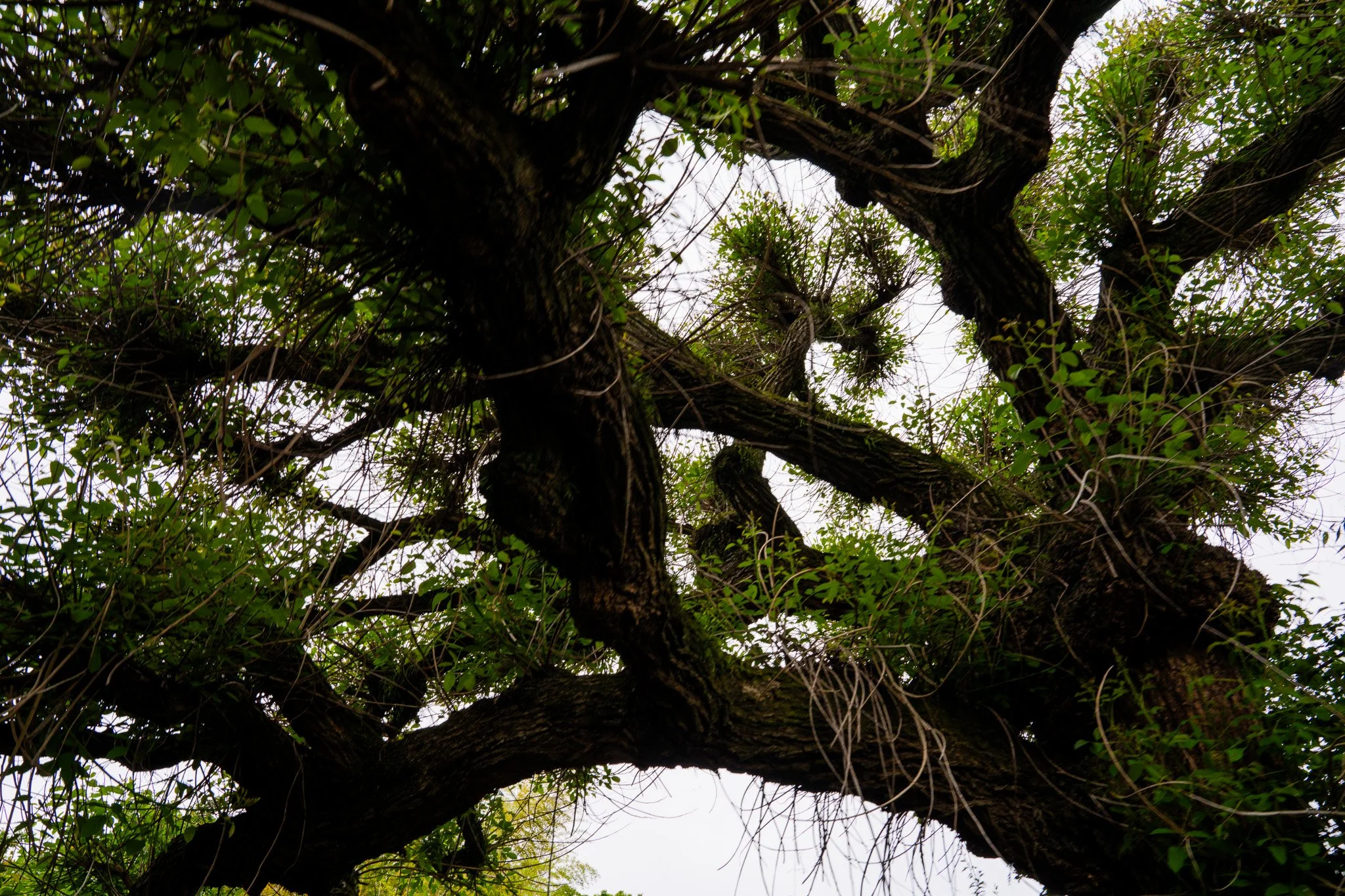
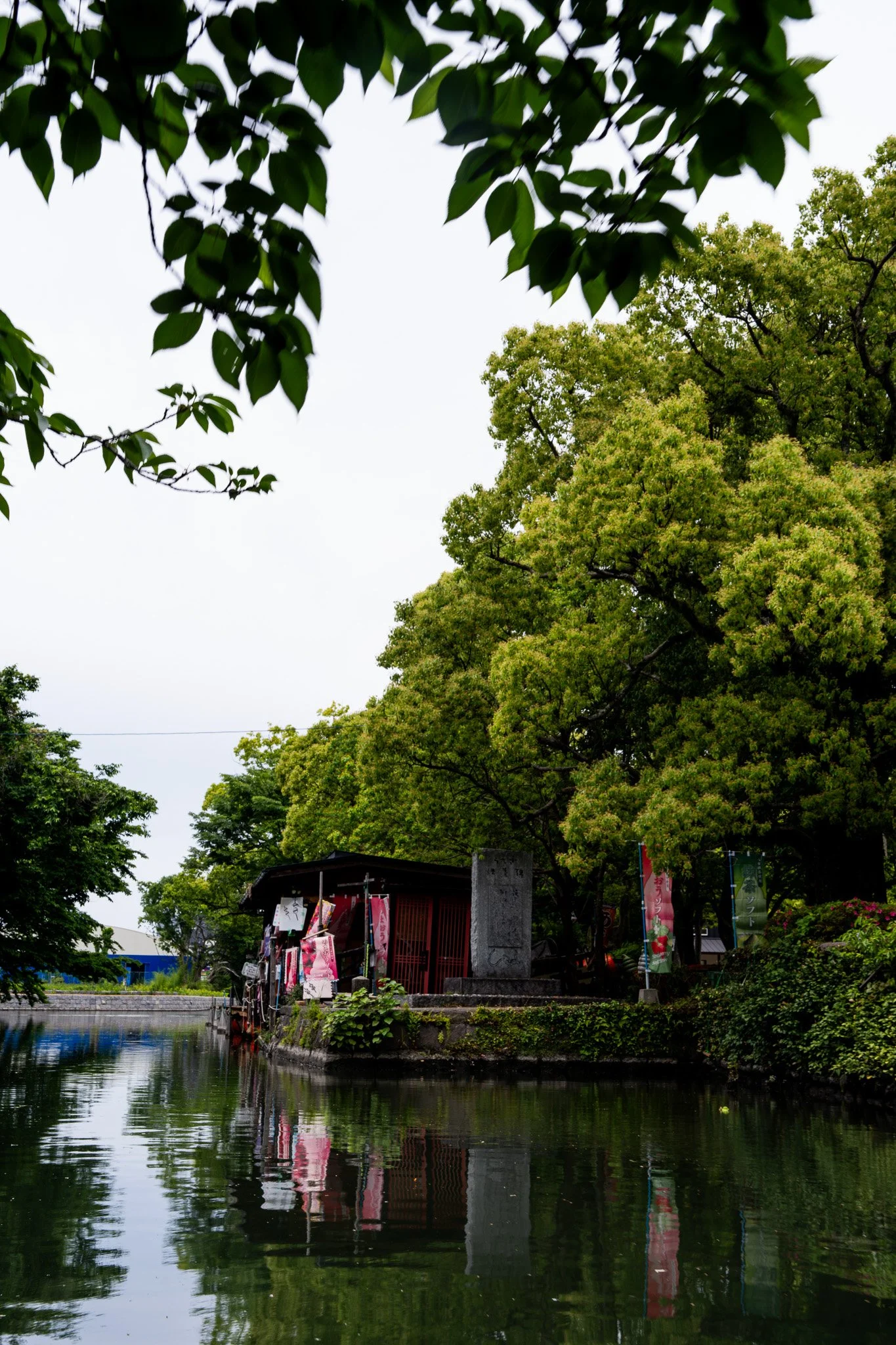
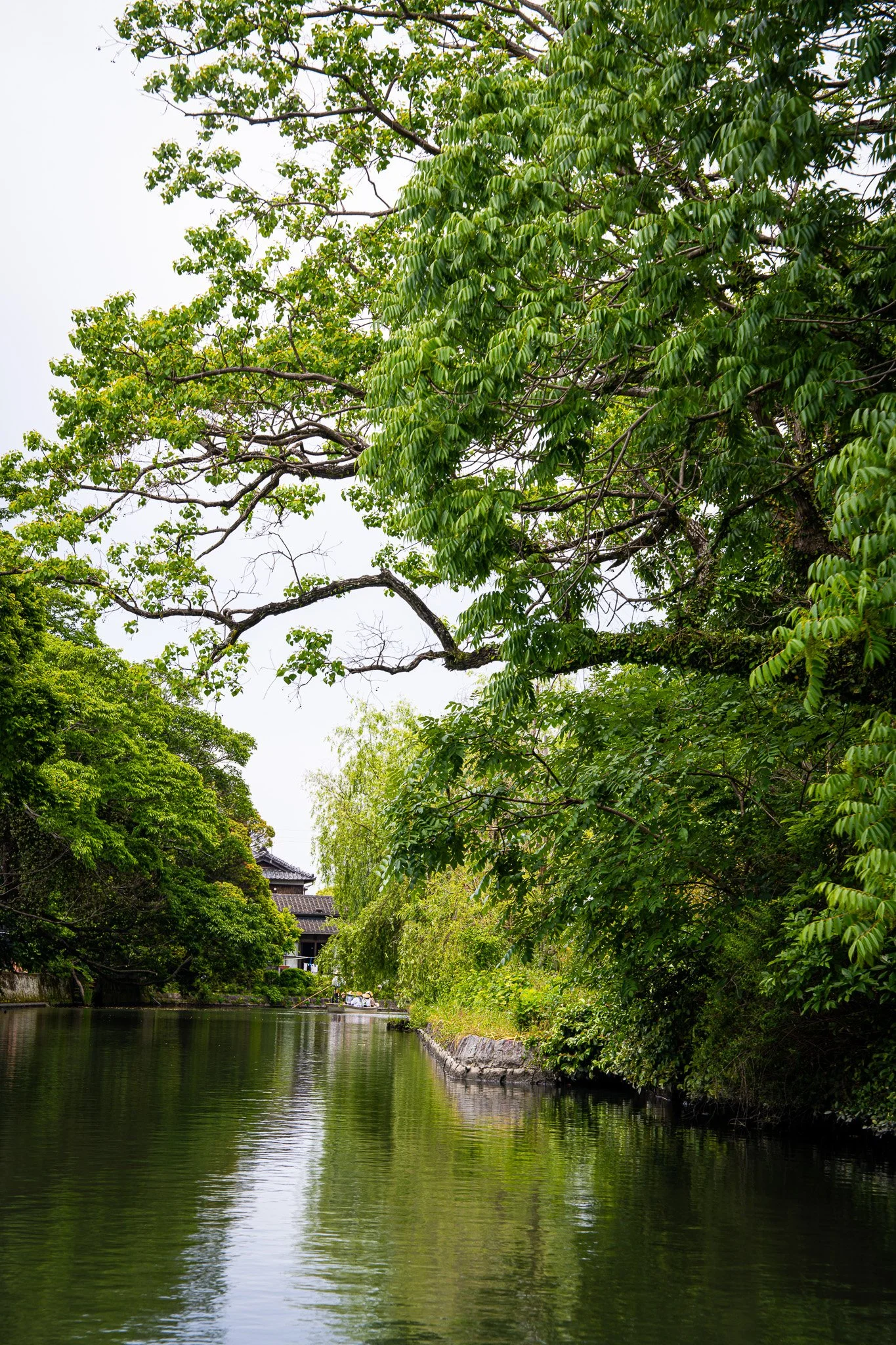
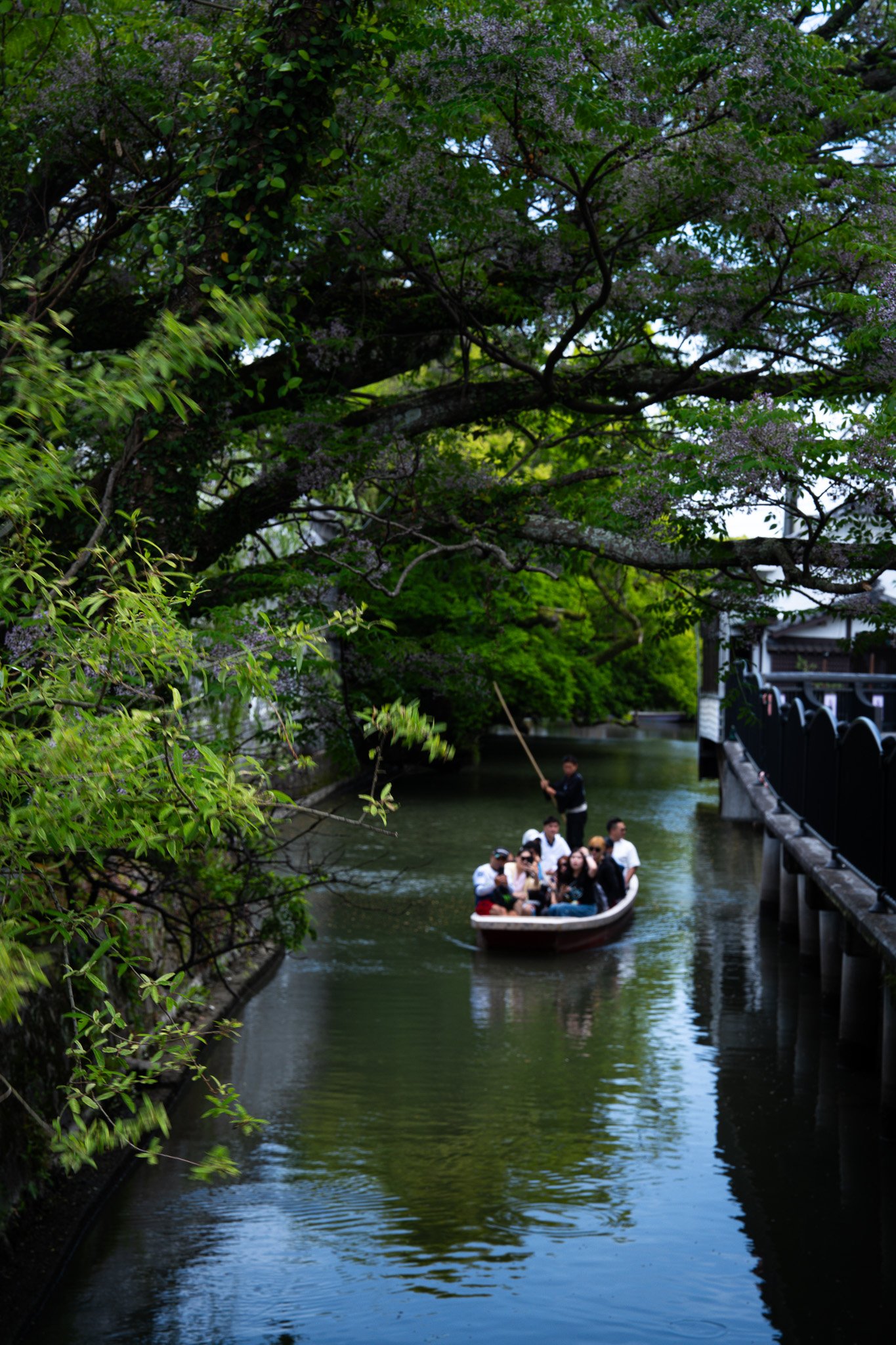
Within the group, the response was not uniform. Some found it deeply worthwhile, others less so. As always, shared travel does not produce shared interpretation.
Each of us carried a slightly different version of the same moment.
What caught my attention most, afterwards, was the lack of overt commercialisation.
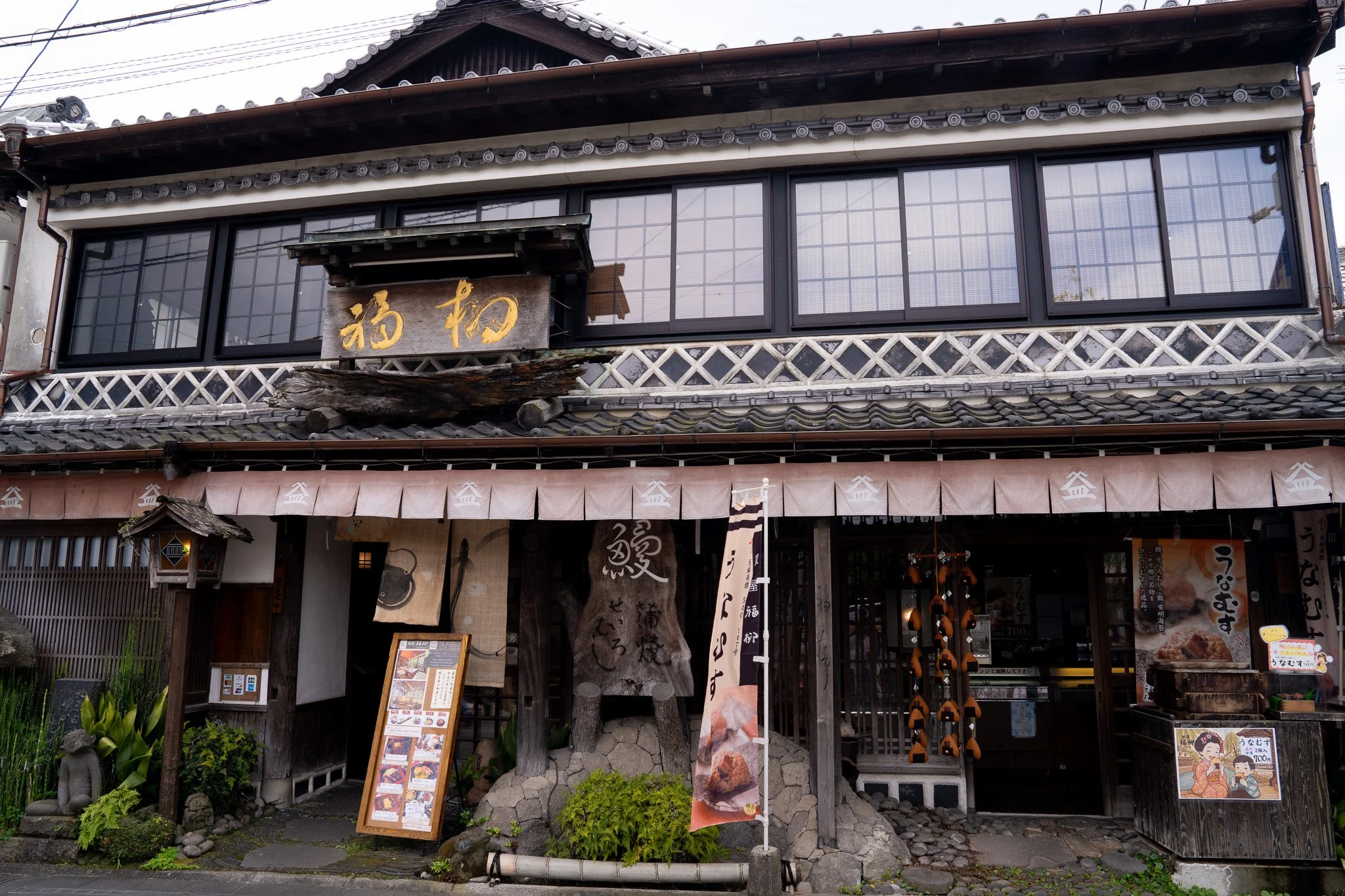
There were shops, of course — small places offering souvenirs and local dishes, including the steamed eel that Yanagawa is known for. But even as we walked along the canal after the boat ride, the street did not feel saturated or repetitive.
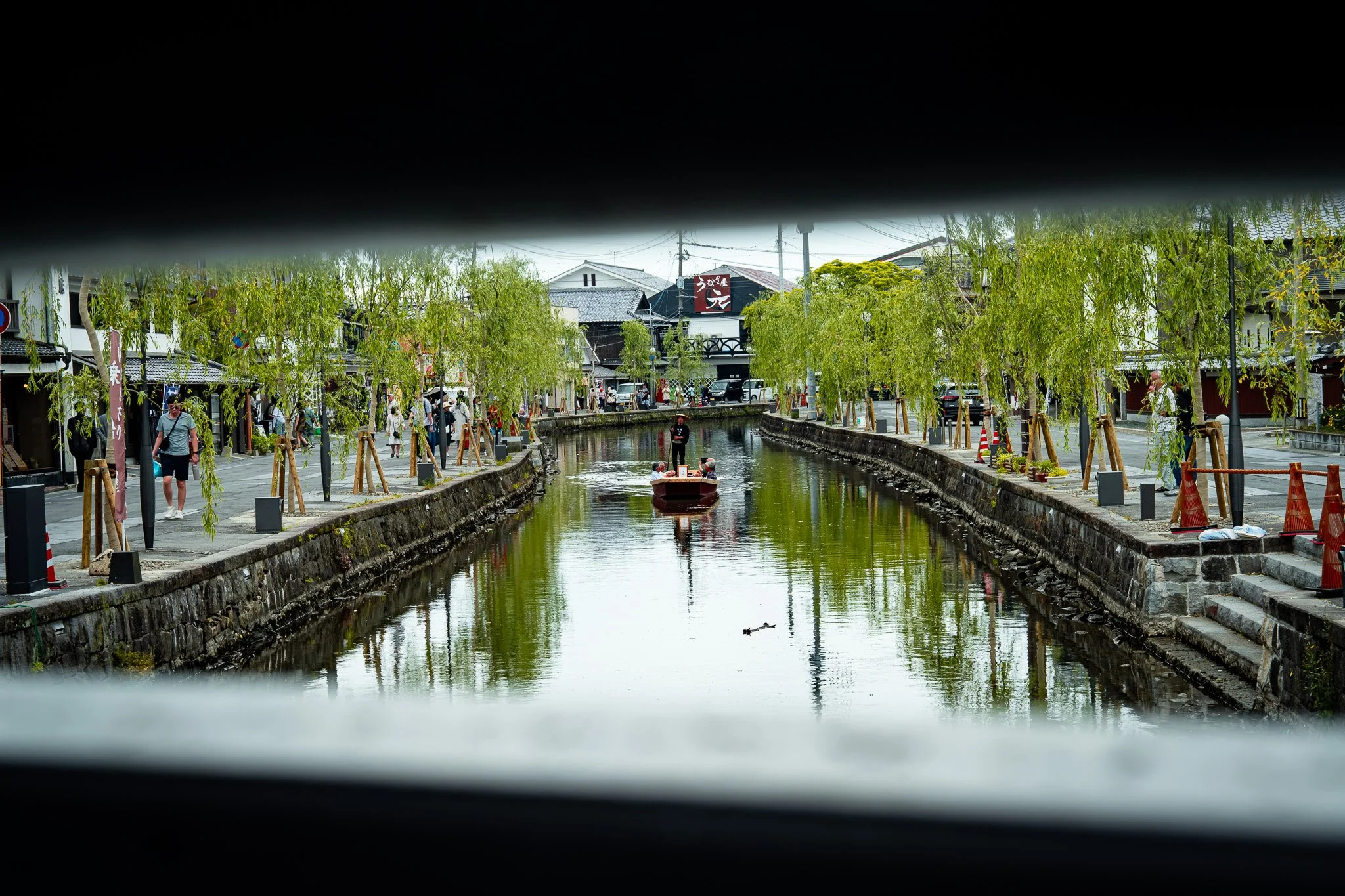
Instead, there were gaps — pauses in the streetscape that allowed the canal itself to remain visible, to breathe between moments of human activity.
It created a different kind of rhythm.
Rather than moving from one attraction to another in quick succession, there was space simply to observe — to take in the water, the light, the movement of the boats, and the quiet presence of the town itself.
It was a slower form of engagement, almost contemplative in nature.
A contrast, I realised, to what we would soon experience in places like Kyoto — where movement often shifts into a more continuous flow of people, shops, and sights, requiring a different kind of attention altogether.
Here, however, nothing demanded urgency.
You could simply walk, look, and continue at your own pace.
The drive toward Tōhō Village unfolded through landscapes that had already begun to feel strangely familiar over the previous few days.
It was the kind of scenery that travelling by train — or even by bus — would never quite reveal in the same way.
The mountains were always there, sometimes looming directly ahead, sometimes quietly accompanying us from the side of the road. Their presence became less a destination and more a constant companion to the journey itself.
And with repetition came attention to detail.
As we drove closer, the layers of vegetation slowly became distinguishable. Bamboo groves appeared first — tall, narrow, and elegant in the way they swayed lightly against the mountain slopes. Then came the pines, standing in such orderly rows that we often found ourselves wondering whether they had been deliberately planted that way, like disciplined formations stretching across the hillsides.
There were also the taller trees whose trunks rose bare and uninterrupted for long distances before finally opening into clusters of leaves high above, almost as though the forest canopy existed separately from the ground itself.
Alongside the natural landscape, another feature repeatedly caught my attention — the large concrete barriers built into the mountainsides to prevent landslides. Even from a distance they were unmistakable, their geometric patterns cutting across the green slopes in giant irregular grids filled with smaller rectangular sections inside.
Functional, yet strangely striking against the landscape.
And then there were the tunnels.
So many tunnels.
Again and again, the roads disappeared directly into the mountains before emerging somewhere else entirely. They shortened distances in ways that became easy to take for granted after a while. Yet each tunnel quietly reminded me how different this journey would once have been.
Without them, travelling through these mountain regions would have meant endless winding roads climbing up and down steep terrain.
It brought back memories of driving through Flores several years earlier, where we spent hours navigating mountain roads the traditional way — constantly ascending and descending through narrow passes. Beautiful, but exhausting in a way that slowly accumulated through the body over time.
Here in Japan, the mountains still shaped the journey.
But modern engineering had changed the rhythm of moving through them.
Most of the tunnels we passed through were relatively short. The moment you entered, you could already see the light at the other end — a strangely reassuring sight, as though the mountain never fully closed around you.
After passing several of them, I began noticing small roadside signs positioned just before each entrance, quietly displaying the tunnel length ahead. They were easy to miss, understated in typical Japanese fashion, offering information without demanding attention from either driver or passenger.
During the drive, one of us mentioned that years earlier they had travelled through similar mountain roads in Japan with family, where the repetition of tunnels eventually led to a small game: seeing who could hold their breath long enough to make it through before reaching daylight again.
Naturally, we tried it ourselves.
For most of the tunnels, it was surprisingly easy.
But there was one that changed the rhythm entirely.
When we entered, the far end did not immediately appear. The darkness stretched forward longer than expected, enough to create that brief sensation of uncertainty where distance becomes difficult to judge.
It reminded me of the Domain Tunnel back in Melbourne, though the two felt fundamentally different despite serving similar purposes.
One cuts directly through a mountain.
The other passes beneath a river.
And yet both carry the same quiet impression — the immense human effort required to reshape geography itself in order to shorten movement and connect places more easily.
Travelling through them, one after another, I found myself thinking less about the destination and more about the invisible engineering that quietly makes journeys like this possible.
As we drew closer to Tōhō Village, the landscape shifted once again.
A wide river began appearing beside the road, cutting through the valley with a quiet steadiness. Then came the dam.
Even from the passenger seat, it was difficult not to notice its scale. Concrete stretching across the landscape, reshaping the movement of water through the mountains. Another reminder of the immense human effort spent not simply resisting nature, but redirecting and repurposing it.
As we drove past, the view opened briefly enough for all of us to react almost at once. Someone pointed. Someone suggested stopping.
For a moment, we were tempted.
But then came the familiar practical response that had quietly accompanied much of our trip so far — we would stop on the way back instead.
Experience, by then, had already taught us what that usually meant.
We probably wouldn’t.
Beyond the river and the mountains, another feature had become increasingly noticeable throughout our drives across Kyushu: the fields.
They seemed to appear everywhere. Some stretched across open plains, while others sat unexpectedly close to the roadside, tucked between homes and smaller roads as though agriculture still existed naturally alongside daily life.
What fascinated us was trying to identify what exactly was growing in them.
Within the group, small debates formed repeatedly during the drive — were they rice fields or wheat fields?
To me, having grown up around rice fields back home, something about them did not feel quite right for rice. The plants appeared shorter, the grain fuller, and most noticeably, many lacked the standing water I instinctively associated with paddy fields.
And yet, I was never completely certain.
That uncertainty stayed with us until we finally had the chance to ask a local later in the day.
Wheat, he confirmed.
Though even after hearing the answer, there were still moments during the drive when certain fields caught the light in such a way that I could almost convince myself they were rice after all.
Perhaps familiarity sometimes shapes what we expect to see before we fully understand what is actually there.
One among us had naturally become the unofficial leader for this particular detour into Tōhō Village.
Not through declaration, but through interest.
Pottery mattered more deeply to them than it did to the rest of us, and with nearly forty active kilns scattered across the area, they had already mapped out a loose strategy for how we would move through the village.
Given the limited time we had, only four or five kilns had been selected — chosen carefully based on reviews, reputation, and proximity to one another.
It was, in many ways, a practical compromise between curiosity and time.
At each kiln, the same quiet pattern repeated itself.
We wandered slowly through shelves lined with ceramics, picking things up, turning them over in our hands, pausing longer than expected in front of pieces that caught our attention. And whenever something truly appealed to us, the same question immediately surfaced:
Do we buy it now, or risk not returning later?
Because deep down, we already understood the truth.
There was a high chance we would not come back.
Time rarely unfolded as generously as we imagined it would at the beginning of the day.
So decisions had to be made in the moment.
Strangely, no formal agreement about this system was ever spoken aloud. Yet everyone seemed to move within it instinctively, adapting to the same rhythm without needing explanation.
It was something that had slowly formed over the course of the trip itself.
By then, travelling together no longer felt like six separate people trying to protect individual preferences. We were becoming more aware of the balance required — when to linger, when to move on, when to wait, and when to quietly let someone else have their moment.
Not perfectly.
But better than when we had first arrived.
I was never particularly drawn to pottery in the way some others in the group were.
I could appreciate it at a surface level — the beauty of the finished pieces, the patience and craftsmanship required to shape them — but I had never invested enough time to truly understand the finer details that pottery enthusiasts seemed to notice immediately.
My attention was often guided by instinct rather than expertise.
I found myself drawn more toward pieces that simply caught my eye, something intuitive rather than technical.
Yet this trip introduced another practical consideration entirely: weight.
Every piece we considered carrying home would eventually have to fit within the limited allowance of our luggage for the flight back to Australia. And with everything else we already planned to bring home from Japan, pottery quickly became one of the more difficult purchases to justify.
So my partner and I quietly agreed on a simple rule — only lighter pieces, and only a small number of them.
Still, moving from kiln to kiln became unexpectedly eye-opening.
The variety alone was astonishing. Different shapes, textures, colours, and purposes — some delicate and decorative, others clearly designed for everyday use. And within each piece, there was a visible sense of care, as though value had been placed not only on the object itself, but on the process of making it.
Yet despite all the variations, one common thread seemed to run through many of them.
The geometric patterns distinctive to Tōhō Village.
Subtle, repetitive, almost rhythmic in their design.
Perhaps that was what eventually drew me in.
Not a sudden understanding of pottery as an art form, but a growing attachment to something recognisable and specific to the place itself.
In the end, the few pieces we selected felt less like purchases and more like quiet reminders of the journey — small tokens carrying the texture and rhythm of the village home with us.
By the time we were ready to leave Tōhō Village, the clock had already moved far beyond what we had originally intended.
Whether you were there for the pottery or simply passing through, there was a quiet pull in each kiln — something about the way objects were displayed, handled, and considered that made it easy to linger longer than planned, often without realising how much time had passed.
When we entered Itoshima into the navigation system, the estimated arrival time was already after 7 p.m.
Even without checking, I knew what that meant.
The sunset would be gone.
A quick glance at the weather confirmed it — the sun would set exactly at 7.
Yet the group still chose to continue.
So we set off again, retracing the same roads we had driven earlier that morning.
At one point, I joked to the driver, asking if he could “make up time” — shave off perhaps thirty minutes if possible.
He laughed, but there was a quiet seriousness in how he responded. The pace on the highway subtly shifted, still safe, still within limits, but with a shared awareness that we were now negotiating with time itself.
Halfway through the drive, just before the turn toward Fukuoka, I found myself questioning the decision more openly.
Maybe we should turn back.
By then, we were almost certainly going to miss the sunset, and I had no real sense of what Itoshima would look like in fading or already-dim light.
It was known, after all, for a single image — the white torii gate standing on the shore, facing the twin islands offshore. That was the photograph everyone came for.
But without the light, what would remain?
Just shapes. Silhouettes. Possibly still beautiful, but uncertain.
And that uncertainty stayed with me.
As someone who enjoys photography, I found myself thinking less about reaching the place, and more about what I was actually trying to capture.
A “perfect shot,” for me, was never just about composition, colour, or subject.
Those mattered, but they were not the core.
The frame I valued most was something quieter — shaped by time, patience, curiosity, and presence. It was about how long I stayed with a place before raising the camera. About what I noticed before deciding to press the shutter.
In the end, the photograph itself was only the surface.
What mattered more was what existed outside the frame — the experience that made the image meaningful in the first place.
That, to me, was the real picture.
We actually managed to save those precious ten minutes.
By the time we arrived, the sun was still lingering on the horizon.
Almost immediately, the group seemed to understand what it meant to me. Without hesitation, they urged me to get out of the car rather than wait for parking.
So I did.
I ran.
Sprinting along the roadside, I kept glancing toward the horizon — the sunset unfolding in real time, almost unreal in its timing. There was something surreal about it, as though I had stepped briefly outside the trip itself and into a scene I was only meant to observe from a distance.
For a moment, it felt like watching myself in a film.
A single purpose. No hesitation. Just movement toward light.
The steps leading down to the beach — which I would later realise were beautifully designed — became nothing more than a blurred passage, a structure simply meant to get me from one point to another.
When I finally reached the shore, I stopped.
The beach was not crowded. A few people scattered across the sand, leaving more than enough space to choose a position.
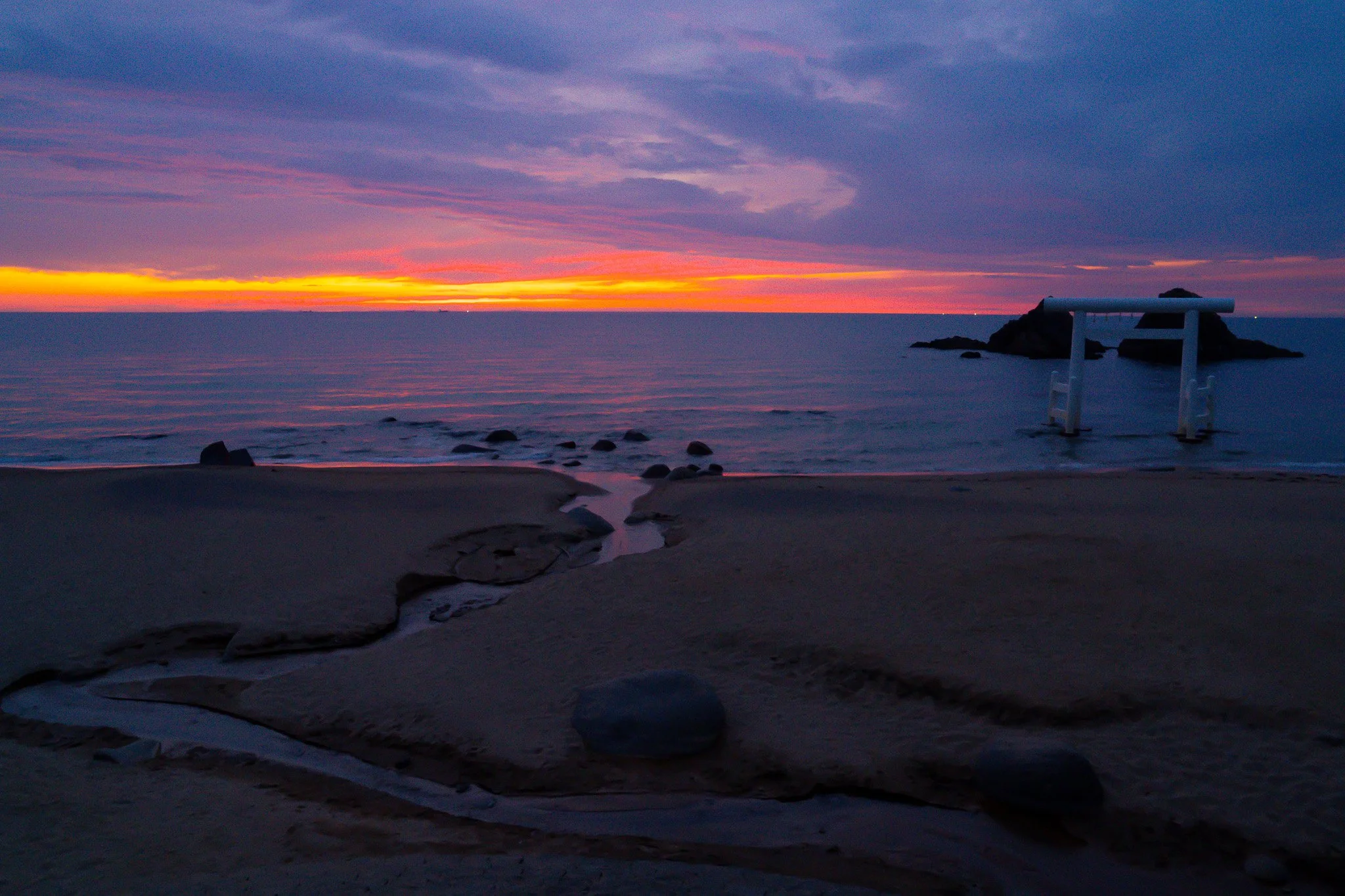
The Itoshima coastline opened in front of me, with the white torii gate standing offshore, facing the twin islands in the distance.
There was no time to scout or overthink composition. No time to wait for the “perfect” alignment.
It was instinct now.
Click. Then click again.
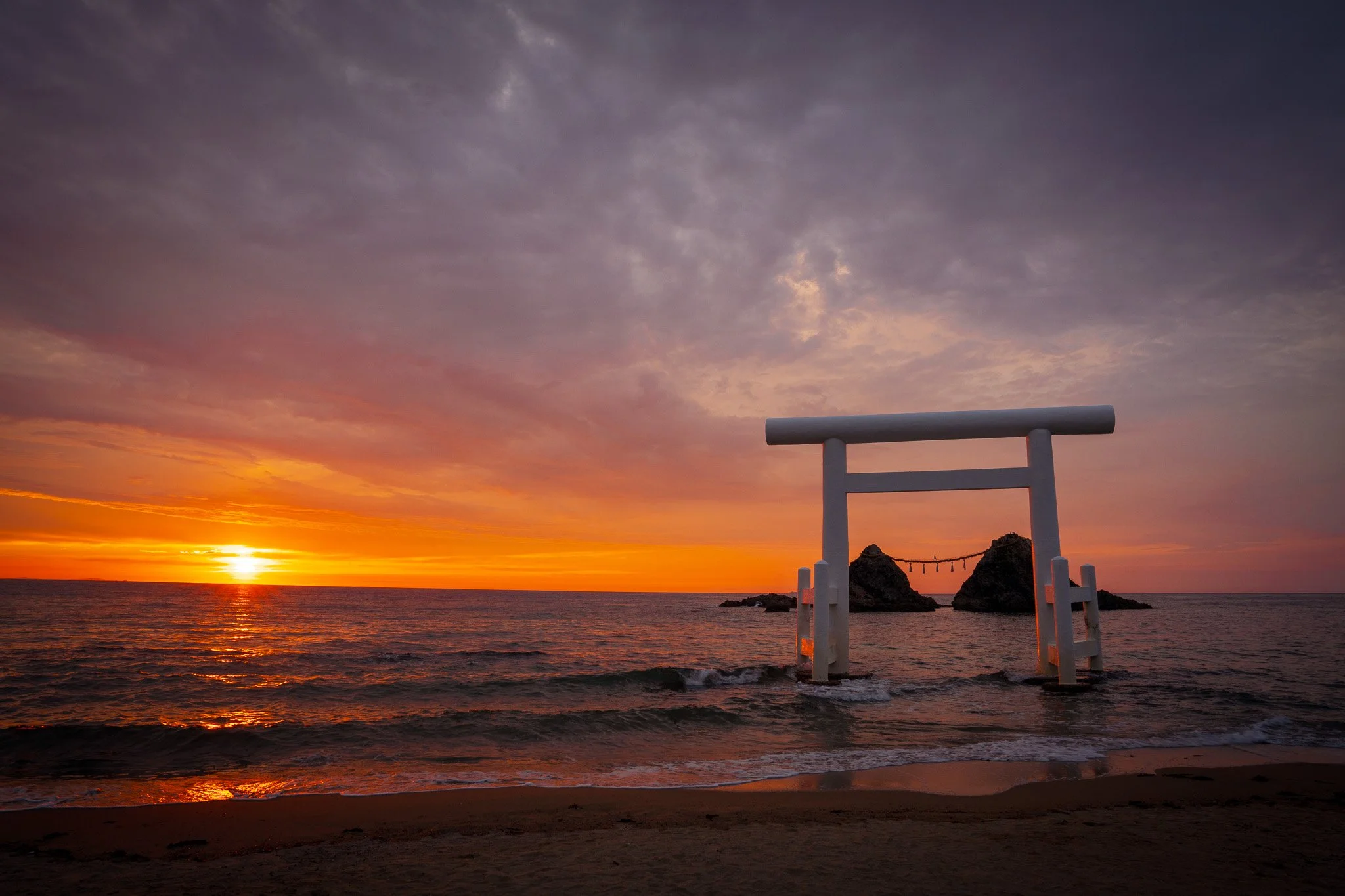
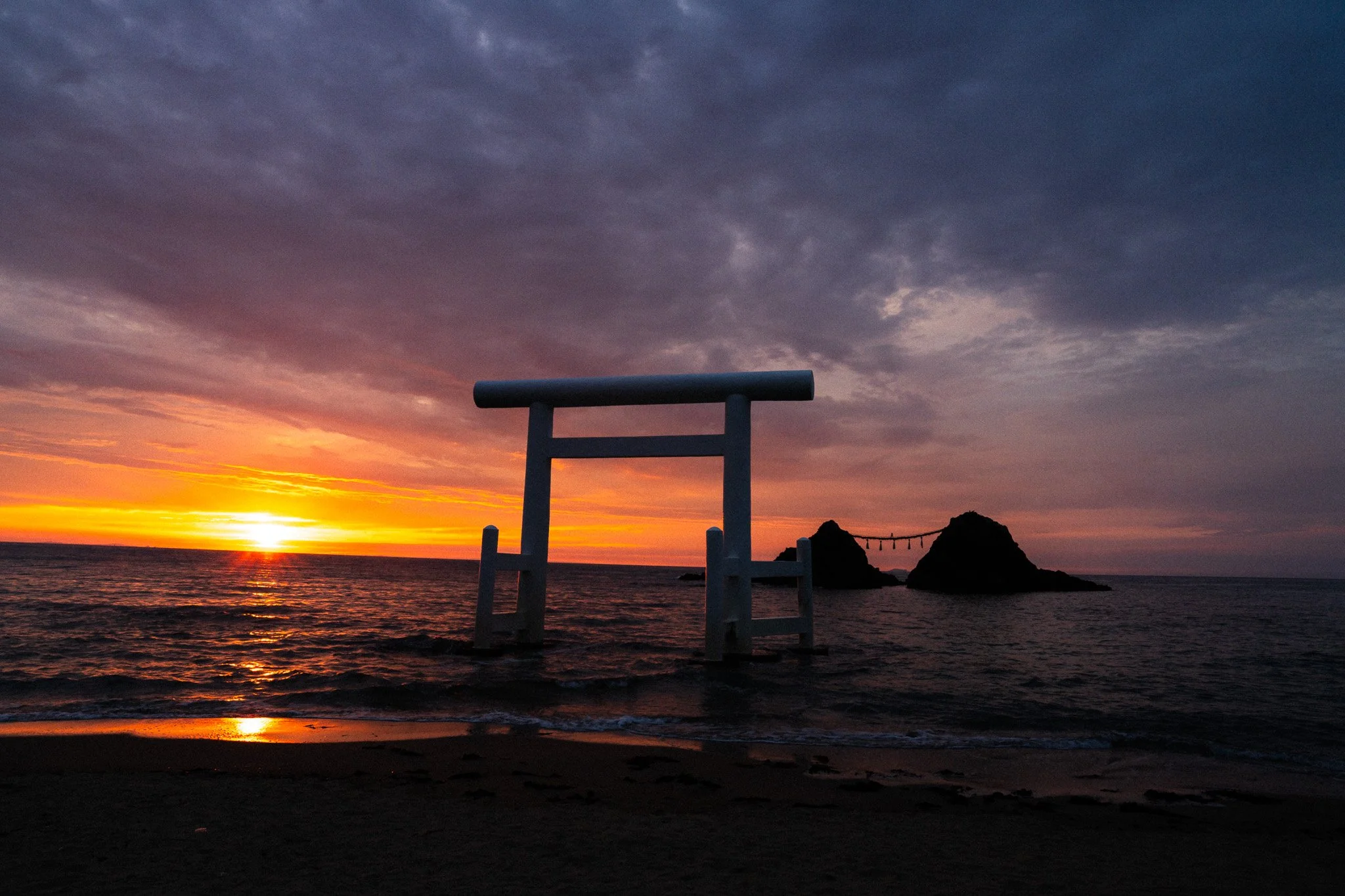
As the sun continued its descent, disappearing slowly into the horizon, the urgency began to dissolve.
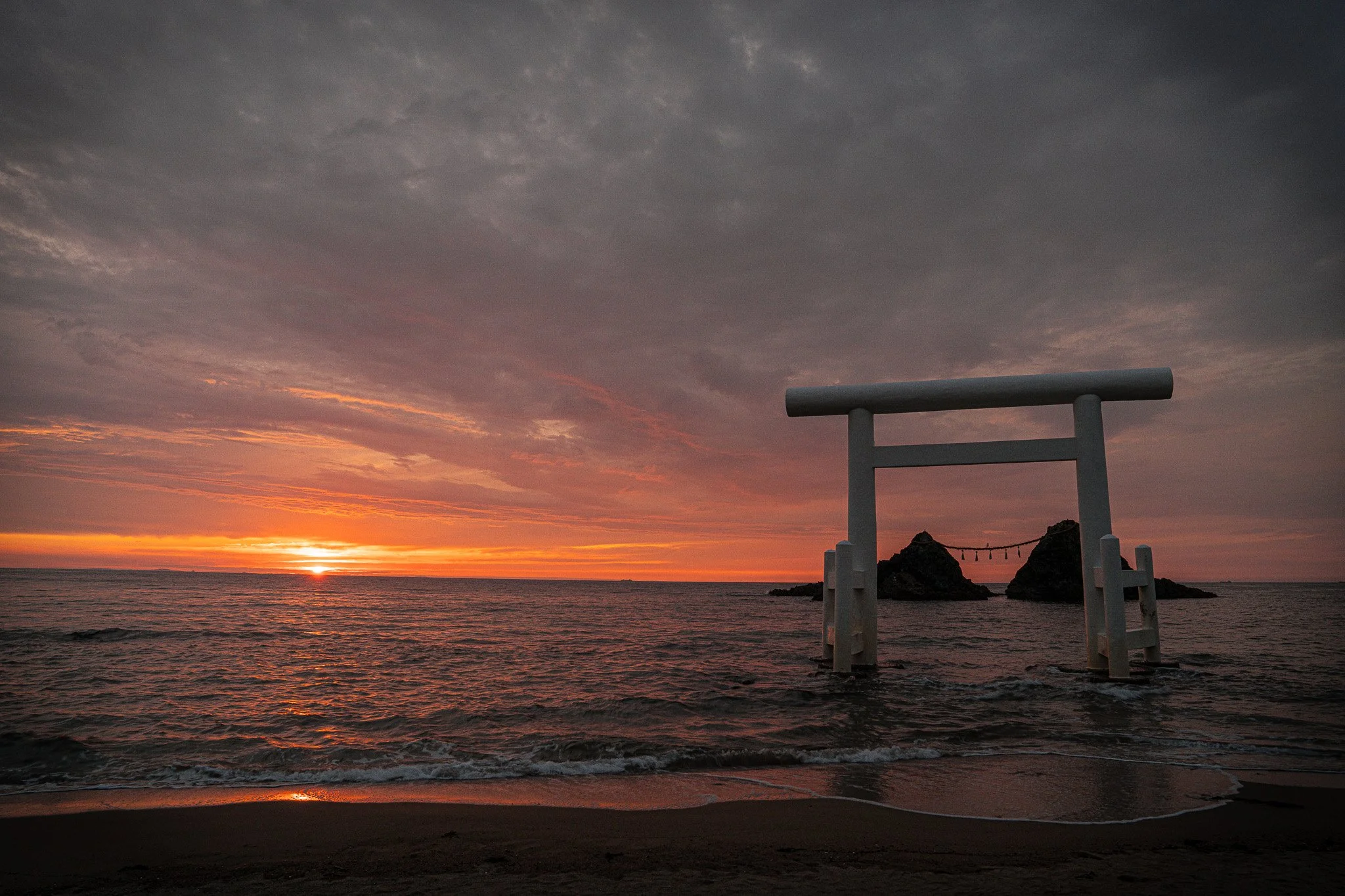
Only then did I slow down.
I lowered the camera.
And for the first time, I simply looked.
The sky had shifted into a deep orange glow. The sea remained calm, absorbing the fading light. Waves broke gently against the shore in a steady rhythm, almost unchanging.
Beyond the torii gate, the twin islands stood still — unmoving silhouettes against a sky that was quietly burning itself out.
In that moment, the place no longer felt like something to capture.
It felt like something to be inside of.
And the stillness that followed the rush made everything before it feel distant, almost unreal — as though the sprint, the urgency, the fear of missing it, had all belonged to another version of me entirely.
The group eventually made it down to join me on the beach.
By then, the sun had completely disappeared below the horizon, but the lingering light it left behind was still enough to reveal the outline of the Itoshima coastline — the details of the white torii gate, and the silhouettes of the twin islands beyond.
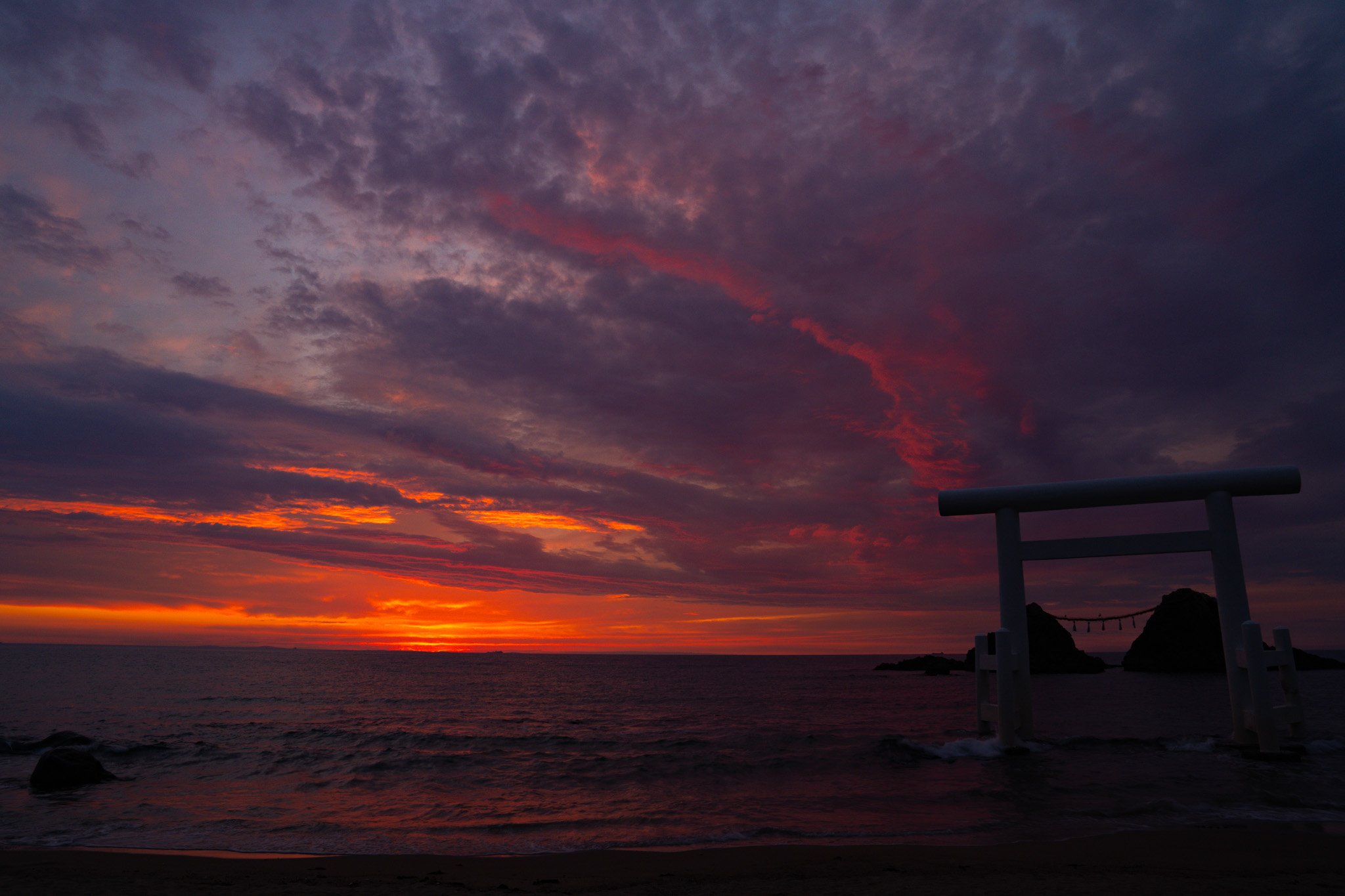
We stayed longer than we had anywhere else on the trip.
Long after most people had already left, we remained, unhurried, as the sky slowly darkened and the shoreline quieted around us.
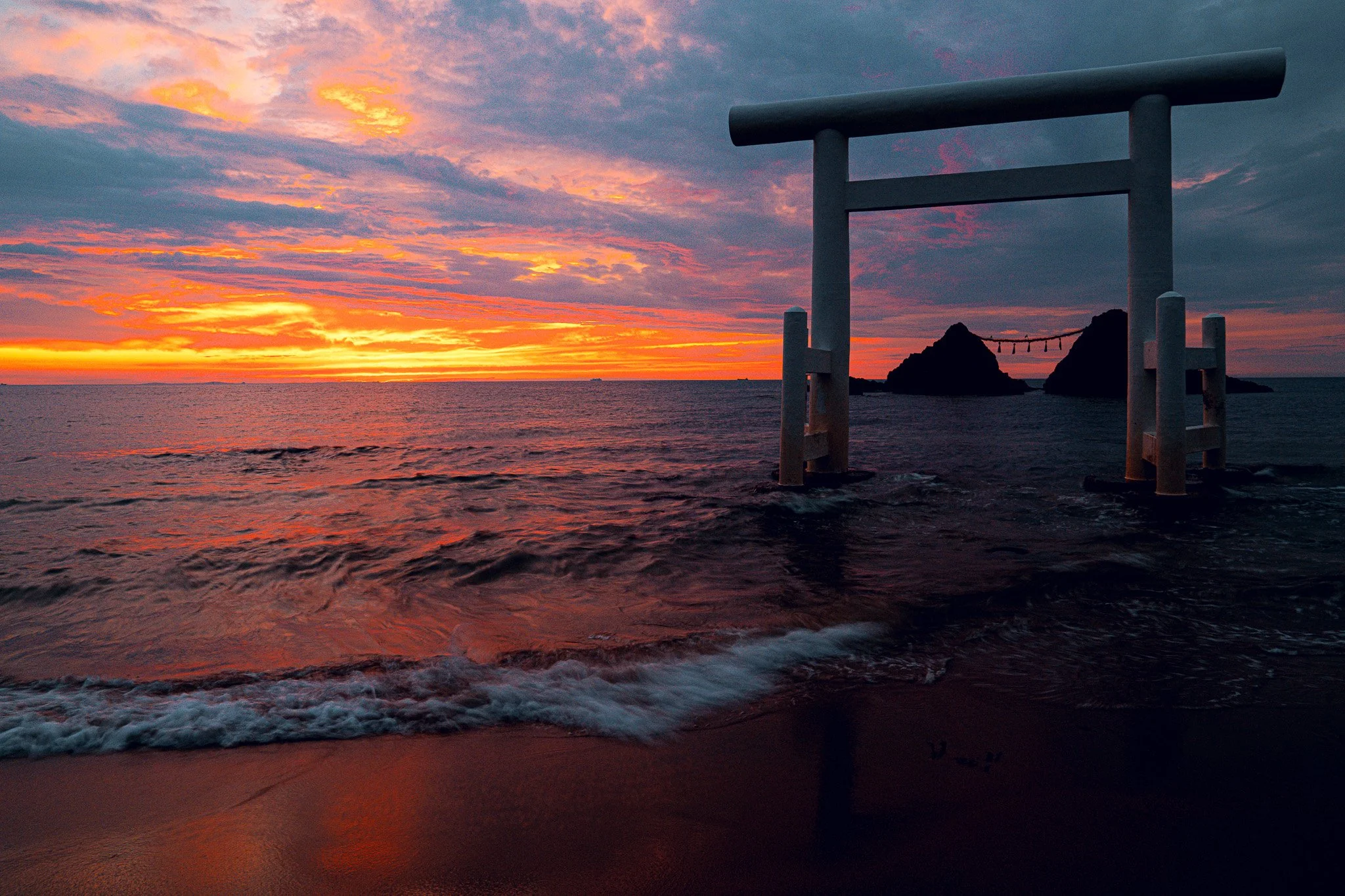
In many ways, it felt like the natural closing moment of our journey through Kyushu.
A quiet ending, without announcement, but felt by all of us in the same way.
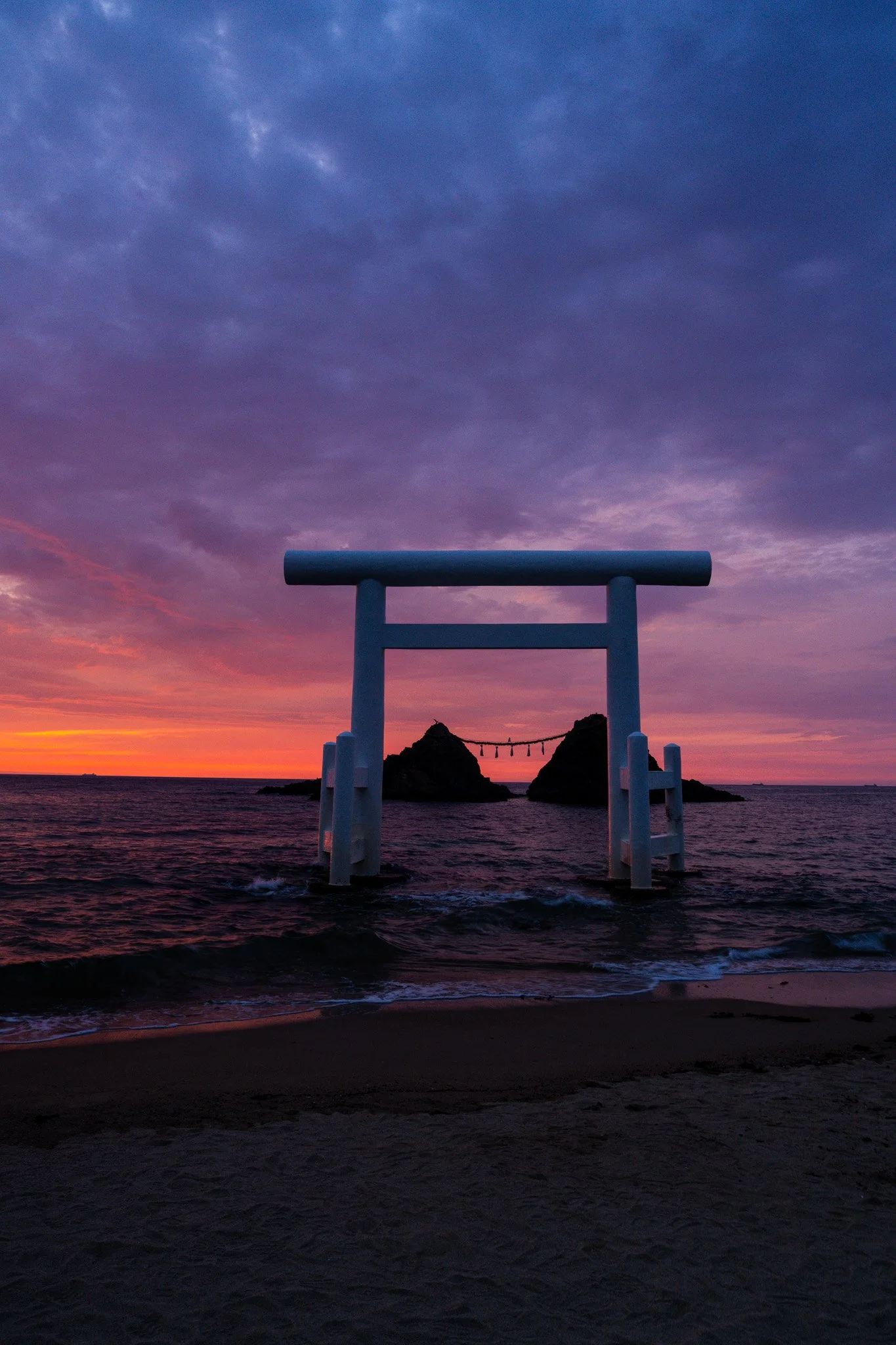
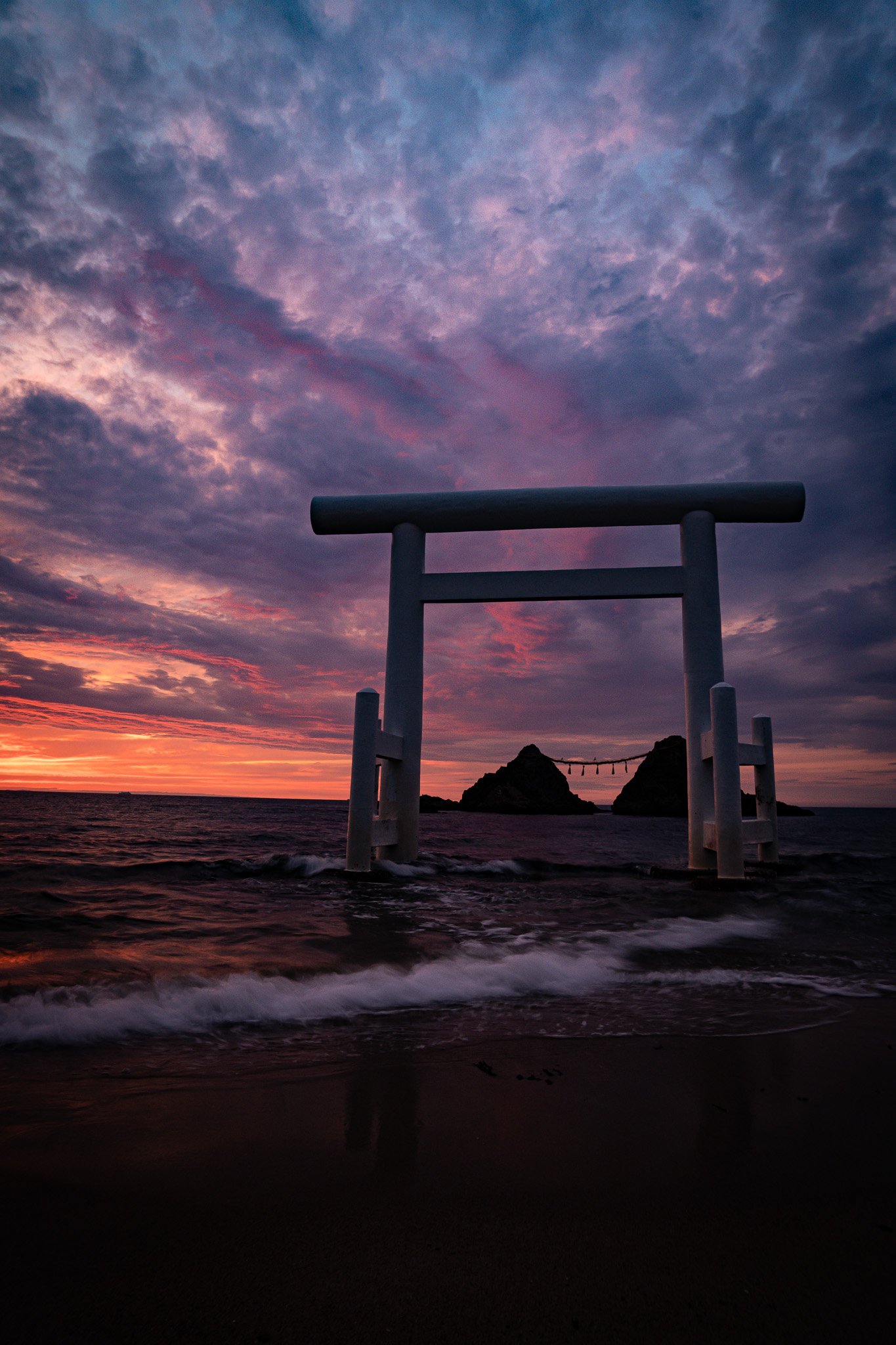
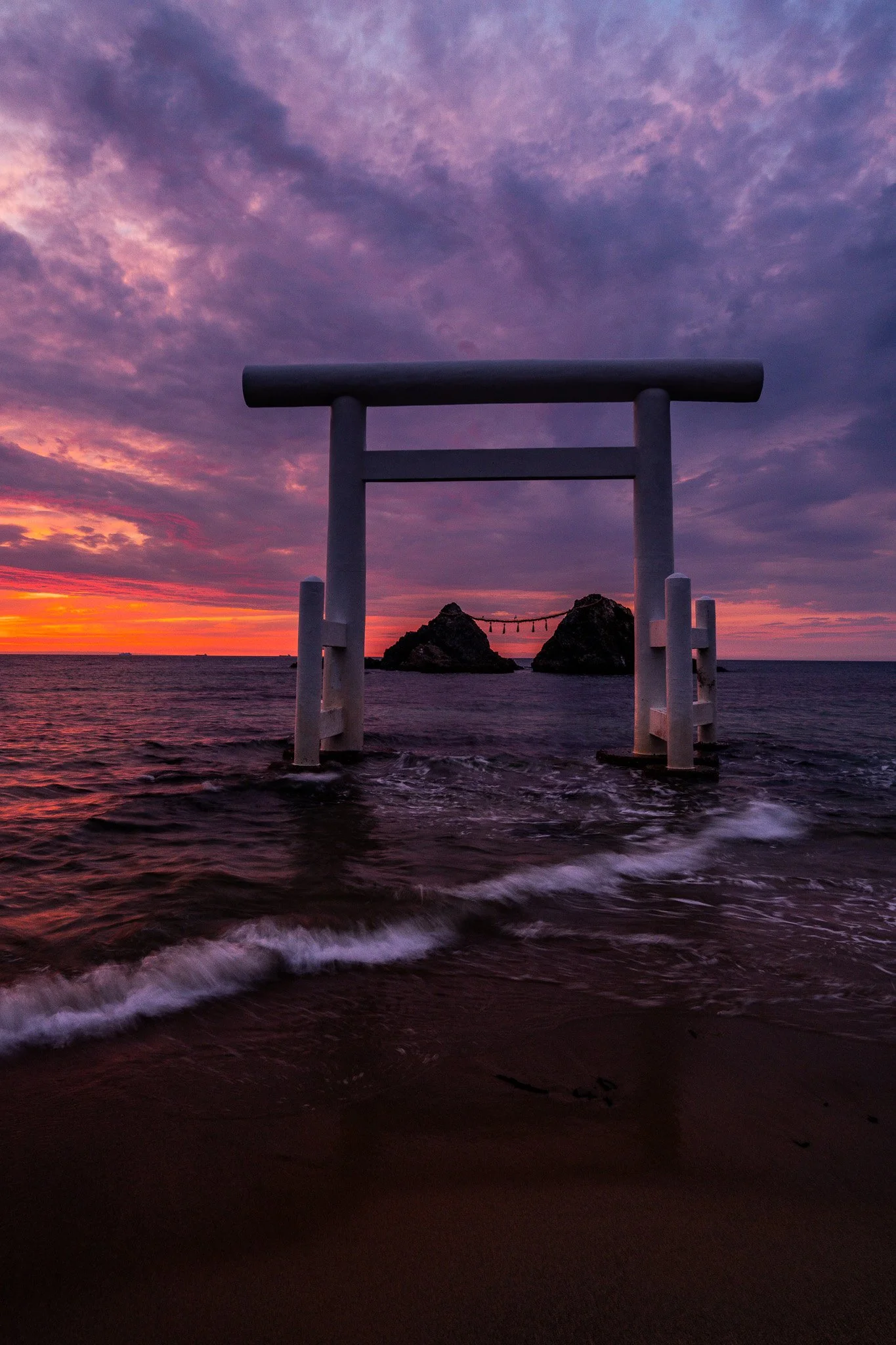
We eventually left only when the beach had fully emptied — as if we were the last to step out of that shared moment.
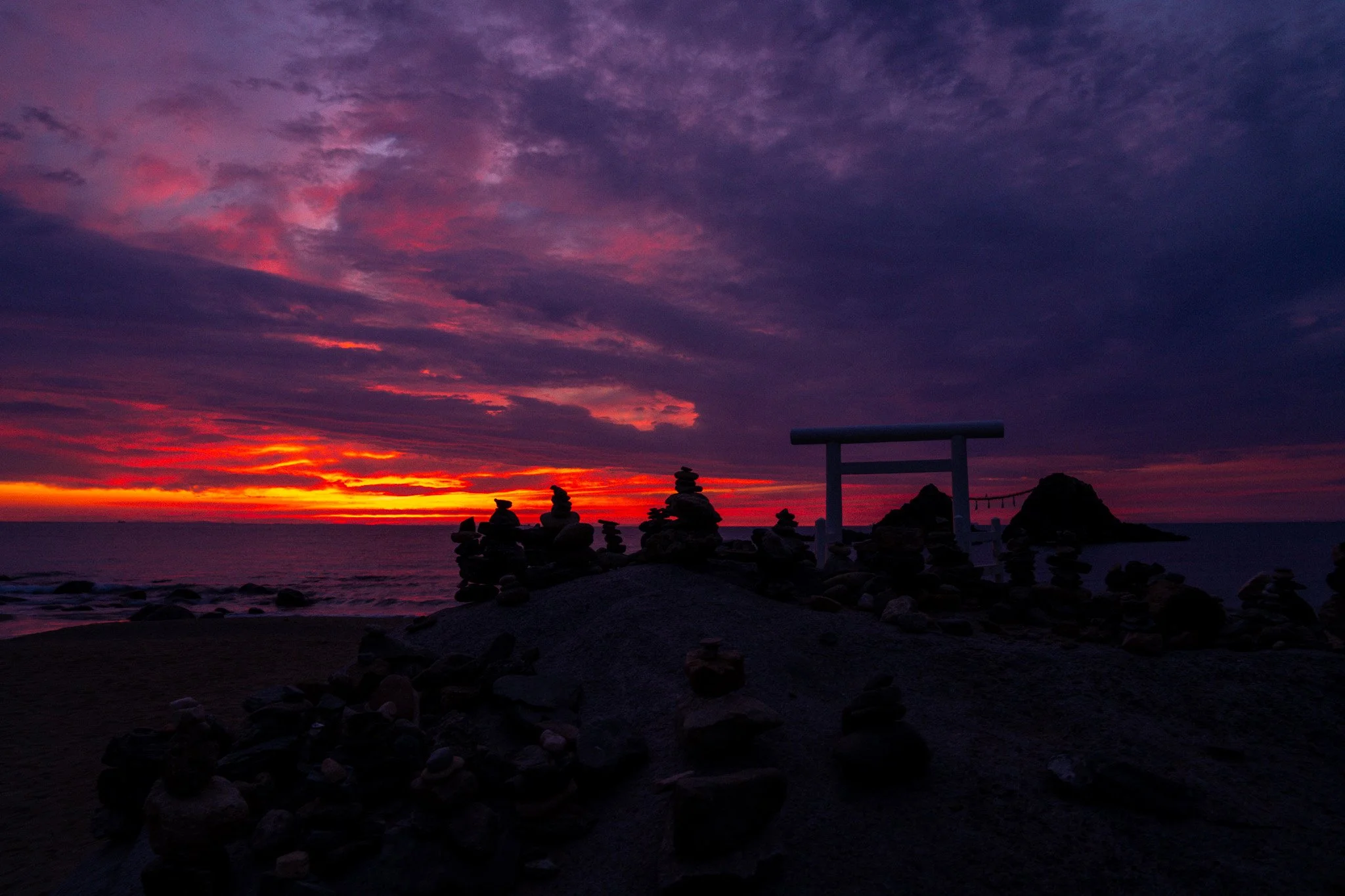
It was a fitting conclusion to the trip.
A place I would like to return to one day, not only for the sunset that drew us there, but to experience it in a different rhythm — beyond the urgency of timing and arrival.
I also came to understand something more quietly personal in that moment.
Despite earlier hesitation about whether Itoshima was worth the detour, the group had made space for it. They adjusted, accommodated, and ultimately gave time to something that mattered to me.
That, in itself, felt significant.
It was perhaps what group travel had become for us in those days — not rigid agreement, but a fluid willingness to move together, even when individual preferences briefly pulled in different directions.
Not six separate journeys.
But one shared motion, finding its direction as it unfolded.